Sanjha Morcha

What’s New

Click the heading to open detailed news

Current Events :

web counter

Print Media Reproduced Defence Related News

PHOTOS OF TANKS AND ARMOURED VEHICLES IN THE HIMALAYAS SHOW THAT CHINA AND INDIA’S NEXT BORDER SHOWDOWN COULD BE MUCH DEADLIER

China’s Type 99 (ZTZ-99) tank during an event at the 2017 Army Games in Russia
Two months ago, the Indian and Chinese militaries pulled back their forces stationed around Pangong Lake, on their disputed border in the western Himalaya mountains. The pullback, described as a “disengagement” by India’s Defence Ministry, was meant to be a first step to ease tensions on the disputed border – swaths of which have been heavily militarized since 20 Indian and at least four Chinese soldiers died in a medieval-style brawl in the nearby Galwan River Valley almost a year ago.
The Indian Army released photos, videos, and aerial images of the pullback, showing Chinese troops dismantling bunkers, removing tents, and evacuating the area. The most interesting images, though, were the ones that showed the large number of tanks and armoured vehicles. Indian media reported that China alone withdrew 200 tanks from the area.
The sheer sizes of the armoured forces indicates that both sides were quite serious about their military build-ups, and that the next violent incident on the border could escalate into something far more deadly.
In general, large-scale armour deployments in mountainous and high-altitude regions are rare, especially in the Himalayas.

Tanks pull back from the banks of Pangong Lake region, in Ladakh along the India-China border
The low air pressure, freezing conditions, and rough terrain make operating and maintaining such vehicles difficult and often lead to losses from wear and tear or mechanical failure. Tanks and armoured vehicles have to be restarted for up to 30 minutes every two or three hours to prevent them from freezing, according to one retired Indian general. That operational challenge is believed to have been a significant factor in both countries’ decisions to pull back their armour from Pangong Tso.
“These operational issues simply cannot be ignored either by Beijing or Delhi for a variety of operational reasons that are common to both forces,” a high-ranking Indian Army officer told The Wire.
That is also the reason armour – and aircraft, for that matter – played a very limited role in the month-long war India and China fought in the region in 1962. During that war, India airlifted six AMX-13 light tanks to an area just south of Pangong Tso, but the feat was extremely difficult, and there were no large-scale tank battles. The 1962 war itself was an embarrassment for India, which had over 8,000 soldiers killed, wounded, captured, or missing and lost the territory Aksai Chin to China. China lost 722 soldiers killed and 1,697 wounded.
Both India and China set about building up their militaries after the 1962 war.
Today, India’s tank force is made up primarily of three models. Two of them, the T-72 “Ajeya” and T-90 “Bhishma” main battle tanks (MBTs), are built in India using Russian designs. The third, the Arjun, is of Indian design. The Russian tanks, designed to operate in the cold, make up most of India’s fleet of about 4,000 tanks. The Arjun has had a troubled rollout, and only 124 are in service. China’s People’s Liberation Army, or PLA, maintains a large number of legacy models from the Cold War, like the Type 59, Type 69, and Type 80/88 tanks, but China’s tank force is centred on three modern models: the Type 96 and Type 99 MBTs, and the new Type 15.
While the Type 96 and Type 99 are MBTs, the Type 15 is one of the few light tanks developed this century.
The Type 96 and Type 99 weigh about 42 tons and 54 tons, respectively, and are armed with 125 mm guns, whereas the Type 15 weighs just 35 tons and has a 105 mm gun.
By comparison, India’s T-72, T-90, and Arjun tanks weigh about 41 tons, 46 tons, and 68 tons, respectively. The T-72 and T-90 are armed with 125 mm guns and the Arjun with a 120 mm. Despite being smaller and under-gunned, the Type 15 is far more capable in the mountainous terrain of the Himalayas than its Indian counterparts. The Type 15 is just one of the PLA’s numerous new weapon systems designed with mountain operations in mind, and China has shown it off in a number of live-fire drills in Tibet.
Both the PLA’s Xinjiang and Tibet military commands have received Type 15s. They have also been deployed to the Sino-Indian border, as have India’s T-72 and T-90s.
The images and a video released by the Indian military appear to indicate that the pull out around Pangong Tso was a coordinated event in which tanks were purposely shown to withdraw one at a time.
Indian T-72 and BMP-2 infantry fighting vehicles (IFVs) can be seen on the Indian side of the border, as can a number of small fighting positions and foxholes.
The Chinese armoured force that can be seen is more diverse. A few of the tanks appear to be legacy models, likely Type 80/88s. There also appear to be several modern models, most likely Type 96s or Type 99As.
Another image shows at least 12 Chinese ZBD-04 IFVs and three other armoured vehicles, possibly tracked variants of the HQ-17 short-range surface-to-air-missile system, Type 09 self-propelled anti-aircraft artillery units, or a combination of both.
It’s unclear if the tanks and IFVs were always deployed so close to one another or if they were only brought forward for verification during the disengagement.
What is clear is that both sides are far more mechanized, capable, and lethal than they were in 1962.
The pullback from Pangong Tso has not been followed by additional pullbacks in other contested areas, as was originally hoped. Recent reporting suggests some Indian officials may regret pulling back from a strategically important area with little to show for it.
Despite the difficult conditions in a region known as the “roof of the world,” flare ups along the border are still a real possibility.
With so much heavy hardware present, future fighting in the area could be much deadlier than before.
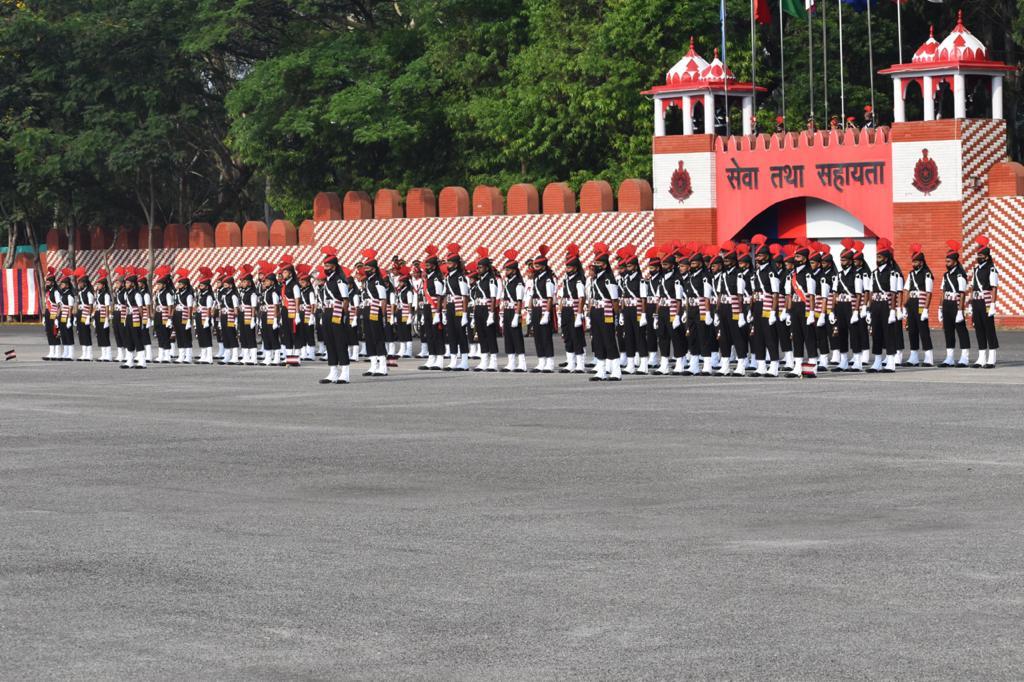


First batch of women Military Police inducted into the Army

First batch of women Military Police inducted into the Army

Tribune News Service
Chandigarh, May 8

The first batch of 83 women military police was inducted into the Army today at an attestation parade held at the Corps of Military Police Centre and School in Bengaluru.

The Commandant of the Centre and School, while reviewing the parade, complimented the newly attested women soldiers on their successful completion of the intense 61 weeks of training. 

This included basic military training, provost training to include all forms of policing duties and management of prisoners of war, ceremonial duties and skill development to include driving and maintenance of all vehicles and signal communications, an official statement said.


COVID DUTY NOT AFFECTING OPERATIONAL EFFICIENCY ALONG NORTHERN, WESTERN BORDERS: INDIAN ARMY

General MM Naravane visited forward areas in Eastern Ladakh in April 2021
The Indian Army has sent its doctors and trained Army paramedics to various hospitals across the country to assist in providing timely and critical care to Covid patients
New Delhi: As retired and serving Army men continue to help the countrymen to tackle the COVID-19 surge, the Indian Army on Wednesday assured the nation that the deployment of military medical professionals has been deliberated at the highest level and that there is no dilution in the operation prepared of Indian Armed Force along both northern and western borders.
Army’s clarification came after various media reports indicated that deployment of Army medical assents in various COVID-19 hospitals has adversely affected the operational efficiency of the force.
Notably, to assist in India’s fight against the COVID-19 pandemic, the Indian Army has contributed by deploying its doctors and trained Army paramedics at various hospitals across the country to assist in providing timely and critical care to Covid patients.
Chief of Army Staff General MM Naravane called on Prime Minister Narendra Modi on April 29 and discussed various initiatives being taken by the Army to help in Covid management.
The Army chief informed the prime minister that the medical staff of the Army is being made available to various state governments. He also briefed PM Modi that Army is setting up temporary hospitals in various parts of the country.


MoD questions efficacy of ECHS for retired personnel

MoD questions efficacy of ECHS for retired personnel

ays scheme failed to deliver amid pandemic

New Delhi, May 7

The Ministry of Defence has come down heavily on the Ex-servicemen Contributory Health Scheme (ECHS) that is designed to cater to the medical needs of retired soldiers and their families.

The MoD, in a statement, said the denial of medical support to the veterans in these testing times raised several questions regarding the efficacy of the scheme. “The armed forces will have to take a hard look on this issue to identify fail-safe options for the future,” it said. Set up in 2003, the ECHS was to provide quality medical care to veterans and their families because of the limited capacity of the military hospitals. During the Covid surge, most veterans were denied admissions under the ECHS and empanelled hospitals, which had increased their dependence on the already-stressed military hospitals, said the MoD. — TNS


Warships to bring 250 MT oxygen in 4 days

  • Over next four days, over 250 tonnes of liquid oxygen is expected to land on Indian shores aboard Navy warships
  • Five warships are homeward-bound and will reach between May 9 and May 11
  • The warships are also carrying 2,300 filled and 3,150 empty oxygen cylinders, 57 concentrators, eight empty oxygen containers (20 tonnes each) and 10,000 rapid antigen test kits
  • Air Force aircraft too are ferrying supplies from domestic sources and countries like Germany, Singapore, UAE, Oman, UK, Australia and Thailand
  • Defence doctors will now provide online consultation on e-Sanjeevani OPD to all citizens of the country

AS HARSH WINTER SUBSIDES, CHINA ENHANCES MILITARY ACTIVITY ALONG LAC

New Delhi: China is now reinforcing its military positions and rotating troops along the Line of Actual Control. This means that China is showing no intent of de-escalation along the Line of Actual Control in eastern Ladakh where it is locked in a stand-off with India for over a year now.
While many would have hoped that the harsh winter would lead to a de-escalation, the Chinese are not converting temporary structures, helipads and surface to air missile positions it had set up last year into permanent positions.
Officials say that China continues to maintain a big force in the friction point areas. The Rutog county area which is only 100 kilometres away has witnessed plenty of activity in the past couple of days. India’s worry is that the People’s Liberation Army can move forces must faster to the LAC due to better road connectivity.
The last time that talks were held at the military level between the two countries was in April. The Chinese side did not agree to pull back troops at patrolling posts 15, 17 and 17A in the Hot Springs-Gogra-Kongka La areas.
A statement from India said that both sides agreed to resolve issues. “It was highlighted that completion of disengagement in other areas would pave the way for two sides to consider de-escalation forces and ensure full restoration of peace and tranquillity and enable progress in bilateral relations,” the statement read.
“The two sides agreed on the need to resolve the outstanding issues in an expeditious manner in accordance with the existing agreements and protocols,” a statement by the Defence Ministry read.
Sources said that the next round of talks would take place after consulting with the political leadership. The talks did not go as planned and several unresolved issues remain. However, it is important to keep talking and find solutions at the earliest, the source also said.
In March, India said that it expects China to work with it through the existing bi-lateral consultation mechanisms between their diplomats and military commanders to ensure early completion of the disengagement process in the remaining areas in eastern Ladakh to allow both sides to consider de-escalation of forces.
At the 10th round of the senior commanders meeting, India is learnt to have insisted on a faster disengagement process in areas such as Hot Springs, Gogra and Depsang to defuse tension in the region.


MoD questions efficacy of ECHS for retired personnel

Says scheme failed to deliver amid pandemic

New Delhi, May 7

The Ministry of Defence has come down heavily on the Ex-servicemen Contributory Health Scheme (ECHS) that is designed to cater to the medical needs of retired soldiers and their families.

The MoD, in a statement, said the denial of medical support to the veterans in these testing times raised several questions regarding the efficacy of the scheme. “The armed forces will have to take a hard look on this issue to identify fail-safe options for the future,” it said. Set up in 2003, the ECHS was to provide quality medical care to veterans and their families because of the limited capacity of the military hospitals. During the Covid surge, most veterans were denied admissions under the ECHS and empanelled hospitals, which had increased their dependence on the already-stressed military hospitals, said the MoD. — TNS


Warships to bring 250 MT oxygen in 4 days

  • Over next four days, over 250 tonnes of liquid oxygen is expected to land on Indian shores aboard Navy warships
  • Five warships are homeward-bound and will reach between May 9 and May 11
  • The warships are also carrying 2,300 filled and 3,150 empty oxygen cylinders, 57 concentrators, eight empty oxygen containers (20 tonnes each) and 10,000 rapid antigen test kits
  • Air Force aircraft too are ferrying supplies from domestic sources and countries like Germany, Singapore, UAE, Oman, UK, Australia and Thailand
  • Defence doctors will now provide online consultation on e-Sanjeevani OPD to all citizens of the country

States seek Army help to fight Covid but ‘overstretched’ forces have limited doctors to spare

Armed forces doctors arrive in Lucknow Monday | Twitter/@suryacommand

New Delhi: As the country faces one of the worst healthcare crises in several decades, the armed forces’ Medical Corps finds itself stretched as it swings between the increasing demand from the civilian side as well as its own, ThePrint has learnt.

The latest demand has come in from the Delhi Deputy Chief Minister Manish Sisodia who has written to Defence Minister Rajnath Singh calling for the Army to set up 11,000 beds, including 1,000 ICU ones, in the national capital. https://efd128da917c28d59815f1eb16d86cbe.safeframe.googlesyndication.com/safeframe/1-0-38/html/container.html

Many within the defence and security establishment are now wondering from where they would source doctors, nurses and paramedics to cater to so many beds.

“A number of ad hoc hospitals have been set up across the country to provide succour to fellow citizens,” a source said. “A large number of men and women of the Armed Forces Medical Services are manning these facilities.”

The military’s medical staff is stretched thin due to continuous demands to create medical infrastructure and provide army doctors to man them, the source added.

Explaining the manpower needed, the source said that the 500-bed Sardar Vallabh Bhai Patel Covid Hospital near the New Delhi Airport has a mix of ICU and HDU beds but consistently, the bed occupancy ranges from 98-100 per cent.

According to the source, 122 medical officers, 48 nursing officers and 120 paramedical staff from the Army, Navy and Air Force have been stationed in the hospital.

The source said the doctors are drawn in from various units including the premier Army Research and Referral Super Speciality Hospital, where some of these doctors cater to critical patients such as those suffering from cancer and other ailments including kidney failure.

“These doctors not only tend to the ones at the makeshift hospital but also have to observe their own patients back at the R&R behind the screen,” a second source said.


Also read: Soldiers sit tight in Ladakh amid India’s Covid crisis, but construction activity continues


Military care in the state

The Dhanvantri Covid Care Hospital in Ahmedabad was the second such facility, after the Sardar Vallabh Bhai Patel Covid Hospital, made functional with the help of the Armed Forces Medical Services. It is working with support from the state machinery.  

Over 200 seriously ill patients, who have tested Covid positive, are being treated here. The ICU in this hospital is almost ready and is expected to start working soon. 


A contingent of about 70 healthcare personnel from the three services have been moved from various parts of the country and are deployed in Ahmedabad, the second source said. 

Similar hospitals are in the process of being set up at Lucknow and Varanasi and will open shortly. 

The armed forces have already earmarked a contingent of 33 doctors, 69 paramedical staff and 34 nursing staff for the hospital at Lucknow, which is expected to be a 450-bed facility.

At Varanasi, the facility will be a 750-bed hospital and is likely to be functional in the next few days. 

Moreover, a 500-bed hospital has been established with the support of the armed forces at the ESI Hospital in Bihta, Patna. 

A contingent of armed forces medical personnel and paramedics have been deployed here besides that of the state government. 

Sources argue that with the government declaring the opening of a 500-bed centre in Jammu, with help from the military, and a number of states demanding the Army’s help to stem the tide, the entire Medical Corps of the armed forces “has been dangerously overstretched”. 

Steps taken to ensure more availability of military doctors

A number of measures have been put in place by the armed forces to quickly increase the availability of doctors. 

These include recalling medical officers from the frontline as well as those who have been posted with recruiting offices, NCC and on staff appointments. 

Medical officers from a particular geographical area are being pooled in to ensure availability. Courses of all doctors have been cancelled and retirements of short service medical officers have been moved ahead to until the end of this year.

To ensure that no doctor is wasted on administrative duties, quarantine centers are being run by non-medical staff while limited paramedics have been handed the job in isolation centers.

Sources said that during the course of duty in these places, a significant amount of medical staff have themselves been infected with Covid-19.

“Even after the reinforcements mentioned above, the medical staff is stretched thin due to ceaseless demands to create medical infrastructure and provide army doctors to man them,” the second source said.  

(Edited by Arun Prashanth)


Also read: Tejas aircraft tech comes in aid of oxygen-starved Indian cities. This is how it works


With hospitals, medical staff, Western Command steps up assistance for civilians

Another 100 paramedics will be deployed shortly at various other locations

With hospitals, medical staff, Western Command steps up assistance for civilians

The hospitals will be inaugurated on May 10. — Tribune Photo

Vijay Mohan
Tribune News Service

Chandigarh, May 8

With a spike in coronavirus cases, the Army’s Chandimandir-based Western Command has stepped up assistance to civilian authorities in combating the pandemic.

They set up additional hospitals, and contributed medical staff to civilian hospitals, and restating oxygen generating plants.

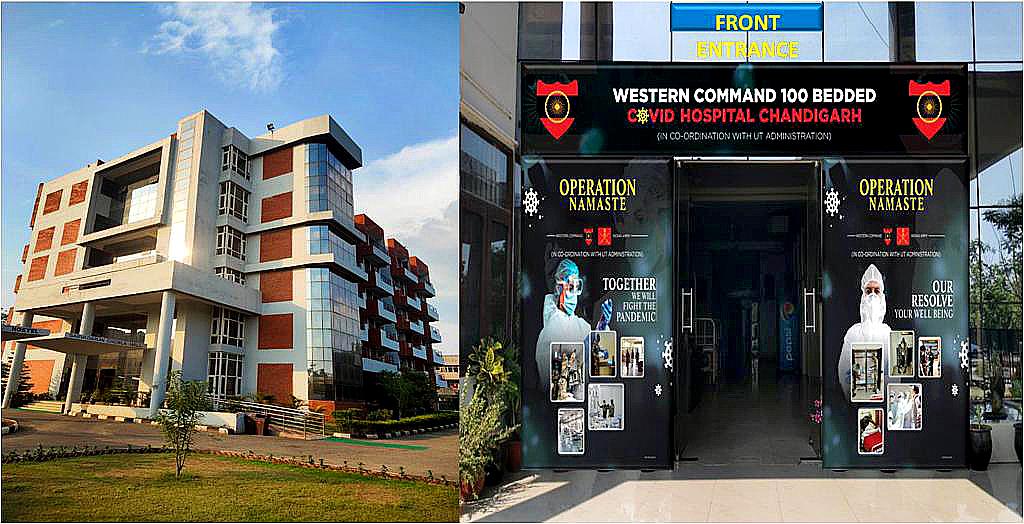
About three 100-bed COVID hospitals at Chandigarh, Patiala, and Faridabad have been set up. This will accommodate 100 mild to moderate symptomatic civilian patients.

The hospitals will be inaugurated on May 10, said a spokesperson of Western Command on Saturday.

The Army temporarily moved its field hospitals from different places in the region to set up the COVID-hospitals at the request of the state governments. It is also providing manpower, medical supplies and equipment for them.

Apart from contributing 108 doctors, 14 nursing officers and 205 paramedics in various hospitals set up by the Defence Research and Development Organisation, Western Command has also provided 33 paramedics to Government Rajendra Hospital at Patiala, SVBP Hospital at Delhi.

Another 100 paramedics will be deployed shortly at various other locations.

Further, to tide over the oxygen shortage in the region, a dedicated team from the Corps of Electronics and Mechanical Engineers are working round the clock to resuscitate the oxygen generation plant of the Bhakra Beas Management Board at Nangal.

The Army is also examining the feasibility of reviving more oxygen plants located in the region.

Recently, during a virtual meet between Punjab CM Captain Amarinder Singh, and Lt Gen RP Singh, General Officer Commanding-in-Chief, Western Command, the Chief Minister shared his concerns on the rising trend in the fresh infections, especially in the major cities of Punjab, and had sought for assistance of Western Command to manage the COVID crisis in terms of setting up Military COVID Field Hospitals, provisioning of paramedics and technical assistance to revive the disused oxygen plants in the state.

The Western Command, which has its footprints in the states of Punjab, Haryana, Himachal Pradesh, Jammu and Kashmir, Delhi and the Union Territory of Chandigarh, had assured the civilian administration of all possible assistance within the institutional capacity of Western Command to help manage the crisis.

To overcome the shortage of ambulances with the Ex-servicemen Contributory Health Scheme, Western Command, on Saturday, also provided eight service ambulances from its resources to polyclinics across the National Capital Region for use by veteran


Big boost for military as Modi govt gives officers powers of additional & joint secretaries

Formal appointment means the officers can now dispose of files at their levels under powers delegated to them, instead of routing them through Secretary, DMA, Gen. Bipin Rawat.

The Ministry of Defence at South Block in New Delhi | Commons

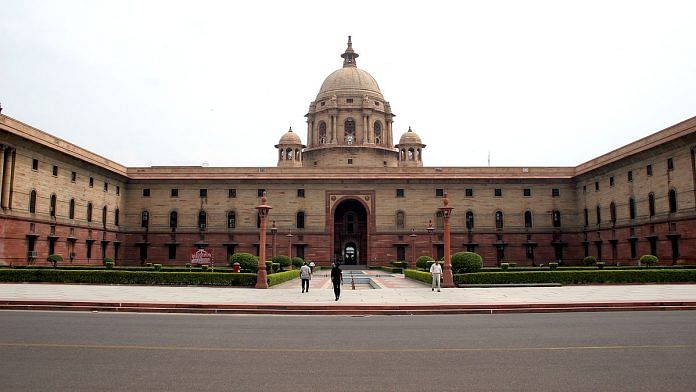
New Delhi: In a landmark move in the country’s armed forces history, uniformed personnel from the Army, Air Force and Navy have been for the first time formally appointed as additional secretary and joint secretaries in the Ministry of Defence.

In a late evening order Monday, the Appointments Committee of the Cabinet (ACC), headed by Prime Minister Narendra Modi, appointed Lt Gen. Anil Puri as the Additional Secretary in the Department of Military Affairs (DMA).

Maj. Gen. K. Narayanan, Rear Admiral Kapil Mohan Dhir and Air Vice Marshal Hardeep Bains have been appointed as joint secretaries in the DMA, which began functioning in January 2020 as part of the defence reforms introduced by the government.

Gen Bipin Rawat holds the position of Chief of Defence Staff (CDS) and Secretary, DMA.

While Puri was already officiating as additional secretary and the other three officers as joint secretaries, the formal appointment opens up decision-making powers and streamlines the functions.


Also read: A defence minister with military background — a risk India needs to take


‘Historic and landmark moment’

The move is being hailed as a significant step.

Explaining this, a source said: “Till now, without official notification, all files had to be moved to Secretary, DMA for decisions. This is no longer needed because each appointment can now dispose of files as per powers delegated.”

Calling it a “historic and landmark moment” for the armed forces in the country, another source said: “The ACC approval was in the pipeline and it has finally come. This makes the process much smoother and formalised in a bureaucratic set-up.”

As reported by ThePrint in 2019, the DMA, headed by the four-star CDS, will look after the affairs of the Army, the Navy and the Air Force, but will have no operational control over individual organisations, which will remain with the respective service chiefs.

While the DMA will look after all procurement exclusive to the three services — barring capital acquisitions, according to prevalent rules and procedures, besides the Territorial Army and various functions relating to the Services — its mandate includes promoting ‘jointness’ in procurement, training and staffing for the services through joint planning and integration of their requirements.

It is also responsible for facilitation of restructuring of military commands for optimal utilisation of resources by bringing about jointness in operations, including through establishment of joint/theatre commands besides promoting use of indigenous equipment by the services.


Also read: Nearly 15% Covid beds in select military hospitals could be made available to civilians


Armed forces plan to hire 400 retired military doctors to assist in fight against Covid

A file photo of a Covid ward set up at an Army hospital, in Prayagraj. | Photo: ANI

New Delhi: The Directorate General of the Armed Forces Medical Services (DG, AFMS) has mooted a proposal to hire around 400 medical veterans of the service to aid with the handling of the Covid-19 wave raging across the country. 

The former medical officers will be hired on a contract basis for a year and will be expected to pitch in with their expertise on advising, counselling and treating patients, ThePrint has learnt.  

Defence sources told ThePrint that the proposal is under active consideration of the defence ministry and a decision is expected soon. 

If approved, the measure will provide some relief to the military medical staff, who have been stretched thin due to the burgeoning Covid cases and states looking to them for personnel and infrastructure. 

The proposal talks about recruiting retired officers of the AFMS and short service commission medical officers for a period of about a year, the sources added.  

“There are plans to hire around 400 such medically sound officers who retired in the last four to five years on a contract basis,” a defence source said. This will also include those medical officers who resigned or took premature retirement during this period. 

The source added that their monthly remuneration would be based on the last salary they drew from the government and other specialisations. 

The new proposal comes days after the DG AFMS sent out an appeal to the veteran officers of the Armed Forces Medical Services (AFMS) to aid in the fight against Covid.

In a letter last week, the DG AFMS had asked veteran AFMS officers to register themselves on the defence ministry’s e-Sehat portal where they can provide their advice, guidance and counselling to needy patients through teleconsultation.  

Prior to that, Chief of Defence Staff Gen. Bipin Rawat had met Prime Minister Narendra Modi and said that all armed forces medical personnel who had retired or taken premature retirement in the last two years would be recalled to serve in Covid-19 facilities near their residences.


Also read: Army cap on premature retirement to continue as Covid has hit recruitment since last yearhttps://c6cd6ff82dd69dec4b0449cae4a07834.safeframe.googlesyndication.com/safeframe/1-0-38/html/container.html


Overstretched military medical staff

The Ministry of Defence has allowed 50 AFMS hospitals — including 42 Army, five Air Force and three Navy hospitals (dedicated and mixed Covid hospitals) — in which civilians could get treated subject to referral by the local health authority after ascertaining bed availability. 

As reported by ThePrint, the military’s medical staff is stretched thin due to the growing demands from states to create medical infrastructure and provide army doctors, nurses and paramedics for them. 

Several military doctors, paramedics and nursing staff have been put on duty in different Covid care facilities set up across the country, including the 500-bed Sardar Vallabh Bhai Patel Covid Hospital near the New Delhi Airport, Dhanvantri Covid Care Hospital in Ahmedabad and the 500-bed Atal Bihari Vajpayee hospital in Lucknow among others.

Last week, the defence ministry invoked Schedule 8.1 of Delegation of Financial Powers to Defence Services (DFPDS-2016), which deals with the grant of emergency financial powers to the Armed Forces Medical Service (AFMS) upto 30 September 2021.

Schedule 8.1 of DFPDS-2016 provides for full financial powers to the DG, AFMS to procure medical items, materials and stores.

Additionally, the three services have also been granted emergency financial powers from the defence ministry to expedite critical procurement needed to build additional infrastructure to tackle the growing burden of the coronavirus pandemic.

(Edited by Arun Prashanth)


Also read: Polyclinics for defence veterans get more medical staff so they can run 24×7 amid Covid surge