Twelve roads built by the BRO in the northern and eastern border areas were thrown open by Defence Minister Rajnath Singh today.
At an event in Lakhimpur district of Assam, the Defence Minister e-inaugurated a 20-km double-laned Kimin-Potin road along with nine other roads in Arunachal Pradesh and one each in the Union Territories of Ladakh and Jammu & Kashmir.
He said the roads inaugurated today hold strategic and socio-economic importance as they would play an important role in strengthening national security as well as promoting development of the North-East region.
Singh said the development of North-East, was not only the overall development of the country, but also to the nation’s relations with East Asian countries.
DG Border Roads Lt Gen Rajeev Chaudhry gave a brief overview of the BRO’s achievements. — TNS
Heartening to see the third pillar of democracy asserting itself
Reassuring: The elevation of Justice NV Ramana as the CJI has introduced a discernible change in the way justice is being delivered. PTI
Julio Ribeiro
The elevation of Justice NV Ramana as the Chief Justice of India has introduced a discernible change in the way justice is being delivered by the judiciary. This was first noticed in the process of selection of the CBI chief. It gave the people hope that the third pillar of democracy is asserting itself, as it is expected to do, specially at such times when the political executive is misinterpreting the Constitution and the laws to suit its own ends.
I think of officers who continue to keep the flag flying. Their numbers are dwindling. But people cling on to them in the hope of getting justice, which is what IPS officers were specially recruited to dispense.
Take, for instance, the remarks made in open court by Justices Hemant Gupta and V Ramasubramanian when turning down the demand of the former Police Commissioner of Mumbai for transfer to the CBI the investigation of cases filed against him in Mumbai by sundry complainants. Why the CBI? For one, the ex-Commissioner had asked for the allegations he had made against the state’s Home Minister to be inquired into by the CBI and the Bombay High Court had obliged.
The court’s decision was a good one because you cannot expect the state government’s agencies to establish the truth when its own Home Minister is the object of suspicion. The minister was accused of summoning two junior officials of the police’s Crime Branch to his house and tasking them with collecting Rs 100 crore every month from bar owners and such like who tweak the law for financial gain.
When the former Commissioner was removed from the coveted position held by him, he abandoned his comfort zone and dashed off a letter to the CM in protest. In that letter the details of the minister’s design to strengthen his party’s coffers through encouragement of criminality were laid bare. The name of the two junior officials who had been tasked with the collections were also disclosed. One of the two was Sachin Vaze. The exact contents of the letter have not been published. Vaze was the closest confidant of the chief! When Vaze botched up, the ex-Commissioner had anticipated an unhappy turn of events. He had recorded his conversation with Vaze and the other police Inspector in which allegedly the demand for Rs 100 crore was mentioned. He wrote to the CM and simultaneously released a copy of his letter to the press.
The Leader of the Opposition in the Maharashtra Vidhan Sabha, BJP’s Devendra Fadnavis, denounced the three-party alliance ruling the state — the Shiv Sena, NCP and Congress. When he was the CM earlier, Fadnavis had made use of the same officer, Param Bir Singh, first to justify the state’s action against the left-oriented activists arrested in the Bhima Koregaon conspiracy case, and later, when the officer was appointed Director, Anti-Corruption Bureau, to absolve NCP’s Ajit Pawar in a big irrigation scam, in an attempt to cement a political alliance. It was in the interest of his (Fadnavis) party to ensure that Anil Deshmukh, the Aghadi’s Home Minister, was reviled. So, the BJP welcomed back into its camp the ex-Police Commissioner with open arms.
It is an open secret that in recent years the CBI has been used by the party in power. So, when the High Court of Bombay ordered the inquiry into the ex-Commissioner’s accusations against the minister to be assigned to the CBI, the former Commissioner could not but have been in seventh heaven.
But the state government counter attacked with three or four complaints of selected victims against the ex-Commissioner. Two former Inspectors, one cricket bookie and one real estate agent were lined up with their own individual grievances of extortion against the officer when he was Commissioner of Thane three-four years ago. The state’s investigation agencies were entrusted with the investigations. Param Bir Singh approached the Supreme Court for relief, knowing well that the state’s police units are as caged in the state as the CBI is at the Centre. While turning down his request, the judges remarked that ‘those who live in glasshouses should not throw stones’. How did the judges conclude that both, the accused and the accusers, lived in glasshouses, a sentiment shared by the rank and file of the Thane and Mumbai police?
When two prominent residents of the SC-dubbed glasshouses join hands, if one of them relies on a specialist to do hatchet jobs of unlawful content and that hatchet man trips up in a crucial operation, because by now he has begun believing in his own invincibility, the denouement is bound to follow.
Faced with unexpected and sudden ruin, the resident resorts to his own instincts of survival. And here, too, he meets a dead end as the judiciary is in no mood to oblige.
The disgraced minister, whose cash-for-transfer policy was universally known to all ranks of the police force he was chosen to administer, hopes to get off the hook because presently it is one man’s word against the other. At this moment of time, his opponent in the adjoining glasshouse has a slight advantage because of the recorded evidence.
The bar owners would have to shut shop if they had to pay these added imposts to the legally mandated taxes they pay. A sharp increase in protection money would be a novel way of combating the crime itself. Only combating the crime was not the intent of the two occupants of the glasshouses!
The entire episode has left a sour taste in the mouth. I was always proud to proclaim my membership of the elite IPS, which I joined in 1953. But opting for positivity of the type our PM preaches, I think only of those officers who continue to keep the flag flying. Their numbers show signs of dwindling. But people cling on to them in the hope of getting justice, which is what IPS officers were specially recruited to dispense.
Early completion of disengagement in eastern Ladakh could pave way for de-escalation: MEA
The two sides are now engaged in talks to extend the disengagement process to the remaining friction points
New Delhi, June 17
India on Thursday said early completion of the disengagement process in the remaining friction points in eastern Ladakh could pave the way for both Indian and Chinese troops to consider de-escalation and ensure full restoration of peace and tranquillity in the border areas.
At a media briefing, External Affairs Ministry spokesperson Arindam Bagchi said such a step could enable progress in bilateral relations between the two countries.
“Early completion of disengagement in the remaining areas could pave the way for both sides to consider de-escalation of forces and ensure full restoration of peace and tranquillity, and thereby enabling progress in bilateral relations,” he said replying to a question.https://dac735d1aad68a67136649ddc9a7ffcb.safeframe.googlesyndication.com/safeframe/1-0-38/html/container.html
The 11th round of Corps Commander-level talks between the two sides was held on April 9 while the last edition of diplomatic negotiations under the framework of the Working Mechanism for Consultation and Coordination (WMCC) on border affairs took place on March 12.
It is learnt that another round of WMCC talks could take place soon.
India and China were locked in a military standoff at multiple friction points in eastern Ladakh since early May last year. However, the two sides completed the withdrawal of troops and weapons from the North and South banks of Pangong lake in February following a series of military and diplomatic talks.
The two sides are now engaged in talks to extend the disengagement process to the remaining friction points.https://dac735d1aad68a67136649ddc9a7ffcb.safeframe.googlesyndication.com/safeframe/1-0-38/html/container.html
There was no visible forward movement in disengagement of troops in the remaining friction points as the Chinese side did not show flexibility in their approach on it at the 11th round of military talks.
Last month, Army Chief Gen MM Naravane said that there can be no de-escalation without complete disengagement at all friction points in eastern Ladakh and that the Indian Army is prepared for all contingencies in the region.
He also said that India is dealing with China in a “firm” and “non-escalatory” manner to ensure the sanctity of its claims in eastern Ladakh, and that it was even open to initiating confidence-building measures.
India has been insisting on complete disengagement in remaining friction points to de-escalate the situation in eastern Ladakh. PTI
Lt Gen & Mrs AS Bhinder, (9 Horse, presently Army Cdr SWC) and their son and daughter.
Armed Forces Tribunal (AFT): The Division Bench of Justice Umesh Chandra Srivastava (Chairperson) and Vice Admiral Abhay Raghunath Karve, Member (A) held that there is no barometer that can assess the disability percentage to the extent of 1% and therefore, the percentage of disability which has been assessed as 15-19% may be 20% also and there may be variation of at least two percent plus.
Briefly stated facts of the case were that the applicant was enrolled in the Indian Air Force on 14-11-1995 and was discharged on 30-11-2015 in Low Medical Category (Permanent). At the time of his retirement, the Release Medical Board (RMB) assessed his disability ‘SEVERE OBSTRUCTIVE SLEEP APNOEA (OLD)’ at 15-19% for life and opined the disability to be neither attributable to nor aggravated (NANA) by service. The applicant approached the respondents for grant of disability pension but the same was rejected, pursuant to which the applicant had preferred the present Original Application.
The applicant pleaded that he was enrolled as Radio Fitter (Electronics & Telecommunication) trade and was working in advance defence ground environmental system which deals with Radar and Radio equipments and such units are usually at High Altitudes, thus environmental condition leads to stress and strain which had affected his health badly. He submitted that in the year Dec 1998, he was posted at High Altitude Area i.e. Dalhousie (H.P.) located above 10,000 feet and to protect from cold large heating blowers were used. Due to high altitude there was lack of oxygen and due to use of blowers there was lack of moisture content which resulted in breathing problems. In the last phase of his three years tenure, he started having breathing problems at High Altitude due to Nasal Blockage. He further submitted that claim for the grant of disability pension was wrongly rejected on the ground of disability percentage being less than 20% and NANA.
Regarding the issue of disability being assessed as less than 20%, the Tribunal stated that various Tribunals and Courts had found that,
“The assessment of disability to the tune of 15-19% itself is a doubtful assessment and cannot be final for the simple reason that there is no barometer which can assess the disability percentage to the extent of 1% and therefore, the percentage of disability which has been assessed as 15-19% may be 20% also and there may be variation of at least two percent plus also. In case of doubt as the benefit should always be given to the applicant.”
Noticeably, the applicant was enrolled in Indian Air Force in fully fit condition after rigorous medical examination and the disability was detected for the first time in January 2008 after more than 12 years of Air Force service. Therefore, the Tribunal held that disability of the applicant must be presumed to have arisen in the course of service which must, in the absence of any reason recorded by the Medical Board, be presumed to had been attributable to or aggravated by service. Further, there was neither any note in the service record of the applicant at the time of his entry nor was any reason been recorded by the RMBoard that the disease which the applicant was found to be suffering from, could not have been detected at the time of his entry into service hence the reasoning for denying disability pension to applicant was not convincing and did not reflect the complete truth on the matter. The Tribunal remarked,
“The opinion that ‘SEVERE OBSTRUCTIVE SLEEP APNOEA (OLD)’ is caused by obesity and included anatomical variations resulting in airway collapse and apnoea is an good opinion, but nowhere rules out that this may not occur due to conditions of service.”
In the backdrop of above, the Tribunal held that the benefit of doubt in should be given to the applicant and the disability of the applicant should be considered as aggravated by military service. Accordingly, the impugned orders rejecting claim for grant of disability element to the applicant were set aside. The respondents were directed to grant disability element of the pension at 15-19% to the applicant, which was directed to stand rounded off to 50% from the date of discharge.[Rohitash Kumar Sharma v. Union of India, 2021 SCC OnLine AFT 1413, decided on 18-01-2021]
Kamini Sharma, Editorial Assistant has reported this brief.
From the battles fought on western front between Degh Nadi and Bein river emerged two PVCs (Maj Hoshiar Singh and 2nd Lieutenant Arun Khetarpal), eight Maha Virs, including Lt Col VP Ghai, Lt Col VP Airy and Havildar Thomas Phillipose, and many more who won Vir Chakras and other awards for their bravery
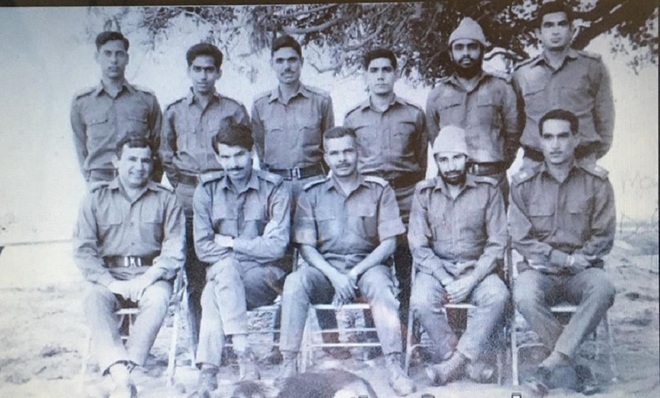
In this group photograph of the 3rd Grenadiers, Lt Col Ved Prakash Airy, MVC, is seated in the centre. To his left is Maj Hoshiar Singh, PVC, and to his right, Maj SS Cheema, SM.
Lt Col Dilbag Singh Dabas (Retd)
On December 3, 1971, at last light, the PAF simultaneously attacked the forward Indian airfields, including the Advance Landing Ground at Faridkot. When the expected pre-emptive ground attack by Pakistan did not materialise, the Indian Army decided to cross the International Border on the western front and enter the Shakargarh Bulge at dusk on December 5, with troops advancing on a broad front between Degh Nadi in the north and Ravi river in the south-east. The plan of the 54 Infantry Division, spearheading the advance, envisaged launching of operations against Zafarwal-Rajian-Dhamtal from general area Mawa-Galar, establishing a bridgehead across Basantar Nadi and capturing the Supwal Ditch.
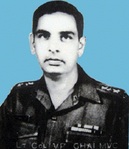
Lt Col VP Ghai
The task allotted to 54 Infantry Division also included the destruction of Pakistan’s 8 (Independent) Armoured Brigade and the capture of Zafarwal. After some preliminary operations en route, its 47 Infantry Brigade was ordered to establish a bridgehead west of Basantar Nadi to include areas Barapind-Lalial RF-Sarajchak and south-west shoulder of Supwal Ditch during phase 1 of the Divisional attack, followed by capture of Jarpal and Lohal in the second phase.
The Pakistan army had predictably concentrated the bulk of its armour to the west of Basantar between Supwal Ditch and Zafarwal and waited for the enemy armour to enter the dragon (chakravyuh). The Indian armour entered the chakravyuh and smashed it, but not without losing Second Lieutenant Arun Khetarpal, its Abhimanyu.
During the 1971 war, from the battles fought on the western front between Degh Nadi and Bein river emerged two Param Virs (Major Hoshiar Singh of the 3rd Grenadiers and Second Lieutenant Arun Khetarpal of The Poona Horse); eight Maha Virs, including Lieutenant Colonels VP Ghai, VP Airy and Havildar Thomas Phillipose, and many more who outperformed themselves and won Vir Chakras and other awards for their bravery.
Lt Col Ved Prakash Ghai, an alumnus of Mission School and DAV College, Dehradun, while commanding 16 Madras, raised in 1819 as the 2nd Travancore Nair Infantry, led it from the front and blunted three determined counter-attacks by the enemy to dislodge his battalion from the bridgehead established by his Madrasis. He was killed in action but not before ensuring that his gallant Thambis held on to the bridgehead they had established at a heavy cost.
Lt Col Ghai was awarded the Maha Vir Chakra for outstanding command of his battalion during the bridgehead battle. The excerpts from the battle account read:
At 7:30 pm on December 15, during phase 1 of the Division attack, Lieutenant Colonel Ved Prakash Ghai, commanding 16 Madras, led his battalion for the capture of Lalial and Sarajchak as part of the bridgehead operation. The positions were captured after some of the sharpest hand-to-hand encounters. The enemy launched many counter-attacks at night to dislodge the battalion but under the inspiring leadership of Lt Col Ghai, his men beat back all attacks.
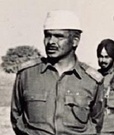
Lt Col VP Airy
As the day dawned, the enemy again launched a determined counter-attack supported by artillery and armour. With utter disregard to personal safety, Lt Col Ghai moved fearlessly from one Company position to another encouraging his men. Inspired by his fearlessness, bravery and leadership, the battalion repulsed the attacks with heavy losses to the enemy. However, a stray bullet by the withdrawing enemy caught him in the chest, wounding him seriously. Before he could be evacuated, Lt Col Ghai died on the battlefield but not before ensuring that his battalion held onto the bridgehead for three nights and two days steadfastly against all possible odds.
Havildar Thomas Phillipose from Kerala was a Non Commissioned Officer in 16 Madras. During the 1971 war, his and the platoon’s dare-devilry during the bridgehead battle proved beyond doubt that the Madrasis (men in Indian Army belonging to Kerala, Tamil Nadu, Karnataka, Andhra Pradesh and Telangana) are no less martial than the maliciously created martial classes by the British.
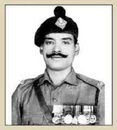
Havildar Thomas Phillipose
Havildar Thomas Phillipose was platoon commander in one of the companies of 16 Madras occupying the bridgehead across Basantar. During a counter-attack, after causing heavy casualties, the enemy captured a portion of the bridgehead after overpowering one of the forward sections of his platoon. Realising the criticality of the situation, Havildar Thomas rallied the meager strength of his platoon, sounded the battle cry ‘Veer Madrasi Adi Kollu-Adi Kollu-Adi Kollu (Brave Madrasi Hit and Kill – Hit and Kill – Hit and Kill)’ and led the dash with bayonets drawn. The spontaneous action inspired the small force of Madrasis to the hilt. During the dash, although he received a bullet on his left shoulder, wounding him severely, Thomas did not stop. The charge led by him was so determined that the enemy fled without giving a fight.
For his conspicuous gallantry, Havildar Thomas Phillipose was awarded the Maha Vir Chakra. Major PV Sahadevan and Naik Sahadevan of 16 Madras, too, performed beyond the call of duty and earned Vir Chakras.
Lieutenant Colonel Ved Prakash Airy, an alumnus of Government School, Karnal, took over the command of the 3rd Grenadiers in April 1971. In the morning hours of December 5, the battalion, as part of 47 Infantry Brigade, was ordered to cross the IB and ‘Bash on Regardless’ (the motto of 54 Infantry Division).
On the night of December 5/6, the 3rd Grenadiers crossed the International Border. The first interference from the enemy’s infantry and armour came up at Bhaironath. With the bold planning by Lt Col Airy and dauntless courage by his paltan, by the first light on December 6, not only was the defended locality captured, but also taken were three prisoners of war and two Sherman tanks with Patton turrets.
The battles fought and won so far were only part of the preliminary operations. For the main task, the 3rd Grenadiers spearheaded Phase 2 of the 54 Infantry Division attack and, under the leadership of Lt Col Airy, did more than enough to earn the title of ‘PVC Battalion’ by capturing the heavily defended Jarpal deep inside Pakistan.
During the iconic battle, the 3rd Grenadiers not only captured the heavily defended Jarpal, but with support from the tanks of The Poona Horse and the guns of Divisional Artillery, including those of 161 Field Regiment and 75 Medium Regiment, held on to it defeating repeated enemy counter-attacks.
The role played by Lt Col Airy earned him the Maha Vir Chakra. The battle account reads:
The 3rd Grenadiers was tasked to capture the heavily defended localities of Jarpal and Lohal on the night of December 15/16, with a view to establish a bridgehead on Basantar Nadi for the tanks to break out. Lt Col Airy led his troops fearlessly even when his men were fighting the enemy hand-to-hand. Though the casualties of the battalion were marginally high, both objectives were captured. But after regrouping, the enemy counter-attacked in the morning hours on December 16, followed by the attacks supported by the tanks to dislodge the Grenadiers from the bridgehead but all the counter-attacks were ruthlessly beaten back one after the other.
During the battle, unmindful of his personal safety, Lt Col Airy moved from one Company to the other, with just his cap balaclava as headgear, motivating his men to hold the captured ground. Noticing the firm resolve of the Grenadiers, the enemy finally retreated with heavy losses.”
During the battle of Jarpal, ‘C’ Company of the 3rd Grenadiers under the command of Major Hoshiar Singh beat back repeated counter-attacks. Maj Singh was awarded the PVC.
The ‘B’ Company of the 3rd Grenadiers, under the command of Major SS Cheema, which was defending Jarpal adjacent to the ‘C’ Company of Maj Hoshiar Singh, too, repulsed repeated counter-attacks against all possible odds. For his exemplary leadership, Maj Cheema was awarded the Sena Medal (gallantry). Lance Havildar Jaswant Singh and Grenadier Ram Kumar also made the battalion proud by winning Vir Chakras.
After winning the toughest battle, Lt Col Airy, before endorsing the bravery of his battalion’s officers and men, did the honour to the bravehearts of the supporting arms, including Second Lieutenant Khetarpal of The Poona Horse, Captain Satish Sehgal of 75 Medium Regiment, Major Prahalad Toro of 161 Field Regiment and Captain RN Gupta of 9 Engineer Regiment.
Regarding endorsement of the bravery of Second Lieutenant Khetarpal, there is a piece of history that personifies the strong inter-arm camaraderie. Maj Cheema, commanding ‘B’ Company of the 3rd Grenadiers, along with his forward platoon, while fighting the enemy infantry with baited breath and at a visible distance, watched Arun in action. Even after his tank got hit, Arun did not abandon it (since the tank gun was still firing) and singlehandedly destroyed three enemy tanks from as close as 75 yards before dying a hero’s death. After the battle, Maj Cheema (from Infantry) narrated the most conspicuous bravery of Second Lieutenant Khetarpal (from Armoured Corps). And Lt Col Airy, a thorough professional, proudly endorsed the submission.
After the war, a senior General officer from the Pakistan army remarked, “If two armoured regiments (13 Lancers and 31 Cavalry) of our army could not evict two Indian infantry companies (Hoshiar’s and Cheema’s of 3rd Grenadiers) supported by just a squadron of armour (of The Poona Horse), it was foolhardy to pitch 35 Frontier Force battalion against them. It was nothing short of hara-kiri, suicidal.”
Incidentally, C (Sikh) Squadron of 13 Lancers, at Partition, formed part of The Poona Horse. So, during the 1971 war, in effect, the ‘son’ was fighting the ‘father’. And among the defeated 13 Lancers (by The Poona Horse) was the Officer Commanding B Squadron, Major Jehangir Karamat, who later became Pakistan’s COAS.
Lt Col Airy also displayed a high level of morality and professionalism by recommending Lt Col Mohd Akram Raja, Commanding Officer of 35 Frontier Forces, his counterpart, whose body was recovered with bullet marks on the forehead and right hand with a firm grip on his gun, for the highest gallantry decoration in Pakistan. The handwritten citation did not go unnoticed. Lt Col Raja was awarded ‘Hilal-i- Jur’at’, Pakistan’s second highest gallantry decoration.
What does the future of India-China ties look like? 8 experts speak
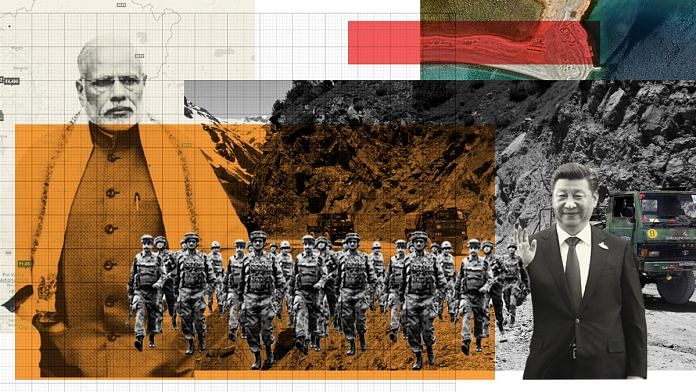
New Delhi: On 15 June 2020, India lost 20 soldiers at the Galwan river valley in Ladakh. While India and China have had several border standoffs since the 1962 India-China War, this was the first time, since 1975, that a face-off had turned violent — albeit without the actual use of firearms, in line with the confidence-building measures in place for a long time now.
Since the clash, India and China have held several discussions at the level of senior ministers, military commanders and diplomats, and yet disengagement and de-escalation processes have not taken the direction that both sides had planned for.
While disengagement did take place in the Pangong Tso area where India had strategic advantage, the situation in rest of the areas remains the same.
India has now taken a stance that unless there is peace and tranquility in the border areas, the bilateral ties will not go back to normalcy.
ThePrint spoke to eight experts on how they view the Galwan Valley clash, one year later, and what it means for the future of India-China bilateral ties:
‘New low will push Asia into divisive, uncertain scenario’
“Expectations about India and China reaching a mutual accommodation of interests at the regional and global level have evaporated. The loss of the most significant achievement since the mid-1980s — a peaceful border — has come in the wake of worrisome power asymmetry. Nationalist sentiments and mistrust are rising and the strategic discourse is hardening.
“India’s continuing economic dependence on China jostles uneasily with China’s enlarging footprint in India’s neighbourhood. While geopolitical equations between the major and middle powers have yet to crystallise, between India and China also falls the shadow of the US. In the short to medium term, the wisdom and sagacity of leaders on both sides will be on test. This new ‘low’, if not resolved at the earliest, will push Asia and its much vaunted century, into a highly divisive and uncertain scenario.”
— Alka Acharya, Professor of Chinese Studies, Centre for East Asian Studies, Jawaharlal Nehru University
‘Indian ocean new theatre of India-China competition’
“The Galwan clash was a pivot that revealed China’s readiness to bear the enormous cost of bilateral damage, by using duplicitous means to coerce India. Incidentally, Galwan flagged off China’s active coercion campaigns against Australia, Hong Kong and Taiwan.
“China’s failure to enforce coercion and increased troop deployment and infrastructure at the LAC points to a permanent stalemate of deployment. Since not much headway can be made in the Himalayas, China exploits other dimensions. Revelations on Wuhan labs and brief power shutdowns in Indian cities are indications of bio and cyber warfare.
“India-China bilateral ties will be defined more by power balance in a divided Indo-Pacific. China has increased its leverage in the subcontinent — Sri Lanka and Nepal are examples. India feels a need for greater external balancing to counter China. Post Galwan, India shed pretensions of neutrality and grew closer to the US and QUAD. Indo-Pacific is a playground of future global tussles, with India as the fulcrum. The Indian ocean is the new theatre of India-China competition, given China’s naval expansion plans and India’s strategic alliance with an active America.”https://5b2ee1c902461071665e1eec99dbdcda.safeframe.googlesyndication.com/safeframe/1-0-38/html/container.html
— Probal Dasgupta, Army veteran and author of ‘Watershed-1967: India’s Forgotten Victory Over China’
‘Time and effort wasted in informal summits led to Galwan’
“One year after the Chinese incursions there has been nothing by way of an accountability exercise by the government. Clearly a series of mistakes were made in China policy. Instead of keeping China under pressure during and post-Doklam by banning Chinese apps and 5G then, the government gave Beijing an out with the ‘informal summits’. This betrayed a lack of understanding of how the Chinese system worked.
“China subsequently built up around the face-off site with New Delhi now ignoring the development. It is clear that the time and effort wasted in the informal summits led to Galwan. Current negotiations over disengagement and de-escalation show the government as too eager to reach a compromise with China. The government’s lack of both options and strategy is the result of a long-term process of blanking out and undermining critical voices and of the preference to focus on the more familiar issue of Pakistan.”
— Jabin T. Jacob, Associate Professor, Department of International Relations and Governance Studies, Shiv Nadar University
‘India, China must find alternate equilibria in their hugely transformed equation’
“Remembering Galwan incidents teaches us how our conventional mechanisms and mannerisms of resolving border standoffs have become ineffective and outdated. After dozen-plus long-drawn interactions between India and China at the level of military core commanders and senior ministers, we have not yet achieved even full military disengagement on the LAC to our satisfaction. We achieved disengagement only on the Pangong Lake area where India had managed to clinch critical strategic advantage on the South bank of the Pangong Tso whereas other points of confrontation still remain militarised with heavy deployment from both sides.
“History teaches us that such episodes were resolved only by structural changes plus bold initiatives by strong and ambitious leaders. This time again untying these knots would require direct intervention from the very top. The upcoming BRICS Summit in September could be that important occasion to find a breakthrough in disengagement followed by early demobilisation at the LAC to return to the peace and tranquillity template of their border management. But learning from Doklam and Galwan, both sides must explore building a new set of confidence-building measures to find alternate equilibria in their hugely transformed India-China equation.”
— Swaran Singh, Professor and Chair, Centre for International Politics, Organization and Disarmament, School of International Studies, Jawaharlal Nehru University
‘Chinese hawks and doves seem to agree there is no need to turn India into a distinct enemy’
“An influential section within the Chinese strategic community believes that China’s ‘cooperative approach’ towards India in the past years has failed to deliver desired benefits, particularly reduction in strategic pressure on China in the southwest direction, so that it can concentrate on facing its main strategic opponent, the United States. And therefore, China’s India policy from hereon should focus on an occasional show of strength or an assertion of China’s strength advantage vis-a-vis India from time to time so as to effectively check and balance a rising and more confident India and undercut what is considered as its strategic opportunity period induced by the geopolitics of Indo-Pacific.
“However, there is also widespread concern within China if such a muscular approach will eventually lead to a rupture in China-India ties and what implications it will have for China in the present not-so-friendly international environment. Interestingly, Chinese hawks and doves seem to agree on one point that as of now there is no need to turn India into a distinct ‘enemy’. Rather, having India as an occasional partner on specific issues continues to serve the Chinese interest better — and hence China’s all-out effort to de-link the border issue from the rest of the relationship.
— Antara Ghosal Singh, Research Associate, Centre for Social and Economic Progress (CSEP)
‘India must engage proactively with its neighbours’
“With it being one year since the Galwan Valley clash between Indian and Chinese troops, there is a need to reflect on the continuous implications of the tragic event. China’s incursions in Ladakh represent a dissatisfied revisionist rising power bent on altering the geopolitical landscape of the Eastern Hemisphere in accordance to its narrowly defined interests. As China will continue to grow in terms of military and economic capability, more of these incursions will be expected despite the presence of cooperative agreements such as those in 1993 and 1996. India must realise that China’s assertive activities along the LAC represent a bigger picture. China views India as a major competitor in its strategic designs in the Indian Ocean Region. Thus, it will be inevitable for the former to craft measures to constrain India’s influence in the region. This is quite evident with Beijing’s increase in strategic engagements with states throughout the region.
“Moreover, as India is faced with the challenges brought by the Covid-19 pandemic, its preoccupation with containing that disease has provided China with a golden opportunity to alter the region’s architecture discreetly but effectively. These include recent reports on Chinese activity in Bhutanese territory, its refusal to follow through with the initially planned broader disengagement process, and the continued fortification of Chinese military presence in the depth areas of the LAC. The shock of the bloodshed from the Galwan Valley Clash alone ensures that the standoff will long remain in India’s public consciousness. India must internally and externally balance against China by: 1) advancing domestic policies for development and economic recovery, 2) engage proactively with its neighbours and 3) enhance deterrence.”
— Don McLain Gill, Fellow, International Development and Security Cooperation (IDSC), Philippines
‘Still no clarity on casualties on Chinese side’
“A year after Galwan, there is still no clarity on the number of casualties on the Chinese side. It could be anywhere between four and 120 deaths. Currently, China is recycling troops in forward areas due to the harsh terrain and looking at new strategies like drone usage, which had helped Azerbaijan defeat Armenia last November. India isn’t far behind here. Going forward, India should be mindful of China’s attempts to develop border settlements and expand Han Chinese populations along the Line of Actual Control (LAC). They’ve set up 628 new villages already which means if India were to take action, there would be a real risk of civilian casualties.”
— Srikanth Kondapalli, professor in Chinese studies, JNU
‘Open society with free media can’t reveal all that’s afoot’
“Managing a complex relationship with China is intrinsically difficult for India; an open society with a free media cannot reveal all that’s afoot. For me that translates into trusting my government to do the right thing.”
— Kishan S. Rana, former ambassador and currently Emeritus Fellow at Institute of Chinese Studies (ICS)
India prepares for long haul in face-off with Chinese
Ayear after the deadly clashes between the Indian and Chinese armies in the Galwan valley in eastern Ladakh, tension in the region continues and the trust deficit reigns supreme. The Army Chief’s assertion that there can be no de-escalation without complete disengagement at all friction points gives a broad view of India’s approach. However, 11 rounds of discussions between the two sides later, China, it is amply clear, has no intention of taking any further step back after the Pangong Tso troop withdrawal. The road ahead appears conflict-ridden. Galwan may have crystallised New Delhi’s military, diplomatic and economic strategy towards Beijing, as well as recalibrated the short-term and long-term goals, but the challenges are only mounting.
If New Delhi was surprised at Beijing’s deceit, the Chinese soldiers were taken aback by India’s tactical military response. With no sign of status quo ante and China’s belligerence continuing to pose a security threat, the military infrastructure has been ramped up, focusing on better road connectivity and modernisation of equipment. The enhanced boots on the ground could even become a permanent deployment. The preparations for the long haul are already being concretised. A glimpse of such a determined effort across the security establishment was visible in providing appropriate accommodation and clothing to the troops to endure the harsh winter in Ladakh.
The same synergy needs to be exhibited at the political level. Dealing with China, which has emerged as the biggest adversary, has to be seen as an Indian problem, and not just the ruling party’s. The hesitancy in taking the Opposition into confidence on the foremost strategic issue, not being open to constructive criticism or discussing tough choices facing the country at the leadership level do not bode well. ‘One Nation, One Voice’ is a slogan that has not been forthcoming. Diplomacy alone will not deter Beijing, but a broad sweep of going the extra mile in strengthening ties in the neighbourhood will ensure collaborations India cannot do without.
Lt Gen Hooda bats for ITBP to be under Army, says step necessary at ‘unsettled’ borders
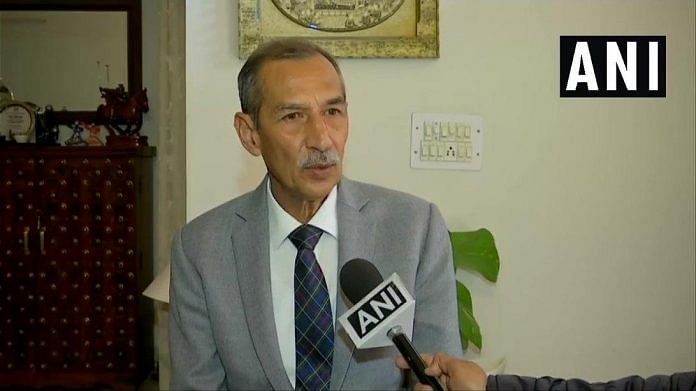
New Delhi: Given the changing nature of the India-China border, it would make sense to place the Indo-Tibetan Border Police (ITBP) under operational control of the Army, former Northern Army Commander Lt Gen Deependra Singh Hooda (retd) said Wednesday.
Hooda, speaking at a webinar organised by Delhi-based Institute of Chinese Studies, said: “We are looking at responding to a regular military (on Chinese side). There are limitations in the way ITBP can respond, not because the soldiers or officers are lacking, but because they don’t have the organisational structure and the capability to react to it.”https://bcb05fffede691cfcd88b6dc6b6ecb6e.safeframe.googlesyndication.com/safeframe/1-0-38/html/container.html
Launched in the wake of the 1962 Sino-Indian War, the ITBP is India’s first line of defence at the Line of Actual Control (LAC) and the Army remains behind it.
The ITBP guards the 3,488 km China frontier, which passes along Arunachal Pradesh, Sikkim, Uttarakhand, Himachal Pradesh and Jammu and Kashmir.
Hooda said that the Army is not needed at “settled” borders like with Bangladesh.
“But where you have unsettled borders, like the Line of Control and LAC where you are likely to see the regular Army from the other side reacting, then it would be better to give the management of the border to the Army,” the Lt Gen said.
This would not entail the Army raising its own structures but rather building capabilities of the ITBP to ensure smoother, coordinated response in the event of a crisis.
ITBP, one of five Central Armed Police Forces (CAPF), comes under the Ministry of Home Affairs. The Ministry of Defence, however, is also responsible for its units, often resulting in a “turf war”.
Hooda also said that because of the presence of two ministries, raising ITBP’s capabilities has been done in an “uncoordinated” and “wasteful” manner.
He said that, for example, while there were seven to nine ITBP battalions in Ladakh, the headquarters of the Deputy Inspector General (DIG) or the Inspector General (IG) wasn’t in Ladakh until 2019. “As far as the Army is concerned… the core commanders sit in Ladakh,” he added.
ITBP treated like a ‘poor cousin’
During the webinar, Jabin T. Jacob, associate professor at Department of International Relations and Governance Studies at Shiv Nadar University, said the ITBP is treated like a “poor cousin” by the central government. He spoke about the changing mandate of the ITBP and leadership issues that plague the institution.
“At the DIG rank, 80 per cent of the officers come from the ITBP cadre and 20 per cent are IPS officers,” he said. “One step above at the IG rank, 50 per cent are IPS officers and the rest are ITBP cadre. The DGP, the highest position, is always an IPS officer.”
He added that promotions are not handed out on time, cadre reviews do not take place as often as necessary and a wide gap of experience exists between what an ITBP cadre needs for a top post and vice-versa for an IPS officer.
In the past, pay parities between IPS and CAPF officers were also a point of conflict that led to years of litigation.
Asked about combining capabilities of the Army and ITBP at the China border, Jacob remarked that the ITBP would work better with the Army than under its own top brass.
Despite undergoing rigorous training to man the mountainous terrain along the LAC, ITBP troops are often assigned to non-specialised tasks, he said.
Criticising the MHA, Jacob said the political leadership “doesn’t care where the ITBP is posted”.
“In 2017, a bunch of ITBP units were pulled in to take care of the Amarnath Yatra, then they remained in Kashmir due to some disturbances,” he said. “Soon after, there were local elections so they were again deployed in the same area… Then when the units were relieved, they went back to their hardship posting. There was no R&R”.
R&R is a military abbreviation for “rest and recuperation” or “rest and relaxation”.
The Northern Command was raised on 17 June 1972 and completed its 50th Raising Day
Photo for representation.
Jammu, June 17
Army’s Northern Command on Thursday paid homage to the gallant soldiers on its golden jubilee Raising Day which was celebrated at Udhampur headquarters in Jammu and Kashmir amid strict Covid protocol, a defence spokesman said.
Chief of Staff (COS), Headquarter Northern Command, Lt Gen S Harimohan Iyer, on behalf of General Officer Commanding-in-Chief, Northern Command, Lt Gen Y K Joshi and all ranks laid wreath at the Dhruva War Memorial and paid homage to the gallant soldiers of Northern Command who have made the supreme sacrifice for the territorial integrity and sovereignty of the country, the spokesman said.
He said the Northern Command was raised on 17 June 1972 and completed its 50th Raising Day.
In his message to the troops, the Army Commander stated that these glorious years are testimony to historic operational achievements of Northern Command in ‘Op Meghdoot’, ‘Op Parakarm’, ‘Op Vijay’ ‘Op Rakshak’ and ‘OP Snow Leopard’.
The resolute response of the Indian Army against aggression on the Line of Control (LoC) and Line of Actual Control (LAC) has won numerous accolades.
“In addition, our firm yet people-friendly sub-conventional operations have not only thwarted attempts by our Western adversary to destabilise the nation but also won the hearts and minds of the local populace,” he said.
Lt Gen Joshi said the Northern Command has been at the forefront to assist the administration and people of UTs of J&K and Ladakh during natural calamities like snow blizzards, earthquakes, cloudburst at Leh (2010), floods in Jammu & Kashmir (2014) and frequent avalanches.
“The current Covid-19 pandemic is yet another example when the Indian Army has gone out of its way to support the people, in their times of need,” he said.
The Army Commander in special order of the day complimented all ranks for their extraordinary leadership, courage and sacrifice to keep the flag of the Command, the Indian Army and the nation flying high and exhorted all ranks to rededicate towards safeguarding the nation’s integrity and resolve to confront new challenges with exemplary professionalism and courage. PTI
State Stalwarts
ALL HUMANS ARE ONE CREATED BY GOD
HINDUS,MUSLIMS,SIKHS.ISAI SAB HAI BHAI BHAI
CHIEF PATRON ALL INDIA SANJHA MORCHA
LT GEN JASBIR SINGH DHALIWAL, DOGRA
SENIOR PATRON ALL INDIA SANJHA MORCHA
MAJOR GEN HARVIJAY SINGH, SENA MEDAL ,corps of signals
.
.
PATRON ALL INDIA SANJHA MORCHA
MAJ GEN RAMINDER GORAYA , CORPS OF
sanjhamorcha303@gmail.com
PRESIDENT SOUTH ALL INDIA SANJHA MORCHA
COL SS RAJAN BOMBAY SAPPERS,
PRESIDENT SAS NAGAR ALL INDIA SANJHA MORCHA
GROUP CAPT AMARJIRT SINGH
PRESIDENT UTTARAKHAND ALL INDIA SANJHA MORCHA
COL B M THAPA ,BENGAL SAPPERSS
PRESIDENT HARAYANA STATE CUM COORDINATOR ESM
BRIG DALJIT THUKRAL ,BENGAL SAPPERS
PRESIDENT TRICITY
COL B S BRAR (BHUPI BRAR)
PRESIDENT CHANDIGARH ZONE
COL SHANJIT SINGH BHULLAR
.
.
PRESIDENT PANCHKULA ZONE AND ZIRAKPUR
COL SWARAN SINGH
joint PRESIDENT SAS NAGAR (MOHALI)
COL BALBIR SINGH , ARTY
INDIAN DEFENCE FORCES
DEFENCE FORCES INTEGRATED LOGO
FORCES FLAGS
15 Th PRESIDENT OF INDIA SUPREME COMMANDER ARMED FORCES
Droupadi Murmu
DEFENCE MINISTER
Minister Rajnath Singh
CHIEF OF DEFENCE STAFF (2nd)
General Anil Chauhan PVSM UYSM AVSM SM VSM
INDIAN FORCES CHIEFS
CHIEF OF ARMY STAFF(29th)
General Upendra Dwivedi, PVSM, AVSM (30 Jun 2024 to Till Date)