









Current Events :















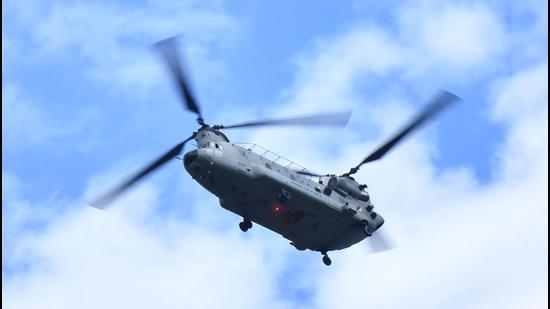
The residents of Chan[1]digarh on Thursday wit[1]nessed a thrilling air show by the Indian Air Force at the Sukhna Lake. It was a two-and-a-half-hour long full dress rehearsal of the mega air show to be staged by the IAF on Saturday to mark the 90th anniversary of the by the Indian Air Force (IAF) at Sukhna Lake on Thursday. Presi[1]dent Draupadi Murmu and Defence Minister Rajnath Singh will attend the show on Saturday. Newly-inducted Pra[1]chand combat helicopter (indigenous light combat helicopter) was among 80 fighters, transport aircraft and helicopters that par[1]ticipated in the air show. The programme started at 2.30 pm and concluded at 5 pm. All fighters including Su[1]30 MKI, Tejas and Rafale took part in the event. Similarly, transport air[1]craft like IL 76 and C-130s, and helicopters except the Avro, Dornier, Chetak and Cheetah also participated. The event began with the IAF’s Akash Ganga skydiv[1]ing team. It was followed by Chinook helicopter under[1]taking manoeuvring and underslung operations. The UT Administra[1]tion had set up 11 alight[1]ing points where people, who booked their tickets through the app, couldpark their vehicles and board a CTU bus to reach the venue. On each entry pass, zone number, alighting point and entry staircase was prominently displayed. The general public had been asked to reach the alight[1]ing point as mentioned on their entry pass by their own arrangements, with or without vehicle, where CTU buses were parked to transport them to their respective zones. The entire Sukhna Lake was divided into seven zones, with a separate en[1]try staircase. Each zone is also mapped with 11 alight[1]ing points. General public while booking the entry passes will have the option of selecting the alighting points of their choice.
BREAKING NEWS
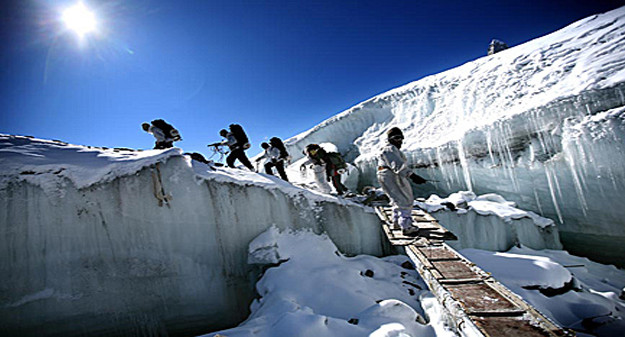
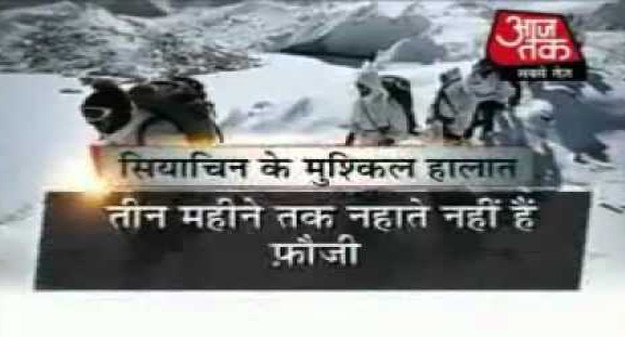
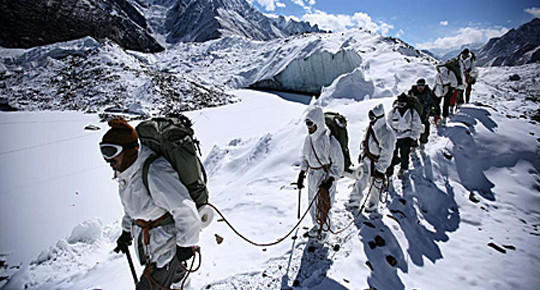
Three vehicles of Indian Army Convoy came under heavy landslide while going from Ladakh to Second Glacier in the morning, in which 6 Army personnel were martyred.


With the first fleet of the indigenously-built Light Combat Helicopter inducted into the IAF, India should go all out to turn her ‘buyer’ air force into a ‘builder’ air force. Successive Indian governments have already taken too long to carry out indigenisation, despite buying the best machines for the squadrons

TARGET: One hopes that by the time IAF celebrates its centenary, its squadrons will have 100% indigenous fighters of at least three variants. Tribune photo

A FEW years ago, the then Indian Air Force (IAF) Chief asked at a brainstorming meet: “Shouldn’t the IAF always seek the latest and best of fighters for the country’s security?” The answer, obviously, was an instant, unanimous ‘yes’, as a participant promptly quoted a loaded statement, gleaned from somewhere: “The exhortation to climb every mountain is best disregarded by those ill-clad for inclement weather at the peak.” The allegory was, and is, relevant even today as the IAF completes 90 years. The best machines indeed should be in the sky for the fliers.
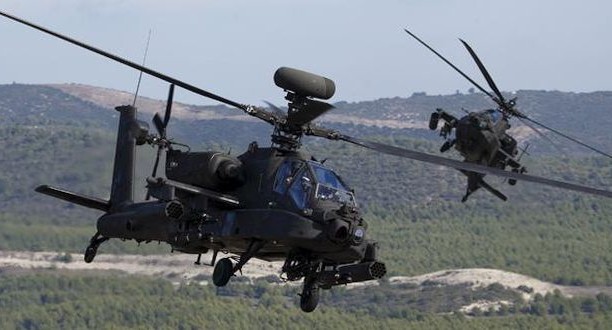
With the first fleet of the indigenously-built Light Combat Helicopter (LCH) inducted into the IAF on Monday, India should go all out to turn her ‘buyer’ air force into a ‘builder’ air force. Successive Indian governments have already taken too long to carry out indigenisation, despite buying the best machines for the squadrons.
At the turn of the 20th century and the beginning of the 21st, the IAF’s fighter inventory virtually made it a cent per cent “imported air force”. That’s understandable owing to New Delhi’s prolonged dependence on imports.
It’s not that Delhi didn’t try to come out of it. It did try; and the credit goes to the then Prime Minister Indira Gandhi’s government for having approved the development of the ‘all-weather multi-role’ light combat aircraft (LCA) in 1983. It’s important to remember here that the government preceding hers had peremptorily scrapped the earlier indigenous fighter programme ‘Marut’ more out of political than military or technological reasons.https://76e1e5616ba276554743a7c2aacc1118.safeframe.googlesyndication.com/safeframe/1-0-38/html/container.html
Consequently, when the indigenous LCA programme was reborn, it was back to the drawing board. Regrettably, this propensity for political folly and irrational rivalry to show their predecessors in a poor light has been the bane of India’s defence preparedness.
Understandably, the competing business interests of foreign manufacturers of fighter aircraft (owing to the slow pace of development of the indigenous fighter programme) took advantage of the mistakes of the Indian leadership. And, expectedly decision-making gave a jolt to the timely choice of a suitable machine and the transfer of its technology to the IAF. Every foreign vendor saw India as a traditional and big market for products ranging from commercial goods to combat aircraft. They still do.
Nevertheless, once things thawed a bit, India’s LCA programme began in earnest and didn’t needlessly try to touch the sky in one “vertical Charlie”. The idea, in 1983, had begun with the future replacement of MiG-21.https://76e1e5616ba276554743a7c2aacc1118.safeframe.googlesyndication.com/safeframe/1-0-38/html/container.html
Hence, the parameter stipulated for the LCA had several similarities with the Soviet fighter. The initial batch of the single-engine IAF MiG-21 was of 11,240-pound static thrust (the thrust developed by an airplane engine that is at rest with respect to the earth and the surrounding air), with the afterburner taking it to 14,550 pounds. In comparison, however, the LCA engine was planned to inject more power into the single engine; 11,700-pound static dry and 22,400 pounds with afterburning.
In matters like the maximum takeoff weight (9 to 9.5 tonnes), service ceiling (50,000 ft), payload (3 to 4 tonnes) etc, the LCA was planned and designed to be on a par with Soviet-origin craft. But, that was the calculation almost four decades ago. With time, the threat perception and the consequential scenario have changed. Hence, today it’s no surprise to see LAC, under new name Tejas Mark-IA (which is the new and improved variant of the operational Mark-I), entering flight testing on May 20 (as per the annual report of Hindustan Aeronautics Limited). “Modified to Mark-1A aircraft standard, it’s being used as a test platform for production and induction” of the present Tejas, which’s already operational.
According to Jane’s Defence Weekly, the aircraft (Mark-1A) are to be delivered to the IAF on schedule by 2024. Nevertheless, the credit goes to at least four past Air Chiefs for having relentlessly pushed the growth, development and deployment of indigenous air fighters for the IAF, thereby trying to remove the stigma of being an “imported air force”.
If one scrutinises the fighter programmes of the world’s top 10 air forces, it would emerge that only China, the US, Russia and France are the actual builders of their machines. Sweden, too, manufactures “Saab JAS-39 Gripen”, but none of the European countries today manufacture a fighter solo. It’s either a consortium of nations making a Eurofighter or the US-made F-16 or F-35 is the preferred choice across continents.
In this background, though slow, the steady progress of Tejas is laudable. One hopes that by the time IAF celebrates its centenary, its squadrons will operate with 100 per cent indigenous fighters of at least three variants for roles such as air defence, close air support to ground forces, counter-air operations and interdiction to deep penetration strikes through the electronic warfare system.
In the midst of India’s Tejas being operational, however, it would be in order to have some idea as to where the IAF stands today. According to the International Institute for Strategic Studies’ annual Military Balance, India had 36 fighter squadrons in 2013 of 866 combat-capable craft and 25 squadrons of helicopters. The 2021 figures of Military Balance, however, show marked depletion of fighters, with 31 squadrons of 777 combat-capable craft. In contrast, the number of helicopter squadrons rose to 28, thereby virtually putting the strength of fighters and rotorcraft on a par.
Another point comes to the fore regarding Tejas. As a single-engine multi-role fighter, it’s got to have a minimum 27,500-pound static thrust, if not more, with the afterburner. That’s because it’s the fighter engine which impacts superior or inferior combat results, giving an edge, with outmatching performance/speed, service ceiling, payload, systems, avionics, armament and endurance.
Thus, whereas the 40-year-old Lockheed Martin’s multi-role single-engine F-16 Falcon generates 29,588-pound static thrust, the latest single-engine F-35 strike fighter creates 37,000-pound static thrust. Even the sparsely used Lockheed Martin’s twin-engine air dominance fighter’s F-22 Raptor gives 37,000-pound static thrust to each power plant.
Well, the perception — “India’s slow to take off and China is fast” — is valid. But, how has it happened? The Chicago Tribune’s September 27 edition gives a glimpse — “Former Chicago college student convicted of spying for Chinese intelligence service”. Ji Chaoqun was assigned by Beijing for aerospace espionage for the Chinese fighter development programme. Understandably, Ji’s not an isolated case. It’s part of China’s strategic long-term espionage. Hence, India, till now, is on the slow, but steady, track.
As technology and air capabilities of the IAF evolve, nuanced means of air power employment would emerge, posing unique challenges in the training and honing of skills for the practitioners. Like they say, the IAF needs to train as it fights. With the changing times and challenges in reduced inventories due to costing issues, the IAF has to strive to be ‘lean and mean’.

Great strides: The IAF is one of the world’s leading air forces today, 90 years after its inception. PTI

The Indian Air Force (IAF) has made great strides in its evolution to become one of the world’s leading air forces today, 90 years after its inception. From the ungainly khaki to its present-day azure blue uniform, from the hawai sepoys before Independence to women fighter pilots today, we have indeed come a long way in the entire spectrum of air power prosecution.
From the humble beginnings at Drigh Road, Karachi, on October 8, 1932, and the commissioning of the first IAF batch of five pilots on April 1, 1933, the IAF has fought four major wars in the subcontinent and rendered sterling service during peace-time humanitarian assistance and disaster relief to Indians and foreign citizens ad interim, evolving into a mature entity with its own articulated Air Power Doctrine and nuanced instruments of air power orchestration ranging from a Space Command to cyber capabilities and an original ‘Top Gun’ air tactics factory by way of the Tactics and Combat Development Establishment (TACDE).
The vintage of aerial fighter platforms has already reached the four-and-a-half generation capability and fifth-sixth generation capabilities are in the offing. The service has integrated the nation’s commendable space and information technology prowess into its own war-fighting domain, craftily achieving the capabilities to undertake all-weather long-range operations such as the Balakot air strike, the very raison d’etre of an air force.
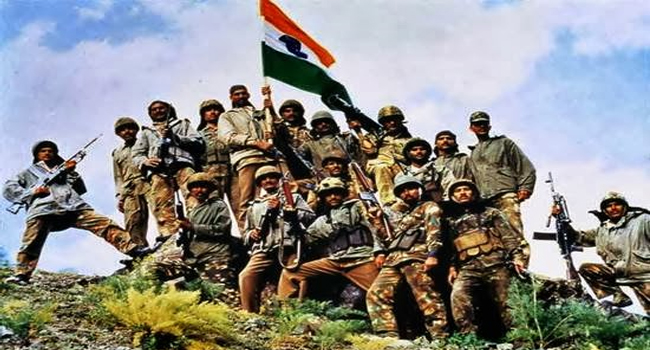
It needs recognition that the IAF over these nine decades has had its share of trials and tribulations. From being blooded during World War II, it earned its aviation spurs by living up to myriad challenges, tasks and demands imposed on it during the 1948, 1965, 1971 and Kargil operations.
While it is impossible to do justice to all the supporting staff and air warriors who have contributed to the IAF story so far, suffice to say that it has indeed become an instrument of pride for the nation, covering itself with glory within the country and the world over by way of the HADR, UN and other international commitments.
Meanwhile, lessons learnt from operations and wars worldwide has enabled the IAF to evolve into an entity of considerable air capability and reach, making its friendly partner air, land and sea armed forces yearn to undertake mutually beneficial air exercises all over the world.
It is heartening to look back at what the IAF has become since the times of the Skeen Committee of June 1925 to lay down the role for Indian professionals who would don the King’s Commission to train at the RAF College, Cranwell, as the original air warriors. From the Royal Flying Corps of those days to today has been a historic path-breaking journey, wherein tales of valour and bravery abound, virtually becoming a shining beacon of career motivation for the entire young population of our many-splendoured nation.
While celebrating Air Force Day, it is but natural for the service to take stock of its operational track record. As technology and air capabilities of the IAF evolve, nuanced means of air power employment would emerge, posing unique challenges in the training and honing of skills for the practitioners. Like they say, the IAF needs to train as it fights.
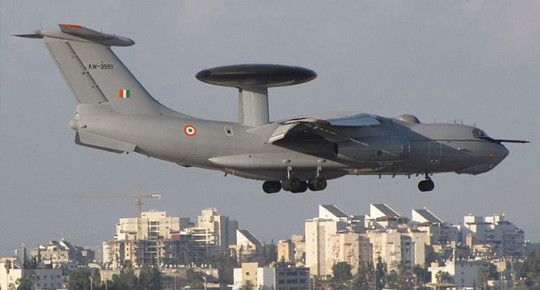
It was heartening to hear some veterans marvel at the progress made even in an archetypal ‘Crew Room’ ambience since the days of yore. From antiquated techniques of debriefing a training aerial mission several years ago, the IAF has now adopted advanced debriefing techniques employing airborne digital sensor platforms, Airborne Warning and Control Systems (AWACS), aerostat radars, realistic armament and flight simulation, all dovetailed to give more ‘bang for the buck’ in the aerial training domain.
Not only have the steeds operated by the IAF advanced in capability and technology over the years, the IAF is now learning to adapt to the new mantra of atmanirbharta. The induction of platforms such as the Tejas Mk1, indigenously manufactured trainer and transport aircraft all pose distinct professional challenges to the engineer and the operator.
Optimising indigenous capability to fly and operate state-of-the-art gear would be specially challenging for the IAF as compared to its sister services, given the vagaries and risk elements ingrained in military aviation. Whilst adapting to indigenisation, the IAF would also need to modify its manpower and training mores in view of the renewed format of personnel induction, the Agnipath scheme.
With the changing times and challenges in reduced inventories due to costing issues, the IAF has to really strive to be ‘lean and mean’ in the true sense. Alongside would be the need for its leadership to adapt to these challenges.
The IAF Chief has talked of how they have had to upgrade the Air Power Doctrine to adapt to the new peculiarities such as cyber war and prolonged conflict situations. More nuanced and capable IAF leadership would be the order of the day for our men in blue.
Thus, for the Indian Air Force in this changing environment of cutting-edge technology and manpower and equipment challenges, some things would remain the same — to learn to fight as it trains.
Momentous decisions on integration can be taken only by the political executive. Expecting the CDS to accomplish the integration needed for a joint structure is asking too much of him. Being first among equals, he may endeavour to build a consensus for change with the three service chiefs, but he is not empowered to force this change. Such decisions have been taken in other countries by the political executive.
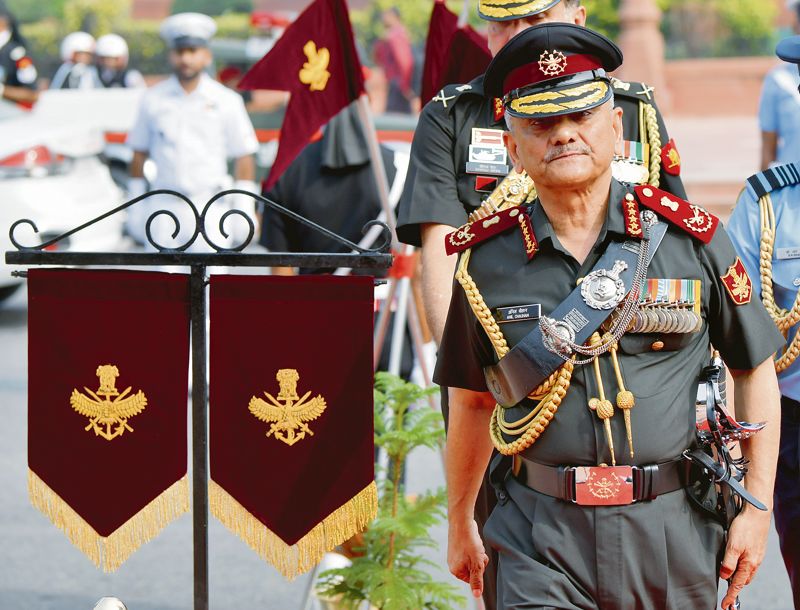
PRIORITY: As the head of the Department of Military Affairs, the CDS has to facilitate the restructuring of military commands for an optimal utilisation of resources. ANI

THE recent appointment of Lt Gen Anil Chauhan (retd) as the Chief of Defence Staff (CDS) after an inexplicable delay of 10 months is indeed welcome news and puts at rest any apprehension about the rollback of this apex position in the hierarchy of the armed forces.
The amendments to the statutory provisions laid down for the three services for the selection of the CDS a few months earlier gave this appointment a somewhat political hue. However, any individual who meets the current selection criteria for the top job in the armed forces will undoubtedly be a professional of exceptional and proven calibre and competence and such is well the case with the present appointment.
What is the task ahead for the CDS? Primarily to bring about jointness in operations, logistics and maintenance of the three services. As the head of the Department of Military Affairs, the CDS also has to facilitate the restructuring of military commands for an optimal utilisation of resources. This would be achieved by bringing about jointness in operations, including through the establishment of joint theatre commands. The new incumbent has spelt out the need to look after the interests of all three services and build a synergised approach in going ahead in fulfilling the mandate.
There appears to be a strong desire for bringing about changes in the services, especially the Army. The armed forces have been constantly evolving their structuring, organisation, equipment and training according to the security requirements. Their doctrines are under constant review as per the changes taking place in threat perceptions and advances in technology. The desire for change should be focused on tangible capability-enhancing factors, like the induction of high-end technology into weapons and equipment of the three forces, which boost their lethality, mobility, battlefield transparency and survivability. What need to be shed are budgetary constraints and labyrinthine processes that have been a dampener on the acquisition of military weapons and equipment. These are the key areas and issues that need to be addressed by the CDS with a missionary zeal.
However, the desired level of integration, even in basic issues like the commonality of logistics and acquisitions, still seems a far cry despite having had a very proactive CDS for almost two years. In this vein, achieving structural and operational jointness appears to be almost a pipe dream. The prime reason, apparently, is the lack of desire to move in this direction by one or the other service headquarters by protecting their turf and safeguarding parochial interests.
In a joint theatre command scenario, the primacy of individual service will always be to the fore in specific structures. The integrated air defence of the nation must be with the Air Force and the maritime expanse of the Indian Ocean and beyond the domain of the Navy. However, the integrated theatre commands, looking after our land borders in the East, North and West, have to be with the Army as the lead service. All this calls for asking some uncomfortable questions and taking even more difficult decisions.
Air transport, even the biggest, is only an instrument to support the land Army. Siachen and other high-altitude deployments are sustained largely by air effort. Similarly, all helicopter operations, whether for ferrying troops or supplies, casualty evacuation or even in the attack mode, would be in support of the operations conducted by an Army formation. Even a bomber run is meant to destroy enemy assets with shock and awe tactics preceding a land offensive. The fact that the IAF has and will always be in support of the Army, which is required to combat aggressive and hostile neighbours, is a reality that has to be accepted. Not doing this amounts to frittering efforts, energy and resources, something that India can ill afford.
Momentous decisions on integration can be taken only by the political executive. Expecting the CDS to accomplish the integration needed for a joint structure is asking too much of him. Being first among equals, he may endeavour to build a consensus for change with the three service chiefs, but he is not empowered to force this change. Such decisions have been taken in other countries by the political executive.
Two examples pertaining to the restructuring of the armed forces of nations of global consequence amply support this approach.
In the US, it was the Senator Goldwater-Congressman Nichols Department of Defence Reorganisation Act in 1986, signed by the then President Ronald Reagan, that made the most sweeping changes to the United States Department of Defence by reworking the command and organisational structure of the armed forces. The Goldwater-Nichols Act was an attempt to fix problems caused by inter-service rivalry, which had emerged during the Vietnam War.
At the other end of the spectrum, in a totalitarian regime like China, the integrated theatre commands of the People’s Liberation Army (PLA) emerged at an accelerated speed in the last decade due to the simple reason that this change was driven by the Central Military Commission, whose Chairman is the triple-hatted President of China and, more importantly, the General Secretary of the Communist Party.
Integrated command and formation structures are long overdue in the Indian context. Gleaning from the Prime Minister’s yearly address at the Combined Commanders’ Conference, the political executive is positively inclined to and desirous of this.
The creation of the CDS post was a decision taken by the political leadership, as was the decision to widen the pool from which he could be appointed. Both have gone through smoothly once decided upon by the Cabinet.
A similar top-driven approach is needed for the armed forces to evolve into a fully synergised joint organisation.
At some stage, the call has to be taken against turf wars and specious arguments for status quo. While the CDS can, and surely will, be a facilitator for this change, it has to be strongly driven by the political leadership so that we achieve the optimum utilisation of national efforts.
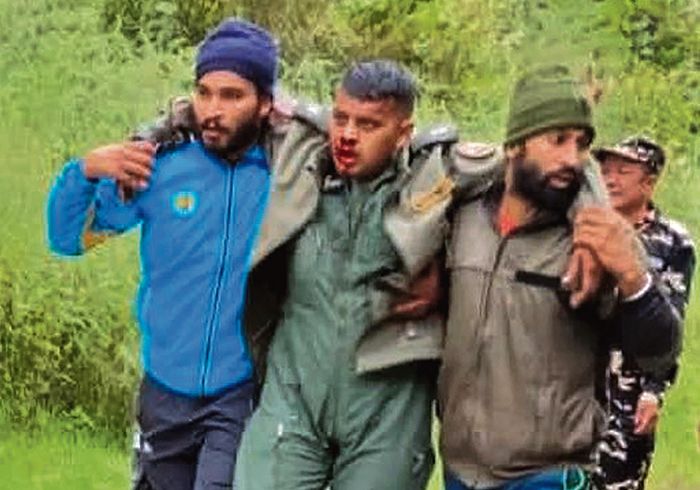
The pilot rescued after the helicopter crash in Tawang on Wednesday. PTI
New Delhi, October 5
An Army pilot, Lt Col Saurabh Yadav, was killed and another sustained serious injuries after a Cheetah helicopter crashed in a forward area near Tawang in Arunachal Pradesh on Wednesday.
Another injured
The incident took place around 10 am during a routine sortie in the forward area, a defence spokesperson from Tezpur, Assam, said. After the crash, both pilots were airlifted to the nearest military hospital. Lt Col Yadav succumbed to his injuries during treatment. “The cause of the crash is not known at this stage. Further details are being ascertained,” the spokesperson added.
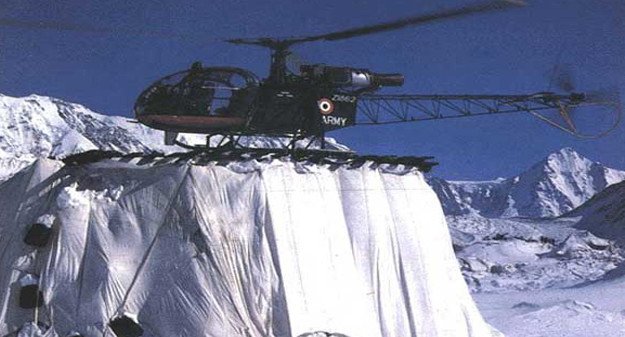
The single-engine Cheetah helicopters are based on Alouette Aérospatiale 315B Lama of France designed in the 1950s. The Army has already planned to phase out Cheetah helicopters and replace these with twin-engine advanced light helicopters.
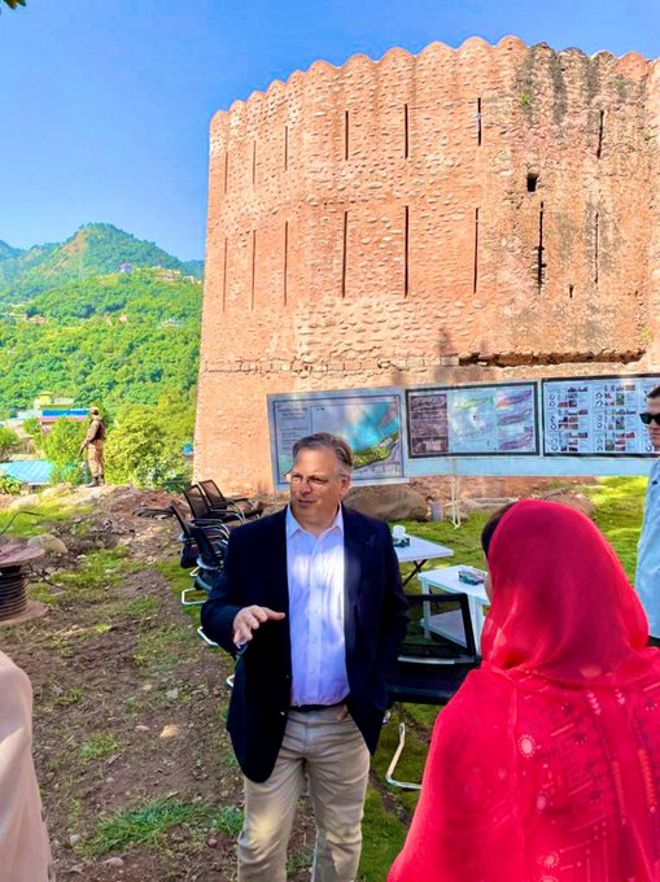
US ambassador to Pakistan Donald Blome. Photo: @usembislamabad-Twitter
New Delhi, October 5
The Foreign Office here has not reacted so far to US ambassador to Pakistan Donald Blome’s visit to Pakistan-occupied Kashmir (PoK) this week with the US embassy in Islamabad highlighting it with a series of tweets over the three days that he was in the disputed region.
In April, the MEA had not taken kindly the PoK visit of US Congresswoman Ilhan Omar, describing her as a practitioner of “narrow-minded politics”. This was the first official US delegation to PoK in three years.
However, the difference is that Omar directly touched on the human rights issue in J&K as well as Article 370. But the US envoy’s visit was aimed at restoring Pakistani heritage and cultural sites as well as highlighting the American aid for the victims of the 2005 earthquake and the recent floods in Pakistan.
This is the second visit by a US official to PoK. Also, Blome throughout mentioned PoK as AJK (Azad Jammu and Kashmir), which is anathema to New Delhi as it holds that the region was forcibly occupied by Pakistan in 1947. Analysts say the US ambassador may also be showing up China, which had taunted Washington last week by stating that “instead of passing unwarranted criticism against China-Pakistan cooperation, the US side might as well do something real and beneficial for the people of Pakistan”.safeframe.googlesyndication.com/safeframe/1-0-38/html/container.html
The PoK visit adds to US-UK’s attempt to mend fences with Pakistan, which had been kept at an arm’s distance by the Trump administration for “not being sincere in combating terrorism.
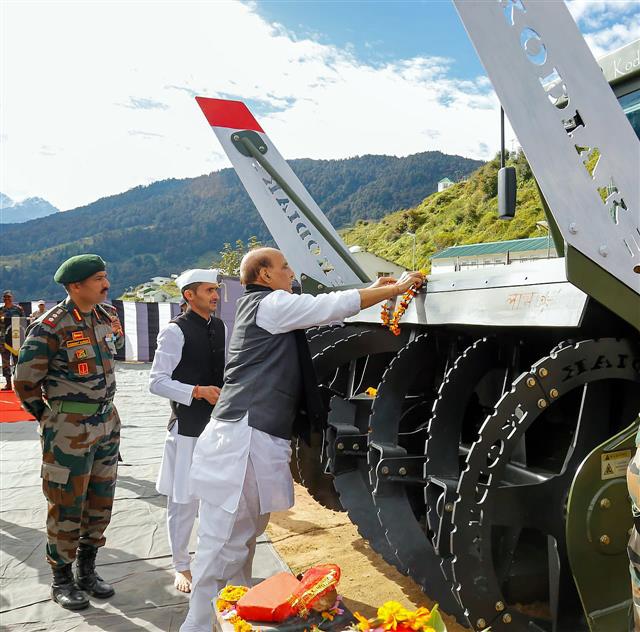
Defence Minister Rajnath Singh performs ‘shastra puja’ on the occasion of Vijayadashmi at Auli, Uttarakhand, on Wednesday. ANI
New Delhi, October 5
Defence Minister Rajnath Singh on Wednesday celebrated Dasehra with jawans of the armed forces and the ITBP in Auli, Uttarakhand.
The minister performed “shastra puja” (worship of weapons) during his visit.
In an impromptu address to the soldiers, Rajnath Singh said: “Interacting with men and women in uniform is always a source of motivation. The secure environment has enabled India to pursue economic growth and achieve new heights of development under the leadership of Prime Minister Narendra Modi.”
He hailed the “unparalleled bravery and courage” of the military personnel during the clashes in eastern Ladakh’s Galwan Valley in June 2020.https://72cd6e994e8496b1489a050ee9c340ab.safeframe.googlesyndication.com/safeframe/1-0-38/html/container.html
He said India believed in the principle that “the whole world is one family”, but gives a befitting response if any outsider casts an “evil eye” on it.
Rajnath also spoke of the significance of “shastra puja” and highlighted the traditions and uniqueness of the Indian culture, which emphasises the unity of all things.
Indian Army Chief General Manoj Pande and Central Army Commander Lt Gen Yogendra Dimri were present on the occasion.
Later, the Defence Minister visited the Badrinath temple.
“I feel blessed to visit Badrinath Dham on the auspicious occasion of Vijayadashmi festival,” he tweeted.
India, US, UK and France strongly condemn North Korea’s ballistic missile launch

United Nations, October 6
India, joining the US, UK and France, has strongly condemned North Korea’s ballistic missile launch which overflew Japan, with New Delhi underlining that these launches affect the peace and security of the region and beyond.
The missile fired on Tuesday was the first from North Korea to fly over Japan in five years. The launch mark the 24th time this year that North Korea has conducted missile tests.
“We have noted with concern the reports of ballistic missile launches” by the DPRK (Democratic People’s Republic of Korea), India’s Permanent Representative to the UN Ambassador Ruchira Kamboj said at a UN Security Council meeting on DPRK on Wednesday.
“These follow the launch of the intercontinental ballistic missile by the DPRK in March this year, which was discussed in this Council, as well as other successive launches,” she said.
Later, US Ambassador to the UN Linda Thomas-Greenfield delivered a joint statement on behalf of Albania, Brazil, France, India, Ireland, Japan, Norway, South Korea, the United Arab Emirates, the United Kingdom, and the United States at the UN Security Council stakeout on North Korea’s ballistic missile launches.
“The United States, Albania, Brazil, France, India, Ireland, Japan, Norway, the Republic of Korea, the United Arab Emirates, and the United Kingdom, strongly condemn the DPRK’s long-range ballistic missile launch which overflew Japan” on October 4 and its seven other ballistic missile launches conducted since September 25, the joint statement said adding that North Korea has now launched over 35 ballistic missiles this year alone.
These launches violate multiple Security Council resolutions and pose a threat to not only the region, but to the entire international community, the joint statement said.
North Korea on Tuesday conducted its longest-ever weapons test, a nuclear-capable ballistic missile that flew over Japan and could reach the US Pacific territory of Guam.
Kamboj, in her remarks to the Council, stressed that these launches constitute a violation of the resolutions of the Security Council relating to the DPRK and “they affect the peace and security of the region and beyond.”
India called for full implementation of the relevant UN Security Council resolutions relating to DPRK and “reiterated the importance of addressing the proliferation of nuclear and missile technologies related to DPRK in our region. These linkages have an adverse impact on peace and security in the region, including on India.”
Kamboj said the Global South has already been disproportionately affected by the prevailing geopolitical situation and related challenges. “It is therefore important to continue to make all efforts to maintain peace and stability.
Ensuring peace and security in the Korean Peninsula is in our collective interest. Going forward, we will continue to support dialogue and diplomacy as the means to resolve the issues in the Korean Peninsula,” she said.
Kamboj reiterated New Delhi’s continued support for denuclearisation towards peace and security in the Korean peninsula.
In the joint statement, the 11 countries said that North Korea had made its intentions clear in April and September when its leader signaled an effort to accelerate the DPRK’s nuclear and ballistic missile programs and even alluded to pre-emptive use of nuclear forces.
“We are witnessing the DPRK’s pursuit of this objective,” it said.
“We call on all UN member states, especially Council members, to join us in condemning this reckless behavior and in urging the DPRK to abandon in a complete, verifiable, and irreversible manner its unlawful weapons programmes and engage in diplomacy toward denuclearisation,” the joint statement said, recalling the Council’s decision referring to “further significant measures.”https://af4dac1533f6da79ab0a492f32218e56.safeframe.googlesyndication.com/safeframe/1-0-38/html/container.html
The US Ambassador said Washington, and those who have joined her at the podium for the joint statement remain committed to diplomacy and continue to call on the DPRK to return to dialogue.
“But we will not stay silent as the DPRK works to undermine the global nonproliferation regime and threaten the international community,” she said.
The joint statement called on the member states to fully implement the relevant Security Council resolutions.
Noting that following North Korea’s provocations and escalatory behaviour in 2017, the Council came together and unanimously took action to hold the DPRK accountable for its unlawful actions, the joint statement said that “now again the DPRK is testing the Council’s resolve and we must act accordingly. The Council will continue to engage over the course of the next week to find a unified voice and way forward.”
UN Secretary-General Antonio Guterres had “strongly” condemned the launch of the ballistic missile, calling it a “reckless act and a violation of Security Council resolutions.” Guterres said it is also of “serious concern” that North Korea has again disregarded any consideration for international flight or maritime safety.
The Secretary-General urged North Korea to resume dialogue with the key parties concerned with a view to achieving sustainable peace and the complete and verifiable denuclearization of the Korean Peninsula.






























