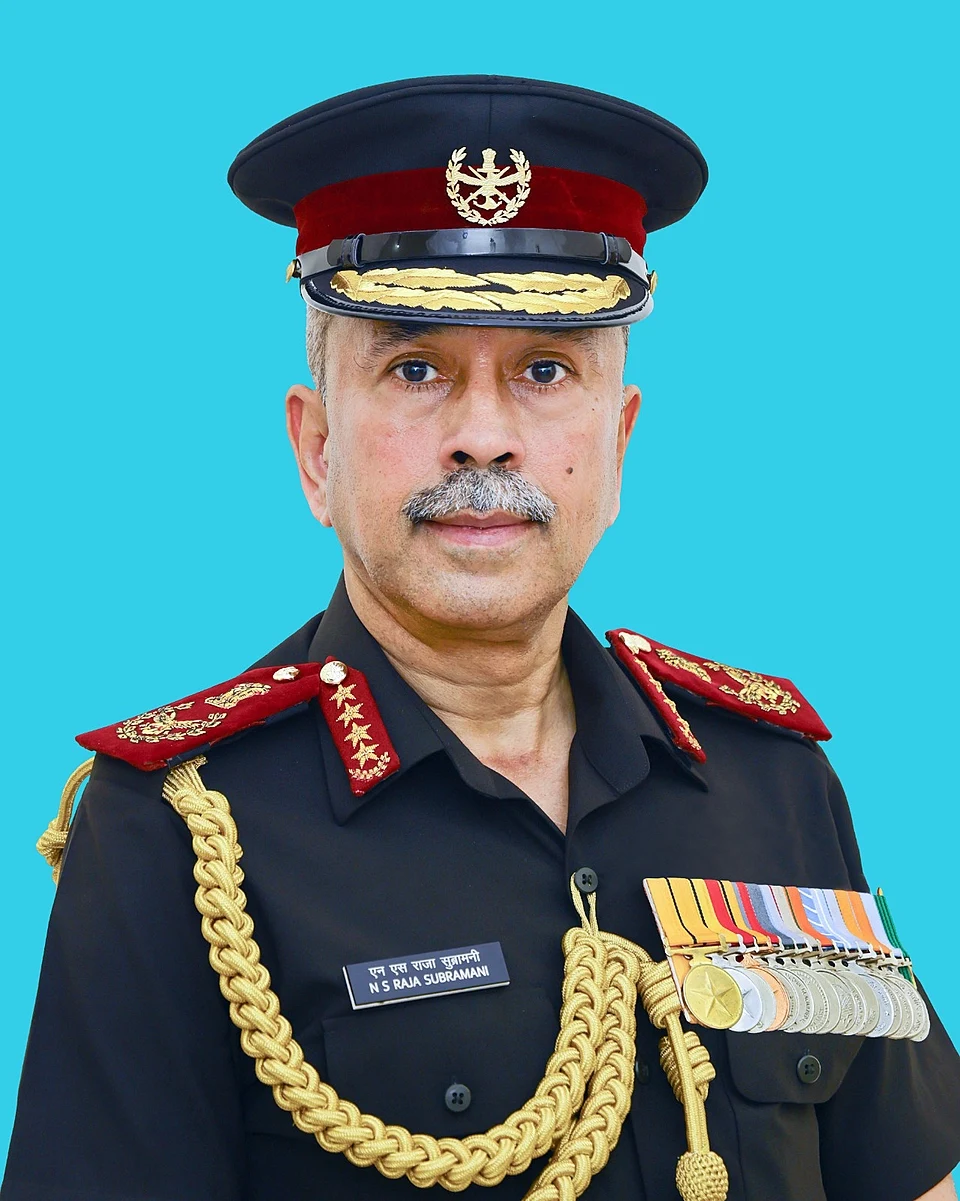
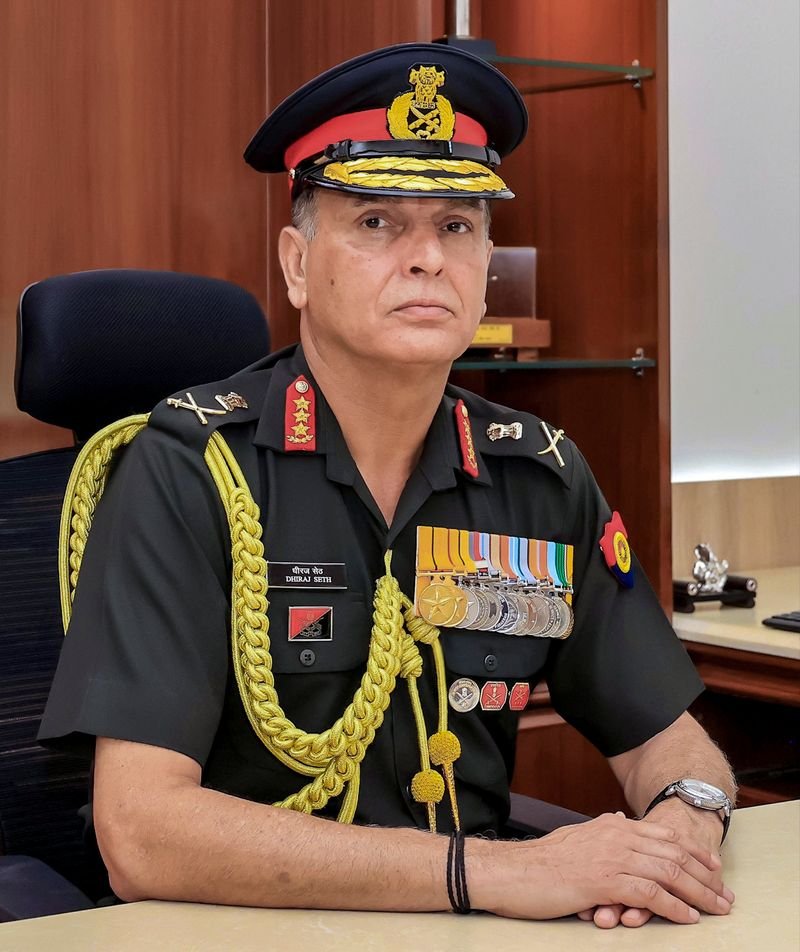
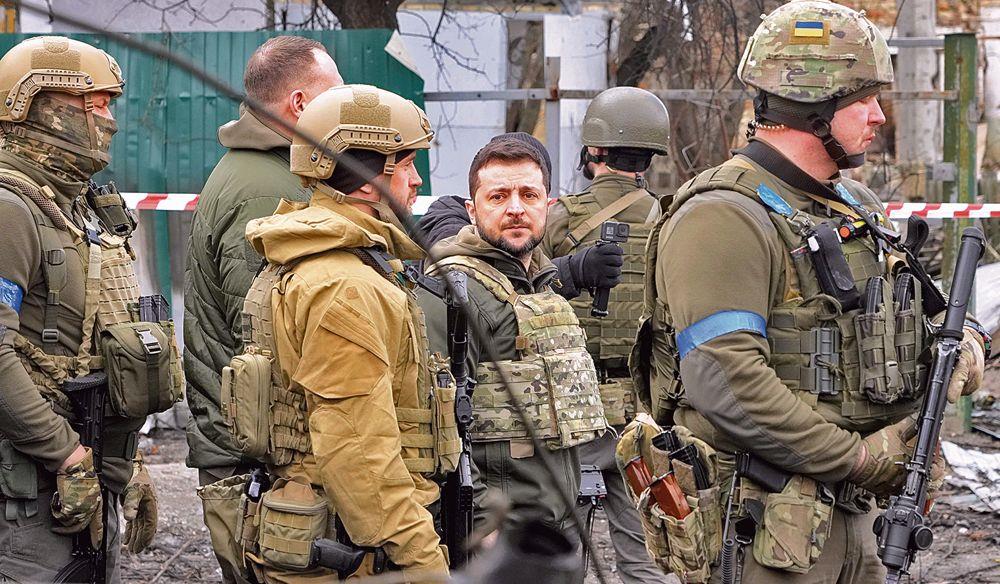
Offensive formations of the Indian Army are preparing to take part in a military exercise on the Western front this month, according to a defence release here on Thursday. It is expected to be one of the biggest exercises in recent times and will be witnessed by the General Officer Commanding-in-Chief, Western Command, and other key officials from Army headquarters, it said. “The exercise is planned to validate newly converted mechanised formations, also known as Reorganised Plains Infantry Division, test efficacy of latest induction and upgrades in weapons and equipment, and also test the enhanced force ratios accrued post rebalancing of forces on entire Western Front,” according to the release. Validation of tactical concepts of these formations, especially on canal-based operations, and fighting manoeuvre through built-up areas apart from many other latest operational concepts designed to launch a swift punitive blow to the adversary as part of the proactive strategy will be the key features of the exercise, it said. “The exercise will put into practice the synergy between all arms and services including attack helicopters in a semi desert terrain, it said.
PAKISTAN’S WORST NIGHTMARE: INDIAN KASHMIR THRIVES: US MEDIA
Indian Kashmir’s great leap forward economically, socially, and politically can only embarrass Pakistan, for it both shows the failure of Islamabad’s stewardship and highlights its cynicism by Michael Rubin SRINAGAR—In 2019, just weeks after Indian president Ram Nath Kovind abrogated Article 370 of India’s constitution, ending Kashmir’s de facto autonomy, I visited Pakistan. Anger was palpable. Electronic billboards, depicting barbed wire and dripping blood, counted the time since the Indian government imposed a curfew on the territory. At a Pakistan National Defence University conference, both officers and civil society leaders spoke about the horrible situation of Indian Kashmir. “It’s like the Gaza Strip,” one activist told me. Three years later, I took the opportunity to see Kashmir for myself. My conclusion: Pakistan is in trouble. While Kashmiris under Pakistani control remain hobbled by a moribund economy and suppressed by Jamaat-e-Islami extremism, Kashmiris in India have security, taste freedom, and thrive. The signs are everywhere. Whereas Pakistanis depict a region in India where civilians cower under the yoke of the Indian army and separatists represent popular will, the reality is different. Certainly, Indian police from outside the territory are present, but their checkpoints are unmanned and traffic flows. The emergency is over and life is normal. At the height of the day and long after dark, both in the capital Srinagar and in the hinterlands, there were no active checkpoints. This extended to southern Kashmir, where in years past, Pakistan-trained terrorists exploited the night to bring commerce and life to a halt. Evidence of Kashmir’s growing confidence is everywhere. I drove past the crowded new Inox multiplex, Srinagar’s first operational cinema in thirty years, where young men and women as well as families can see the latest films. It may sound simple, but many Kashmiris spoke about the cinema as a sign of normality after militants began to harass and even kill Bollywood fans in the 1990s. I met a seventeen-year-old girl who badgered her father into allowing her to do karate. She is now a national gold medallist and competes in international tournaments. Her schoolmates and friends now demand similar freedom from their families. With militancy pushed back, Kashmir’s traditional moderation and even liberalism again prevail. Her friend, a blackbelt and power lifter, had a similar story. Other women have started businesses or entered politics. In the nearby town of Ganderbal, the Sikh president of the local university showed off new athletic fields and preparations for a multi-university football, volleyball, table tennis, and kho-kho tournament. When I asked what kho-kho was, he took me to a nearby court where two teams of young women were scrimmaging in the ancient Indian team tag sport. With the Taliban takeover of Afghanistan, and state-sponsored extremism in Pakistan, Indian Kashmir is an oasis of freedom for women to pursue activities forbidden elsewhere. Perhaps the biggest cause for local optimism was the normalization of education and commerce. For almost three decades, separatists sought to show their power by forcing schools and businesses to shutter. The sense of impunity was so absolute that they would publish monthly calendars in advance to show where and when they would flex their muscle. The losers were the Kashmiri people, as India’s regimented exam system does not make exceptions for those forced out of school for months at a time. Today, not only do schools operate smoothly and without interruption, but new opportunities also exist as the Indian Institutes of Technology and Indian Institutes of Management open local branches to accommodate the hundreds of well-qualified Kashmiris. Business was apparent as was the growing wealth of Jammu and Kashmir. Tourists, mostly from India but also many from Europe, Israel, and the United States have returned to Dal Lake, and its famous houseboat hotels. The line to enter the nearby Mughal gardens stretched outside and down the block, a concentration of men, women, and children I would never see in any of the active conflict zones I visit. Nor was the tourism limited to Srinagar. On a mountain slope outside of Ganderbal, a young couple had purchased a plot of barren, rocky land and transformed it into a thriving eco-lodge and conference centre. Inspired by their intervention, their neighbour founded a fish farm. I stopped for coffee and a small snack at a sleek new restaurant along the main road in Kulgam, southern Kashmir, to give my driver a break; we had gotten caught in traffic as a train passed on the region’s new railroad. Heading to Jammu, it would pass over the highest railroad bridge in the world, more than 1,000 feet above the Chenab River below. Not everything was tourism: Much as Morocco won over the Western Sahara by pumping money into a long-deprived region, today India spends more per capita on Jammu and Kashmir than it does in any other state. Saffron stores flourished, attracting business from the heavy traffic along the Srinagar to Jammu highway. Not far away, near Pulwama, infamous as the site of a February 2019 Pakistan-sponsored suicide bombing that killed more than forty Indians, new cricket bat factories dot the highway, planks of willow wood piled high. Each supports nine or ten families or perhaps 70 to 100 people. These, and handicraft and artisan factories and shops on the road to Gulmarg, the government now supports with low-interest loans and marketing support. The result is tremendous: Kashmiris now build expansive villas in the countryside. This is an important barometer of progress. When locals fear the continuation of conflict, they invest in gold because they can take it with them if forced to flee, but when families feel confident in their future, they invest in real estate and build a house to last generations. Religious freedom is also apparent. In Srinagar, I met Hindus returning after having been forced to flee by Islamist militants decades ago. While I expected greater local concerns that the 2019 change in Kashmir’s status would mean an influx of outsiders into the state, locals told me this never materialized: Indians like to visit, but do not want to relocate outside major cities or their own ancestral regions. Traditional Sufism has made a rebound as the return of security no longer means Pakistan-inspired militants can impose their will through threat of violence. This hit home when I met a Lashkar-e-Taiba veteran. He related how his Pakistani controllers brainwashed him into believing Hindus prevented Muslims from praying in Kashmir and closed mosques. After he infiltrated into the territory, he realized they had lied to him as mosques thrive and people pray openly. I visited a pro-bono lawyer who handled many such security cases; he said such revelations were common. Prior to 2019, teenagers often threw stones at vehicles belonging to security forces or violating the militants’ general strike orders. When police caught them, they often said they were following the Quran as Jamaat-e-Islami inciters taught them. When shown no such verses existed, they were chagrined. Religious freedom manifests itself in other ways. In Pakistan, Shi’ites represent 20 percent of the population but are often subject to vicious terrorism. In Kashmir, I got caught in traffic as police closed one-half of a major road so that Shi’ites could march in a religious procession. Thousands turned out. In Pakistan, both militants and a state seeking to appease them victimize heterodox sects such as Ahmadis. In Indian Kashmir, I passed Sikh temples that could no longer exist across the border. This does not mean everyone in Kashmir is happy with the changes brought by the abrogation of Article 370. At one university, professors complained bitterly that they no longer could directly hire faculty, but rather had to deal with central authorities in New Delhi. Other Kashmiris, however, dismissed such complaints as rooted mostly in the disruption of the old patronage system. Even those happy with current developments resented the initial blockage of the internet and cell phone system, as the central government undertook a security operation to arrest militants and deployed to prevent instability. Today, however, all those deprivations are gone. It was brief pain to prevent more sustained hurt. Essentially, New Delhi ripped off the band-aid. There are other reasons for complaint. Demotion to “union territory” status means direct rule by New Delhi. This may strike outsiders as anti-democratic, but it has parallels in the United States: The Commonwealth of Pennsylvania regularly extends receivership over bankrupt towns and cities when corruption and mismanagement threaten solvency and functioning. It was a temporary arrangement, much like union territory status will be. That more than 30,000 showed up earlier this month to hear Home Minister Amit Shah speak in Baramulla, a district once off-limits to senior Indian officials because of terrorism, is an indication that ordinary Kashmiris do not share the resentment voiced by a corrupt, aristocratic old elite. For Islamabad, this is the problem. Islamabad and the separatists and terrorist groups it sponsors may say India denies Kashmir freedom, but reality increasingly suggests otherwise. Pakistan may claim to be the flagbearer for Kashmiris, but Indian Kashmir’s great leap forward economically, socially, and politically can only embarrass Pakistan, for it both shows the failure of Islamabad’s stewardship and highlights its cynicism. The developments in Kashmir appear irreversible; no opposition successor to Prime Minister Narendra Modi will be able to set back the clock. The question for Pakistani authorities is how they will address the loss of any legitimacy to their rule in the portion of Kashmir they control. Will they double down on terrorism or will they recognize that peace, freedom, and tolerance are the way forward?
BSF shoots down Pakistani drone along International Border in Punjab
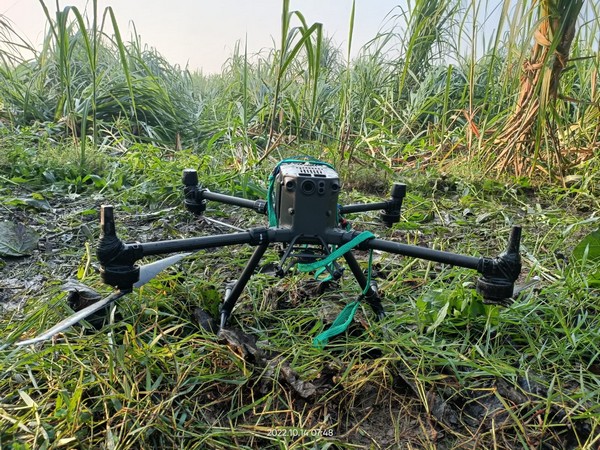
Border Security Force (BSF) troops shot down a drone that entered India in Punjab’s Gurdaspur sector from the Pakistan side on the International Border in the early hours of Friday.
A senior BSF officer said that the drone was spotted at 4.35 am by BSF troops on patrolling duty. They immediately opened fire and it was shot down.
According to the BSF official, a massive search operation has been launched in the area to determine whether the drone has dropped any consignment in the area.
A search operation is underway under the supervision of BSF DIG. It is suspected that the drone was carrying a consignment from Pakistan.
“Brave jawans of BSF spotted a drone coming from Pakistan side. As soon as it entered India, jawans fired 17 rounds of bullets at it. One of the blades of the drone was damaged. The entire area is being searched. The drone will be analysed,” said BSF DIG, Gurdaspur, Prabhakar Joshi.
Pertinent to mention, in the past nine months, security forces have observed the illegal entry of 191 drones into Indian territory from neighbouring Pakistan, raising major concerns in terms of internal security in the country.
The central government recently shared the input from the security forces deployed at the India-Pakistan border to maintain such illegal attempts from the Pakistan side.https://a222434f420d567ecf16ff5e593f8cdd.safeframe.googlesyndication.com/safeframe/1-0-38/html/container.html
Of the 191 drones observed, 171 entered into Indian territory through the India-Pakistan border along the Punjab sector while 20 were seen in the Jammu sector, a document accessed by the ANI mentions.
As per the document, the “UAV (Unmanned Aerial Vehicle) observation in Indo-Pak border was seen in Punjab and Jammu frontier with effect from January 1, 2022, to September 30, 2022”.
The documents further reveal that most of these drones or UAVs managed to flee while a total of seven have been shot down by the Border Security Force (BSF) personnel, who are deployed along the India-Pakistan border to keep a tab on such illegal activities being orchestrated by Pakistan’s Inter-Services Intelligence.
Among seven drones shot down this year between January 1 to September 15 were observed in Punjab’s Amritsar, Ferozpur and Abohar regions.
Officials in the BSF told ANI that drones are being used by Pakistan’s side to transport weapons, explosives and narcotics across the international border in Jammu and Punjab from Pakistan.
The increased drone activity across the border was brought to the notice of Home Minister Amit Shah in the security review meeting in Srinagar recently with top security and intelligence chiefs in attendance. While BSF, which mans the international border with Pakistan in the Jammu sector, believes that it has been able to repel drones carrying arms, ammunition and explosives from Pakistan, the state police and the intelligence agencies differ with this assessment.
The security forces have seized various AK series assault rifles, pistols, MP4 carbines, carbine magazines, high explosive grenades as well as narcotics which were transported into Indian territory from Pakistan from the drones shot down so far.
As per security agencies, BSF intelligence inputs and Jammu and Kashmir Police officials, the drones are also used to drop packets of Afghan heroin for financing terror operations in the Valley and Punjab.
It is learnt that the group behind the transportation of weapons, explosives and drugs is Pakistan-based Lashkar-e-Taiba and other terror outfits which have camps across the International Boundary and are backed by ISI.
The Home Ministry is learnt to have directed the concerned agencies to find out a solution to stop drone activities and meanwhile security agencies and law enforcement forces are asked to keep a special watch on such movements.
Chancellor, Jammu Central University & former High Commissioner to Pakistan
Russia’s ties with its former republics have generally been good, even after the disintegration of the Soviet Union in 1996. It was only natural for Russia’s smaller neighbours to seek to widen their regional and international options, which is happening now. Moreover, there are millions of Russians living as local citizens in virtually all former Soviet Republics. Russia also has a long coastline across the freezing waters of the Arctic Ocean. It has, therefore, historically used ports, in what is now Ukraine, for the bulk of its trade and military operations across the sea. It also has serious concerns about ensuring uninterrupted access to the seas, through Crimea, in Ukraine. Under the leadership of President Volodymyr Zelenskyy, Ukraine has, however, in recent years, sought to widen its options through a growing strategic partnership with the US.
India has positioned itself as a constructive participant in the emerging situation in Ukraine.
Russia took control of the port facilities in Crimea in southern Ukraine in 2014. Russian population constituting 17% of Ukraine’s population lives largely near and across the shores of the Black Sea. Matters came to a head when the young and charismatic Zelenskyy hastily sought close military relations with President Biden’s administration in 2021. This transpired even as ethnic tensions between Russians and Ukrainians in southern Ukraine were escalating. Rather than seeking to promote stability in Ukraine, the Biden administration chose to play to the ego of the Ukrainian President.
In 2021 emerged a joint declaration by Biden and his Ukrainian counterpart, laced with strong anti-Russian rhetoric, which included: ‘Unwavering commitment to Ukraine’s sovereignty, independence, and territorial integrity within its internationally recognised borders, including Crimea, and extending to its territorial waters, in the face of Russian aggression’. This was an assurance of support to Ukraine for actions which would undermine Russia’s access to the sea in Crimea. This was accompanied by rapid transfer of sophisticated US military hardware to Ukraine.
President Putin ordered his troops into southern Ukraine in February, with the stated objective of seizing the cities of Luhansk and Donetsk by declaring them independent states. He thereby established Russia’s control over areas where the Russians are well positioned. There are an estimated 7.7 million Russians in Ukraine, which has a total population of 43.3 million. The Russian population resides predominantly in six southern districts of Ukraine which control Russia’s access to the sea in Crimea. The Russian Black Sea Fleet was established in the Crimean Peninsula in 1783. It has historically been the gateway of Russia to the Black Sea, the Sea of Azov and the Mediterranean Sea. The ill-planned and poorly executed Russian military response that followed the Biden-Zelenskyy declaration, combined with massive US and NATO arms assistance, threatened the only historical Russian access to the seas
The Russians are now confined to operating almost exclusively in Ukraine’s six districts of Mariupol, Luhansk, Donetsk, Melitopol, Kherson and Crimea. While Russia had taken control of these largely Russian-dominated areas, its forces are now under tremendous risk of being overrun by far better equipped Ukrainian forces. Given the strategic dimensions and the location of these areas, there is every possibility of Russia resorting to the use of tactical nuclear weapons, if unavoidable. Just over a year ago, Biden and Putin proclaimed in a joint statement that: ‘A nuclear war cannot be won and should never be fought’. The durability of that statement is now under test, with Putin not ruling out the use of tactical nuclear weapons. Biden, in turn, is warning of dire consequences if Russia does so.
Putin placed Russia’s nuclear forces in ‘special combat readiness’ on February 22, and held high-profile nuclear drills. More recently, he said: ‘If the territorial integrity of our country is threatened, we will, without a doubt, use all available means to protect Russia and our people. This is not a bluff.’ Biden predictably rebuffed Putin’s threat. This is the first time that the world is facing such a dangerous threat of an impending use of nuclear weapons, especially as the Ukrainians are now eyeball to eyeball with Russians. While many Russians may not agree with Putin’s policies, they will rally behind him in such a situation.
While the atomic bombs that devastated Hiroshima and Nagasaki had a capacity of 15-25 kilo tonnes of high explosives, tactical nuclear weapons have capacities ranging from 0.1 to 1 kilo tonne. According to US intelligence, Russia has about 2,000 tactical weapons. One hopes Zelenskyy does not provoke the Russians to act drastically.
Russia has lost support and sympathy across Europe. But, it is a country with scientific skills and immense natural resources. It is also one of the world’s leading producers of oil and natural gas. With shortages in supplies worldwide, there is little the western world can do to halt the looming rise in oil prices now brought about by Arab oil producers like Saudi Arabia and the UAE. This, despite appeals by Biden to lower oil prices. Prince Salman of Saudi Arabia, however, appears determined to challenge Biden’s diktats. The impact of Russia’s actions will be felt by people in Europe during winter months without the availability of Russian gas supplies.
India has positioned itself as a constructive participant in the emerging situation in Ukraine. This is evident as all sides have hailed PM Modi’s talks with Putin at the recent SCO Summit, where Modi drew attention to the reality that: ‘Today’s era is not an era of war.’ This statement has been welcomed by the governments and media in the US, Russia and across Europe. One hopes that Biden, Putin and Zelenskyy heed the advice and move towards a negotiated settlement to avoid a looming, dangerous conflict.
India, China back peaceful dialogue on Ukraine: Putin
Russian President Vladimir Putin said on Friday that India and China supported “peaceful dialogue’’ in Ukraine, a month after their leaders appeared to differ with him over the conflict.
Both Prime Minister Narendra Modi’s comment that “now is not the time for war’’ and Chinese President Xi Jinping’s “concerns and questions’’ about the conflict made at the Samarkand summit of the Shanghai Cooperation Organisation (SCO) was interpreted as the attempt by both leaders to distance from Putin’s “special military operation.’’
Speaking at a press conference in the Kazakh capital Astana, Putin said that Ukraine was not prepared for negotiations and thanked Turkish President Tayyip Erdogan for his role in brokering prisoner exchanges.
Russian President Vladimir Putin also said he saw “no need” for talks with the US. There was no need for more strikes on Ukraine because most designated targets had been hit and that Russia was not looking to destroy the country. Russia had launched a missile blitzkrieg last week in response to the terrorist bombing of the bridge over Kerch Starit to Crimea.
Russia was willing to hold talks although they would require international mediation if Ukraine was willing to take part, he said.
He warned that any direct clash of NATO troops with Russia would lead to a global catastrophe while hoping that “those who are saying this are smart enough not to take such steps.’’
Dismantle terror infrastructure: India on Pakistan PM Shehbaz Sharif’s offer for talks
MEA spokeperson Arindam Bagchi has categorically conveyed India’s stand to Pakistan over latter’s proposal for talks stating that India will comply with the offer only when terror module thriving in neighbourhood is dealt with. “But, as we have always said, in an atmosphere free of terrorism,’’ Bagchi said when he was asked about Shehbaz Sharif’s statement, who insisted the engagement if India is ready to show ‘sincerity and purpose’.
Speaking on the sidelines of the Conference on Interaction and Confidence Building Measures in Asia (CICA) Summit in Astana, Kazakhstan, Sharif said that the engagement between the two countries is important for the peace and prosperity of the region.
“We are willing to engage with India for the sake of peace, prosperity, and progress of the region. We cannot afford to have more poverty and unemployment on both sides of the border. Absolutely willing to have serious dialogue and discussions with our counterpart provided they show the sincerity of purpose,” Sharif said when asked about possible talks with India.
Sharif said talks will be possible if both countries can keep aside issues that have caused rifts in the past. “If we don’t act speedily, then history will not forgive us. We can talk if they show that they are ready to discuss issues which have kept us at a distance over decades. This has to come to a stop and I am absolutely committed and ready to move forward,’’ he said.
But Minister of State (MoS) for External Affairs Meenakshi Lekhi, who was also in Astana for the same conference, was unimpressed by Sharif invoking history. Speaking about the present, Lekhi said Pakistan should first dismantle the terror infrastructure and get on the better side of law and order. “Then you can have a conversation with India. We want good relations with all our neighbours including Pakistan but not at the cost of India’s integrity,’’ she said.
Nuclear-powered submarine INS Arihant carries out successful launch of ballistic missile
India’s nuclear-powered submarine INS Arihant on Friday carried out a successful launch of a submarine-launched ballistic missile (SLBM) in the Bay of Bengal with a “very high accuracy”, the Defence Ministry said.
It said all operational and technological parameters of the weapon system have been validated, seen as a major milestone to further boost India’s strategic strike capabilities.
“INS Arihant carried out a successful launch of a Submarine Launched Ballistic Missile (SLBM) on October 14. The missile was tested to a predetermined range and impacted the target area in the Bay of Bengal with very high accuracy,” the ministry said in a statement.
It said “all operational and technological parameters of the weapon system have been validated”
India’s nuclear-powered ballistic missile submarine (SSBN) programme is a closely guarded project. INS Arihant was the first boat under the SSBN project that was reportedly followed by another boat, INS Arighat.
In a statement, the defence ministry said the SSBN programme is a key element of India’s nuclear deterrence capability.
It said a “robust, survivable and assured retaliatory” capability is in sync with the country’s policy to have ‘credible minimum deterrence’ that underpins its ‘no first use’ commitment
“The successful user training launch of the SLBM by INS Arihant is significant to prove crew competency and validate the SSBN programme, a key element of India’s nuclear deterrence capability,” the defence ministry said.
“A robust, survivable and assured retaliatory capability is in keeping with India’s policy to have ‘credible minimum deterrence’ that underpins its ‘no first use’ commitment,” it said.
India has been a leading voice in pitching for universal nuclear disarmament aimed at complete elimination of atomic weapons.
Karachi: The equations of America and Pakistan are changing day by day. The Joe Biden government of America shocked India on the first F-16 deal and Kashmir issue and now two ships of the US Coast Guard (Coast Guard) reached Pakistan. Two Coast Guard ships were in Karachi from October 6 to 9. The arrival of these ships in Karachi is enough to show how strong the ties with Pakistan are. By issuing a statement from the Central Command of the US Navy, information has been given about the arrival of these ships to Pakistan. This ship arrived recently at a time when the Chief of the Pakistan Army, General Qamar Javed Bajwa, had returned from his American tour. It has been told by the Central Command that Coast Guard ships USCGC Charles Moulthorpe and USCGC Emin Tunnel had gone to Karachi. Both these ships are part of the 5th Fleet of the Coast Guard. The Navy has said that these ships were sent to Karachi to take stock of coastal stability and security in the Middle East. The US Navy’s Fifth Fleet is vital to America’s presence in the Middle East. Apart from the Arabian Gulf, the Gulf of Oman, the Red Sea and a part of the Indian Ocean come in the Middle East. This area is spread over 2.5 million square miles and this part is commanded by the Fifth Fleet. The region comprises 21 countries and has three important waterways, including the Suez Canal, the Strait of Hormuz, and the Strait of Bab al-Mandeb in Yemen. US Navy Happy The US Navy said in its statement, “We are delighted to visit Pakistan as our relationships continue to grow in this dynamic region.” According to Captain Eric Helgen of the US Coast Guard, who is responsible for patrolling forces in Southwest Asia, this recent visit shows how close the relationship between the Pakistan Navy and the US Navy’s Fifth Fleet is. If they believe, this relationship will get stronger in the coming days. Members of the US Coast Guard also met representatives of the Pakistan Navy in Karachi. Issues related to coastal security were also discussed between the two for a long time. India’s Opposition In the last few days, there have been many such things between Pakistan and America which are enough to show that the White House is ready to help Pakistan’s economy. Despite India, the Shahbaz Sharif government of Pakistan is getting support from America. Recently, US Ambassador to Pakistan Donald Blome used the term Azad Jammu and Kashmir for Pakistan Occupied Kashmir. On 7 October, there was also a protest against Blome’s visit to PoK from the Indian side. Before this incident, in September, a package of $ 450 million was announced by the US to Pakistan for the F-16. According to the Biden administration, this package is very important for counter-terrorism operations. This American argument was opposed by India. Indian External Affairs Minister S Jaishankar had said that no one knows who America is fooling by this logic.
INDIAN ARMY TO PROCURE ELECTRIC VEHICLES FOR SELECT UNITS
The Indian Army decided to procure electric vehicles (EV) for select units and formations in sync with the government’s overall policy of reducing the carbon emissions, officials said on Wednesday. As per the plan, around 25 per cent light vehicles, 38 per cent buses and 48 per cent motorcycles in select units will be replaced with EVs in a time-bound manner. Various factors unique to the Indian Army’s employability, remote locations of employment and operational commitments were considered before finalising the roadmap for induction of EVs, the officials said. “The Indian Army has put into plan a roadmap to induct EVs wherever possible, considering the operational commitments which will significantly reduce carbon emissions dependency on fossil fuels,” said an official. “Various factors unique to the Indian Army’s employability, remote locations of employment and operational commitments were considered to arrive at a definite time-bound roadmap for the project,” he added. In order to support a viable EV ecosystem in the Army units, necessary support infrastructure, including charging points for EVs, will be put in place. “These EV charging stations will have at least one fast charger and two to three slow chargers. Electric circuit cables, transformers with adequate load bearing capability based on anticipated number of EVs per station will be put into place,” the official said. The Army is also planning setting up of solar panel-driven charging stations, which are also planned in a phased manner. “The Army is also procuring EVs through the capital route. As per plans, the existing shortage of buses will be fulfilled by procuring electric buses for select peace establishments for initial exploitation,” said the official. An initial tender for procurement of 60 buses along with 24 fast chargers will soon be floated, he said. “Considering the pace of greener initiatives being adopted by the government, efforts to reduce the dependency on fossil fuels, it is necessary to adapt to the changing environment,” said another official. In April, the Indian Army had organised a demonstration of available EVs to Defence Minister Rajnath Singh where EV manufacturers such as Tata Motors, Perfect Metal Industries (PMI) and Revolt Motors showcased their EVs and briefed about the enhancement in technology.
Rafale, Chinook take part in air show to celebrate diamond jubilee at Udhampur Air Force station
JAMMU, OCTOBER 12 The skies over Udhampur roared on Wednesday as fighter jets and combat helicopters of the IAF cap[1]tivated the audience with their maneuvers during an air show to mark the diamond jubilee celebra[1]tions at the headquarters of Air Officer Command[1]ing (AOC) Jammu, Kash[1]mir and Ladakh.As part of the event, a fly-past began with skydiving by a team of Akashganga from AN32 followed by air maneuvers and different formations by Jaguar, MIG29, Su-30 and Rafale aircraft, officials said. Combat helicopters like Apache, Mi-17 Slithering and Chinook also exhib[1]ited adrenaline-pumping maneuvers in the first-of[1]its-kind air show at the Ud[1]hampur Air Force Station. Air Officer Commanding[1]in-Chief, Western Air Com[1]mand, Air Marshal Sreeku[1]mar Prabhakaran lauded the role of headquarters AOC Jammu, Kashmir and Ladakh for dominating the Himalayas over the past 60 years.General Officer Com[1]manding-in-Chief, northern command, Lt Gen Upendra Dwivedi, Air Officer Com[1]manding Jammu, Kash[1]mir and Ladakh Air Vice Marshal Praveen Keshav Vohra and other senior IAF, military and civil dignitaries also attended the show. “As part of the diamond jubilee celebrations of headquarters AOC Jammu, Kashmir and Ladakh, the motive is dominating Hima[1]layas and that is what they have been doing for the last 60 years. AOC J&K was es[1]tablished back in 1962 and they moved here to Udham[1]pur in 1964,” Prabhakaran said.He said the headquar[1]ters AOC has worked as a link between the IAF’s Del[1]hi-based western command and the northern command of the Army. “And thanks to the head[1]quarters AOC, the northern command of the army and western command based in Delhi, we work very closely and it is this headquarters which has helped in coordi[1]nating all activities between the Army and Air Force,” the IAF western command[1]er said.He said they have also been actively involved in all the air maintenance. “We execute, especially in the northern sector that is J&K sector, Siachen Glacier. In the winter months when the roads are blocked, our brave soldiers up at the front depend on the air main[1]tenance,” he said.Prabha[1]karan said the headquar[1]ters AOC has build good liaison with the Army and the soldiers on the frontline are looked after well and all their needs, whether related to rations or ammunition, especially during the winter months are fulfilled. “And not just coordina[1]tion with the Army, head[1]quarters AOC also main[1]tains very close liaison with our civilian counterparts, whether it is the earthquake which happened in J&K earlier, floods in Srinagar and the issue which we recently had at Amarnath cave.“In all these activities, thanks to the close liaison and coordination between civil authorities and IAF through headquarters AOC, we have been able to save many lives and we are happy that during times of peace, IAF has come for the benefit of fellow country[1]men,” he said.
State Stalwarts
DEFENCE MINISTER
Minister Rajnath Singh
ALL HUMANS ARE ONE CREATED BY GOD
HINDUS,MUSLIMS,SIKHS.ISAI SAB HAI BHAI BHAI
CHIEF PATRON ALL INDIA SANJHA MORCHA
LT GEN JASBIR SINGH DHALIWAL, DOGRA
SENIOR PATRON ALL INDIA SANJHA MORCHA
MAJOR GEN HARVIJAY SINGH, SENA MEDAL ,corps of signals
.
.
PATRON ALL INDIA SANJHA MORCHA
MAJ GEN RAMINDER GURAYA ,MADRAS REGIMENT
sanjhamorcha303@gmail.com
PRESIDENT SOUTH ALL INDIA SANJHA MORCHA
COL SS RAJAN BOMBAY SAPPERS,
PRESIDENT UTTARAKHAND ALL INDIA SANJHA MORCHA
COL B M THAPA ,BENGAL SAPPERSS
PRESIDENT HARAYANA STATE CUM COORDINATOR ESM
BRIG DALJIT THUKRAL ,BENGAL SAPPERS
PRESIDENT TRICITY
COL B S BRAR (BHUPI BRAR)
PRESIDENT CHANDIGARH ZONE
COL SHANJIT SINGH BHULLAR
.
.
PRESIDENT PANCHKULA ZONE AND ZIRAKPUR
COL SWARAN SINGH
INDIAN DEFENCE FORCES
DEFENCE FORCES INTEGRATED LOGO
INDIAN AIR FORCE
Air Officer C-in-C WESTERN AIR COMMAND
AIR MSHL S PRABHAKARAN AVSM VM
AOC-IN-C, EASTERN AIR COMMAND
Air Marshal Inderpal Singh Walia
AOC-in-C SOUTH WESTERN AIR COMMAND
Air Marshal Vikram Singh
AOC-IN-C, SOUTHERN AIR COMMAND
Air Marshal J.Chalapati
AOC-IN-C TRAINING COMMAND
AIR MARSHAL SK GHOTIA VSM
AOC-IN-C MAINTENANCE COMMAND
Air Marshal Jagdish Chandra
Flag Officer Commanding in Chief, Western Naval Command
ice Admiral R Hari Kumar, PVSM, AVSM, VSM
Flag Officer Commanding in Chief, Eastern Naval Command
Vice Admiral Sanjay Bhalla, AVSM, NM
Flag Officer Commanding in Chief, Southern Naval Command