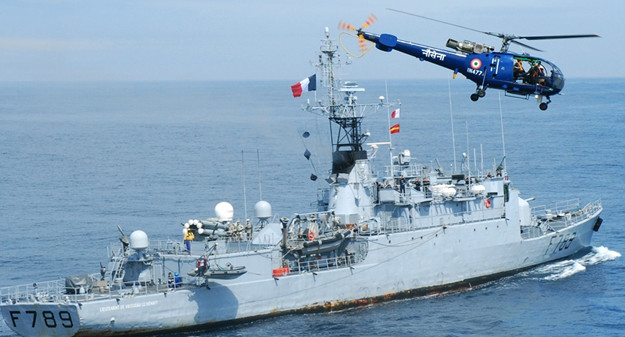
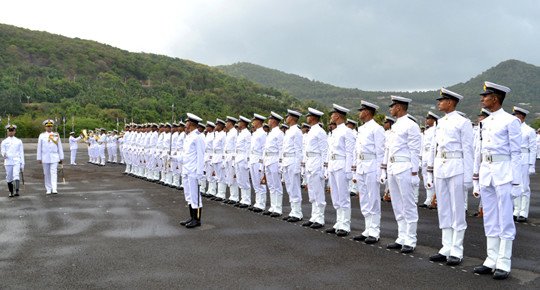
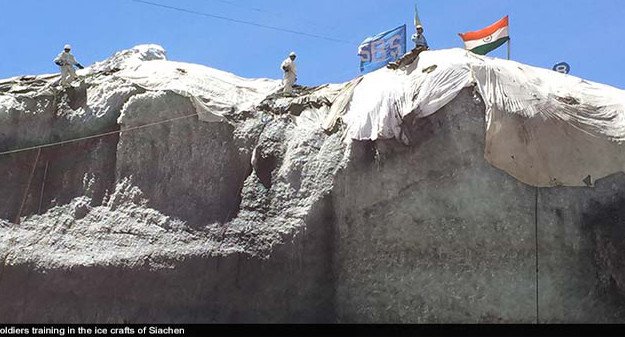
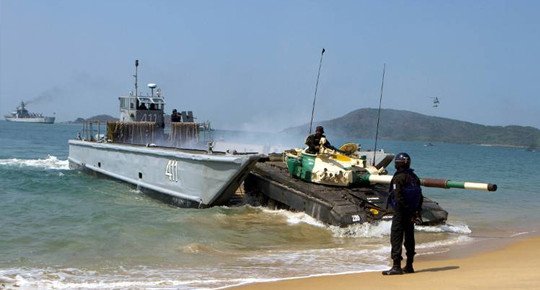
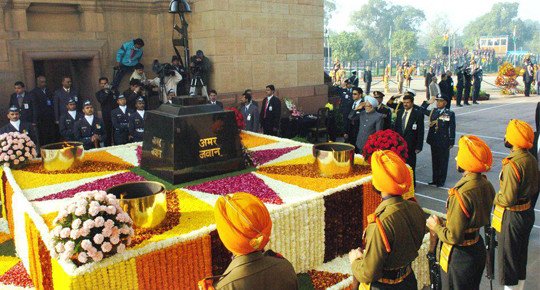
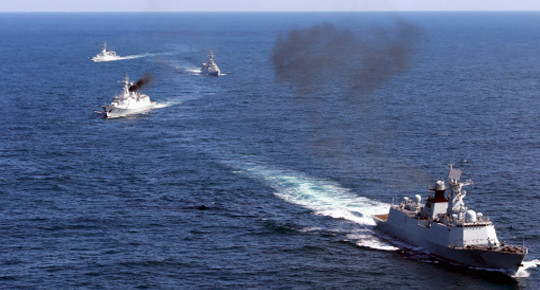
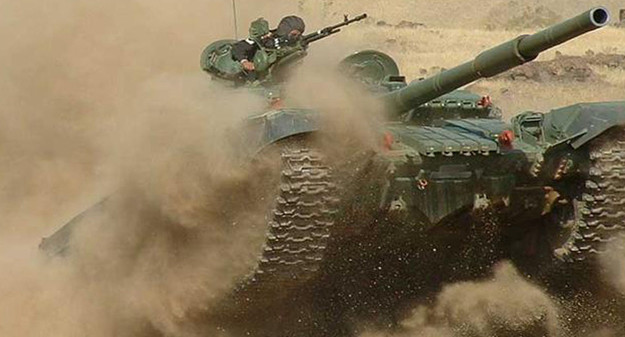
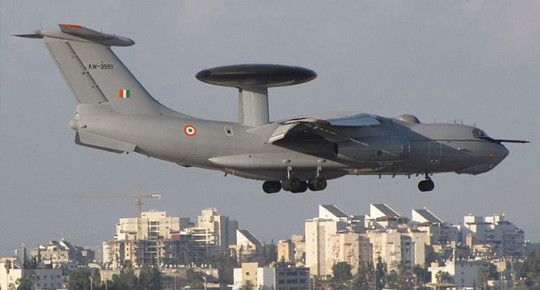
Singh underlined the government’s focus to equip armed forces with state-of-the-art weapons/equipment, manufactured by a self-reliant defence industry New Delhi: Self-reliance & secured borders are central to making India a powerful nation, defence minister Rajnath Singh said on Saturday. The defence minister, in his address, echoed the government’s unwavering resolve to transform India into one of the most powerful nations by 2047, asserting that the defence ministry was leaving no stone unturned to achieve PM Modi’s vision of ‘Aatmanirbhar Bharat’. Singh underlined the government’s focus to equip armed forces with state-of-the-art weapons/equipment, manufactured by a self-reliant defence industry. Singh listed a number of steps taken by the ministry to reduce dependency on imports, including issuance of positive indigenisation lists. Citing the example of recently-commissioned INS Vikrant, which contains 76% indigenous content, he said that India has the ability and capability to manufacture modern weapons and platforms. Due to steps taken by the Centre in the last few years, India’s defence exports have seen a massive jump. “There was a time when India only exported defence equipment worth ₹1,900 crore. The figure today has crossed ₹13,000 crore. We have set a target of ₹1.75 lakh crore of defence production by 2025, including ₹35,000 crore worth of exports. We are well on course to achieve the target,” he said. Terming border area development as another aspect at the core of the government’s vision, Singh said that all efforts are being made to increase connectivity with far-flung areas to strengthen the preparedness of the armed forces and linking the country with people residing in the region. “Our greatest achievement in the last 8.5 years has been the restoration of peace & prosperity in the North-Eastern states. Since 2014, there has been about 80-90% reduction in violence incidents in almost every state of the North-East. Most of the extremist organisations have either been rooted out or have surrendered and joined the mainstream. Armed Forces (Special Powers) Act has been removed from 80 per cent of the areas. This was made possible as now there is peace, stability and durability in the region,” he said. Singh also commended Prime Minister Narendra Modi under whose leadership the country’s economy has become more dynamic and stronger. “Today, most of the countries are facing the problem of slowdown in economy. International Monetary Fund (IMF) has projected its global GDP growth rate to be 2.9% in 2022-23. While India’s growth rate has been underestimated, it is still pegged at 6.1 per cent. The world is looking up to India’s growth story,” the defence minister said.
WHY INDIA’S SUBMARINE-LAUNCHED BALLISTIC MISSILE TEST IS SIGNIFICANT
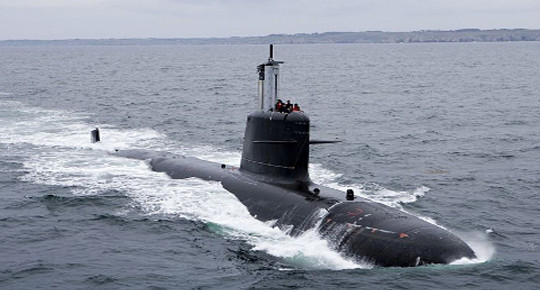
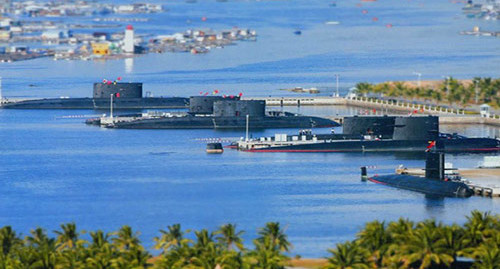
INS Arihant on Friday carried out a successful test of a submarine-launched ballistic missile (SLBM) in the Bay of Bengal The defence ministry said the nuclear-powered submarine carried out the launch “very high accuracy”. “INS Arihant carried out a successful launch of a Submarine Launched Ballistic Missile (SLBM) on 14 October. The missile was tested to a predetermined range and impacted the target area in the Bay of Bengal with very high accuracy,” the ministry said in a statement. It said “all operational and technological parameters of the weapon system have been validated”. The defence ministry in a statement said the SSBN program is a key element of India’s nuclear deterrence capability. It said a “robust, survivable and assured retaliatory” capability is in sync with the country’s policy to have ‘credible minimum deterrence’ that underpins its ‘no first use’ commitment. “The successful user training launch of the SLBM by INS Arihant is significant to prove crew competency and validate the SSBN program, a key element of India’s nuclear deterrence capability,” the defence ministry said. “A robust, survivable and assured retaliatory capability is in keeping with India’s policy to have ‘credible minimum deterrence’ that underpins its ‘no first use’ commitment,” it said. Let’s take a closer look at why this is significant: This is seen as a major milestone to further boost India’s strategic strike capabilities. India’s nuclear-powered ballistic missile submarine (SSBN) program is a closely guarded project. INS Arihant was the first boat under the SSBN project that was reportedly followed by another boat, INS Arighat. As per defence analysts, the test further signals the credibility of India’s naval nuclear deterrent. Indian ballistic missile submarines may now be able to target China and Pakistan from underwater locations when deployed. The launch further shows the home-made INS Arihant class submarines are operational ‘in all respects’, as per the report. INS Arihant was commissioned in 2016 by then defence minister Manohar Parrikar. Though the ministry did not put up an official statement on which missile was fired, defence sources said it was the nearly 750-kilometre range K-15, which is already in service. The K-4 missile underwent its maiden test in January 2020 from a fixed underwater pontoon on the east coast, as per The Print. India is also working on a nearly 5,000-kilometre range missile called the K-5. INS Arihant is the first of three indigenously built nuclear submarines. The INS Arihant is designed to carry 12 K-5 or four K-4 missiles. The 6,000-ton vessel was built under the Advanced Technology Vessel (ATV) project at the Ship Building Centre in the port city of Visakhapatnam. INS Arihant, based on the Russian Akula-1 class submarine, was launched on July 26, 2009, the anniversary of Vijay Diwas (Kargil War Victory Day), by then prime minister Manmohan Singh. It was commissioned in 2016 by then defence minister Manohar Parrikar after a series of sea trials. Its induction into the Strategic Forces Command (SFC) — responsible for India’s nuclear arsenal — was one of the biggest developments for the armed forces in the last decade, as per The Print. India completed the nuclear triad with its induction. As per The Print, India is among just six countries in the world to have the capability to fire a nuclear missile from land, air and undersea. The others being the United States, Russia, China, France and the United Kingdom. Submarines-launched nuclear missiles are a ‘force multiplier’ for any nation as they are difficult to track before launch, as per the report. India has been a leading voice in pitching for universal nuclear disarmament aimed at complete elimination of atomic weapons.
DEFENCE START-UP PARAS AEROSPACE DEVELOPING MICRO LOITERING MUNITION FOR TACTICAL USE
SpearUAV, Israel-based developers and suppliers of unique Unmanned Aircraft Systems (UAS) solutions for defence and Homeland Security (HLS) applications — has signed a Memorandum of Understanding (MoU) with Paras Aerospace, a subsidiary of Paras Defence and Space Technologies Limited, to introduce the unique encapsulated Ninox-40 system to the Indian market for use by military forces, paramilitary, internal security, and law enforcement agencies. Ninox-40 is a micro-tactical, cost-effective drone system, featuring an encapsulated drone and control unit. “The defence sector in India faces challenges in surveillance of multiple international borders as well as dealing with extreme natural forces, such as monsoon storms, cyclones and earthquakes,” Yishai Amir, CEO of SpearUAV said in a statement. These challenges apply to the special forces, army, navy, various internal security divisions, and national disaster response teams. The cooperation between our companies will address the needs of these forces, in order to give every person, officer and first responder an immediate ISTAR capability to complete their mission and save lives.” Specifically designed for single-user operation, the Ninox 40 is a micro-tactical, cost-effective drone system, featuring an encapsulated drone and control unit. Weighing under 250g. it is lightweight enough to be incorporated into the soldier’s vest during combat. The Ninox 40 has a flight capacity of up to 40 minutes, extensive ISTAR capabilities, day and night camera for enhanced situational awareness, automatic tracking, and can be launched on the move even in harsh environmental conditions. “Paras is a recognised and a well-known defence technology provider catering to the Indian government organisations such as DRDO and Defence PSUs and the private sector across India and to companies from other Asian and Middle Eastern countries,” Pankaj Akula, CEO of Paras Aerospace, said. About Ninox-40 Ninox family of solutions create new dimensions for managing today’s battlefield. By focusing on the real operational needs of troops, this advanced, ruggedized solution provides the end-user with tools that are accessible, intuitive and simple to operate, and is the most effective way to achieve immediate tactical superiority. Suitable for launch from air, sea and land, Ninox provides strategic, tactical and micro-tactical solutions with the capacity to carry a range of specialized payloads serving various missions. This micro-tactical drone system was specifically designed for single-user operation and can be launched manually or from a standard 40 mm. grenade launcher. Sitting in the barrel, it’s ready for launch in seconds. Featuring an encapsulated drone and control unit, the Ninox-40 weighs under 250g – within regulatory limitations – and is lightweight enough to be incorporated into the soldier’s vest and carried on the person during combat. Build to withstand harsh battle conditions, the ruggedized system is ideal for tactical urban environments. The Ninox-40 has up to 40- minutes’ flight capacity, extensive ISTAR capabilities, a day and night camera for enhanced situational awareness, automatic tracking, and can be launched on the move and from under cover.
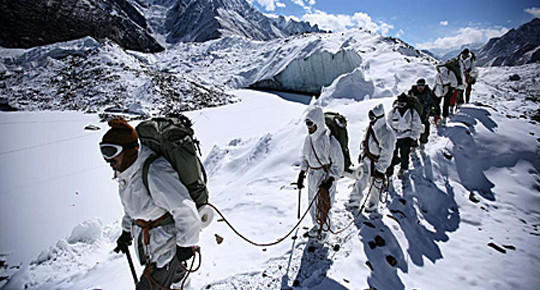
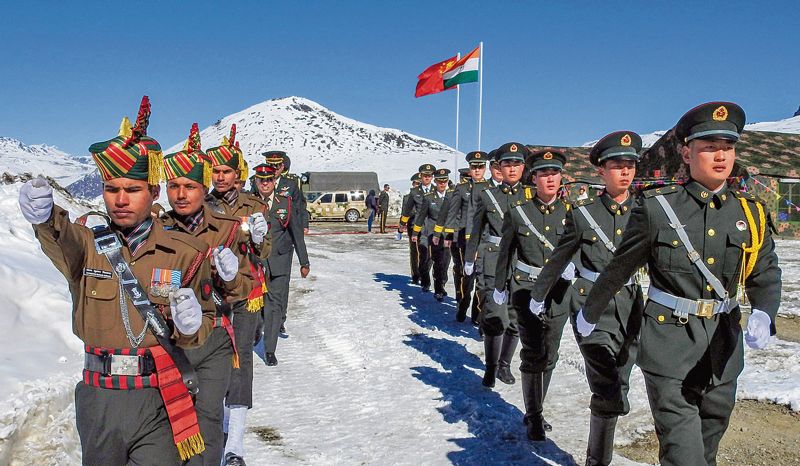
For China, the standoff in east Ladakh is over; the border situation is ‘starting to normalise’ and the military strife resulting from the Galwan clash has ended. For India, ‘full normalcy had still not been restored’. That is the new normal which is unlikely to change for the foreseeable future. A demilitarisation zone has been created from Depsang to Pangong Tso and China will not discuss the two remaining friction points: Depsang and Demchok.
Maj Gen Ashok K Mehta (retd)
Military Commentator
THE altered status quo with ‘no LAC’ (replaced by the demilitarisation zone or DMZ) represents the new normal in Ladakh. The Modi government has not come clean on Chinese aggression in Ladakh, reminiscent of how the Nehru government hid from the public the illegal road China had constructed across Aksai Chin in 1956, till its admission in Parliament. The mutual withdrawal from Hot Springs last month marked the end for the PLA of the disengagement process.
India is playing with a weak hand. When asked last year at a press conference why Bangladesh had not voiced support for India in its standoff with China in Ladakh, Foreign Minister AK Abdul Momen said: “it was not sought”, quickly adding “especially after PM Modi’s statement ‘not an inch of territory was lost’.” What Modi actually said was: “China has not intruded into our border, nor has any post been taken over by them”. This one statement with its clarification has caused irreparable harm to India’s repeated urging for the restoration of status quo ante of April 2020. It is Defence Minister Rajnath Singh who has periodically said: “not an inch of territory was lost”. External Affairs Minister S Jaishankar has not contradicted the position taken by Modi. Except for the US initially, no country came out explicitly condemning Chinese aggression.
For China, the standoff in east Ladakh is over; the border situation is ‘starting to normalise’ and the military strife resulting from the Galwan clash has ended. For India, ‘full normalcy had still not been restored’. That is the new normal which is unlikely to change for the foreseeable future. A DMZ has been created from Depsang to Pangong Tso and China will not discuss the two remaining friction points: Depsang and Demchok. Further, it has transformed the border question into one of sovereignty. The Chinese Ambassador in India, Sun Weidong, called the disengagement process having transited to ‘normalised management control’, while India said ‘we have certainly not reached that stage.
For the three Service Chiefs, the benchmark for normalcy is the status quo ante prior to the standoff, reiterated on October 5 by the Chief of the Air Staff, Air Chief Marshal VR Chaudhari. Army Chief Gen Manoj Pande has said that disengagement from two friction points is left. The Chief of the Naval Staff, Adm Hari Kumar, says Beijing is a formidable challenge not just on land but also in the maritime domain. Northern Army Commander Lt Gen Upendra Dwivedi is relying on ‘strategic patience’. In March, Jaishankar dodged the question whether he had raised the issue of restoration of the status quo with his visiting counterpart, Wang Yi.
A piquant situation has been created on the ground. India has retreated to areas on its side of the LAC; the PLA has done the same, mostly on the Indian side of the LAC. The Chinese have applied the Dragon’s Rule: what is mine is mine. What’s yours is also mine. For 40 years, the undelineated LAC was considered a role model for border management between India and China. The adherence to 1993, 1996, 2005 and 2013 border protocols and agreements had ensured peace and tranquility; even in the Galwan clash neither side fired a shot. The modus vivendi of 1988 following the Sumdorong Chu dispute when both countries were militarily and economically on a par. Since then the capability gap has left India limping behind.
According to China’s internal deliberations, withdrawal from friction points Galwan, Hot Springs, Goghra and Pangong Tso (both banks) is a concession to India. Depsang and Demchok are not friction points. Disengagement is to prevent a repeat of the Galwan clash, especially after the turret-to-turret confrontation between rival tanks below the Kailash ridge. Neither side wants vertical escalation. India was keen that Chinese troops remove from the North Bank their flag, a huge map of China and banners with slogans in Mandarin that were embarrassing for India.
Centre for Policy Research’s Sushant Singh, in an essay, has mentioned that the Galwan clash took place at PP14 where Indian soldiers, who had gone to verify whether the Chinese had vacated the spot, walked into an ambush and lost 20 men while four PLA personnel died. In addition, 70 Indian soldiers were wounded and around 100 soldiers, including officers, captured by the PLA. There was no PLA soldier taken captive
Another casualty from the new normal is PLA preventing Ladakhi herders from grazing animals on Indian land. The nambardar of Phobrang village, Konchok Stobgais, said they had lost access up to 40 km of the Kugrang valley. Similarly, Chushul councillor Konchok Stenzin is complaining about loss of traditional grazing ground. They are saying that the Indian leadership is being timid in getting these areas vacated. China, on the other hand, has used graziers escorted by the PLA in civilian clothes, leading to land grab in Bhutan and Arunachal Pradesh. In July 2021, President Xi Jinping visited Tibet’s Nyingtri prefecture opposite Arunachal Pradesh, even as Chinese fishing vessels mark their presence in the maritime domain.
Modi, who has met Xi 17 times and is being lauded for his ‘this is not the era of war’ warning to President Putin at the Samarkand SCO summit, unfortunately missed the opportunity to disarm Xi, who was standing next to him. While the status quo ante of April 2020 is impossible, PM Modi must seek a new modus vivendi that enables India’s equal partnership in an Asian century. Modi and XI are to meet at the G20 summit next month at Bali where he must break the ice and restore summit diplomacy to reach a better deal in Ladakh than what has been arrived at on the ground between military commanders.
Army inks pacts with 11 banks to provide banking facilities to Agniveers
The Indian Army has said it has signed agreements with 11 banks to provide banking facilities to Agniveers after their enrolment, the defence ministry said on Saturday.
In June, the government announced the ‘Agnipath’ scheme for the three services to recruit youths between the age bracket of 17-and-half years and 21 for only four years with a provision to retain 25 per cent of them for 15 more years.
For 2022, the upper age limit has been extended to 23 years. The three services are currently undertaking the recruitment process under the new scheme.
The first batch of Agniveers will be joining Army training Centres by January next year
“The Indian Army has signed historic MoU with 11 Banks viz State Bank of India, Punjab National Bank, Bank of Baroda, IDBI Bank, ICICI Bank, HDFC Bank, Axis Bank, Yes Bank, Kotak Mahindra Bank, IDFC First Bank and Bandhan Bank for providing banking facilities to Agniveers on enrollment,” the defence ministry said.
The Memorandums of Understanding (MoUs) were signed on Friday.
“The features and benefits offered under Agniveer salary package are similar to the defence salary package,” it said in a statement.
Rajnath Singh: Want rule-based order in Indo-Pacific
Defence Minister Rajnath Singh today reaffirmed India’s resolve for open, free and rule-based maritime borders in the Indo-Pacific region.
He was delivering the inaugural address at Heads of Asian Coast Guard Agencies Meeting (HACGAM) in New Delhi today.
Without naming China, which is locked in multiple maritime disputes, the minister said, “We stand for open, free and rule-based maritime borders in the Indo-Pacific. India was always ready and forthcoming to work with like-minded partner countries across various forums.”
Rajnath called for effective collaboration among maritime nations to deal with challenges to maritime safety. The Indian Coast Guard is hosting the 18th HACGAM. A total of 55 representatives from 18 countries and two International Organisations are part of the event. The HACGAM is a multilateral forum of 23 countries — Australia, Bahrain, Bangladesh, Brunei, Cambodia, China, France, India, Indonesia, Japan, South Korea, Lao PDR, Malaysia, Maldives, Myanmar, Pakistan, Philippines, Singapore, Sri Lanka, Thailand, Turkiye, Vietnam and Hong Kong (China).
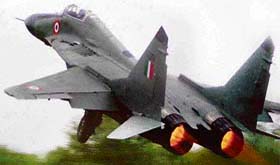
IAF mulls second life extension for MiG-29 fighters to enhance service span from 40 years to 50 years
The Indian Air Force is planning to undertake a second life extension programme on its fleet of MiG-29 frontline fighter jets, which will enhance their service span from 40 years to 50 years.
Inducted into the IAF in 1986, the first life extension programme was undertaken in the mid-2000s. The then Defence Minister, AK Antony had stated in Parliament that the MiG-29s’ technical life was being extended from 25 years to 40 years to meet the IAF’s operational requirements.
According IAF sources, the enhanced technical life of the MiG-29 aircraft will begin expiring from 2025 onwards and in view of the depleting squadron strength and slow rate of inductions, it is imperative to determine that for how long this fleet can continue to remain effectively in service.
The project will be executed at IAF’s No.11 Base Repair Depot near Nashik, which is mandated with the repair and overhaul of Russian origin fighter aircraft. Only Indian firms will be permitted to participate in the programme.
The project involves study and examination of the aircraft’s airframe, engines, avionics, sub-assemblies and other aggregates, development and analysis of technical and flight data, structural integrity checks, corrosion removal, repair and strengthening of certain load bearing areas and some structural modifications, sources said.
The IAF operates about 66 of the Soviet/Russian origin fighters in three squadrons. Two of them are based at Adampur and Jamnagar, while the third has recently moved to Srinagar to replace a MiG-21 squadron that was phased out. In addition, the Navy also procured 35 MiG-29s for its fleet air arm.
The MiG-29s went in for extensive modification and upgradation during the second half of the last decade, which significantly enhanced their combat capability. Christened the MiG-29 UPG, this included modifications to the airframe along with new avionics, radar, missiles, weapon control systems and electronic warfare suite.
The IAF used its MiG-29s extensively during the 1999 Kargil War to provide fighter escort for Mirage 2000s attacking high altitude targets with laser-guided bombs as well as for carrying out combat air patrols. MiG-29s were also deployed in Ladakh to counter Chinese aircraft during the face-off along the Line of Actual Control in 2020.
According to reports, India is in the process of procuring 21 additional MiG-29s from Russia which would enable replacement of earlier losses and raise another squadron. These would be developed and upgraded from airframes built earlier but which never entered service.
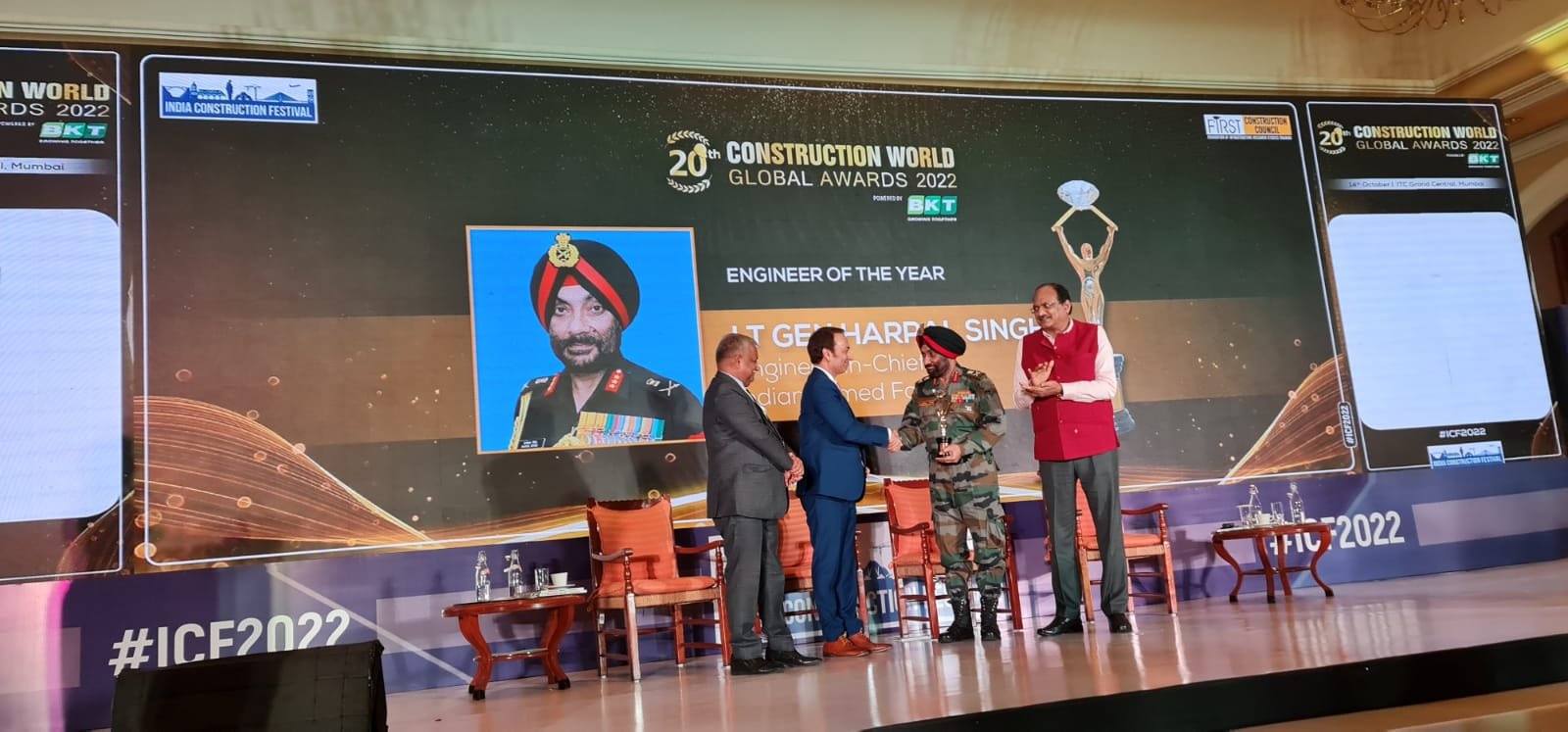
Lt Gen Harpal Singh, PVSM, AVSM, VSM, ADC, Engineer-in-Chief is an alumni of National Defence Academy, Khadakwasla. He was commissioned into the Corps of Engineers in Dec 1982. The officer has tenanted critical command and staff appointments at various levels. He has commanded a Border Roads Task Force in J&K Valley. He has also been the Chief Engineer of Project Dantak (BRO) at Bhutan, Chief Engineer (Navy), Mumbai and Chief Engineer Eastern Command.
2. The General Officer is a graduate of Defence Services Staff College, Higher Defence Management Course and National Defence College. His distinct academic achievements include a double M Tech from the Virginia State University, USA and Masters in Management Studies from Osmania University and M. Phil (Defence Studies) from Madras University.
3. During his 37 years of distinguished career, the General Officer has held several appointments to include Gde 2 at Army HQ, Gde 2 and Gde 1 at Comd HQ, DDG DV at Army HQ and Dy MS at Central Command. He has also been Directing Staff and DS Coord at the prestigious College of Defence Management, Secunderabad. His prestigious appointments include Additional Military Secretary and Director General of Military Training and Col Comdt of the Army Physical Training Corps.
4. Prior to taking over as Engineer-in-Chief, the General Officer was at the helm of affairs of the Border Road Organisation as Director General of Border Roads.
5. The General Officer has assumed the appointment of Engineer-in-Chief and Colonel Comdt of the Corps of Engineers wef 01 Dec 2020.