



Sanjha Morcha

What’s New

Click the heading to open detailed news

Current Events :

web counter

Print Media Reproduced Defence Related News

JAWA SPECIAL EDITION COMMEMORATES INDIA’S VICTORY IN THE 1971 WAR

As part of the Swarnim Vijay Varsh, Jawa Motorcycles has launched a special edition of its Jawa model to commemorate India’s victory against Pakistan in the 1971 war.
The bike is available in two special shades namely, Khakhee and Midnight Grey, and sports cosmetic upgrades over the standard two-wheeler. However, there are no mechanical changes.
Here are more details.
History” Over 3,000 Indian Armed Personnel Lost Their Lives
This year marks the 50th anniversary of the 1971 Indo-Pakistan war which lasted 13 days, making it one of the shortest battles in history. It was fought on both the eastern as well as western fronts.

Following Pakistan’s surrender, our eastern neighbour Bangladesh, then known as East Pakistan, became independent.
Over 3,000 Indian army personnel lost their lives while over 10,000 were injured.

Design: Tri-Colour And Indian Army Emblem Are Present On The Tank
The Jawa Special Edition has a muscular fuel tank with the tri-colour and Indian Army emblem on it. There is also an insignia that reads ‘Commemorating 50 years of the 1971 war victory’ and ‘1971-2021 Special Edition.’
The body paintwork as well as the headlight bezel, twin exhaust pipes, suspension forks, and the engine exhibit a matte finish.
Information: It Is Fuelled By A 27Hp, 293Cc Engine
The Jawa Special Edition draws power from a BS6-compliant 293cc, single-cylinder engine that generates a maximum power of 26.9hp and 27.02Nm of peak torque. The mill is linked to a 6-speed gearbox.

Safety: There Are Disc Brakes On Both The Wheels
To ensure the safety of the rider, the Jawa Special Edition is equipped with disc brakes on both the front and rear wheels, along with dual-channel ABS for better handling on the roads.
Suspension duties on the motorcycle are taken care of by telescopic forks on the front side and dual shock absorbers on the rear end.
Information: Jawa Special Edition: Pricing And Availability
In India, the Jawa Special Edition can be booked online via the company’s website. It carries a price-tag of Rs. 1.93 lakh (ex-showroom), making it Rs. 6,000 more expensive than the standard Jawa.


A JARRING NOTE IN THE CHORUS FOR THEATRE COMMANDS

Each of the 17 existing commands is headed by a secretary-level three-star officer. Assuming that Ministry of Home Affairs (MoHA) is willing to play ball, integrating them with the Integrated Theatre Commands (ITCs) structures is not going to be an easy task
by Amit Cowshish
Speaking at a webinar organised by the Global Counter Terrorism Council, Chief of Defence Staff (CDS) described the Indian Air Force (IAF) as a ‘supporting arm’ akin to artillery and engineers that support the combatant arms of the Indian Army (IA). He also added, somewhat patronisingly, that the IAF must understand that its charter is to provide support to the ground forces in time of operations, belittling the force that turned the tables in the last war fought in Kargil in 1999.
Coming from someone who is tasked with the responsibility of bringing about operational jointness by compressing the existing 17 commands, the three services presently operate, into five Integrated Theatre Commands (ITCs), the statement was iniquitous and untimely. The IAF’s role is not confined to air defence. In recent years, it has played a stellar role in Humanitarian Assistance and Disaster Relief (HADR) operations, which are not a part of military operations. More importantly, IAF has an important role to play in future wars that are more likely to be fought in air and space.
While Air Chief RKS Bhaduria quickly refuted the CDS saying that ‘airpower has a huge role to play’, mirroring the reservations IAF has had for more than two decades, it is unlikely to stall the inadequately planned move to create the ITCs. However, this disagreeable and entirely avoidable public spat indicates that other complex issues -and there are several of them- impacting establishment of the ITCs may also get similarly brushed under the carpet.
Each of the 17 existing commands is headed by a secretary-level three-star officer. With the requirement coming down to 5 after ITCs are established, one of the immediate challenges would be to accommodate 12 three-star officers who would become redundant after the ITCs are formed. Additionally, some Principal Staff Officers (PSOs) at the Services Headquarters (SHQ) who also enjoy the same status may become redundant in the new command and control structure. The problem may seem insignificant, but it is not a trivial matter for an organisation that is extremely sensitive about pay, perks and status, especially vis-à-vis the civilians.
Talking of civilians, the indications are that the ITCs would subsume not only some of the entities presently administered by the Ministry of Defence (MoD), like the Border Roads Organisation (BRO) and the Indian Coast Guard (ICG), but also the paramilitary forces like Assam Rifles and the Indo-Tibetan Border Police that are presently controlled by the MoHA. Assuming that MoHA is willing to play ball, integrating them with the ITC structures is not going to be an easy task.
The organisational ethos of the services, especially the IA, is largely incommodious and domineering. The prejudices, biases and grudges have got ingrained in their outlook which is not conducive to integration of ‘outsiders’, generally considered inferior. This attitude is more pronounced when it comes to dealing with the civilian officers who too are expected to be inducted into the ITC set-up.
No thought seems to have been given to how this attitudinal change will be brought about to not only get over the decades long inter-services rivalries and turf wars -amply demonstrated by the CDS’s statement and the Air Chief’s rejoinder- but also the adversarial views about having the civilian bureaucracy as a part of the decision-making in the new set-up on an equal footing. This too may not be so easy for the protocol-conscious services.
These issues are not as fanciful as they may appear; those familiar with the inner functioning of the BRO and ICG, or the Military Engineer Service (MES) which has a fair sprinkling of civilians, would vouch for it. And so would the officers of the Armed Forces Headquarters Service (AFHQ) which is a civilian cadre manning the SHQs. This attitudinal propensity is best illustrated by the posting of two civilian officers to the Department of Military Affairs (DMA), headed by the CDS as its secretary, who have been assigned the mundane tasks of managing the establishment, coordination, works and parliamentary affairs.
Last but not the least, one of the first things the impecunious MoD needed to do was to estimate the cost of establishing the ITCs, but this does not seem to have been done. Going by common sense, huge sums of money will be required to create the infrastructure for the ITCs as it is almost certain that the existing infrastructure at none of the stations where the existing command headquarters are located would be considered adequate by the ITC commanders.
For example, going by the media reports, the Western Theatre Command is likely to be located at Jaipur which is where the IA’s South Western Command (SWC) is presently located. Set up on 15 April 2005, the SWC’s infrastructure may not be adequate to accommodate the entire establishment of the new Western ITC. Expansion of infrastructure would involve acquisition of additional land which, apart from being an expensive and time-consuming process, can get mired in litigation. This is precisely what happened in Karwar in Karnataka, which is being developed as a naval base.
The first phase of this naval base, called INS Kadamba, was completed after several years of work in 2005. The second phase of development that started in 2011 is yet to be completed. For quite some time, the project was embroiled in court cases filed by the landowners, whose land was acquired for the project, for higher compensation. Besides, establishing other essential services like water, electricity, approach roads, schools, and shopping centres can be an equally onerous exercise. It would require careful planning to pre-empt such delays in raising or augmenting the infrastructure of the new ITCs.
Meanwhile, at least 12 of the existing Command Headquarters will have to be downgraded, possibly rendering some of the infrastructure surplus to the requirement. It is not known to what use the surplus infrastructure is planned to be put. Financial planning is critical to minimise the cost by making optimum use of the existing infrastructure and resources. While it is important to resolve the larger operational issues, such as the new command and control structure, before the ITCs are created, it would be a mistake to play down the above mentioned seemingly mundane issues as these could frustrate the process.


INDIGENISATION – IN NEED OF POLICY FRAMEWORK

India has been striving for indigenisation of defence production for close to three decades. To give impetus to the efforts, the Ministry of Defence (MoD) had constituted a committee in the early 1990s under Prof APJ Abdul Kalam. The committee suggested a 10-year roadmap to increase the indigenous component in the total expenditure on capital procurement from 30 per cent in 1992-93 to 70 per cent by 2005. This goal could not be achieved and there continues to be some confusion about the present state of indigenisation.
Present State of Indigenisation
Several steps have been taken in the last 20 years, but the outcome of these efforts remains a matter of debate as the available data on indigenisation is confusing. According to a recent report of the Standing Committee on Defence (SCoD), only 93 of the 213 contracts worth about Rs 1,76,569 crore were awarded to foreign vendors of the USA, Russia, Israel, France, and some other countries between the financial years (FYs) 2016-17 and 2019-20.1
The same report shows that the proportion of expenditure on imported defence equipment in the total expenditure went up from 30.41 per cent in the FY 2010-11 to 43.22 in the FY 2019-20, and though in the first three quarters of the following year (FY 2020-21), it plummeted to 32.39 per cent,2 it is possible that the percentage jumped up again by the end of the year. These figures give the impression that the goal set by the APJ Abdul Kalam Committee has largely been met. However, this is not borne out by other empirical evidence.
In the last five years alone, several contracts have been awarded to the foreign vendors for an assortment of platforms like Dassault’s twin-engine Medium Multi-Role Combat Aircraft (MMRCA), Boeing’s multi-role combat AH-64E Apache and vertical-lift Chinook helicopters, Lockheed Martin’s C-130J Super Hercules four-engine turboprop military transport aircraft, and Russian Almaz-Antey’s S-400 Triumf Air Defence System.
The Strategic Partnership Model adopted in 2016, which envisages manufacturing of foreign-origin platforms by the Indian companies with the transfer of technology from the former, is another indication that presently India does not have the capability to design and develop state-of-the-art fighter aircraft, helicopters, submarines, and armoured fighting vehicles/main battle tanks. But, above all, according to Stockholm International Peace Research Institute (SIPRI), India was the second-largest importer of arms in 2016-20 after Saudi Arabia.3
Indigenisation In High-Technology Areas Lagging Behind
The best explanation for these contradictory sets of facts is that while the Indian industry has done reasonably well in manufacturing foreign-origin equipment with the help of technology transfer from the foreign Original Equipment Manufacturers and in indigenising components, it still lacks the capability to indigenously design and develop major platforms, with a few exceptions like the Light Combat Aircraft Tejas, which is what indigenisation should be all about.
Even in respect of components and assemblies, no data/information is available to show whether these are critical parts of the equipment/platforms in which these are used. This is important because the extent of indigenisation of a product matters little if a critical part, even if it constitutes a miniscule percentage of the overall product, is not indigenised. In hostile circumstances, the OEM or the country of its origin could deny the export of such items and paralyse production in India.
Seen in this perspective, the level of indigenisation of defence production in India is quite low. Broadly, there are four reasons for this.
Absence of An Overarching Policy Framework
The primary reason is the absence of a pragmatic overarching indigenisation policy. What comes closest to it is a notification issued by the Department of Defence Production (DDP) in 2019.4 It cannot be the guiding document for a concerted effort as it only contains the policy for indigenisation of components and spare parts used by the Defence Public Sector Undertakings (DPSUs) and the Ordnance Factory Board (OFB) in the manufacturing process.
Be that as it may, this document too suffers from many conceptual and procedural inadequacies. For example, the stipulation that the ‘indigenised product should invariably be cheaper and meet all technical and functional specifications of the imported component which it seeks to replace’5 , makes it unrealistic and unworkable as the indigenised products are not always cheaper.
No wonder then that the focus of the DPSUs/OFB has been mainly on the indigenisation of items that can be manufactured in India at a cheaper cost vis-à-vis the cost of importing them. Such items do not generally account for a substantial proportion of the technologies that go into the making of a high-technology product and, therefore, the extent of indigenisation of critical components in various defence products continues to be low.
Absence of An Overarching Organisation
The second reason is the absence of an overarching organisation to channelize the efforts being made by several agencies towards a pre-defined goal. Besides DPSUs and the OFB, other agencies presently involved in indigenisation efforts include the Indigenisation Directorates of the Services, Defence Research and Development Organisation (DRDO), and the Defence Innovation Organisation (DIO).6 The efforts being made by these agencies are largely disjointed and lack synergy, and no mechanism is in place to facilitate their interaction with the armed forces which are the primary stakeholders in the indigenisation efforts.

Procedural Complexities And Financial Viability
Procedural complexities are the third reason for the slow pace of indigenisation. Though some efforts have been made in recent years to smoothen the process, agencies involved in indigenisation continue to follow their own procedures and norms. A typical example is the process of selection of partners from, and giving assurance of orders to, the private sector industry, especially the Micro, Small and Medium Enterprises (MSMEs), who play a critical role in developing niche technologies and providing solutions that are critical for indigenisation. Besides, no satisfactory system is in place to address the issue of Intellectual Property Rights violations that are bound to arise if import substitutes are to be designed and developed in India.


Budgetary Constraints
Lastly, there is a severe budgetary constraint, making it difficult to earmark substantial sums of money to undertake large-scale efforts, especially for indigenous design, development and production of futuristic equipment, platforms, and weapon systems, which is essential for achieving self-reliance. Indigenisation depends heavily on research and development (R&D), on which the public spending in India has consistently been quite low. Barring a few notable exceptions, even the private sector has been reluctant to make heavy investments in R&D because of the uncertainty that the MoD will procure the indigenously developed product.
What Can Be Done
As the first step, the MoD needs to formulate a composite policy that focuses on indigenisation in high priority technology areas, shedding the notion that it must necessarily result in savings. The commercial viability of the identified projects and institutional arrangement for financing them, apart from a mechanism to accommodate the cost of failed efforts, must form the bedrock of the policy. As a matter of policy, a distinction needs to be made between indigenisation of major systems-equipment, weapons, and assorted platforms – that of components, assemblies, and sub-assemblies. This is important because the challenges faced in the indigenisation of these two categories of defence materiel are different. The approach to indigenisation in these two distinct areas will have to be different.
Secondly, there must be an overarching organisation to coordinate indigenisation efforts currently being made almost independently by several institutions mentioned above. This organisation will have to work out a system for ensuring deeper involvement of the private sector in the indigenisation effort, apart from engagement with other scientific institutions, innovators, foreign entities, and academia.
The private sector, especially the MSMEs, and Start-ups, can play a major role in achieving the intended results. However, funding is a major issue for them, as also the assurance of the follow-on orders being placed on them. These issues will require to be addressed.
Thirdly, procedural issues need to be resolved to ensure that the testing, quality assurance and certification agencies work more as a part of the team engaged in indigenisation rather than as external technology audit entities. This may also require the quality assurance personnel to acquire and upgrade their domain expertise, as well as test procedures, equipment and methodologies.
This is just an example of the procedural tangles besetting indigenisation. Many other issues, such as the setting of extremely stringent specifications by the services and lack of clarity about the aggregated long-term demand for the indigenised product – for special alloys, for example – also slow down indigenisation as action cannot be taken in such cases in the absence of economy of scales.
Fourth, legal issues that often come in the way of indigenisation of products need to be tackled. This is more relevant in the case of substitution of parts and assemblies fitted in the imported equipment through indigenisation efforts which pose a problem because of the legal constraints imposed by the warranty/guarantee clauses in the contracts awarded by the MoD/Services to the technology provider concerned.
Lastly, indigenisation is driven by commercial considerations. No seller will opt for indigenisation if it involves the risk of conceding a competitive edge to another seller because of the additional cost of indigenisation, or if the delivery schedule is inflexible allowing no room for indulging in time-taking indigenisation efforts, or there is uncertainty about the MoD’s ability to place follow-on orders for indigenised products because of the enduring financial constraints it has been facing for long.
A more modest and focussed mission-mode approach to indigenisation can produce better results.


The theatre command debate

Turf rivalries and disagreements must be brought to an end

The theatre command debate

As One: In a conflict, the three services should play a complementary role.

Maroof Raza

Strategic Affairs Analyst

There comes a time when discussions must end, and actions must be taken, based on what can be done at best. No other organisation knows this better, at least in India, than the armed forces. Therefore, it must have come as a surprise to most Indians — especially our political elite — when the CDS, General Bipin Rawat, and the Chief of Air Staff, Air Chief Marshal RKS Bhadauria, publicly aired their different opinions about the role of the IAF. The essential point of departure in the views of the two senior military men was about the role of the IAF in future conflicts and in the evolving concept of theatre commands.

One reason for this disagreement is historical. As India’s major external threats are land border-centric, the Army looks at its role from defending India’s borders to making territorial gains, if possible, beyond the borders. And in all this, the importance of the IAF in support of ground operations has historically proved to be crucial, whether in the 1965 and 1971 wars, or in the Siachen glacier since 1987 and the 1999 Kargil conflict. The IAF also perhaps nurses a grievance about it being blamed for standing idle in 1962, when the Chinese invasion was in full swing. Historians however say that the then IAF chief, Air Marshal Apsy Engineer, is said to have prepared a detailed plan for the IAF to attack both the Chinese PLAAF bases in Tibet as well as the Chinese army’s garrisons there, to stall the Chinese attacks, but his plans were dismissed by General Thapar, who outranked him since the prevailing wisdom among the leadership in Delhi’s South Block was that the use of the IAF would only escalate the conflict. But now, the IAF sees its importance as a game-changer in any future conflict — the Balakot strikes are an example — and is averse to the term ‘supporting arm’, even though it’s a role it would still have to play.

To limit the Army’s overbearing influence, after Independence, a number of structural changes were adopted and an initial step was the re-designation of the Indian Army Chief, from that of Commander-in-Chief to Chief of Army Staff. This brought him on a par with the other two service Chiefs, and all were thereafter, as Chiefs of their respective service staff, advisers to the Defence Minister. Each service headquarters has thereafter zealously guarded its independence and equal status. Somehow, India still managed to pull off military successes despite this, in the 1965 and 1971 wars. But when the idea of a CDS was apparently first brought up after the 1971 War — and it was suggested that Field Marshal Sam Manekshaw should be made the first CDS — his candidature was apparently vetoed by then Air Chief Marshal PC Lal (with whom Manekshaw was not quite on talking terms, at least during the 1971 War, as per Lt Gen JFR Jacob in his biography), and the then Defence Secretary, KB Lall, since Manekshaw was known to bulldoze his way past the bureaucracy. The matter thereafter lay in limbo for another four decades, as the bureaucracy was quite happy to see that the three service Chiefs were not on the same page, at least on this issue. Even during the Kargil conflict, it was said the then Army Chief, Gen VP Malik, and then Air Chief Marshal Anil Tipnis had major differences on the use of airpower and helicopter gunships against Pakistani bunkers. Such differences and delays do cost lives of soldiers on the ground. However, it was eventually resolved, and the IAF became a force multiplier.

Thus, following the Kargil conflict, the Kargil Review Committee (KRC) report recommended that having a CDS was essential for the demands of modern warfare — which require inter-services cooperation — to achieve our military goals. It was supported by a Group of Ministers, the Naresh Chandra committee on defence reforms, a team headed by Lt General Shekatkar in 2016. But the opposition to the idea of the CDS comes from the concern within each of the three Chiefs and their headquarters that the appointment of a supreme military commander, like the CDS, will lead to the depletion of their respective clout within each of their service flock. But the role mandated to the CDS is to get India’s armed forces move beyond operating in silos, despite each service having its own doctrine, its own equipment purchase requirements, and its own professional traditions and culture. Hence, the need for theatre commands, and consequently its opposition, particularly by the IAF, that has limited resources today, and doesn’t wish to further allow them to be frittered away into various theatres that are now proposed: two land theatre commands — one facing Pakistan and another China — an air defence command and a maritime command, with each having resources from all three services.

Currently, India has 17 military commands in all, and each of them with operational roles that overlap those of the other service command. India has at least seven commands facing the Chinese on the Himalayan front (and if you count the maritime threat, it’ll be eight if not nine commands) in the event of a conflict. China has one on the Himalayan front. If the IAF’s assertions are to be heeded by allowing it to keep all its aircraft under its headquarters in Delhi’s control, how could a (maritime) theatre commander plan of confronting the Chinese threat in the Indian Ocean Region without knowing for certain what air power he could put to use? Should our maritime theatre commander have to waste time lobbying with the IAF Chief in Delhi for essential resources to plan his operations on, more so, if the IAF brass feels that they’d rather use their limited resources better in the Himalayas? However, as the decision to create a CDS, and consequently theatre commands, has come from the political leadership, the latter has to end the debate and close the matter. In the US, which offers a fine democratic model of civil-military and inter-service cooperation, the turf rivalries and disagreements were brought to an end by the civilian leadership, to enforce the Goldwater-Nichols Act of 1986. It’s about time India does the same.


WOLF-WARRIOR DIPLOMACY IS BEING HARD-WIRED INTO CHINA’S FOREIGN POLICY, SHIVSHANKAR MENON SAYS

During a webinar hosted by Carnegie India, ex-NSA Menon says neither India nor China are very clear on how to navigate the crisis and are ‘hedging’ the border situation in Ladakh
New Delhi: Wolf-warrior diplomacy is being hard-wired into China’s foreign policy as is evident in the recent centenary celebrations of the Chinese Communist Party that took place on 1 July, according to former National Security Advisor (NSA) and Foreign Secretary Shivshankar Menon.
Discussing his newly-released book, India and Asian Geopolitics: The Past, Present, Menon, who was also India’s envoy to Beijing, said that despite tensions at the border, China remained India’s largest trading partner in 2020.
According to data from India’s commerce ministry, the two-way trade between India and China stood at $77.7 billion last year.
He added that India and China are “hedging” the border situation in Ladakh. “Neither government has taken irreversible measures or steps which would set the relationship on a much more adversarial trajectory…but there’s also very few signs of a real conversation between them. The leaders haven’t spoken…” Menon, currently a visiting professor at Ashoka University, said addressing a webinar hosted by Carnegie India.
The last time Prime Minister Modi and Chinese President Xi Jinping met was during an informal summit in Mamallapuram in October 2019.
Despite several rounds of talks on disengagement at the border, India redirected at least 50,000 additional troops to its border with China last week.
‘China Wants To Dethrone Liberalism’s Pretensions’
Asked if the India-China crisis is about ideology, Ashley Tellis, co-panellist and senior fellow at the Carnegie Endowment for International Peace, said: “This is not necessarily about ideologies…The Chinese want simply to dethrone liberalism’s hegemonic pretensions. They want to communicate to the world that liberalism cannot be the end point of history and there must be space made for alternatives.”
He added that Beijing sees a hierarchy in Asia where they expect India to “know its place”.
Meanwhile, Menon argued that the US and China are engaged in a “demarcated” and “limited” competition. “I don’t think today we’re in another Cold War. It’s not just a bipolar situation between China and the US…The US and China have common interests,” he said. They are joined at the hip economically and work together in other fields, making for “a much more complex situation” for the rest of the world, he added.
Menon said he is more “pessimistic” about the future of Asia due to Beijing’s growing ‘wolf warrior diplomacy’.
“I’ve actually got a little more pessimistic about Asia’s future. I must say, we saw the first signs of wolf warrior diplomacy but we thought that maybe that’s a response to internal developments in China and that will pass once things settle down. But there’s no sign of that. If anything, from everything we see with the centenary celebrations, this is now becoming hard-wired into China’s foreign policy in various ways,” he said.
He suggested India focus on partnerships with other countries, given that it has already “taken a bet on a multipolar world” by exiting the Regional Comprehensive Economic Partnership (RCEP) in November 2019.


INDIA AWAITS NEXT MILITARY TALKS WITH CHINA ON UNFINISHED DISENGAGEMENT IN LADAKH

Beijing has blamed India for the military standoff in eastern Ladakh
Efforts are on to finalise the agenda for the next round of military commanders meeting between India and China. But, in absence of the ‘common understanding’ over certain issues, the two sides have not been able fix the date for the impending 12th round of Corps Commander-level talks.
A top official in the South Block, which houses the ministry of defence, claims that China is pushing to downgrade the level of military talk to division commander level, which the Indian side is not accepting. India feels that military standoff should be negotiated at the highest level of military engagement. Division Commander-level talks involve teams headed by officers of the rank of Major General.
In the June 25 meeting of Working Mechanism for Consultation and Coordination (WMCC) on India-China border affairs, both sides had agreed to hold the senior commander’s meeting as soon as possible to discuss ‘complete disengagement’ on Ladakh sector of the Line of Actual Control (LAC).
But China, instead of discussing all friction points, only wants disengagement of troops and weapons from the general areas of Gogra and Hot Sprints. “They (China) are not willing to discuss Demchok and Depsang flashpoints. But we are insisting to restore the status quo of April 2020,” said an official. While both sides of Pangong Tso was demilitarised after military talks in February, the other friction areas like Hot Springs, Gogra, the Depsang plains, CNN (Charding Ninglung Nallah) track junction at Demchok and Patrolling Point 15 are yet to be resolved.
“Out of the four principal issues, Depsang could prove to be most contentious, which China is not willing to discuss at the senior military level talk. Chinese side is pushing to discuss such issues at local commander level instead of the highest level. It shows their unwillingness to resolve the border dispute,” another official said. Since 2013, China has blocked Indian patrols to Patrolling Point 10, 11, 11A, 12 and 13 Depsang plains.
Since April 2020, India and China have deployed over 50,000 troops (three division level) along with artillery, tanks and rockets, along the 1,597 kilometre-long border in eastern Ladakh.
Beijing has blamed India for the military standoff in eastern Ladakh. Its foreign ministry spokesperson made a statement that “for quite some time, the Indian side has been increasing its military along the border and encroaching upon the Chinese territory. This is the root cause of the tense situation along the borders”.
In a message to China (for its provocative behaviour at Ladakh), on July 6, in a departure from the past, Prime Minister Narendra Modi called Tibetan spiritual leader Dalai Lama on his 86th birthday. Keeping the sensitivities of the Chinese government, New Delhi has been careful and calibrated in its engagement with the Dalai Lama. This is the first time since 2015, Modi has publicly acknowledged his telephonic conversation with the Tibetan spiritual leader. In September 2015, Modi had thanked the Dalai Lama for his birthday greetings.
China does not accept the Dalai Lama’s government-in-exile in India and disapproves any engagement with him.
Till date, 11 rounds of military talks at the Corps Commander level to find a resolution have taken place between the two sides. Expect partial disengagement on both sides of Pangong Tso, talks have not yielded much outcome. Military negotiations have, however, managed to control the temper of both forces and have been able to prevent a repeat of Galwan-type clash.
According to Indian military planners, they have realised that Chinese PLA can only be deterred by ‘offensive’ posturing. It was evident from Indian Army’s Operation Snow Leopard, launched in last August to capture the dominating heights of Rezang La and Rechin La (south of Pangong Tso) in the Kailash ranges. In February, Indian forces eventually vacated these heights after the 9th Corps commander level meeting. However, some military experts believe that giving away the dominant heights on Kailash range was a mistake as it was Chinese military’s prime objective. Since then, Chinese military have not been keen to resolve other friction points.
Besides the Army, the Indian Air Force deployed its frontline fighters, including the newly inducted Rafale jets from France, on the Ladakh sector. Indian military believes swift deployment of air force strike assets have somehow deterred aggressive Chinese military. Newly inducted Chinook and Apache helicopters along with omni-role Rafale jets changed the dynamics on the icy heights of Himalayan frontiers, as these air assets were, for first time, deployed in extreme high-altitude areas.


Army, Navy & IAF propose pension for officer trainees who suffer disabilities during training

Latest news on National Defence Academy | ThePrint
National Defence Academy (NDA) campus | NCA Blog

New Delhi: The armed forces have put forth a proposal to include in the services’ pension regulations officer trainees who are medically boarded out for disabilities suffered during their military training. The move will pave the way for the trainees to secure a disability pension.

The proposal is for officer trainees who undergo training at the Indian Military Academy in Dehradun, the National Defence Academy, Khadakwasla, the naval and air force academies. Sources told ThePrint that at least 8-10 trainees are medically boarded out every year

The proposal, ThePrint has learnt, is under the active consideration of the defence ministry, which is currently assessing the overall financial implications of the move.

Defence sources told ThePrint that the proposal under consideration includes an amendment to the regulation concerning disability pension and family pension — covered under the pension regulations of the services — for these officer trainees.

It has also been proposed that the ex-servicemen contributory health scheme (ECHS) should be extended to these trainees and that they should be granted the benefits under the Army Group Insurance Fund (AGIF).

Once an in-principle approval is received from the government, the finer modalities will be worked out, the sources said.

A defence source told ThePrint that currently the trainees are only paid a stipend in the final year of training. 

“The pension for these trainees is likely to be based on the starting salary entitled to a lieutenant or equivalent,” the source said.

The source added that it is proposed that even the contribution to ECHS would be made by the government based on starting salary entitled to a lieutenant or equivalent. The contribution to the AGIF will be deliberated upon after the in-principle approval is granted.

According to Major Navdeep Singh (retd), an advocate in the Punjab and Haryana High Court, the issue should’ve been resolved long ago.

“In fact, Mr. Parrikar (former defence minister Manohar Parrikar) wanted this sorted out and had even referred it to the Committee of Experts. The unfortunate part, however, is that despite Mr Parrikar’s will, the committee’s observations and the positive approach of all stakeholders including the CDS, the defence services, higher bureaucracy and even the defence accounts department, the matter is still hanging fire because certain officers at the lower level manage to put up hyper-technical objections and send the file in a never-ending orbit,” he told ThePrint.

ThePrint tried reaching the Defence Ministry spokesperson through a call and a text message, but did not receive a response until the publishing of this report. The report will be updated when we receive one.


Also read: Army to procure anti-drone systems as India scales up defences against new threats


A long-standing demand

There has been a long-standing demand from the military community that officer trainees who are medically boarded out or die during their training should be provided with disability pension.

At present, they are not provided pensions, or other pay and allowances as their training is not equated with service. 

The issue was put before the Sixth Pay Commission to count their last year of training as service, but was rejected.

A report submitted by a Committee of Experts in 2015 had recommended that the trainees should be given proper disability pension and that they should be supported through professional courses for resettlement in civil life, among others.

However, there was no further movement on the matter.

According to sources, a recent order by the Punjab and Haryana High Court has given fresh impetus to the matter.

In August last year, the Punjab and Haryana High Court had directed the government to consider granting disability benefits to defence officer trainees at par with civilian officers.

The court was hearing a petition by Jaya Madan, widow of a officer trainee who was boarded out of the Indian Military Academy for a disability suffered during training. He passed away in 2019.

The petition had stated that on a disability of 20 per cent, an civil officer trainee is paid Rs 36,465 per month, a recruit trainee (jawans) is paid Rs 18,000 per month, while an officer trainee is paid Rs 12,240 per month. Widows of officer trainees are not paid anything. 

This is due to the fact recruits undergoing training are counted as being in service from the first day of training and as a result also get full disability pension and other facilities if they suffer a disability during training. What a disabled officer trainee gets is a monthly ex-gratia award, which is a fixed amount.

A regular disability pension is a factor of the last pay drawn. For 100 percent disability attributable to military service, it is 30 percent of the last pay drawn and scaled down proportionately. 

(Edited by Arun Prashanth)


Also read: Why BRO apologised to Arunachal residents after Rajnath’s road inauguration event


Army to procure anti-drone systems as India scales up defences against new threats

Police conduct a drone awareness campaign near the International Border in Samba district in Jammu on 5 July 2021 | PTI

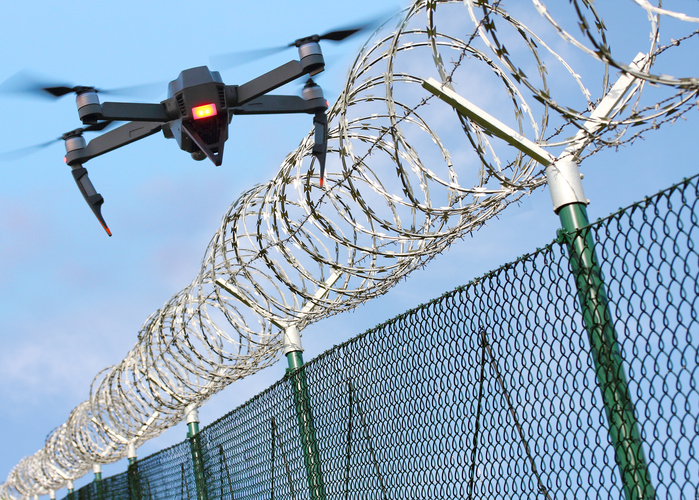
New Delhi: The Army is in the process of procuring an unspecified number of anti-drone systems that will detect and jam the communication and navigation signals of a hostile unmanned aerial vehicle (UAV) or spoof it.

Top defence sources told ThePrint that a majority of these systems will only have the jamming feature option, which can disrupt the communication or navigation signals of a rogue drone. The others will be of a more advanced configuration, which will also be able to spoof a UAV.

Jamming by an anti-drone system refers to the disruption of the communication signals of a rogue drone and its control station. Spoofing means engaging with all classes of drones and taking active control of them to either make them forcibly crash land or to abandon their mission.

According to the sources, the procurement process for the first set of anti-drone systems is at an advanced stage and an order is expected to be placed shortly. About four to five companies had sent in their bids. They added that this fast track process was likely carried out under the provisions of the emergency procurement powers that were granted to the services last year by defence ministry.

The anti-drone systems set to be procured by the Army will be different from the ones the Indian Air Force sought to buy recently.

While the ones that the Army is seeking to buy will have this “soft-kill” option, which means they will be able to jam the communication and navigation signals of a hostile drone, the ones sought by the IAF might have both the soft kill and the “hard kill” option, the latter meaning the physical destruction of the drone.

The services’ procurement of the anti-drone systems is significant in the backdrop of a first-of-its-kind attack at the Jammu air base, where two low-intensity improvised explosive devices were dropped from a drone, exposing chinks in the country’s security apparatus with regards to such new threats.

It exploded close to the station’s helicopter hangar and left two IAF personnel injured.

ThePrint reached the Army for a comment on the matter, but did not receive a response till the time of publishing this report.


Also read: Design & materials of Jammu drone attack IEDs ‘point to Pakistan Ordnance factories’


What the anti-drone systems will be capable of

The first set of anti-drone systems will have features to detect and jam the communication and navigation signals of hostile drones — also those dependent on Global Navigation Satellite System such as GPS, GLONASS, BEIDOU, IRNSS — in ranges of up to 10 kilometres.

They should be GIS (geographic information system)-enabled and have an inbuilt navigation system. They will carry out reconnaissance to detect, identify and track hostile drones before jamming them. They should also be able to engage multiple drones within a certain frequency band.

The second set of anti-drone systems with additional spoofing capabilities will be able to perform a variety of functions against rogue drones — search, detect, jam and spoof them, over a range of 20 km.

Defence sources said that these drones should be suitable for deployment anywhere, particularly in high altitude areas and mountains.

Anti-drone systems detect and intercept hostile drones and unmanned aerial systems, which can be used for intelligence gathering or smuggling contraband, or to deploy explosives.

They are deployed to protect military bases, airports, critical infrastructure and other important sites.

(Edited by Manasa Mohan)


Also read: Why countering ‘low-tech drone terror’ is going to be a big challenge for India


India will have to fend for itself along the LAC

In the Indian experience, no country has parted with high-grade technology and raising the FDI limit in defence to 74% has made little difference. Quad is cited as an example of a balancing coalition and power centre in the Indo-Pacific. But it is not a military coalition, it’s just a strategic grouping of like-minded democracies, which, at best, will have token maritime influence from the collective naval exercises as part of the expanded Malabar series.

India will have to fend for itself along the LAC

Huge Gap: India can’t deter China from its offensive action along the LAC due to the military and economic power asymmetry between the two countries. PTI

Maj Gen Ashok K Mehta (retd)

Military

India cannot deter China from its coercion, intimidation and offensive military action along the LAC due to the military and economic power asymmetry. China’s comprehensive national power is seven times more than India’s. Its GDP is $15.5 trillion compared to India’s $2.9 trillion. China has the second largest economy. It is the world’s largest investor, spends three times more than India on defence and has the world’s second most powerful armed force, including the biggest navy.

By not defining the LAC, China can indulge in salami-slicing. Its latest foray in east Ladakh has yielded around 800 sq km of territory and altered the LAC more or less, according to its 1959 alignment of LAC.

The power differential includes the huge infrastructure disparity in Tibet and Xinjiang compared with India. During the first military standoff at Sumdorong Chu in 1988, India and China were roughly on a par with each other in different power indices and India was emerging as a regional military power.

China has broken the 1988 consensus and strategic equilibrium by violating protocols put in place to ensure that peace and tranquility prevails on the disputed border, which is a necessary and essential condition for normal bilateral relations.

As part of its Wolf Warrior diplomacy, it has now falsified the narrative, portraying India as the aggressor and contending its deployment on the border was to prevent India from encroachment on China’s territory.

Beijing has paraded the Pangong Lake flag among its army units to commemorate the bravery of its troops in Galwan, in particular, and in east Ladakh, in general. Chen Hongjun was one of the four martyrs of Galwan. He was posthumously valourised during the recent centenary of the Communist Party of China (CPC) for defending and guarding the country’s borders.

In editorial columns one year after Galwan, our diplomats and generals have suggested ‘external balancing’ as a means of bridging the power gap —building balancing or countervailing coalitions with other nations that will support India in international fora as well as sell modern weapons, platforms and technology.

In the Indian experience, no country has parted with high-grade technology and raising the FDI limit in defence to 74 per cent has made little difference. Quad is cited as an example of a balancing coalition and power centre in the Indo-Pacific. But it is not a military coalition, it’s just a strategic grouping of like-minded democracies, which, at best, will have token maritime influence from the collective naval exercises by the US, Japan, Australia and India as part of the expanded Malabar series.

Routine exercises in the Indian Ocean Region will have little or no bearing on events in Ladakh. What Quad may do in the future when and if it adopts the military avatar is to invoke the Chinese Malacca dilemma, with New Delhi acting as the pivot. Any military action on the high seas against Chinese maritime assets will be construed provocative, even an act of war.

Quad is certainly one method of containing China to partially offset India’s continental handicap along the LAC. With Quad transforming into a military grouping or alliance, India risks losing its highly coveted strategic autonomy. Speaking last month at the Qatar Economic Forum, Foreign Minister S Jaishankar, when asked what role Quad could play as a counterweight to the LAC situation, answered: “I think when it comes to Quad and India-China border issue, we are talking apples and oranges. I would urge you look at them independent of each other.”

NATO is the biggest military alliance of 30-member states. Its Article 5 states that an attack against one ally is considered an attack against all allies. Balancing is achieving equilibrium (or parity). Coalition is alliance, short of union, e.g. the Coalition of the Willing. Partnership is a contract between two states. Alignment is taking of sides.

For decades, India was non-aligned, whereas today it can be multi-aligned or issue-based aligned. It has chosen to enter into strategic partnerships which are comprehensive, special, enduring etc, with several like-minded countries. It shuns joining any alliance which can erode its strategic independence. India will not be part of any military alliance, except under aegis of the UNPKO.

The closest India got to a quasi-alliance was the Indo-Soviet Treaty of Peace, Friendship and Cooperation of August 9, 1971, which had a clause on Prime Minister Indira Gandhi’s insistence about India’s non-aligned status. The treaty was signed only when war with Pakistan became a distinct option and Sino-US relations had changed dramatically three weeks earlier.

During the one-year-plus standoff and clash at Galwan, where firearms were not used, India was cheered by the US and Japan. Other countries made friendly noises. Bhutan was mum. As in 1962, only the US provided intelligence, high-altitude equipment and logistic support, but no weapons.

India has kept the resolution of the multiple standoffs purely bilateral, diplomacy being the primary tool of dispute-solving. The Chinese intrusions may never be vacated for the same reasons that they were perpetrated.

The lesson from Ladakh is that India will have to fend for itself along the LAC for a long time to come. No foreign soldier will join the standoff; nor will India ask for combatants. External balancing with a grouping like Quad is not a sufficient substitute for a military alliance to deter China from coercion and aggression.

While Modi greeted Biden on the US Independence Day (July 4), he did not congratulate Xi Jinping on the centenary of the CPC (July 1). A Sino-India reset is possible if BRICS, of which India is the chair, is held physically and Modi and Xi meet on the sidelines.


Two jawans killed in Rajouri, 6 ultras shot in 3 encounters

Four militants gunned down in Valley; two Pak terrorists shot in Jammu

Two jawans killed in Rajouri, 6 ultras shot in 3 encounters

Naib Subedar Sreejith M & Sepoy Maruprolu Jaswanth Reddy.

Tribune News Service
New Delhi, July 8

Six terrorists were killed in separate encounters in Kulgam, Pulwama and Rajouri districts on Thursday.

The security forces said four militants had been killed in Kulgam and Pulwama districts. Two Lashkar-e-Toiba militants were in Kulgam. They have been identified as Nasir Ahmad Pandith and Shahbaz Ahmad Shah.

In another operation at Puchal in Pulwama district, two militants were neutralised, an official said, adding that further details would pour in later as the operation continued. They have been identified as Kifayat Ramzan Sofi, associated with the LeT, and Inayat Ahmad Dar, affiliated with Al-Badr outfit.

Infiltration bid foiled in Sunderbani

The Army foiled a major infiltration bid in Rajouri as it eliminated two Pakistani terrorists. Naib Subedar Sreejith M and Sepoy Maruprolu Jaswanth Reddy died in the gunfight.

Meanwhile, Kashmir IGP Vijay Kumar has congratulated security forces. “Five terrorists killed in 24 hours in Kashmir. Congratulations to the police and the security forces for the operations without collateral damage,” he added.

In Rajouri, the Army foiled a major infiltration bid along the LoC as they eliminated two Pakistani terrorists. The Army lost two soldiers, including a Junior Commissioned Officer, in the fierce gun battle.

Jawans had launched an extensive search operation in Sundarbani sector after getting information regarding infiltration, a defence spokesman said.

The gunfight erupted in in Dadal forest area that also claimed the lives of Naib Subedar Sreejith M and Sepoy Maruprolu Jaswanth Reddy.

Two AK-47 rifles and ammunition in heavy quantity have been recovered from the terrorists, the spokesman said, adding a detailed search of the area continues.

This is second infiltration bid foiled by troops in the last 24 hours along the Line of Control in Rajouri.

A Pakistani terrorist was gunned down as Army troops foiled an infiltration bid along the LoC in Rajouri district of Jammu and Kashmir on Wednesday. Two soldiers were injured in the fire-fight with the terrorists who made an attempt to cross the LoC.