























A drone was spotted near international border in Jammu around 10 pm on Tuesday, prompting the Border Security Force (BSF) to fire five to six rounds, following which it went back to the Pakistan territory, an official said. “On intervening night of July 13 and 14, a blinking red light was observed by own troops in Arnia sector at about 0952 pm at height of 200 metres on own side. Alert troops fired from their position towards red blinking light, due to which it returned back. Area being searched. Nothing found so far,” the BSF said in a statement. This is for the sixth time that a drone was seen hovering over Jammu after two explosions rocked the India Air Force Station in June. Two IAF personnel had suffered minor injuries in the explosions that took place at the high security airport located around 14 km from the border with Pakistan. The Jammu and Kashmir police chief later said that another major strike was averted when a terrorist, believed to be working for the Pakistan-based outfit Lashker-e-Taiba, was arrested with an IED (Improvised Explosive Device) that was to be used for a strike “in a crowded place”. The arrest is not linked to the airport attack, Dilbagh Singh said. A day later three suspected drones were spotted again at three different locations in Jammu. According to officials, the first drone was spotted in Kaluchak cantonment area, second in Ratnuchak cantonment area and the third in Kunjwani area between 1:30 and and 4 am. Spotting of hexacopter was also reported inside the Indian High Commission in Islamabad on the night of June 26. It is said to have happened hours before the Jammu Indian Air Force Base drone attack. “It was possibly recording our function which was a curtain raiser event on India’s 75th Independence Day but we can’t be sure of their intention,” a diplomat said.
Defence ministry extends emergency powers to armed forces as India-China stand-off continues
An Indian Army truck on a Kashmir highway leading to Ladakh | Representational image | ANI
New Delhi: The Defence Ministry has granted yet another extension of the emergency powers, which were accorded to the Indian Army, Navy and Air Force last year, for emergent revenue procurements and works, amid the stand-off with China at the Line of Actual Control (LAC) in eastern Ladakh.
According to top defence sources, the emergency powers for revenue procurements —through the fast track procedure —have been extended till 31 August.
Last month, Defence Minister Rajnath Singh-headed Defence Acquisition Council (DAC) had also extended emergency powers of the defence services for capital acquisitions till 31 August 2021.
The emergency capital and revenue procurement powers were first extended upto March 2021.
Revenue procurement powers relate to the procurement of critical spares and ammunition required to sustain or maintain these assets.
“Invoking of emergency powers for both revenue and capital procurement indicates the government’s intent to enhance our fighting and engaging capabilities to the next level and also sustain them through the long term,” a source in the government said.
After the Galwan Valley clash in June last year, the defence ministry had, for the first time, given emergency capital procurement powers to the armed forces to procure weapon systems of upto Rs 300 crore on an urgent basis without further clearances to cut short the long and tedious procurement cycle.
Prior to that, emergency powers were granted to the services after the Balakot airstrike in February 2019 and the 2016 Uri surgical strike covered only revenue procurements.
CDS cited operational readiness of armed forces in Ladakh
Top defence sources told ThePrint that before Rajnath Singh approved the extension of the emergency powers, the Chief of Defence Staff, General Bipin Rawat, cited high operational readiness of the forces in Ladakh for the move.
The CDS had noted that it is unlikely that the situation at the LAC will ease anytime soon and that would require the armed forces to be at peak operational readiness in the region, and he thus cited the need for extending the emergency powers both for capital and revenue procurement, the sources added.
In the last one year, India has deployed nearly 50,000 additional troops in the Ladakh region and deployed a large number of ground and air assets for any contingencies.
Spares, HAMMER under emergency powers
Sources said that apart from some major capital purchases, a number of spares and other smaller items will be purchased under the emergency revenue procurement powers.
“Aside from some major capital purchases, there is also a number of spares and other smaller items required to be purchased for maintenance of our assets deployed in the frontlines, its overhauls and refits,” a source said.
Some of these emergency revenue procurement powers will also be helpful in building large-scale infrastructure such as roads and bridges in eastern Ladakh.
Among the major capital procurements initiated by the defence ministry are anti-drone systems being procured by the Army which can jam the communication and navigation signals of a rogue drone or spoof it.
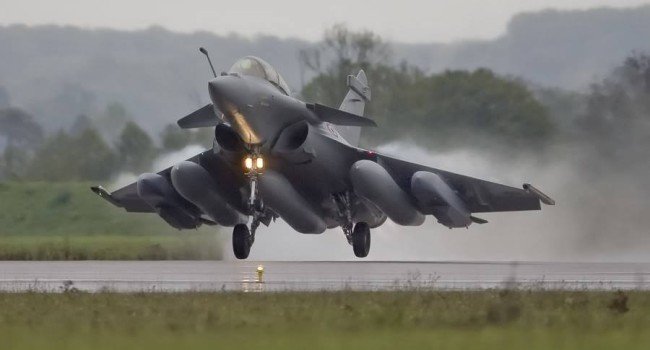
Defence sources also said that the IAF is planning to buy another lot of HAMMER air-to-ground precision-guided weapon system for its Rafale fighter jets using the emergency powers.
The Highly Agile and Manoeuvrable Munition Extended Range costs around Rs70 lakh and consists of a guidance kit and a range-extension kit fitted on a standard Mk 82 bomb of 250 kg.
Other procurements include armour-piercing fin-stabilised discarding sabot (APFSDS) ammunition fired by the T-72 and T-90 main battle tanks, additional Heron drones, loitering munition, Spice Bombs, and Man Portable Air Defence System (MANPADS).
Representation Jammu: The Indian Army has been equipped with modern gadgets to tackle security threats along the Line of Control in Poonch district of Jammu and Kashmir, defence sources said here on Wednesday. According to them, the first-of its kind drone attack in the country on the Air Force Base and detection of UAVs in the bordering districts of Jammu and Kashmir, prompted the Indian Army to devise a comprehensive strategy to tackle new threats along the Line of Control (LoC). “The Army has also enhanced vigil along the LoC to combat the infiltration bids in coming winters,” they asserted, adding that the Army has been put on high alert to thwart nefarious designs of Pakistan. “Despite adverse weather conditions, troops are on toes to foil infiltration attempts being made from across the border,” the sources said. “The Army has revamped its strategy to tackle (UAVs) movement and also to combat infiltration attempts,” they said. Pakistan, through its launching pads based on the other side of the LoC in Poonch sector, is attempting to infiltrate Lashkar-e-Taiba (LeT) and Jaish-e-Mohammed (JeM) militants into Indian side. Poonch sector in Jammu region is strategically important because the Chinkut area in Pakistan across the border has one of the biggest launching pads whereas in the training camps, terrorists are being motivated to infiltrate inside the Indian territory and launch attacks at key locations. On February 25, a joint statement issued by both India and Pakistan said that they have agreed to a ‘strict observance of all agreements’, understandings and ceasefire along the LoC and all other sectors. The sources said that to thwart the nefarious designs of Pakistan, the Army has been well equipped with modern weaponry and has also installed latest gadgets to keep a close watch on any suspicious movement on the border. “Before fresh snowfall, attempts of infiltration may increase but the Indian Army has geared up to defeat every nefarious conspiracy of the enemy,” they added.
Brigadier Kailash Prasad Pande (left) with son-in-law General Deepak Kapoor, ex-COAS
Lt Col Dilbag Singh Dabas (Retd)
During Operation ‘Cactus Lily’ on the eastern front, among the seven Brigadier-rank officers awarded the Maha Vir Chakra (MVC) was Brigadier Kailash Prasad Pande, an artillery officer who was considered more than capable to command an infantry brigade.
Affectionately known in the Gunners’ fraternity as ‘Tom’ Pande, he was born in 1925 in an illustrious Brahmin family of Gwalior in the then Central Provinces of undivided India (now Madhya Pradesh). Kailash had his secondary education at Victoria College (now Rani Laxmi Bai Government College) where Atal Bihari Vajpayee, the former Prime Minister, was his classmate. The family had a tradition of its male members joining the Army and after Senior Cambridge, Kailash was commissioned into the Gwalior State Forces on August 25, 1945.
After amalgamation of the princely states with the Indian dominion and during reorganisation of the Indian Army post-Partition, ‘Tom’ Pande, now a subaltern, joined 42 Field Regiment. The first three youngsters from the Gwalior State Forces joining the Indian Artillery were affectionately named Tom, Dick and Harry. Second Lieutenant Kailash Prasad Pande, being short and stocky and with remarkable josh, got the name Tom.

In 1964, ‘Tom’ Pande, as Lieutenant Colonel, raised and also commanded 56 Mountain Composite Regiment (Pack). He also had a two-year successful tenure at the Indian Military Academy as Battalion Commander, where he enthused many good ranking Gentlemen Cadets to join the Regiment of Artillery.

In 1970, Tom was promoted to the rank of Brigadier and was given the command of 2 Mountain Artillery Brigade deployed in Arunachal Pradesh on the border with Bhutan, Tibet and Burma (now Myanmar).

In the early stages of ‘Cactus Lily’, the battle to capture Dhalai post turned out to be fierce with unimaginable casualties. Brigadier Shiv Yadav, Commander of 61 Mountain Brigade, who was badly injured, had to be evacuated. Lieutenant General Sagat Singh, Corps Commander of IV Corps, arrived on the scene and after having taken stock of the situation ordered Brigadier Pande, who at that moment was functioning as artillery adviser to the divisional commander, to take over 61 Mountain Brigade and carry on with the attack.
After planning afresh and regrouping of the combat elements, the battle recommenced. It was a fiercely fought battle with Brigadier Pande leading from the front. After successful conduct of the battle, General Sagat Singh was highly impressed with Brigadier Pande’s personal gallantry and exemplary leadership and immediately recommended him for the award of Maha Vir Chakra. Not just that, seeing the way he led the brigade with cool courage and innovative planning that produced results, General Sagat now directed Brigadier Pande to take over the brigade formally; a rare honour for an artillery brigade commander to be given such a prestigious assignment of commanding an infantry brigade, and that too in the middle of the battle.
Captain Deepak Kapoor, who would later rise to become the 23rd Chief of Army Staff, was then Staff Officer to Brigadier Pande at Artillery as well as Infantry brigade headquarters. A few years later, he would go on to marry Brigadier Pande’s daughter.
Under the dynamic leadership of Brigadier Kailash Prasad ‘Tom’ Pande, 61 Mountain Brigade accomplished seemingly impossible tasks, advancing 40 miles in just three days capturing all strongly-held bounds en route. On December 9, 1971, Brigadier Pande personally advanced alongside 12 Kumaon Infantry Battalion and a troop of armour and ensured that Daudkandi, a vital communication centre south-east of Dacca, was secured by the last light, taking the enemy completely by surprise.
Under the command of Brigadier Pande, the battalions daringly leaned onto the mighty Meghna river on its southern bank and captured a steamer station at Daudkandi, resulting in a great number of Pakistani troops getting trapped between Comilla and Daudkandi. Some enemy troops, however, managed to extricate themselves and got into the fortress at Mynamati; they would eventually surrender a week later to Brigadier Pande. This lightning success on December 9 also resulted in the capture of 1,500 Pakistanis, including Lieutenant Colonel Nayeem, a commanding officer of the Pakistan army. This was the first major local surrender by Pakistani troops in the eastern theatre. On December 16, Brigadier Sheikh Mansoor Hussain Attif, Commander of Pakistan’s 117 Infantry Brigade, surrendered to Brigadier Pande along with 5,000 troops.
For his bold planning and almost always advancing alongside the attacking battalions, Brigadier Pande was awarded the Maha Vir Chakra. The battle account reads:
61 Mountain Brigade, commanded by Brigadier Kailash Prasad Pande, was assigned the task of clearing a well fortified position in the eastern theatre in December 1971. The task was successfully completed mainly due to Brigadier Pande’s inspiring leadership. He was always well forward, unmindful of his safety, encouraging troops and directing the battle. His brigade group advanced 40 miles in 72 hours, effectively bottling up the enemy and capturing the key posts. When lodgment was attained in the fortress of Mynamati defences, his brigade was subjected to the determined enemy attacks supported by tanks. Against all the relentless pressure of the enemy, the brigade held onto the defences until surrender by the enemy commander.
Throughout the operations, Brigadier Pande displayed gallantry, leadership and devotion to duty of a very high order for which he was awarded the Maha Vir Chakra.
It is widely believed that during the course of ‘Cactus Lily’, Brigadier Pande was thrice recommended for the award of MVC. Finally, the government, in its wisdom, combined all three recommendations and awarded the Maha Vir Chakra to this great soldier.
Consequent to the liberation of Bangladesh, while the Indian Army was promptly withdrawn, 61 Mountain Brigade was told to stay on for pacifying the restive areas. For a good eight months, 61, now a Mountain Brigade Group, under the command of Brigadier Pande helped put down rebellions and near uprisings, especially in Chittagong Hill Tracts. During the process, his men suffered casualties but delivered the results to keep up the good reputation of the Indian Army.
After a glorious military career spanning more than three decades, Brigadier Kailash Prasad ‘Tom’ Pande, MVC, superannuated in July 1979 and settled down in Bhopal, his hometown. After retirement, the Madhya Pradesh Government appointed him as Director General of Home Guards, where he introduced many reforms. He was also appointed secretary of the Madhya Pradesh Rajya Sainik Board.
After the Bhopal gas tragedy in 1984, he was given charge of the Madhya Pradesh State Red Cross Organisation. He went beyond the call of duty, often at personal risk, in providing timely relief and succor to the maximum extent possible.
Brigadier Pande, MVC, passed away on February 4, 2010, while attending the Artillery Reunion at the School of Artillery, Deolali. General Deepak Kapoor, his son-in-law, was by his side when the Maha Vir breathed his last.
MONITORING ACTIVITIES BY PLA: ARMY ON EASTERN LADAKH SITUATION
India and China troops and tanks disengage from the banks of Pangong lake area in Eastern Ladakh The Army made the comments as part of a statement trashing a media report that said the Chinese military has again crossed the LAC in eastern Ladakh at several places. There has been no attempt by the Indian or the Chinese side to occupy the areas in eastern Ladakh from where they disengaged in February and both sides are engaged in talks to resolve the remaining issues in the region, the Army said on Wednesday. The Army said it has been monitoring activities by the People’s Liberation Army (PLA) including turnover of troops in the region. The Army made the comments as part of a statement trashing a media report that said the Chinese military has again crossed the Line of Actual Control (LAC) in eastern Ladakh at several places and that there has been at least one incident of clash between the two sides. “Ever since the disengagement agreement in February this year, there has been no attempt by either side to occupy the areas from where the disengagement had been undertaken. There have been no clashes in Galwan or any other area, as reported in the article,” the Army said. It also said that the report mentioning that agreements with China have collapsed is “false and baseless”. “Both sides have continued with negotiations to resolve the balance issues, and regular patrolling in respective areas continues. The situation on ground continues to be as hitherto fore. PLA activities, including turnover of troops continue to be monitored by the Indian Army,” the Army said. India and China have been locked in a military standoff at multiple friction points in eastern Ladakh since early May last year. The two sides completed the withdrawal of troops and weapons from the North and South banks of Pangong lake in February following a series of military and diplomatic talks. The two sides are now engaged in talks to extend the disengagement process to the remaining friction points. There was no visible forward movement in disengagement of troops in the remaining friction points as the Chinese side did not show flexibility in their approach on it at the 11th round of military talks.
No fresh clash between Indian and Chinese troops in eastern Ladakh, Army says
An Indian Army truck on a Kashmir highway leading to Ladakh | Representational image | ANI
New Delhi: The Army has denied reports of any fresh clash between Indian and Chinese troops in eastern Ladakh, stating that no attempt has been made by either side to occupy the areas from where the forces had disengaged after the agreement in February this year.
The statement came in view of reports quoting sources that Chinese troops have crossed the Line of Actual Control (LAC) in eastern Ladakh at several places and at least one clash has taken place between the two sides.https://e6dcd74b1df4dcffeb444b88a8e022d0.safeframe.googlesyndication.com/safeframe/1-0-38/html/container.html
The Army said both India and China have continued with negotiations to resolve the existing issues in eastern Ladakh while regular patrolling has continued in the respective areas along the LAC. It also noted that there have been no clashes in Galwan or any other area since June 2020.
“PLA activities, including turnover of troops, continue to be monitored by the Indian Army,” the Army said in its statement Wednesday.
While India and China disengaged from the contentious Pangong Tso area in March — after multiple rounds of talks at the military and diplomatic levels — there has been no further breakthrough, with China refusing to pull back its troops from Hot Springs and Gogra Post and Depsang Plains.
Defence sources told ThePrint that despite the disengagement of troops at Pangong Tso, there has not been any de-escalation in the area.
“There has been a gradual build-up of Chinese troops and equipment on their side of the LAC. India has also proportionately put in thousands of troops and deployed additional assets in the region,” a source said.
A second defence source explained that minor skirmishes between the troops take place at times when they are in close proximity or bump into each other while patrolling in their respective claim lines along the LAC.
“However, such incidents are far and few and extremely localised. They are immediately brought under control by the subordinate commanders at the local level and do not impact the overall situation,” the source said.
According to a report in The Hindu, Chinese nationals earlier this week protested against Indian villagers celebrating the birthday of the Dalai Lama in Demchok in eastern Ladakh by displaying banners from across the Indus river.
Next round of talks awaited
Last month, at a virtual meeting of the Working Mechanism for Consultation and Coordination on border affairs, India and China agreed to hold the next round of military talks at an early date to achieve the objective of complete disengagement in remaining friction points.
It was also decided at the meeting to hold the 12th round of the military corps commander talks for complete disengagement from all friction points along the LAC.
The final date for the next round of military talks is still awaited.
Last month, Defence Minister Rajnath Singh was briefed on India’s military preparedness in eastern Ladakh during his three-day visit to the Union territory.
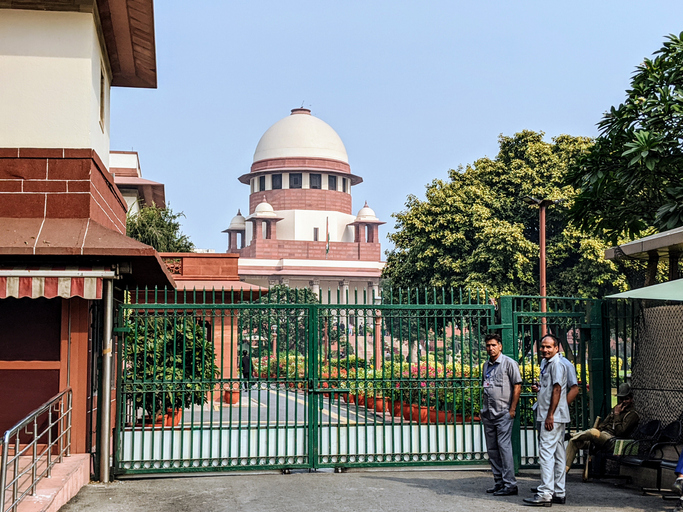
The Supreme Court on 25 March had criticised the Army’s evaluation criteria for granting permanent commission to women officers and called out its systematic discrimination.
Women Army officers outside the Supreme Court in New Delhi on 17 February 2020 ( representational image) | Photo: Suraj Singh Bisht | ThePrint
New Delhi: A total of 147 additional women short service commission (SSC) officers of the Indian Army have been granted permanent commission as per the revised parameters set by the Supreme Court in March this year, the Defence Ministry said on Wednesday.
The Supreme Court on March 25 had said the Army’s evaluation criteria for granting permanent commission (PC) to women SSC officers systematically discriminated against them.
“The women officers were re-considered as per directions of the Hon’ble Supreme Court and fresh results have now been de-classified. Consequently, 147 more women officers are being granted PC, taking the total PC granted to 424 out of the 615 officers considered,” the ministry said in a statement.
The results of a few women officers have been withheld for administrative reasons and awaiting the outcome of the clarification petition filed by the central government in the Supreme Court, it added.
Therefore, the Army had constituted a special selection board in September 2020 to screen women officers. The results were declared in November 2020.
The women officers who were not granted PC in November 2020 moved to the Supreme Court. The top court in March this year found that the “evaluation criteria set by the Army constituted systemic discrimination” against these women officers.
The Supreme Court, in its March order, laid down revised parameters on the basis of which the women officers would be evaluated for the permanent commission in the Army.
The Defence Ministry said on Wednesday that all women officers, who have been granted PC, would undergo special training courses and challenging military assignments to empower them for higher leadership roles in the Army.
A batch of 33 women officers has already successfully completed the mid-level tactical orientation course from Army War College Mhow recently, it added.
The ministry said all women SSC officers, who were considered by the Army’s selection board and not granted PC, will still be eligible for pension subject to serving for a minimum of 20 years in service.
The centenary speech an exercise in self-aggrandisement and promotion of CCP
In command: The party was honoured with a 100-gun salute. Reuters
Jayadeva Ranade
President, Centre for China Analysis and Strategy
The Chinese Communist Party (CCP) concluded its centenary celebrations with a grand event and speech by CCP general secretary Xi Jinping on July 1. It provided the CCP and Xi Jinping an opportunity to share their assessment of the journey thus far and give a broad sense of direction for the future. In his speech Xi Jinping mentioned the Belt and Road Initiative and the ‘community of shared destiny’ — his personal projects — hinting that he would continue in office beyond the party congress next year.
The celebrations confirmed also that the CCP leadership is sensitive to the military’s morale. Contrary to its announcement in March, a carefully vetted crowd watched a military parade and flypast by the latest generation J-20 ‘stealth’ fighter aircraft and ZL-10 transport helicopters over Tiananmen Square. The party was honoured with a 100-gun salute.
The entire CCP politburo was present on the Tiananmen Gate Tower. The state-owned CCTV showed Xi Jinping deferentially walking a step behind his grey-haired predecessor Hu Jintao. Former President Jiang Zemin was absent, possibly because of age. The invitees included many retired veteran cadres, including 104-year-old Song Ping and former Premier Wen Jiabao.
Suggesting that Xi Jinping is possibly seeking the support of party ‘elders’ at the next party congress, Jiang Zemin’s long-serving chief of staff and ex-Vice President Zeng Qinghong was present. Particularly interesting was the presence of Bo Xicheng, son of one of China’s ‘Eight Immortals’, Bo Yibo and brother of incarcerated former politburo member Bo Xilai, who tried to push Xi Jinping aside in the run up to the 18th party congress in 2012 and take over China’s top three posts!
The CCP’s international liaison department had requested political parties from around the world to send congratulatory letters on the occasion. Of the Indian parties, only the CPI and CPI (M) responded positively.
Xi Jinping’s nearly hour-long speech was crafted to exude confidence blended with aggression and nationalism. It was calculated as much to concretise the CCP’s monopoly on power in China as to rally nationalist sentiment against anti-China foreign forces and mobilise the people towards achieving the second centenary goal under the CCP’s leadership. It avoided mentioning calamitous disasters like the Great Leap Forward and Cultural Revolution, in which over 80 million people lost lives, were disabled or scarred for life. Surprisingly, neither did it list what material benefits the people could expect in the coming decades.
Xi Jinping paid the ritual obeisance to veteran Chinese communist revolutionaries, acknowledging them by name. The rest of his speech focused on the party: how it had ushered in ‘socialism with Chinese characteristics’, ‘profoundly changed the course of Chinese history in modern times’, modernised China, and its indispensability for China. Xi Jinping declared ‘we must uphold the firm leadership of the party. China’s success hinges on the party. Without the Chinese Communist Party there will be no new China and no national rejuvenation’. The party was mentioned 133 times.
It also conveyed a message to foreign powers, whose remarks bore Xi Jinping’s imprimatur. Stressing that China was no longer ‘a semi-colonial, semi-feudal society’ and had ended ‘all the unequal treaties imposed on our country by foreign powers and all the privileges that imperialist powers enjoyed in China’, Xi Jinping was emphatic that ‘any attempt to divide the party from the Chinese people or to set the people against the party is bound to fail’.
Alluding to increasing US pressure on China, he declared that ‘the Chinese people will not allow any external forces to bully, oppress, or enslave us; anyone who deludes themselves into doing so will suffer a crushing and bloody head-on collision with the great wall of steel (PLA) made of the flesh and blood of 1.4 billion Chinese people’. China’s official news agency Xinhua subsequently released a toned-down version saying ‘anyone who would attempt to do so will find themselves on a collision course with a great wall of steel forged by over 1.4 million people’.
Xi Jinping subtly directed credit for achievements towards himself. He declared ‘a historic resolution to the problem of absolute poverty in China’, as China marched towards its second centenary goal. The goal of alleviating absolute poverty by 2021 was Xi Jinping’s flagship programme. Xi Jinping also said ‘in this new era, we have upheld and strengthened the party’s overall leadership’, overcoming many ‘major risks and challenges’. Xi Jinping traced these achievements to the 18th party congress. He reinforced this with a call to uphold the core position of the general secretary on the party central committee and in the party as a whole.
Xi Jinping’s uncompromising remarks on Hong Kong, Macau and Taiwan are revealing. He promised Hong Kong and Macau the rule of law, but tempered with greater autonomy. On Taiwan, he specifically mentioned the 1992 consensus and reiterated China and the party’s commitment to the ‘full reunification’ of China.
Xi Jinping asserting full reunification indicates that he will remain unyielding on issues of sovereignty. It is relevant for those with whom China has unresolved territorial or maritime disputes. While the celebrations allowed the CCP to effectively project its contribution to China’s ‘rise’ and its future relevance, the repeated references in Xi Jinping’s speech to foreign bullying, efforts to separate the party from the people, and call for the people’s support, reveal the worries of the party leadership. He deftly fashioned his speech to take credit for China’s achievements and affirm that the party would guide China towards ‘the second century goals’.
Chandigarh: An Army officer from Chandigarh, Lt Col Amarjeet Singh Sidhu, died after the jeep he was travelling in fell into a gorge in Bhilwara district of Rajasthan. His mortal remains are being brought to the city and he will be cremated here on Thursday. He was serving with 64 Cavalry and was posted at Pathankot. He was travelling to Ahmednagar when the accident occurred. tns
Laptop, purse stolen from car
Chandigarh: A resident of Sector 21, Gurmeet Singh, reported that a laptop and a purse containing a driving licence, a registration certificate and other documents were from his Honda City car parked near his residence. A case was registered. TNS
Biker snatches woman’s purse
Chandigarh: A bike-borne miscreant allegedly snatched a purse from a woman outside her house in Sector 34 on Tuesday evening. Complainant Shalini Goyal (45) reported that the miscreant snatched her purse containing Rs5,000, car keys, a mobile phone, a debit card and other belongings. The police have registered a case. TNS
Court notice to Administration
Chandigarh: The Punjab and Haryana High Court on Wednesday put the Chandigarh Administration on notice on an application seeking directions to a school to accept monthly tuition fee “at the same rate as was paid during the academic year 2020-21”. The notice by Justice Sudhir Mittal came on an application filed by Manpreet Kaur and other applicant-petitioners. Taking up the matter, Justice Mittal also fixed August 18 as the next date of hearing in the matter. TNS
Boxing tourney begins tomorrow
Chandigarh: The Chandigarh Amateur Boxing Association (CABA) will organise the 41st Junior Men and 17th Junior Women State Boxing Championship at the Sector 42 Sports Complex from July 16 to 17. During this championship, the CABA will also select teams for representing the city in the Junior National Boxing Championships to be held at Sonepat, Haryana, from July 25 to 31. Interested boxers of Chandigarh are advised to report at the venue with original and photocopy of valid photo identity proof (Aadhaar card, original institutional identity card and age proof). The weighing-in time is from 6 am to 9 am. TNS
2 held under NDPS Act
Chandigarh: Two persons have been arrested under the NDPS Act. The crime branch nabbed Ravinder Pal Singh, alias Ghoda (38), of Patiala with 51.15 gram of heroin in Sector 40. In another incident, the police nabbed a resident of Hallo Majra, Amarjeet Singh, alias Happy (52), with 85 banned vials and 68 syringes at Ram Darbar. TNS
Shuttler gets rs 2-lakh reward
Chandigarh: Shuttler Devika Sihag, a student of Bhavan Vidyalaya, has won a cash reward of Rs 2 lakh from the Sports Department, Haryana, in recognition of her achievements in badminton during the past year. She is ranked No. 2 in girls’ doubles and No. 6 in girls’ singles as per last year’s rankings released by the Badminton Federation of India (BFI). She has won gold in sub-junior doubles (U-17), a bronze in U-15 singles and a team bronze in the U-19 category. She is at present training at Prakash Padukone Badminton Academy, Bengaluru. Senior Principal Vineeta Arora congratulated Devika on this feat. TNS
Two held for duping man
Chandigarh: Two persons have been arrested for duping a resident of Nayagaon of Rs 48.46 lakh. Tarsem Lal had reported that he had received calls from unknown persons who made him deposit money in lieu of LIC bonus and a club’s membership. He later found that he had been duped. Two suspects, identified as Atul Abhishek (37) of Hamirpur district in Himachal Pradesh and Hardeep Kumar (32) of Fazilka district in Punjab, have been arrested. TNS
Elderly man hit by train, dies
Dera Bassi: An elderly man died after being hit by a train near here on Wednesday. The deceased is yet to be identified. Rajinder Singh Dhillon, Mubarikpur railway police station in-charge, said a person was reportedly hit by a train heading from Ambala to Chandigarh around 6.30 pm. TNS
Army grants permanent commission to 147 more women SSC officers
The SC on March 25 had said the Army’s evaluation criteria for granting permanent commission to women SSC officers systematically discriminated against them
Photo for representation. iStock
New Delhi, July 14
A total of 147 additional women short service commission (SSC) officers of the Indian Army have been granted permanent commission as per the revised parameters set by the Supreme Court in March this year, the Defence Ministry said on Wednesday.
The Supreme Court on March 25 had said the Army’s evaluation criteria for granting permanent commission (PC) to women SSC officers systematically discriminated against them.
“The women officers were re-considered as per directions of the Hon’ble Supreme Court and fresh results have now been de-classified. Consequently, 147 more women officers are being granted PC, taking the total PC granted to 424 out of the 615 officers considered,” the ministry said in a statement.
The results of a few women officers have been withheld for administrative reasons and awaiting the outcome of the clarification petition filed by the Central government in the Supreme Court, it added.
The apex court, in a landmark ruling in February 2020, had directed the Centre to ensure that women SSC officers are given PC in the Army, including command postings.
Therefore, the Army had constituted a special selection board in September 2020 to screen women officers. The results were declared in November 2020.
The women officers who were not granted PC in November 2020 moved to the Supreme Court. The top court in March this year found that the “evaluation criteria set by the Army constituted systemic discrimination” against these women officers.
The Supreme Court, in its March order, laid down revised parameters on the basis of which the women officers would be evaluated for the permanent commission in the Army.
The Defence Ministry said on Wednesday that all women officers, who have been granted PC, would undergo special training courses and challenging military assignments to empower them for higher leadership roles in the Army.
A batch of 33 women officers has already successfully completed the mid-level tactical orientation course from Army War College Mhow recently, it added.
The ministry said all women SSC officers, who were considered by the Army’s selection board and not granted PC, will still be eligible for pension subject to serving for a minimum of 20 years in service. PTI
State Stalwarts
ALL HUMANS ARE ONE CREATED BY GOD
HINDUS,MUSLIMS,SIKHS.ISAI SAB HAI BHAI BHAI
CHIEF PATRON ALL INDIA SANJHA MORCHA
LT GEN JASBIR SINGH DHALIWAL, DOGRA
SENIOR PATRON ALL INDIA SANJHA MORCHA
MAJOR GEN HARVIJAY SINGH, SENA MEDAL ,corps of signals
.
.
PATRON ALL INDIA SANJHA MORCHA
MAJ GEN RAMINDER GORAYA , CORPS OF
sanjhamorcha303@gmail.com
PRESIDENT SOUTH ALL INDIA SANJHA MORCHA
COL SS RAJAN BOMBAY SAPPERS,
PRESIDENT SAS NAGAR ALL INDIA SANJHA MORCHA
GROUP CAPT AMARJIRT SINGH
PRESIDENT UTTARAKHAND ALL INDIA SANJHA MORCHA
COL B M THAPA ,BENGAL SAPPERSS
PRESIDENT HARAYANA STATE CUM COORDINATOR ESM
BRIG DALJIT THUKRAL ,BENGAL SAPPERS
PRESIDENT TRICITY
COL B S BRAR (BHUPI BRAR)
PRESIDENT CHANDIGARH ZONE
COL SHANJIT SINGH BHULLAR
.
.
PRESIDENT PANCHKULA ZONE AND ZIRAKPUR
COL SWARAN SINGH
joint PRESIDENT SAS NAGAR (MOHALI)
COL BALBIR SINGH , ARTY
INDIAN DEFENCE FORCES
DEFENCE FORCES INTEGRATED LOGO
FORCES FLAGS
15 Th PRESIDENT OF INDIA SUPREME COMMANDER ARMED FORCES
Droupadi Murmu
DEFENCE MINISTER
Minister Rajnath Singh
CHIEF OF DEFENCE STAFF (2nd)
General Anil Chauhan PVSM UYSM AVSM SM VSM
INDIAN FORCES CHIEFS
CHIEF OF ARMY STAFF(29th)
General Upendra Dwivedi, PVSM, AVSM (30 Jun 2024 to Till Date)