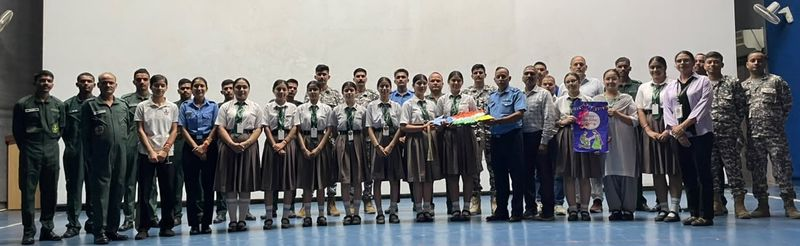
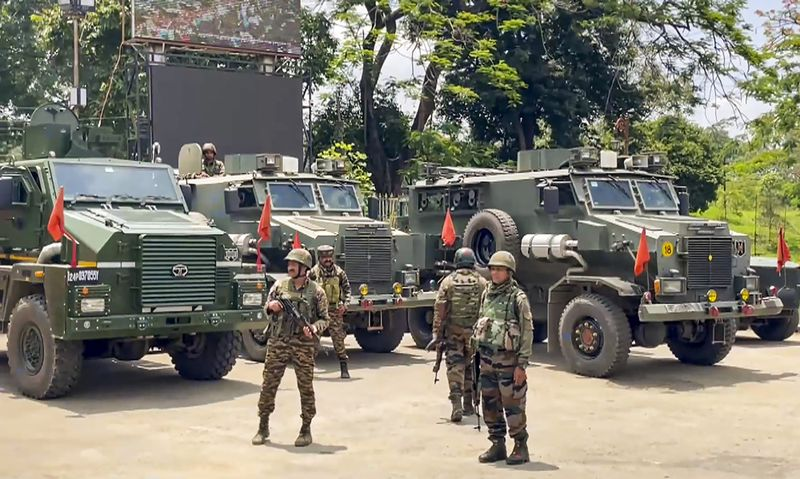
EMM AAR International School, Adampur, Doaba, Class XII girls celebrated Raksha Bandhan with young soldiers at the Air Force Station, Adampur, tying Tricolour-themed Rakhis and expressing gratitude for their service. Students interacted with the soldiers and discussed Operation Sindoor, gaining insights into courage, discipline and national security. Coordinator Rupinder Kaur, Principal Rajinder Kumar and Directors Dr Simmi Tandon and Dr Meesha Tandon appreciated the initiative, highlighting patriotism, brotherhood and the spirit of service.
DRDO successfully tests high-altitude combat parachute system in Ladakh
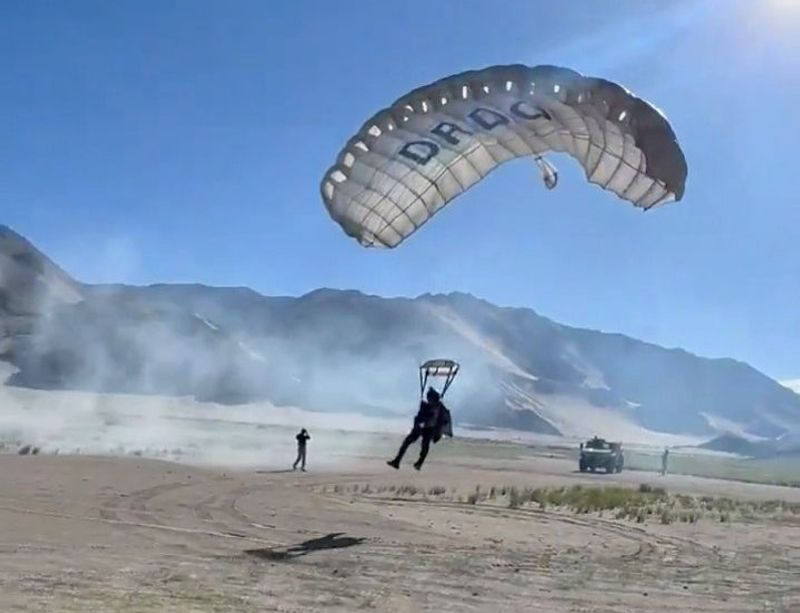
The Defence Research and Development Organisation (DRDO) has successfully tested its Military Combat Parachute System (MCPS) at one of the world’s highest-altitude drop zones in Ladakh.
The trials were carried out at Nyoma, close to the Line of Control in south-eastern Ladakh. The Indian Air Force (IAF) recently commissioned an airbase at Nyoma, which is among the world’s highest airbases for fighter aircraft operations.
The MCPS has been designed and developed by DRDO’s Aerial Delivery Research and Development Establishment (ADRDE), Agra, and the Defence Bioengineering and Electromedical Laboratory, Bengaluru.
During the trial, ADRDE test jumpers Wg Cdr Rahul Jha, Chief Test Jumper, MWO RJ Singh and MWO Vivek Tiwari executed a jump from an altitude of 22,000 feet above mean sea level, DRDO said on Wednesday.
The parachute was deployed at 20,000 feet, with the jumpers landing safely at an altitude of 13,700 feet. The trial was conducted in temperatures as low as minus 15°C .
The test jumpers utilised the MCPS and all other sub-systems, including an indigenous para computer, oxygen system and jumpsuits.
Nyoma has previously been used for several military exercises, including the para-dropping of troops, vehicles and equipment.
“The successful trial demonstrated the efficacy, reliability and tactical employability of MCPS in extreme high-altitude conditions, reinforcing India’s commitment to self-reliance in critical defence technologies,” DRDO said.
Earlier, the MCPS had successfully undergone a combat freefall jump from an altitude of 32,000 feet. This makes it the only parachute system currently in operational use by the Indian Armed Forces capable of deployment above 25,000 feet.
The system incorporates several enhanced tactical features, including a lower rate of descent and superior steering capabilities. These enable paratroopers to safely exit aircraft, deploy their parachutes at predetermined altitudes, navigate accurately and land at designated zones.
The MCPS is also compatible with Navigation with Indian Constellation, also providing the freedom of use against any adversary of our choice and is not susceptible to interference/denial of service by outside parties/nations.
The system incorporates several enhanced tactical features, including a lower rate of descent and improved steering capabilities. These enable paratroopers to safely exit aircraft, deploy their parachutes at predetermined altitudes, navigate accurately and land at designated zones.
Army foils intrusion bid by Pak drones along LoC in Rajouri
Three Pakistani drones reportedly entered the Indian side in the Rumil Dhara area of Nowshera
Security forces foiled an intrusion bid by Pakistani drones along the Line of Control (LoC) in Rajouri district late on Thursday night.
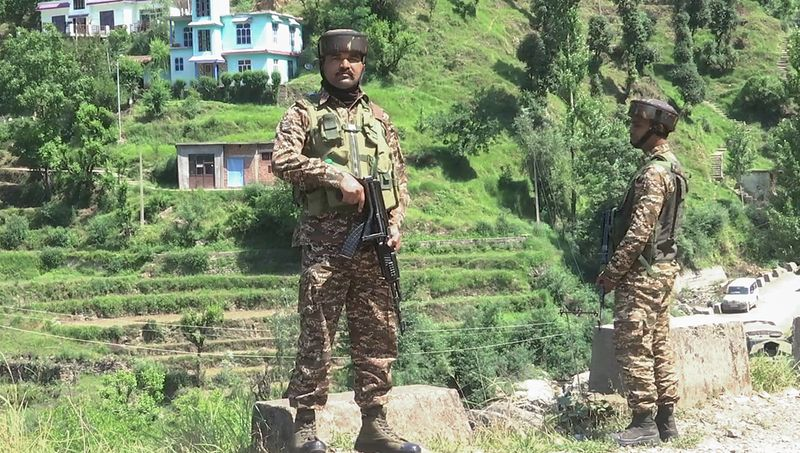
Three Pakistani drones reportedly entered the Indian side in the Rumil Dhara area of Nowshera, following which the Army stationed at the site opened fire, forcing the drones to retreat.
Sources said that after the drone intrusion, suspected movement was also witnessed close to the border fence, following which the Army opened fire. A search operation was immediately launched after the incident to ascertain whether the drones had dropped arms and ammunition or drugs in the area. However, no confirmation of any recovery was received till evening.
Meanwhile, two hand grenades were recovered from a suspect in the Baramulla area during checking by security forces on Thursday evening. The incident took place at Wussan Bangil in the Kunzer area of Baramulla.
The checking was being conducted by a joint party comprising personnel from Police Station Kunzer, Special Operations Group (SOG), Central Reserve Police Force (CRPF) and the Army’s Rashtriya Rifles.
Police said that during the checking, a man tried to flee from the area, making security forces personnel suspicious, following which they chased the suspect.
The man, a resident of Kunzer, was found in possession of two grenades. An FIR has been registered against the accused and an investigation has been started to ascertain from where and for what purpose he was carrying the grenades.
From tunnel rescue teams to Bailey bridges, India expands Nepal aid; NDRF offer awaits nod
External Affairs Minister S Jaishankar said the latest consignment included portable generator sets, dignity kits, food packets and water-purification tablets
From tunnel rescue teams and medical personnel to Bailey bridges and tonnes of emergency supplies, India on Friday significantly stepped up its rescue and relief assistance to flood-ravaged Nepal, while awaiting Kathmandu’s response to its offer to deploy National Disaster Response Force (NDRF) teams with specialised equipment.
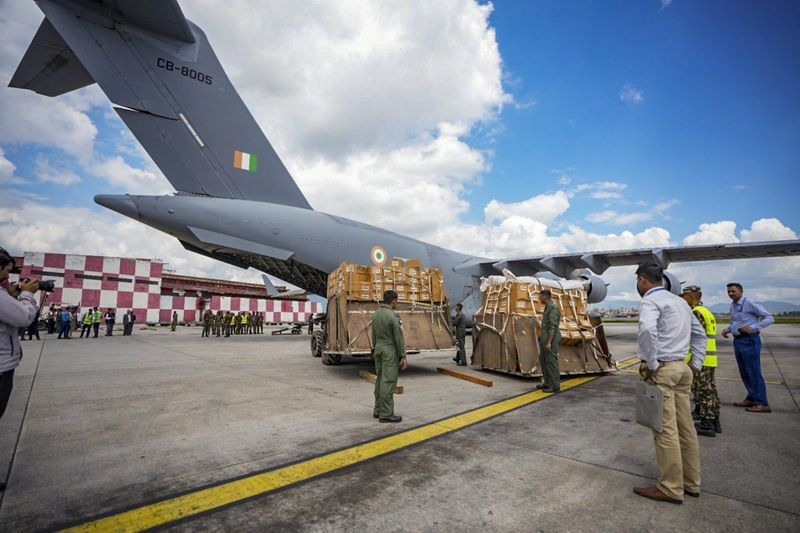
A third Indian aircraft carrying 10 tonnes of humanitarian assistance departed for Kathmandu on Friday with an 11-member team of doctors, paramedics and a reconnaissance team for tunnel rescue operations, as India widened its support for the massive rescue effort.
External Affairs Minister S Jaishankar said the latest consignment included portable generator sets, dignity kits, food packets and water-purification tablets.
The Ministry of External Affairs said India had specifically offered to dispatch NDRF teams along with associated equipment to assist in search and rescue operations and provide relief to people affected by the disaster.
“We await a response from the government of Nepal on this front,” MEA spokesperson Randhir Jaiswal said, adding that India remained ready to provide any other assistance required by Kathmandu.
At Nepal’s request, India is also preparing a tunnel rescue team, with the reconnaissance team being flown in to assess the situation on the ground and determine the equipment required.
India has additionally offered Bailey bridges along with technical teams to restore connectivity in areas cut off by the floods. One Bailey bridge is already in Nepal and can be deployed for rescue, relief and connectivity operations, Jaiswal said.
The third flight takes India’s humanitarian assistance to Nepal to around 60 tonnes in three days.
The first aircraft departed on August 26 carrying 10 tonnes of relief material, including temporary shelters, blankets, hygiene kits, solar lamps and medicines. The second, which left on August 27, carried 37.5 tonnes of tents, blankets, hygiene kits, solar lamps, dewatering pumps, kitchen sets, generators, medicines and food items.
India’s expanded assistance comes as it simultaneously races to trace its nationals caught in the disaster. The MEA has said 320 Indian nationals remain uncontactable or missing, while around 100 persons of Indian origin holding other nationalities also remain uncontactable.
So far, 21 tourists from Tamil Nadu rescued from the affected areas have returned to Delhi, while 63 Indians working at the Trishuli-I hydropower project were rescued earlier.
Jaiswal said the government was arranging the return of those rescued and maintaining round-the-clock coordination through its control rooms in New Delhi, Kathmandu and Beijing.
Asked whether any Indian bodies had been recovered, Jaiswal said there was still no clarity on the death toll among Indian nationals and that those currently unaccounted for remained classified as missing.
India has also sent medical assistance, with the 11-member team of doctors and paramedics now travelling to Nepal alongside the tunnel rescue reconnaissance team.
On the possibility of direct financial assistance to Nepal, the MEA said India was currently extending support through humanitarian aid, technical assistance, medical personnel and rescue teams rather than announcing a separate financial package.
There was also no immediate confirmation on sending a field hospital. Jaiswal said a medical team was being dispatched and that further details on additional assistance would be shared as they became available.
India, he said, stood ready to extend “any other assistance” required by the Nepalese authorities as rescue and relief operations continued in the flood-hit Himalayan nation.
India seals deal to procure Javelin anti-tank guided missiles from US
Co-production through joint venture likely in future
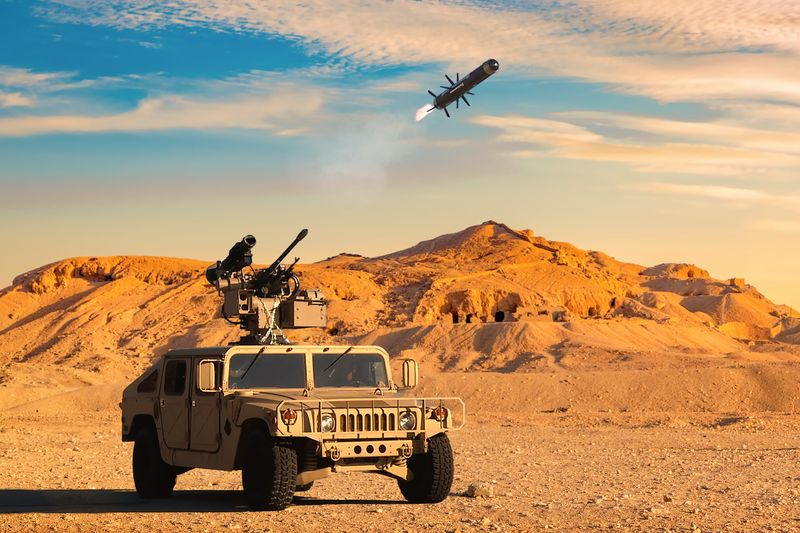
India has finalised an agreement with the US to purchase Javelin anti-tank missile systems for the Army, with prospects of the weapon being co-produced in the future through a joint venture between companies from the two countries.
The decision comes nearly 17 years after the US first proposed selling Javelin to India and showcased it during a joint military exercise at Babina, near Jhansi in Uttar Pradesh. The missile is fired by ground troops to target tanks, armoured vehicles and fortified enemy positions at a range of up to 5 km.
In military parlance, the Javelin system is classified as a “medium-range, fire-and-forget anti-tank guided missile (ATGM)”. The operating crew can literally “shoot and scoot” as the missile tracks the target on its own after launch. “It automatically guides itself to the target after launch,” say the missile’s manufacturers, Lockheed Martin and Raytheon.
The Army currently uses a mix of indigenous, French, Israeli and Russian-origin ATGMs, each offering varied capabilities.
The decision to acquire an ATGM from the US comes months after the US Defense Security Cooperation Agency (DSCA) cleared the sale of Javelin to India in November last year. The US State Department had approved a $45 million deal for 100 Javelin missiles, one fly-to-buy round, 25 command-launch units, training aids, simulation rounds, spare parts and full lifecycle support.
In a statement today, the US Embassy in New Delhi welcomed the Indian Army’s signing of a Letter of Offer and Acceptance (LOA) for the purchase of Javelin missiles. “The signature also opens discussions on mutually beneficial co-production and additional opportunities to strengthen the defence industrial bases of both countries,” it said.
While the embassy did not elaborate on potential manufacturing arrangements, the Javelin Joint Venture (JJV) announced in February last year that it had signed a memorandum of understanding with Bharat Dynamics Limited (BDL), a Government of India enterprise.
US Ambassador to India Sergio Gor said the Javelin agreement demonstrated the depth of the US support for the Indian Army and created new opportunities for defence industries of both countries to work together. “This agreement reflects a defence partnership that is growing deeper, more capable and more consequential,” Gor posted on X. The Javelin system is used by the US Army, its Marine Corps and numerous international customers.
Make-in-India push: MoD allows missile tech transfer to private players
The move is aimed at increasing industry participation in the defence ecosystem and accelerating indigenous production of advanced weapon systems
Defence Minister Rajnath Singh on Tuesday approved a proposal for the transfer of DRDO-developed technology of all conventional missile systems to domestic private industry for production within the country.
Announcing the decision, the Ministry of Defence (MoD) said the transfer of technology by the Defence Research and Development Organisation (DRDO) “marked an important milestone in promoting greater participation of domestic industries in the defence ecosystem”.
The move was aimed at enhancing operational capability, reducing import dependence and increasing domestic value addition, while supporting the growth of India’s defence manufacturing sector, the ministry said.
In military parlance, “conventional missiles” destroy targets using traditional high explosives, fragmentation effects or kinetic impact. They do not carry nuclear, biological or chemical warheads.
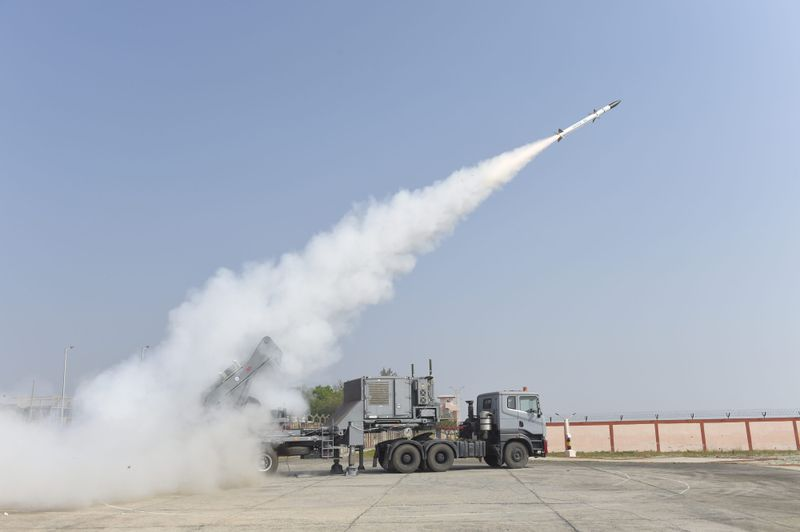
The MoD has not disclosed the details of the missiles covered under the “transfer of technology” initiative. However, going by the reference to “conventional missiles”, the list could include the Akash air defence missile system; the quick reaction surface-to-air missiles; air-launched Astra and the Nag missiles.
So far, the ministry-owned public sector undertaking Bharat Dynamics Limited had been producing the missiles. The government’s go-ahead to the private industry is expected to boost production capacity and address the fledgling export market for Indian missile systems.
In a post on social media platform X, Rajnath’s office said the transfer of technology would be subject to specified qualifications, certifications and regulatory requirements.
The latest MoD initiative is different from a move announced last week that sought private partners for the manufacturing of strategic missiles. On August 17, the DRDO invited Indian private companies to apply as long-term partners for making missiles and guided bombs. The tender was issued by the Research Centre Imarat (RCI), Hyderabad, on behalf of the DRDO’s Missile and Strategic Systems (MSS) cluster.
The DRDO website describes the MSS cluster as “being responsible for the design and development of state-of-the-art missiles and strategic systems required for the country’s deterrence and defence”. In simpler terms, missiles such as the inter-continental Agni system and the under-development hypersonic missiles are part of the MSS cluster.
Former CDS’s Kirana Hills remarks raise questions on India’s Operation Sindoor
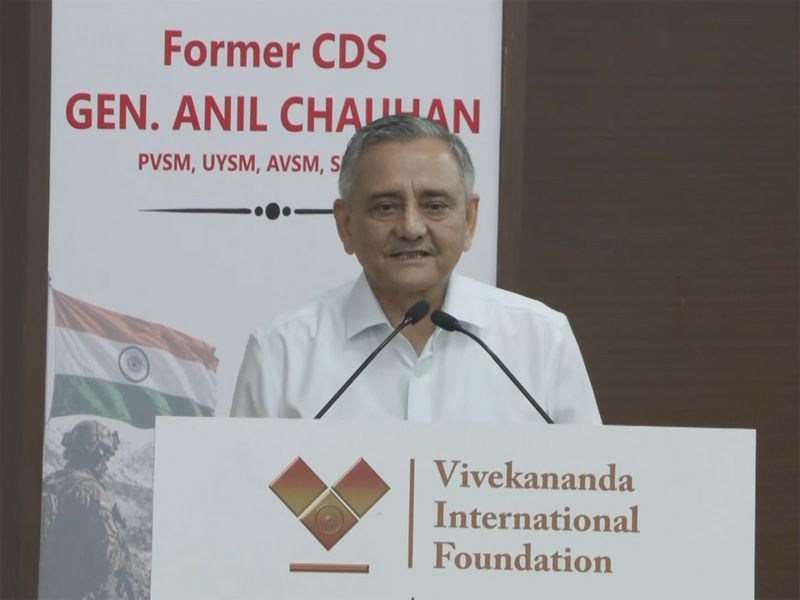
Former CDS General Anil Chauhan’s fresh account of India’s strikes near Kirana Hills, close to Sargodha in Pakistan, during Operation Sindoor differs from India’s original public position articulated in May 2025.
Kirana Hills is associated with Pakistan’s nuclear programme. Speaking on Tuesday, at an event organised by Vivekananda International Foundation, the former CDS revealed new details about the 15-month-old confrontation between the two nuclear-armed neighbours. He said an Indian loitering munition had “accidentally” hit Kirana Hills while searching for Pakistani radars.
General Chauhan, who retired on May 31, explained that India had sent numerous loitering munitions towards the Sargodha area. Kirana Hills is located about 10 km north of the Pakistani city. According to him, these munitions can loiter for roughly two hours while searching for a target. If they fail to locate one, they are designed to strike a target or designated area anyway.
General Chauhan said that one such loitering munition “must have come and hit one of those hills”.
His remarks represent a reversal of India’s official position in May 2025. At the time, Air Marshal AK Bharti, then Director General of Air Operations, dismissed the suggestion that India had struck the site. Responding to a question about reports that Kirana Hills housed nuclear installations, he said: “Thank you for telling us that Kirana Hills houses some nuclear installations. We did not know about it. We have not hit Kirana Hills.”
General Chauhan’s words now confirm, rather than deny, that a strike apparently occurred near or on a nuclear-linked site, even if it was unintentional. This marks a shift from India’s position in May 2025: from saying that Kirana Hills had not been hit to acknowledging that an Indian munition likely struck the hills, albeit unintentionally.
Back in May 2025, shortly after Operation Sindoor, the International Atomic Energy Agency (IAEA) ruled out a radiation leak or radioactive release from any nuclear facility in Pakistan.
However, the IAEA statement addressed only the question of radiation leakage. It did not establish whether a conventional strike had physically occurred near or at Kirana Hills. In other words, the statement neither confirmed nor denied that a strike had taken place; it only indicated that no radioactive release had been detected.
Against the backdrop of the IAEA statement and General Chauhan’s latest remarks, there have also been unrelated claims by US President Donald Trump that Washington helped avert a “nuclear war” between India and Pakistan. India’s Ministry of External Affairs has rejected that characterisation, maintaining that the conflict remained conventional.
The IAEA’s “no radiation leak” statement and General Chauhan’s latest admission that a loitering munition likely struck Kirana Hills are therefore not necessarily contradictory. A conventional munition could have struck near or on Kirana Hills without breaching or damaging nuclear-related facilities in a manner that resulted in a measurable radioactive release.
General Chauhan’s remarks help close a year-old information gap, but they also raise important questions. Kirana Hills is associated with Pakistan’s nuclear programme, and even an accidental strike near such a site carries considerable strategic significance. In a nuclear-armed rivalry, uncertainty over whether nuclear-adjacent infrastructure has been hit — deliberately or accidentally — can influence threat perceptions, signalling and crisis behaviour.
General Chauhan’s comments about Kirana Hills also came alongside other revelations, including his assessment of Pakistan’s ability to verify Indian losses and his reference to India’s stated principle of “always delivering the last strike” in an escalation ladder.
In hindsight, some of his remarks may be intended not merely as a technical clarification but also to shape the retrospective narrative of Operation Sindoor: one in which India maintained the upper hand, controlled escalation and ultimately retained escalation dominance.
India to get 100% transfer of technology on Rolls Royce aero engine for AMCA
British engine free from any US restrictions on technology
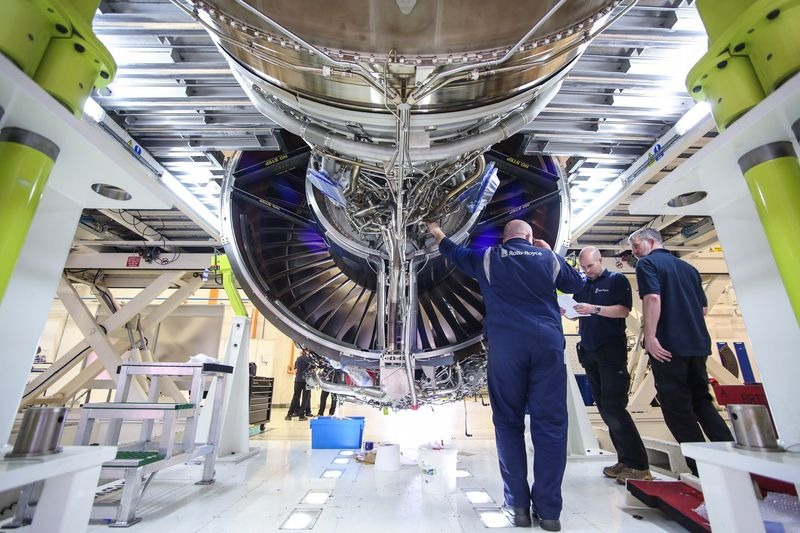
India will receive a full transfer of technology (ToT) and retain the intellectual property rights (IPR) for the engine being offered by British aerospace major Rolls-Royce to power the country’s under-development fifth-generation fighter aircraft, the Advanced Medium Combat Aircraft (AMCA).
The core technology being offered to India by the UK is under an inter-governmental agreement (IGA) and is free from any US-imposed restrictions under the US International Traffic in Arms Regulations (ITAR), UK officials said.
India is wanting ‘deep’ transfer of technology, including what is called the ‘single crystal blade’, a part of the engine, that does not heat up, allowing greater thrust.
The British offer is about India and Rolls-Royce designing an engine for India, a ground-breaking, fifth-generational engine with a 120-plus kilo newton thrust with scope of increasing the thrust to 145 kilo newton. In aviation circles, an engine with such power has not been developed, so far, for fighter jets.
Details of the British offer have emerged days after the Rolls Royce and Reliance Industries Limited, on August 14, announced a partnership to develop an indigenous combat engine for India’s under development fifth generation AMCA.
Rolls Royce faces competition from Safran of France which has partnered the Gas Turbine Research Establishment (GTRE) under the DRDO – to make the 120 KN engine.
Rolls Royce makes any engine entirely on its own. One such engine engines powers the F-35B, the marine variant of the fifth-generation plane used by US and its NATO allies. The technology and experience exists and the Rolls Royce’s engine making is free from any ties into the American system. Only three companies make an entire engine – the Rolls Royce and two US companies – others need to source some parts from US.
UK officials Rolls-Royce bringing in knowledge base and is targeting a roll out the new engine by 2034.
LeasingHigh-End Luxury Automobiles
The UK India collaboration stems from the ‘India-UK Vision 2035’ released in June last year. Defence is one of the five key pillars of that ‘Vision 2035’. A 10-year Defence Industrial Roadmap has been adopted. This targets to deepen collaboration in advanced technologies and complex weapons, supporting innovation and co-development, through cooperation programs such Jet Engine Advanced Core Technologies (JEACT).
The 120 kilo newton engine is to power the AMCA which is progressing. The Ministry of Defence has invited three companies to send in their Request for Proposal (RFP) for technical and commercial bids for the project.
The bidders invited for the RFP are — Tata Advanced Systems Ltd (TASL), which is competing independently; a consortium led by Larsen & Toubro (L&T), State-owned Bharat Electronics Ltd (BEL), and Dynamatic Technologies Ltd; and another consortium of Bharat Forge, PSU BEML and Data Patterns.
The winning partner will work with the Aeronautical Development Agency (ADA) under the Defence Research and Development Organisation to build five flying prototypes and one structural test aircraft. The shortlisted firms, selected based on their technical capabilities, will compete to build prototypes of the fighter aircraft.
None of the three invited to bid, are engine makers hence the need to source an engine.
New facility to overhaul 80 Army tanks annually to come up at Jabalpur
Rs 472-crore project to augment existing capacity at Avadi, bridge annual overhaul gap and boost operational readiness
A new facility for overhauling Army tanks will come up at the Ministry of Defence-owned Vehicle Factory in Jabalpur, Madhya Pradesh, adding to the existing tank-overhaul capacity in the country.
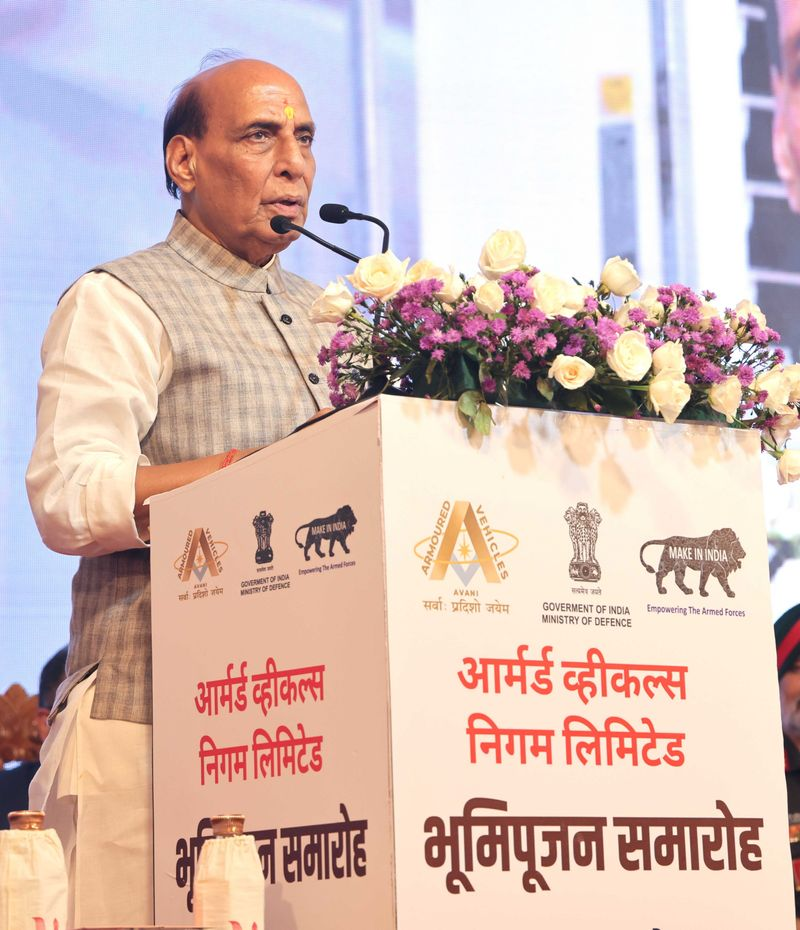
Defence Minister Rajnath Singh and Madhya Pradesh Chief Minister Mohan Yadav on Thursday performed the groundbreaking ceremony for the Rs 472-crore project, which is projected to have the capacity to overhaul 80 tanks annually and boost the Indian Army’s operational readiness.
The facility will supplement the existing tank-overhaul capacity of the Heavy Vehicles Factory at Avadi, Tamil Nadu. The Army requires 230 tanks to be overhauled each year, while the Avadi facility currently has the capacity to overhaul 150 tanks. The new unit at Jabalpur will bridge this gap and help ensure that more tanks are overhauled annually and remain in war-fighting condition.
The Army has nearly 4,000 Russian-origin T-72 and T-90 tanks in its fleet, besides a smaller number of indigenous Arjun tanks.
The new overhaul facility will also create opportunities for MSMEs to supply mechanical, electrical, electronic and hydraulic components, assemblies and subsystems.
At the event, Singh described the project as a testament to India’s growing technological prowess and industrial capabilities. Speaking about the changing nature of warfare, he emphasised that while the nature of warfare was changing, the relevance of tanks had not diminished but evolved.
“There is a need to equip tanks with superior sensors and capabilities aligned with modern battlefield requirements,” he added.
“Modern warfare demands combined capabilities rather than dependence on a single platform,” the minister said. Tanks, infantry, artillery, drones, air power, surveillance and precision weapons together form an integrated combat system, a concept demonstrated by the Indian Army through its ‘Integrated Battle Group’.
The Vehicle Factory, Jabalpur, is under the Defence Public Sector Undertaking Armoured Vehicles Nigam Limited (AVNL).
What is tank overhaul?
Army tank overhaul refers to a comprehensive maintenance and refurbishment process in which a tank is inspected, repaired and restored to a fully operational condition. It is distinct from routine servicing or field repairs and involves much deeper maintenance.
Tank systems such as the engine, transmission, running gear, tracks, sprockets, gun and turret systems, electrical and electronic systems, and hull components are separated for individual inspection.
Each component is checked against technical specifications to determine wear, damage or degradation, including barrel wear, engine hours, armour integrity and suspension condition.
Worn or damaged components such as engines, gearboxes, tracks, optics and weapon systems are repaired, reconditioned or replaced with new or refurbished parts.
Overhauls can also be used to integrate upgrades, including improved fire-control systems, modern communication equipment, night-vision systems and engine upgrades.
Bodies of four Naga civilians killed in Manipur ambush retrieved
A security team comprising state police personnel reached the ambush site on Friday morning and retrieved the bodies
The bodies of four Naga civilians killed in an ambush in Manipur’s Kangpokpi district were retrieved on Friday morning, a day after the attack, officials said.
The four were killed and another person injured when armed assailants attacked a vehicle in an isolated area between Makui Ashang and Thanamba Naga villages around 8.30 am on Thursday, they said.
One of the deceased was the principal of a private school.
Security forces had attempted to retrieve the bodies on Thursday evening but could not reach the site due to an alleged blockade and disruptions at a village along the route, officials said.
A security team comprising state police personnel reached the ambush site on Friday morning and retrieved the bodies, which were being taken to Senapati district headquarters, they said.
On Thursday night, a large number of people gathered at Senapati district headquarters and staged a protest, demanding that the bodies be brought to the Naga-majority district.
Meanwhile, village volunteers fired several rounds in the air as a mark of respect when the bodies reached Thonglang Atongba in Kangpokpi district, officials said.
Following the killings, Chief Minister Y Khemchand Singh chaired a high-level security meeting and directed security forces to identify, arrest and take action against those involved in the attack.
The United Naga Council (UNC), the apex body of the Naga community in the state, accused two militant outfits—Kuki National Front (P) and Kuki Revolutionary Army (KRA) — of being involved in the ambush.
The deceased have been identified as Tadsongbou Ringkangmai, the founder and principal of a private school, M Wijunamai, Anil Wijunamai, and Wisobou Charenamai, the chairman of the Chawangkining Village Authority. The injured person has been identified as Gaikamang Ringkangmai.
All five victims belong to the Liangmai Naga community.
State Stalwarts
DEFENCE MINISTER
Minister Rajnath Singh
ALL HUMANS ARE ONE CREATED BY GOD
HINDUS,MUSLIMS,SIKHS.ISAI SAB HAI BHAI BHAI
CHIEF PATRON ALL INDIA SANJHA MORCHA
LT GEN JASBIR SINGH DHALIWAL, DOGRA
SENIOR PATRON ALL INDIA SANJHA MORCHA
MAJOR GEN HARVIJAY SINGH, SENA MEDAL ,corps of signals
.
.
PATRON ALL INDIA SANJHA MORCHA
MAJ GEN RAMINDER GURAYA ,MADRAS REGIMENT
sanjhamorcha303@gmail.com
PRESIDENT SOUTH ALL INDIA SANJHA MORCHA
COL SS RAJAN BOMBAY SAPPERS,
PRESIDENT UTTARAKHAND ALL INDIA SANJHA MORCHA
COL B M THAPA ,BENGAL SAPPERSS
PRESIDENT HARAYANA STATE CUM COORDINATOR ESM
BRIG DALJIT THUKRAL ,BENGAL SAPPERS
PRESIDENT TRICITY
COL B S BRAR (BHUPI BRAR)
PRESIDENT CHANDIGARH ZONE
COL SHANJIT SINGH BHULLAR
.
.
PRESIDENT PANCHKULA ZONE AND ZIRAKPUR
COL SWARAN SINGH
INDIAN DEFENCE FORCES
DEFENCE FORCES INTEGRATED LOGO
INDIAN AIR FORCE
Air Officer C-in-C WESTERN AIR COMMAND
AIR MSHL S PRABHAKARAN AVSM VM
AOC-IN-C, EASTERN AIR COMMAND
Air Marshal Inderpal Singh Walia
AOC-in-C SOUTH WESTERN AIR COMMAND
Air Marshal Vikram Singh
AOC-IN-C, SOUTHERN AIR COMMAND
Air Marshal J.Chalapati
AOC-IN-C TRAINING COMMAND
AIR MARSHAL SK GHOTIA VSM
AOC-IN-C MAINTENANCE COMMAND
Air Marshal Jagdish Chandra
Flag Officer Commanding in Chief, Western Naval Command
ice Admiral R Hari Kumar, PVSM, AVSM, VSM
Flag Officer Commanding in Chief, Eastern Naval Command
Vice Admiral Sanjay Bhalla, AVSM, NM
Flag Officer Commanding in Chief, Southern Naval Command