Sanjha Morcha

What’s New

Click the heading to open detailed news

Current Events :

web counter

Print Media Reproduced Defence Related News

Why the future is feminine

Women don’t need saving or spotlighting anymore. They need space — to play, to fail, to rise

If there’s one word that will define 2025, it’s women. Not as a label or a cause, but as an unstoppable force reshaping every field — from sport to startups, from storytelling to leadership. Everywhere you look, women are no longer waiting to be invited to the table. They are building their own, often on their own terms.

Kiran Manral’s new book ‘The Game Changers’ arrives right at the cusp of this shift. It’s not a feminist call to arms or a glossy self-help guide. It’s a mirror — held up to the messy, magnificent, multi-tasking Indian woman who refuses to fit into a box. She is ambitious yet empathetic, exhausted yet unyielding, flawed yet unflinching. And in that contradiction lies her quiet revolution.

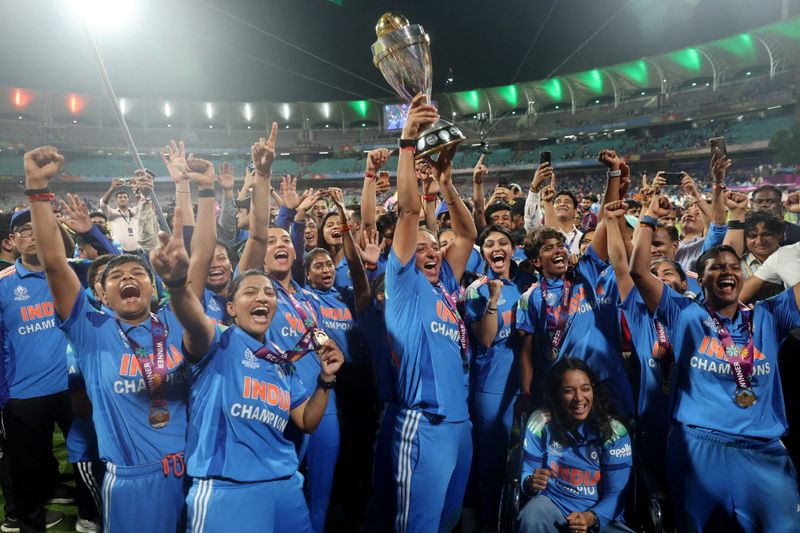
Consider women’s cricket. Once dismissed as a novelty, it has become impossible to ignore. Packed stadiums, endorsement deals, live telecasts — it’s not just a sporting moment, it’s a cultural one. When the Indian women’s team won, the triumph reverberated far beyond the boundary. It told every girl that the bat and the briefcase, the pitch and the boardroom, are all fair game.

With her new book, Manral captures the moment women have stopped asking for permission — to lead, to play, to build, to simply be. She draws a sharp, almost poetic, parallel between the women who play and the women who build. The cricketer and the entrepreneur share the same DNA: both have had to fight for visibility, credibility, and access to opportunity. Both have faced scepticism disguised as advice. And both, in their own quiet way, are redrawing the map of aspiration.

But what makes Manral’s writing powerful is that she refuses to paint these women as superheroes. She doesn’t romanticise their struggle or sanctify their success. She knows revolutions rarely come with banners and hashtags. They unfold in kitchens, in WhatsApp groups, in cramped offices and late-night commutes. They take shape when a woman asks for a pay raise, when she walks out of a bad marriage, when she starts a business from her bedroom. They are built on the everyday courage of choosing oneself.

Reading Manral, I am reminded of how the modern Indian woman doesn’t want to be glorified or victimised — she just wants to be seen. She can lead a meeting and forget her child’s tiffin. She can smash a century and still check in on her parents. Her power lies not in perfection but in persistence. Her feminism is not angry — it’s pragmatic, lived, and often laced with humour.

The women of 2025 aren’t asking to “lean in” to systems built for men. They are redesigning those systems entirely. They’re rejecting the old hierarchies that celebrated burnout and bravado, the super-woman, and offering a new template grounded in empathy, adaptability, and collaboration. The traits once dismissed as “soft” are now the ones saving businesses, democracies, and relationships.

This is what Manral calls the “feminine future”. It’s not about flipping the patriarchy and placing women at the top — it’s about rebuilding power itself. It’s about leading without ego, nurturing without guilt, winning without cruelty. It’s about saying no without apology.

And that’s why her book feels like the story of our times. It’s a chronicle of women who no longer fit neatly into stereotypes: the homemaker who invests in a startup, the founder who becomes a mother on her own terms, the athlete who turns down a movie deal to mentor the next generation. These are the women who will define this decade.

In a culture obsessed with external validation, there’s something radical about being enough for yourself. That, ultimately, is Manral’s message. Women don’t need saving. They don’t need spotlights. They just need space — to play, to fail, to rebuild, to thrive.

The shift is everywhere if you know where to look: in the startup founder disrupting industries; in the athlete winning hearts; in the storyteller like Manral herself, who is documenting the zeitgeist with a mix of mischief and gravitas. Together, they form the mosaic of modern India — a country finally learning to see its women not as symbols or slogans, but as forces of transformation.

Women don’t just represent the future, they are the future. And in 2025, that future is already here — fearless, funny, and unapologetically feminine.

Because the future isn’t female — it’s feminine. And that’s what makes it so revolutionary.

— The writer is an acclaimed author

Separate UT in Manipur not feasible: MHA to Kuki groups

During two-day talks with tribal leaders, Centre says current policy doesn’t permit it

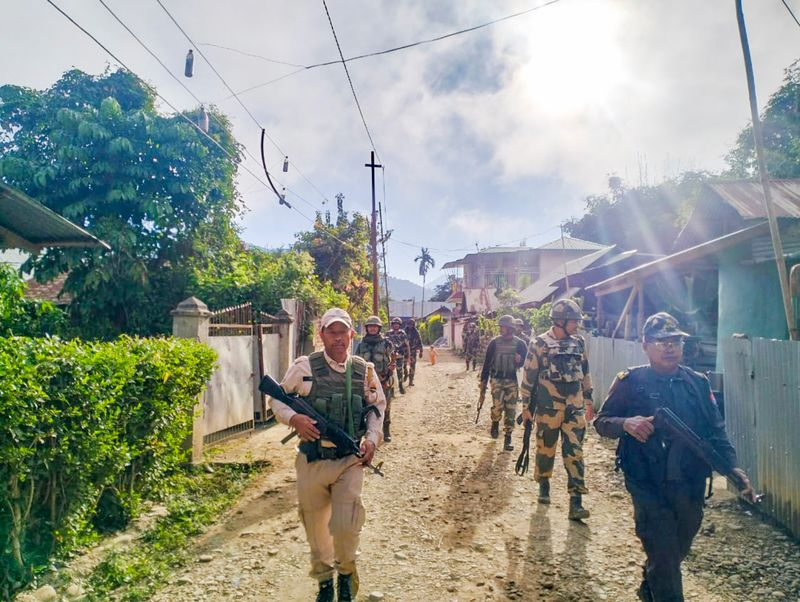
The Centre has indicated to Kuki-Zo groups under the Suspension of Operations (SoO) agreements that their demand for a separate union territory with a legislative Assembly is not feasible.

This was conveyed to representatives of the Kuki National Organisation (KNO) and the United People’s Front (UPF), the two groups part of the SoO, during a two-day talks with the Ministry of Home Affairs (MHA) on November 6 and 7 in New Delhi.

The discussions primarily focused on the Kuki-Zo community’s core political demand for the creation of a UT with a legislative Assembly. MHA officers reiterated that though the Centre was sensitive to the plight of the Kuki-Zo people, the current policy did not support creation of new UT, sources privy to developments said. The officials are learnt to have conveyed to the representatives, the need for consultations with other communities in Manipur.

The KNO-UPF delegation urged the Centre to reconsider its position in view of the fact that the “Constitution is above the government policy”. The delegation also pointed out that the ground zero situation in the state made coexistence impossible between the Kuki-Zo and Meitei communities, requiring the need to invoke necessary provisions of the Constitution to secure Kuki-Zo lives and property.

The talks also covered key community concerns, including issues of land, forests, customs and development, along with mutual confidence-building measures to be pursued alongside the regular political dialogue.

The SoO leaders urged the MHA to take concrete steps to protect traditional tribal land rights and uphold the authority of chiefs, who traditionally manage land and customary matters in the hill areas.

They also urged the government to remove administrative hurdles related to the succession of village chiefs after their demise and to simplify procedures for land registration and deed processing, which currently require travel to Imphal, an area that has become inaccessible and unsafe for the Kuki-Zo community since the outbreak of ethnic violence, the sources indicated.

The severe problems faced by internally displaced persons (IDPs) were also discussed at length in respect to their rehabilitation being expedited with essential security and amenities ensured by the government. The first day of the talks reviewed the implementation of the September 4 tripartite agreement signed between the MHA, the Manipur Government and the SoO groups.

The Kuki-Zo representatives highlighted the breakdown of governance and law and order in Kuki-Zo inhabited areas following the ethnic conflict, calling for an alternative administrative arrangement to ensure security and development.

On the second day, deliberations centred on the Kuki-Zo demand for a UT with legislature. The delegations reiterated that “coexistence under the present Manipur state administrative structure is no longer possible” following what they described as “ethnic cleansing” beginning on May 3, 2023, in Imphal.

The Kuki-Zo leaders argued that their demand was both historically and constitutionally justified. They pointed out that before the Independence, the Kuki-Zo Hills were never under the Manipur State Durbar’s control and were classified as an “excluded area” under the Government of India Act, 1935, administered directly by the British Political Agent, not the Meitei monarchy. They further explained that the tribal chief-owned land tenure system was fundamentally incompatible with the state-controlled land model in the valley, reflecting historically distinct administrative systems.


HEADLINES : 08OCT 2025

Armed Forces’ capability during Op Sindoor shocked the world: Punjab Governor

British Army doctor with ‘an Indian heart, an Indian stomach’ and a few lessons for life

British Army Delegation to the MLF :Dinner at DSOI Sector 36,Chd on 07Nov 2025

Importance of being Capt Amarinder Singh

Vice Admiral Bhalla is chief of Eastern Naval Command

British general finds strategic perspective by Indian experts enlightening

HAL, US firm GE sign fresh pact for 113 Tejas engines

44 Indian natives serving in Russian Army, says MEA

Shift stray dogs from institutional areas, cattle from highways: Supreme Court


Armed Forces’ capability during Op Sindoor shocked the world: Punjab Governor

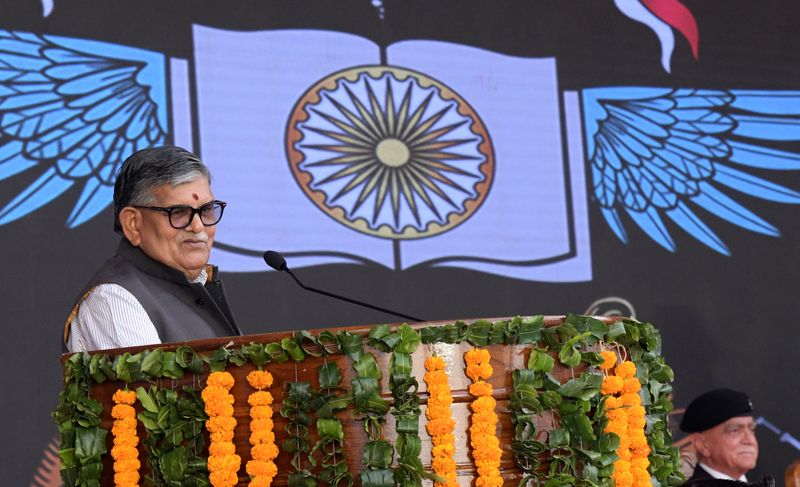
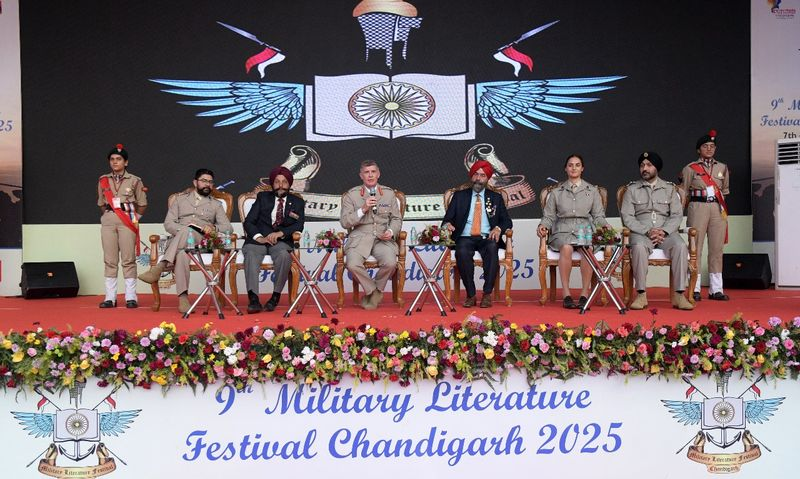
Punjab Governor Gulab Chand Kataria addresses a gathering during the 9th Military Literature Festival at Lake Club in Chandigarh on Friday. Tribune Photo: Ravi Kumar

“Valour exhibited by the sons and daughters of Punjab in different wars remains a perennial source of motivation for the nation,” Gulab Chand Kataria said

The capability and performance of our Armed Forces during Operation Sindoor has not just been an eye opener for our citizens, but has also left the entire world awe-struck, Governor of Punjab Gulab Chand Kataria said during his inaugural address at the 9th edition of the Military Literature Festival (MLF) here today.

Stressing upon the importance of maintaining requisite deterrence capability, he said that no enemy dares to take upon a powerful nation, but it is the weak who is always hit. The world now recognises and respects India’s defence capabilities, he added.

The governor also highlighted India’s growing indigenisation of defence systems and their export potential.

Referring to Punjab’s unmatched contribution to the defence forces, Kataria said that valour exhibited by the sons and daughters of Punjab in different wars remains a perennial source of motivation for the entire nation.

Underscoring the salience of producing correct literature in nation-building, he said that the transmission of our war histories to next generation remains pivotal towards nurturing a formidable India. Youth power forms the fulcrum of India’s dream to achieve superpower status by 2047, he added.

The Governor stressed that we must let our youth grasp the complete import of our glorious history full of sacrifices of our soldiers in service of the nation. “Our defence forces bind us as one and the whole county is eternally grateful to our soldiers,” he added. An avid motorcycle rider in his youth, Kataria expressed his desire to join next year’s Bravehearts Ride, a motorcycle rally held as a precursor to the MLF.

A joint initiative of the Punjab government, Chandigarh Administration and Western Command, MLF is an annual affair that offers the youngsters aspiring to join defence forces as well as the citizens a peep into military life, besides laying out a platform for discussions on issues of national, international and geo-political significance. This year’s theme is “Heartland and Rimland Powers in a Multi-domain Warfare and India”, besides commemorating 60 years of the 1965 Indo-Pak War and the veterans who fought in it.

Terming the MLF to be a melting pot of defence thought and strategy, MLF Chairman Lt Gen TS Shergill, delved upon the multi-pronged threats emanating from electronic, space, artificial intelligence and drones confronting India, and said India’s brightest minds remain one up on any enemy.

Delving upon the application of air power in multi-domain warfare in the context of Operation Sindoor, Lt Gen Raj Shukla, former GOC-in-C Army Training Command and Air Marshal Rajeev Sachdeva, former Deputy Chief of Integrated Defence Staff stressed upon the need to develop space, cyber and electronic warfare capabilities and integrate all war fighting platforms. They said that while unmanned vehicles will play an important role in future wars, manned aircraft cannot be done away with.

Lt Gen Anil Ahuja, former Deputy Chief of Integrated Defence Staff, Air Marshal Ravi Kapoor, former AOC-in-C, Central Command and Yash Sinha, former High Commissioner of India to the United Kingdom, discussed the multi-domain warfare threats from China and Pakistan, delving upon historical perspectives, the collusion between the two and emerging scenarios.

A military delegation from the United Kingdom, led by Maj Gen John Kendall, Deputy Commander Field Army, educated the audience on the shared military heritage between the militaries of India and Great Britain that goes back.


British Army doctor with ‘an Indian heart, an Indian stomach’ and a few lessons for life

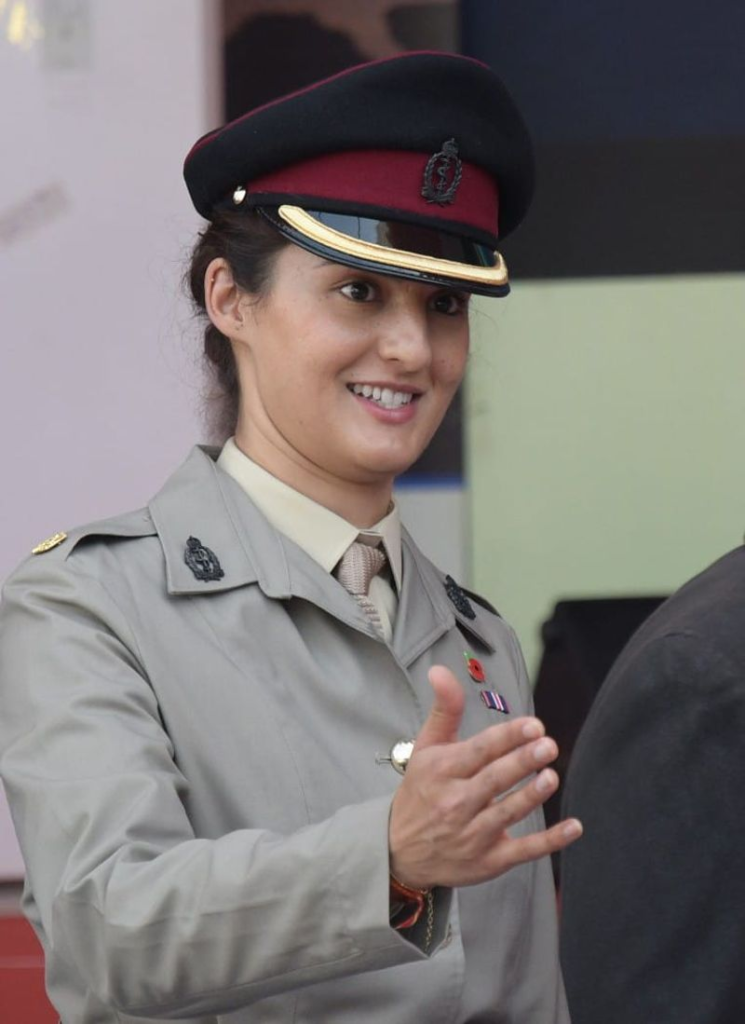
Major Hina Majoria, an Indian-origin medical officer in the British Army reserves, has not lost touch with her roots

Major Hina Majoria, an Indian-origin medical officer in the British Army reserves, has not lost touch with her roots, indulging in many of the traditional practices that her parents and grandparents had followed.

“We celebrate Diwali, Navratri, everything. We still speak some of the language, we eat the food and that’s what I like to say to people that I have an Indian heart, I have an Indian stomach as well,” she said.

Hina is part of a British Army delegation led by Major General John Kendall, Deputy Commander Field Army, which spoke on the shared heritage between the Indian and British armed forces at the Military Literature Festival in Chandigarh on Friday.

“So, what’s my connection with India? I was born in the UK but my grandparents were born in Gujarat and my parents were born in East Africa,” she said, adding that in civilian life she is a general practitioner with an interest in ENT.

Speaking on her service experience, she said that she has managed to do a lot with the British Army. “I’ve had a really good, extremely enriching career in terms of my medical officer side. So I’ve been able to go to Cyprus, the Falklands, Kenya on an exercise and now to India on an engagement piece as well,” she said.

“I’ve managed to learn so many different skills with the military that includes working under pressure, learning to resource carefully, being able to speak publicly and many, many more and it’s been an incredible experience and I would recommend it to anyone,” she added.

One of the few Indian-origin women officer in the British Army, Hina said that when she joined, less than two percent of the British Army was female and ethnic as well. “So there aren’t that many people that fit how I look. But it is changing and it’s extremely diverse now,” she said.

“They’re very open, very welcoming, they want to see more people with different cultures. So I’ve been extremely just overwhelmed with how well received I am as a British Indian woman in the military,” she said.

Hina said that earlier the cadets were asking her what they would be able to do to prepare for a life in the military and she wanted to give them a few lessons that she had learned. “So I would say celebrate with small wins. Build your networks and start doing it now,” she said.

“You don’t know what’s going to come back to you in the future. Change starts with you. When you walk into a room and you feel like you should be saying something then do it, say something, speak your truth,” she added.


British Army Delegation to the MLF :Dinner at DSOI Sector 36,Chd on 07Nov 2025

Maj Gen John Kendall, Deputy Commander Field Army, 

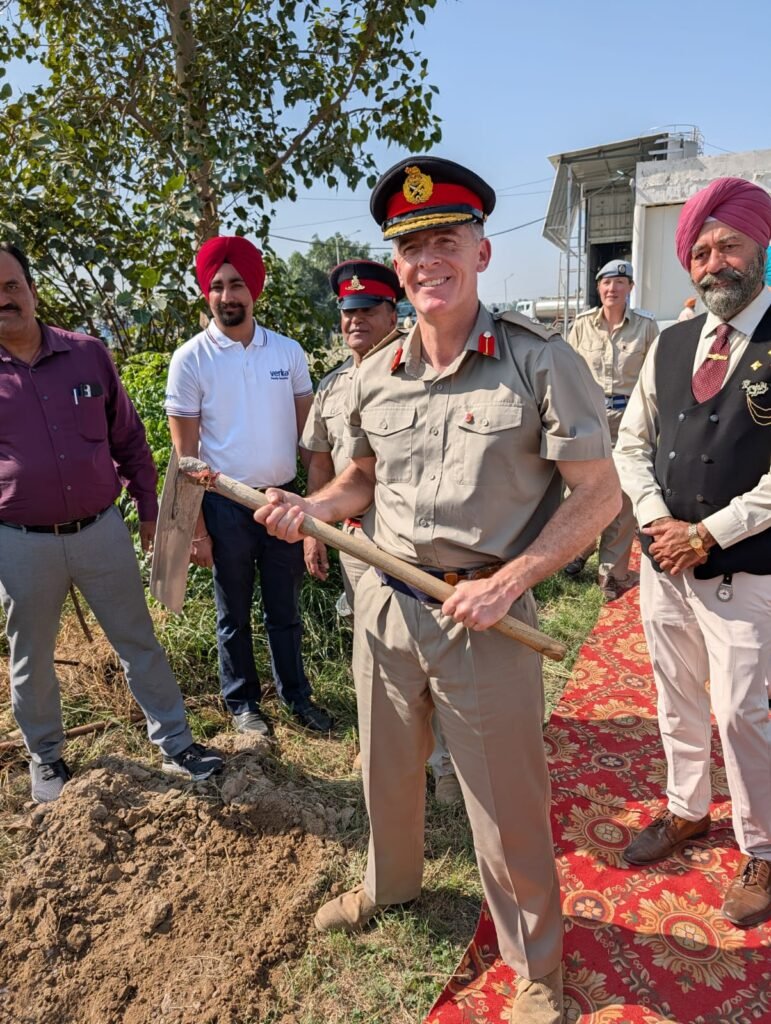
Planting Tree at Verka ,Ferozpur

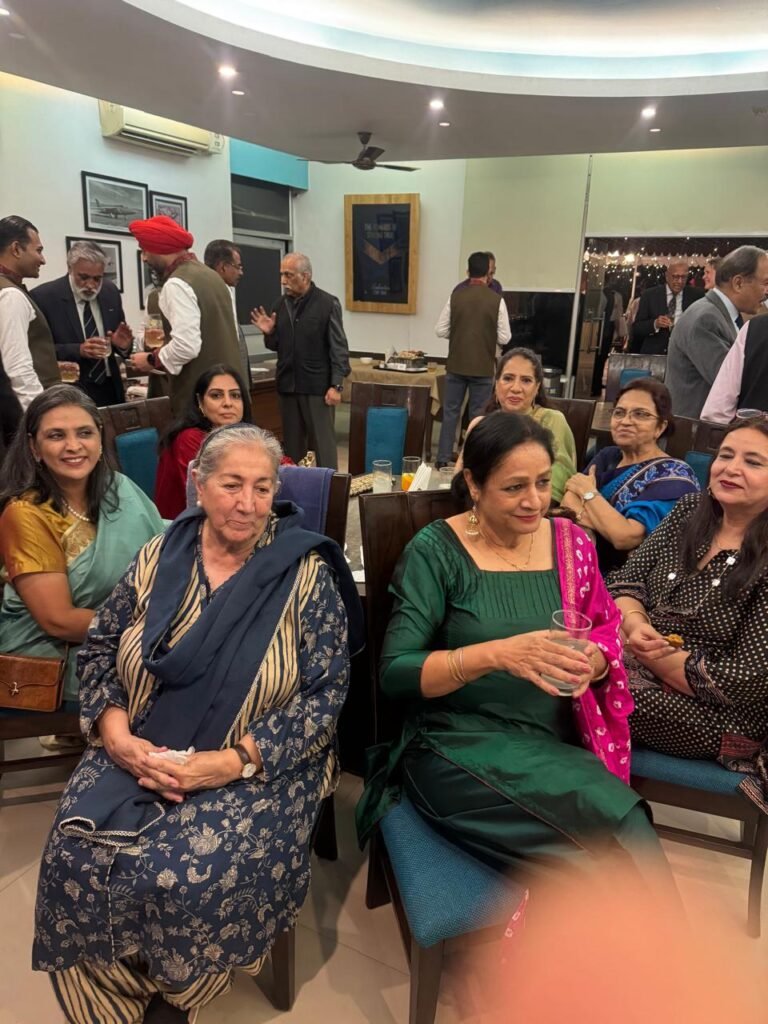
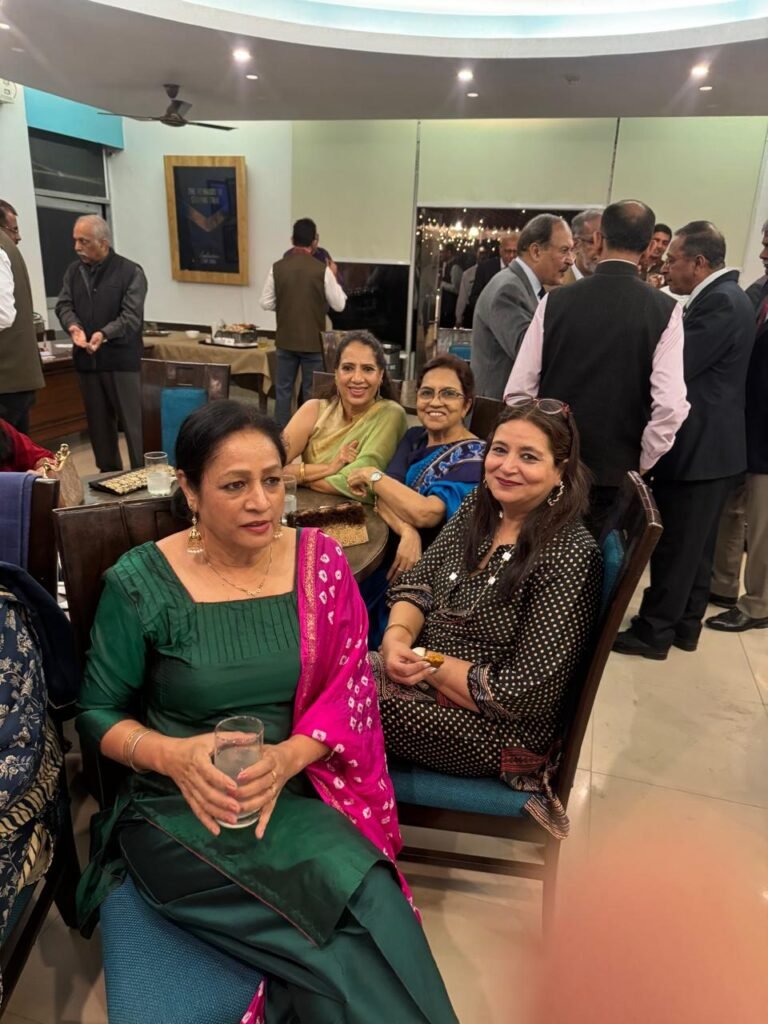
Dinner at DSOI Sector 36,Chd on 07Nov 2025

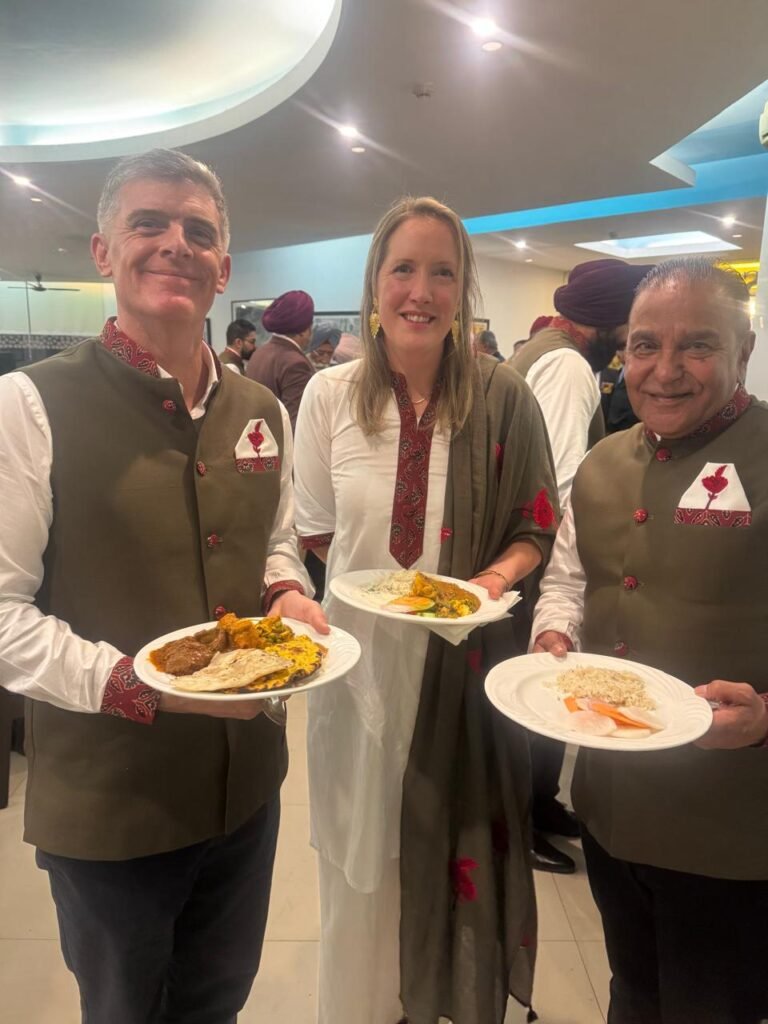
Members of UK Army delegation

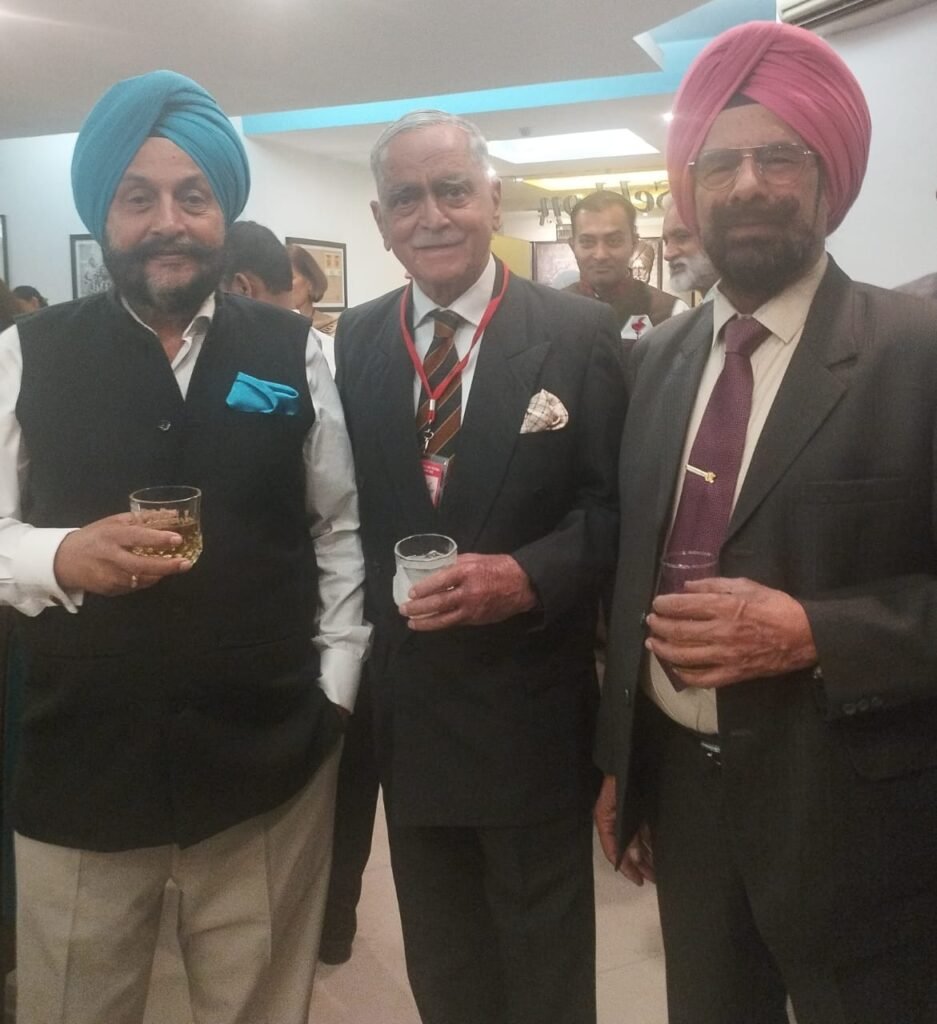
L To R : Brig JS Arora,Lt Gen TS Shergill, Col Charanjit Khera


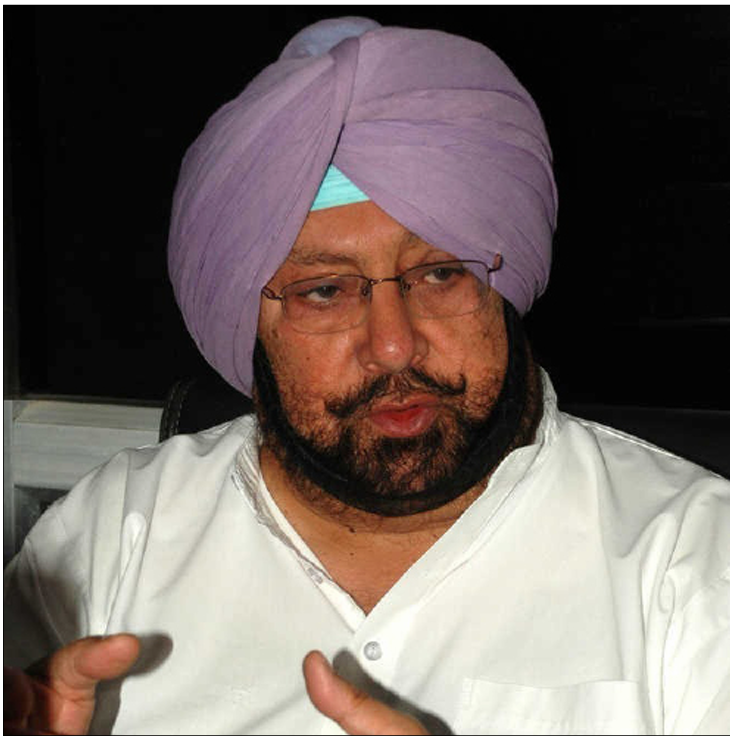
Importance of being Capt Amarinder Singh

In Capt Amarinder Singh, the BJP has an ace of trumps up its sleeve. That is why the political parties
in Punjab have already grown curious, as he has resumed his political innings. Those who know him
closely, particularly his former colleagues in the Congress, are wary about his getting active in the
BJP, not only for his personal capability, but the charisma and appeal he enjoys among all sections
of people. When it comes to the ‘panthic credentials’, he has no rival either. And his nationalistic
credentials are too well known. He never shies away from taking a stand in the national interest even
if it is contrary to his own party’s stand

RECENTLY FORMER Punjab Chief Minister and senior Bharatiya
Janata Party leader Capt Amarinder Singh inducted one of his former aides,
Sunny Brar into the party in Faridkot. It was a reasonably good show with a
significantly substan tial number of people in attendance. It was after a long
time that Singh made a “public appearance” following a pro longed sabbatical.
Even when this was just a single out ing, it has started generating curiosity
about his role vis-à-vis the 2027 legisla tive assembly elections in Punjab.
Capt Amarinder is not a leader who can be taken lightly. Those who know him and those who have worked with him closely during the six decades of his political career, know it well that he has an
unmatched and unparalleled capacity of bouncing back from the wilderness with a
big bang. After his defeat from Patiala assembly segment in the 2022 elections
against an overwhelming electoral tsunami of the Aam Aadmi Party, people
started writing his political obituary. He contested 2022 assembly elections as
a candidate of the Punjab Lok Congress, a party he had formed after parting
ways with the Congress. Punjab Lok Congress had aligned with the BJP for the
2022 assem bly elections. But he was not the only former chief minister to
lose. So did Parkash Singh Badal, Rajinder Kaur Bhattal as also the then
sitting chief minister Charanjit Singh Channi, who lost from two assembly
segments he had contested from. Capt Amarinder was unceremoni ously removed as
the chief minister in September 2021. IIn hindsight, Congressmen without any exception admit that
had he not been removed and had the party contested the 2022 assem bly
elections under his leadership, the party would not have fared so badly. It won
just 18 of the 117 assembly seg ments. In 2017, he had led the party to a
landslide victory on 77 seats. Capt Amarinder and the Congress was a perfect
combo in Punjab. It was he who had led the Congress back to pow er in 2002,
after the dark era of mili tancy which saw Operation Bluestar and the 1984 anti-Sikh
massacre in the after math of the assassination of Indira Gandhi by her own
Sikh bodyguards. Although the Congress had formed the government in 1992 also,
those elections had seen a negligible voter turnout. But those elections did
help in restoring the political order in the state. Capt Amarinder led the
party to two consecutive defeats in 2007 and 2012. On both the occasions, his
rivals wrote his extensive political obituaries. After losing in 2007, he faced
a vindictive Akali-BJP government which even struck down his membership of the
assembly. This was, however, restored by the Supreme Court of India.The Congress, which ignored and tried to sideline him for quite some time, even tually handed him the reins ahead of the 2012 elections.
As ill luck would have it, the Congress again lost the elections, although
there was hardly one per cent difference in the popular vote share. That was
thought to be the last innings of Capt Amarinder as he had delivered two
“back-to-back defeats” for the party. Moreover, it was for the first time that
a sitting government had been reelected in Punjab. Within less than a year he
was removed as the Punjab Congress president and replaced by Partap Singh
Bajwa. While living in virtual political wilder ness, with Bajwa having
positioned himself as the natural successor and a prospective chief ministerial
candidate for 2017 elections, the 2014 General Elections were announced.


There was a strong nationwide anti-incumbency against the
Congress. The BJP’s victory was a foregone conclusion. Bajwa, who was the PCC
president and sitting MP from Gurdaspur had developed close proximity with the
high command. He suggested that the party should field prominent faces and
senior leaders in Punjab from all the parliamentary con stituencies. The BJP
had announced veteran leader Arun Jaitley as its candidate from the Amritsar
parliamentary constituency. The party that time was in alliance with the
Shiromani Akali Dal in the state. The alliance was in power in Punjab. Amritsar
was thought to be a “safe” seat for the BJP as Navjot Singh Sidhu had con
secutively won it thrice, since 2004. Moreover, given the stature of Jaitley,
with an alliance government in the state, his (Jaitley’s) victory was taken to
be for granted. Bajwa specifically proposed Capt Amarinder’s name as the party
candidate from Amritsar to fight against Jaitley. He was sure and confident that he (Capt Amarinder) will
refuse to fight and that would be the proverbial last straw on the camel’s back
and the end of his political career. And even if Capt Amarinder would accept
the contest he, according to Bajwa’s calculations, would certainly get defeated
by Jaitley and would mark the end of his political career. This would obviously
clear the path for him (Bajwa) as he would have been left with no competitor,
not at least as powerful as someone like Capt Amarinder. To Bajwa’s utter delight, Capt Amarinder initially refused and declined to contest the parliamentary elections, obviously being
apprehensive to take on Jaitley with all the odds  stacked in his (Jaitley’s) favour. However,
one phone call from Sonia Gandhi, who was the party president at that time,
changed the course of Congress’ political history in Punjab. Capt Amarinder, as
he later revealed, was on his way from Delhi to Chandigarh when he received the
phone call from Gandhi. She reportedly asked him wheth er he can do “something
for her”. Naturally, Capt Amarinder replied in the affirmative and she asked
him to fight from Amritsar. Since he had assured her that he could do anything
for her, he agreed to fight, which indeed was one of the greatest challenges in
his political career. Not many people know that when the Indo-Pak War broke out
in 1965, Capt Amarinder had already taken a premature retirement from the Army
as his father had been appointed India’s ambassador to Holland. But once the
war broke out, he rejoined the Army and went to the battlefront in the Western
theatre as the ADC to Western Commander Lt Gen Harbaksh Singh. Capt Amarinder
is a perennial soldier at heart. He took the Amritsar challenge head on like a soldier in the
midst of a battle. While Jaitley had been announced long before, Capt Amarinder
got limited time as his candidature was announced at the last moment. Nobody
thought that he could defeat Jaitley. For three weeks, he worked hard like a
soldier on the warfront. He would be ready and out before 7 in the morning and
return only late in the night around 11. Otherwise thought to be taking things
in a relaxed way, his determination and hard work surprised everyone. And it
worked and paid off. Cap Amarinder defeated Jaitley by a huge margin of over
one lakh votes and that too when there was nationwide BJP surge. He literally
stopped the BJP wave in Punjab. Partap Singh Bajwa, who had pushed Capt
Amarinder to fight from Amritsar, lost from the neighbouring Gurdaspur
constituency to Vinod Khanna by about 1.5 lakh votes. This heralded the “political reincarnation” of Capt
Amarinder. Soon the entire Congress party in Punjab, which had ditched and
deserted him and virtually written him off, began to rally around him again. He
was again reappointed the PCC president to lead the party to an emphatic and
historic victory in 2017 assembly elec tions. The AAP, which eventually formed
the government in Punjab in 2022, might well have won in 2017, had it not been
for Capt Amarinder’s leadership. The AAP may not have claimed the landslide
victory in 2022 either, had the Congress fought the elections under Capt
Amarinder’s leadership. The BJP does not have the same grass roots strength and
support as the Congress in Punjab. The BJP is yet to make significant inroads
into the coun tryside across Punjab. At the same time, it does not face the
same hostility it faced in 2022 mainly due to the three Central farm laws. The BJP this time has an advantage that it has not been tried so far exclu sively by the Punjabis. It has another advantage that the
party is in power at the Centre. There is a feeling among people that the same
party’s government at the Centre and the state might be beneficial for the
state. Punjab badly needs Central aid and assistance. Will Capt Amarinder be
able to deliv to deliver with the Congress? It is indeed a challenging task, as
challenging as the 2014 Amritsar parliamentary election. But he does retain
some advantages indeed. After the 2022 elections, both Capt Amarinder and
veteran Akali leader Parkash Singh Badal practically with drew from active
politics. Both the lead ers remained active till 2022, although Badal had
partially withdrawn from much of the political activity. After 2022, there has
been a complete “leadership vacuum” in Punjab. Chief Minister Bhagwant Mann had
no experience as compared to Capt Amarinder or Badal. In the Congress, Sunil
Jakhar remained alienated and he eventually joined the BJP. Charanjit Singh
Channi, Partap Bajwa, Sukhbir Badal lacked the per sona and charisma of Capt
Amarinder and Parkash Singh Badal. The “leadership” vacuum is still being felt in Punjab. Capt
Amarinder has the advantage that he has no challenger of the same stature he
enjoys. Plus backed up by a party like the BJP, he can defi nitely deliver some
aces for the party. Despite being in his early 80s, Capt Amarinder remains “as
active and agile as he always has been”, whether in his 60s or 70s. He has his
own “exclusive style” of working. He still enjoys his drink. He still loves his
food. He still does his gardening. He is still fond of reading and he continues
to write.Recently a senior journalist revealed how Capt Amarinder responded to
his story on a military topic, (Captain’s first love). He not only shared some
inputs but also gifted a copy of one of his military history books to the
journalist. That is quite characteristic of him to go into the minute details,
whether about military history or the political and election strategy.Those who know him closely, par ticularly his former colleagues in the Congress, are wary about his getting active in the BJP, not
only for his per sonal capability, but the charisma and appeal he enjoys among
all sections of people. Even when he was in the Congress, he was as popular
among the BJP supporters as the Congress cadres. And when it comes to the ‘panthic
credentials’, he has no rival either. When Operation Bluestar was carried out,
he resigned in protest as an MP and also from the Congress. This was when
Indira Gandhi was the Prime Minister. He was just 42 then and had dared to put
his political career at stake. Again in 2004, when the Supreme Court left
Punjab with no option but to construct the Satluj Yamuna Link Canal, he enacted
the famous Punjab Termination of Agreements Act 2004 in the Punjab assembly. He
risked his chief ministerial position. Congress president Sonia Gandhi did not
speak to him for about a year over this. But he was credited with saving Punjab
waters. Even in 2019 when the BJP govern ment at the Centre enacted
the three Central farm laws, he was the first to oppose these. Had it not been
for his support, the farmers would not have managed to reach Delhi borders,
thus forcing the government there to with draw these laws. And his
nationalistic credentials are too well known that he would take a stand in the
national interest even if it went contrary to his own party’s (then Congress)
stand. In Capt Amarinder, the BJP has an ace of trumps up its sleeve. That is
why the political parties in Punjab have already grown curious, as he has
resumed his political innings. Once on the ground, he knows how to play it to
the finish. That is the importance of being Capt Amarinder and that his former
colleagues and today’s rivals are well aware of


Vice Admiral Bhalla is chief of Eastern Naval Command

He has taken over from Vice Admiral Rajesh Pendharkar who has superannuated

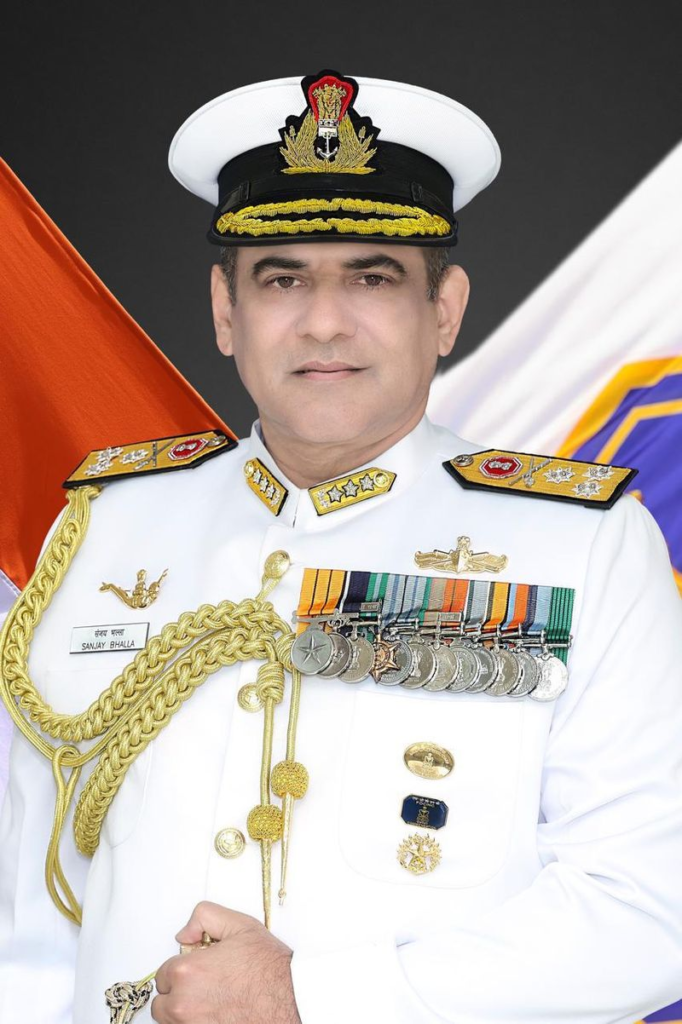
Vice Admiral Sanjay Bhalla has been appointed as the Flag Officer Commanding-in-Chief, Eastern Naval Command at Visakhapatnam. He has taken over from Vice Admiral Rajesh Pendharkar who has superannuated.

Prior to assuming Charge as FOC-in-C (East), he was the Chief of Personnel at Naval Headquarters, where he held transformative HR reforms, streamlining recruitment, training advancements and driven holistic wellness and community programs for Indian Navy Personnel.

Vice Admiral Sanjay Bhalla was commissioned in the Indian Navy in January 1989 and in a career spanning 36 years, he has held a number of Command and Staff appointments, both afloat and ashore.

After completing his specialisation course in communication and electronic warfare, he served as a specialist onboard several frontline warships. Subsequently, he had the opportunity of holding challenging command at sea, which include, INS Nishank, INS Taragiri, INS Beas and the coveted appointment of Flag Officer Commanding, Eastern Fleet (FOCEF).

During the tenure as FOCEF, he was the Officer in Tactical Command for the prestigious President’s Fleet Review and the sea phase of the Indian Navy’s flagship multinational exercise, MILAN-22, that witnessed an unprecedented participation form friendly foreign countries.

His important staff appointments ashore, including Assistant Chief of Personnel (HRD) at Naval Headquarters, Chief of Staff, Western Naval Command, Director, Maritime Doctrine and Concept Centre, and a diplomatic assignment overseas.

An alumnus of the Royal College of Defence Studies, London, Naval War College, Goa, and Defence Services Staff College, Wellington, his educational accomplishments include M.Phil in Defence and Strategic Studies, Masters in International Security and Strategic Studies from the Kings College, London, and M.Sc (Telecom) from CUSAT. He has been decorated with the Ati Vishist Seva Medal and the Nau Sena Medal for distinguished service.


British general finds strategic perspective by Indian experts enlightening

Maj Gen Kendall said that shared heritage was important because the United Kingdom was becoming a more diverse nation with a more diverse Army

Britain and India have significant defence cooperation and the Royal Air Force will soon be sending pilots to India for training, Maj Gen John Kendall, Deputy Commander Field Army, said in Chandigarh on Friday. He is leading a British Army Delegation to the Military Literature Festival.

“I think that’s symbolic of how strong our shared heritage and our present ties are. For the Army, we have Exercise Ajaya Warrior, where our soldiers work together. We have recently exercised our carrier strike groups together, he said.

He said that it was also important to listen to different perspectives and he particularly enjoy listening to perspectives on China and Gaza and military thought around multi-domain operations like Operation Sindoor.

“For the UK, we have slightly different focusses. But your perspectives still add value. We are slightly more interested in Russia and how we support Ukraine,” he said. “We have, for example, trained over 60,000 Ukrainian soldiers. We help train their commanders, help share intelligence with them and we help equip them. So we know how good our training is, soldier for soldier,” he said.

Paying tribute to India, as the country that raised the largest-ever all-volunteer force in the Second World War and fought on every front in the First World War, he said that just as the Indian Army and the British Army in 1915 dug trenches, we see very similar trenches today. “But that is not just 1915, it is how do we add technology,” he remarked.

Maj Gen Kendall said that shared heritage was important because the United Kingdom was becoming a more diverse nation with a more diverse Army, and therefore it was important for them to recognise the contribution of all their citizens and their heritage.

“Our theories of victory are shaped by our culture and our history. The British will create a very Western way of war by coming to events like this to hear a different perspective. We can modify that and perhaps be a little bit more scientific, a bit more driven by different ideas,” he said. “And as the democratic world faces the autocratic world, alliances and partnerships have never been more important,” he added.


HAL, US firm GE sign fresh pact for 113 Tejas engines

The 113 engines are meant for the 97 Tejas jets

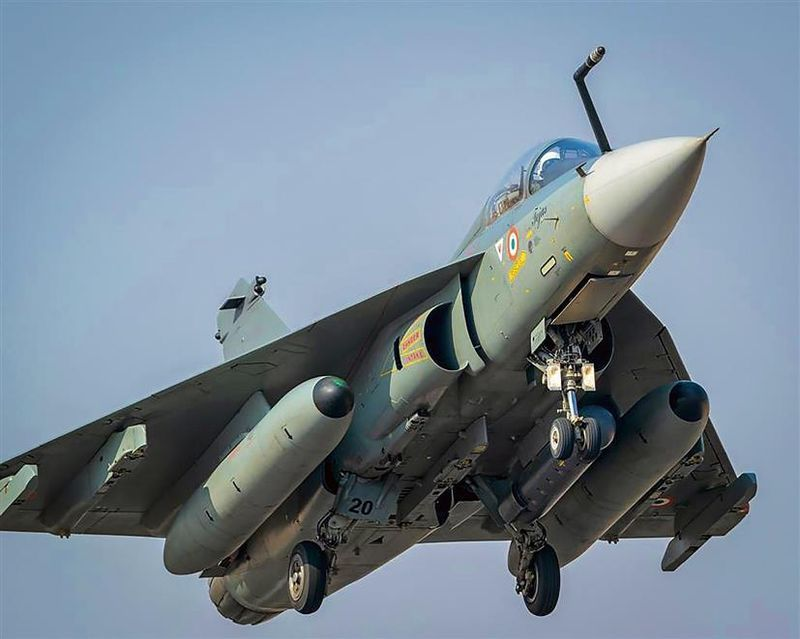
Public sector Hindustan Aeronautics Limited (HAL) on Friday signed a fresh agreement with US company General Electric (GE) for sourcing 113 F404 engines and a support package for the under-production Tejas Mark-1A fighter jets.

The engines will be delivered between 2027 and 2032, HAL said. Neither HAL nor GE has disclosed the value of the contract, but it is estimated to be around $1 billion (Rs 8,800 crore).

The 113 engines are meant for the 97 Tejas jets for which the Ministry of Defence (MoD) signed a Rs 62,370-crore contract with HAL in August. This latest order for 97 jets comes in addition to an earlier order for 83 aircraft, taking the total Tejas Mark-1A order to 180 jets.

HAL, a listed company in which the MoD holds a majority stake, had earlier signed a $716-million deal with GE in January 2021 to supply 99 F404 engines for the first batch of 83 Tejas Mark-1A aircraft. Deliveries under that contract were scheduled to begin in April 2023 at a rate of 16 engines per year. However, as of last month, only four engines had been delivered, delaying the supply of Tejas Mark-1A aircraft to the Indian Air Force (IAF).

According to the MoD, the new contract for 113 engines is for the 97 planes that are to be delivered to the IAF from 2027-28 onwards and be completed over a period of six years.

The 97 new Tejas jets will incorporate advanced, indigenously developed technologies such as the ‘Uttam’ Active Electronically Scanned Array (AESA) radar and an electronic warfare suite, further strengthening India’s ‘Aatmanirbhar Bharat’ initiative. These jets will represent the most advanced variant of the indigenously designed and manufactured Tejas aircraft, the MoD said.