Sanjha Morcha

What’s New

Click the heading to open detailed news

Current Events :

web counter

Print Media Reproduced Defence Related News

India ‘ultimate swing state’ in geopolitics, shift in global power balance depends on its alignment with power centres: CDS

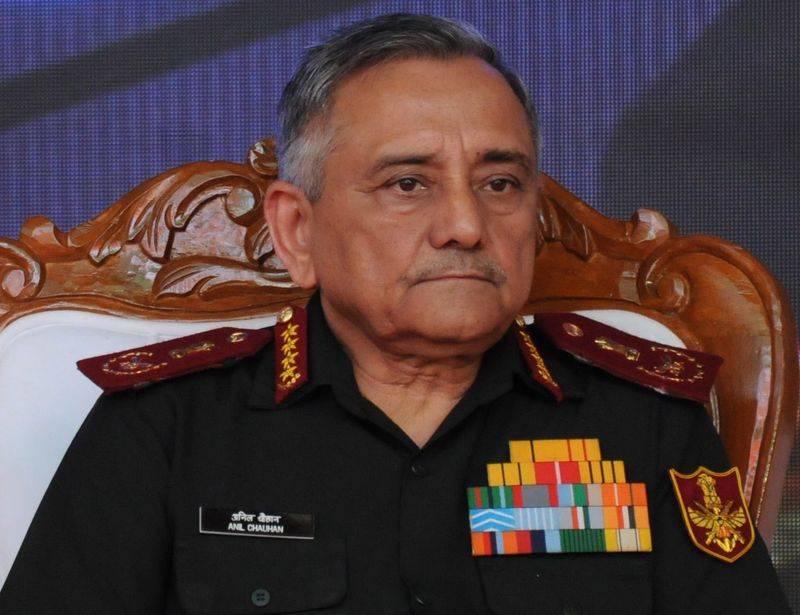
Terming India to be the “ultimate swing state” in the ongoing global geopolitical competition, the Chief of Defence Staff (CDS), Gen Anil Chauhan, said that the global balance of power can shift should it choose to align with the existing or the emerging centres of power and that is the current importance of India geopolitically.

“India will also be a kind of a stabilising force which can protect trade, data portion and balance rival parts in the Indian Ocean region. So I believe that India must pursue a wholehearted national strategy which balances both continental security and its maritime ambitions,” he said while speaking at the Military Literature Festival in Chandigarh on Sunday.

Gen Chauhan underscored the centrality of the Indian Ocean in the global order, which is the world’s primary maritime highway linking the largest manufacturing hub of East and Southeast Asia with the biggest energy producers of the Middle East and the fastest growing consumer markets of South Asia and Africa. the market of the future.

“India’s Indian Ocean strategy should leverage its peninsular geography, island depth, strategic outposts and diplomatic standing to achieve regional stability and contest external forces,” he said. “India stands at the confluence of Eurasia and the Indo-Pacific. Its population, technological prowess and rapid economic growth position is the driver of global demand and innovation. Growing partnerships and inter-dependency, multi-aligned foreign policy allows us to engage with competing blocs,” he added.

Delving on contemporary battlefield scenario, the CDS said that the nature of warfare and warfare itself is changing, with multi-domain operations, integrated deployment of multi-capabilities across land, sea, air, space, cyber and cognitive domains expanding the aperture of the strategy.t

“Future battlefields are not going to be recognised by service boundaries and integration, rapid decision-making and seamless exploitation of information are now keys to victory. “India’s joint doctrine for multi-domain operation recognises that no domain can be siloed and no service can operate in isolation,” he remarked.

Glimpses of what lies in the future were actually visible to a large extent during Operation Sindoor in May this year. These operations were entirely different from the kind of wars fought earlier and had set new benchmarks for conducting war in the future, he said.

“In Operation Sindoor, the action was multi-domain and integrated, with a combination of kinetic as well as non-kinetic missions executed in a distanced kind of environment, which are networked. And to some extent, in this particular operation, we also used artificial intelligence to understand future courses of action,” the CDS said.

Gen Chauhan said that technology, long range weapons and precision strike capability have reduced the relevance of geography in the context of warfare. With long-range bombers and missiles, you can target things at a vast distance. Warfare is extended towards space that provides a total amount of transference.

Similarly, cyber and digital warfare operate in a kind of borderless, interconnected digital domain, where distances, terrain and boundaries are of no consequence at all. Attacks can originate anywhere in the world to target any kind of a command system. Cognitive warfare, cognitive operations target the human mind and transcend geography by occupying not ground, but perceptions. They influence beliefs, erode morale, incite unrest, manipulate leadership and affect visions, he added.

The major impacts of these technological developments on warfare, the CDS said, are the death of distance because weapons now have a global reach, the demise of surprise and the disappearance of offensive manoeuvre.

“Surprise is no longer an element, because you can see everything today. Probably, deception may be more important than surprise. The disappearance of offensive manoeuvre is because today anything that moves is visible, it can be tracked. If it is tracked, you can actually hit that,” he said.

Opinion of medical board in determining disability cannot be junked unless there is evidence to the contrary: HC

Dismissing a bunch of about 40 appeals filed by the Central Government against disability benefits granted to soldiers by the Armed Forces Tribunal (AFT), the High Court of Jammu and Kashmir and Ladakh has ruled that opinions made by medical boards in such cases should ordinarily prevail unless these are contradicted by cogent medical evidence.

Stating that the benefit of reasonable doubt must be extended to the claimant, a division bench comprising Justice Sanjay Parihar and Justice Sanjeev Kumar held that that the onus of proof largely lies with the authorities and the claimant shall not be called upon to prove the conditions of entitlement, except in case where claims are filed 15 years after discharge from service.

The bench said that defence personnel suffering from disabilities due to service conditions, including those arising within 10 years after retirement, may qualify for disability pension if the disease is found attributable to service factors.

In a detailed 260-page judgement, the bench made a detailed analysis of the pensionary provisions from the Entitlement Rules, 1982 to the comprehensive framework of 2008, which classified cases of death or disability into five categories ranging from casualty from natural causes to that in war.

The interpretation of different provisions was the crux of the petitions. The bench observed that the Pension Regulations for the Army, 1961 and the Entitlement Rules for Casualty Pensionary Awards to the Armed Forces Personnel, 1982 represented one part, whereas Pension Regulations for the Army, 2008 and Entitlement Rules for Casualty Pensionary Awards to the Armed Forces Personnel, 2008 formed second part. Some of the petitioners were covered by the first set of rules whereas others were covered by the second set of rules.

Observing that the presumption that a person shall be deemed to be in sound physical and mental condition, if no note of any disease suffered by him is made at the time of his entry into service was now not available under the new rules of 2008, the bench said that indisputably, when an individual is enrolled in military service he is subjected to thorough medical examination so as to determine whether he is fit for military service.

If during examination, no physical or mental disability is noted or recorded, it would not be inappropriate or illogical to say that the disease that occurred or manifested after his entry in service is due to military service unless of course the medical opinion states to the contrary, the bench observed.

The bench further said that while medical examination at the time of entry may not determine certain hereditary or congenital diseases which may manifest later, these would not debar personnel from disability benefits unless a causal connection with military service is ruled out by the medical boards.

Under the 2008 rules, the entire issue of attributability and aggravation has been left to be determined by the medical experts, the bench observed. However, from a reading of the entire set of new rules, it becomes abundantly clear that one-line opinion sans reasons given by the medical authorities is not determinative of the fact whether the injury or death is either attributable to or aggravated by military service, the bench said.


Quad navies begin ‘Malabar’ exercise

Countering challenges in Indo-Pacific

The navies of India, Japan, Australia and the US took part in the multi-nation annual maritime exercise, named Malabar, which started on Monday.

The nine-day exercise from November 10 to 18 is being hosted by the US, at Guam island, one of its military bases in the western-part of the Pacific Ocean.

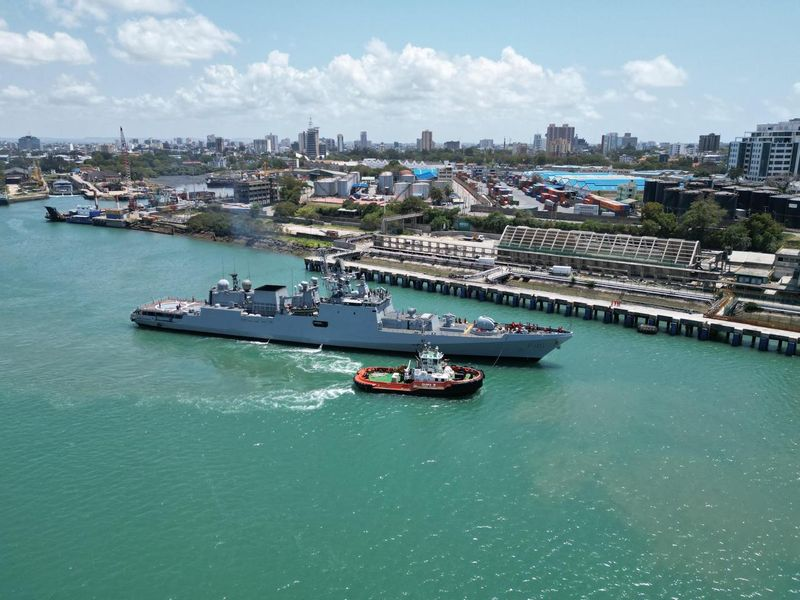
Indian Navy warship INS Sahyadri has reached Guam, the Indian Navy had said on Sunday. The drills kick off with a harbour phase that would feature operational planning and discussions, alignment on communication protocols, familiarisation visits between participating nations and sports fixtures.

Following the harbour phase, all participating units will proceed for a sea phase — during which ships and aircraft will take part in naval drills, focusing on joint fleet operations, anti-submarine warfare, gun firing and flying operations.

The exercise gains importance as all the four-countries operate the same maritime surveillance planes, which are also capable of hunting submarines. Thee sensors and radars on these planes can generate a common ‘picture’ at sea. The four also have other common platforms in their arsenal, which can enable seamless communication with each other.


Security personnel and Naxalites exchange fire in Chhattisgarh forest

Exchange of fire started on Tuesday morning in the Indravati National Park forest

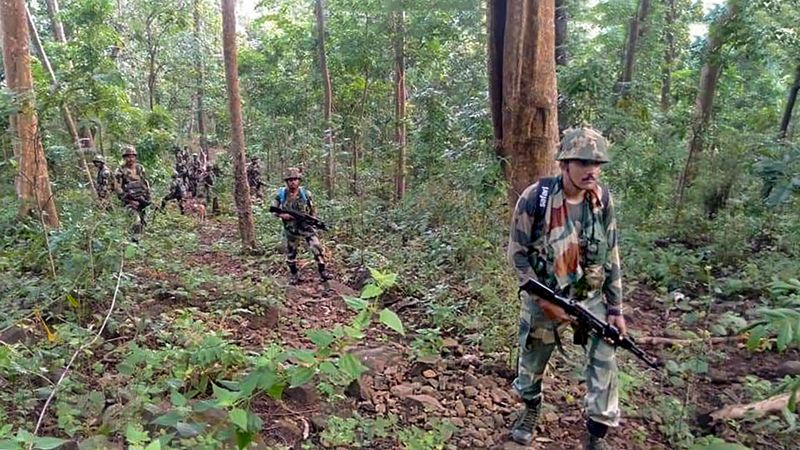
An encounter broke out between security personnel and Naxalites in Chhattisgarh’s Bijapur district on Tuesday, a police official said.

The exchange of fire started this morning in the Indravati National Park forest when a team of security personnel was out on an anti-Naxal operation based on inputs about the presence of senior Maoist cadres, he added.


ISRO successfully tests main parachutes for Gaganyaan’s crew module

The test evaluated the system’s structural integrity and load distribution under asymmetric disreefing conditions

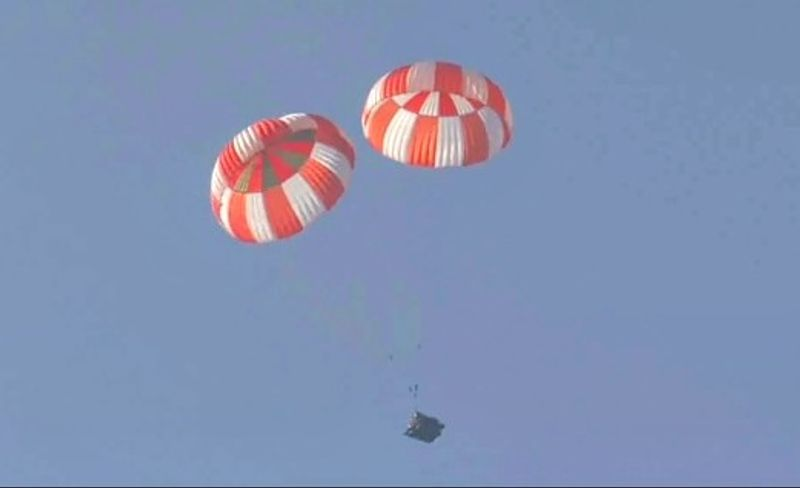
ISRO on Tuesday said it has successfully conducted an important test on main parachutes for the Gaganyaan Crew Module at the Babina Field Firing Range (BFFR) in Uttar Pradesh’s Jhansi on November 3.

The Indian space agency said this test is part of the ongoing series of Integrated Main Parachute Airdrop Tests (IMAT) for the qualification of the parachute system for the Gaganyaan mission.

The Gaganyaan mission is India’s first human spaceflight programme, aiming to send a three-member crew on a three-day mission to space and return them safely to Earth.

As part of the mission, ISRO is developing a human-rated launch vehicle, an orbital module, and a crew-escape system. The programme includes prior unmanned missions to test critical systems before the first manned flight.

In a statement, ISRO said that for the Gaganyaan Crew Module, the parachute system comprises a total of 10 parachutes of four types. It added that the descent sequence begins with two apex cover separation parachutes that remove the protective cover of the parachute compartment, followed by two drogue parachutes (small powerful parachute deployed from a fast moving object to slow it down) that stabilise and decelerate the module.

Upon release of the drogues, three pilot parachutes are deployed to extract three main parachutes, which further slow down the Crew Module to ensure a safe touchdown, ISRO said.

“The system is designed with redundancy—two of the three main parachutes are sufficient to achieve a safe landing. The main parachutes of the Gaganyaan mission deploy in a step-by-step process known as reefed inflation,” ISRO said.

In this process, the parachute first opens partially, which is called reefing, and then fully opens after a predetermined period of time, known as disreefing. This process is carried out using pyro device, it explained.

A pyro device, short for pyrotechnic device, is any mechanism that uses controlled combustion or an explosive chemical reaction to perform a specific function, usually to generate gas, pressure, heat, light, or motion.

“In this test, one of the possible extreme scenarios of delay in the disreefing between the two main parachutes was successfully demonstrated validating the main parachutes for the maximum design,” ISRO said.

“The test evaluated the system’s structural integrity and load distribution under asymmetric disreefing conditions—one of the most critical load scenarios expected during actual mission descent,” the agency said.

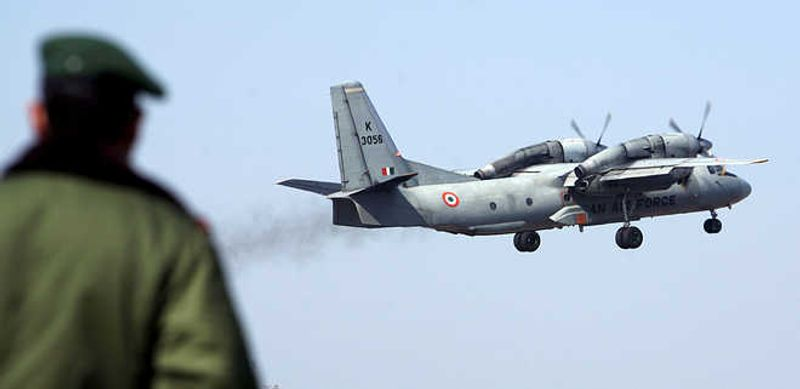
A simulated mass equivalent to the Crew Module was dropped from an altitude of 2.5 km using the Indian Air Force’s IL-76 aircraft, it said, adding the parachute system deployed as planned and the sequence was executed flawlessly, and the test article achieved a stable descent and soft landing, validating the robustness of the parachute design.

“The successful completion of this test marks another significant step toward qualifying the parachute system for human spaceflight, with active participation from the Vikram Sarabhai Space Centre (VSSC), ISRO, Aerial Delivery Research and Development Establishment (ADRDE), DRDO, Indian Air Force and the Indian Army,” ISRO said.


2-day air exercise in region from today

The exercise will be conducted in the airspace of Haryana, Punjab, Himachal Pradesh and Jammu and Kashmir

The Indian Air Force will conduct a two-day air exercise starting tomorrow over northwestern India. The exercise will be conducted in the airspace of Haryana, Punjab, Himachal Pradesh and Jammu and Kashmir.

The region has important airbases, including Chandigarh, Ambala, Halwara, Adampur, Pathankot and Srinagar, where air defence units such as S-400 are located.

A notice to airmen (NOTAM) has been issued for the 48-hour exercise from November 12 to 14. It is likely to include fighter jet operations. Fighter jets such as Rafale, Sukhoi-30MKI and MiG-29 are based at these airbases.

During Operation Sindoor (May 7-10), these bases were actively involved in launching attacks on Pakistan and defending against incoming enemy missiles.


Pak issues NOTAM, puts forces on alert

As per sources, Pakistan’s air defence systems have been activated and are closely monitoring the airspace along the Indian border

Pakistan has issued a notice to airmen (NOTAM) and placed its armed forces on high alert after the deadly car explosion near the Red Fort on Monday that killed several people.

NOTAM, effective from November 11 to 12, imposes restrictions on air traffic and signals a significant rise in security preparedness. Officials in Islamabad have also declared a “red alert” across all airbases and airfields after intelligence warnings suggested the possibility of retaliatory action or cross-border tension with India.

As per sources, Pakistan’s air defence systems have been activated and are closely monitoring the airspace along the Indian border.

“The country’s army, navy, and air force have been directed to remain in full readiness, with the central command ordering all military branches to track developments and prepare for any contingency,” according to reports.


HEADLINES : 09 OCT 2025

SOME GLIMSIS OF 9th MLF, celebrates bravery and sacrifices of Indian soldiers : VEDIOS

MLF :Need to develop and integrate space, electronic warfare and cyber capabilities with manned aircraft for air dominance: Lt Gen Shukla

MLF:Indian Navy ready to deter, but country lacks full maritime capability: Ex-Navy chief

WW 1 Sikh heroes remembered at Sarwali village memorial

Wing Commander acquitted of murder reinstated after three decades, but plea for promotion to Air Marshal nixed

Ex-CAPF personnel seek justice for ITBP Dy Commandant who took his own life

Pakistan amends Constitution; Asim Munir to become Chief of Defence Forces

Defence ministry to double DPSU R&D spend to Rs 32,766 crore in 5 years

Infiltration bid foiled at LoC, 2 terrorists killed

350 years of the Guru Tegh Bahadur’s martyrdom

Sainik School, Kunjpura, holds Old Boys’ Meet

Row over Punjabi University’s Rs 53K ‘golden chance’ scheme

Why the future is feminine

Separate UT in Manipur not feasible: MHA to Kuki groups


MLF :Need to develop and integrate space, electronic warfare and cyber capabilities with manned aircraft for air dominance: Lt Gen Shukla

“We have to develop the capability to intercept ballistic and hypersonic missiles”

Stating that the quality of airpower will determine victory or defeat in any future fight, Former General Officer Commanding-in-Chief, Army Training Command, Lt Gen Raj Shukla said that towards this end, it was imperative to integrate manned aircraft with unmanned platforms, space, cyber and electronic warfare (EW) capability.

“In order to achieve air superiority, the adversary kill chains that we have to defeat are very complex. And the instruments to defeat these enemy kill chains are EW, space, cyber, information, dominance, stealth and now AI,” he said while speaking at the Military Literature Festival in Chandigarh on Friday. AI is giving you automated threat detection, automated identification.

“Just look at the electromagnetic spectrum. It consists of radars, stealth, jamming. You have to protect the spectrum and you have to attack it. And this is exactly what happened in Operation Sindoor, which was a resounding victory for India. It was the system level integration which was important,” he said.

Stating that platform level integration was very important, he said that without these “wraparound technologies”, manned aircraft would be of very little utility in modern world. “If we do not invest 50 to 60 per cent of our budget in these wraparound technologies, these piloted platforms will not be very effective,” he said.

“We have to make a decisive push towards system level integration. And therefore, if we are serious about theatre commands, the first two commands which must be given combatant command status and upgraded are space and cyber. It is so obvious because their capacities they will lubricate air power and everything else,” he said.

Air power, he said, has to play out in theatrised structures, because theatrisation is not about air power. It’s about giving theatre commanders a quasi-diplomatic role, shaping areas beyond you. Theatrisation is a far bigger argument and air power is phenomenally important, he added.

Referring to the air strikes by the Israel and the US on Iran a few months ago, he said that such missions were not possible without stealth, EW and space capabilities. “These are not non-kinetic elements. They are deadlier than kinetic. And when everything comes together, you have the classical dismantling of integrated air defence and command and control nodes.

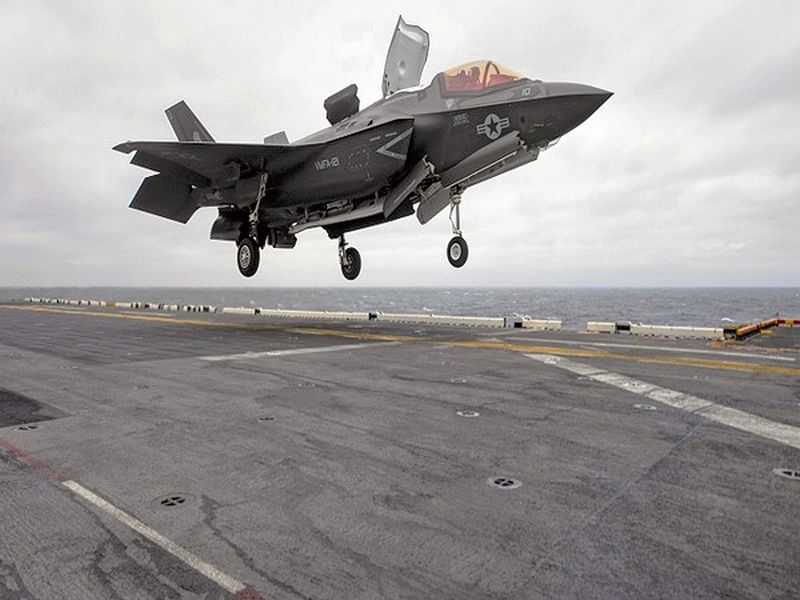
Pointing out that the missions were led by the F-35 stealth fighters, Lt Gen Shukla said that without stealth capability, you simply cannot operate in contested envelopes. So acquisition of such stealth should be our foremost priority. “Stealth was beating air defence hands down. Stealth, survivability and whatever goes around it, signature management, electronic warfare, tactic techniques and procedures,” he said. “We have to start thinking of long growing stealth. 25 years from now that can strike the Chinese mainland,” he added.

Lt Gen Shukla said that the Chinese have a formidable rocket missile force and our cities are at risk. “Space is supremely important to detect missile launches and we have to develop the capability to intercept ballistic and hypersonic missiles.” He said that we need dedicated military satellites, not just for imagery and communications, but also for EW, for cyber warfare.