Current Events :

















The PMO-driven initiative aims to rid India’s premier defence research agency of ‘redundant’ tasks and remodel it on the lines of the US Defence Advanced Research Projects Agency
https://98d5fd8a106e2443b3cd0e2adf5907e5.safeframe.googlesyndication.com/safeframe/1-0-40/html/container.htmlWith an aim to attain high-end futuristic technologies for future wars, the Union government has set up a high-powered committee, comprising officials from the ministry of defence (MoD), the three services, industry and academia, to redefine the role of India’s premier defence research agency, the Defence Research and Development Organisation (DRDO). The DRDO, which has a budget of Rs 23,264 crore in budget estimate (BE) 2023-24, has often been criticised for delayed projects and cost overruns. Incidentally, the DRDO, with massive manpower and infrastructure, currently does not have any major new project in its hands.
The nine-member committee, headed by former principal scientific advisor to the government Prof. K. Vijay Raghavan, will submit its report within three months. Defence sources claim the move to revamp the DRDO is driven by the Prime Minister’s Office. The PMO is reportedly also considering bifurcating the post of DRDO chairman and secretary-research and development in the MoD. This is to ensure that the DRDO chief, with lesser responsibility, is able to devote more time and energy to defence programmes. The view is that a bureaucrat holding the post of secretary-R&D can manage administrative and financial tasks better than a scientist.
A top defence official said the DRDO should be focusing only on high-end futuristic technologies foreseen in air, ground, maritime and space systems. This would come at the cost of offloading some of its ongoing ‘redundant’ tasks, which perhaps the academia or industry can do. For several years, the DRDO was mandated to work to only meet the immediate demands of the armed forces and indigenise existing weapon systems even as other countries concentrated on future technologies.
As per the terms of reference of the Raghavan-led committee, while it will suggest inputs to maximise academia and start-up participation in the development of cutting-edge technologies, the panel will also look into the restructuring and redefining the role of the Department of Defence (R&D) and DRDO, as well as their relationship with each other and with the academia and industry.
Military analysts believe most of India’s defence manufacturing achievements are limited to the production of outdated tanks, guns, helicopters and weapons platforms, or the setting up of manufacturing units producing foreign weapons after technology transfer. However, the DRDO has done tremendously well in missile and radar technologies.
With this revamp, the Union government intends to follow the Defense Advanced Research Projects Agency (DARPA) model of the United States for the DRDO. DARPA and DRDO were born in the same year, 1958. According to its website, DARPA works on the principle that the US should be ”the initiator and not the victim of strategic technological surprises“. DARPA is merely a funding agency with no laboratories or research staff, and all research is conducted through contracts with universities, industry and government R&D institutions. On the other hand, the DRDO has a staff strength of about 30,000, of which only 30 per cent are from the scientific community.
In the 2022-23 Union budget, 25 per cent of MoD’s R&D budget was earmarked for private industry, start-ups and academia. Union finance minister Nirmala Sitharaman, while presenting the budget, had said that “private industry will be encouraged to take up design and development of military platforms and equipment in collaboration with the DRDO and other organisations through the strategic partnership model”. However, the DRDO has not been able to share its R&D budget with any academia.
Last year, the government opened the DRDO’s doors to private players wherein they could use government assets for projects, thus sparing them the need to invest in land, machinery or other support infrastructure. The Narendra Modi government has taken several measures to boost indigenous defence manufacturing, through initiatives like Aatmanirbhar Bharat, and boost defence exports. The MoD has set an ambitious defence exports target of Rs 35,000 crore by 2025.
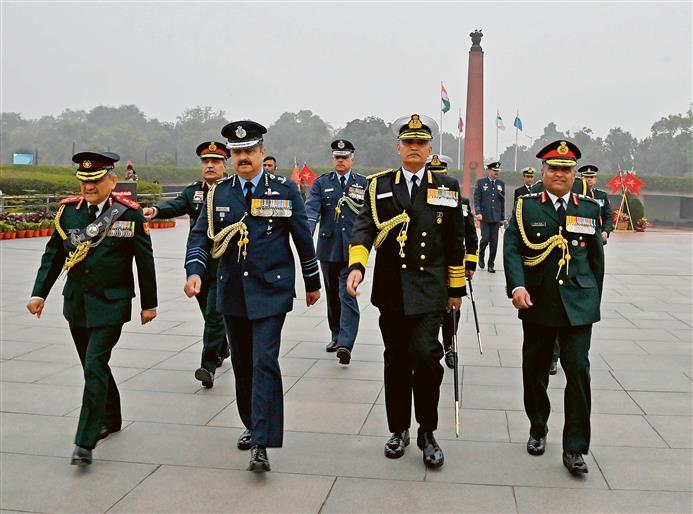

EARLIER this month, an Army Commander told me that he expected Prime Minister Narendra Modi to announce from the ramparts of the Red Fort the creation of the Western Integrated Theatre Command (ITC) at Jaipur as part of the theatrisation plan. This did not happen, indicating that there are last-minute problems for the long-awaited defence reform. Last month, the Chief of Defence Staff (CDS), Gen Anil Chauhan, speaking at a function of the Defence Research and Development Organisation in New Delhi, emphasised that jointness and integration were a prelude to theatrisation. At an earlier event in Delhi, he said that 99 per cent of the work on theatrisation was over. So, what is this 1 per cent that is holding up the train? Is it separate legislation for theatrisation and the role and functions of the CDS?
After the bad blood between the Indian Air Force (IAF) — the habitual but conscientious objector — and other services during late Gen Bipin Rawat’s term as CDS, haste is no longer the choice for implementing theatrisation. When I had met Gen Rawat a week before his tragic death, he showed me the file enunciating his mission. He believed that he was required to inculcate jointness and introduce ITCs within three years. Being in a hurry, Gen Rawat rubbed IAF the wrong way by comparing it with a supporting arm, an extension of the artillery. The IAF was never going to agree to a division of its limited assets and raising of the Air Defence Command (ADC).
On December 24, 2019, the Union Cabinet had approved the creation of the post of CDS, who was tasked “to bring about jointness in operations, logistics and training… of the three services within three years”. The new Department of Military Affairs was mandated with “restructuring military commands for optimum utilisation of resources through jointness in operations, including establishment of joint theatre commands”.
Gen Rawat gave a peek into his version of the ITC in September 2021 in New Delhi. His model of theatrisation consisted of country- and domain-specific ITCs — the Western ITC for Pakistan, Northern ITC for China, a maritime command for Indian Ocean and an islands command (already existing) — the Andaman and Nicobar ITC. He spoke about a fifth command for Indian airspace to be followed by cyberspace command. Also included were ADC and the existing Northern Army Command, which is responsible for Ladakh and Pakistan-occupied Kashmir (PoK), as an interim measure. A former Deputy Chief of Army Staff, Lt Gen Harwant Singh (retd), who had made the first presentation on theatrisation to then MoS for Defence Arun Singh in 2001, had suggested three sea-based integrated commands — one each for Bay of Bengal, Arabian Sea and Andaman and Nicobar Islands (which came up in 2002). Singh recognised the salience of sea power, which has not been suitably acknowledged.
Gen Chauhan, who is from the 11 Gorkha Rifles, like Gen Rawat, has ticked the right boxes — patience, perseverance and persuasion. He has not gone public with the framework of the ITC. His model is apparently more or less identical to other models and includes two land-based country-specific ITCs and two sea-based domain-specific ITCs, including the existing Andaman and Nicobar Command. Additional joint commands in the pipeline relate to logistics, training, cyber and space, missiles and intelligence. It is proposed that the three new ITCs will be commanded by four-star officers who will retire at the age of 61. Other additional joint commands will be led by three-star officers. Land commands will be followed or accompanied by the merger of Eastern and Naval Commands into the Maritime Command, to also include the existing Andaman and Nicobar Command. The ADC has been dropped to accommodate the IAF on comprehensive utility of its assets. The clincher, it seems, is that one of the two land-based commands will go to the IAF.
It is believed that some IAF resources will be dedicated to ITCs, while the majority will be maintained as strategic reserve. Four-star Generals/ Admirals/Air Chief Marshals will lead ITCs and report to the CDS, who will be responsible for decision-making. It is being said that the Chiefs of Staff Committee will assist the CDS in fulfilling this role. The Service Chiefs, who will remain four-star officers, will be left with the responsibility to raise, train and sustain. Altogether, there will now be seven four-star officers, including the CDS. This will not please the civilian bureaucracy, especially the Defence Secretary, as these officers will be miles ahead of him in the Warrant of Precedence.
Congress MP and advocate Manish Tewari has written that the Inter Services Organisation (Command, Control and Discipline) Bill, 2023, was passed this month in the Lok Sabha and Rajya Sabha without any meaningful debate in Parliament — though a discussion did take place in the Rajya Sabha. The Bill was needed for bringing uniformity in disciplinary matters, cross-posting and promotions in tri-service organisations as each service has its own Act. The Bill will standardise the framework for administrative authority. The Bill is also the legal basis for the government to create theatre commands by restructuring the armed forces. According to Tewari, this will be ultra vires of constitutional jurisprudence if it is used as the legal basis for the CDS. Further, while Clause 3(1) (b) of the Bill defines the CDS, no role is ascribed to him.
I heard the debate in the Rajya Sabha, which was quite pedestrian. Rounding off the debate, Defence Minister Rajnath Singh said the Bill that was passed should not be confused with theatrisation. It is clear that a standalone legislation is required for theatrisation and a separate law to define the institution of the CDS, his role and responsibility. Still, there is no doubt that the government will announce theatrisation plans before the General Election.
ANI
Texas [US], August 27
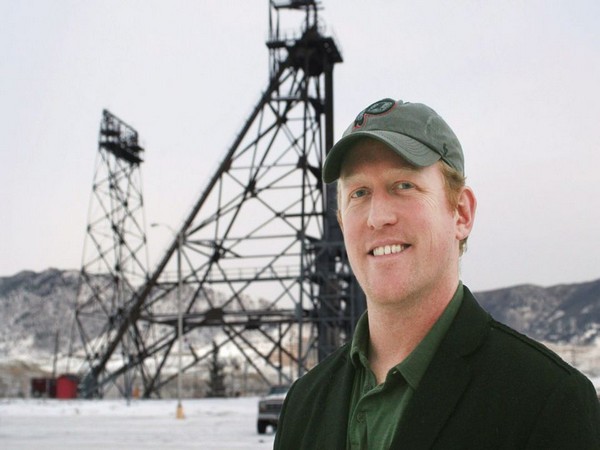
Former US Navy SEAL, who claimed to have killed Osama bin Laden in 2011, was arrested earlier this week in Texas for allegedly causing body injury, The New York Post reported.
Robert O’Neil was booked on Wednesday in Frisco and was released on a USD 3,500 bond the same day, the New York Post said, citing The Dallas Morning News, a newspaper serving the Dallas’ Fort Worth area of the US state of Texas. The former Navy SEAL was booked on a Class A misdemeanour charge of assault causing bodily injury and a Class C misdemeanour of public intoxication, although jail records listed only the assault charge, as per The New York Post.
O’Neill got the spotlight after he took credit for firing the shots that killed 9/11 mastermind Osama bin Laden during a US covert raid in Pakistan in 2011.
He recounted the story in his 2017 memoir “The Operator”. The US government has never confirmed or denied the story, reported The New York Post.
O’Neill’s latest arrest is far from his first run-in with controversy. In 2016, he was busted for driving drunk in Montana, charges which prosecutors later dropped CBS News reported.
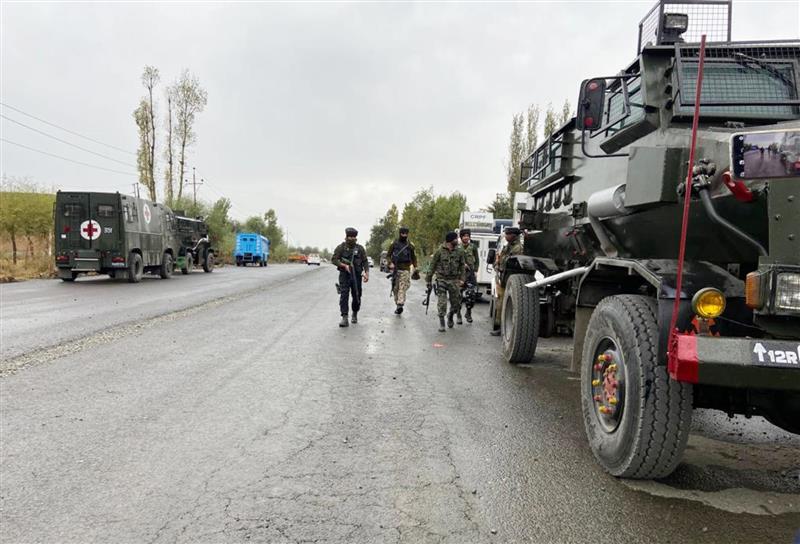
Mendhar/Jammu, August 26
Security forces on Saturday launched a search operation in a forested area after detecting suspicious movement near the Line of Control (LoC) in Jammu and Kashmir’s Poonch district, officials said.
The search operation by the army and police was launched in Chamrer and Gangna Top in the Buflaiz sector around 6 am, they said.
The search parties fired a few rounds in the Chamrer forest area on observing some suspicious movement but there was no retaliation from the other side, the officials said.
Reinforcements had been rushed to the area for conducting a thorough search operation, they said.

Sydney, August 27
Three US Marines died during military exercises in northern Australia on Sunday, the US military said, in a helicopter crash that Prime Minister Anthony Albanese called “tragic”.
Five others were “transported to Royal Darwin Hospital in serious condition”, Marine Rotation Force – Darwin said in a press release circulated on social media and Australian news networks.
It said they were among 23 Marines on a MV-22B Osprey helicopter during routine training exercises and that the cause of the crash was being investigated.
Marine Force Rotation – Darwin did not immediately respond to an email seeking comment.
The crash occurred on the remote Tiwi Islands after 9 am (0100 GMT), said Northern Territory Police Commissioner Michael Murphy.
Australian personnel were not involved in the crash that occurred during Exercise Predators Run 2023, Albanese said.
“Our focus as a government and as a department of defence is very much on incident response and on making sure that every support and assistance is given at this difficult time,” the prime minister told a previously scheduled press conference in Western Australia.
About 2,500 personnel from Australia, the US, the Philippines, Indonesia and East Timor were taking part in the exercises, Sky News reported.
The US and Australia, a key ally in the Pacific, have been stepping up military cooperation in recent years in the face of an increasingly assertive China.
Four Australian soldiers were killed last month during large bilateral exercises when their helicopter crashed into the ocean off the coast of Queensland.

New Delhi, August 26
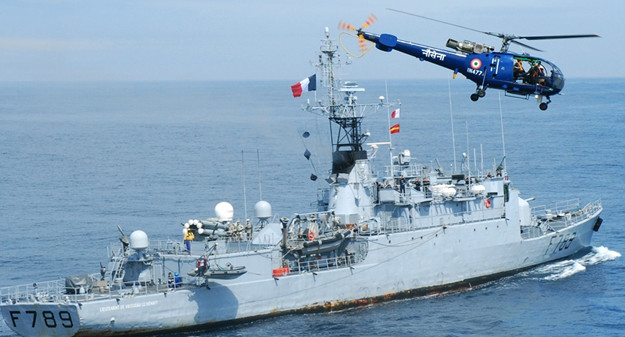
The fifth edition of biennial AUSINDEX maritime exercise between Indian Navy and Royal Australian Navy (RAN) has ended at Sydney.
INS Sahyadri and INS Kolkata participated in the exercise along with HMAS Choules and HMAS Brisbane from RAN. Besides ships and their integral helicopters, the exercise also witnessed participation of fighter aircraft and maritime patrol aircraft.
Held over four days (August 21-25), AUSINDEX included a series of complex exercises in all three domains of maritime operations.

Kyiv, August 26
Russian forces struck a cafe in a key front-line area in northeastern Ukraine Saturday, killing two civilians and wounding a third, regional officials said.
The shelling near the city of Kupiansk came as UK officials said that Russia may try to retake the area, which was captured by Kyiv in a lightning counteroffensive last September after more than six months of Russian occupation.
Fierce fighting there earlier this month prompted mandatory evacuations and fears of a second Russian takeover.
Russian shells on Saturday morning struck the cafe in Podoly, an eastern suburb of Kupiansk, regional governor Oleh Syniehubov said in a Telegram post. He added that rescue teams were working at the site.

Moscow, August 26
The Wagner Group’s presence extends from the battlegrounds of Syria to the deserts of sub-Saharan Africa, projecting the Kremlin’s global influence with mercenaries accused of using brutal force and profiting from seized mineral riches.
Putin tells them to sign allegiance oath
But that was under Yevgeny Prigozhin, who, in what may have been his final recruitment video, appeared in military fatigues from unidentified dry and dusty plains, boasting of Wagner “making Russia even greater on all continents”. A private jet carrying Prigozhin and his top lieutenants crashed northwest of Moscow on Wednesday, two months after he led an armed rebellion that challenged the authority of Russian President Vladimir Putin. The crash has raised questions about the future of the group.
In African countries where Wagner provided security against extremist organisations like Al-Qaeda and the ISIS, officials and commentators predicted Russia would likely maintain a presence, placing the mercenaries under new leadership.
Others, however, say Prigozhin built deep, personal connections that Moscow could find challenging to replace quickly. Africa is vitally important to Russia. This summer, Wagner helped secure a national referendum in the Central African Republic; it is a key partner for Mali’s army in battling armed rebels; and it contacted the military junta in Niger that wants its services following a coup.

New Delhi, August 26
A CRPF head constable’s hand was chopped off allegedly by her husband in a hotel in northwest Delhi’s Adarsh Nagar following an argument between them, the police said on Saturday. The couple hails from Kanpur in Uttar Pradesh.
They had checked in at the hotel around 3 pm on Friday. The woman was in the city for giving a departmental examination. According to the police, it is suspected that the accused might have given something to his 28-year-old wife following which she became unconscious and he later chopped off her hand from the wrist on Friday evening.
When the woman re-gained consciousness, she called the hotel staff who later informed the police. “We are verifying the details provided by the victim. The woman is in a semi-conscious state and has been admitted to Babu Jagjivan Ram Memorial hospital. She is currently not in a position to give details,” a senior police officer said.
“However, we are trying to trace the accused who is at large,” he added.