









Sanjha Morcha

What’s New

Click the heading to open detailed news

Current Events :

web counter

Print Media Reproduced Defence Related News

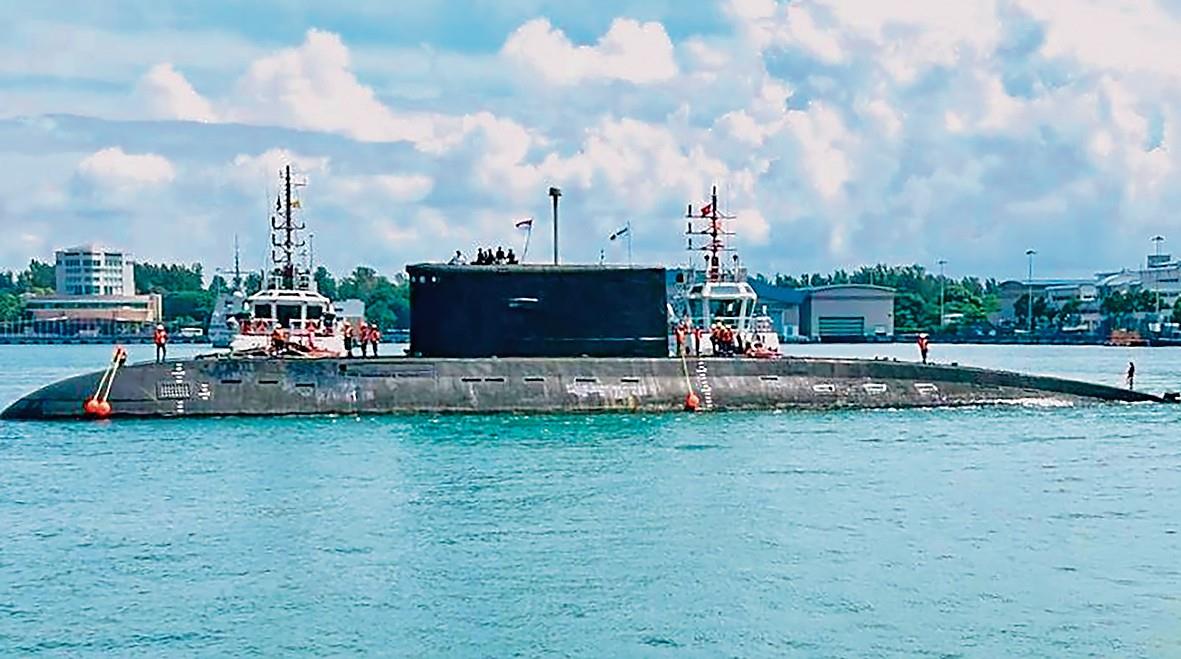
Hope floats for augmentation of Navy’s underwater assets

As per the Horizon 2047 document, India and France agreed to ‘explore more ambitious projects to develop the Indian submarine fleet and its performance’.
Hope floats for augmentation of Navy’s underwater assets

Boost: India has added maritime competence to its land and air-based capacity for delivering strategic weapons. PTI
Rahul Bedi

Senior Journalist

The prospects of France assisting India in developing and constructing six nuclear-powered general-purpose attack submarines or SSNs for the Indian Navy (IN) are believed to have brightened following a meeting between PM Narendra Modi and President Emmanuel Macron in New Delhi on the sidelines of the recently concluded G20 summit.

Discussions between the two leaders — who were meeting for the second time in two months following Modi’s July visit to Paris as the chief guest at France’s Bastille Day parade — were centred on the “joint development, manufacture and testing of advanced military platforms and technologies”, said officials in Delhi. French assistance for the IN’s continuingly deferred SSN programme has long been on the anvil, with hush-hush discussions over it at an advanced stage.

Earlier, the joint Horizon 2047 document agreed upon during Modi’s Paris visit to mark 25 years of the bilateral strategic partnership between Delhi and Paris referred to both sides agreeing to “explore more ambitious projects to develop the Indian submarine fleet and its performance”. Mazagon Dock Shipbuilders Limited in Mumbai had already licence-built six Kalvari (Scorpene)-class conventional diesel-electric ‘killer-hunter’ submarines under transfer of technology from France’s Naval Group, and is poised to begin constructing three more to further boost collaboration in more advanced underwater platform production.

India had approached France for assistance with its then putative and floundering nuclear-powered missile submarine (SSBN) programme after Paris had robustly backed New Delhi’s 1998 ‘Shakti’ nuclear tests. And though this support, when India was globally isolated and under US-led sanctions, had led to the two inking the bilateral strategic partnership, France had declined to be involved in India’s SSBN programme as, at the time, such assistance contravened prevailing global nuclear protocols. This negation had left India no choice but to turn to Russia as a default option, but senior industry officials conceded that the impending SSN project in the overall transformed security environment presented Paris and Delhi yet another collaborative opportunity to be exploited productively.

SSNs are employed for sundry missions such as anti-submarine and anti-surface warfare, while SSBNs perform specialised strategic nuclear deterrence missions. The latter’s principal operational objectives are to safeguard a nuclear force’s second-strike capability by offering a safe and undetected location from where missiles can be launched when required.

Earlier this year, France reportedly offered to jointly develop SSNs with India, under the aegis of Delhi’s Atmanirbharta initiative designed to enhance self-sufficiency in materiel requirements, by transferring technology based on its Barracuda-class SSNs, the first of which — Suffren — was commissioned into the French Navy in mid-2022. Designed by the Naval Group, the 4.765-tonne and 99m-long Suffren was the first of the six SSNs scheduled to join France’s Marine Nationale by 2030 at an estimated cost of over $2 billion each.

France was eager to clinch this prospective SSN deal with India to compensate for Australia summarily scrapping in late 2021 the multi-million-dollar deal with the Naval Group to supply the Royal Australian Navy 12 conventional submarines, for which the latter paid $585 million as compensation. Instead, Australia entered into a $268-368-billion deal with the US and the UK for eight SSNs between now and around 2050 under the AUKUS strategic pact.

The IN, for its part, is keen on partnering the Naval Group for its SSN needs as the technology it offered is more advanced compared to that of Russia, the only P5 country amenable to such sensitive cooperation with India. Industry officials and analysts are of the view that French involvement in India’s SSN programme would, in all likelihood, be ‘endorsed’ by the US, whose strategic, defence and military technology ties with India are proliferating in a bid to challenge Chinese hegemony in the strategic Indian Ocean Region.

The IN’s SSN project, worth an estimated Rs 60,000 crore, was approved by the Ministry of Defence in early 2015, with the first of the 6,000-tonne boats scheduled for completion by 2032-33. These platforms comprised part of the Navy’s revised 30-year Project for the Series Construction of Submarines (till 2030) that envisaged the induction of 24 submarines, including six SSNs. These SSNs would supplement and operationally support the four or five 6,000-7,000-tonne Arihant-class SSBNs built with Russian knowhow and technical assistance, particularly with regard to miniaturising their 82.5MW pressurised light water reactors.

Meanwhile, India’s SSBN programme, undertaken jointly by the Defence Research and Development Organisation, the Department of Atomic Energy and the IN, is proceeding apace at the secretive Ship Building Centre (SCB) in Visakhapatnam. The third such platform — simply designated as S4 — was launched in late 2021 after INS Arighat, the second SSBN, was undergoing further fitment. These SSBNs comprise a vital component of India’s nuclear triad, aimed at sustaining its nuclear deterrence and no-first-use posture.

INS Arihant, the lead SSBN boat, was constructed at the SCB, drawing upon design elements of Soviet-era and Russian submarines from the Project 670A Skat-series (‘Charlie I’) and Project 667 (‘Delta I’) to the more recent Project 885 Yasen-class nuclear-powered cruise missile submarines (SSGNs). It was launched in July 2009; four years later, its on-board nuclear reactor attained criticality, enabling sea trials to begin in 2014 and weapon tests before its unannounced and low-key commissioning in August 2016. Two years later, Arihant completed its first deterrence patrol, confirming India’s three-tier retaliatory nuclear deterrent capability by adding maritime strike competence to its existing land and air-based capacity for delivering strategic weapons.

The IN, however, which acknowledged the SSBN programme’s existence only in December 2007, continues to claim that the Prime Minister’s Office (PMO) had ‘exclusive’ management of the confidential programme. Funding for it was also confidential, supervised by the PMO via the National Security Adviser, it claimed. But having taken ownership of the SSN programme, it now behoves the Navy to imminently kickstart the project and stall the severe drawdown in its underwater assets.

Commander of Russian Black Sea Fleet killed, claims Ukraine

Had struck HQ at Crimea’s Sevastopol port last week; Moscow mum
Commander of Russian Black Sea Fleet killed, claims Ukraine

Kyiv, September 25

Ukraine’s special forces said on Monday that Admiral Viktor Sokolov, the commander of Russia’s Black Sea Fleet, had been killed in a Ukrainian attack last week on the fleet headquarters in the Crimean port of Sevastopol.

Admiral Viktor Sokolov.

The Russian Defence Ministry did not immediately respond when asked to confirm or deny that Sokolov had been killed in the attack on Crimea, which Russia seized and annexed in 2014. The Ukrainian military said Friday’s attack had targeted a meeting of the Russian navy’s leadership in the city of Sevastopol.

US-made Abrams tanks arrive in ukraine

  • United States-made Abrams tanks have arrived in Ukraine and are being prepared to reinforce the latter’s brigades, President Volodymyr Zelenskyy has said.
  • He did not say how many of tanks had arrived. European countries have already sent dozens of German-made Leopards and some British Challengers.

“After the strike on the headquarters of the Russian Black Sea Fleet, 34 officers died, including the commander of the Russian Black Sea Fleet. Another 105 occupiers were wounded. The headquarters building cannot be restored,” the special forces said on the Telegram messaging app.

It was not immediately clear how Ukraine’s Special Forces counted the dead and wounded in the attack. Russian-installed officials confirmed the Ukrainian attack on Friday, saying that at least one missile struck the fleet headquarters. Kyiv has stepped up attacks in the Black Sea and Crimea as Ukrainian forces press on with a nearly four-month-old counteroffensive to take back Russian-occupied territory.

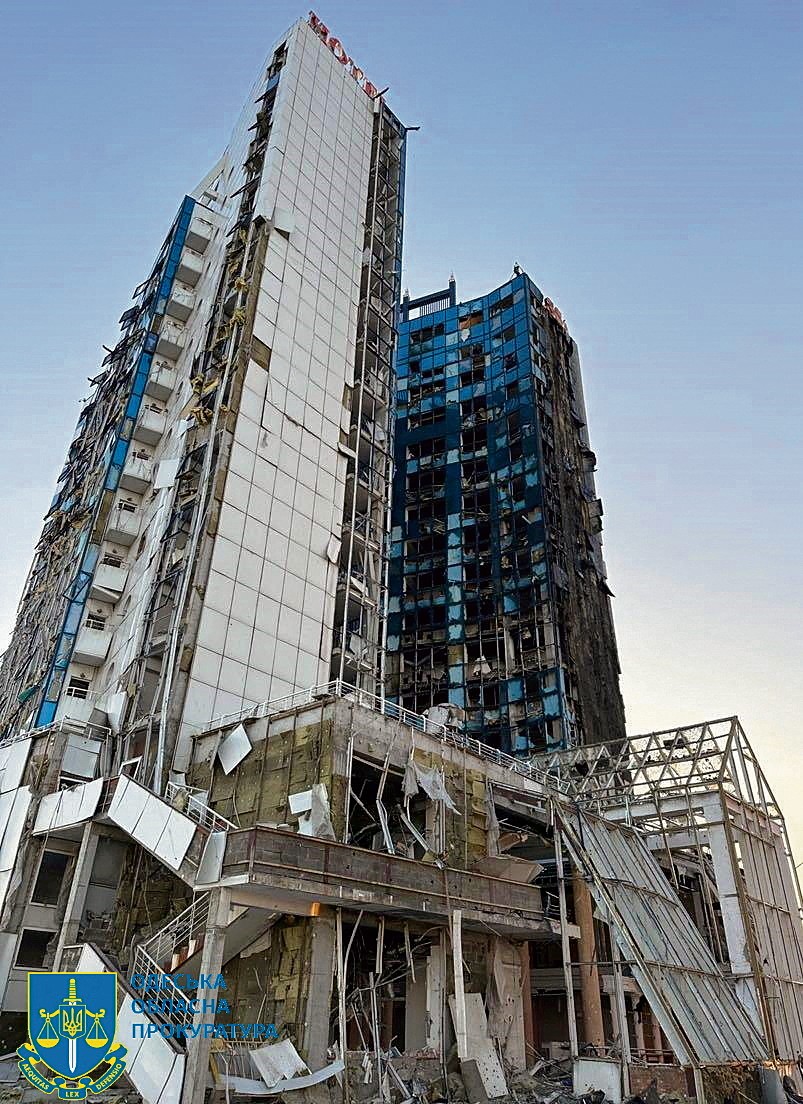
Meanwhile, Russian air strikes killed four people and caused significant damage to infrastructure at the Black Sea port of Odesa and to grain storage facilities, Ukrainian officials said.

Ukraine’s military said 19 Iranian-made Shahed drones and 11 cruise missiles were shot down overnight, most of them directed at Odesa region. 

‘34 officers killed’

According to Ukraine’s special forces, it struck Russia Black Sea Fleet’s headquarters in the Crimean port of Sevastopol that killed 34 officers and 105 others. — Reuters


Issue Aadhaar to those who lost it in Manipur violence: Supreme Court

Tells Bar bodies not to stop any lawyer from hearings
Issue Aadhaar to those who lost it in Manipur violence: Supreme Court

The Supreme Court on Monday ordered issuance of Aadhaar numbers to those who lost their 11-digit unique identification number during the ongoing ethnic violence in Manipur even as it emphasised the need for prior necessary verification to ensure that “illegal immigrants” didn’t get undue advantage of the exercise.
Tribune News Service

Satya Prakash

New Delhi, September 25

The Supreme Court on Monday ordered issuance of Aadhaar numbers to those who lost their 11-digit unique identification number during the ongoing ethnic violence in Manipur even as it emphasised the need for prior necessary verification to ensure that “illegal immigrants” didn’t get undue advantage of the exercise.

Accepting the suggestion made by Justice Gita Mittal-led three-member all-women panel, a Bench led by CJI DY Chandrachud ordered the UIDAI Deputy Director General, Guwahati and the Manipur Home Secretary to issue Aadhaar numbers to those who lost or misplaced their documents on account of displacement during the violence that has claimed at least 175 lives and left more than 70,000 people displaced.

The Bench, however, clarified that “Necessary verification shall be carried out before issuing Aadhaar cards.”

The directions came after senior advocate Vibha Datta Makhija, representing the panel, urged the top court to issue directions for re-issuance of Aadhaar numbers to those who lost their documents during the ongoing ethnic violence in Manipur.

The top court also directed the Bar Associations in Manipur not to prevent any lawyer, regardless of the community he/she belongs to, from appearing before courts. Any violation of the direction would amount to contempt of the court’s order, it said. “We are a people’s court and giving a hearing is part of the healing process,” the Bench said emphasising that no lawyer should be denied access to court proceedings in Manipur.


Experts review joint war doctrine

Brainstorm gaps in execution of operations
Experts review joint war doctrine

Tribune News Service

New Delhi, September 25

As the creation of joint theatre commands inches closer to reality, the Indian armed forces for the first time discussed among themselves the probability of united operations. The forces also reviewed “joint doctrines”, needed to execute military operations unitedly.


The review of the “joint doctrines” was aimed at understanding the gaps, if any, in the planning and execution of operations. The future wars are expected to be fought in the domains of space and cyberspace. Long-range missiles aided by pin-point surveillance are likely to be used.

The review conference spanned over two sessions: Brainstorming the joint doctrine formulation process and reviewing the ongoing as well as future joint doctrines on diverse subjects, including cyberspace, amphibious warfare and space wars. “The conference was successful and achieved its aim,” the Ministry of Defence today said, adding the review was done on Saturday.

Subject matter experts from separate doctrine development agencies of tri-services, Integrated Defence Staff (IDS) and the three services (Army, IAF and Navy) along with members from reputed think-tanks were present at the conference. The ‘Joint Doctrine Review Conference-2023’ was conducted at the Manekshaw Centre in Delhi Cantonment and was chaired by Air Marshal Jeetendra Mishra, the Deputy Chief of the IDS.

The review was aimed at synergising and bridging the gaps in understanding between IDS and three services in formulation of doctrines, as also reviewing the progress of existing doctrines. It also helped in sharing best practices and ongoing initiatives on creating a joint doctrine to execute military plans with all three participating services.


Army burnt Kargil war records?

He was the highest official to be dismissed for alleged lapses that led to the Kargil intrusion in 1999. And now Brigadier Surinder Singh’s efforts to prove his innocence have been dealt a huge blow. The Army says it has burnt the documents that could’ve helped him restore his honour.


Army veterans, residents pay tribute to Anantnag op martyr

Colonel Manpreet Singh laid down his life fighting terrorists

Army veterans, residents pay tribute to Anantnag op martyr

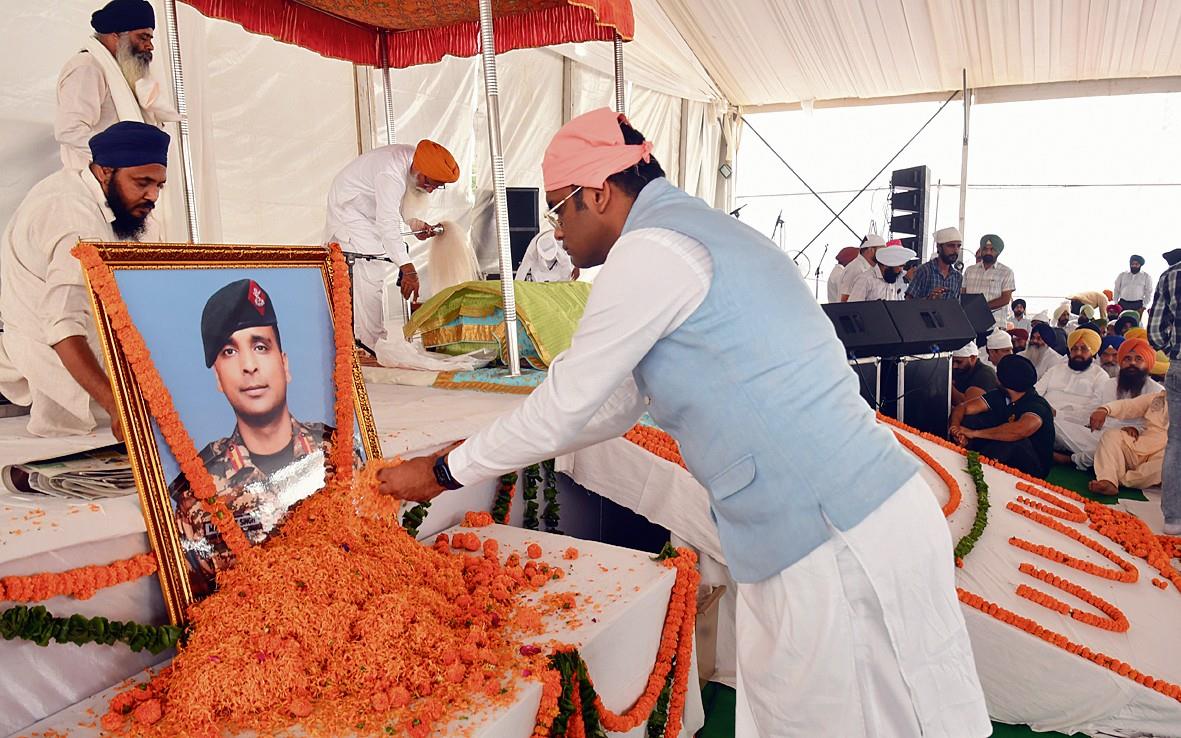
Mayor Anup Gupta pays tribute to Col Manpreet Singh at his bhog ceremony at New Chandigarh. Pradeep Tewari
Tribune News Service

Mohali, September 24

Residents of New Chandigarh, Army veterans and people from various walks of life paid tribute to Col Manpreet Singh, who laid down his life in the line of duty during a gunfight with terrorists in J&K’s Anantnag recently, during his bhog ceremony at his ancestral Bharaunjian village this afternoon. Besides representatives of the Western Command, senior leaders from political parties, women, children and elderly in large numbers paid their respect to the departed soul.

The Army officer, a Sena medal awardee, who laid his life in the service of the nation, was cremated at his village on September 15. Singh, a third generation soldier, belonged to 12th Sikh Light Infantry. Three officers — the Colonel, a Major and a DSP of the Jammu and Kashmir Police — were killed in the gunfight with terrorists in the higher reaches of the Kokernag area in the valley on September 13.


EQUALIZATION OF PENSION MAJ GEN’S

File:Major General of the Indian Army.svg - Wikipedia
File:Brigadier of the Indian Army.svg - Wikipedia

Dear Gen Ashok Sen Sir,

  1. Thank you for your message seeking some clarification. There are three issues which you have to understand. This is as per my understanding on this issue of Equalisation of Pension in respect of Maj Gens / R Adms / AVMs.
  2. Let us go by issue by issue.
    Issue No 1 : Pension Arrears of Pre – 2016 Maj Gens from Jan 2016
  3. The Dept of Military Affairs of CDS vide their letter dated 12 Jun 2023 after obtaining the recommendation of Min of Fin (Expdr) issued the Equilisation letter. This letter states Pre – 2016 Maj Gens get lesser pay and pension from Jan 2016 due to the fact that 7th CPC did not give MSP to Maj Gens & Equivalents. The Brigadier got MSP of Rs 15,500 from Jan 2016. If you consider pay of these two ranks in any Level you find the difference in Matrix Pay is not more than Rs 6,000 favouring Maj Gen. For example take level 10 in Army Pay Rules 2017.
    (a) Matrix Pay of Maj Gen: Rs 1,88,200.
    (b) Matrix Pay of Brigadier: Rs 1,82,200 + Rs 15,500 =
    Rs 1,97,700.
    (c ). The loss of pay to serving Maj Gen from Jan 2016 is
    Rs 9,500 (197700 -– 188200).
    (d) Loss of Pension to Pre – 2016 Maj Gen from Jan 2016
    is Rs 0.50 x 9500 = Rs 4,750 pm.
  4. Now the ibid letter dated 12 Jun 2023 has created a lot of confusion. There, the Min of Fin (Expdr) insisted for equalising pension of Maj Gen and Brigadier if both should belong to the same Arm or Service or Branch. But In OROP from Jul 2014 whether your belong to Infantry or ASC your pension is same for the rank of Maj Gen and total service of 33 years. No discrimination is done because someone got promoted earlier or later.
  5. This confusion has delayed in my view issue of Circular or Corr PPO for each Maj Gen or Equivalent. I am sure the CGDA would have taken up this case with Min of Def. Such things happens when there is no conference between the Min of Fin , Min of Def and Service HQ and Ex-Service Officers of Maj Gens rank to sort out such confusion. How do you expect the CGDA to hunt for each Maj Gen and see to which Arm or Service or Branch he belongs to and also locate another Brigadier of the same Arm or Service or Branch. See the difference in pension and then equalise them using the two illustrations given in the letter of 12 Jun 2023. I urge all general offices to read the letter of 12 Jun and understand its contents.
  6. Arrears of Pre – 2016 Maj Gens from Jan 2016 will get unduly delayed because the letter of 12 Jun 2023 stipulates about Maj Gens and Brigadiers to belong to the same Arm or service which is no more relevant in OROP where only rank and length of service matters.
  7. I hope I have made myself understood with issue No 1.
  8. Issue No 2. TSEWA prays for giving Notional MSP to general officers from Jan 2016 like it was done in 6th CPC from Jan 2006. Then the pension of Maj Gens from Jan 2016 will go up higher than that of the Brigadiers. Therefore, whatever is the difference in pension (Rs 4,750) between Brigadier and Maj Gen in issue No 1 will be remitted as first tranche of arrears in due course. Now when the pension of Pre – 2016 Maj Gens goes up due to Notional MSP, then the difference in pension between the Maj Gens and Brigadiers will be worked out and second tranche of arrears will be given in due course.
  9. Issue No 3:. The Brigadiers / Cmdes / Air Cmdes who got promoted to the next rank of Maj Gen and equivalent in 7th CPC on or after Jan 2016 have been given benefit of MSP. Kindly see the Army Pay Rules para 12 how the pay is to be fixed of such newly promoted Brigadier or equivalent to next rank of Maj Gen on or after 01 Jan 2016.
    (a) Matrix Pay of Brigadier = Rs 1,71,700 (Level 10)
    (b) Add one Promotion Increment = Rs 1,76,900. (Level 11)
    © Add MSP of Rs 15,500
    (d) Total Matrix Pay of Brigadier = Rs 1,92,400.
    (e) Go to Maj Gens Matrix pay column at Grade pay of Rs 10,000 and see the figure higher than Rs 1,92,400. It is Rs 1,93,800.
    (f) The matrix pay of Maj Gen is now Rs 1,93,800. Such Post – 2016 Maj Gens got MSP subsumed in their matrix pay hence they are unlikely to suffer loss of pay or pension.
  10. As per my understanding, the sufferers are Pre – Jan 2016 Maj Gens who did not get benefit of MSP of Rs 15,500 from Jan 2016. The arrears will be in two stages. First stage will be paid only once the confusion created by Min of Fin (Expdr) is cleared as in OROP, the Arm or Service or Branch does not affect the pension. Only criterion in OROP is rank and qualifying service. Most of the Maj Gens put in more than 33 years of service and whether one is from Infantry or ASC all Pre – 2016 Maj Gens or equivalents get the same pension.
  11. Kindly go through this long message and if you agree with my understanding then do share it with your coursemates who are not members of TSEWA and widows of Maj Gens and their equivalents.

warm regards & respects,
Brig CS Vidyasagar (Retd), President TSEWA & Administrator the Defence Services Single Ladies of Officers WhatsApp Group
Mobile – 94931 91380


Indian Army’s annual parade at Lucknow in January next

Indian Army's annual parade at Lucknow in January next

New Delhi, September 24

The Army has decided that its annual parade will be conducted in Lucknow in January 2024.

Lucknow is the headquarters of the Army’s Central Command that has been tasked with, among other areas, strengthening its position along the Line of Actual Control (LAC) in Himachal Pradesh and Uttarakhand.

In January this year, the parade was conducted in Bengaluru, making it the first such Army Day Parade outside the Capital. A decision has been made to rotate the Army Day Parade venue across different cities in India.

After the Bengaluru event, the Army has planned to ensure that each of its six operational commands gets a chance to host the parade. The idea is to conduct the event in selected venues within all commands, on a rotational basis. The last event was conducted in the Southern Command area.

The objective of this landmark decision is to diversify the locations and allow various regions to witness the grandeur of the event, said an official.

The rotation is not just about changing cities but about shifting the spotlight to various commands, each of which plays a unique and critical role in the nation’s defence. This also offers a chance to highlight the distinct cultural and regional backdrops against which our Army operates, the official said. — TNS

Was organised in Bengaluru this year

  • In Jan this year, the parade was held in Bengaluru, the first Army Day Parade outside the Capital
  • A decision has been made to rotate the Army Day Parade venue across different cities in India