These copters are armed to attack enemy troops and tanks on the ground and also enemy bunkers in unreachable places in the mountains
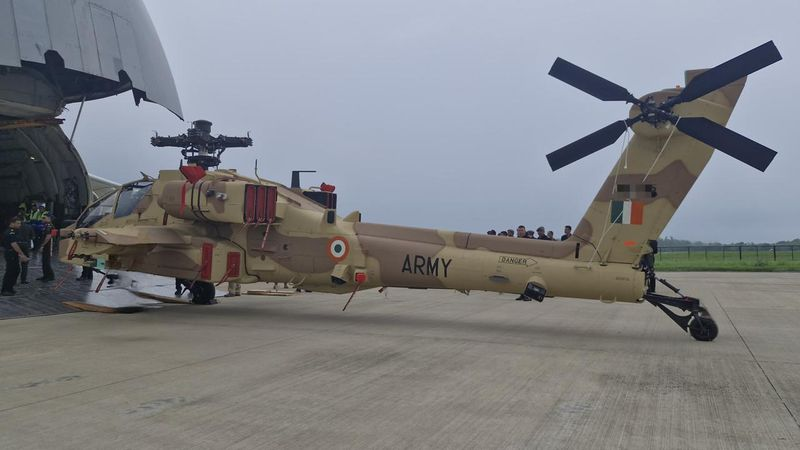
The Indian Army’s tranche of the last three Apache AH-64E attack helicopters was delivered by US aerospace giant Boeing. A cargo plane carrying the copters landed at the Indian Air Force base in Hindon, about 20 km east of the national capital. Sources in the Army confirmed the delivery and added that affixing of rotors on the copters would be done at Hindon. A few sorties would be flown for a final check by the Boeing team before the copters are sent to join the existing fleet of three Apache copters at the Army base in Jodhpur.
These copters are armed to attack enemy troops and tanks on the ground and also enemy bunkers in unreachable places in the mountains. The Apache is a heavily-armed, twin-engine ground attack helicopter that can carry a combination of air-to-ground missiles, rockets, and a chin-mounted machine gun to engage tanks, vehicles, troop concentrations, communications, and logistics centres, etc. They can also fire short-range air-to-air missiles like the Stinger.
Attack helicopters are conventionally integrated with mechanised formations of the Army. The copters will be part of the Army Aviation Corps, which has a fleet of about 350 copters, including attack copters made by Hindustan Aeronautics Limited (HAL) and Soviet-origin Mi-25/Mi35s. It also flies other copters for logistics and administrative duties.
The first batch of three Apache attack helicopters arrived in India in August, after a delay in deliveries. The Indian Army had signed a Rs 5,691 crore deal with the US in 2020 for procuring six Apache attack helicopters, with delivery initially expected in mid-2024. The delay in sending the copters was flagged by Defence Minister Rajnath Singh over a telephone call with his US counterpart Pete Hegseth in July.
Meanwhile, the delivery of the last three copters was delayed by more than a month. On November 1, a specialised cargo aircraft, the Antonov AN-124, was on its way from Arizona, US, to India, carrying the three Apache helicopters. The plane landed in England for refuelling; however, its onward route to India included overflight over Türkiye. Permission was not given for a week, so the Antonov plane had to fly back to the US with the three helicopters.
India-UAE joint military drill set to begin at Abu Dhabi on December 18
The first time it was held at the Mahajan Field Firing Ranges in Rajasthan in January 2024
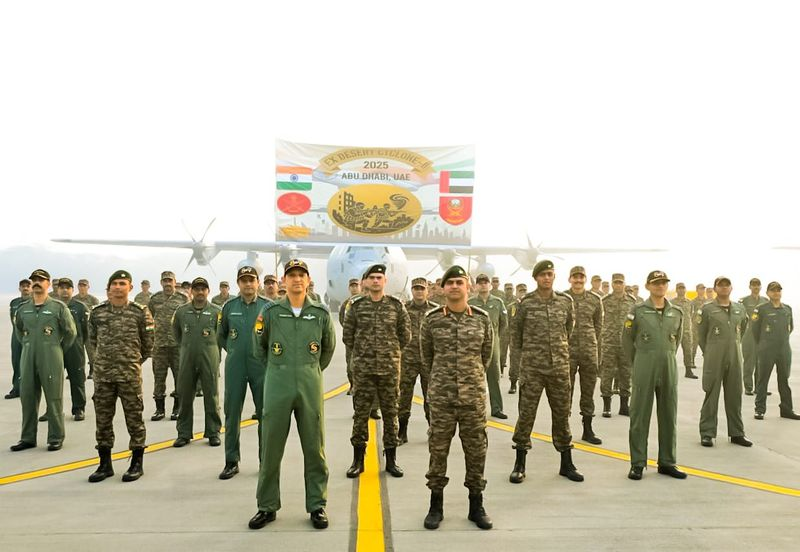
Exercise Desert Cyclone-II, a joint military drill between India and the United Arab Emirates (UAE) involving mechanised forces, is set to be conducted at Abu Dhabi from December 18 to 30.
This is the second edition of the exercise. The first time it was held at the Mahajan Field Firing Ranges in Rajasthan in January 2024.
The Indian contingent comprises 45 personnel, primarily from a battalion of the Mechanised Infantry Regiment. The UAE Land Forces contingent, of similar strength, will be represented by its 53 Mechanised Infantry Battalion.
The aim of the exercise is to enhance interoperability and foster defence cooperation between the Indian Army and the UAE Land Forces through joint training in an urban environment, with a focus on sub-conventional operations under a United Nations mandate, enabling both forces to operate together in peacekeeping, counter-terrorism and stability operations, a defence spokesperson said on Wednesday.
Over the next two weeks, troops from both countries will jointly train on a wide spectrum of tactical drills including fighting in built-up areas, heliborne operations and detailed mission planning.
In addition, the integration of Unmanned Aerial Systems (UAS) and counter-UAS techniques will be carried out for conduct of operations in built-up areas.
Building on the momentum of the successful visit of the Commander, UAE Land Forces, on 27-28 October 2025 and Commander UAE Presidential Guard on 15-19 December 2025, to India, Exercise Desert Cyclone–II will further strengthen bilateral defence cooperation between India and the UAE.
The conduct of the drill underscores the deepening strategic partnership and military diplomacy between India and the UAE, reaffirming the shared commitment of both nations to regional peace, security and stability.
The exercise will further cement professional bonds between the two armies, promote mutual understanding of tactics, techniques and procedures, and contribute to the development of interoperable capabilities, the spokesperson added.
The Indian Army contingent prior to departing for UAE. Pic: PIB
DERA BABA NANAK BRIDGE DEMOLITION DAY :December 17, 1971.
We had been working on the bridge now for more than five hours, fully exposed to artillery and mortar shelling and machinegun fire. Had any shell or bullet hit any of our crates with explosives, all of us on the bridge would have been blown off. We tested the rate of burning of the safety fuse and set it for a burning time of two minutes. We rechecked the circuits and put the detonators in place.
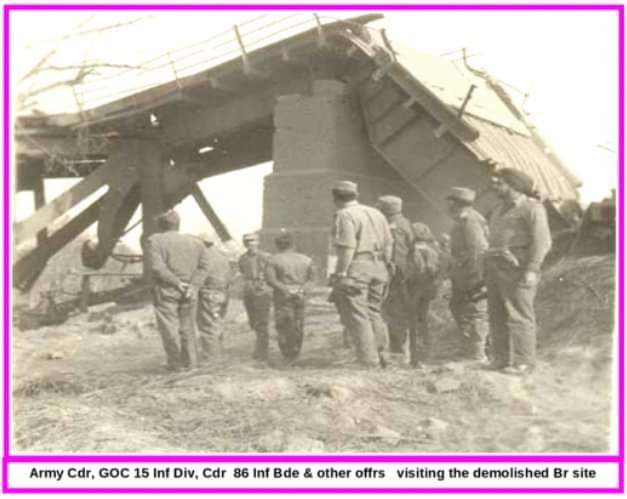
Dera Baba Nanak (DBN) is a small town near Gurdaspur in Punjab, located on the banks of the Ravi river. Though the international border between India and Pakistan generally runs along the river line, there are certain areas of Pakistan which are across the river towards the Indian side. One such area is near DBN and is called the Pakistan DBN Enclave. In this enclave, there was a rail-cum-road bridge over the river which connected the enclave to Narowal and Sialkot towns in Pakistan. This bridge was used to provide logistics support to the Pakistani troops deployed in the enclave.
One of the operational plans of Pakistan was to launch an attack through this enclave and capture the towns of DBN, Gurdaspur and Pathankot and cut off the supply lines to Jammu and Kashmir. Hence, this was a critical area as far as India was concerned.
The war broke out on December 3, 1971. On the night of December 5, 86 Infantry Brigade of the Indian Army, under the command of Brig Gauri Shankar, launched an offensive and captured the enclave by the morning of December 6, pushing the enemy back across the river.
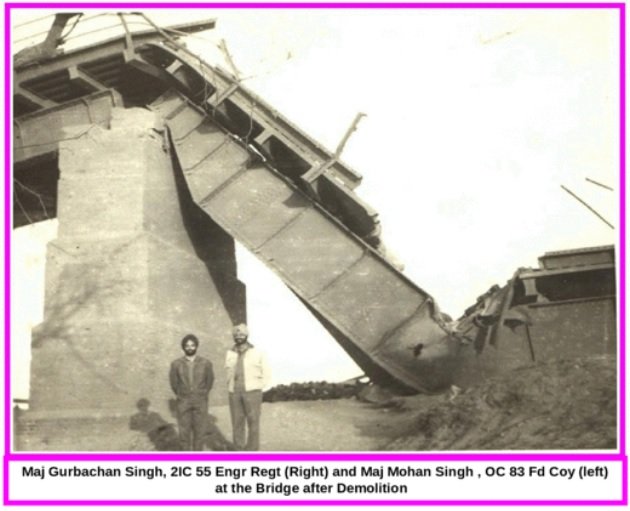
I was commanding 83 Engineer Field Company (55 Engineer Regiment). We were operationally under 86 Infantry Brigade. On the evening of December 16, I had just finished my dinner in the underground bunker at Dera Baba Nanak, when I heard the news over the radio that the Pakistan Army in East Pakistan (now Bangladesh) had surrendered and India had declared a unilateral ceasefire with effect from 8 pm the next day, i.e., December 17, 1971.
I had been earlier warned by my Commanding Officer, 55 Engineer Regiment, that the rail-cum-road bridge of Pakistan over the Ravi at DBN would have to be demolished before the ceasefire. Now that ceasefire had been declared with effect from the next evening, it meant that the bridge would have to be demolished that night itself. Sure enough, at 10.15 pm, I received a telephone call from my commander engineers that the bridge be demolished by the first light next day, i.e., December 17.
I took my 2IC, Lt Punjab Vartak, one JCO, one Havildar and a section of sappers for the task. We moved out from the company location, carrying explosives and stores that would be required for the task. Normally, it would have taken about 20 minutes to reach the bridge site. However, heavy mortar firing and artillery shelling was going on and twice, we had to stop and take cover in the folds of the ground to avoid being hit by the shells. We reached the bridge site by 11.15 pm, tucked the vehicles behind earthen bundhs to prevent them from getting damaged and moved to the bridge site along with the explosives. It was 11.30 pm.
The bridge had a dual carriageway: the roadway on the top and the railway line running below. We decided to tackle the road bridge first. Our explosives were put in five wooden crates, each having 200 kg of explosives. It required eight men to lift one crate and haul it up to the top of the bridge.
Due to the continuous shelling in the area, we had to stop work many times when the shelling was heavy and take shelter in the trenches. Also, the enemy had put one machinegun on ‘fixed line’ over the bridge and was intermittently firing bursts. Hence, we could not stand and work as the bullets would have hit us.
Therefore, we had to crawl to push the crates into place. It was a very tedious and difficult task and took a considerable amount of time. All this time, the Engineers’ party was fully exposed to the shelling and firing that was going on. Having placed all five crates, we connected these with cordtex and put primers in the explosives (gun cotton slabs). It was already 2.30 am and we still had a lot of work to do. Then, we moved down to the railway track to prepare the heavy steel girders for demolition.
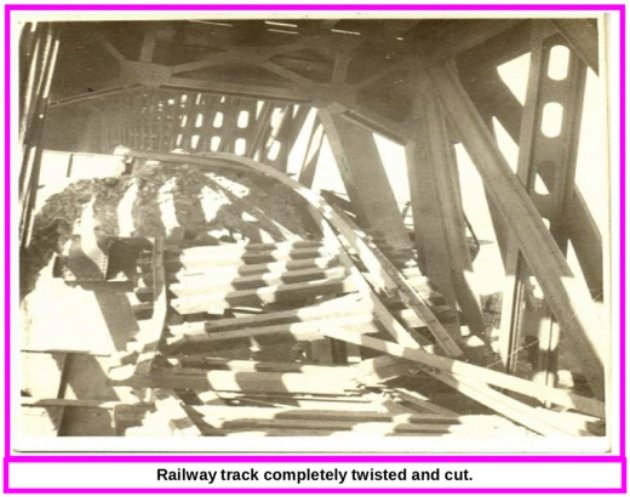
This was an old bridge, constructed with steel plates and girders braced together. Since it supported the road bridge on the top, the steel columns, plates and girders were very thick and heavy. To destroy these, we planned to use cutting charges. However, we found that the PEK explosives would not stick to the steel girders as the girders were very cold and damp. We tried using mud from the river bank to make the gun cotton (GC) slabs stick, but that also did not help as the mud was mostly sandy. Ultimately, we used a combination of GC slabs and PEK explosives and used steel wire, thin ropes and mud all together to put these in place. Also, we used a combination of both footing and cutting charges. A total of 1,400 kg of explosives had been used for the demolition. We were finally ready by 5 am.
We had been working on the bridge now for more than five hours, fully exposed to artillery and mortar shelling and machinegun fire. Had any shell or bullet hit any of our crates with explosives, all of us on the bridge would have been blown off.
As per the engineering practice, we tested the rate of burning of the safety fuse and set it for a burning time of two minutes. We rechecked the circuits and put the detonators in place. The weather was very cold, damp and foggy, and it took a considerable amount of time to light the fuses.
Once the fuses were lit, we ran back to the safety of our bunker in the rear. We felt great anxiety while waiting for the explosion. We put fingers in our ears and waited for the big bang. Finally, in another minute and a half, there was a huge blast and the bridge was blown off. The bang was so loud that it shook the enemy, and they opened fire with all their weapons.
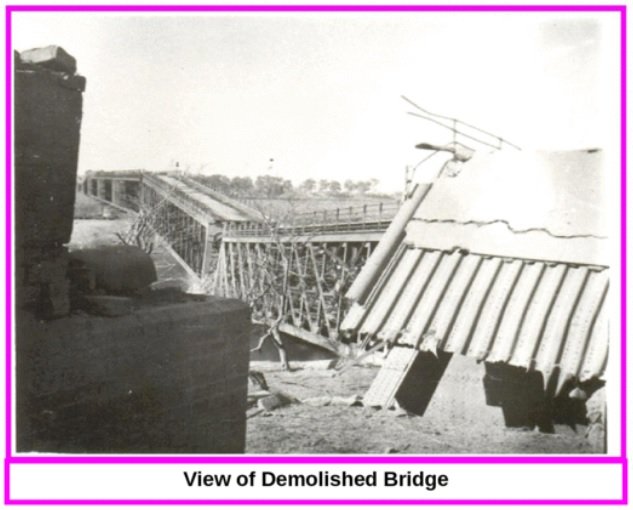
We waited inside the bunker till the firing had subsided. Then we moved out cautiously to see the result and check what damage had been done to the bridge. It was dark and the whole area was full of smoke and dust and tree leaves were flying all around. We could hardly see beyond 20 metres. All trees and the sarkanda grass within a 100-metre radius were charred black. The leaves of trees within 50 metres had been blown off. A brick building near the bridge was completely destroyed. The infantry bunkers/ trenches up to 150 metre alongside the bridge had collapsed. The road bridge was completely destroyed and it had slumped to the ground. The railway bridge was totally shattered and it had fallen into the river.
There is now no possibility of the bridge ever being repaired or reconstructed. In future, a major offensive by the enemy through this sector is ruled out. Due to the demolition of this bridge, the operational plans of the enemy in this area have, perforce, to undergo a change.
This demolition is a milestone in the history of the Indian Army. It is the first time ever that a huge bridge of this size had been demolished during operations.
Advertisement
1971 INDO PAK WAR (THE LIBERATION WAR): WESTERN THEATRESRINAGAR: GUTS AND GLORY IN THE SKY
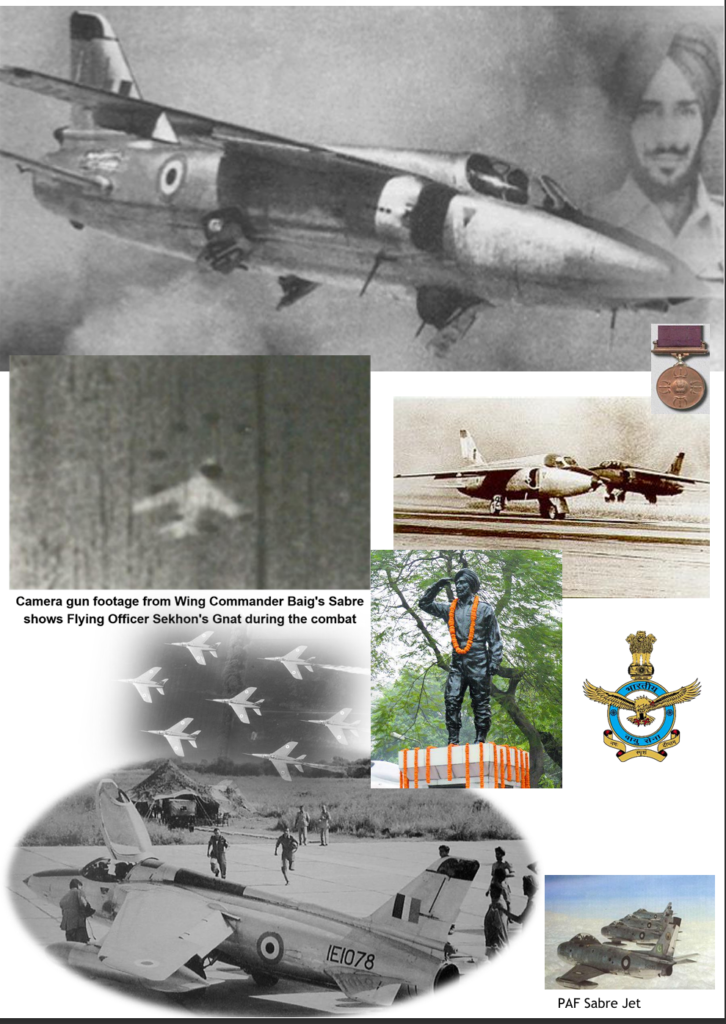
Pre emptive air strikes by Pakistan began at 5.45 PM on 3 Dec. IAF responded with alacrity and went into action the same night ….. operations continued at an unprecedented pace of 500 sorties per day. The IAF also won its first Param Vir Chakra; Flying Officer Nirmal Jit Singh Sekhon achieved this rare feat fighting six Pakistani aircraft alone in the Kashmir Valley. During 1971, Sekhon was posted with No.18 “Flying Bullets” Squadron flying the Gnat fighter. In accordance with the agreements of 1948, no air defence aircraft were based at Srinagar, until the outbreak of hostilities. The squadron, new to the area was not fully acquainted with the terrain and cold climate. Nevertheless, they fought waves of Paki aircraft. The Gnat was a gallant opponent for the larger and heavier Pak Sabre F 86 which itself was a legendry jet – the Gnat downed many Sabres during 1965 Indo Pak War and was nicknamed “Sabre Slayer”. Sekhon was fondly known as ‘Brother’ in the Squadron. Early morning on 14 Dec, Srinagar Airfield was attacked by a wave of six enemy Sabre aircraft in an early morning raid. The strike force comprised four F-86F Sabres led by Wing Commander Sharbat Ali Changazi, with Flight Lieutenants H K Dotani, Amjad Andrabi and Maroof Mir heaving two 500 lbs bombs and nose-bay packed with 12.7 mm belted machine gun ammunition. They took off from Peshawar for Srinagar airfield 320 kilometres away seeking to crater its runway with their 500 lb packages.
Flight Lieutenants Salim Baig and Rahim Yusufzai flew as escorts in two F-86Fs Sabre with all six M3 Browning machine guns fully loaded. All carried external 760 litre fuel drop tanks to stretch their endurance. At Srinagar airfield, a loaded pair of interceptor aircraft always remained on runway readiness strapped up and ready to take off on a moment’s notice. Kashmir valley had no radar then, IAF had to depend on observation posts pitched atop the Pir Panjal ridges, and elsewhere, to detect attackers and warn of incoming raids on radio. That day (14 Dec) Flight Lieutenant Balbir Singh Ghuman and Flying Officer Nirmal Jit Singh Sekhon were on runway readiness. There was a thick fog in the Valley. The Sabres descended to low level over the Pir Panjal Range, veered towards the Srinagar Airport and pulled up to 3,200 metres altitude for the bomb run. At about 8 AM sirens blared at the runway. The runway ready aircraft were ordered to scramble. Even while they took flight, two pairs of bombs dropped by the raiders exploded on the runway behind them. Sekhon spotted the sabres and accelerated to catch up with them, Ghuman meanwhile unable to spot them in the fog climbed up to the designated Combat Air Patrol (CAP) zone. “I am behind two Sabres. I won’t let them get away,” Sekhon roared on the radio. “Good show, Brother, where are you?” Ghuman responded wanting to check whether Sekhon’s tail was clear of the attackers, both buddies and two more interceptors which had got airborne were operating separately which was not good for Sekhon already caught up in a dogfight. Sekhon manoeuvred behind Dotani and fired a burst from his machinegun. Unlike modern fighters, the Gnat and Sabre were not armed with air-to-air missiles; just the front guns for aerial combat – this demanded great skills. Due to poor visibility, Sekhon missed. Dotani escaped by the skin of his teeth – with his life at stake, he managed to drop out of sight and limped away. Mir followed him. Sekhon now shifted sights to Changazi. Sensing an opportunity, Andrabi at full throttle manoeuvred to tailgate the Gnat, leaving Sekhon sandwiched between him and Changazi. With visibility dimming, distinguishing the flecks of Sabres and Gnat battling it out at 100 metres above ground was impossible. There was to be no support for Sekhon today — he was left alone to fight two experienced sabre pilots.
The Pakistanis on their part couldn’t have asked for more. While Sekhon’s Gnat chased a Sabre, the second Sabre pursed the Gnat, in a dogfight of sharp twists and turns with no one prepared to yield. “I’m in a circle of joy but with two Sabres. I am getting behind one, but the other is getting an edge on me,” Sekhon’s voice crackled. He let off a burst of 30 mm ammo from the cannons on Changazi – missed. Meanwhile, Andrabi, firing all cylinders closed in over Sekhon. He pressed his trigger but drew a blank; he had run out of ammo. Sensing the moment, feisty Sekhon converged on to Changazi for the kill. Paki escorts who were encircling above in support of the bomb run, had remained undetected so far and dropped quickly to join the dogfight against Sekhon. He was now up against four Sabres. Baig zeroed in. Three hundred metres. Six machineguns volleyed, discharging the whole nine-yard clip. “I think I have been hit” Sekhon radioed his buddy, come and get them.” With black smoke belching, the Gnat levelled her wings and turned towards base. The hail of bullets had peppered the Gnat’s tail and knocked out her flight control system.
She soon flipped, nosedived and plummeted into a gorge near Badgam. Sekhon pulled the ejection seat handle to save himself. The canopy flew off, but the parachute deployed only partially as the Gnat was too close to the ground. Thick fog and speed of action prevented any support for Sekhon who took on six Sabres single handedly unmindful of his safety and exhibited extraordinary gallantry. It was not his day, yet he made it his own. For his extraordinary gallantry and flying skills against odds of 1:6, Flying Officer Nirmal Jit Singh Sekhon, was awarded the Param Vir Chakra, the only air warrior to be elevated to the highest wartime pedestal. “He put up a brave fight….” Flight Lieutenant (Later Wing Commander) Salim Baig who shot down Flying Officer Nirmal Jit Singh Sekhon. ‘Brother Sekhon’, your bravery is unmatched you are a hero for generations of air warriors; we salute you.
Sekhon manoeuvred behind Dotani and fired a burst from his machinegun. Unlike modern fighters, the Gnat and Sabre were not armed with air-to-air missiles; just the front guns for aerial combat – this demanded great skills. Due to poor visibility, Sekhon missed. Dotani escaped by the skin of his teeth – with his life at stake, he managed to drop out of sight and limped away. Mir followed him. Sekhon now shifted sights to Changazi. Sensing an opportunity, Andrabi at full throttle manoeuvred to tailgate the Gnat, leaving Sekhon sandwiched between him and Changazi. With visibility dimming, distinguishing the flecks of Sabres and Gnat battling it out at 100 metres above ground was impossible. There was to be no support for Sekhon today — he was left alone to fight two experienced sabre pilots. The Pakistanis on their part couldn’t have asked for more. While Sekhon’s Gnat chased a Sabre, the second Sabre pursed the Gnat, in a dogfight of sharp twists and turns with no one prepared to yield. “I’m in a circle of joy but with two Sabres. I am getting behind one, but the other is getting an edge on me,” Sekhon’s voice crackled. He let off a burst of 30 mm ammo from the cannons on Changazi – missed. Meanwhile, Andrabi, firing all cylinders closed in over Sekhon.
He pressed his trigger but drew a blank; he had run out of ammo. Sensing the moment, feisty Sekhon converged on to Changazi for the kill. Paki escorts who were encircling above in support of the bomb run, had remained undetected so far and dropped quickly to join the dogfight against Sekhon. He was now up against four Sabres. Baig zeroed in. Three hundred metres. Six machineguns volleyed, discharging the whole nine-yard clip. “I think I have been hit” Sekhon radioed his buddy, come and get them.” With black smoke belching, the Gnat levelled her wings and turned towards base. The hail of bullets had peppered the Gnat’s tail and knocked out her flight control system. She soon flipped, nosedived and plummeted into a gorge near Badgam. Sekhon pulled the ejection seat handle to save himself.
The canopy flew off, but the parachute deployed only partially as the Gnat was too close to the ground. Thick fog and speed of action prevented any support for Sekhon who took on six Sabres single handedly unmindful of his safety and exhibited extraordinary gallantry. It was not his day, yet he made it his own. For his extraordinary gallantry and flying skills against odds of 1:6, Flying Officer Nirmal Jit Singh Sekhon, was awarded the Param Vir Chakra, the only air warrior to be elevated to the highest wartime pedestal. “He put up a brave fight….” Flight Lieutenant (Later Wing Commander) Salim Baig who shot down Flying Officer Nirmal Jit Singh Sekhon. ‘Brother Sekhon’, your bravery is unmatched you are a hero for generations of air warriors; we salute you.
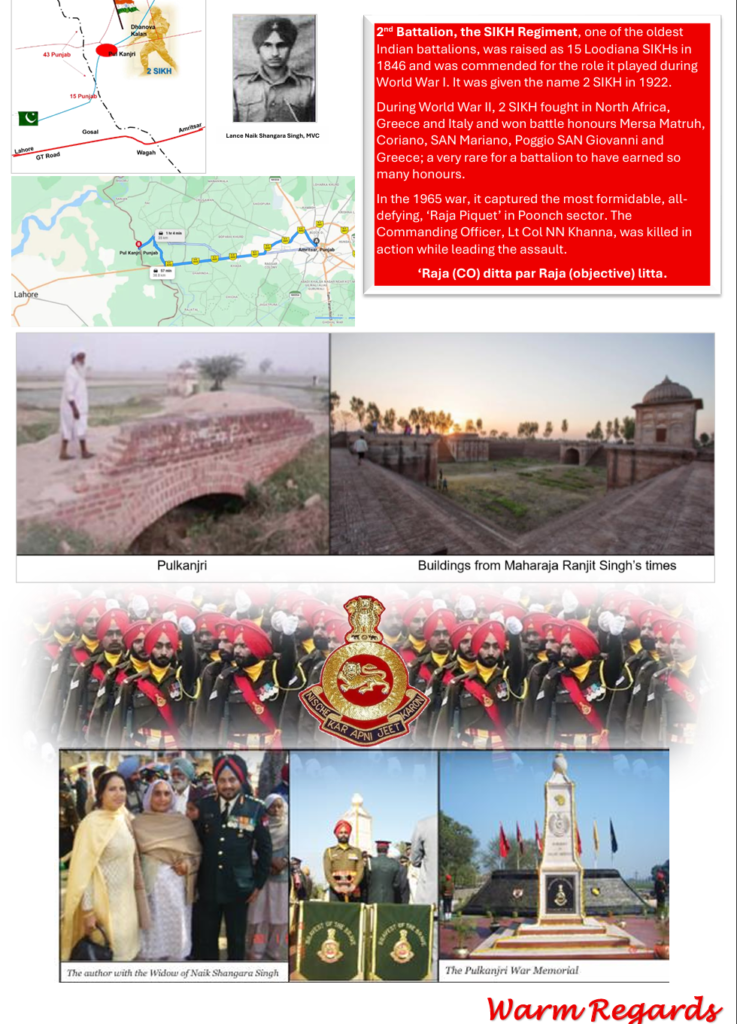
1971 INDO PAK WAR (THE LIBERATION WAR): WESTERN THEATREPULKANJRI: SLUGFEST EVEN AFTER THE CEASE FIRE
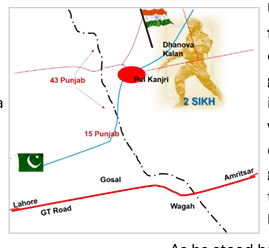
35 Km from both Amritsar and Lahore ia an Indian village Pulkanjri. Maharaja Ranjit Singh, built a baradari (building having twelve gates). He stayed here during his sojourns to Lahore from Amritsar in the 17th century. Arora Sikhs, Hindus and Muslims lived in great harmony. A 12-foot-wide canal ran close by carrying water from Kahnuwan Chammb, a swampy depression along the Beas River in Gurdaspur district, to the Shalimar Gardens Lahore and was built by Emperor Shah Jehan.
A ‘‘Kanjri’’ (professional dancer) Moran, entertained the Maharaja and was his favourite. One day, as the legend goes, while Moran was on her way to the Baradari for a dance show, her shoe fell into the canal. She got upset and told the Maharaja that she would dance only if he built a ‘‘pul’’ (bridge). The bridge was made and came to be known as Pul Kanjari, it still stands today, a tribute to the legend of Moran (Now called Pul Moran). Pulkanjri was attacked by Kabaili rioters in 1947; almost the entire population was butchered. Pulkanjri located bang on the International Border continued to endure violence and bloodshed during the two wars fought by India and Pakistan. On 3 Dec 1971, Pak 43 Punjab Regiment occupied Pulkanjri in a surprise attack after the BSF Post was tactically withdrawn. It remained in their possession during the entire war. The Pakistanis secured the area well making full use of the built-up area, small bunds and broken ground around the ruins of the Baradari built during the Maharaja’s time. They converted the captured Border Outpost into a strong defended locality supported with automatic weapons. Adequate reserves were also available in the close vicinity to counter any threat. The village was located in the area of responsibility of 2nd Battalion, the SIKH Regiment.
The battalion was anxious to regain the lost post and teach the enemy a lesson. Their persistent requests paid off and orders were finally received at 5.45 PM on 17 Dec to capture Pulkanjri by 8 PM, the announced time of the unilateral cease fire of the war with Pakistan. “Too short a time”, any commander would say, but the spirits were high and the opportunity could not be missed. 2 SIKH would have to use all their fighting skills and tactical diligence to defeat the enemy who was superior in strength, fire power and also well entrenched. Veterans who participated in the battle whisper that orders had to come from the highest leadership at the centre in view of the declaration of Cease Fire; evidently Pulkanjri was considered important to get such attention. Undeterred by the increase in volume of fire, Lance Naik Shangara Singh of the company decided to take on the Machine gunners.
He displayed remarkable gallantry in clearing two machinegun posts, which were holding the attack up. Shangara Singh dashed through a minefield and hurled a grenade at one of the posts. He then charged the second gun and leaping over the loophole snatched it. As he stood holding the gun, he received a fatal burst. The Brother – in – Law of Shangara Singh (he fought alongside Shangara) whom the author met during a memorial service at Pulkanjri states that he had to cut Shangara’s hand that had burnt on the red-hot barrel of the machine gun before his cremation. Shangara accounted for eight Pak soldiers. Lance Naik Shangara Singh was awarded India’s second highest gallantry award, the Maha Vir Chakra. The assaulting troops were soon in the centre of the village surrounded by the enemy. Led by their company commander Major NS Koak they (incl the wounded) kept on shouting and firing trying to depict a much larger force than they were – this aggression both confused and scared the enemy who fell for the ruse de guerre. The Pak army quickly committed their reserves and launched a counterattack using a company of 43 Punjab Regiment and two companies of 15 Punjab Regiment. The 2 SIKH Company stood firm, foiled the counterattacks and inflicted heavy casualties on the enemy; the tactical bluffs played by Maj Koak had paid rich dividends. A small patrol launched a simulated attack for deception while the main assault by Charlie Company went in at 7.20 PM supported by heavy mortar and artillery fire. The deception was well executed and enemy readjusted some of his automatic weapons. The enemy soon regrouped and brought down heavy Machine Gun fire at the assaulting troops.
Undeterred by the increase in volume of fire, Lance Naik Shangara Singh of the company decided to take on the Machine gunners. He displayed remarkable gallantry in clearing two machinegun posts, which were holding the attack up. Shangara Singh dashed through a minefield and hurled a grenade at one of the posts. He then charged the second gun and leaping over the loophole snatched it. As he stood holding the gun, he received a fatal burst. The Brother – in – Law of Shangara Singh (he fought alongside Shangara) whom the author met during a memorial service at Pulkanjri states that he had to cut Shangara’s hand that had burnt on the red-hot barrel of the machine gun before his cremation. Shangara accounted for eight Pak soldiers. Lance Naik Shangara Singh was awarded India’s second highest gallantry award, the Maha Vir Chakra. The assaulting troops were soon in the centre of the village surrounded by the enemy. Led by their company commander Major NS Koak they (incl the wounded) kept on shouting and firing trying to depict a much larger force than they were – this aggression both confused and scared the enemy who fell for the ruse de guerre. The Pak army quickly committed their reserves and launched a counterattack using a company of 43 Punjab Regiment and two companies of 15 Punjab Regiment. The 2 SIKH Company stood firm, foiled the counterattacks and inflicted heavy casualties on the enemy; the tactical bluffs played by Maj Koak had paid rich dividends
. A small patrol launched a simulated attack for deception while the main assault by Charlie Company went in at 7.20 PM supported by heavy mortar and artillery fire. The deception was well executed and enemy readjusted some of his automatic weapons. The enemy soon regrouped and brought down heavy Machine Gun fire at the assaulting troops. The assault was supported by accurate artillery (175 Field Regiment) and 2 SIKH’s 3-inch mortars fire. When the company started running low on ammunition, they exercised fire discipline instinctively – fire one round to kill and then shout ten choicest Punjabi profanities. Wit combined with bravado; such regimental resilience (endure, adapt, and fight on) is the hallmark of Sikh troops. Enemy accepted defeat at 1.30 PM on 18 Dec, the battle had continued for more than 12 hours after Cease Fire. During a flag meeting, Lt Col Mohd Iqbal, CO 43 Punjab Regiment told Lt Col SC Puri CO 2 SIKH “Colonel, one soldier to another, I will like to compliment you on your excellent outfit. Your men fought heroically and were distinctly superior in battle.” One enemy officer and 13 Other Ranks were captured and 25 dead bodies were handed over. Many more wounded and dead were evacuated by the enemy during the conflict. 2 SIKH was awarded one Maha Vir Chakra, two Vir Chakras and four Sena Medals. Five months later, Naib Subedar Gian Singh was posthumously awarded the Vir Chakra when in May 1972 he led a fighting patrol and thwarted another attempt by Pakistan army to capture Pulkanjri.
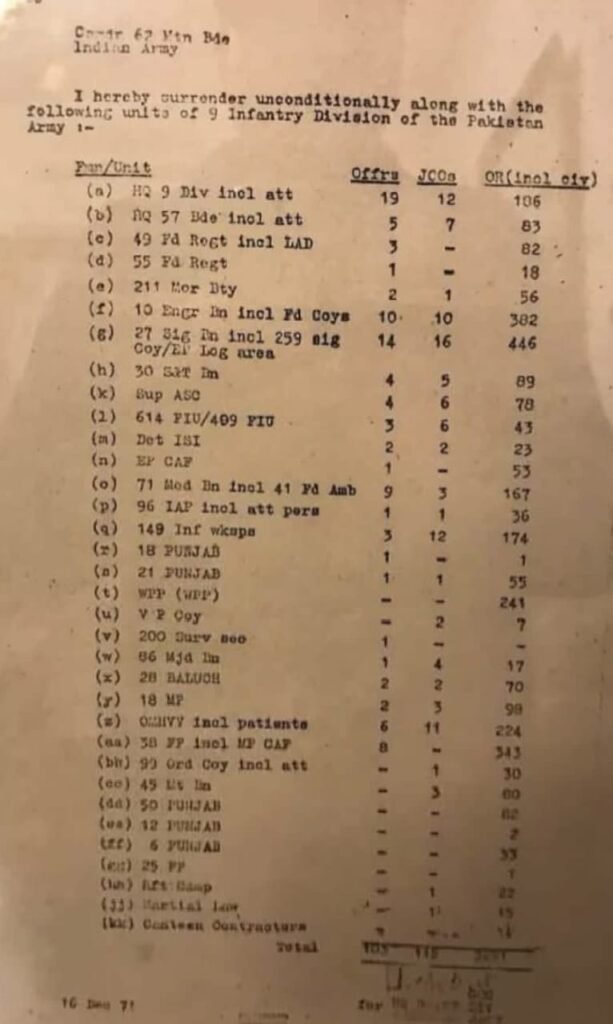
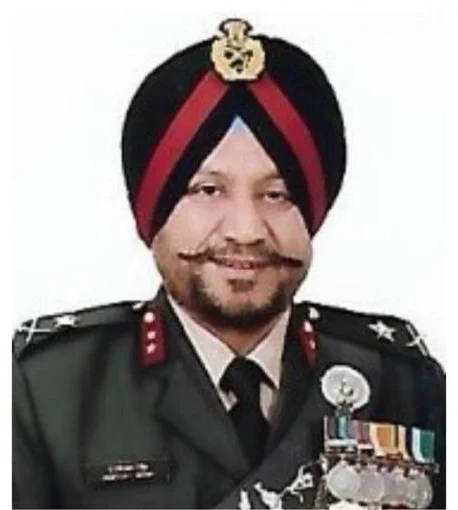
(Maj Gen Harvijay Singh, SM) The Eastern Sector of East Pakistan comprised the territory East of the Meghna River, spanning the Districts of Sylhet, Brahmanbaria, Comilla, Chittagong, and the Chittagong Hill Tracts. The approach to Dacca, the capital was via the Meghna, a wide river spanning between 4,000 to 4,500 yards, with the sole crossing point being the railway bridge at Ashuganj, approximately 2,950 feet in length.
While 57 Infantry Division/4 Corps operations were being conducted in Akhaura, radio intercepts indicated that Pak 14 Division was ordered to withdraw its 313 and 27 Brigades for the defence of Dacca. Lt Gen Sagat Singh GOC 4 Corps who had a penchant for rapid manoeuvre saw this as an opportunity to bypass Pakistani defences at Ashuganj and Bhairab Bazar on the Meghna River accelerating the advance towards Dacca. Meghna is one of three rivers that forms the Ganges Delta, beyond it lay Dacca. Only way across the river was over Ashuganj Bridge – heavily defended, difficult to assault. 313 Pak Brigade from Maulvi Bazar was expected to move by Steamers to Ashuganj on its way to Dacca. It never did, fell back into ‘Sylhet Fortress’ and sat out the war.
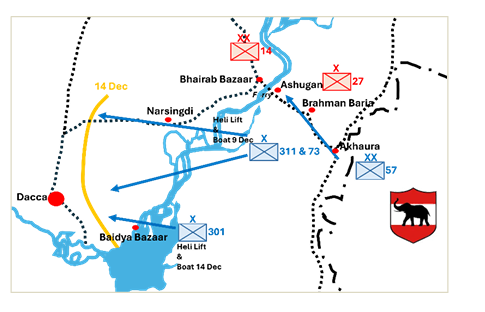
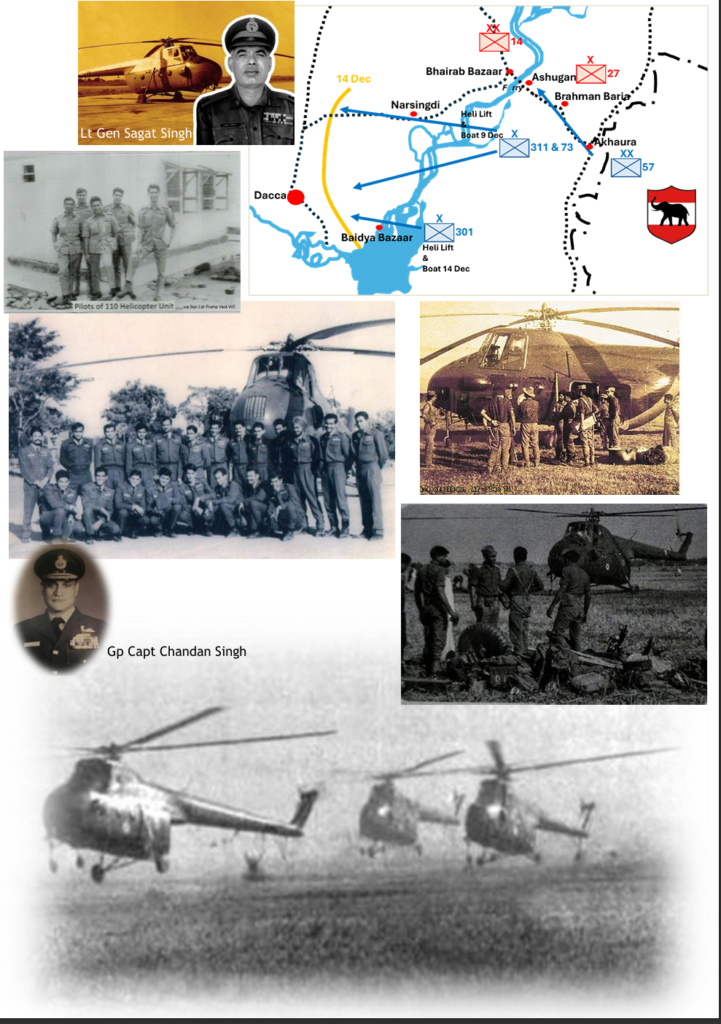
Gen Niazi blamed GOC 14 Infantry Division and removed him from command. Possibly, if 313 Brigade had withdrawn to defend Meghna & Narsingdi, ‘The End’ of the war may have been delayed to the advantage of the enemy. Lt Gen Sagat Singh chose an impromptu heliborne operation to begin bypassing Pakistan’s 14 Division that was now falling back to Bhairab Bazar. Anticipating high casualties to take the bridge by force Sagat Singh, decided to airlift 57 Infantry Division troops using helicopters. (Strategic Heliborne Operations (SHBO)) Meghna heli-lift perhaps changed the course of the war and by 9 Dec, Dacca became an achievable objective. On 9 Dec, Gen Sagat Singh during an aerial recce approved a landing site near Raipura village, outside artillery range from Bhairab Bazar. The recce underscored the extraordinary nature of the ops ……. On their way back, the chopper, piloted by Capt (later Lt Gen) GS Sihota, encountered enemy ground fire near Ashuganj but managed to land safely with 38 bullet holes.
On the Night of 9 Dec, 12 Mi-4 helicopters flew from Brahmanbaria stadium across the Meghna and its marshy banks, to a field in Raipur inducting A-Coy 4 GUARDS to hold ground and then the entire battalion. As 4 GUARDS over-ran enemy deployments in Methikanda and Narsingdi, the operations became bolder and landing sites went further forward, towards Narsingdi. The MI-4 helicopter normally carries 14 troops, that day it carried as many as 23; juggad. 311 Infantry Brigade heli lifted 4 GUARDS & 10 BIHAR Regiments the same day. The rear doors were kept open for quick entry and exit, and the engines never switched off; all this while braving dangers associated with a war at night. The enemy too would be at his wits end and scared to death by the continuous noise of the helicopters throughout the night
At the same time, while this operation was on, 73 Infantry Brigade moved across Meghna on boats and riverine crafts. After securing Narshingdi, Indian forces captured Daudkandi and Baidya Bazar towards the south and opposite Comillaon on 14 and 15 Dec respectively, both with helicopter assault. From Narshingdi, the metaled road to Dacca lay undefended for 4 Corps to take. Pakistan’s 14 Infantry Division was siting isolated and useless with the Division HQs and 27 Infantry Brigades at Bhairab Bazaar and Asuganj and 202 and 313 Infantry Brigades in the ‘Sylhet Fortress’. The Pakistani Army had left the roads to Dacca undefended moving their defences at the bridges and defensive strong points. They were expecting to hold the Indian Army at these positions long enough till the UN and international pressure halted the Indian advance. The Meghna Heli bridge along with the Tangail Airdrop on 11 Dec ensured that these positions were by-passed. Dacca now could only be defended by troops available within the city.
The air bridge across the Meghna by 14 Mi-4 (110, 105 & 111 HUs) – 32 Pilots, (2 VrCs), 4 Tech Offrs, 84 SNCOs & Air Men was a remarkable feat. Overcoming logistical challenges from 7 Dec to 15 Dec, the MI-4 helicopters completed a total of 222 sorties without a single mishap between various locations, carrying 2,010 troops and 49,470 kgs of equipment for 57 Mountain Division. Moreover, they conducted 187 sorties from Kalaura and Kailashahar to Sylhet and from Daudkandi to Baidya Bazar, transporting 1,793 troops and 50,600 Kgs of weaponry and equipment. Despite the absence of artillery support for the infantry being airlifted, this audacious plan caught the enemy off guard, marking a bold move against significant odds. The Meghna heli-lift was considered a significant war winning factor. The Indian Air Force’s operation was led by Group Captain Chandan Singh who was awarded the Maha Vir Chakra. Lt Gen Sagat Singh
Advances in defence, space, telecom in focus as science fest comes to close
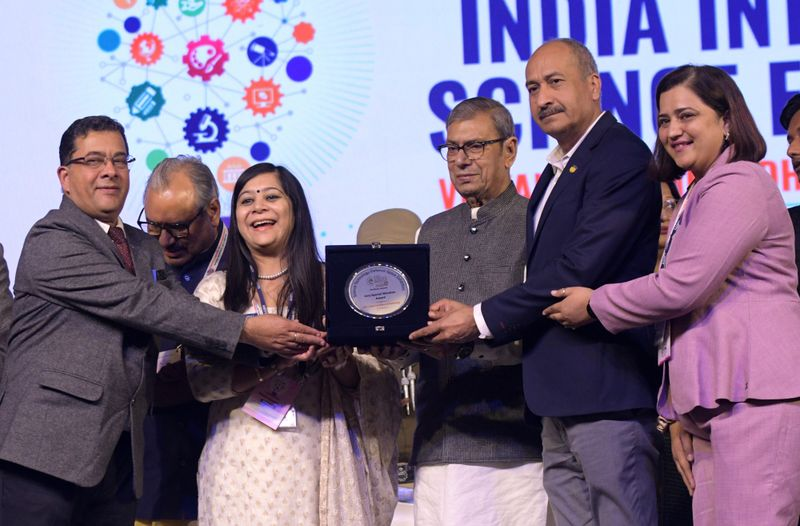
Experts delved on emerging technologies in the domain of defence, space and telecommunications and the close interplay of these fields during a technical session on “New Age Technologies” at the India International Science Festival.
The four-day event that saw scientists, industries, academia and innovators from across the country reach out to the public and showcase scientific advances in the country concluded today.
Reflecting on India’s space journey, Dr S Somanath, former director of the Indian Space Research Organisation, recounted his experiences during the Chandrayaan-3 Mission and spoke about the nation’s expanding ambitions.
Referring to upcoming missions such as Gaganyaan as proof of India’s rising capabilities, he said India’s achievements in space have grown significantly over the past decade. “There is an explosion of possibilities in space exploration,” Dr Somanath said, adding, “Interest in the Moon, Mars and other planets has surged worldwide. India has announced its return to the Moon and we are also pursuing science missions aimed at understanding the origins of the universe. Soon, your mobile phones may receive signals directly from space. Young students in India are already building rockets and satellites.”
Dr Abhay Pashilkar, Director National Aerospace Laboratory, Bengaluru, delved upon the expanding role of drones in India from long-endurance surveillance platforms to cargo-handling systems.
“We can do a lot with drones—some can fly for more than 90 days,” he said, adding, “They help in agriculture, logistics and large-scale mapping. The Government of India is working to build a national drone mission that empowers young innovators to create and deploy drone solutions suited to local needs.”
Offering insights into India’s defence preparedness, Dr Prahlada Rama Rao, former Director Defence Research and Development Laboratory, discussed the evolution of BrahMos cruise missile and Akash surface-to-air missile system.
Referring to the recent Operation Sindoor, he said both the missile systems demonstrated India’s technological edge. “Akash stood like a wall, while BrahMos penetrated enemy territory with precision,” he said.
Discussing advances in the telecommunications sector, Jagmohan Bali, Chief Technology Officer, Bharti Airtel and Jeevan Talegaonkar, Vice President, Jio, said the groundwork was being laid for 6G after India’s rapid progress from 2G to 5G. They also brought out how the next era of telecom will merge terrestrial and non-terrestrial networks.
“Drone systems, aircraft and missile technologies will be linked under one technological umbrella. With integration between mobile networks and space-based systems, we aim for seamless global coverage—across the ocean,” Bali said.
Gene editing discussed
Experts also highlighted India’s rapidly advancing in genetic technologies while staying rooted in its pursuit of building an innovative and self-reliant nation at a session on gene editing at the India International Science Festival here today.
Dr KC Bansal, former Director of National Bureau of Plant Genetic Resources, New Delhi, stressed how scientific interventions in agriculture are central to achieving self-reliance. Dr Ramesh V Sonti, Director of International Centre for Genetic Engineering and Biotechnology, New Delhi, described genome editing as a way of rewriting DNA — removing and inserting sequences much like changing letters in a text. Meanwhile, Dr Rahul Purwar from IIT Bombay shared the journey behind the indigenous CAR-T cell therapy. He said that treatment costs abroad run into several crores, whereas years of work by Indian scientists have brought it down to a fraction of that cost.
Experts discuss women’s role in scientific fields
Discussing the role of women in science at a special session titled “Women’s Development to Women-led Development in Science and Technology”, speakers from diverse field stressed that the journey toward women-led development must begin at home and in schools. Teachers, mentors and families hold the key to identifying young talent and nurturing confidence early on. Encouragement at the right age, they said, can shape future leaders in science.
Lt Gen Madhuri Kanitkar, Vice-Chancellor of Maharashtra University of Health Sciences, Nashik, said India’s progress was incomplete without women leading the way. “When women rise, the nation rises with them,” she said, encouraging students to embrace discipline, teamwork and courage. Vibha Tandon, Director, Indian Institute of Chemical Biology, Kolkata underlined the importance of mutual support while Bineesha Payattati, Executive Director, IIWM, also spoke about the comfort and confidence women gain when they see others in leadership roles.
Tanushree Bhowmik from the World Bank highlighted the growing gap between boys’ and girls’ participation in the STEM programme beyond middle school, attributing it to deep-rooted social barriers. She noted that high female enrolment in STEM education doesn’t translate into job opportunities. —TNS
Not just IAF, aspirants from different fields can become astronauts soon: Shukla
Talking about his mission, Shukla says space is very disorienting, but it is a lot of fun
The domain of astronauts, presently restricted to Indian Air Force test pilots, will be opened up for aspirants from other branches of the armed forces and different disciplines in the future, enabling a greater number of persons to participate in India’s space programmes.
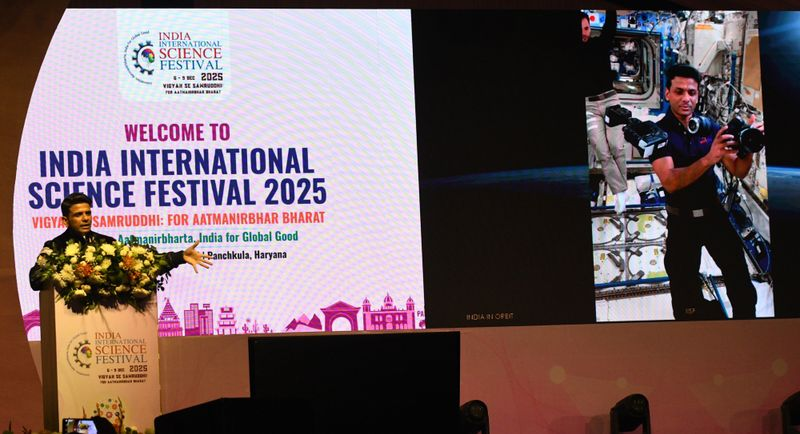
Stating this during a public interaction with students at the India International Science Festival-2025 here today, Group Captain Subhanshu Skukla, the first Indian to travel to the International Space Station, said it was their responsibility to take the country forward in its space programme.
Pointing out that India already has programmes like a manned space station and a human landing on the Moon under way, he said that unlike the 1960s, when we will go to space, we will have a sustained presence and this will involve enabling of long-duration space missions, development of key technology and creating a scientific and industrial infrastructure around it.
Talking about his mission, Shukla said space is very disorienting, but it is a lot of fun. “When you travel to space again, it gives you a very unique perspective, forces you to solve problems because it is an environment where life should not be existing. There is no air, there is no water, there is no protection from radiation, but you not only sustain life you also thrive there and you conduct science,” he said.
“You have brain fog, headaches, nausea. You do not feel hungry because everything inside your stomach is also floating. So your stomach feels full all the time. You also grow taller in space by 5-10 cm, but when you come back to Earth, you return to normal height,” he said.
When you get to space, you do not have an idea of up or down, left or right. You just forget about it because there is no gravity. So even if you are upside down, you do not realise that. The concept of space also changes, where it is like a three dimensional hall, whereas on Earth we do not use the 3D space but use 2D, Shukla said.
The other interesting concept is the concept of weightlessness. There is only mass, but no weight, he said. Similarly, there are a lot of psychological challenges like confined space and stressful environment that you have to address, Shukla said.
For the first time we were able to conduct microgravity research and bring back the data and analyse it. The other experiments were for solving problems of food security. Then we also took seeds to see the effect of microgravity. They have been brought back and they will be evolved for five generations to see what changes they go through when they experience microgravity, he said.
“You have to create the experiments in a way that they can be done in space because the environment is really different. I think learning of this part was the biggest lesson for us, for the country. I think we have learned this ecosystem and now we know how to do it,” Skukla said.
The border infrastructure projects have been constructed by Border Roads Organisation
Defence Minister Rajnath Singh on Sunday inaugurated 125 infrastructure projects constructed by Border Roads Organisation (BRO) from Ladakh.
Spread across seven states of Arunachal Pradesh, Sikkim, Himachal Pradesh, Uttarakhand, Rajasthan, West Bengal and Mizoram, and two Union Territories, Ladakh and Jammu and Kashmir, these projects include 28 roads, 93 bridges and four miscellaneous works, which have been executed at a cost of about Rs 5,000 crore.
These upgraded infrastructure projects will significantly improve last-mile connectivity to remote villages and forward military locations, bringing these areas closer to the national mainstream, a defence spokesperson said.
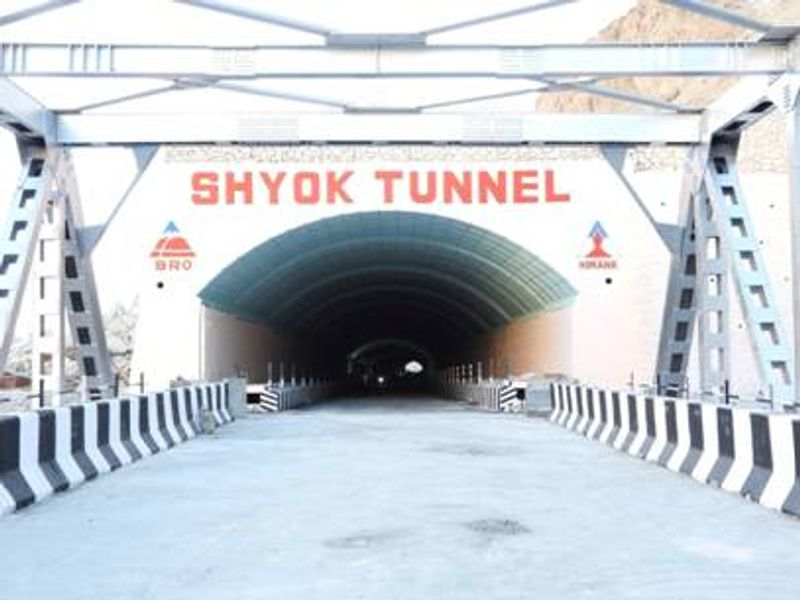
The inauguration event was organised on the Darbuk-Shyok-Daulat Beg Oldie Road at the Shyok Tunnel, which is among the key projects inaugurated by the Defence Minister. This is an engineering marvel, built in one of the world’s toughest and most challenging terrain, will ensure all-weather, reliable connectivity to this strategic area.
This 920-metre ‘cut-and-cover’ tunnel will significantly enhance security, mobility, and rapid deployment capabilities, especially during harsh winters, as the region is prone to heavy snowfall, avalanches and extreme temperatures.
Singh also virtually inaugurated the Galwan War Memorial in Ladakh to honour the bravery, commitment and sacrifice of the Armed Forces personnel. He voiced the government’s resolve to develop the border areas, stating that these connectivity tools are lifelines for security, economy, and disaster management.
“There are numerous benefits of robust infrastructure in border areas. It ensures military mobility, smooth transportation of logistics, increase in tourism & employment opportunities and, most importantly, stronger faith in development, democracy and the government,” he said.
The Defence Minister said that the speed with which India is strengthening its borders with roads, tunnels, smart fencing, integrated command centres and surveillance systems is proof that connectivity is a backbone of security, not a separate entity.
On Operation Sindoor, Singh said the Armed Forces launched the operation in response to the horrific terrorist attack in Pahalgam in Jammu and Kashmir. “Everybody knows what befell on those terrorists. We could have done much more, but our forces, demonstrating both courage and patience, only did what was necessary. Such a massive operation was possible due to our strong connectivity. Logistics were delivered to the Armed Forces in a timely manner. Our connectivity with the border areas was maintained, making the operation a historic success,” he said.
He said the coordination between the Armed Forces and the civil administration, along with the people of border areas, during the operation was incredible. “This coordination; this mutualism is our identity. This is what makes us unique in the world,” he remarked.
Referring to India’s GDP growth, which reached 8.2 per cent in the second quarter of 2025-26, the Defence Minister stated that connectivity and communication play a significant role in not just security, but economic prosperity as well. “This growth is the result of policies and reforms, as well as the hard work of every Indian. We’re witnessing many wars and conflicts today. Post Operation Sindoor, we also witnessed a major conflict. But despite these challenges, our economy continues to grow, we continue to move forward,” he said.
Singh also pointed out that, in the financial year 2024-25, BRO incurred a record expenditure of Rs 16,690 crore, the highest ever, and a target of Rs 18,700 crore has been set for the 2025-26 fiscal.
Director-General Border Roads Lt Gen Raghu Srinivasan, said BRO has emerged as the agency of choice for key central ministries, including the Ministry of Home Affairs, the Ministry of External Affairs and the Ministry of Road Transport and Highways for executing critical infrastructure projects in the country’s most challenging and strategically significant terrains.
Rajasthan Governor, Haribhau Kisanrao Bagde, Mizoram Governor-General (Dr) Vijay Kumar Singh, Ladakh Lt Gov Kavinder Gupta, J&K Lt Gov Manoj Sinha, J&K Chief Minister Omar Abdullah, Mizoram Chief Minister Lalduhoma, Union Minister of State for Science and Technology, Dr Jitendra Singh, Union Minister of Parliamentary and Minority Affairs, Kiren Rijiju, Chief of the Army Staff, General Upendra Dwivedi, Defence Secretary, Rajesh Kumar Singh, General Officer Commanding-in-Chief, Northern Command, Lt Gen Pratik Sharma, General Officer Commanding, 14 Corps Lt Gen Hitesh Bhalla, other senior officials and BRO personnel attended the event.
In the last two years, a total of 356 BRO infrastructure projects in diverse and challenging regions, including high-altitude, snowbound, desert, flood-prone and dense forest terrains, have been dedicated to the nation. The government has enhanced BRO’s budget from Rs 6,500 crore to Rs 7,146 crore in the Union Budget 2025-26 in view of its critical role in national security and development.
State Stalwarts
DEFENCES FORCES RANKS
ARMY, NAVY, AIRFORCE RANKS
FORMATION SIGNS
FORMATION SIGNS
ALL HUMANS ARE ONE CREATED BY GOD
HINDUS,MUSLIMS,SIKHS.ISAI SAB HAI BHAI BHAI
CHIEF PATRON ALL INDIA SANJHA MORCHA
LT GEN JASBIR SINGH DHALIWAL, DOGRA
SENIOR PATRON ALL INDIA SANJHA MORCHA
MAJOR GEN HARVIJAY SINGH, SENA MEDAL ,corps of signals
.
.
PATRON ALL INDIA SANJHA MORCHA
MAJ GEN RAMINDER GORAYA , CORPS OF
sanjhamorcha303@gmail.com
PRESIDENT HARAYANA STATE CUM COORDINATOR ESM
BRIG DALJIT THUKRAL ,BENGAL SAPPERS
PRESIDENT TRICITY
COL B S BRAR (BHUPI BRAR)
PRESIDENT CHANDIGARH ZONE
COL SHANJIT SINGH BHULLAR
.
.
PRESIDENT PANCHKULA ZONE AND ZIRAKPUR
COL SWARAN SINGH
PRESIDENT SAS NAGAR (MOHALI)
COL BALBIR SINGH , ARTY
INDIAN DEFENCE FORCES
DEFENCE FORCES INTEGRATED LOGO
FORCES FLAGS
15 Th PRESIDENT OF INDIA SUPREME COMMANDER ARMED FORCES
Droupadi Murmu
DEFENCE MINISTER
Minister Rajnath Singh
CHIEF OF DEFENCE STAFF (2nd)
General Anil Chauhan PVSM UYSM AVSM SM VSM
INDIAN FORCES CHIEFS
CHIEF OF ARMY STAFF(29th)
General Upendra Dwivedi, PVSM, AVSM (30 Jun 2024 to Till Date)