




Sanjha Morcha

What’s New

Click the heading to open detailed news

Current Events :

web counter

Print Media Reproduced Defence Related News

Veterans move NHRC over faulty SPARSH migration

More than a year after the Ministry of Defence (MoD) switched to a new pension-disbursing software for veterans, nearly 1.20 lakh individuals are yet to migrate, prompting a group of veterans to petition the National Human Rights Commission (NHRC).

The MoD introduced ‘System for Pension Administration – Raksha (SPARSH)’, a flagship Digital India initiative. Last year, it migrated data for all pensioners, though several lakhs could not be transferred and are being addressed gradually.

On December 15, the MoD stated that 31.69 lakh defence pensioners have been onboarded to SPARSH.

A Parliamentary Standing Committee on Defence report, tabled in the House on 9 December, put the total number of defence pensioners at 32,94,181. This includes 6,40,536 defence civilian pensioners and 26,79,645 armed forces pensioners.

The MoD added that 94.3% of the 6.43 lakh cases with discrepancies have migrated from previous systems, with 6.07 lakh normalised without affecting entitlements.

Grievance redressal time has fallen from 56 days to 17 days, the MoD noted. SPARSH has replaced a fragmented system—previously managed by over 45,000 agencies—with a unified, transparent, and accountable digital framework.

Extensive outreach has targeted elderly and non-tech-savvy pensioners. For the nationwide Digital Life Certificate (DLC)—required annually to continue pensions—the Defence Accounts Department mobilised 202 offices, 4.63 lakh Common Service Centres, and 15 partner banks. Consequently, 20.94 lakh people obtained their DLCs, the highest among all departments, the MoD said.

In FY 2024–25, a defence pension budget of ₹1,57,681 crore was disbursed in real time via SPARSH. OROP-III, implemented in July 2024, enabled swift payment of ₹1,224.76 crore to 20.17 lakh beneficiaries within 15 days.

Yet, away from the MoD’s claims, Lt Col RK Bhardwaj (Retd), representing affected ex-servicemen (ESM) pensioners, has petitioned the NHRC for intervention.

The petition alleges that data migration relied on outdated legacy pension payment orders (issued 1976–2016) rather than post-7th Pay Commission orders, depriving many pensioners of entitled benefits.

Most pensioners, being less educated, non-tech-savvy, and living in remote villages or small towns, cannot lodge individual complaints via the online portal or offline forms, the petition states.
Ex-Agniveer quota raised for BSF constable posts from 10% to 50%

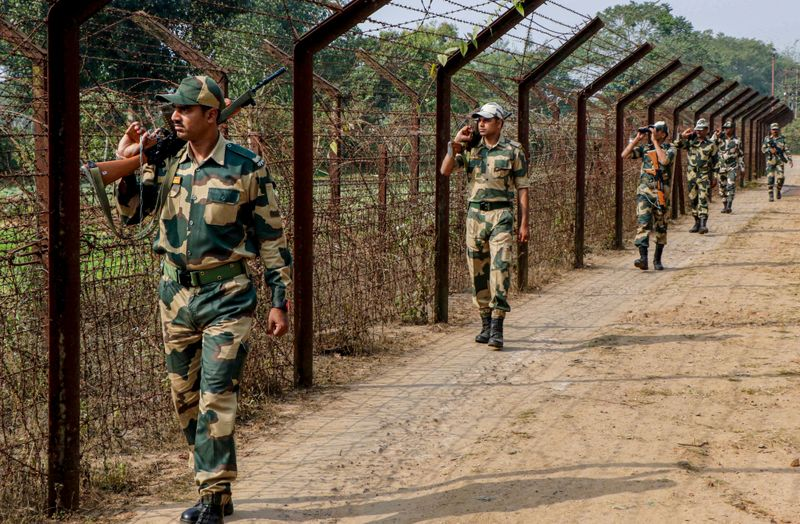
The Ministry of Home Affairs has increased the quota for ex-Agniveers for constable recruitment in the Border Security Force (BSF) from 10 per cent to 50 per cent, according to a gazette notification.

The increase has been made by amending the BSF, General Duty Cadre (Non-Gazetted) Recruitment Rules, 2015. The first batch of ex-Agniveers will also get upper age-limit relaxation of up to five years, while the rest of the former Agniveers will get three years relaxation. The ex-Agniveers shall also be exempted from physical standard test and physical efficiency test, said the notification issued on Friday.

By direct recruitment (including fifty per cent), vacancies shall be reserved for ex-Agniveers in every recruitment year, ten per cent for ex-servicemen, and up to three per cent for Combatised Constable (tradesmen) in absorption of annual vacancy, the notification said.

In the first phase, the recruitment shall be conducted by the nodal force for 50 per cent vacancies earmarked for ex-Agniveers, and in second phase recruitment shall be conducted by the Staff Selection Commission for candidates other than ex-Agniveers for the remaining forty-seven per cent vacancies (including ten per cent ex-servicemen), along with the unfilled vacancies of ex-Agniveers in a specific category in the first stage, it said.

The Centre had amended the Government of India (Allocation of Business) Rules, 1961, by the gazette notification in June this year, inserting a new point in the second schedule under the Department of States of the Home Ministry, “coordinating activities for further progression of ex-Agniveers” who exit after completing four years in the armed forces. With this amendment, the work relating to coordinating activities for further progression of ex-Agniveer has been assigned to the MHA, sources said.

After rolling out the Agnipath recruitment scheme in June 2022, the government had already reserved 10 per cent of jobs for ex-Agniveers in all future appointments of constables in the Central Armed Police Forces like the CRPF, BSF, CIS and the SSB.


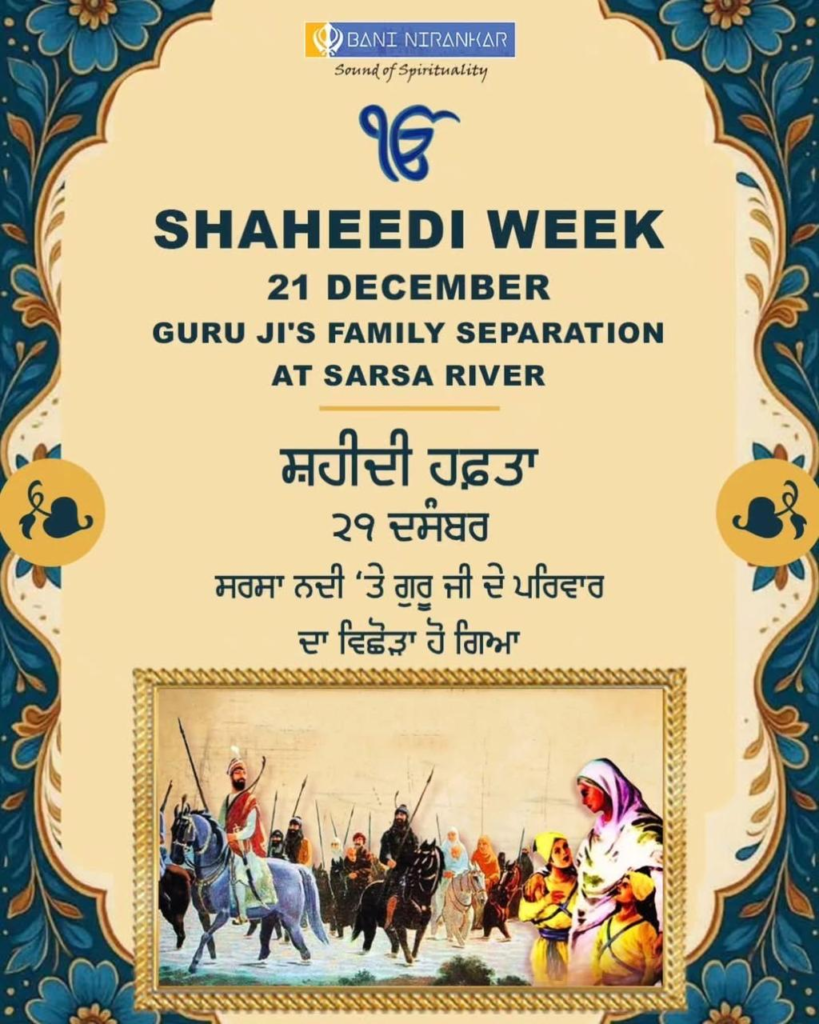
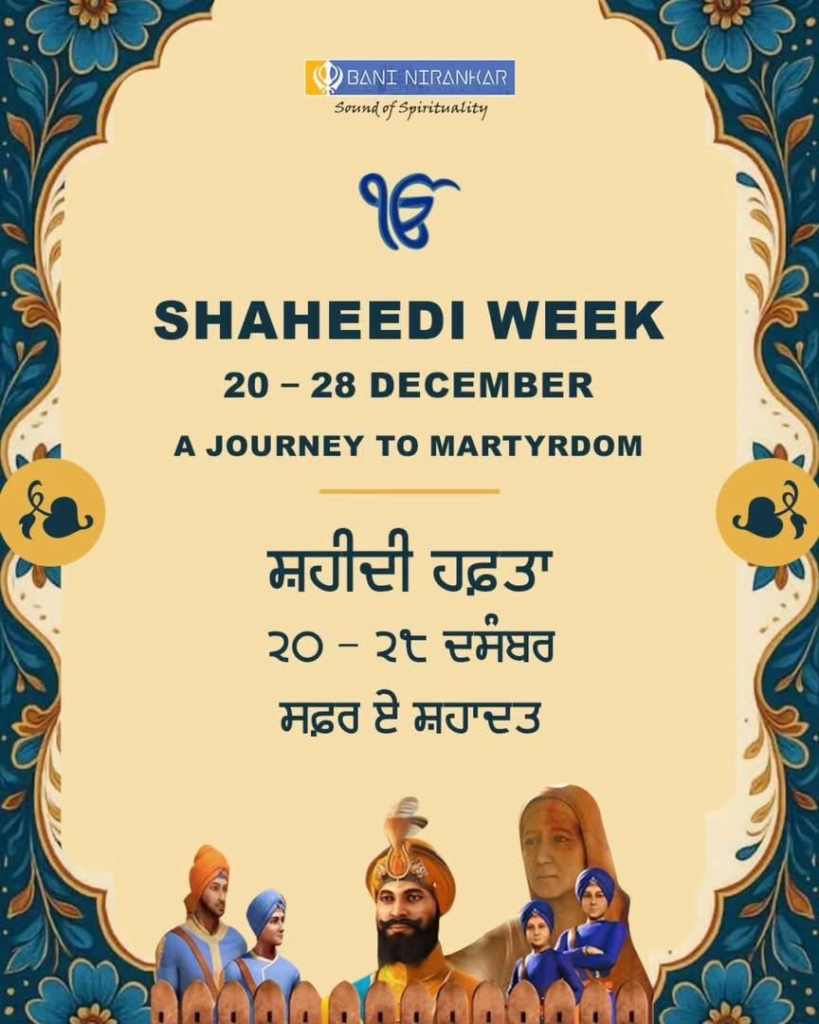
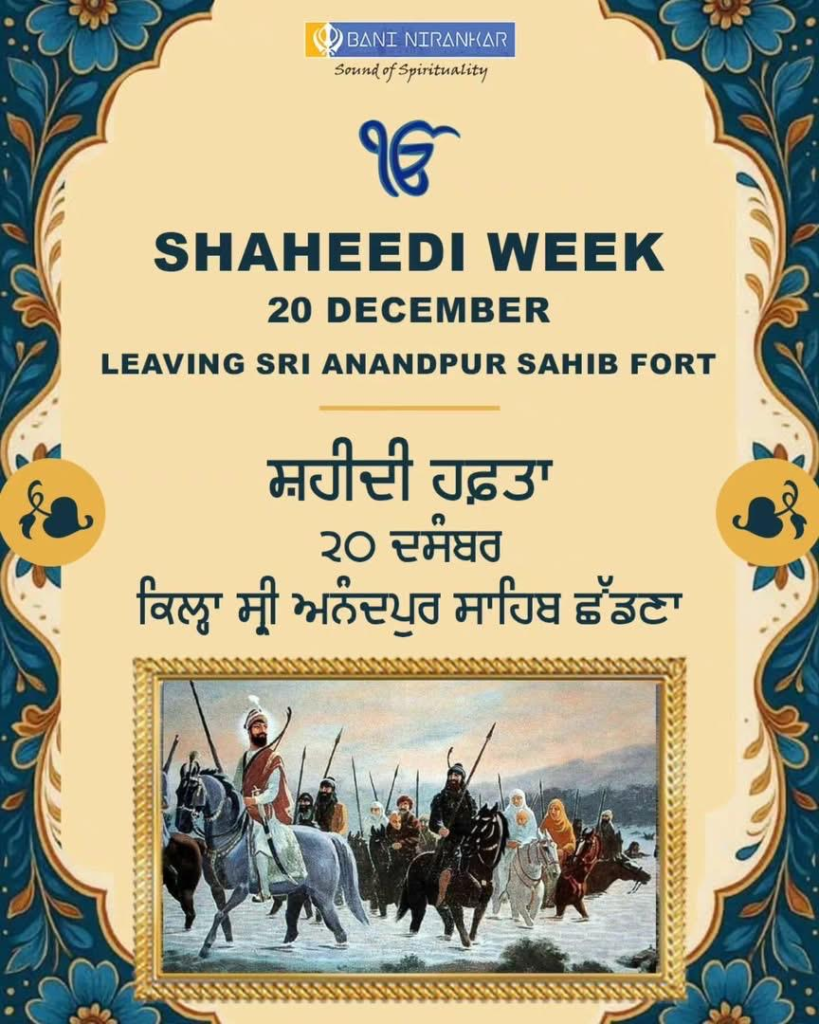
History why Guru Gobind Singh ji had to leave Anandpur Sahib Fort on 20 Dec (6Poh, 6ਪੋਹ)

The period following the execution of Guru Tegh Bahadur – the father of Guru Gobind Singh, was a period where the Mughal Empire under Aurangzeb was an increasingly hostile enemy of the Sikh people.[88] The Sikh resisted, led by Gobind Singh, and the Muslim-Sikh conflicts peaked during this period.[88] Both Mughal administration and Aurangzeb’s army had an active interest in Gobind Singh. Aurangzeb issued an order to exterminate Gobind Singh and his family.[89]

Gobind Singh believed in a Dharamyudh (war in defence of righteousness), something that is fought as a last resort, neither out of a wish for revenge nor for greed nor for any destructive goals.[90] To the Guru, one must be prepared to die to stop tyranny, end persecution, and to defend one’s own religious values.[90] He led fourteen wars with these objectives, but never took captives nor damaged anyone’s place of worship.[90]

There were total of 12 Hill Kings who could not tolerate the growing popularity among local and other states ,they tried to attack Guru Gobind Singh but were defeated .They jointly met Aurungzeb and asked him to curb Guru and so they collectively along with support of Mogul Army attacked but could not make any dent in any walls of the fort for 8 months . Thereafter Aurangzeb asked Guru Gobind Singh ji to leave the Fort and took oath of Cow beef for safe passage .

It was again the Indian rulers who sided with Aurungzeb to defeat their own Singh King

Battles

Guru Gobind Singh with his horse

Guru Gobind Singh fought 21 battles against the Mughal Empire and the kings of Siwalik Hills.

  • Battle of Anandpur (1682) Bhim Chand attacks Gobind Singh.
  • Battle Of Anandpur (1685) Bhim Chand attacks Gobind Singh once again
  • Battle of Bhangani (1688), which states chapter 8 of Gobind Singh’s Bicitra Natak, when Fateh Shah, along with mercenary commanders Hayat Khan and Najabat Khan,[91] attacked his forces without any purpose. The Guru was aided by the forces of Kripal (his maternal uncle) and a Brahmin named Daya Ram, both of whom he praises as heroes in his text.[92] The Guru’s cousin named Sango Shah was killed in the battle, a cousin from Guru Hargobind‘s daughter.[91]
  • Battle of Nadaun (1691), against the Islamic armies of Mian Khan and his son Alif Khan, who were defeated by the allied forces of Gobind Singh, Bhim Chand and other Hindu kings of Himalayan foothills.[93] The non-Muslims aligned to the Guru had refused to pay tribute to the Islamic officials based in Jammu.[91]
  • In 1693, Aurangzeb was fighting the Hindu Marathas in the Deccan region of India, and he issued orders that Guru Gobind Singh and Sikhs should be prevented from gathering in Anandpur in large numbers.[91][94]
  • Battle of Anandpur (1695) Mughals attack Gobind Singh at Anandpur
  • Battle of Guler (1696), first against the Muslim commander Dilawar Khan’s son Rustam Khan, near Sutlej river, where the Guru teamed up with the Hindu king of Guler and routed the Muslim army.[95] The commander sent his general Hussain Khan against the armies of the Guru and the Guler kingdom, a war fought near Pathankot, and Hussain Khan was defeated and killed by the joint forces.[95]

After the creation of the Khalsa the Hill Rajas, who had previously lost in battle to Guru Gobind Singh, sent a petition to Delhi requesting they act immediately and join them in battle against the Guru.l[96]

  • Battle of Anandpur (1699), was against two Rajas of the hills.
  • Battle of Anandpur (1700), against the Mughal army of Aurangzeb, who had sent 10,000 soldiers, in response to the Hill Rajas letter, under the command of Painda Khan and Dina Beg.[97] In direct combat between Gobind Singh and Painda Khan, the latter was killed. His death led to the Mughal army fleeing the battlefield.[97]
  • First siege of Anandpur, The hill Rajas of northern Punjab regrouped after defeat at Anandpur the previous year and resumed their campaign against Gobind Singh, joining forces with Gujar and other tribesmens to besiege Anandpur, northeast of Ludhiana. Gujar leader Jagatullah was killed on the first day and the Rajas were driven off after a brilliant defence led by the Guru’s son Ajit Singh.[97][98][94]
  • Battle of Taragarh was a battle fought in defence during the Siege of Anandpur.
  • Battle of Basoli (1702), against the Mughal army; named after the kingdom of Basoli whose Raja Dharampul supported the Guru in the battle.[99] The Mughal army was supported by rival kingdom of Kahlur led by Raja Ajmer Chand. The battle ended when the two sides reached a tactical peace.[99]
  • First Battle of Chamkaur (1702), Mughal Army was repulsed.[97]
  • First Battle of Anandpur (1704), Mughal Emperor Aurangzeb sent a fresh force into northern Punjab under General Saiyad Khan, later replaced by Ramjan Khan. Ramjan was mortally wounded in further very heavy fighting around the Sikh stronghold at Anandpur, northeast of Ludhiana, and his force again withdrew.[97]
  • Second siege of Anandpur, According to scholars, this siege was triggered by the proliferation of armed Sikhs in Anandpur, the increasing numbers creating a shortage of supplies. This led the Sikhs to raid local villages for supplies, food, and forage, which in turn dramatically frustrated the local pahari rajas who forged alliances and mounted an attack on Guru Gobind Singh’s patrimony.[100][91] The Mughal general was fatally wounded by Sikh soldiers, and the army withdrew. Aurangzeb then sent a larger army with two generals, Wazir Khan and Zaberdast Khan in May 1704, to destroy the Sikh resistance.[97] The approach the Islamic army took in this battle was to lay a protracted siege against Anandpur, from May to December, cutting off all food and other supplies moving in and out, along with repeated battles.[16] Some Sikh men deserted the Guru during the Anandpur siege in 1704 and escaped to their homes where their women shamed them and they rejoined the Guru’s army and died fighting with him in 1705.[101][102] Towards the end, the Guru, his family, and followers accepted an offer by Aurangzeb of safe passage out of Anandpur.[103] However, as they left Anandpur in two batches, they were attacked, and one of the batches with Mata Gujari and Guru’s two sons – Zorawar Singh aged 8 and Fateh Singh aged 5 – were taken captive by the Mughal army.[98][104] Both his children were executed by burying them alive into a wall.[16][105] The grandmother Mata Gujari died there as well.[98]
  • Battle of Sarsa (1704), against the Mughal army led by general Wazir Khan; the Muslim commander had conveyed Aurangzeb’s promise of a safe passage to Guru Gobind Singh and his family in early December.[104] However, when the Guru accepted the offer and left, Wazir Khan took captives, executed them and pursued the Guru.[106] The retreating troops he was with were repeatedly attacked from behind, with heavy casualties to the Sikhs, particularly while crossing the Sarsa river.[106]
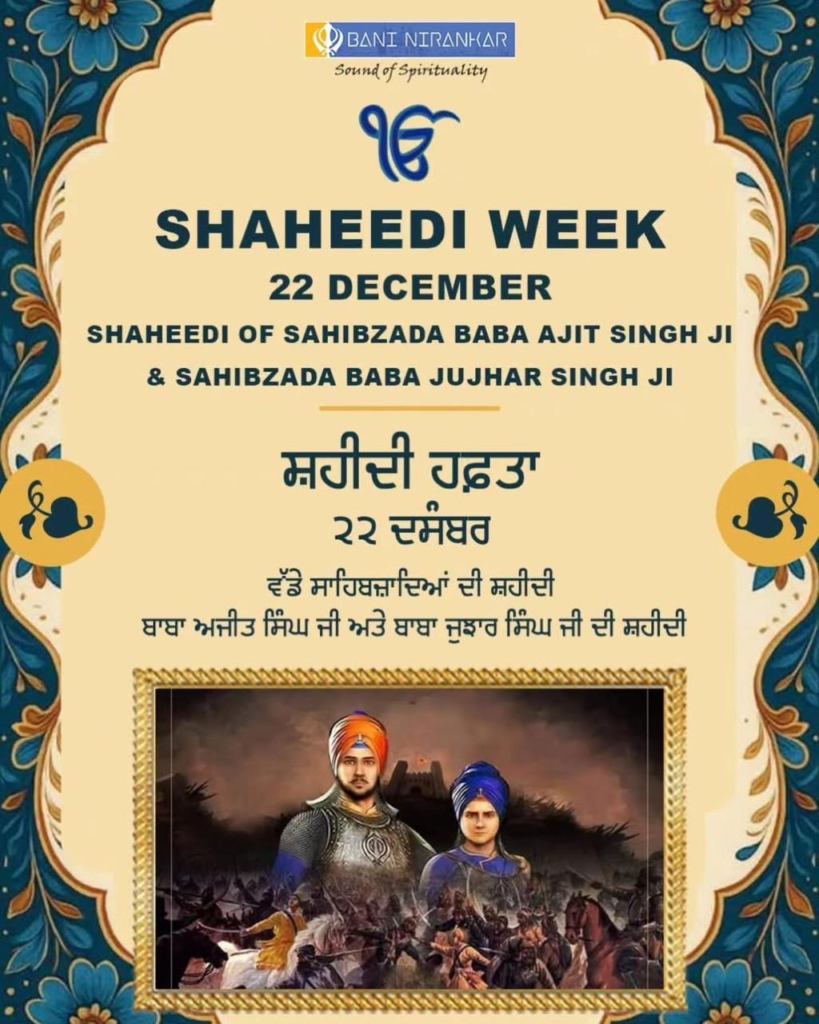
  • Battle of Chamkaur (1704) Regarded as one of the most important battles in Sikh history. It was against the Mughal army led by Nahar Khan;[107] the Muslim commander was killed,[107] while on Sikh side the remaining two elder sons of the Guru – Ajit Singh and Jujhar Singh, along with other Sikh soldiers were killed in this battle.[108][98]

Vijay Diwas: Wounded, Lance Naik Ekka cleared enemy bunkers, silenced machineguns


Born in an Adivasi tribe, where hunting was a common activity, he was spotted during a hockey by a Subedar Major from the Bihar Regiment

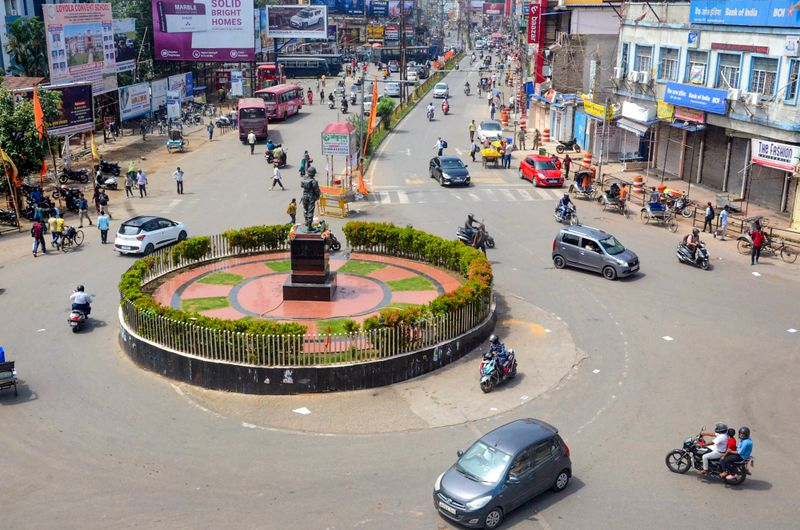
The Albert Ekka Chowk in Ranchi. Photo: Tribune archives

Lance Naik (L/Nk) Albert Ekka was just a few days shy of his 29th birthday when he made the supreme sacrifice on the very first day of the India-Pakistan War of 1971. His actions in the face of the enemy earned him the Param Vir Chakra (PVC), the highest gallantry award in the country.

Despite being wounded in the arm and neck, he charged enemy defence under fire, clearing several bunkers and knocking out two machinegun posts before succumbing to his injuries on the battlefield.

Hailing from Jari village (in the present day Chhattisgarh), Ekka belonged to an Adivasi tribe, where hunting was a common activity. “This helped groom his soldierly instincts from an early age, and he became a marksman with the bow and arrow. He was also quite good in hockey. During a district-level tournament, he was spotted by a Subedar Major from the Bihar Regiment, who helped him join the battalion,” Lt Col Dilbagh Dabas (retd), historian and author of several books on gallantry awards, told The Tribune.

Ekka was enrolled in the Bihar Regiment in December 1962. Later, when 14 Guards was raised, he was transferred to the new battalion in 1968. A little before the war began, he was promoted to the rank of Lance Naik.

As hostilities officially commenced, 14 Guards under 4 Corps was tasked to capture Gangasagar, located in eastern Bangladesh adjoining Tripura. Capturing Gangasagar was crucial for the 4 Corps to advance westwards and the battalion positioned itself south of Gangasagar near the local railway station for further operations and attacked enemy defences along the railway tracks. It was here that L/Nk Ekka, despite being wounded, made his final charge.According to the historical records, L/Nk Ekka was part of a forward company of his battalion during the attack on the enemy defences at Gangasagar on the eastern front. This was a well-fortified position held in strength by the enemy. The assaulting troops were subjected to intense shelling and heavy small-arms fire, but they charged on to the objective and engaged in a bitter hand-to-hand combat.

L/Nk Ekka noticed an enemy light machine-gun inflicting heavy casualties on his company. With complete disregard for his personal safety, he charged the enemy bunker, bayoneted two enemy soldiers and silenced the machine gun. Although he was seriously wounded in this encounter, he continued to fight alongside his comrades, clearing bunker after bunker with undaunted courage.

Lance Naik Albert Ekka. File

In the meantime, enemy troops opened a medium machine-gun from the second floor of a well-fortified building, inflicting heavy casualties. Once again, L/Nk Ekka, despite his serious injury and the heavy volume of enemy fire, crawled forward till he reached the building and lobbed a grenade into the bunker killing one enemy soldier and injuring the other.

The machine gun, however, continued to fire. “With outstanding courage and determination L/Nk Ekka scaled a side wall and entered the bunker, bayoneting the enemy soldier who was still firing and silenced the machine-gun, saving further casualties to his company and ensuring the success of the attack. In the process, however, he received serious injuries and succumbed to them after the capture of the objective,” reads the citation for his award.

“L/Nk Ekka had displayed gallantry of the highest order. His determination and grit in the face of grave danger remain unmatched and he made the supreme sacrifice in the finest traditions of the Army,” Brig SS Ahluwalia (retd), a member of the War Decorated India, an association of wartime gallantry award recipients, told The Tribune.

According to army officers, Gumla district of Jharkhand, where L/Nk Ekka’s village is located, has a strong martial tradition. Virtually every household in the district has sent a member to the armed forces or the para-military organisations.

To honour L/Nk Ekka’s legacy, the government issued a commemorative postal stamp on the 50th Republic Day in 2000. A major intersection in Ranchi has been named as Albert Ekka Chowk and bears his statue, while a block in Gumla has also been named after him. There is also a park in Tripura named after him to commemorate his actions in the war.


Army jawan arrested for ‘raping’ woman in Jharkhand’s Ranchi

Jawan currently posted with the 42 Medium Regiment in Patiala 

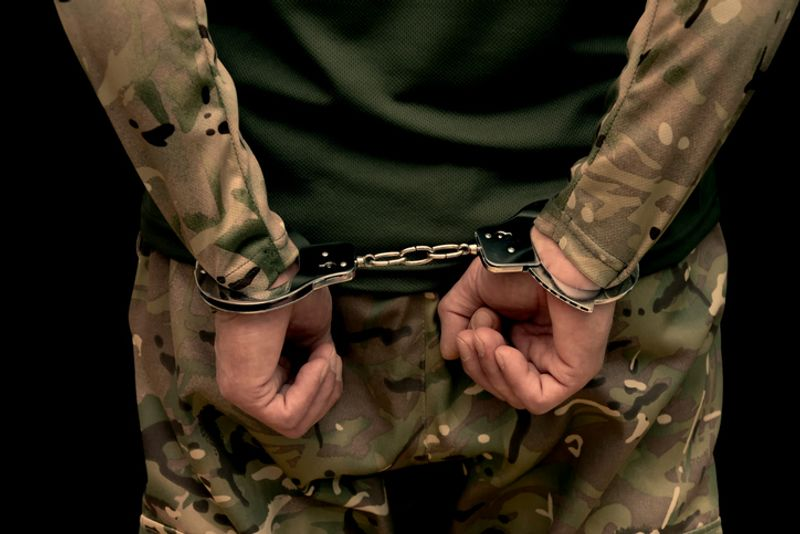
An Army jawan has been arrested in Jharkhand’s Ranchi for allegedly raping a 22-year-old woman while on duty, an official said on Saturday.

The incident occurred at Tatisilwai Railway Station on Thursday around 5:30 pm, when the woman was waiting to board a train for Ranchi, he said.

The jawan, 42, took her to an empty coach of a train and allegedly raped her, the official said.

“The Army personnel was on duty guarding a defence logistics train. He was reportedly in an inebriated state when he committed the crime,” the Railway Protection Force (RPF) official said.

The accused jawan is a resident of the Sarha police station area in Prayagraj district, Uttar Pradesh, and was posted with the 42 Medium Regiment in Punjab’s Patiala, he said.

After hearing her cries for help, people at the railway station gathered and raised an alarm, following which the Railway police rushed to the spot, the official said.

The jawan tried to flee before being apprehended and suffered injuries, he said.

An FIR has been registered based on the woman’s statement.

On Friday, he was produced before a court, which forwarded him to judicial custody.


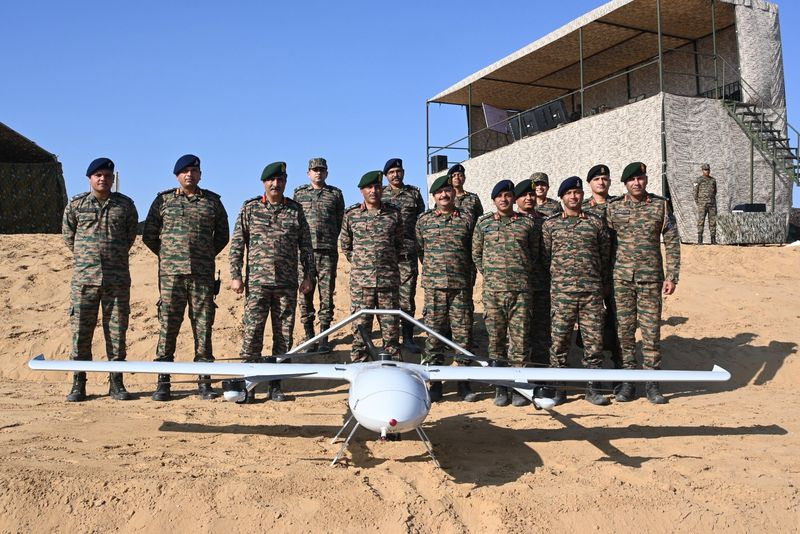
Army’s Western Command tests long-range drone resilient to electronic warfare

The fixed wing drone, developed jointly developed by Chennai-based startups and Army engineers from the artillery division, has a range of about 100 km

The Army’s Western Command successfully tested a new indigenously developed long-range drone that is resilient to electronic warfare, on Friday. The trails were carried out by the Kharga Corps’s artillery division at Mahajan Field Firing Ranges in Rajasthan.

The fixed wing drone, developed jointly developed by Chennai-based startups and Army engineers from the artillery division, has a range of about 100 km and is designed to resist disruption in the electromagnetic spectrum.

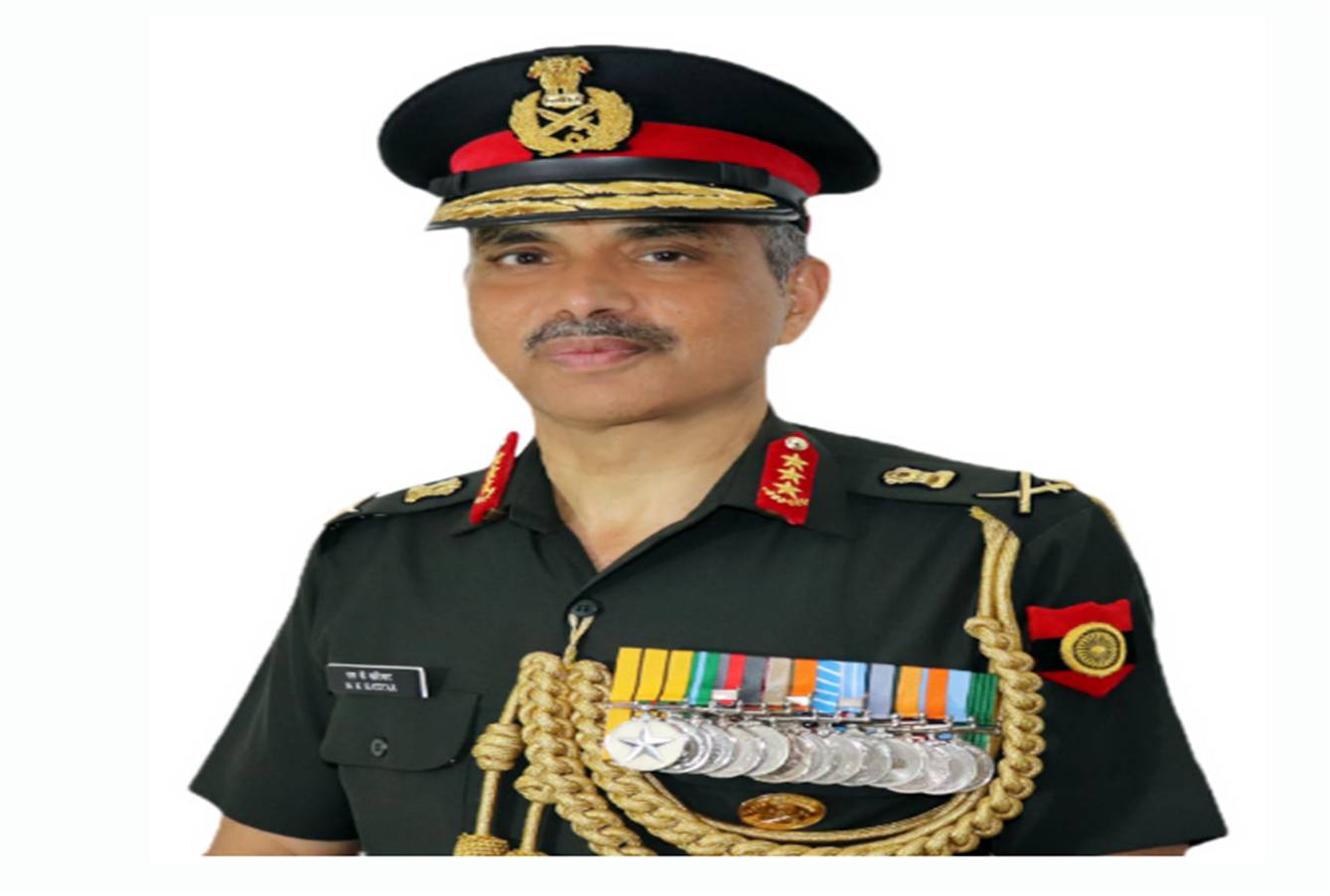
“Witnessed by Lt Gen #ManojKumarKatiyar, PVSM, UYSM, AVSM, #ArmyCommander, the trial marked a key step towards self-reliance in critical drone technologies,” the Army posted on its official X handle.

Electronic Warfare resilient drones are unmanned aerial systems designed to operate effectively in environments where adversaries use jamming, spoofing or other electronic attacks to disrupt radio communication frequencies and GPS navigation links, effectively disabling or blinding the drone of taking over its control.

Such drones employ artificial intelligence based mission control and navigation using on-board computing, visual and inertial navigation systems or pre-programmed routes, enabling them to continue their mission without constant inputs from operators or GPS.

They also feature anti-jamming communications like radio frequency hopping, mesh networking and low-probability-of-intercept signals, along with alternative control methods like fiber-optic tethers that are immune to interception or jamming.

In the contemporary battle space, drones have emerged as a key element for offensive, surveillance, recce, communications and logistics. Operation Sindoor, the brief but intense military engagement between India and Pakistan in May this year, as well as other conflicts such as the Russia-Ukraine war are examples of this.

The Army is also incorporating lessons drawn from Operation Sindoor as well as inputs from global conflicts in its operational doctrines and tactical concepts. Several field exercises involving the employment of drones in different operational environments have been conducted by the Army recently.

The Army, as with the other services, has inducted a range of UAV’s from small tactical hand-held drones to large, long-range systems, and these have been integrated into every arm and service of the Army, including delivery of supplies in high altitude areas.

A lot of focus is being laid on the development and fabrication of drones, both in-house by the Army and in collaboration with industry partners and a great deal of emphasis is being given to drone warfare and strengthening training.


Amid China threat, US defence policy stresses deeper India ties

Amid strained India-US ties over trade and punitive tariffs US President Donald Trump has signed an annual defence policy Bill into law, laying down an expanded engagement with India in 2026, including through the Quad, to promote a free and open Indo-Pacific and address the challenges posed by China.

Called the National Defence Authorisation Act (NDAA) for US FY2026 (starting January 1), it includes a spending of $900 billion on defence and security over the next fiscal.

The NDAA mentions the need to maintain a ‘free open Indo-Pacific region’ through bilateral and multilateral engagements and participation in military exercises, expanded defence trade and collaboration on humanitarian aid and disaster response.

The passing of the NDAA comes just two weeks after the US ‘national security strategy’ released by the White House mentioned the need to ‘improve commercial and other relations with New Delhi’. It had also mentioned a strategic role of India and Japan in the US calculus for maintaining equilibrium vis-a-vis China in the disputed waters of the South China Sea.

Besides, the NDAA authorises fiscal year appropriations for the Department of War (DoW), the Department of Energy national security programmes, the Department of State, the Department of Homeland Security, the Intelligence Community and other executive departments and agencies.

The Act outlines ‘sense of Congress on Defence Alliances and Partnerships in the Indo-Pacific region’. Under this, the Secretary of Defence should continue efforts that strengthen US defence alliances and partnerships in the Indo-Pacific region to “further the comparative advantage of the US in strategic competition with China”.

The NDAA says it should include “broadening US engagement with India, including through the Quad”. India, the US, Japan and Australia are part of Quad, which is aimed to counter China’s aggressive behaviour in the Indo-Pacific region.

This, it said, would strengthen the collective defence industrial base by expanding capability, capacity and workforce, including enhanced supply chain security, interoperability and resilience among participating countries.

A section titled ‘Joint Assessment between US and India on Nuclear Liability Rules’ further states that Secretary of State Marco Rubio shall establish and maintain within the US-India Strategic Security Dialogue a joint consultative mechanism with the Indian government.

This mechanism would convene regularly to “assess the implementation of the agreement for cooperation between the US and India concerning peaceful uses of nuclear energy, signed in Washington in 2008,” it said.

It also calls on Rubio to submit a report describing the joint assessment about this not later than 180 days after the date of the enactment of the Act, and annually thereafter for five years.

Calls BRICS adversary

The NDAA also mentions how adversaries of the US were cooperating multilaterally in international institutions such as the UN and through expanded multilateral groupings such as the Brazil-Russia-India-China-South Africa group (BRICS) to isolate and erode the influence of the US.


Army eyes new 9mm pistols; Ministry of Defence invites bids from Indian firms

The Ministry of Defence today asked Indian industry to provide options for an indigenous 9mm pistol suited to the changing nature of threats.

The MoD seeks to procure 1 lakh such pistols and has issued a request for information (RFI) to identify capable vendors. It requires a 9mm pistol with accessories like night sights and targeting options.

The MoD is addressing the Army’s future needs with a weapon to replace the existing 9mm semi-automatic, magazine-fed pistol from Rifle Factory Ishapore, used for close-range enemy engagement.

The Army wants new 9mm pistols featuring ambidextrous controls, suppressors and accessory rails to modernise older weapons.

While the Army’s special forces currently use imported 9mm pistols, they are shifting to advanced indigenous solutions.

The DRDO and Indian Army have already designed a 9mm weapon for counter-insurgency and counter-terrorism, incorporating 3D-printed parts and a high rate of fire.

Today’s MoD RFI emphasises a ‘Make in India’ weapon and parts. The pistol must operate across terrains, from hot deserts along India’s western borders to extreme winters above 18,000 feet in the Himalayas.

It should function day and night in common weather conditions across all terrains.

Accessories like night sights must operate from desert heat to extreme cold.

The MoD requires a modular design for future upgrades via simple modifications, without structural changes. It should also allow accessory integration without affecting performance.


Suspension of IWT act of war, says Dar

Remark comes day after Pakistan sought clarification from India regarding variations in the flow of the Chenab river

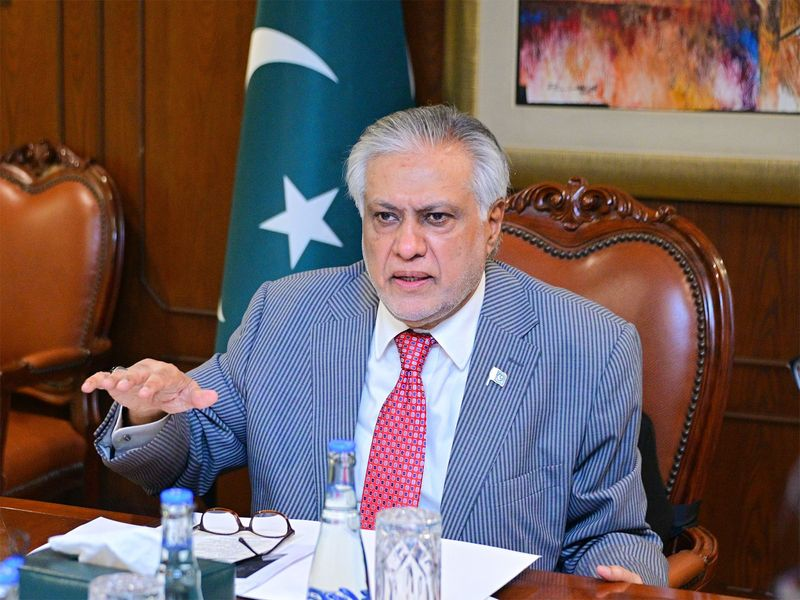
Pakistan’s Deputy Prime Minister Ishaq Dar on Friday accused India of “consistently attempting to undermine the Indus Waters Treaty (IWT)”, claiming that the current material breaches strike at the heart of the pact. He said suspension of water would be considered as an act of war.

Dar, who is also the Foreign Minister of Pakistan, was addressing the media a day after Pakistan sought clarification from India regarding variations in the flow of the Chenab river. “We witnessed in April this year India’s unilateral abeyance of the Indus Waters Treaty. But what we are witnessing now is material breaches by India that strike at the heart of the IWT, with escalating consequences both for regional stability and the sanctity of the international law,” he said.

A day after the Pahalgam attack on April 22, India took a series of punitive measures against Pakistan, which included putting the 1960 Indus Water Treaty in “abeyance”.

Dar said the manipulation of the Indus basin waters at a critical time of agricultural cycle threatened lives and livelihood in Pakistan. He said India had halted sharing information, which had exposed Pakistan to floods and droughts.