FOR decades, Pakistan’s ruling class has blamed foreign conspiracies for the country’s turmoil, conveniently ignoring the fractures within.
But the truth is, you cannot silence a storm by shutting your windows. The unrest in Balochistan, the resentment in Sindh, and the frustration in Khyber Pakhtunkhwa are not the result of external forces alone; they are the inevitable consequences of a state that has refused to listen, choosing coercion over conversation.
The ghosts of our past haunt us still. Mir Ahmad Yar Khan, the last Khan of Kalat, signed the accession under duress, and his people were left without a voice.
Nawab Akbar Bugti’s assassination did not quell resistance — it turned him into a martyr. Babu Nowroz, who died on a hunger strike in protest; Sardar Ataullah Mengal and GM Syed, once symbols of hope, later labelled as “traitors”; Hyder Bux Jatoi and Rasool Bux Palijo, who dedicated their lives to Sindh’s rights but were sidelined — their stories are not mere footnotes.
These are chapters in a long history of broken promises and betrayed alliances. Even those who sought peaceful means to bring about change — Khan Abdul Ghaffar Khan, the ‘Frontier Gandhi’, and his son Abdul Wali Khan — were met with state brutality rather than dialogue. Taj Muhammad Langah’s calls for Siraiki identity and Nawabzada Nasrullah Khan’s demands for fairness were reduced to mere whispers drowned out by louder accusations of treachery.
When allies are treated as adversaries and legitimate grievances are met with bullets, resentment does not disappear — it deepens.
The rise of the Balochistan Liberation Army (BLA), the flames of unrest in the three provinces and the growing anger in south Punjab and the former tribal areas — these are not isolated incidents of ‘terrorism’. They are the bitter fruit of policies that have long prioritised suppression over justice.
Pakistan remains a country of two realities: in one, the elite of Lahore and Islamabad thrive, enjoying the spoils of development; in the other, Balochistan’s minerals are extracted, Sindh’s waters are diverted and Khyber Pakhtunkhwa’s valleys are exploited, while their people are left in poverty.
A rent-seeking economy serves the powerful, while the marginalised are told to tighten their belts. But hunger has no patience for empty slogans.
The obsession with kinetic solutions — military operations instead of dialogue, bullets instead of ballots — has only added fuel to the fire.
When Bugti was buried after a military operation, when Mengal was thrown into jail and when GM Syed was confined to his hometown, what was expected? That people would remain silent? That they would thank the state for their oppression? A dog kicked too many times will eventually bite back. A people pushed to the brink will rise.
This is not a simplistic battle between good and evil. It is a question of fairness. Pakistan was envisioned by Quaid-e-Azam Muhammad Ali Jinnah as a federation, not a fiefdom.
Yet, power remains concentrated in the hands of Punjab’s elite, while smaller provinces are forced to beg for their rightful share.
A house built on exploitation cannot stand forever. The coerced accession of Kalat, the assassination of Bugti and the marginalisation of the Red Shirts — these are not relics of the past. They are open wounds that continue to fester.
The way forward is clear, but it requires courage. We must start listening instead of lecturing. The state must honour its social contract: give provinces their fair share of resources, respect their cultural identities and replace suspicion with solidarity.
The BLA’s guns will fall silent only when the state extends an open hand instead of a clenched fist. As the saying goes, “A wound ignored festers; a wound healed becomes a scar of resilience.”
Pakistan’s survival depends not on forced uniformity but on unity in diversity.
Let Lahore’s prosperity be shared with Sindh and Balochistan. Let the institutions responsible for national security protect citizens instead of punishing them.
Until then, the fire will continue to rage — and no amount of flag-waving will hide the smoke. The choice before us is clear: evolve or unravel.
Munim Ali Khan, a mechanical engineer, explores the polymathic nature of humans, philosophy, politics and economics.
Three J&K policemen, 3 Pak-origin militants killed in Kathua gunfight
3 security personnel hurt as forces come under heavy fire in forest
Three Jammu and Kashmir Police personnel and three militants were killed while three security men were injured in an encounter in a thick forest near Jakhole village of Ghati Juthana in J&K’s Kathua district on Thursday.
The security forces, including the Army, launched a combing operation after being alerted by villagers about suspicious movement in the area, said officials.
Sources said the hiding terrorists, carrying sophisticated weapons and learnt to be highly trained and of Pakistani origin, fired indiscriminately at the security personnel, injuring five of them, including Sub-Divisional Police Officer Dheeraj Katoch. Katoch and three other police personnel were the first to reach the area and came under heavy fire from the militants. During the encounter, a head constable and two constables were killed, said sources.
No official statement was released by the police till the filing of this report. The injured included a jawan of Special Forces of the Army and two policemen.
Sources in the Military Intelligence said the militants were most likely the same group that was involved in an encounter at Sanyal village of Hiranagar in Kathau on Sunday. “The militants were probably trying to reach the higher reaches so as to escape to other areas. However, they were spotted by the locals, who alerted the security forces,” the sources said.
Even on Tuesday, a woman had spotted two suspects in Army fatigue in Ding Amb belt, after which the police were alerted.
The Ghati Juthana area is nearly 35 km from the International Border with Pakistan in Kathua from where the terrorists are believed to have infiltrated.
The Army is learnt to be using UAVs, sniffer dogs and other technical assistance to trace the militants, who have been frequently changing positions.
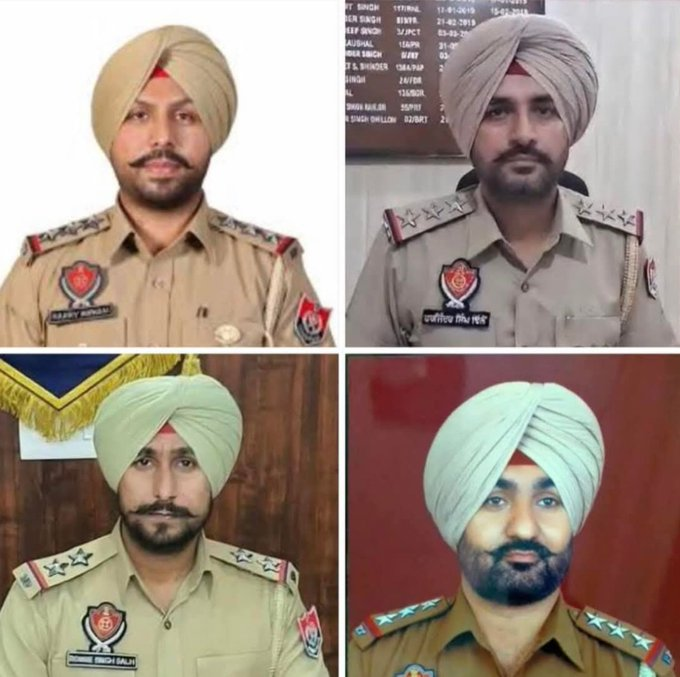
These are the 4 main COWARDS of Punjab Police who were drunk with power and Alcohol who attacked and injured a serving Colonel of the Indian Army and his son mercilessly in Patiala. SHAME ON PUNJAB POLICE who rather than dismissing these COWARDS is threatening the family of the Colonel to reach a compromise. MATTER OF UTTER SHAME N DISGUST.
VETERAN COL SADHU SINGH SOHI : DGP CAME TO ARMY CDR TO APPOLIGISE
EVEN PUNJAB POLICE PERSONEL NOT HEARD ABOUT HIS GRIVENCES BY Pb POLICE
There has been considerable excitement in the India media about terrorist leaders/terrorists being killed periodically in Pakistan in recent years by “unknown gunmen”, often motorcycle-borne undertaking killings in broad daylight. This also coincided with the recent visit of Tulsi Gabbard, Director of National Intelligence of the US to India. While India’s external intelligence agency, R&AW, is being given the credit by some, the fact of the matter is that these terrorist leaders/terrorists have outlived their utility to the Pakistan army and the ISI, who don’t want to keep paying them in perpetuity. Only the dumbest of dumb would believe that “unknown gunmen”, with impunity, can go on periodic killing sprees in Pakistan without the ISI having an inkling who these killers are.
There is no denying that Pakistan-backed Muhamad Yunus, Chief Advisor to the Interim Government of Bangladesh, is trying to depose Bangladesh Army Chief General Waker-Uz-Zaman. The situation apparently is coming to a head with Lt Gen Joel Vowell, Deputy Commanding General of the US Indo-Pacific Command visiting Dhaka on March 24-25. But to say that India helped Bangladesh avert a coup by Pakistan-aligned Generals is a bit too much. If R&AW was awake and Indian intelligence not under orders to focus on running down the opposition in India, we would have not been surprised by the recent regime change in Bangladesh in the first place. Do we believe that only because of few Pakistan-aligned Bangladeshi Generals, the ISI has a free run in Bangladesh, terrorist leaders of Bangladesh and Pakistan are visiting each other, both exchanging military delegations, Pakistan army is providing military training in four cantonments of the Bangladesh army, and senior Pakistani army and ISI officials visited Rangpur, close to India’s ‘Chicken Neck’ area?
The US and Canada have been crying hoarse over India killing terrorists abroad, as if this is the forte of only the white race? The fact is that the killing of Hardeep Singh Nijjar in Canada had the signatures of Pakistan’s ISI involvement with international drugs and immigration cartels, as well as in the case of the Gurpatwant Singh Pannun, a CIA weasel, who is a terrorist himself (https://www.spsmai.com/experts-speak/?id=1494&q=India-Killing-Terrorists-Abroad). Political Scientist and Author Ayesha Ray writes that Indian separatists and their educated Ivy League Gucci supporters in the West excel in diversionary tactics, deflection, lies and zero accountability. Tulsi Gabbard and the Donald Trump administrations need to act against Pannun threatening India, in the interest of Indo-US relations.
Pakistan’s ISI is able to use its scalpel in India’s Union Territory of J&K and the State of Punjab with impunity because of the direct involvement of the police in the narcotics trade and their links with terrorists. It is obvious that the financial booty is also passed on to politicians, because of which nothing much happens to these police officials beyond suspension or prolonged court cases, despite periodic incidents coming to light – which may not be all.
Take the case of Deputy Superintendent of Police (DSP) Davinder Singh, who was posted at Srinagar Airport. He was also in the security detail when Prime Minister Narendra Modi visited Srinagar. Later, Davinder Singh was arrested on a tip-off travelling in a car with three Hizbul Mujahideen (HM) terrorists. Any action taken against him, if any at all, remains unknown.
In May 2024, the Station House Officer (SHO) of the Pantha Chowk Police Station in J&K was caught red-handed while demanding and accepting the bribe. In August 2024, six employees of J&K, including five police constables (Farooq Ahmad Sheikh, Khalid Hussain Shah, Rahmat Shah, Irshad Ahmad Chalkoo and Saif Din) were dismissed from service for being part of the narco-terror network sponsored by Pakistan’s ISI. These are only a few samples of what is going on in J&K. Narcotics smuggling by the ISI is not without help from the Indian side in which both the police and politicians are involved. This includes the use of tunnels. In recent years, cases have come to light where “over-priced” goods were deliberately sent across from J&K, enabling the ISI to ship drugs back.
SP Salwinder Singh, Punjab Police
The well-oiled terrorist infiltration and drug smuggling routes in Punjab are a haven for Pakistan’s ISI with police contacts on the Indian side. The Gurdaspur terror attack in 2015 and the terror attack on the Indian Airforce Base, Pathankot in 2016 by Pakistani terrorists had definite involvement of the Punjab Police. The ease with which a vehicle was arranged from the Indian side on a telephone call from Pakistan, indicates the intimate links of the ISI with the Punjab Police. Significantly, the vehicle arranged on the Indian side belonged to the Superintendent of Police (SP) Salwinder Singh of Punjab Police, although he later said that Jaish-e-Mohammed terrorists had “captured” his SUV to attack the IAF Base in Pathankot. Fate eventually caught up with Salwinder when in 2019 he was sentenced to 10-years in prison for involvement in the Pathankot terrorist attack and five years for rape and bribery. Whether he is still serving the sentence or out of jail remains ambiguous given the political patronage he enjoyed in what he was doing.
The Pakistani nexus of some Indian politicians, mostly covert, is a reality. Attending the oath taking ceremony of Prime Minister Imran Khan of Pakistan in August 2018, the then Punjab Congress President Navjot Singh Sidhu was photographed hugging the Pakistani army chief with the latter whispering something in his ear. Sidhu also unashamedly posed for photographs with Khalistan leaders invited to Imran’s oath taking, including Gopal Sigh Chawla.
For those who think that the involvement of Punjab Police in drug trafficking is on the wane, think away; watch a recent video of drugs being transported in a Punjab Police vehicle (https://www.facebook.com/share/v/19B2jr9wwa/). To Pakistan’s glee this state of affairs will continue because of multiple reasons, including: quantum of narcotics trade and involvement of Indian police and politicians; long-winded judicial processes; the farce of transfers vis-a-vis offences; temporary suspensions (and reinstatement?); dismissal from service outweighing the money made through nefarious means; readily available mafia-linked jobs following dismissals. Little wonder then that Punjab youth are stopping Himachal buses and pasting on them photos of separatist Jarnail Singh Bhindranwale
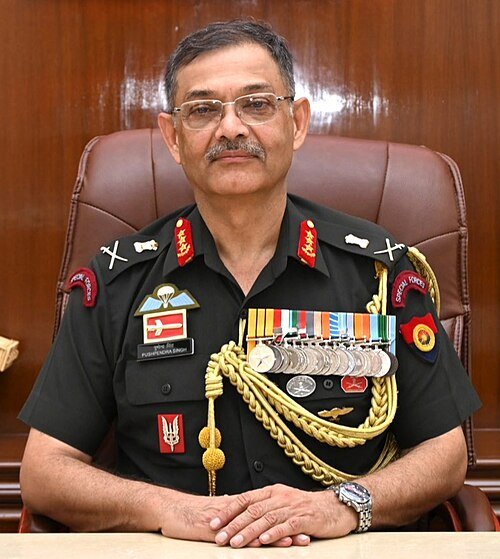
Take a look now at the latest ISI hit in Punjab, the executants being the Punjab Police, who brutalized and severely injured Colonel Pushpinder Singh Bath (a serving Army officer) and his son at Patiala on March 13, 2025. The target was carefully chosen because Colonel Bath is on deputation with R&AW. Analysts are pointing out that it is an ISI operation because the attacking Punjab Police personnel only took the identity card and mobile of Colonel Bath, not his wallet, watch and other items. But this would have been on specific instructions of the ISI; to cock a snook at India while our media indulges in fables or R&AW killing terrorists in Pakistan.
The consequences of the officer’s identity card and mobile in the hands of ISI are obvious. The issue, however, is to note that no statement has been issued by the Defence Minister, Home Minister, NSA, R&AW, CDS or the Army Chief. To top this, the Patiala Police has filed an FIR against “unknown persons”, while Colonel Baath’s wife is running from pillar to post seeking justice for her husband and son.
Where do we go from here? A veteran-scholar, close to the inner power circle writes, “Action will be taken, more because the officer is on deputation with R&AW. But these police personnel at best will get a warning, may not get plum posting like SHO for two-three years but nothing more than that. Police and judiciary are more corrupt than politicians, the difference is just of scale. That said, the Army has come down to a state where it has zero say even in matters military – the backbone is missing in the top brass. The brazenness of the police reflects in the fact that the FIR doesn’t mention the names of the police personnel involved despite all the noise.”
The latest is that the National Investigation Agency (NIA) is to investigate the case. Its investigations may keep these police personnel on their radar, similar to keeping the chief of Arambai Tenggol (the largest armed radical organization in Manipur) on NIA radar for the past several months – and nothing beyond that! The investigation report anyway would be in sync with the mood of the political hierarchy, which doesn’t favour the Army much. Meanwhile, the state of India’s judiciary is grabbing headlines with one High Court judge saying his reputation is devastated because of sacks of cash found burnt in his outhouse. Incidentally, one was invited for a meal by a friend, an advocate of the Supreme Court, when one his client turned up unannounced with two bags full of cash – that was some 15 years back. Another High Court judge has recently ruled that grabbing a teenager’s breasts, breaking her pyjama string and dragging her under a culvert is not attempted rape, but a minor offence to disrobe a person in public. Aren’t we going great guns?
The author is an Indian Army veteran. Views expressed are personal.
Veteran Captain shows his Displeasure : mishandling of Col Bath case
Family members of Colonel Pushpinder Bath, who was allegedly assaulted by police personnel along with his son, continued with their protest for the second consecutive day outside the District Administrative Complex (DAC) here, demanding “nothing less than a CBI probe…
Family members of Colonel Pushpinder Bath, who was allegedly assaulted by police personnel along with his son, continued with their protest for the second consecutive day outside the District Administrative Complex (DAC) here, demanding “nothing less than a CBI probe into the incident”.
The alleged incident had taken place on March 13 night, drawing widespread condemnation.
All 12 accused police personnel were suspended and the authorities had constituted a three-member special investigation team (SIT) to probe the incident.
Several ex-servicemen, politicians and members of social organisations had joined the protest launched on Saturday.
On Sunday, the Colonel’s family members placed a complaint box at the protest site and urged residents to submit their complaints against “atrocities” of the Patiala police in that box.
Over a dozen complaints were put in the box and many complainants also narrated their tales.
“The Punjab Government should transfer the probe to the CBI as we have no faith in the SIT, which comprises state police officers,” Colonel Bath’s wife Jaswinder Kaur said.
She also reiterated the demand for the transfer of Patiala SSP Nanak Singh.
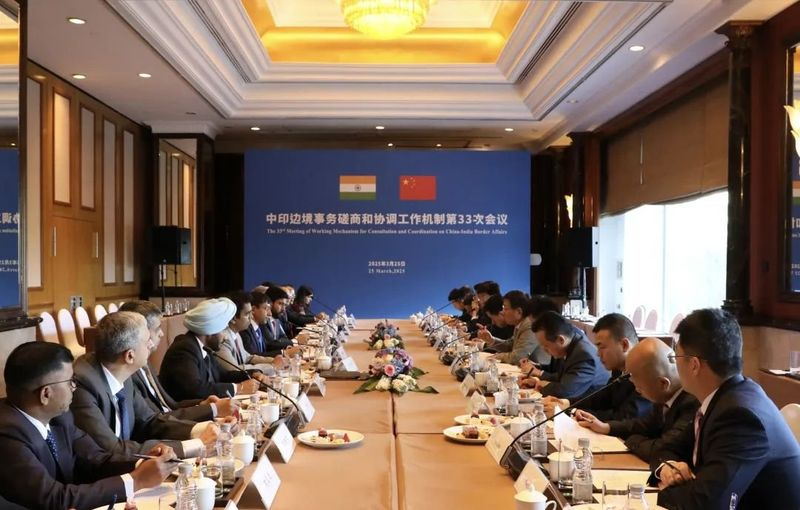
India, China make progress on resuming dialogue mechanism, Kailash Mansarovar Yatra
The meeting marked a significant step towards improving bilateral relations, with both sides agreeing to utilise dialogue mechanisms to address priority areas of interest and concern
India and China held a consultative meeting in Beijing today, discussing ways to resume their stalled dialogue mechanism and address each other’s concerns. The meeting marked a significant step towards improving bilateral relations, with both sides agreeing to utilise dialogue mechanisms to address priority areas of interest and concern.
Gourangalal Das, Joint Secretary (East Asia) led the Indian delegation while Liu Jinsong, Director General of the Department of Asian Affairs of the Chinese Ministry of Foreign Affairs led his country at the talks.
According to the Ministry of External Affairs (MEA), the two sides reviewed the action taken to implement strategic direction and specific steps agreed upon in previous meetings. They also discussed resuming people-to-people exchanges, including direct flights, media interactions, and think-tank engagements.
The MEA noted that the two sides agreed to continue efforts to facilitate and promote people-to-people exchanges, including arrangements for resuming direct flights and celebrating the 75th anniversary of diplomatic relations.
Progress was also made on modalities to resume Kailash Mansarovar Yatra this year, which was suspended in 2020. The MEA stated that the two sides recognise the significance of 2025, being the 75th anniversary of diplomatic relations, and plan to utilise it to redouble public diplomacy efforts and restore mutual trust and confidence.
They took positive note of the developments in bilateral relations since Prime Minister Narendra Modi and Chinese President Xi Jinping met on sidelines of the BRICS at Kazan, Russia, in October last year.
In the intervening period, the foreign ministers of the two countries have met twice, while the Special Representatives on the India-China boundary question have held their 23rd meeting.
State Stalwarts
DEFENCE MINISTER
Minister Rajnath Singh
ALL HUMANS ARE ONE CREATED BY GOD
HINDUS,MUSLIMS,SIKHS.ISAI SAB HAI BHAI BHAI
CHIEF PATRON ALL INDIA SANJHA MORCHA
LT GEN JASBIR SINGH DHALIWAL, DOGRA
SENIOR PATRON ALL INDIA SANJHA MORCHA
MAJOR GEN HARVIJAY SINGH, SENA MEDAL ,corps of signals
.
.
PATRON ALL INDIA SANJHA MORCHA
MAJ GEN RAMINDER GURAYA ,MADRAS REGIMENT
sanjhamorcha303@gmail.com
PRESIDENT SOUTH ALL INDIA SANJHA MORCHA
COL SS RAJAN BOMBAY SAPPERS,
PRESIDENT UTTARAKHAND ALL INDIA SANJHA MORCHA
COL B M THAPA ,BENGAL SAPPERSS
PRESIDENT HARAYANA STATE CUM COORDINATOR ESM
BRIG DALJIT THUKRAL ,BENGAL SAPPERS
PRESIDENT TRICITY
COL B S BRAR (BHUPI BRAR)
PRESIDENT CHANDIGARH ZONE
COL SHANJIT SINGH BHULLAR
.
.
PRESIDENT PANCHKULA ZONE AND ZIRAKPUR
COL SWARAN SINGH
INDIAN DEFENCE FORCES
DEFENCE FORCES INTEGRATED LOGO
INDIAN AIR FORCE
Air Officer C-in-C WESTERN AIR COMMAND
AIR MSHL S PRABHAKARAN AVSM VM
AOC-IN-C, EASTERN AIR COMMAND
Air Marshal Inderpal Singh Walia
AOC-in-C SOUTH WESTERN AIR COMMAND
Air Marshal Vikram Singh
AOC-IN-C, SOUTHERN AIR COMMAND
Air Marshal J.Chalapati
AOC-IN-C TRAINING COMMAND
AIR MARSHAL SK GHOTIA VSM
AOC-IN-C MAINTENANCE COMMAND
Air Marshal Jagdish Chandra
Flag Officer Commanding in Chief, Western Naval Command
ice Admiral R Hari Kumar, PVSM, AVSM, VSM
Flag Officer Commanding in Chief, Eastern Naval Command
Vice Admiral Sanjay Bhalla, AVSM, NM
Flag Officer Commanding in Chief, Southern Naval Command