Sanjha Morcha

What’s New

Click the heading to open detailed news

Current Events :

web counter

Print Media Reproduced Defence Related News

Pak-based JeM directs its cadres to strengthen ‘jihad’ in Kashmir

Pak-based JeM directs its cadres to strengthen ‘jihad’ in Kashmir

Such statements by JeM from Pakistan have exposed Islamabad’s malicious designs in Jammu and Kashmir. Reuters file

Karachi, May 5

Pakistan-based terror outfit Jaish-e-Mohammed has directed its cadres to step up and intensify its ‘Jihad’ in Jammu and Kashmir.Addressing a gathering at its Markaz known as Beteha Masjid in Karachi, JeM commander Mufti Abdul Rauf Asghar claimed responsibility for the April 26 grenade attack in the Tral township of Pulwama district in Jammu and Kashmir.Rauf said in his speech, “During the ongoing ‘Daura Tafseer’, news of JeM cadres fighting at battlefronts (in J&K) was pouring in. On April 25 JeM cadres were engaged in fighting against the enemy and were killed the day after (April 26). Their funeral processions were being carried out and, meanwhile, another team of JeM launched attack to take revenge of killings of cadres on the previous day.”Such statements by JeM from Pakistan have exposed Islamabad’s malicious designs in Jammu and Kashmir.Rauf motivated cadres and told them not to forget the real motive for and behind ‘Jihad’. He said, “At the battlefront, there is no dearth of ‘Mujahideen’, who have been waiting in queues to enter into J&K to kill the enemy.The Jaish-e-Mohammed has been banned in Pakistan since 2002, but it continues to train terrorists in Pakistan-occupied Kashmir and provides them weapons to create troubles in Jammu and Kashmir.Having maintained close relations with the Taliban and al Qaeda, it has carried out several attacks primarily in Jammu and Kashmir.Rauf has asked its cadres to be mentally and physically ready to join cadres at battlefield. “The war of ‘jihad’ is entering into an extremely dangerous phase, where enemies would be trying to eliminate Mujahideen from well inside their own locations. Time is likely to come when Mujahideen and others will have to take shelter in forests and plan strategy of survival.”From January to April this year, 55 terrorists have been killed by the security forces in the Kashmir Valley. A majority of these terrorists were from Pakistan who crossed the border to create disturbances in Jammu and Kashmir.On several occasions, India has accused Pakistan of sheltering terrorists and providing them open space to wage ‘jihad’ in the Kashmir Valley. ANI


India and 2 opposing narratives in Pak by TCA Raghavan

The issue of Pakistan’s civil-military strife, particularly with regard to Nawaz Sharif’s fate in the forthcoming elections, will continue to bedevil its relations with India.

India and 2 opposing narratives in Pak

Nawaz Sharif. AP/PTI

TCA Raghavan

Former High Commissioner of India to PakistanDisaggregating longer term trends from immediate developments is never easy in Pakistan as the drama of the moment often overrides everything else. Nevertheless, two contradictory processes are most evident amidst numerous others jostling to direct events: 1 Civil-military balance: The first is a steady accretion of influence around the army chief representing the continued tilting of the civil-military balance in the direction of the latter. This is a process that began in late 2014 and has gathered momentum since. On the way, it has crippled the PML(N) by deposing its charismatic head as Prime Minister. It is easy to overlook the substantive steps the Pakistan military had to take to achieve this outcome. The actions following the Peshawar school attack against Taliban-type fronts in the tribal areas was a source of public gratification and for most Pakistanis, the army had again proved that it was the country’s final and also ultimate saviour. As public adulation for the army mounted, the civilian government and the PML(N), in particular, found itself between a rock and a hard place. By mid-2017 and with Nawaz Sharif’s deposition as Prime Minister, the process had crystallised. The long cycle that began a decade earlier with Musharraf’s exit, the growing unpopularity of the army as terrorist attacks spread across Pakistan, the OBL raid etc had ended and the circle was complete.2 Nawaz Sharif’s postures: The second process is equally striking and is personalised and animated by the defiance of the PML(N) and in particular of Nawaz Sharif. His postures against hidden forces at work have evoked a public response that is surprising in itself. His accusations of a “judicial martial law’ have in turn spawned a new field of analysis for Pakistan that is being termed the ‘judicialisation of politics’. His claims that he is a victim of a judiciary military concert have a wide credibility. His party seems to be holding behind him and in the forthcoming General Election, it will be in the curious — but politically strong — position of both being the incumbent government as also the party against the establishment. These two then are rival popularities and narratives bouncing off each other — almost as if Pakistan wishes to embrace two contradictory ideas simultaneously and is unable or unwilling to choose one or the other. Is this muddle also part of Pakistan’s 20-year coup cycle — 1958, 1977, 1999….? It is tempting to think so, for who can deny such a possibility given Pakistan’s history.  Yet it is also a fact that in the past two decades, the Pakistan society has changed a great deal and the leap from precedent to the future is now more difficult and tenuous. Many of its institutions — the judiciary, media, military have matured and changed — and conflicting, working and allying with each other as they interface with parties seems to be the direction of change rather than an old-fashioned coup as was the pattern in the 1990s. This may be a reflection of the deepening of roots of democratisation, howsoever inconsistent and non-linier the process may be in the future.But for all this, large question marks about the immediate future remain. Will the General Election return results with a strong PML (N) showing as the present response Nawaz Sharif is getting suggests? Or will the PML (N) be cut to size and a combination of the other national parties rise to the top? A shaky coalition is what the military will be most comfortable with and which would be infinitely superior to a PML(N) thirsty for revenge and keen to rehabilitate Nawaz Sharif. There is going to be no clear answer to these questions for the future is untested terrain in Pakistan, as indeed elsewhere.

Indo-Pak ties

Where does this leave India-Pakistan relations, stuck as they are in the long impasse that developed in the first half of 2016? This was the result of the Pathankot air base terrorist attack, the Kulbhushan Jadhav case and the events that followed the detection and elimination of the Jihadi poster boy Burhan Wani in Kashmir Valley. But important as each of these were individually and collectively, it is perhaps also valid to speculate that the impasse continued longer than could have been anticipated on account of Nawaz Sharif being deposed in July, 2017.The impact of that on India-Pakistan relations should not be underestimated for his is the most powerful voice to have emerged in Pakistan in favour of reset of a fundamentally flawed and troubled relationship. How his party fares in the next election, what will be the architecture of the government and what happens in Pakistan in the interregnum are questions whose answers will impact on the country’s relations with India.In May, 2014, when PM Nawaz Sharif attended the swearing-in of the new government in India, it did appear that the strength of the ruling parties in both countries had enabled the emergence of a viable negotiating space. What could not have been anticipated was that as during earlier governments, foreign policy had no real answer to dealing with internal civil-military turbulence in Pakistan. This issue will continue to bedevil India-Pakistan relations and the frustrations of policymaking with Pakistan will remain our inability to influence the one single factor that has such a major bearing on bilateral ties. Nevertheless, keeping engagement on hold, much like all other policies, has a shelf life. As Pakistan heads to elections, it is also time to keep an eye on other clocks and choose from a menu of options, none of which may be to our liking.


Army school opens organic garden

Army school opens organic garden

Jammu, April 30

A number of activities were organised by Army Public School, Jammu Cantt, to commemorate the Army Welfare Education Society’s foundation day on the school premises on Monday.To mark the day, a special morning assembly was conducted by Manekshaw House. The programme began with the welcome of chief guest Rita Singh, president, Army Wives Welfare Association, 25 Infantry Division, along with other dignitaries.The main event of the day was the inauguration of an organic garden. — TNS


Parliamentary panel to visit border areas in Sikkim, Arunachal

Parliamentary panel to visit border areas in Sikkim, Arunachal

The Parliamentary Standing Committee on External Affairs is headed by Congress MP Shashi Tharoor and includes Rahul Gandhi. Tribune file

New Delhi, April 30The Parliamentary Standing Committee on External Affairs, headed by Congress MP Shashi Tharoor and including Rahul Gandhi, would visit border areas in Sikkim and Arunachal Pradesh next month to take stock of the situation following the Doklam crisis with China, sources said.The panel has been looking into various aspects of the India-China military standoff at Doklam and has been briefed several times on the issue by the former and current Foreign Secretary Vijay Gokhale.“The panel will visit the border areas in Sikkim and Arunachal to see the ground realities and take stock of the situation on border in these two states,” a source said.The idea is to get a firsthand experience of the situation on the India-China border in the two states and to see, or if possible, visit areas where incursions had happened, another source said.The panel, which might also use a chopper to get an aerial view, could also interact with top security and defence officials deployed there, sources said.Troops of India and China were locked in a 73-day standoff in Doklam in the Sikkim sector from June 16 last year after the Indian side stopped the building of a road in the disputed tri-junction by the Chinese Army.Bhutan and China have a dispute over Doklam.Earlier, foreign ministry officials had informed the 31-member parliamentary panel that Bhutan was firmly with India on the issue.During the discussions, Congress president Gandhi questioned foreign ministry officials on China’s objective and why Beijing chose Doklam to create a confrontation, sources had said.Gandhi had also asked about reports of a major Chinese buildup near Doklam, to which officials replied that nothing had been done in the Indian territory. PTI


Don’t be warrior nation or China pawn: Ex-envoy Husain Haqqani to Pak

Don’t be warrior nation or China pawn: Ex-envoy Husain Haqqani to Pak

File photo of Pakistan”s former envoy to the US, Husain Haqqani.

New Delhi, April 15

Pakistan should become a “trading nation” rather than a “warrior nation” while ensuring it does not turn into China’s pawn, Islamabad’s former envoy to the US, Husain Haqqani, has said.

In an interview to PTI, Haqqani said Pakistan also needs to take a call on what is more important – supporting terror suspect Hafiz Saeed or gaining international credibility and respect.

Amid the consolidation of the already-robust Sino-Pak ties, Haqqani, who served as ambassador to the US from 2008 to 2011, stressed Pakistan should not go from being dependent on the US to relying on China and must refrain from becoming a “Chinese pawn”.

“Pakistan needs to build a self-sustaining economy,” he said, warning Islamabad of the pitfalls of aligning with a major power.

Haqqani, who was in India last week for the launch of his new book ‘Reimagining Pakistan: Transforming a Dysfunctional Nuclear State’, said the country needs to “re-think its overall direction”, including in the economic sector.

Pakistan should become a “trading nation rather than a warrior nation” and start thinking about geo-economics rather than geo strategy, said the 61-year-old former diplomat and author of ‘Pakistan Between Mosque and Military’ and ‘India v Pakistan: Why Can’t We Just Be Friends?’, among other books.

“Trying to take advantage of its strategic location by allowing itself to be used by one major power or another has brought Pakistan to the present situation and if we continue to play the same game, the result is not going to be very different in the future,” he said.

While Islamabad should seek good relations with Beijing, “there is no reason why Pakistan should become a Chinese pawn in the mistaken belief” that this would somehow make it a power in its own right, he said when asked if Pakistan’s dependence on China could prove counterproductive.

His remarks assume significance as in January, the US had suspended more than USD 1.15 billion security assistance to Pakistan, accusing it of harbouring terror groups such as the Afghan Taliban and Afghan guerrilla group Haqqani Network.

After US President Donald Trump had lashed out at Pakistan earlier this year for providing “safe havens” to terrorists, China had defended Islamabad, saying the world community should acknowledge its all-weather ally’s “outstanding contribution” to counter terrorism.

Asked if America’s tougher stance against terror would push Islamabad into a robust military alliance with Beijing, Haqqani said the more America and India came close, the more Pakistan would try to strengthen its ties with China.

“But, for Pakistan’s own sake, it would be useful to have relationships with multiple partners. Dependence on the US did not prove useful for Pakistan in the 50s and 60s; dependence on China will not necessarily be the key to Pakistan’s progress in the 21st century,” said Haqqani, who lives in the US, where he is Senior Fellow and Director for South and Central Asia at the Washington-based Hudson Institute.

Haqqani was removed as Pakistan’s envoy to the US for his alleged role in what is known as the ‘Memogate’ controversy, which revolved around a memorandum seeking help from the Obama administration after the killing of Osama bin Laden to avert a military takeover of the civilian government in his country.

Asked if the suspension of American aid had brought about a change in Pakistan’s attitude, Haqqani said the establishment had not changed its world view and was still hoping that logistical and other considerations would make the Trump administration soften its stance.

On the possibility of power blocs being formed in the region, he said a “new Cold War” in which Pakistan aligns with China and India with the United States was not going to be positive for South Asia.

“I think that aligning with one major power against another is not the recipe for economic growth and success for a country like Pakistan,” said Haqqani, who also served as the Pakistani envoy to Sri Lanka from 1992 to 1993.

The former diplomat, who is often critical of the Pakistani military, rued that the power structure in the country had not changed fundamentally and national security and foreign policy remained in the hands of the Army.

Pakistan has made distinctions between terror groups that have acted against it and those that have acted outside the country, and that distinction had not worked to its advantage, he said.

Islamabad’s insistence on “mainstreaming terrorists” rather than marginalising them was going to be counter-productive for the country, he held.

Haqqani also said the Kashmir issue could be put on the back burner to build normal Indo-Pak relations.

“It is also a reality that the problem of Kashmir has not been solved in 70 years. And if Pakistan insists on solving the Kashmir problem before moving forward on normal relations with India, then it may have to wait for another 70 years,” he said. PTI


Will not take long to decide on fighter jets: Modi

Will not take long to decide on fighter jets: Modi

Ajay Banerjee

Tribune News Service

Chennai, April 12

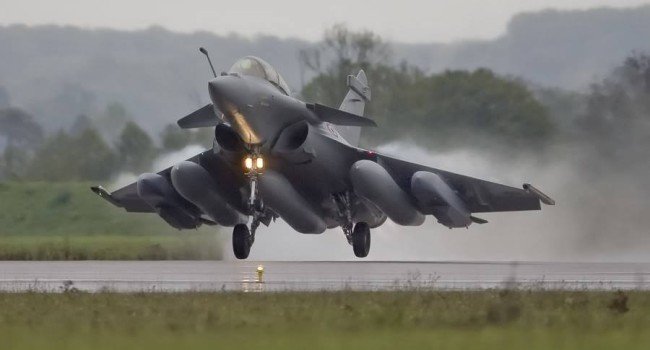
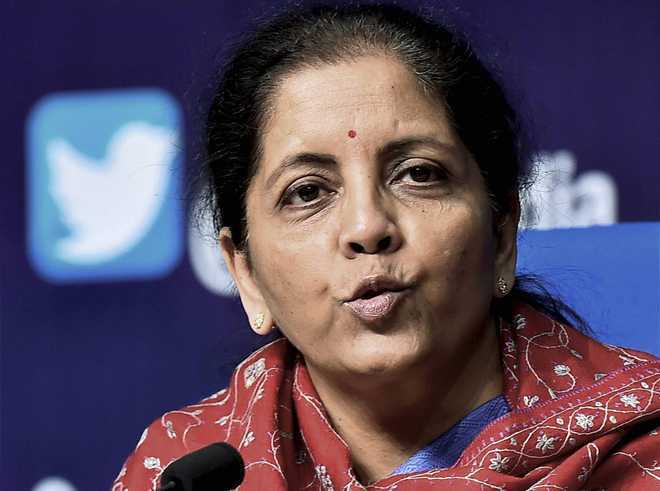
Within a week of the new tender from India to get 110 fighter jets for the Indian Air Force, Prime Minister Narendra Modi on Thursday assured foreign companies that they would “not spend a decade on it”.The obvious reference has come as the foreign industry is skeptical that the tender is a re-run of the scrapped tender to buy 126 fighter jets. It was started in 2004 and scrapped in 2015 after years of trials, discussions and cost negotiations.Speaking at the ‘def-expo-2018’, the Prime Minister mentioned the long-drawn process of fighter jets and took a dig at the previous UPA government saying “issues which should have been long addressed are being resolved now”.“We have not only taken bold action to meet immediate requirement (purchased 36 Rafale jets) we have started a new process for 110 jets, he said, adding, “We will not spend 10 years without any tangible outcome.”Taking another dig at the UPA, he said the ‘policy paralysis’ that had set in the defence sector is a thing of the past. “It shall not happen again.” He cited how the issue of bulletproof jackets to soldiers was kept hanging for years.Addressing concerns of the industry, he said, “Our goal is not merely to tinker but to transform. We want to move fast, but with no shortcuts. I am aware we need to do a lot more; we are committed to doing so. Our dream is to develop an eco system.”The PM said the government would undertake extensive consultation with all stakeholders with Indian and foreign companies for the defence production policy (a draft has been released and 100 suggestions have come) and also the defence procurement policy. “Our aim is not just to discuss but to draw right lessons. Our intention is to listen and not merely lecture,” Modi added.It is strategically imperative “to make in India, Make for India and supply from India”.He suggested the setting up of a defence industrial complex which would have room for public sector undertakings, Indian and foreign firms. “I understand it’s not that simple. Many pieces of this puzzle need to fit together”.Defence Minister Nirmala Sitharaman said the ‘def-expo’ showcased the best of equipment and military ammunition by leading producers.She said, “Not only are we going to buy from various manufacturers. Fifty per cent of this expo today has Indian manufacturers.” On the defence production corridor, Sitharaman said, “We hope to go with great speed to have these activated and performing so that India realised the dream of being a manufacturing hub.”“We have allowed great flexibility for foreign companies and more policies are being relaxed,” she said.The programme was telecast live to 35 Indian embassies in Nepal, Bhutan, Nigeria and Afghanistan, among others.Modi launched the innovation of defence excellence (IDEX), a new scheme that looks to work with start-ups doing technology.

Army Major writes to DC, police Jawan alleges men in khaki took away his bike from house

Ludhiana, April 3

An Army jawan has alleged that his motorcycle was forcibly taken away by men in police uniform from his house at Kehar Singh Nagar on the Jassian road. Lance Nayak Sunny Pathania, posted with 30th Battalion of Punjab Regiment in Binnaguri, West Bengal, is running from pillar to post to find out which police station had impounded his bike.Pathania said his brother Manish Pathania was named in a robbery case and recently, a fresh case of decoity was also registered against him at the Salem Tabri police station. Alleging that the police had taken his bike, Splendor Pro (PB10DD 5053), from his house without telling anything to his elderly mother.“On March 22, several personnel, reportedly of the Ludhiana police, came to his house and forcibly took his locked motorcycle. When my mother and local residents asked about the reason for it, the policemen said nothing. If my brother is facing any FIR, why the motorcycle registered in my name was taken away by thet police. Now, my elderly mother is running from one police station to another to find the bike. Police stations are denying being in possession of my bike,” Sunny told The Tribune.The Army jawan said he and his mother were not in touch with his brother wanted by the police, still the police were harassing his mother, who had serious health issues.“A few days ago, my mother was informed by some city policemen that the bike was impounded by the Kotwali police. When she reached there, the policemen asked her to go to PS 4. When my mother went to PS 4, the personnel there, too, denied impounding any such bike,”The jawan later approached his Major, Coy Commander JK Aggarwal, 30th   Battalion, Punjab Regiment, Binnaguri, West Bengal, who sent a letter to the Deputy Commissioner, Ludhiana; the Zila Sainik Welfare Office, the SDM and the Police Department.   The Major writes: “I have received an application from Lance Nayak Sunny Pathania serving with the Punjab Regiment. It is requested the matter may please be investigated thoroughly to be resolved at the earliest since the individual is currently under stress and is unable to perform his duties with peace of mind. Action taken report on the subject may please be intimated to this unit”.  Meanwhile, PS 4 SHO Rajwant Singh said no one from his police station took away any bike from the Army jawan’s house. Kotwali SHO Birbal said no such bike was impounded by the police in the recent past.


IAF copter crashes near Kedarnath, all safe

IAF copter crashes near Kedarnath, all safe

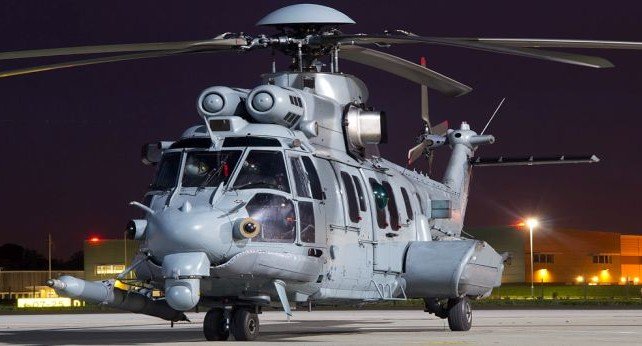
An IAF MI-17 V5 helicopter crashed near Kedarnath shrine in Uttarakhand on Tuesday morning. All those on board the helicopter, including the pilot and the co-pilot, were safe. The helicopter was carrying heavy construction equipment from Guptkashi to Kedarnath when the accident occurred.“The incident occurred around 8.10 am. The helicopter crashed 60 metres from the helipad. Only the IAF can ascertain the exact cause,” said the Rudraprayag DM. The state government had requisitioned MI-17 V5 as the Irrigation Department needed heavy machinery for reconstruction work. PTI


Soldiers with disabilities honoured

Tribune News Service

Solan,March 30

Veer naris and widows of ex-servicemen from across the state on Friday participated in a mega ex-servicemen rally organised by the Pine Division under the aegis of Vajra Corps at the local military station here.The General Officer Commanding (GOC), Pine Division, was also present.Addressing a gathering, officials assured them of making all efforts to resolve their grievances. The rally aimed at resolving service and civil administration-related grievances of these people through several counters.A medical camp was also organised by the Army as part of “The Year of War Disabled”. Soldiers with disabilities were also honoured.Three modified auto scooters, two wheelchairs and various grants were distributed. As many as 34 Veer naris and 94 widows were felicitated.