Sanjha Morcha

What’s New

Click the heading to open detailed news

Current Events :

web counter

Print Media Reproduced Defence Related News

15 cadets from Mohali institute don olive green

MOHALI: Of the 33 cadets from Punjab who passed out of the Indian Military Academy (IMA), Dehradun, on Saturday, as many as 15 cadets, were trained in the Mohali-based Maharaja Ranjit Singh Armed Forces Preparatory Institute (AFPI).

HT PHOTO■ Cadets trained at the Mohali-based Maharaja Ranjit Singh Armed Forces Preparatory Institute after the passing out parade at the IMA, Dehradun, on Saturday.

THESE CADETS HAD UNDERGONE TWO-YEAR TRAINING AT THE AFPI, FOLLOWED BY THREE YEARS AT THE NDA AND A YEAR AT THE IMA

This is one of the highest number of cadets from any feeder institute in the country getting commissioned in the Indian Army at the same time.

These cadets had undergone two-year training at AFPI from 2013 to 2015, followed by three years at the National Defence Academy and finally a year at the IMA.

Of the 15 young officers, two have joined the Armoured Corps, one mechanised infantry, four infantry, four artillery, two signals and two to army ordnance corps.

The senior-most among the AFPI cadets was Battalion Under Officer Harshdeep Singh Sohi who has been commissioned into the mechanised infantry.

AFPI director Major General BS Grewal said, “Punjab was once known as the Sword Arm of India but over the years, its contribution to the armed forces decreased. But now, we are sending about 25-30 boys to NDA from AFPI which shows that the contribution has increased substantially.”

With this, the total number of commissioned officers from the first three AFPI courses has reached 50. Another five cadets undergoing training at Air Force Academy are expected to be commissioned in the Indian Air Force on June 15.

So far, six AFPI courses have already contributed 119 cadets to various service academies. On three occasions in the past, cadets of this institute have stood first in the All India Merit List for NDA / OTA.

Maharaja Ranjit Singh Armed Forces Preparatory Institute was set up by the government of Punjab in 2011 for training boys for joining the armed forces as commissioned officers through the NDA / other service academies. Prior to 2011, the entire state of Punjab was sending six to eight boys to NDA for each course. This figure has now changed for the better with AFPI alone sending 25 to 30 boys to NDA / other service academies per year.


IAF Chief BS Dhanoa New Chairman of Chiefs of Staff Committee

The Chairman of Chiefs of Staff Committee is tasked with ensuring synergy among the three services and evolve common strategy to deal with external security challenges facing the country


New Delhi: Air Chief Marshal B S Dhanoa on Wednesday received the baton of Chairman of Chiefs of Staff Committee from outgoing Navy Chief Admiral Sunil Lanba who retires on Friday.

The Chiefs of Staff Committee comprises chiefs of the Army, the Navy and the Air Force and the senior most member is appointed its chairperson.

“Air Chief Marshal Birender Singh Dhanoa will be the Chairman COSC with effect from May 31 consequent to relinquishment of charge by Admiral Sunil Lanba upon superannuation,” a defence ministry spokesperson said.

The Chairman of Chiefs of Staff Committee is tasked with ensuring synergy among the three services and evolve common strategy to deal with external security challenges facing the country. Air Chief Marshal Dhanoa is a Kargil war veteran and top rated fighter pilot with over 3,000 hours of flying experience.

An alumnus of Rashtriya Indian Military College and the National Defence Academy, he was commissioned in the flying branch of Indian Air Force in June 1978.

The Air Chief Marshal has primarily flown the MiG-21 aircraft with flying experience across the entire spectrum of fighter aircraft of the IAF.

During the Kargil war in 1999, he was the Commanding Officer of a frontline ground attack fighter squadron.

He has led many coveted operational and staff assignments that include command of a frontline fighter base and director of the fighter operations and war planning at Western Air Command.

He was the Air Officer Commanding-in-Chief of South Western Air Command and has also been the Vice Chief of the Air Staff.


Probe bias against Sikhs in Army jobs: Akal Takht

Amritsar, May 5

The Akal Takht has taken note of the alleged discrimination meted out to Sikh youth hailing from hilly areas at the time of recruitment in the Army. It has sought intervention of the SGPC into the matter.

Akal Takht’s acting Jathedar Giani Harpreet Singh said turbaned Sikhs living in the foothills of Hoshiarpur, Mukerian, Tanda and Ropar had been subjected to discrimination in terms of relaxation in height criteria during recruitment in the defence services.

“We have received complaints that Sikhs who support turbans have not been given a special certificate of height relaxation by the authorities. Also, the certificate used to be issued under the name of ‘Dogra certificate’, which has now been changed to ‘Hindu Dogra certificate’. This is also objectionable. This discrimination needs urgent attention and the SGPC has been directed to carry out a probe and take action,” he said.

Meanwhile, Haryana Jannayak Janata Party’s state president and former MLA Nishan Singh appeared before the Akal Takht to seek an apology. He had equated the Dera Sirsa cult with Guru Gobind Singh in a video clip that went viral recently. Since he has submitted a written apology, he has been directed to hold ‘Akhand Path’ for atonement. —TNS


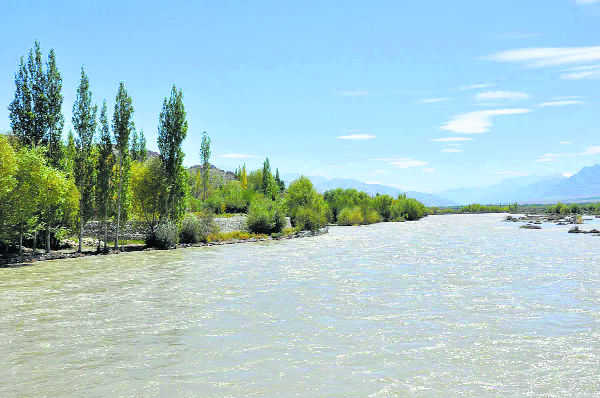
Pakistan’s lapses taking their toll on Indus waters by Lt Gen PK Grover (retd)

Although the lesser beneficiary, India has never deprived Pakistan of its share of water under the Indus Waters Treaty, even when there is ample evidence to suggest that the neighbour continues to waste the precious resource. The persistent use of antiquated agricultural techniques in Pakistan has led to excessive loss of water

Pakistan’s lapses taking their toll on Indus waters

Largesse: For the past almost six decades, Pakistan has been the beneficiary of 80 per cent of the water available in the Indus basin.

Lt Gen PK Grover (retd)
Former State Information Commissioner, Punjab

WATER is perhaps the most coveted resource in the world today. With a burgeoning world population and consistently increasing demand, it is also becoming a highly scarce resource, especially in the developing countries. Its misuse, overuse or wastage is a matter of global concern.

After Independence, the Indus Waters Treaty was negotiated at Pakistan’s insistence to allay the fear of water insecurity in the lower riparian state. The treaty was signed with the World Bank as facilitator on September 19, 1960.

The spirit of the treaty, as stated in the preamble, included three essential parameters — optimum utilisation of all available water in the Indus basin; to maintain goodwill and friendship; and to cooperate in future for further exploitation — which were also to be taken into consideration while approving loans to Pakistan for replacement and developmental works.

For the past over 58 years, Pakistan has been the beneficiary of 80 per cent of the water available in the Indus basin. Pakistan had also received financial assistance in creating/developing the best canal and irrigation system in the world. This amount included £62 million paid by India.

Water is becoming an existential issue for Pakistan. As per a recent report, the United Nations has estimated that Pakistan’s water supply has dropped from about 5,000 cubic metres per person in the 1950s to about 1,000 cubic metres. It is expected to fall below 700 cubic metres (international marker for water scarcity) by 2025. Pakistan is the third most water-stressed country in the world.

Pakistan has been attributing its water scarcity to Indian action of constructing hydroelectric power projects on the western rivers, a situation that would jeopardise economic growth and prove to be a health hazard for Pakistan. Broadly, the problems may be attributed to Pakistan having drawn limited benefit of India’s benevolence, despite the fact that it has been receiving more than its authorised share. As per the treaty, Pakistan was to receive 136 MAF (million acre feet) of water annually, but as per a recent report it is getting about 154 MAF.

The treaty was signed with undivided Pakistan to provide requisite food security. Thus, the interests of erstwhile East Pakistan were also part of this agreement. Even though India has a separate treaty with Bangladesh, Pakistan continues to get more than its authorised share of water under fundamentally changed circumstances and with no justification for declining per capita water availability.

It can be inferred that optimal utilisation of water has been overlooked. This is most evident in the case of inefficient use of water for irrigation by Pakistan as almost 80 per cent of the water is used for low-value agricultural production. Moreover, for an irrigated agricultural area of 36 million acres, out of an average 104 MAF of river flows diverted for canal irrigation, a considerable amount of water is lost in conveyance and in its field applications. Water loss in field applications is due to lack of coordination between agriculture and irrigation departments. Incidentally, Pakistan is also permitting about 39.4 MAF of fresh water, worth approximately $25 billion, to flow into the Arabian Sea annually as it does not have enough reservoirs or dams to store water. Views regarding mismanagement of water have been expressed on the floor of Pakistan’s Senate on a number of occasions.

The treaty had been worked out on the assumption of 75 per cent cropping intensity. However, Pakistan has crossed 160 per cent in 2018, resulting in utilising about 95 per cent of the available water for agriculture alone. Further, the continued use of traditional and antiquated agricultural techniques has also led to the non-judicious use and excessive loss of water. As a result, the yield per hectare of cereal crops continues to be consistently low even when the most fertile lands are available in the interfluves (doabs) of the rivers.

Another vital use of the waters is for hydroelectric power generation, but here too Pakistan has lagged in optimal and judicious utilisation. Globally, most countries generate 80 per cent of their power requirements from their installed infrastructure, but Pakistan’s generation capacity only meets 65 per cent of the needs due to old plants, poor maintenance and circular debt. As per the World Energy Council Report 2016, Pakistan has an installed capacity of 6,481 MW of hydropower from all plants on the Indus, Jhelum, Chenab and Kabul rivers. The overall power deficiency of about 3,000 MW is made up by importing power from Iran, Tajikistan and Kyrgyzstan.

There is great reduction (about 33 per cent) in the storage capacity at the facilities developed at Tarbela, Mangala and Chasma for 17.79 MAF. This is primarily on account of excessive sedimentation. Pakistan has water storage capacity just for 30 days (indicating a paltry 150 cubic metres per person) against the minimum requirement of 120 days, while most of the developed countries have one-two years’ water storage capability.

It is apparent that this situation is now being exploited by Pakistan by approaching various world forums. India has all along adhered to the provisions of the treaty in letter and spirit. Although the lesser beneficiary, India has never deprived Pakistan of its share of water under the treaty, even when there is ample evidence to suggest that Pakistan continues to waste it, which can be stopped by being sensitive to the need of achieving optimum level of utilising this fast-depleting resource through improved infrastructure, better management and awareness. The question remains: should Pakistan be allowed to continue wasting the Indus waters and converting a renewable resource into a non-renewable one?


Army convoys ply, with civilian vehicles J&K residents question 2-day restriction

Army convoys ply, with civilian vehicles

Trucks stranded on the Jammu-Srinagar highway. File photo

Ishfaq Tantry & Majid Jahangir
Tribune News Service
Srinagar, April 8

A day after civilian movement on the 270-km Baramulla-Srinagar-Udhampur National Highway was barred to secure the safe passage of security forces’ convoys, the Army and other forces’ convoys continued to ply on the highway in Kashmir today, prompting the people to question the logic behind the bi-weekly ban.

Former Chief Minister Omar Abdullah posted a video of convoys plying on Monday despite two days being reserved specifically for their passage on the highway, which serves as a lifeline.

“If it is safe for SF convoys to move on Monday without closing the highway to civilian traffic, why is it not safe on Wednesdays and Sundays?

Nothing proves the mindlessness of the order more than the Army movement on ‘unsafe’ days. This road is part of the highway by the way,” he said in one of the tweets.

Throughout Monday, the Army convoys were seen plying along the Baramulla-Qazigund stretch, raising questions as the government had on April 3  notified Sunday and Wednesday for forces’ movement every week, restricting civilian traffic movement on the highway on these two designated days.  

An Army official who wished not to be named said that the ban was imposed not based on the inputs of Army, as Army requires to ply convoys on all days.

Besides, sources in police also alluded to this fact that plying convoys on exclusive days without civilian traffic on highway would make them (convoys) more prone to attacks by militants.

In fact, during the 2016 unrest following Burhan Wani’s killing,  the Army used to ply convoys during night hours, but the militants had attacked one such convoy in Baramulla, in which two personnel and a police driver was killed. Later, the Army decided to ply convoys during day time.

Apart from the Army, CRPF and BSF convoys also plied along the highway today. “The Army will ply their vehicles all the days except Friday,” a defence official said.


Mind games on LoC by Brig Vivek Lall

Mind games on LoC

Illustration: Sandeep Joshi

Brig Vivek Lall

The notion of victory or military success, be it in war or counterterrorist operations, lies in the mind. We know it better now, because of the pervasiveness of social media and the ease in availability of information. For me, this lesson was driven home in the forests of Jammu and Kashmir on the LoC at a time when terrorism was at its peak in the early 1990s.

My battalion had just moved to the LoC in an area known to be a traditional infiltration route. Our warm welcome started with discovery of an improvised explosive device along the fence where we kept our ammunition. If that was not enough, we found solar-activated rockets apparently aimed at where some of the officers stayed. We were fortunate in preventing what could have been a very sticky beginning. In the period that followed, we did everything we could to ‘dominate’ the LoC and the entire area behind it, where there were about 20-odd villages spread over approximately 80-100 sq km. In the rear areas, our innovative patrols would climb mountains from one side and walk through villages on the other to completely surprise even the locals; and we cultivated a network to identify ‘over ground workers’ or terrorists operating in full view. One such person (a shopkeeper) had faced multiple arrests and interrogations by different agencies. In absence of evidence, he was always released.

Knowing that he would never volunteer information, we designed a simple yet innovative plan. I started calling him every morning to our headquarters, where he would be made to sit comfortably in full view of everyone moving around, including the porters. Each day we would ask him about his terrorist links, and each day he would deny it. After a couple of hours, we would send him back to his village, which was a 30-minute walk away. While returning, he would often stop for tea at a shop before starting his journey along a single road connecting to the highway. This road was mostly deserted with a few villages located at intervals. The routine continued without a break for almost a month. One such day, just before leaving him I sent some vehicles ahead. They parked along a lonely patch, pretending that one of the vehicles had broken down. Our suspect, as usual, stopped to have tea before starting his journey, all alone. When he came up to the vehicles, he was very quietly bundled into them and taken to our base, completely under cover and hidden.

By evening, village elders were seeking our support to find him. They appeared to accept that he probably had links with terrorists and run away to avoid being caught. Around midnight, our vehicles came up and in complete darkness brought our suspect to me.

Our psychological domination over this terrorist was complete. Realising his predicament, he gave away every bit of information he had. He then took our patrol to the forest near his village and showed where he had hidden his supply of weapons and ammunition. I ensured that the patrol returned through his village first thing in the morning with him in tow, and the captured weapons in full view of the villagers. For us, the biggest revelation was the first anti-personnel non-detectable mine in the cache he handed over. Had he used the mines; this could have been a different story. It took us 24 hours to pack him off into jail, but interestingly, he was out in just a few months. This time though, his demeanour had changed. There was no defiance left in his eyes, or any fear either — just acceptance.

The lesson for me lay more in how he was captured and what happened thereafter. We did not just dominate this terrorist’s mind space completely, but even of the villagers. One of the elders came up to me and said “sahab, aapka pir to hamare pir se bahut bara hai” (the saint that looks over you is bigger than ours).There were absolutely no incidents of terrorist activity in our rear areas thereafter. I don’t think that it was fear of the Army that did the trick. It was more akin to respect and recognition. And this was not just because of our patrols, but also because of our genuine efforts to support development in the area, including our Santa Claus like Commanding Officer who would go around distributing toffees to children each time he stepped out.

This was just one block in the district of Baramulla where our efforts found resonance. But it holds lessons for the entire state, that to counter terrorism and radicalisation, it is the mind-space that has to be dominated. Respect for state institutions can’t be achieved by force, nor can it be done by seeking popularity and going easy on offenders, and it certainly can’t be done by throwing development money. There are probably no fixed answers, just a muddled way ahead.


Lt Gen Chopra visits NCC Headquarters

Amritsar: Lt Gen Rajeev Chopra, Director General, National Cadet Corps (NCC), visited the District NCC Group Headquarters here on Tuesday. He was received by Maj Gen RS Mann, ADG, NCC Directorate, PHHP, and Chandigarh, along with Brig RK Mour, Commander, NCC group, Amritsar. NCC cadets presented a guard of honour. Brig Mour breifed Lt Gen Chopra on the activities of the NCC units. Lt Gen Chopra said the NCC continued to contribute to society and nation building. TNS


What the IAF-PAF dogfight reveals

The February 27 aerial duel shows India’s military capability doesn’t match its ambition. Blame our tardy defence acquisition process for this

Whether the Rafale deal is a scam or the best thing for India’s defence is for more eminent people to debate. Let me, meanwhile, list four facts emerging from the February 26-27 air skirmishes to bring the story of what should be called the real Rafale scandal.

REUTERS■ An IAF Mirage 2000 during a drill, 2017. It is only because of the force’s good training, situational awareness, and some luck that this audacious PAF mission failed*In the Rajouri-Mendhar sector air skirmish a day after the Indian Air Force’s (IAF) successful Balakot strikes, the Pakistan Air Force (PAF) was able to create surprise and local superiority — technological and numerical — in a chosen battlefield. It struck in daylight when least expected, and perfectly timed to attack the changeover of IAF AWAC patrols. The outnumbered IAF pilots (12 aircraft of three vastly different types), scrambled from various bases, and showed the presence of mind not to walk into the ambush set for them, but they failed to deliver a deterrent punishment on PAF.

*Four Sukhoi-30s, the IAF’s most powerful air-superiority aircraft, were involved in the melee at beyond visual range (BVR). They were surprised by the PAF F-16s firing their American AMRAAM missiles from so far that their own radar/computer/missiles were not able to give them a “firing solution”. Translated: India’s best fighter, which constitutes half of the IAF’s combat force, was outranged and outgunned.

*Fortunately, two of the upgraded Mirage-2000s were on patrol. These have new French missiles (MICA, or Missile d’Interception, de combat d’autodefense), which are the exact peers of the F-16/ AMRAAM. They were able to lock on to some of the PAF planes, which panicked into dropping their South African origin, stand-off weapons in a hurry, mostly missing the targets. Nevertheless, one fell in the middle of the Nowshera brigade headquarters compound. It was a closer call than we think.

*Surprised, and outnumbered, the IAF scrambled six MiG-21 Bisons from Srinagar and Awantipur. Since these climbed in the shadow of the Pir Panjal range, the PAF AWAC failed to detect them. Their sudden appearance at the battlefield upset the PAF plan. This was fortuitous.

It is only because of the IAF’s good training, situational awareness, and some luck that this audacious PAF mission failed. No ground target was hit. Its larger objective of luring vastly outnumbered and outranged IAF jets into a pre-set “killing zone” was the bigger failure.

Which brings us to our central question: Should we have even been having this conversation today if we had the military capability to match our economy (eight times Pakistan’s) and strategic ambition? February 27 reminded us that we don’t.

If we had a functional defence acquisition system, by now we would have built such a gap that Pakistan wouldn’t even dare to retaliate. Check out on a rarely-reported Mirage-2000 laser bomb raid to clear a Pakistani incursion across the Line of Control (LoC) in Machil sector in 2002. Forget retaliation, the Pakistanis pretended nothing had happened. Indian air-to-air missiles then, on both Mirage-2000s and MiG-29s, had better range than the PAF, which ducked the challenge. Computers, radars and missiles decide the outcome in modern, mostly BVR, post-dogfight era air warfare.

How did India lose that edge?

This serial crime dates back to the Vajpayee government. In 2001, IAF projected the need of a new fighter to replace the MiGs. Its choice was more Mirage-2000s. Dassault was willing to shift its production line to India. The IAF knew the plane and loved it. By this time, the IAF would have had 6-8 more squadrons of the upgraded, Made-inIndia Mirages with new missiles. The Rafale would probably not even be needed so desperately. The PAF wouldn’t have dared to carry out the February 27 raid, and if it did, it would have been mauled. But then, George Fernandes, smarting under Coffingate and Tehelka, refused to go with a “single-vendor” deal. The full process for a new acquisition was launched.

We slept for a decade. The Pakistanis got their new F-16s and AMRAAM missiles from the US after 2010. Tactical balance in the air shifted. We, meanwhile, took until 2012 for a new fighter — Rafale — to be chosen. Except that defence minister AK Antony wouldn’t take a decision. Three of his negotiation committee of 14 dissented, so he set a committee above them. And he set up another committee of three outside “monitors” to supervise this committee. Finally, all inputs in, the choice was cleared. Sure enough, Antony ducked again.

He said three things at different times: Within the ministry of defence (MoD), he then said, call fresh bids. To the media, he said he didn’t have headroom in the budget that year. And now, he told the media three weeks ago, that he put off the deal in the “national interest” since two eminent persons, Subramanian Swamy and Yashwant Sinha, had written letters pointing out problems in the deal and he had ordered an inquiry. He has since refused to talk about these letters even when chased by a reporter from ThePrint. The issue is too sensitive, he tells her. Chances are, his party knocked him on the head for nearly killing their Rafale story just to save his own neck. I will be pleasantly surprised if he talks about those letters again.

The earlier 126-aircraft Medium MultiRole Combat Aircraft deal was dead by the time the National Democratic Alliance came in. The first wake-up call came early enough, with the Pathankot raid. As usual, the air forces were first off the blocks, and during aggressive patrolling, the IAF realised the PAF’s range superiority. It’s an unwritten story yet, but some MICA missiles were bought overnight, slung on Mirages which flew deliberately close enough for the PAF to observe them. In the four years since, how many of our 40+ Mirages can even carry that missile? Don’t ask me for the truth because, as Jack Nicholson’s Marine Col Nathan R Jessep said in A Few Good Men, you can’t face the truth. Be grateful that those two on patrol on the morning of February 27 could .

As I promised, I am telling you about the real Rafale scandal without mentioning the Rafale deal. The Vajpayee government wouldn’t buy additional Mirages, scared of touching a single-vendor order. The MICA missile had first been sought by the IAF in 2001, the first only came in 2015 when Pathankot shocked the MoD to pull the file down from orbit. Existing Mirages then had to be upgraded. Two were upgraded by Dassault. HAL said it would do the rest. How many has it done yet? I warned you, you can’t face the truth.

Then it gets even more scandalous. How did Wing Commander Abhinandan Varthaman cross the LoC? He was in visual pursuit of a PAF fighter for sure. But his controller was warning him to return. He didn’t. Because he couldn’t hear. As you’d expect in 2019, the battle zone had full radiojamming. That’s why modern fighters have secure data links. Why didn’t that MiG have it? Ask the gallant bureaucrat of MoD who blocked the purchase for three years claiming that a defence PSU would make it. Don’t ask me his name, find out. You might learn another truth you don’t want to face.

That order has lately been placed. With Israel. Soon enough, all IAF fighters will have this secure data link. And you’d die of shame, when I tell you it is a purchase, worth a mere ~630 crore, less than half the price of one Rafale. We were lucky to lose just one MiG that day.


Vice Admiral Karambir Singh appointed next Navy chief; to take over on May 31

Vice Admiral Karambir Singh appointed next Navy chief; to take over on May 31

Vice Admiral Karambir Singh.

Ajay Banerjee
Tribune News Service
New Delhi, March 23

Vice Admiral Karambir Singh has been appointed the next Navy chief. He will replace Admiral Sunil Lanba who retires on May 31.

The Ministry of Defence announced the appointment on Saturday afternoon. Vice Admiral Karambir Singh, who hails from Jalandhar, supersedes Vice Admiral Bimal Verma, the Commander-in-Chief of the Andaman and Nicobar Command and the senior-most after Admiral Lanba.

Service chiefs are normally appointed two months in advance. Admiral RK Dhowan had been appointed chief after the 2014 general election was announced.  Ironically, he had also superseded Vice Admiral Sekhar Sinha.

The BJP government did not go by seniority when it appointed General Bipin Rawat as the Army chief, overlooking Lt Gen Praveen Bakshi.

Vice Admiral Karambir Singh is currently Commander of the Eastern Naval Command, Vishakapatnam. 

Commissioned into the Navy in 1980, Vice Admiral Karambir is an alumnus of the National Defence Academy. He earned his wings as a helicopter pilot in 1982 and has flown extensively on the Chetak and Kamov helicopters.

He has been the Chief of Staff of the Tri-Services Unified Command at Andaman and Nicobar Islands and as the Flag Officer Commanding, Maharashtra and Gujarat Naval Area.