Sanjha Morcha

What’s New

Click the heading to open detailed news

Current Events :

web counter

Print Media Reproduced Defence Related News

Man with ‘ISI links’ arrested for blackmailing woman colonel

Man with 'ISI links' arrested for blackmailing woman colonel
A woman colonel filed a police complaint in Dwarka, alleging that she had been receiving morphed and obscene pictures through WhatsApp from two unknown numbers.

New Delhi, September 19A man suspected of having links with Pakistani spy agency ISI was arrested here for allegedly threatening to upload morphed pictures of a woman colonel on the internet, the police said.The accused, Mohd Parvez, who is in his early 30s, was arrested on September 13 by the local police but after it was found that he had visited Pakistan a few times, the matter was transferred to the Special Cell for probe, they said.A woman colonel filed a police complaint in Dwarka, alleging that she had been receiving morphed and obscene pictures through WhatsApp from two unknown numbers.

(Follow The Tribune on Facebook; and Twitter @thetribunechd)

She was threatened that if she did not speak to the sender of the messages, the pictures would be circulated on the internet, the police said.After she blocked the two numbers, the woman colonel’s daughter started receiving morphed pictures and messages from the Facebook profile of a woman, they said.The person sending the pictures and messages asked the woman’s daughter to speak to the sender and threatened her with uploading the pictures on social media.The woman colonel approached the police and a case was registered. On the basis of the information gained through the Facebook profile and the records of the two numbers, Parvez was detained.During his interrogation, it emerged that he had visited Pakistan and had made SIM cards available to some Pakistani nationals. It was suspected that he is linked with the Inter-Services Intelligence (ISI), the police said.He was found to have suspicious antecedents and is being questioned by the Special Cell sleuths in connection with the matter, they said.It is suspected that he was threatening the woman colonel since he wanted to extract sensitive information from her, an angle that is currently being probed. PTI


Inflicted more casualties across border, says Jaitley Claims increasing attempts by Pakistan to push in terrorists

Inflicted more casualties across border, says Jaitley

Tribune News Service

New Delhi, August 4

Amid increased attempts by Pakistan to push terrorists across the border, India’s dominance on its western border — Line of Control (LOC) and International Border (IB) — has led to an increase in the number of causalities on the other side, Defence Minister Arun Jaitley informed the Lok Sabha today.Noting that with increased “domination and impact” on the western border, the Army has been able to check infiltration, though “Pakistan has increased efforts of infiltration”, Jaitley said during question hour.The minister said 285 incidents of ceasefire violation had taken place along the LoC so far this year, compared to 228 in 2016 in which eight people had lost their lives. He said there were 221 ceasefire violations along the IB, which is guarded by both the Border Security Force and the Army.The minister said the Army had constructed an anti-infiltration obstacle system (AIOS) in areas under its operational control along the LoC and IB in Jammu and Kashmir. Radars, sensors and thermal imagers along with surveillance have been incorporated on this fence to detect and intercept infiltration by terrorists.The AIOS is further strengthened by deployment of troops and construction of defence works based on threat perception for an effective multi-tier counter-infiltration grid. Jaitley said the government regularly reviewed the threat perception to secure the borders and protect national interests.The minister said the government was taking measures to ensure modernisation of defence forces to keep them in a state of readiness to meet operational and security challenges.Replying to another question, Jaitley said the government had enhanced special allowances given to defence personnel serving in difficult areas such as Siachen, which are even more than what the 7th Pay Commission had recommended.


Spirit of the legendary Marshal lives on

God doesn’t make many like him anymore! Marshal of the Indian Air Force Arjan Singh straddled the aviation scene in the country literally from its inception.

Prime Minister Narendra Modi with Marshal Arjan Singh during the At Home at the President’s house in New Delhi on January 26, 2016.Earning his spurs in the Arakan campaign in the World War II, where he was awarded the Distinguished Flying Cross, he was part of the pioneers who nurtured the fledgling Air Force of India through the turmoil of partition in 1947.

As the IAF grew in stature so did its responsibilities, which unfortunately, were not tested in the 1962 war. But then came the redemption of our armed forces in the 1965 Indo-Pak conflict.

Spearheading the aerial campaign under Arjan Singh’s stewardship, the IAF came out with flying colours. Then Air Chief Marshal Arjan Singh was just 45 years of age but what he did was much more than victories and kills that his aviators scored – the Indian Air Force had been set on a path of professionalism, the results of which we are seeing today with modern aircraft and top notch professionals flying them.

This writer, who was a Class V kid during the 1965 war, remembers how Arjan Singh was a household name during those heady days.

After retiring in 1969, Arjan Singh went on to serve India in more ways than one, from philanthropic acts to political and diplomatic assignments.

Very few people outside the Air Force know that he started, with his own money, a special fund for the wards of non-combatants of the IAF.

He was a senior colleague, patron and a father figure to all men and women in blue – and he was so ably supported by his wife Teji.

One always remembered the Marshal for his ramrod straight gait.

The annual IAF Day parade on October 8 was graced by the sight of a ninety year old serving IAF officer walking smartly at Air Force Station Hindan and moving on to the dais to take the salute – not a stumble, not a waiver and woe betide anyone who tried to give him a helping hand, thinking he was old!

After the parade, he was the cynosure of all eyes as he mixed with one and all and obliged everyone with a photograph.

The last three years saw time take its toll on his physical health, but his memory was as sharp as ever.

Just a year back, despite medical issues, the Marshal came to release a book in which were listed all who had died in Air Force flying accidents.

When asked how he had mustered the strength, he said that was the least he could do for those who had laid down their lives for India. That was the spirit of the Marshal that will live on for ever.


President Kovind, PM Modi condole death of Marshal Arjan Singh

President Kovind, PM Modi condole death of Marshal Arjan Singh
File photo of Arjan Singh, Marshal of the Indian Air Force. — PTI

New Delhi, September 16President Ram Nath Kovind and Prime Minister Narendra Modi on Saturday mourned the death of Marshal Arjan Singh and hailed his excellent leadership in the 1965 India-Pakistan war when the Indian Air Force saw substantial action.”Sad at demise of a great air warrior & Marshal of the Air Force Arjan Singh. Condolences to his family & IAF community.

President Ram Nath Kovind and Prime Minister Narendra Modi on Saturday mourned the death of Marshal Arjan Singh and hailed his excellent leadership in the 1965 India-Pakistan war when the Indian Air Force saw substantial action.”Sad at demise of a great air warrior & Marshal of the Air Force Arjan Singh. Condolences to his family & IAF community.

View image on Twitter

Sad at demise of a great air warrior & Marshal of the Air Force Arjan Singh. Condolences to his family & IAF community  privacy

 “Marshal of the IAF Arjan Singh was a WW II hero & won our nation’s gratitude for his military leadership in 1965 war,” Kovind said in a series of tweets.“India mourns the unfortunate demise of Marshal of the Indian Air Force Arjan Singh. We remember his outstanding service to the nation,” PM Modi tweeted.

View image on TwitterView image on TwitterView image on Twitter

India mourns the unfortunate demise of Marshal of the Indian Air Force Arjan Singh. We remember his outstanding service to the nation.

Modi said the determined focus of Singh, who was promoted to the five-star rank of Marshal of the Air Force in 2002, on capacity building in the IAF added great strength to India’s defence capabilities.”India will never forget the excellent leadership of Arjan Singh in 1965, when the IAF saw substantial action,” the prime minister said in a series of tweets.

India will never forget the excellent leadership of Marshal of the IAF Arjan Singh in 1965, when the IAF saw substantial action.


Modi recalled how the ageing war hero stood up to salute him despite his ill health.”Sometime back I met him, who despite his ill health tried to get up to salute even though I said no. Such was his soldier discipline,” he said.

My thoughts are with his family & those mourning the demise of a distinguished air warrior & fine human, Marshal of the IAF Arjan Singh. RIP

He said his thoughts were with Singh’s family and those mourning the demise of the distinguished air warrior and a fine human being,” the prime minister added. PTI


Pervez Musharraf considered using nukes against India in 2002: report

Pakistan’s former military dictator Gen Pervez Musharraf says he considered the use of nuclear weapons against India amid tensions following the 2001 terror attack on the Indian Parliament, but decided against doing so out of fear of retaliation, according to a media report.

Musharraf, 73, also recalled that he had many sleepless nights, asking himself whether he would or could deploy nuclear weapons, the Japanese daily ‘Mainichi Shimbun’ said.

The former president disclosed that amid tensions between India and Pakistan following the 2001 terrorist attack on the Indian Parliament, he contemplated the use of nuclear weapons, but decided against doing so out of fear of retaliation.

When tensions were high in 2002, there was a “danger when (the) nuclear threshold could have been crossed,” the paper quoted Musharraf as saying.

At the time, Musharraf had publicly said that he would not rule out the possibility of using nuclear weapons.

Musharraf also said, however, that at the time, neither India nor Pakistan had nuclear warheads on their missiles, so it would have taken one to two days to make them launch-ready.

Asked whether he had ordered that missiles be equipped with nuclear warheads and put into firing position, he said, “We didn’t do that and we don’t think India also did that, thank God” — pointing, perhaps, to a fear of retaliation, the paper reported.

The two countries subsequently avoided an all-out clash and tensions subsided.

The then army chief Musharraf ousted the then Prime Minister Nawaz Sharif in a coup in October 1999. The army general served as president from 2001 to 2008.

Musharraf has been living in Dubai since last year when he was allowed to leave Pakistan on pretext of medical treatment. He has been charged with involvement in the murder of the former two-time prime minister Benazir Bhutto in 2007.


Anglo-Sikh war pistols missing since 2006

Anglo-Sikh war pistols missing since 2006
A cannon outside the Anglo-Sikh War Museum in Ferozepur.

Anirudh Gupta

Ferozepur, September 9

Two pistols dating back to the Anglo-Sikh wars of 1845-46, stolen more than a decade ago from a museum here, are yet to be recovered.Earlier, swords, firearms and other weapons from these wars had been put on display at the Anglo-Sikh War Museum at the time of its inauguration in 1976. It was constructed in memory of the Sikh soldiers who had attained martyrdom while fighting the British forces.However, much to the dismay of historians and local residents, these historical weapons have been junked or got stolen.On the complaint of the then Director, Cultural Affairs, the Ferozepur police had registered a criminal case against two persons at Ghall Khurd police station in June 2006 in connection with the theft, but no follow-up action was taken.“It seems successive state governments deserted this monument the way the generals betrayed their brave soldiers during the Anglo-Sikh wars,” said Harish Monga, a local resident.Paucity of funds, manpower and resources at this sprawling complex are cited among the reasons for its neglect. The iron tripod bearing plaques of the Anglo-Sikh wars have rusted beyond recognition. The collection of murals and wall paintings depicting battle scenes and portraits by renowned painters such as Kirpal Singh and Jaswant Singh have been damaged. The condition of portraits of Maharani Jindan, Sham Singh Attariwala, Diwan Mool Chand and Lord Dalhousie is equally bad.“Instead of setting up more memorials, the state government should first improve the condition of the existing ones,” said Lt Gen OP Nandrajog, a former Army commander.“One wonders if the state officials or ministers have ever had the inclination to visit these memorials,” he added.Meanwhile, Army officers from Britain will visit the Saragarhi memorial here on Tuesday to pay tributes to martyrs of the 1897 battle. The Congress government is hosting a state-level function to mark the occasion. Chief Minister Capt Amarinder Singh, who is on a private visit to the UK, has authored a book on the subject.

‘Wall of heroes’ set up at Central varsity

Jammu, July 28

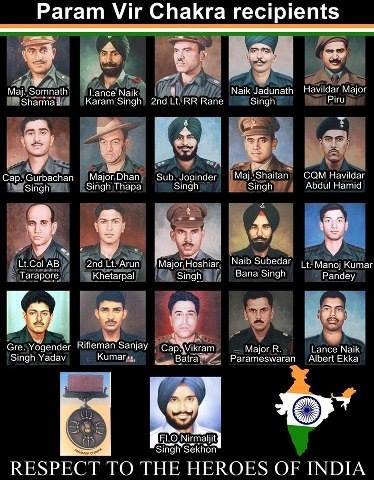
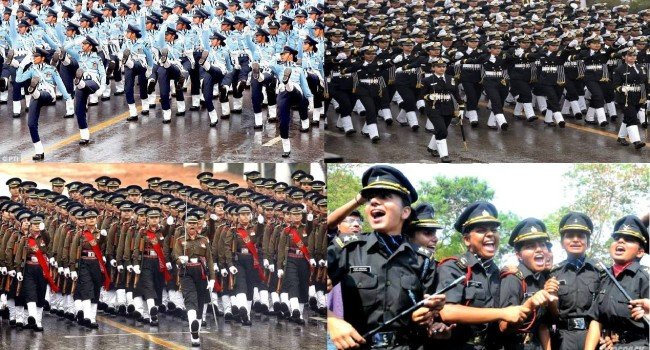
The Central University of Jammu (CUJ) has inaugurated a ‘wall of heroes’, displaying photographs of Param Vir Chakra recipients, as part of the Union HRD Ministry’s ‘Vidya Veerta Abhiyan’.The event has been organised by the National Service Scheme (NSS) of the CUJ in collaboration with the 26 Infantry Division, Jammu.The wall which is titled as “Our Heroes” was inaugurated by Prof Ashok Aima, CUJ Vice Chancellor, and Maj Gen SK Sharma, YSM GOC of 26 Infantry Division, at a function held on the campus to commemorate Vijay Diwas.In his address, Prof Ashok Aima emphasised the valour and sacrifices of soldiers during war and how it is important for students to realise its value. He said the university would constantly interact with the Army and security forces for exchange of knowledge and values.He also directed the National Service Scheme (NSS) to chart out a programme where the university could constructively engage with the war veterans and ‘veer naris’.While delivering the keynote address, Maj Gen SK Sharma highlighted that war was not just the business of the Army or other forces, it was the collective effort of a nation to defend its core values and interests.More than 15 war veterans from various units who fought in Tiger Hills and Tololing and five ‘veer naris’ were felicitated by the Vice Chancellor and the GOC. — TNS


Military muscle, and cutting flab by LT GEN NS BRAR (RETD)

LT GEN NS BRAR (RETD) MILITARY FARMS, POSTAL SERVICES AND BASE WORKSHOPS ARE ALL PREDOMINANTLY, IF NOT ENTIRELY, MANNED BY CIVILIAN NON-­COMBATANTS WHO CANNOT BE ASSIGNED COMBAT ROLES

The announcement of redeploying 57,000 personnel for combat duties as recommended by the Shekatkar Committee — which was tasked “to ensure India’s combat capabilities and potential are enhanced, with a better teeth-to-tail combat ratio, and to re-balance the overall defence expenditure in view of the escalating salary and pension bills” — is said to be farreaching. The Prime Minister had wanted the military to be “agile, mobile and driven by technology”. As conveyed publicly, it was to cut the “flab”. While the objective is laudable, and desirable, the approach may not produce any tangible results.

The entities being addressed — military farms, postal services and base workshops — are all predominantly, if not entirely, manned by civilian non-combatants who cannot be assigned combat roles. The saving on their establishment costs would need to be redirected towards meeting the outsourcing costs, because such services cannot be dispensed with. Undoubtedly, the military farms would release substantial land which, having been engulfed by urbanisation, constitutes prime real estate. As to how this land will be handled and utilised is another matter.

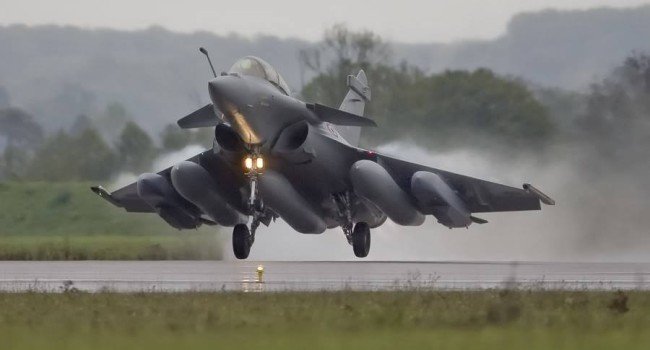
Military force structuring and budgetary allocation are centred on two yardsticks: ‘Teeth to Tail Ratio’ and ‘Revenue to Capital Expenditure’. National security is ultimately a question of evaluating security threats and national interests, and deciding on capabilities to meet or secure them. Capabilities in turn mean expenditure. The first must take the shape of a ‘Strategic Defence Review’ and define our military capabilities to be created and maintained. As this is over the long term, corresponding long-term budgetary commitments have also to be stated. In our context, we are unique in never having formally articulated our security concerns and how we intend to address them. The unilateral cut in the induction of Rafale fighters and putting on hold and then scaling down the raising of the mountain strike corps — both requirements originally arrived at after a decade of debate — are symptomatic of the absence of such an approach.
Stephen Cohen, an authority on South East Asia and the Indian Armed Forces, sums it up in his book, ‘Arming Without Aiming’.

WHAT NEEDS PRUNING

Teeth to Tail Ratio is generally perceived to be the ratio of combatants to support personnel. Besides the uniformed support services, the vast manpower embedded in the defence support establishments — Defence Research and Development Organisation, Director General of Defence Estates, Director General of Quality Assurance, Ordnance Factory Board, ordnance factories, defence public sector undertakings and so on – all forming part of the defence expenditure — need to be taken into account. This ‘tail’ too needs major pruning and restructuring. Interestingly, defence civilians account for 40% of the defence pension budget. The recommendations of the committee on these structures is unlikely to see implementation.

In our context, the army is invariably seen as a manpower-heavy organisation fit for cutting ‘flab’ and therefore defence revenue expenditure. It is not well appreciated that our security commitments, emanating primarily from unsettled borders, and the role of the army are manpower-intensive. This will only increase post-Doklam.

Given the requirement of maintaining a young age profile of the forces, and consequent retirement of a large proportion between 35 and 45 years of age, one of the repeated recommendations which could affect substantial savings is inducting this manpower laterally into the central police organisations such as BSF, CRPF and SSB. This would provide trained manpower and defer the military pension commitment for 15-25 years as also cut the overall pension commitment. This forms part of the committee recommendations.

IN LIGHT OF THE CUT

The perceived imbalance in the other area related to revenue-vs-capital expenditure is due to our overall allotment for defence declining in real terms over the years and the corresponding expenditure on maintenance (pay, pension, fuel) progressively increasing. The defence budget this year is the lowest in GDP terms since 1962. The ratio of revenue to capital expenditure thus appears disproportionate. The Kargil operation with the army chief stating, “We will fight with what we have,” said it all.

The decade of the 1980s saw the highest defence expenditure as a percentage of GDP. With no systematic acquisitions and replacements for the next three decades, the balloon of equipment turning obsolete and requiring substantial capital expenditure stares us in the face today. Depleting fighter strength of the air force and submarines of the navy are publically acknowledged. Shortages in ammunition and war-like stores leading to “hollowness” in war wastage reserves in the armed forces are revenue expenditures adding to the perception of excessive demands for revenue expenditure. Rationalising the classification of expenditure heads would perhaps give a truer picture of defence expenditure.

This committee is not the first and certainly not the last. All have recommended major structural changes and refining budgetary approach to spending on defence.

Needless to say, their implementation has been half-hearted and selective, if at all. Incremental tinkering is unlikely to make it “agile, mobile and driven by technology”. That will require political will.


The Hundred Kills Syndrome Can Only Be A Contributary Factor Towards Peace In Kashmir: More Is Needed In Other Domains Tooby Lt Gen Ata Husnain

IMG-20170304-WA0044
SNAPSHOT

The combination of military effectiveness and public introspection needs to be taken to the next level through effective harnessing of soft power.

The situation perhaps is ripe for it but are there enough takers to undertake the challenge with sensitivity and an eye on the future.

The Security Forces (SF) have reached a landmark achievement in 2017 which is being touted around a bit. They have eliminated a hundred hardcore terrorists in this calendar year, in less than seven months thus far. A fine military achievement that no one can contest. A round of appreciation is needed as especially in the last few weeks there have been successful encounters almost every day and the fatal casualty ratio between terrorists killed and SF personnel martyred has been showing constant improvement after the abysmal level to which it had sunk in February this year.

For those who may be excited by numbers, it is not my intent to dampen their enthusiasm, but wish to inform them that just in South Kashmir in 1999 the Army’s Victor Force of the Rashtriya Rifles (RR) was killing on an average 35-40 terrorists a month. Yet, it is as challenging today as it was then and you can take that as authentic since I was then controlling operations in South Kashmir. When I examine the environment in the same area of responsibility today, I find the General Officer Commanding, his commanders, officers and men perhaps have an even more daunting task with lesser strength of terrorists but perhaps more challenges than even we then had.

Before any analysis of the reasons for this success, it needs to be emphasised that any pragmatic analyst of conflict will advise the SF two things. First, there are miles to go before they sleep. For no fault of theirs the situation had drifted and alienation enhanced. They have to be conscious that military hard power’s achievements in the form of enhanced terrorists killed must create the conditions for the return of soft power as the means to stabilise and resolve conflict; the achievements also enhance resistance by the unarmed anti-national elements.

Second, the SF need to be mindful of the fact that wily minds across the Line of Control (LoC) are already working on creating a surge in terrorist ranks; space created by military achievement can quickly roll back. The only positive I can deduce at this stage of the analysis is that we have all the means available to prevent such a surge, and we should never shy away from employing additional forces and concepts to maintain military dominance. Military dominance is a term always likely to be misconstrued as the negative employment of hard power. That mistake must never be made.

In the same breath about mentioning success, the SF needs to be sensitive to the failure or relative failure to prevent the tragedy of the attack on the innocent victims of the Shri Amarnath Yatra. Such aberrations are a part of the security scenario and highlight the fact that a hundred successes will be offset by one failure. There is a need for better coordination as never before between agencies and different forces. Shedding the colour of the uniform and all egos achieves manifold more.

Why the success has come the SF way is important to analyse. No doubt there has been much hard work and in my opinion the return of the effectiveness of the intelligence grid is the biggest contributory factor. It proves the resilience of the Jammu and Kashmir Police (JKP) and intelligence agencies, and their ability to bounce back from a deep abyss. Without actionable intelligence it is difficult to keep the terrorists on the run. It is not just a question of scoring numbers in the quantum of terrorists killed but also preventing them from being effective by raiding potential hideouts and disallowing their mobility through check points, patrolling, night ambushes, cordon and search and river control.

The second reason for the high numbers is the achievements on the counter infiltration grid where in a short spurt the Army neutralised a dozen attempts and eliminated a large number of infiltrators. The trend this year has seen the activation of Uri and Naugam routes. The Army should be prepared for surge attempts at the Shamshabari. Machil, Keran and Tangdhar will be attempted in the next few weeks.

If praise for JKP, intelligence agencies and the regular Army at the LoC is due, no one can take away the credit from the RR and Central Reserve Police Force (CRPF) in the hinterland. Operating in an environment, where no standard operating procedure currently applies, it is difficult to refine drills and coordinate for a fresh situation every other day. The CRPF has done a fine job despite not being adequately equipped for the duties it is performing.


All the success in the field of hard power has to finally translate into a successful run of soft power to sustain a campaign against the hybrid sponsored proxy conflict. People in rest of India continue to be frustrated by the ups and downs of the situation in Kashmir Valley. Frustration translates to verbal abuse, especially on social media, and that has a negative response in the Valley, furthering alienation. People with no orientation to this type of conflict cannot understand why hard power, the use of the gun and the elimination of the terror groups, does not result in total success in integrating Kashmir to rest of India. We are yet far from educating our people that the centre of gravity in such conflicts is not the armed elements but the people who must return to the fold. To do that, a totally different approach has to be followed and that has nothing to do with appeasement which many misconstrue.

While deeply regretting the unfortunate loss of innocent lives due to the attack on the Amarnath Yatra, it was heartening to see the post incident handling of the situation. Although the attack on the Yatra, which resulted in loss of seven innocent lives was a negative blip in the security picture, we had very restrained statements. Even the social media did not go as negative as could have been expected from such a traumatic event.

The visibility of the Chief Minister and the Deputy Chief Minister was a contributory source for the confidence. The visit to the incident site at night, personal oversight over the handling of casualties at the hospital and attendance at the airport ceremonies did show that the government was in control.

What never fails to impress me is the maturity of the people of Jammu. In 2008, there was a display of negative reaction. What may not have gone home to the people of Kashmir is the fact that Jammu’s response to all the violence in the Valley remains muted and ever mature. That should indicate how much of a place citizens of Kashmir have in India. It also should reinforce the argument, which I repeatedly make that the stabilisation of Kashmir lies in the route through Jammu, a notion appreciated and commented upon most positively by the Jammu-based media. It is something the civil societies and the level-headed citizenry of the two regions need to make together as they understand each other far better than anyone else in rest of India.

The confidence generated by the post event handling should give a fillip to the political handling of the Valley. Already the Chief Minister has put her party members on notice and demanded that the representatives from the Pulwama, Shupian and Kulgam based constituencies can no longer shy away from their responsibilities because of the security situation. This brings me to my age-old observation that unless grassroots politics returns to the rural areas of Kashmir, the space will remain occupied by the vigilantes, mosques and rabble rousers.

A conscious effort has to be made by the political and administrative authority to bring the SF and the political functionaries together. Experimentation on this was done in 2011-12 with the Awami Sunwai (townhall-type public meetings) programmes, which at the beginning were oriented to the Army’s initiative but progressively were joined by political representatives. The security and organisational platforms were provided by the Army for these representatives to then travel and meet the public in faraway areas. It created tremendous hope and helped in resolving some of the longstanding administrative issues, which the people could not otherwise place before the political leadership.

Negative events sometimes help turn the tide and create a groundswell which is not in favour of chaos and turbulence. Perhaps the Shri Amarnath Yatra tragedy is one such event. In the sacrifice of the innocent pilgrims we may yet find a trigger which can bring more introspection within those who have believed in the effectiveness of the gun.

The combination of military effectiveness and public introspection needs to be taken by the scruff of the neck to the next level through effective harnessing of soft power. For that you need a mechanism which is sensitive towards strategic communication and its ability to turn the tide. The situation perhaps is ripe for it but are there enough takers to undertake the challenge with sensitivity and an eye on the future.