Sanjha Morcha

What’s New

Click the heading to open detailed news

Current Events :

web counter

Print Media Reproduced Defence Related News

Ex-servicemen resent OROP order

Our Correspondent
UNA, NOVEMBER 9
The Una unit of the Indian Ex-services League today expressed resentment over the Union government’s notification on one rank, one pension which was not in lines with the OROP definition accepted by the government in Parliament.
As per a press note issued here by Lt SP Sharma (retd.), general secretary of the District Ex-services League, a meeting of veterans from all three services was held here. All members unanimously expressed anguish over the notification, claiming that most of the veterans would not get any relief.
Sharma said the inclusion of voluntary retirement clause in the notification was wrong since this did not apply to the armed forces due to the peculiar nature of the services. He claimed that since the services need to maintain a young profile of officers and other ranks, early retirement was an accepted norm.
The general secretary said the OROP should be implemented in its true spirit. He said their unit has expressed solidarity with ex-servicemen protesting at Jantar Mantar, adding that the protests should continue till the notification was amended.


IAF prepared to destroy any target indicated by govt’: Chief of Air Staff

Operational preparedness will be the key focus area of Air Chief Marshal Rakesh Singh Bhadauria. “Ramping-up operational preparedness, improving serviceability of the fleet, acquiring more technology will be my priority,” Chief of Air Staff, Air Chief Marshal Bhadauria said when asked about his priorities as head of the IAF. Not only is the Indian Air Force short of fighters, but serviceability of its fighter fleet has also been a major cause of concern. The IAF has been battling a lack of spares and delays in maintenance.

Asked whether IAF had the capability to hit terror training camps in Pakistan, the Air Chief said, “We in the IAF are always prepared to meet any contingency that these challenges may pose against the defence of our nation.” Air Chief Marshal Bhadauria also said, “I am confident to take-up any threat and fight a full spectrum war.”

“I am speaking theoretically. We do not start an attack, we do not plan like that. If they (Pakistan) do anything, then we will respond according to the orders given by the government. Whatever be the targets given to us by the government, they will be taken care of,” Air Chief Bhadauria said when asked whether the force can take out 40 terror camps operating in Pakistan simultaneously. “The IAF is prepared to deal with any eventuality although there is no separate plan for Pakistan-occupied Kashmir. We have plans for everything,” the IAF Chief said.
Importantly, the Air Chief said that new secure communications inducted by the Indian Air Force will now ensure that communications cannot be jammed. Inquires, into how Wing Commander Abhinandan Varthaman continued to chase Pakistani fighters on February 27 – when the Pakistan Air Force had launched a counter-attack– had revealed that radio communications between the fighter control and fighters had been jammed by Pakistan.

The Air Chief also said that India will not be looking to import any platforms or equipment. For 5th generation fighters, IAF is “not looking” at foreign manufacturers, Air Chief Bahadauria said. The IAF is putting all its energies into the Advanced Medium Combat Aircraft (AMCA) of the Hindustan Aeronautics Limited, he said. The 114 fighters IAF is acquiring is also through the “Strategic Partnership” route and will be made in India.


Trouble for Kamal Nath as 1984 riots witness deposes before SIT

Trouble for Kamal Nath as 1984 riots witness deposes before SIT

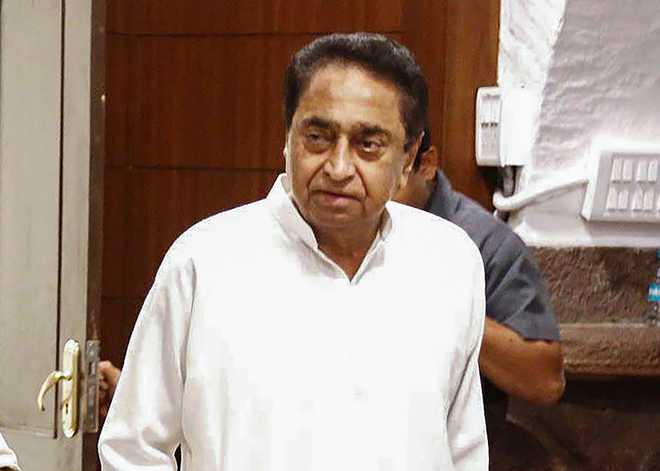
Madhya Pradesh Chief Minister Kamal Nath. — PTI

New Delhi, September 23

In more trouble for senior Congress leader and Madhya Pradesh Chief Minister Kamal Nath, Mukhtyar Singh, a witness in the 1984 anti-Sikh riots case, appeared before the Special Investigation Team (SIT) to record his statement.

Singh arrived at the SIT office in south Delhi’s area of Khan Market and shared the details of the incidents that took place with the SIT members. This was for the first time that Singh appeared before the three-member SIT team to record his statement.

After coming out of the SIT, Singh said he cannot reveal what he told the SIT as the matter was under investigation.

According to sources, Singh apprised the SIT members consisting of a senior IPS officer, a Deputy Commissioner of Police and a retired District and Sessions judge. The case pertains to the killing of Sikhs in Gurdwara Rakabganj on November 1, 1984 by a charged mob.

On September 9, the Union Home Ministry has given its nod for reopening the case, as a result of which Kamal Nath will face a fresh inquiry for his alleged role in the massacre of Sikhs in the aftermath of then Prime Minister Indira Gandhi’s assassination in New Delhi on October 31, 1984.

Kamal Nath was an accused in the case initially, but the court had found no evidence against him. The 72-year-old veteran Congress leader and a Gandhi family loyalist, is facing trouble as London-based journalist Sanjay Suri has also expressed readiness to depose in the case. Suri had written to the SIT on September 15 asking it to give him the appropriate time and date to appear.

Suri’s letter was shared by Shiromani Akali Dal leader Manjinder Sirsa on Twitter. The SIT is likely to consider fresh evidence against the veteran Congress leader, which allegedly mentions that he had instigated a mob near the capital’s Gurdwara Rakabganj during the 1984 riots.

The Modi government had set up the SIT in 2015 to probe the 1984 riots.

Pressure on Kamal Nath has been building since last year after the conviction of Sajjan Kumar in the same case by the Delhi High Court. Kumar, after the assassination of Prime Minister Indira Gandhi on October 31, 1984, was accused of inciting and orchestrating mob violence against the Sikh community across Delhi. — IANS


Only 2 disputed spots along LAC in Ladakh

Only 2 disputed spots along LAC in Ladakh

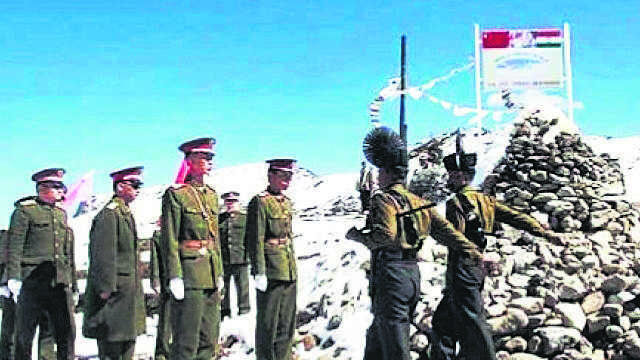
in 2016, India, China carried out first joint military exercise in Ladakh.

Ajay Banerjee
Tribune News Service
New Delhi, August 7

China’s reaction to Ladakh becoming a Union Territory seems to be stemmed from the un-demarcated 823-km frontier. In reality, there are only two spots along the Line of Actual Control (LAC) recognised as disputed by India and China.

Another half-a-dozen spots along the LAC have troops patrolling as per their perception of the LAC, however, not a bullet has been fired since November 1962 in Ladakh. The difference in ‘perception’ is between 2 and 20 km at various points, hence the dispute.

“The reaction of Beijing was to make an on-record diplomatic protest as Aksai Chin, the north-eastern corner of now bifurcated state of J&K, is claimed by India even as China is in illegal custody,” said a senior functionary in the know of matters related to China.

China characterised the move as “unacceptable” and asked New Delhi to avoid actions that unilaterally change the status quo.

In Delhi, observers in the South Block point out there are only two disputed areas along the LAC. One is at Trig Heights located in the north-eastern edge of Ladakh and the other is Demchok, the south-eastern edge. Besides, tensions brew occasionally as both sides carry out patrolling along the northern edge of Pangong Tso (lake), Sppangur Gap, Kongka La, Chumur, Mount Sajun and Samar Lung pa. All these matters are being dealt at the level of the Special Representatives for boundary talks.

In 2016, the two countries carried out their first-ever joint military exercise at a tactical level in Ladakh. In September 2014, Prime Minister Narendra Modi, after a meeting with Chinese President Xi Jinping, proposed the LAC demarcation on ground to end the dispute.

Historically, the frontier of Ladakh with Tibet has never been demarcated. The British took control of J&K in 1846 after defeating the Sikh Army. The British proposed boundaries — five separate ones in 1846, 1865, 1873, 1899 and 1914, China rejected each of them.

Major Alexandar Cunnigham, who was part of the British attempt in 1846 to demarcate the boundary, details this in his 1854 published book ‘Ladak Physical, Statistical and Geographical’. He narrates “The settlement of this boundary (between Ladakh and Tibet) was one of some importance”.

The existing LAC partially adheres to the 1873 British ‘foreign office line’ and is considered the most realistic on the internationally accepted principle that the water shed will decide the boundary. India’s point is the LAC lies along the alignment where its troops were in 1962 before the war commenced


India asks Pak to claim intruders’ bodies; Islamabad denies incursion

India asks Pak to claim intruders' bodies; Islamabad denies incursion

The Army had repulsed a major attempt by the Pakistan’s Border Action Team. Tribune file

Ajay Banerjee 
Tribune News Service
New Delhi, August 4

The Indian Army has offered the Pakistani Army to take over the dead bodies of its troops that are lying inside the Indian territory near Keran in north Kashmir.

The Pakistani Army has been offered to approach with a white flag and take over the dead bodies for last rites.

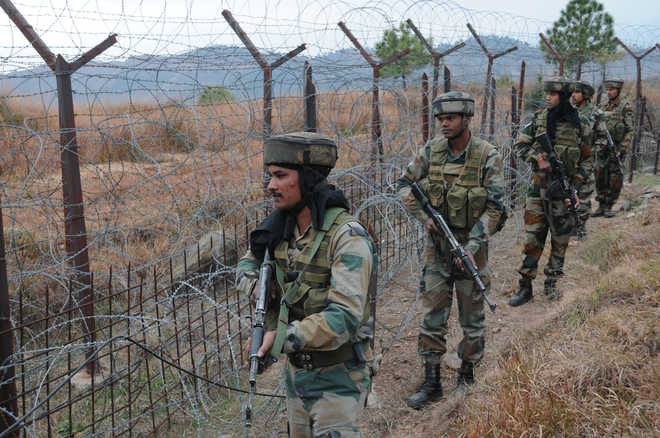
The Army had foiled an attack by Pakistan’s Border Action Team (BAT) on a forward post along the Line of Control (LoC) in north Kashmir’s Kupwara district on Saturday, killing five to seven intruders. The BAT generally comprises special forces personnel of the Pakistani Army and terrorists.

The bodies are lying close to the Line of Control (LoC).

Defence sources said the bodies may possibly be of Pakistan’s SSG commandoes.

On Friday, Chinar Corps Commander Lt General K J S Dhillon had said according to available intelligence reports, all the launchpads in Pakistan-Occupied Kashmir are full and infiltrators attempting to enter Kashmir.

This year, despite Balakot airstrikes, the infiltration has not stopped from across. Sources said over 30 militants managed to sneak into J&K till May-end.

A senior Army official said Pakistan has desperately attempted to push terrorists belonging to JeM and other outfits into Jammu and Kashmir over the last few days. “The response by security forces vindicates the build-up in the hinterland,” he said.

The Pakistan Army has, meanwhile, denied the Indian claim about action by Pakistani army regulars and militants across the Line of Control and that their bodies were lying on the Indian side.

Pakistan Army spokesman Maj Gen Asif Ghafoor on Saturday night denied the Indian claim as “mere propaganda” and said India was “trying to divert attention of the world form the situation of Kashmir.”

Similarly, the Foreign Office also issued a statement at about mid-night to reject the claims by India.

“We reject Indian allegations of cross-LoC action by Pakistan and possession of bodies,” FO said. — With PTI inputs


North Korea fires two ballistic missiles which fly 250 km: Seoul

North Korea fires two ballistic missiles which fly 250 km: Seoul

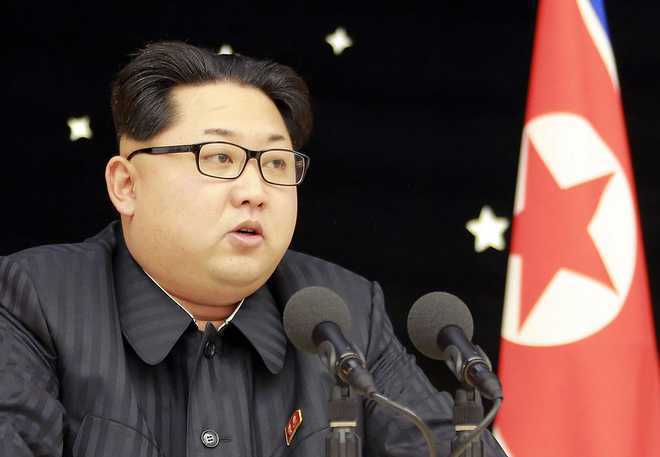
Kim Jong Un. AFP file

Seoul, July 31

Pyongyang fired two ballistic missiles on Wednesday, Seoul said, days after a similar launch that the nuclear-armed North described as a warning to the South over planned joint military drills with the United States.

The two devices were fired from the Wonsan area on the east coast at dawn and flew around 250 kilometres (155 miles), said South Korea’s Joint Chiefs of Staff.

“We stress a series of missile launches do not help ease tensions in the Korean Peninsula and urge the North to refrain from such acts,” they said in a statement.The North is banned from ballistic missile launches under UN Security Council resolutions but it was the second such firing in less than a week, despite a meeting between leader Kim Jong Un and US President Donald Trump last month.

Pyongyang and Washington are engaged in a long-running diplomatic process over the North’s nuclear and missile programmes that has seen three high-profile encounters between their leaders in the space of a year.They agreed to resume talks during their impromptu June encounter in the Demilitarized Zone that divides the peninsula, but that working-level dialogue has yet to begin.

Pyongyang has warned the negotiations could be derailed by Washington and Seoul’s refusal to scrap the annual manoeuvres between their forces.

The North has defied years of isolation and sanctions to develop its arsenal and has not given up any of its weapons, while proving itself adept at dragging out discussions.

US Secretary of State Mike Pompeo told reporters that the talks were taking “a little bit longer” than expected to start.

There was no immediate comment from Pyongyang on the latest launch, but Harry Kazianis of the Centre for the National Interest in Washington said it was a warning to the two security allies to stop the exercises “or we will continue to show off our own offensive military capabilities and raise tensions to a slow boil over time”.

The North would carry out more launches before the drills begin next week and again afterwards, he predicted. AFP


0TH KARGIL VICTORY ANNIV: REMEMBERING MARTYRS

Soldiers lighting lamps at the Kargil War Memorial in Drass on Thursday. President Ram Nath Kovind will be at the memorial to attend the Vijay Diwas celebrations on Friday. SRINAGAR: President Ram Nath Kovind will join the Kargil Vijay Diwas celebrations on Friday in Drass town of the Kargil district.

According to official sources, the President, supreme commander of the armed forces, will arrive in Drass town on Friday to attend the 20th anniversary of the Kargil victory.

“State governor Satya Pal Malik, chief of army staff General Bipin Rawat, air chief marshal Birender Singh Dhanoa and the chief of naval staff admiral, Karambir Singh, will receive the President on his arrival,” an official source said here.

A ‘Victory Flame’ lit by defence minister Rajnath Singh on July 14 at the National War Memorial in Delhi will be received by the army chief in Drass on Friday.

It will be merged with the eternal flame at the Kargil war memorial.


If India chooses F-21, it will plug into ‘world’s largest fighter plane ecosystem’: Lockheed Martin

Lall said the demand from India will create long-term value for F-21 fighter jets.

  • The global demand for F-21 aircraft, of course, would be fuelled from India
  • The top contenders for the deal include Lockheed’s F-21, Boeing’s F/A-18, Dassault Aviation’s Rafale, the Eurofighter Typhoon

NEW DELHI: US aerospace giant Lockheed Martin on Tuesday said its offer of F-21 fighter jets is a very robust ‘Make in India’ proposition and if the country goes for the deal it will be “plugging into the world’s largest fighter plane ecosystem”.

Vivek Lall, the vice president of Strategy and Business Development for Lockheed Martin, said the initial demand from India is for 114 aircraft, but expressed confidence that over time, it will continue to grow.

“Participation in the global production is what the F-21 has to offer,” he said.

The global demand for F-21 aircraft, of course, would be fuelled from India, he said at the 2019 Supplier Conference organised by Lockheed Martin and Tata group here.

In April, the Indian Air Force issued an RFI (Request for Information) or initial tender to acquire 114 jets at a cost of around $18 billion, which is billed as one of the world’s biggest military procurement in recent years.

The top contenders for the deal include Lockheed’s F-21, Boeing’s F/A-18, Dassault Aviation’s Rafale, the Eurofighter Typhoon, Russian aircraft Mig 35 and Saab’s Gripen.

Lall said Tuesday their strategic partner is Tata and the collaboration is an engagement to build an ecosystem that is not just of few players.

Lall said the demand from India will create long-term value for F-21 fighter jets.

“What is very key and important is the after sales support…We have over 3000 F-16s flying all across the world and that ecosystem is the largest one in the world.

“So, when we talk about modifications and upgrades, spares, support equipment etc – this is really plugging into the world’s largest fighter (plane) ecosystem as India looks into its long term needs,” he said.

He said the firm is looking for a long-term partnership and asserted that F-21 is unique for India for various reasons.

“It is a very robust Make in India proposition,” Lall said. He said that the company has got in touch with over 200 companies in India till date and the “list” of such companies keeps getting bigger.

If Lockheed Martin gets the contract for the jets, the F-21 ‘Make in India’ would happen in a phased manner, he said.

He said the F-21 platform has over 130 different types of configurations with weapons that have been integrated over time and is the most versatile with respect to new weapons integration.

“Specific weapon capability will depend on the customer and what they want. Post the award of contract, there is a phased production plan. The RFI (Request for Information) mandates certain planes to come in a flyaway condition and then we would be going into various phases of production as more and more indigenous content comes on board,” he said.

The idea of this suppliers conference is to get everyone together over a three-day period and make sure that executives from US can have a dialogue with the Indian industry, he said.

Lall had told PTI in May that Lockheed Martin will not sell its newly rolled out F-21 fighter jet to any other country if India places an order for 114 planes, in an offer aimed at pitching itself ahead of its other US, European and Russian competitors for the mega deal.


3 Army officers’ plea for promotion junked

Vijay Mohan

Tribune News Service

Chandigarh, July 10

The petitions of three Major Generals who had moved the Armed Forces Tribunal against their non-empanellment for promotion to the rank of Lieutenant General have been dismissed.

With this, the stay imposed in May on promoting officers to the rank of Lieutenant General has also been vacated.

In its orders today, the Tribunal’s Bench comprising Justice Virender Singh and Lt Gen Philip Campose upheld the results of the Special Promotion Board (SSB) that had considered the officers for promotion.

Three officers of the 1983 batch of the general cadre, Maj Gen SC Mohanty, Maj Gen Sudhakar Jee and Maj Gen ML Mohan Babu had mover the Tribunal after they were not empanelled for promotion by the SSB held in October 2017.

According to earlier court orders, they were subsequently given redress related to their Annual Confidential Reports and they had sought directions from the Tribunal that they be considered for promotion as special review (fresh) case as per the old promotion policy, which was in vogue during their consideration by the Board held in October 2017. A new promotion policy for Generals had been introduced in December 2017.

Considering their plea, the Tribunal directed the Army to convene a review promotion board before June 21 and consider the officers for promotion as per the old policy.

After perusing the records of the case and scrutinising the proceedings of the SSB, the Tribunal concluded that there was no irregularity or abnormality in the promotion results. According to one of the counsels, the petitioners reserve the right to move the Supreme Court against the AFT’s judgment.

Not empanelled 

Three officers of the 1983 batch of the general cadre, Maj Gen SC Mohanty, Maj Gen Sudhakar Jee and Maj Gen ML Mohan Babu had mover the Tribunal after they were not empanelled for promotion by the SSB held in October 2017.


Centre bans US-based SFJ Says decision largely driven by Punjab Govt report

Centre bans US-based SFJ

Tribune News Service
New Delhi, July 10

The government today banned Sikhs for Justice (SFJ),  a US-based group that supports the cause of Khalistan, for its other anti-national activities. A senior official in the Ministry of Home Affairs said the decision to ban the outfit under Section 3(1) of the Unlawful Activities (Prevention) Act,1967, was taken at a Cabinet meeting chaired by PM Narendra Modi.

Noting that SFJ’s primary objective was to establish an “independent and sovereign country” in Punjab,  the official said, a strong warning had been sent to “fringe groups operating from foreign soils that India will not tolerate secessionist activities, whether carried out in India or abroad” and would take strong action against such entities.

He also said the ban decision was taken after wide consultations with “all major representative bodies of the Sikh community” and was “largely driven” by the report the Centre had received from the Punjab Government”. The National Investigation Agency (NIA), Punjab Police and Uttarakhand Police have registered 12 cases against SFJ actvists in India and made 39 arrests. “Their presence is minor in India. However, there is potential of mischief and, hence, the decision,” the official said.

“Once the organisation is banned, the NIA can take up the issue with its counterparts across the world for further action,” he said, adding: “SFJ from time to time has been making numerous attempts to instigate Sikh soldiers and Sikh security personnel against the Union of India.”

UK-based SFJ activist Paramjit Singh Pamma was seen during the Cricket World Cup match at Edgbaston advocating the cause of Khalistan before he was evicted. Pamma, say agencies, is member of a Khalistan terror group. “The banned outfit has openly been espousing the cause of Khalistan and has started an online secessionist campaign, the so-called ‘Sikh Referendum 2020’ on the social media,” the MHA official said.

Move comes weeks after DGP threatened

Chandigarh: Weeks after SFJ threatened Punjab DGP Dinkar Gupta, India on Wednesday banned the outfit. Besides Punjab, cases of sedition and terror activities have been filed against it in UP and MP. Earlier, the UK had suspended/blocked SFJ’s Twitter handle and other social media accounts on India’s insistence. Punjab CM Capt Amarinder Singh had at a meeting with Home Minister Amit Shah apprised him of the SFJ designs which had issued video threats to Punjab Police officials, asking them to “stop harassing” SFJ activists or else their relatives living abroad would be targeted. The Punjab CM said the outfit deserved to be banned as a terror organisation. AAP too supported the ban. SFJ had shared a poster on the social media last week, urging pro-Khalistan Sikhs to boo Indian Team during the World Cup semifinal. — Jupinder Singh

Step in right direction

First step towards protecting the nation from anti-India and secessionist designs of ISI-backed organisation. — Capt Amarinder Singh, CM

Centre bans pro-Khalistan group SFJ, Capt hails move

Group started out as a rights advocacy group in 2007 to run a campaign to create awareness about ‘denial of rights’ to Sikhs in India and build a ’movement’ in the community

THE SFJ HAS BEEN PUSHING FOR ‘SIKH REFERENDUM 2020’ AS PART OF ITS SECESSIONIST AGENDA,

CHANDIGARH: The Sikhs for Justice (SFJ), a US-based pro-Khalistan group, was on Wednesday banned by the Centre for its alleged anti-national and subversive activities in Punjab and elsewhere.

FILE PHOTO■ Members of the Sikh community gather at Trafalgar Square in London in support of ‘Referendum 2020’ in August last year.The decision to ban the SFJ, which has been pushing for ‘Sikh Referendum 2020’ as part of its secessionist agenda, as an “unlawful association” was taken at a meeting of the Union Cabinet. The outfit was declared outlawed under the Unlawful Activities (Prevention Act), 1967 as “it is in close touch with the militant outfits and activists and is supporting violent form of extremism and militancy in Punjab and elsewhere to carve out Khalistan out of territory of India,” according to the notification issued by the Union home ministry.

The ban has been slapped in consultation state with governments, including Punjab, after intelligence agencies raised a red flag about its subversive activities and support to militancy. Welcoming the Union government’s decision, Punjab chief minister Capt Amarinder Singh said the organisation deserved to be treated as a “terrorist organisation”. He termed the move as the first step towards protecting the nation from secessionist designs of the ISI-back organisation.

“SFJ’s activities went beyond being unlawful and posed a major threat to the very existence of our nation. The central government will have to take more proactive measures to aggressively crack down on it and its affiliates or operatives in the interest of national security,” Amarinder said in a statement. The SFJ, which has been campaigning that Sikhs’ rights are not protected in India, was started in 2007 as a human rights advocacy with its legal adviser Gurpatwant Singh Pannun as the most vocal member. However, the group emerged as the face of the separatist campaign in just a few years. Its ‘Sikh Referendum 2020’ campaign, which was launched in 2014, is being allegedly funded and promoted by the ISI of Pakistan through a clandestine operation codenamed ‘Express’, according to security agencies.

Though it began by running an online campaign and putting up posters in Pakistan and several European countries, security agencies received information that SFJ activists in USA, Canada, UK and Malaysia were involved in recruiting young radicals through various social media platforms and funding/ motivating them to carry out various types of violent acts.

In the last three years, Punjab police have registered half-adozen criminal cases against SFJ leaders and operatives abroad and their supporters in Punjab for carrying out targeting right-wing leaders, torching of liquor shops and other acts of violence. CHANDIGARH: The US-based Sikhs for Justice (SFJ) banned by the Centre on Wednesday for its antiIndia activities is a previously little-known fringe outfit that emerged as the face of the secessionist campaign for Khalistan in a short span.

The SFJ started out as a human rights advocacy group in 2007 to run a campaign to create awareness about “denial of rights” to Sikhs in India and build a “movement” in the community.

The organisation found traction due to its legal adviser Gurpatwant Singh Pannun, who hails from Amritsar and has been its most vocal and known face.

Pannun struck a chord with a section of the Sikh diaspora by initiating legal proceedings against top political leaders from India such as Prime Minister Narendra Modi, Congress leader Sonia Gandhi and former Punjab chief minister Parkash Singh Badal and obtaining summons against them on “charges of human rights violations”, when they visited the West. But the outfit turned into a Pakistan-backed advocate and motivator of militant groups and activists before long, leading to the ban for espousing militant activities from havens abroad and involvement in “anti-national and subversive” activities in Punjab.

FUNDING AND BACKING FROM ISI

A dossier prepared on SFJ by security agencies shows the ‘Sikh Referendum 2020’ it launched in 2014 for a separate Sikh state has the backing and funding from the Inter-Services Intelligence (ISI) of Pakistan through a secret operation codenamed ‘Project Express’.

The ISI has been helping SFJ promote its campaign for a referendum on Punjab through a front organisation, the Dyal Singh Research and Cultural Forum (DSRCF), which has been putting up posters and hoardings, besides distributing pamphlets, at gurdwaras in Pakistan during visits of Sikh pilgrims from India from time to time, security officials say. Pak-based votaries of Khalistan have also been openly supporting the campaign.

Security agencies have leads to establish that SFJ associates in US, Canada, UK, etc. have not only been radicalising, funding and inciting poor and unemployed youth of Punjab but are also in contact with gangsters and criminals operating in the state. They also cite SFJ’s growing nexus with Kashmiri separatists as a worry sign. In February 2019, SFJ blamed the Indian government for the Pulwama attack and made an appeal to Sikh soldiers not to fight for the country.

MILITANT ACTIVITIES

In the last three years, the Punjab Police registered half-a-dozen cases against SFJ leaders and operatives abroad and their supporters in Punjab for targeting right-wing leaders, torching of liquor shops and other acts of violence, besides recovering arms and ammunition. Security officials say they have ample evidence to prove that such modules were being radicalised and funded by SFJ leaders and operatives, including Pannun and Paramjit Singh Pamma, based in various south-eastern, western and even African countries, through fund transfers over MTSS (money transfer service scheme) or hawala channels.

Pamma, wanted for crimes in Punjab, and other SFJ activists were seen at an India-England Cricket World Cup match at Edgsbaston on June 30, wearing T-shirts advocating ‘Referendum 2020’ and had to be bundled out by security personnel.