Current Events :




















New Delhi: India is facing complex and dynamic security challenges along its borders, which are a threat to the country’s territorial integrity and internal stability, Army Chief Gen. Bipin Rawat has said.
In a new year message to Army personnel, he hailed the collective grit, determination and sacrifices of the troops in standing up to the challenges along the borders as well as in combating threats of terrorism.
He, however, did not mention about the situation along India’s nearly 4,000- km frontier with China or along the Line of Control in Jammu and Kashmir.
“Our steadfast resolve to ensure territorial integrity has been evident from the collective grit, determination and sacrifice of our troops who have stood their ground under the most challenging, inhospitable and most hostile circumstances,” General Rawat said.
The Indian Army has been firmly dealing with infiltration bids and incidents of unprovoked firing by Pakistani Army along the Line of Control (LoC) in J&K.
The Army has also improved its vigilance in several key sectors along the border with China following last year’s Doklam episode.
“All ranks have displayed highest degree of sincerity and commitment while guarding our frontiers, combating terrorism and insurgency,” the Army Chief said.
He also appealed to the 12-lakh strong Army personnel to work with added zeal in dealing with security challenges facing the country.
“We need to continue to work with added zeal while upholding our core values of integrity, loyalty, duty, respect selfless service, courage and honour to fulfil our constitutional obligations and assigned roles,” he said.
General Rawat described his force as one of the most disciplined and professional armies in the world, adding that it must preserve that pride with dignity and honour.
“I am sanguine that the rank and file of the Indian Army will continue to discharge their responsibilities in the best traditions of our organisation,” he said.
General Rawat also mentioned about the “stellar role” the Army played during the devastating floods in Kerala as well as the way it has discharged its duties in the UN missions.
“I salute all those personnel who made the supreme sacrifice in the line of duty for the nation in the past year. I wish speedy recovery to all others who are recovering from injuries in the line of duty,” the Army Chief said.


Imran Khan has been accused by his critics of being the security establishment’s man. (File)
Mr Khan, along with senior Cabinet ministers, was briefed on Wednesday in detail on the various strategic intelligence and national security matters by the senior officials of the Inter-Services Intelligence, an official statement said.
“The Prime Minister lauded contributions of the ISI towards national security especially in the ongoing counter terrorism effort. The Prime Minister said that the ISI is our first line of defence and stands out as best intelligence agency of the world,” the statement issued by the Inter-Services Public Relations (ISPR), the media wing of the military said.
Mr Khan, who was sworn-in as the 22nd Prime Minister of Pakistan on August 18, has already visited the General Headquarters of Pakistan Army twice – first to get an in-depth briefing on the internal security and geo-strategic situation and then to attend the Defence and Martyrs Day ceremony on September 6.
Mr Khan has been accused by his critics of being the security establishment’s man.
The Pakistan Muslim League-Nawaz (PML-N) party has accused him of reaching the Prime Minister House through the support of the powerful security establishment.
Mr Khan told ISI officials that his government and the people of Pakistan firmly stood behind the armed forces and intelligence agencies and acknowledged the “unprecedented achievements” of these institutions, the statement said.
Earlier, Army chief Gen. Qamar Javed Bajwa and ISI Director General Lt Gen. Naveed Mukhtar received Mr Khan on his arrival.
Punjab’s crop loan waiver scheme has been hailed as a successful model. How does it feel?
I am happy other Congress-led states have adopted our model. The party chief has already announced that if elected to power at the Centre, a similar waiver for farmers across the country will be announced.
Are you content with the results of the waiver?We have kept our promise to small and marginal farmers despite the Rs 1.95 lakh crore debt burden we inherited. An additional burden of Rs 31,000 crore on food account was forced on the people by the SAD-BJP barely a week before it relinquished office. It makes me happy that we could work out a formula and keep our promise to the farmers. But it saddens me that we have not been able to give 100 per cent relief to all debt-ridden farmers. As things improve, we shall extend the scheme to farm labourers.
BJP, SAD claim the scheme exists only on paper.They are, perhaps, confusing Punjab with UP, where amounts less than a rupee are reported to have been disbursed. As on December 28, a total of 3,13,715 farmers were given loan waiver by cooperative banks, with the total amount standing at Rs 1,779.94 crore; as many as 19,456 farmers received amounts above Rs 1.5 lakh and 28,552 between Rs 1-1.5 lakh. Only 19,601 farmers got amounts less than Rs 10,000, totalling Rs 11.49 crore, which is the loan amount pending against them in coop banks.
Are real numbers being brushed under the carpet?
It’s because of vested interests, especially when the LS polls are near. Everyone in Punjab knows about the plight of farmers under the SAD-BJP rule. As per PAU data, 9,155 farm suicides were reported owing to debt between 2007 and 2017 — a shocking 915 suicides a year. In contrast, there have been 140 such cases between March 2017 and December 2018, a decline of 84 per cent.
Will you extend waiver to farmers who have availed loans exceeding Rs 2 lakh?
As of now, we cannot do that. But we are moving in that direction. Before I demit office, every debt-ridden farmer would have been covered.
Does not the waiver create a bad credit culture?
It is only a temporary solution. The situation now warrants immediate and direct support. We are also looking at long-term measures, such as diversification.
You may wish free power away but when farmers are already economically stressed, we cannot impose such a decision. — Capt Amarinder Singh

With just three weeks to go for the closure of claims for inclusion in the National Register of Citizens in Assam, Army chief General Bipin Rawat has said that he supports NRC, and that parties opposed to it are undermining national security. In an interview to Times Now, the chief of Army staff also said that most of the accusations of fake encounters and human rights abuses by the army were false.
Rawat said he supported deportation of those who have entered the country illegally. “If they are illegal, they need to be deported. If they are legal, they need to be amalgamated. But then that amalgamation must happen in a manner that benefits everybody. Let it not go the political way,” he said.
He suggested that political parties were helping illegal migrants stay on. “There are some organisations which have amalgamated them into the system. There are others who have come in illegally who do not have citizenship, but there are some people who are trying to get them citizenship,” he said.
In February, Rawat had spoken of the growth of All-India United Democratic Front, led by MP Badruddin Ajmal, in Assam. Rawat had said: “There is a party called AIUDF. They have grown in a faster timeframe than BJP.”
Army chief General Bipin Rawat said, “When we talk of Jan Sangh, with two members of Parliament and where they have reached, AIUDF is moving at a faster pace in Assam. Finally, what will be the state of Assam, we have to take a call.”
Speaking to Times Now, the Army chief also defended the Army’s record on human rights and called for investigations against individuals and organisations “filing false cases against soldiers with an intent to malign the institution”.
“The time has come to probe these people who have come out with these cases,” he said. Rawat gave the example of a case in the National Human Rights Commission when he was in the Eastern Command. “The case was that one of the units had killed a terrorist and the body was missing. We started the probe, and found that the lad was alive. They closed the case. But what about the person who made this allegation, should that not be investigated?” he said.
Where the Army found that encounters were staged, it has taken strict action, he said. “Where we felt encounters, I won’t say were fake, but could have been better conducted, we have punished people,” he said. Rawat said complaints about fake encounters were being filed by “third parties”. “To say it was a fake encounter or that it was not conducted in a way the Army is supposed to conduct an encounter, the complaint should come from near and dear ones. In most of the cases, the allegation has come from a third party. It could be an NGO that has been created.
The MoD, ignoring service HQs had unilaterally amended the gazette notification containing recruitment rules for the GMBOA in 2017, opening doors for a Joint Secretary-ranked bureaucrat to be appointed.
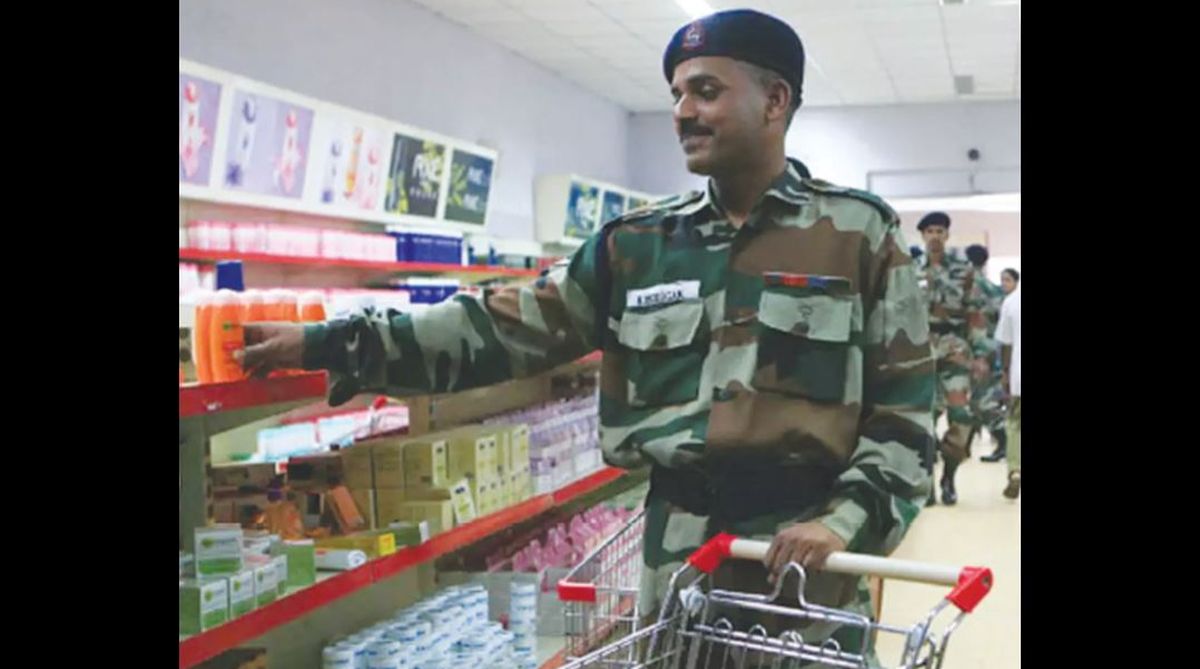
The Canteen Stores Department (CSD) had been established in 1948 alongside the Navy canteen services. The reason for its creation was to provide military personnel with their basic needs, despite remoteness of their location. It initially commenced with a few items in its inventory, which has grown to over 4,000 presently. Its profit in the last financial year, earned from mainly military personnel was Rs 1,253 crores. It is under the overall supervision of the defence minister but run by army HQs.
It was created solely for military personnel, which was subsequently extended to civilians paid from defence estimates in 1966, against military advice. Despite serious objections by the military community, this facility was subsequently extended to retired civilian staff too, thus adding 650,000 entitled personnel.
Retired civilians had restrictions on some items of purchase for which they objected to the Defence Ministry (MoD). The MoD has been attempting to force service HQs to remove these restrictions, which they are resisting, as it would impact availability to genuine customers, the serving and veteran community, due to budgetary constraints. Restrictions pertain to costly items including cars etc. There are already limitations on procurement by military personnel, but if opened for all, it may become nigh impossible for military personnel to obtain these items or ensure long waits.
The General Manager and Chairman Board of Administration (GMBOA), responsible for the daily running of the entire CSD network was always a serving military officer of the rank of a Major General, appointed on contractual basis for three to four years. Last week, the MoD issued a notification appointing a Major General, posted in another appointment in Mumbai, on a temporary basis for a duration of six months or selection of a new GMBOA, whichever is earlier, as against a permanent appointment.
The MoD, ignoring service HQs had unilaterally amended the gazette notification containing recruitment rules for the GMBOA in 2017, opening doors for a Joint Secretary-ranked bureaucrat to be appointed. This unilateral action angered the military and Air Chief Marshal Arup Raha, the then senior most chief, wrote to the defence minister, Arun Jaitley, on the subject. No action was taken.
In August this year, when the current air force head of the CSD moved on promotion, it became evident that the MoD was contemplating appointing their own. The three service chiefs jointly approached the defence minister in August, who temporarily stalled the action.
Hence, a temporary appointment was announced. Based on the meeting, service HQs subsequently forwarded an official communication to the MoD, objecting to the unilateral amendment. This communique has been languishing in the MoD, without being processed.
The bureaucracy appears to be planning to delay the case for six months, hoping for a change in defence minister or government, enabling them to push forth their agenda. The intention behind appointing a bureaucrat is to dilute CSD facilities by opening it to other central government organizations, making it almost redundant as also to amend rules on sharing profit earned by the CSD. Logically, if desired for others, a similar organization can be created, rather than dilute an existing one.
CSD profits have already been used to fund the Sanskriti school in Delhi, which was created for children of bureaucrats. Most of the profit is kept by the government, the small portion which is returned to the armed forces is utilised for creating facilities and providing financial assistance to veterans.
The bureaucracy is seeking to grab every institution of the military that it can, despite having no role in the running nor even being entitled to it. It is now an open conflict between the bureaucracy and the military on controlling military assets.
Evidently, the military is spending more time battling its own MoD and bureaucracy, which suddenly seems to have grown wings, rather than handling cross-border threats. At every stage, the bureaucracy seeks to delay, deny and prevent the armed forces from moving ahead. Surprisingly, this action appears to have the support of the defence minister, who permits it to act, either knowingly or unknowingly.
In addition, in a recent communique to Cantonment Executive Officers (CEOs) and Local Military Authorities (LMAs) responsible for the security and well being of cantonments, Minister Nirmala Sitharaman issued a clear warning. Open all roads ignoring security aspects or face the consequences. She ignored military security concerns. After her last directions, the army had already opened most roads keeping a few closed for security purposes.
She is evidently following the philosophy that the armed forces interest ‘come last, always and every time’, the exact opposite of what her role as the defence minister should have been. With such a head at the MoD, there is no wonder that the ministry is working in a coordinated manner to denude the armed forces of every institution they have, including those on which a majority of the forces depend. Military hospitals are being opened to ‘Modicare’ and the CSD being taken over by the bureaucracy. Cantonments are already open. What could be next??
Never in the history of the country have the armed forces been pushed to such depths that they are forced to fight for their rights and dues. The defence minister can threaten the armed forces, as she did in the cantonment case, only because they are disciplined and respectful. But she cannot direct her own ministry not to cross limits in denuding the status and institutions of the armed forces.
Is this the status and standing of the armed forces that PM Modi promised in his Rewari rally of 2013? Are his directions to her to break every military institution, degrade its status and lower its prestige? If these are not his directions, then she needs to be firmer with her MoD than the military. She must ensure that her bureaucracy does not cross limits. She should remember that as military institutions fall, anger against the government would only rise.
The writer is a retired Major-General of the Indian Army.
Tribune News Service
New Delhi, September 11
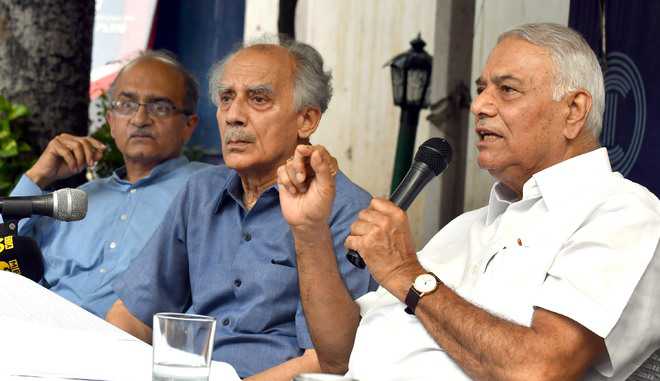
Former Union Minister Arun Shourie today alleged that the deal to buy 36 Rafale jets from Dassualt Aviation of France was the direct culpability of Prime Minister Narendra Modi in “compromising national security”.
When he announced the decision about getting 36 jets in April 2015 in Paris, Modi overturned the work of 7-8 years done by previous governments. There is no scope for discretion of the PM in such matters, said Shourie, addressing a media conference here.
He was accompanied by another former minister Yashwant Sinha and lawyer-activist Prashant Bhushan.
Shourie termed Finance Minister Arun Jaitley as “minister for blogging” in an obvious reference to his recent blogs on the subject. “His statement is contradictory to what he has said in Parliament,” said Shourie.
Jaitley says approval of the Defence acquisition council (DAC) was taken in May 2015, then how did the PM arrive at the number (36 planes) and the decision before the DAC had met. Dismissing claims of India-specific upgrades, Shourie referred to the April 2015 joint statement of Modi and French President François Hollande. It said the aircraft and associated systems and weapons would be delivered on the “same configuration” as had been tested and approved by the Indian Air Force.
Both Sinha and Shourie said the government has “spun a web of lies to protect Modi’s culpability in the largest defence scam” the country has ever seen.
“Every explanation they put out ensnares the government in the web of lies they have spun. This means they have a lot to hide,” said Shourie.
The following points need to explained: How price increased from 670 crore to 1,680 crore; how HAL was not included; why there is no transfer of technology; and how the deal is actually causing a delay.
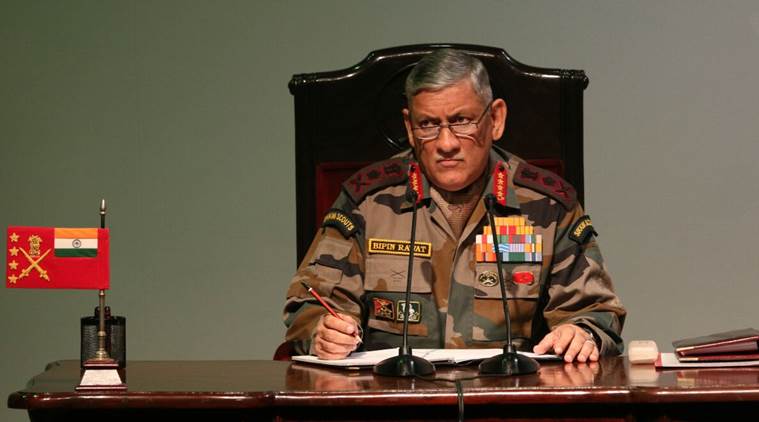
Chief of Army Staff General Bipin Rawat Thursday warned that officers and jawans of the Armed forces “who cannot withstand stress” and “feign disability citing high blood pressure, diabetes and hypertension to avoid operational duties and earn extra money” will soon face action from the Army headquarters.
He made the statement in Pune while addressing a gathering of soldiers and officers who have been disabled in the line of duty.
He said, ”The Army will continue to provide all possible assistance, even of financial nature, to the truly disabled soldiers. But I am warning those who feign disability to earn extra money, will soon face action from the Army headquarters that they will not like. (This type of) disability cannot become a reason to avoid operational duty at the cost of lives of officers who continue to perform the duty till the last breath.”
The function also included a dance and song performance by disabled soldiers.
On Wednesday, 14 November, Attorney-General of India KK Venugopal made an important admission to the Supreme Court of India regarding the Rafale deal. Contrary to previous indications, he confirmed that France had not provided a sovereign guarantee to India for delivery of the 36 Rafale aircraft, but had only provided a letter of comfort.
The Quint has now learned that during the negotiations over the deal, France providing a sovereign guarantee was cited as the basis on which two major objections to the Rafale deal from within the Indian Negotiating Team (INT) were addressed.
The objections had been presented to the Defence Acquisition Council (DAC) and the Cabinet Committee on Security (CCS), but were said to be resolved because France would provide a ‘sovereign guarantee’ – something which never ended up happening.
This raises serious questions about the process followed to approve the deal, including the INT’s sign-off which was granted on 21 July 2016, and the CCS approval on 24 August 2016.
Three members of the INT raised objections to the Rafale deal in a “Note of Concerns”. The three officials were:
The INT is a key part of the process of defence procurement. Under the Defence Procurement Policy (DPP) 2013, which was applicable to the Rafale deal, a contract negotiating committee has to determine and approve the commercial aspects of such a deal. To this purpose, the INT held 74 meetings from April 2015 to July 2016, and its finalised report was submitted to the CCS on 4 August 2016.
Under the DPP, the CCS was required to give its approval for the deal, which it did on 24 August 2016. However, on the same date, the CCS also reportedly waived the requirement for the sovereign guarantee, despite the concerns raised about this by the Law Ministry and the then Defence Minister Manohar Parrikar.
The Quint has accessed a copy of the Defence Ministry document that addresses the “Note of Concerns” and how the issues raised in the Note were resolved.
The relevant issues raised by the three INT members were:

Lack of Bank Guarantees
The Defence Ministry document notes that the French government did not agree to provide bank guarantees for the Rafale deal, despite six months of negotiations by the INT. The INT referred this issue to the DAC and the CCS, which held that instead of bank guarantees, a “sovereign guarantee provided by the French President is adequate.”
This makes the decision of the CCS to waive the requirement for a sovereign guarantee in August 2016 an extremely problematic one, since this was the only basis on which the requirement of bank guarantees (under the DPP) was dismissed.
Dassault’s Unsound Financial Position
The involvement of the French government was also the basis on which the rest of the INT, the DAC and the CCS satisfied themselves that Dassault would be able to deliver the 36 aircraft. The Defence Ministry document says that:
“The French Government assured that as signatory to the IGA, it takes responsibility for deliveries.”
However, the means for this assurance was supposed to be the sovereign guarantee. With only a letter of comfort, it is unclear how the French government has a binding obligation to ensure deliveries if there is a problem with Dassault, a view supported by Sudhanshu Mohanty (the former head of finance at the Defence Ministry) in an interview with the Economic Times. This is also why the Law Ministry had wanted a sovereign guarantee, and had pushed for the same with the Defence Ministry.
The doubts over Dassault’s financial position were not countered even by the other four members of the INT who had not raised this concern, which would appear to indicate that there were indeed valid doubts about their financial position.
This makes the failure to secure a sovereign guarantee even more serious, since the risk of a failure to deliver the aircraft was not just some routine hypothetical, but a legitimate concern.
Aradhika Sharma
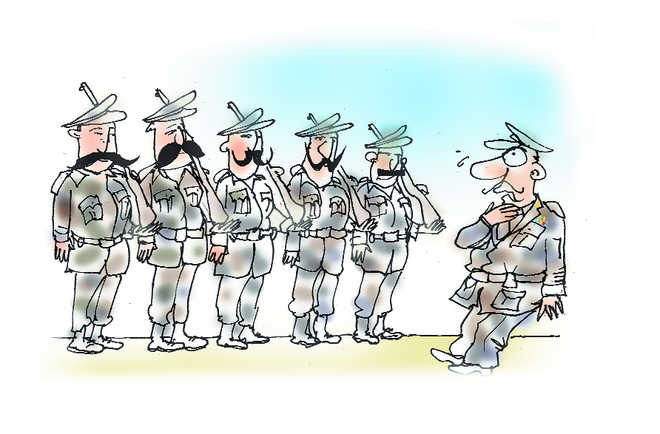
Why are most faujis so humorous?” I enquired of Brig Neeraj Parashar. He responded: “Well, since a fauji’s role is to die for the country with a smile, he may as well practice the smile throughout his life. He certainly can’t practice death!”
“On a more serious note, however”, he continues “since the protection of the country’s borders, even at the cost of their lives, is a prerequisite of the job, humour is a natural defence mechanism for the soldier. An attitude of nonchalance towards life makes the possibility of sudden death or disability less morbid and the daily rigours of fauji life, more endurable.” Armymen know that humour is the best antidote to melancholy, sadness, stress and depression, helping in elevating the mood and diffusing tense situations. A sense of humour indicates high emotional quotient and is a recognised leadership quality for military leaders.
There is an entire sub-section of literature devoted to Army humour. Reams have been written about humour in uniform, mostly by the faujis themselves. The internet has pages devoted to comicality in the army. Army humour appears as comic strips, one-liners, quips, jokes, parody, ridicule, pranks, double entendre and, of course, the famous “barracks jokes”, which are essentially bawdy jokes, rhymes and songs. Some of the milder jokes that have cracked up generations of people are:
What branch of the military do babies join?
The infantry!
What don’t you say to a marine?
I thought you had to be in relatively good physical condition to join the Marine Corps.
What happened to the soldier who went to the enemy bar?
He got bombed.
Reader’s Digest has been running “Humor in Uniform”, the hugely popular column now known as “Offbase”, which has been appearing for half a century and has published “more than 3,500 jokes, quotes, and funny stories from the more than a million readers who have submitted them.” These were compiled into a book with the same name. Several long-running cartoon strips have been based on the funnies in the Army. Mort Walker’s Beetle Bailey (begun on September 4, 1950), set in a United States Army military post where several maladroit soldiers are stationed, was a popular comic strip. Also noteworthy are George Baker’s Sad Sack, Dave Breger’s Private Breger and William Henry “Bill” Mauldin’s Willie & Joe, to name just a few. Hank Ketcham’s strip of Navy humor, was distributed by King Features Syndicate from 1970 to 1975. Nguyen Charlie by Corky Trinidad (later compiled into a book, Nguyen Charlie Encores) was a Vietnam war comic strip. The best Ordnance cartoons came from Sergeant Robert Vittur, USMCR, who found humour in the riskiest of occupations, bomb disposal. He created the popular EOD cartoon character, Mulvaney.
World War II demanded immense perseverance and courage from most American soldiers and gave birth to a lot of authors among whom was former soldier, Spike Milligan who wrote Adolf Hitler: My Part in His Downfall, Rommel? Gunner Who?, Goodbye Soldier and Mussolini: His Part In My Downfall. The bestseller Catch-22 by Joseph Heller is set during World War II, from 1942 to 1944. It mainly follows the life of Captain John Yossarian, a US Army Air Forces B-25 bombardier.
MASH: A Novel About Three Army Doctors and the series of M*A*S*H books that followed were written by Richard Hooker, an American writer and surgeon. The novel was based on his own personal experiences during the Korean War at the 8055th Mobile Army Surgical Hospital.
The Virgin Soldiers by Leslie Thomas (who was briefly involved with the military action against communist rebels in the Malayan emergency) spawned two film versions.
For reasons unknown, although the Indian Army has a long tradition of repartee, humour, bawdy songs and jokes, there aren’t too many officers who have written humour. Among those who have forayed into the realms of writing are Col Sudhir Jee Sharma with Military Anecdotes: Indian Military Humour. Sajita Nair’s debut novel For She’s A Jolly Good Fellow is an amusing take on the life of a woman officer in the Indian Army while Militarily Crazy: The Lighter Side of Life in the Indian Army by Maj Gen. Anil Sengar is a compilation of humorous real-life stories of life in the Indian Army.
Ordered to Laugh: Essentially Indian Humour in Uniform by Sudhir Mudgal is supposedly an “authentic Indian military joke book”. Some fauji wives have also tried their hand at writing humourous books on Army life (Soldier & Spice: An Army Wife’s Life by Aditi Mathur Kumar, Fin, Feather and Field by Simren Kaur)
A specialty of army humour are the quips and one-liners that are, in fact, pithy doses of good sense, but full of wisdom. These form an essential part of the parlance of the armed forces the world over:
Military Expert: One who tells you what’s going to happen tomorrow – then tells you why it didn’t.
All battles are fought at the junction of two or more map sheets… printed at different scales.
Says Col Tarun Parashar: “Spontaneity and timing are essential to humour, as these are to military operations. A good joke is like a well laid ambush, sprung in time, to catch an unsuspecting audience off guard, and …well…. make them die laughing!!”