



Sanjha Morcha

What’s New

Click the heading to open detailed news

Current Events :

web counter

Print Media Reproduced Defence Related News

OROP in with one change, but veterans reject outright

The announcement comes a day after Defence Minister Manohar Parrikar had assured ex-servicemen on OROP implementation before Diwali.
The defence Ministry issued the official notification for One Rank One Pension (OROP) for ex-servicemen late on Saturday evening. The government has reversed its contentious proposal to exclude ex-servicemen who had sought premature retirement from the ambit of OROP, but has not conceded the demands for an annual equalisation of revised pension, for pegging the pension to the maximum of the current pensioners, and for appointing an expert commission with serving military personnel and ex-servicemen representatives.
According to the notification, the government will pay the arrears of OROP in four equal half-yearly installments. However, all family pensioners, including those receiving special or liberalised family pension and gallantry award winners, will get their arrears in a single installment. The pension of past pensioners would be fixed on the basis of the pension of retirees of 2013, and the benefit will be granted from July 1, 2014.
Defence Minister Manohar Parrikar had announced on Friday that the notification would be issued before Diwali.
The notification, which was to follow Parrikar’s formal announcement of the acceptance of OROP on September 5, was delayed after the Model Code of Conduct for the Bihar assembly elections came into effect.Ex-servicemen who have been protesting at Jantar Mantar in New Delhi since June, rejected the notification issued by the defence ministry. “This is not OROP. At best, it is a one-time increment. We totally and outrightly reject it. It reflects a lack of maturity on the part of the political leadership of the government,” Wing Commander (retd) C K Sharma, treasurer of Indian Ex-Servicemen Movement (IESM), told The Sunday Express. On Friday, Group Captain (retd) V K Gandhi, IESM general secretary, had announced that ex-servicemen across the country would return their medals at prominent locations in their cities on November 9-10. The veterans had also announced that they would observe a Black Diwali this year. OROP means military personnel retiring in the same rank with the same length of service would get the same pension, irrespective of their date of retirement. Currently, a Colonel who retired earlier — under the mandate of earlier pay commissions — receives lesser pension than a Colonel who retired after the Sixth Pay Commission came into vogue in 2006. With the Seventh Pay Commission scheduled to submit its report by the end of the year, this difference would have increased further. The demand for OROP had been accepted by the Koshiyari Committee in its report to Parliament in 2011. At an election rally in Rewari in 2013, Narendra Modi, who was then the BJP’s prime ministerial candidate, promised the implementation of OROP. In his first budget in July 2014, Finance Minister Arun Jaitley announced an allocation of Rs 1,000 crore for OROP, but that amount lapsed at the end of the last financial year. As protests by ex-servicemen intensified this year, with some veterans going on an indefinite hunger strike, the defence ministry considered various formulae for OROP. The proposal forwarded by Parrikar to the finance ministry entailed an expenditure of around Rs 8,300 crore this year. That proposal was modified during the announcement made by Parrikar in September, when it excluded veterans who had sought premature retirement. The veterans protested the exclusion, saying that keeping premature retirees out of OROP would exclude 70 per cent of military pensioners. That clause has been removed in the notification, but the government has said that the benefit of OROP will not be extended to military personnel who seek premature retirement now on. The government has, however, stood its ground on other demands of the ex-servicemen. The veterans wanted equalisation of pension every year, or at least every two years, but the government has notified that it would happen only once in five years. They had wanted the revised pensions to be fixed at the maximum of the pension being received by current retirees, but the government has announced that only an average of the maximum and minimum will be given. But the pensions of those who are receiving a higher pension than average will not be reduced. The government has also notified the appointment of a judicial committee to look into anomalies of OROP. The panel will submit its report in six months. The veterans had wanted representation from the military and ex-servicemen in the committee, and its report within 90 days.
In Kabul, Modi calls for end to cross-border terror

Inaugurates new Afghanistan Parliament built with $90 m assistance by India

Kabul, December 25

2015_12$largeimg26_Saturday_2015_003937941

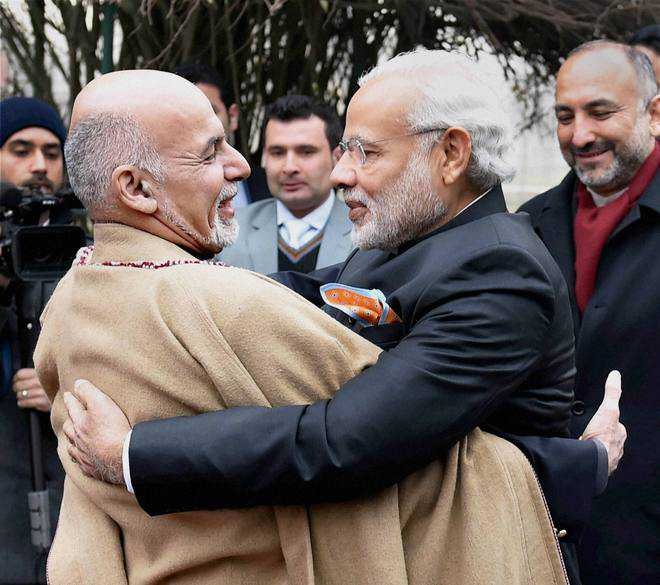
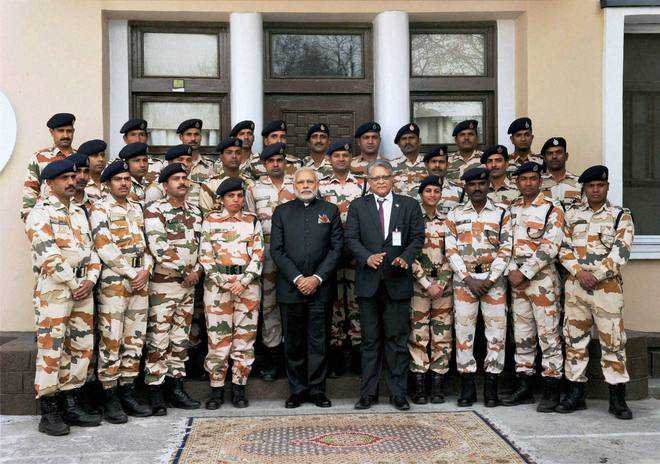
Prime Minister Narendra Modi on Friday called for an end to cross-border terrorism as he inaugurated country’s new parliament building here.Without naming Pakistan, Modi said in an address to Parliament here: “Afghanistan will succeed only when terrorism no longer flows across the border; when nurseries and sanctuaries of terrorism are shut and their patrons are no longer in business.“Terror and violence cannot be the instrument to shape Afghanistan’s future or dictate the choices Afghans make,” he said.Modi reached Kabul early on Friday on his way back from a two-day visit to Russia. He, along with Afghan President Ashraf Ghani, inaugurated the new Parliament building that has been constructed with Indian assistance of $90 million. One block of the building has been named after former PM Atal Bihari Vajpayee.“Bahut dhanyavaad India 4 giving us a new house of democracy. Its a testimony to our unyielding friendship,” Ghani stated in a tweet. In his address, Modi said there were “some who did not want us to be here”. “There were those who saw sinister designs in our presence here. There are others who were uneasy at the strength of our partnership. Some even tried to discourage us.”  He said “those waging war from outside must seek a path to this building and this hall”.The PM said Afghanistan’s success would require the cooperation and support of each of its neighbours.Modi expressed hope that Pakistan would “”ecome a bridge between South Asia and Afghanistan and beyond”. A joint statement issued after a meeting between Modi and Ghani said Afghanistan needed to eliminate terrorism perpetrated from “sanctuaries and safe havens” for peace while identifying terrorism, narcotics and extremism as “serious challenges”. The Mi-25 helicopters India is giving to Afghanistan were also mentioned in the statement, and both sides agreed to expand training opportunities for Afghan security and defence forces. Modi thanked Afghan authorities for ensuring the safety of the Indian embassy in Kabul, the four consulates in Jalalabad, Kandahar, Herat and Mazar-e-Sharif, and Indian nationals in Afghanistan, including those working on various development projects.Earlier, after Modi reached Kabul, Ghani tweeted: “India and Afghanistan enjoy a friendship that dates back to antiquity. We have stood by each other in the best and worst of times.” The two leaders had delegation-level discussions over breakfast.After his address to Parliament, Modi met Afghanistan’s Chief Executive Officer Abdullah Abdullah and former President Hamid Karzai.He also interacted with Indian aid workers in Afghanistan, ITBP personnel and embassy officials. — IANS

Reaching out

Modi pats ITBP men guarding embassyModi spent some time with Indo-Tibetan Border Police personnel deployed to secure the Indian High Commission in Kabul. He lauded their courage and dedication by complimenting them with a “keep it up” remark. The armed contingent is stationed to guard the facility and diplomatic staff in Kabul since 2002. The ITBP also guards India’s four consulates in Jalalabad, Mazar-e-Sharif, Kandahar and Herat.500 scholarships for martyrs’ childrenThe PM announced 500 scholarships for children of the martyrs of Afghan security forces. The Prime Minister, in his address in Afghan Parliament said: “You know India is here to lay the foundations of future, not light the flame of conflict; to rebuild lives and not to destroy a nation. Today, I announce 500 scholarships for children of the martyrs of Afghan security forces while scheme of 1000 scholarships will continue.”

US, UN welcome Modi-Sharif meet

  • The US on Friday said improved ties between the two countries will benefit the entire region. “Better relations between neighbours will benefit the people of the entire region,” said a US State Department spokesman
  • UN Secretary-General Ban Ki-moon hoped the dialogue would be strengthened further

…Invokes ‘Sher Khan’ and ‘Kabuliwalla’

Kabul, December 25

2015_12$largeimg26_Saturday_2015_005733243

The memorable portrayal of a Pathan — Sher Khan — by actor Pran in Bollywood movie “Zanjeer” found its way into diplomacy as PM Narendra Modi mentioned it to underscore how Indians view Afghans as true and magnanimous friends.And not just Sher Khan, the character “Kabuliwalla” in story by that name penned by Rabindranath Tagore too figured in Modi’s speech to Afghan Parliamentarians, as did the successes of Afghan cricket team to highlight the strong cultural and people-to-people bond between the two peoples. In his address, Modi lauded the Afghan people for their valour, courage and magnanimous friendship and then went to recite lyrics of a song in “Zanjeer” filmed on “Hindi cinema’s most favourite Pathan character — Sher Khan”.“Yaari hai imaan mera, yaar meri zindagi”, a smiling Modi said and then translated it for Afghan parliamentarians, that “friendship is my faith and friend is my life”. This, he said, is how India views Afghans in its centuries long relationship, the Prime Minister said. — PTI


OROP notification hailed

Mandi, November 8
Retired personnel of the armed forces have appreciated the Central Government for issuing a notification regarding nearly 45-year-old demand of one-rank one-pension (OROP) scheme.
In a statement issued here today, Honorary Commissioned Officers’ Welfare Association of Himachal Pradesh president Capt Jagdish Verma (retd) said the implementation of the scheme would benefit more than 25 lakh ex-servicemen and their families.
Capt Verma said all members were obliged by the Centre for issuing the notification regarding OROP and making it a reality. He further stated that today was a historical day and more than 1.45 lakh ex-servicemen are going to benefit. — TNS


The rebels who wrote history

Ravjot Grewal

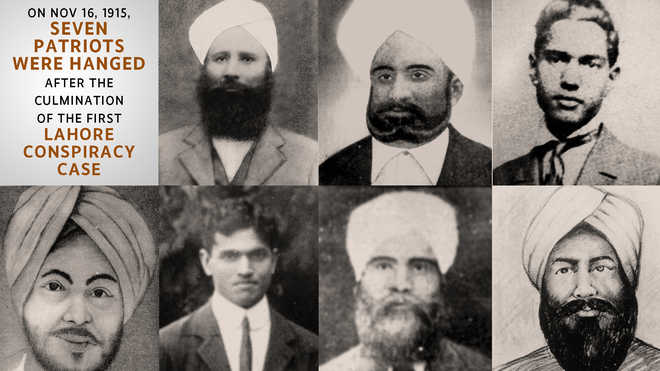
A little more than a hundred years ago, on November 16, 1915, seven patriots were hanged to death after the culmination of what became popular as the first Lahore Conspiracy Case. These included Bakshish Singh, Jagat Singh, Vishnu Ganesh Pingle, Surain Singh s/o Boor Singh, Surain Singh s/o Ishar Singh, Harnam Singh and Kartar Singh Sarabha. These trials were to have an enduring impact on the psyche of Punjab and reverberations on India’s history. These hangings by the colonial government were one of the many in order to curb the war declared by the Ghadarites on the colonial government in India in February of 1915.

Events that led to Ghadar

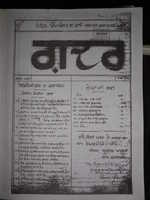
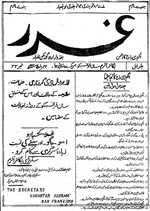
A week after Britain declared war on Germany on August 4, 1914, a clarion call had appeared in Ghadar, a weekly revolutionary newspaper published from San Francisco, summoning its overseas Indian readers to return to their homeland and fight. It said the opportunity to free their country from slavery had arrived. 

This was so because Britain was quite vulnerable due to depletion of troops and resources. Also, its arch-enemy Germany was offering support to various revolutionary movements which had the potential of undermining the strength of the Empire. These included the Indian and Irish national revolutionists and the pro-Ottoman pan-Islamists. This was how the Ghadar Movement was launched among the Punjabi migrant workers in North America in 1913. It was characterised by a predominant Punjabi male participation and was a ringing explosion in the ears of the imperial government of the time.

The Ghadar Party was established by the Punjabi Sikhs of the USA and Canada in June 1913 also known as the Hindi Association of the Pacific Coast. The word ‘Ghadar’ means “mutiny” or “rebellion” or “revolt”. On November 1, 1913, the Ghadar Party issued their first newspaper from University of California in Berkeley. This party was originally built around the weekly paper Ghadar. For the first time, a true picture of the British rule was shown in the journal, simultaneously enunciating a vision for the future of India. In fact, the founders envisioned that the Ghadar would do the work of preparing the Indians for revolt until the actual war. 

Today, it is important to remember the martyrs and the specific conditions that led the erstwhile loyal ‘Sikhs’ to turn against their imperial benefactors. At the heart of the movement was the Punjabi farmer-soldier-turned-labourer abroad, driven out by the accretion of economic problems at home.

In the decade before the seeds of this large-scale unrest were sown by the imperial government in Punjab, the agrarian legislation, the colonisation Bill, issues of water rates and enhancement of land revenue had largely contributed to Punjabi men being forced to migrate in search of economic opportunities. At the same time the Indian National Association, the Indian National Congress, the Swadeshi Movement and the activities of Zamindara League (Unionist Party) had contributed to the political awakening of the Punjabis.

The Sikh connection

It is a curious question of history as to how the Sikh community in Punjab which was given the distinction of being a ‘martial race’ by the British, turned around to demand complete independence and plan a violent stratagem against their benefactors. The spectacular display of material prosperity, the spring of freedom in the steps of white people and the opportunities of economic mobility in the USA and Canada led the pioneer migrants to understand their own depravity induced by slavery to an imperial power. The white Canadians and Americans believed that they belonged to a superior and civilised race whereas Indians and other Asians were considered uncivilised.

During the first decade of the 20th century, 5,000 Indians reached Canada. Out of these more than 90 per cent were Sikhs. The harsh racial differentiation, violent attacks by white labourers and hoodlums led to a feeling of humiliation and shame among these Indian migrants. They believed they were subjected to this treatment because they were citizens of a slave nation. The British at that time did not want Indians associating or interacting with white people. This led to measures being taken by the Canadian government, then a colony of Britain, discouraging immigration from India. The freedom offered by these countries to the migrants propelled the transition to a demand for a more just social order.

These socio-political conditions led to the birth of the Ghadar Party, a party that gave expression to the evolved understanding of the repercussions of colonial rule in India. Although strict interpretation of its character is difficult without being unfair to its secular participants, numerically the Ghadar was largely a Sikh movement. The Komagata Maru incident was the final spark that ignited an already inflamed Sikh pride. The aftermath of this incident was a burst of revolutionary activity in the migrant Sikhs to redeem themselves from both the shame of allegiance to the British government in 1857 and their own cursed status as a slave nation.

Literary legacy

The Ghadar was no ordinary movement neither in its scope of influence nor its tactics. Maia Ramnath has observed in her book, Haj to Utopia that the Ghadar’s printed material served as connective tissue or switching circuit, capable of linking various elements among the Indian radicals abroad. It also linked Indian radicals to other networks, and  also connected pre to post-war revolutionary movements inside the country. This movement in its overall assessment has been termed as a “heroic failure” by Ghadar historian Harish K Puri. Although it largely failed to impact the colonial government in ways its members had originally anticipated, its cultural reach extends to this day.

The literature of Ghadarites was strikingly separate from any talk of fatalism. Instead it spoke to the higher ideal in men while looking at the ultimate fate in its eye. It remains a shiny reminder of the refusal of a population which formed the spine of the military prowess of the colonisers to yield to exploitation, a doomed attempt of unthinkable courage and splendid patriotism. It is a story of our forefathers which merits remembrance and retelling.

The Ghadar Movement was the first Indian movement with truly global linkages that effectively kick-started the movement of immigrants for equal rights and consolidated the integration of migrants into their new nations. It needs to be remembered that the participants being largely Sikh, the ideas of egalitarianism, sacrifice, service and martyrdom formed the bedrock of the political thinking of this and the later resistance movements in the region.

A struggle like Ghadar which failed in its overall objective and did not gain the large-scale support of the citizenry has a tendency to be relegated into historical insignificance. However, this is the exact reason why it must be remembered that not every battle is about victory.

Parallels can be drawn with the widespread desire of today’s Punjabi youth for migration abroad. The fact that it speaks volumes about the socio-economic conditions here is not lost to anyone. The demand for fair migratory opportunities is a prominent legacy of the Ghadar.

The rejection of sectarianism, calling out for social justice and demand for a just society, are vestiges of its cultural impact. In line with Kartar Singh Sarabha’s daring conviction ‘the blood of martyrs never goes waste’, the failure of the Ghadar Movement proved to be a landmark in the struggle for freedom. It inspired the likes of Bhagat Singh who considered Kartar Singh Sarabha his role model towards a revolutionary change. It will be right to conclude that the dreams of these primal modern revolutionaries must be remembered on the day of their martyrdom to serve as a light post for the future we aspire to as a society and a country and to forever be grateful.

Revolutionary literature 

Another enduring legacy of the Ghadar Movement was the poetry and the prose published in the Ghadar newspaper. The idea being to stir its readership in East Asia, North and South America, Mesopotamia and East Africa into revolutionary action. The Ghadarites spoke of confrontation with the British even before the actual ailan-e-jung (declaration of war) was declared at the outbreak of World War 1. The Punjabis had been occupied by the colonial rulers six decades prior and certainly had an evolved political sensibility by then. The Ghadar poetry was a pithy analysis of the causes of their condition and provided ample inspiration for dramatic activity. Giving vent to the migrant experience, it evoked deep emotions in a people who had historically learnt to fight injustice through arms. Their folklore and the 18th century history of Punjab had led to a belief that arms will be more decisive than words. However, words would prepare a template in the form of a population egging to revolt. Ghadar di Gunj, the nationalist and socialist literature published in the weekly Ghadar, was filled with details of exploitation and loot which filled its readers with uncontrollable resentment. The Ghadarites, in fact, were the first to emphasise that to live with dignity and pride even in a foreign land, it was essential to drive the foreigners out of their motherland.


India, Pak armies agree to keep communication channels alive

The two sides discussed ceasefire skirmishes, air space violations and construction near the LoC, acknowledged each other’s efforts in maintaining peace. COLONEL SD GOSWAMI, Jammu-based defence spokesperson

JAMMU: The armies of India and Pakistan on Tuesday agreed to exercise restraint along the line of control and keep the communication channels alive, in the first meeting since the two countries resumed talks to resolve bitter issues.

Battalion commanders of the two armies held a flag meeting at Chakan-Da-Bagh in Poonch sector at 11am and discussed issues, including ceasefire skirmishes, air space violations and construction near the line of control (LoC).

Jammu-based defence spokesperson Colonel SD Goswami said: “Both sides acknowledged each other’s efforts in maintaining peace along the LoC.”

Prime Minister Narendra Modi had on December 15 said New Delhi was resuming talks with Islamabad to “try and turn the course of history” and bring an end to terrorism.

In a joint statement issued in Islamabad after external affairs minister Sushma Swaraj’s visit, India and Pakistan bilateral

had agreed to discuss all issues, including Jammu and Kashmir.

Nearly a week ahead of Swaraj’s visit to Pakistan, the army had shot dead three militants in Poonch sector on December 2.

The two armies had last held a meeting at Chakan-Da-Bagh area in September to defuse tension after about two months of consistent cross-border firing.

61190 64034


China’s Tibet: A story of progress

Tibet has been part of China since ancient times. It enjoys development and religious freedom
Those who claim that the Chinese government violates the religious freedom of Tibetans harbour ulterior motives

Sun Weidong

This year marks the 70th anniversary of the founding of the People’s Republic of China (PRC) and the 60th anniversary of democratic reform in Tibet. Over the past 60 years, under the leadership of the Communist Party of China, great changes have taken place in Tibet. Politically, the backward feudal serfdom was abolished and a socialist system with people as masters and regional ethnic autonomy was established. Economically, Tibet has enjoyed double-digit growth for 26 consecutive years. Its GDP in 2018 was 147.763 billion RMB Yuan, up by 9.1% year-on-year, a growth rate leading the country. Culturally, Tibetan language has become the first ethnic minority language in China to meet international standards. Books and cultural programmes in the Tibetan language are rich and colourful. In education, from a place with less than 2% of children school enrolment rate and 95% of youth illiteracy rate 70 years ago, it has progressed to boast a 9.55-year per capita schooling in 2018. In the religious field, it has over 1,700 religious sites and over 46,000 resident monks and nuns. Each year, millions of people come to Lhasa to worship the Buddha.

Tibet is a homeland shared by Tibetan and other ethnic groups of China. In the 7th century, the then Tibetan ruler Songtsan Gambo married Princess Wencheng of the Tang dynasty of China, and Buddhism was introduced into Tibet from the Tang Empire. In the 13th century, the Yuan dynasty brought Tibet under its direct administration. The following Ming dynasty continued to strengthen the administration of Tibet. During the Qing dynasty, the reincarnation system for living Buddhas was established in Tibet. Historical records prove that Tibet has been part of China since ancient times. In today’s world, it is universally recognised that Tibet is an integral part of China, and no country has ever recognised “Tibetan independence”. And there is no such thing as the so-called “political status” of Tibet.

In recent years, journalists from countries including India have visited Tibet. They have witnessed the economic and social achievements, religious freedom, and the happy life enjoyed by the Tibetan people. More and more people have begun to view the current situation in Tibet in a rational and objective light, and rethink the false accusations made by the Western media. The Chinese government protects citizens’ religious freedom according to its constitution and laws. Those who claim “the Chinese government violates religious freedom of the Tibetan people” either have never been to Tibet or harbour ulterior motives.

The reincarnation of the living Buddha is the unique inheritance system of Tibetan Buddhism. In 1653 and 1713, the Qing emperors granted honorific titles to the 5th Dalai Lama and the 5th Panchen Lama, officially establishing the titles of the Dalai Lama and Panchen Erdeni and their political and religious status in Tibet.

In 1793, the Qing government promulgated the ordinance by the Imperial House Concerning Better Governance in Tibet (29 Articles), stipulating that the reincarnation of the Dalai Lama and other living Buddhas shall follow the procedure of “draw of lots from the golden urn”, and that the selected candidate is subject to approval by the central authorities of China. The current 14th Dalai Lama was approved by the then national government of China and was enthroned through the “Sitting-in-Bed” ceremony in 1940. The 11th Panchen Lama was selected by a draw of lots from the golden urn, approved by the central government of the PRC and then enthroned through the “Sitting-in-Bed” ceremony in 1995. In 2007, the Chinese government promulgated the management measures for the reincarnation of living Buddhas in Tibetan Buddhism, putting the reincarnation of living Buddhas under the rule of law. At present, there are 1,331 living Buddhas in China, among which 356 are in Tibet. Their reincarnation must all comply with national laws and regulations, religious rituals and traditional customs.

On June 23, 2003, China and India signed the Declaration on Principles for Relations and Comprehensive Cooperation Between the PRC and the Republic of India, in which India recognises that Tibet Autonomous Region is part of the territory of the PRC and India does not allow Tibetans to engage in political activities against China in India. This commitment was reaffirmed in subsequent bilateral documents between the two countries. China appreciates India’s position. It hopes and believes that India, as a responsible major country, will stick to its position, honour its commitments, resist interference on Tibet-related issues and promote the healthy and stable development of China-India relations.

Sun Weidong is the Chinese ambassador to India

The views expressed are personal


Indian Air Force is in dire need of fighter aircraft

THE GOVT’S LACK OF UNDERSTANDING OF OPERATIONAL NECESSITIES, COUPLED WITH PROPENSITY FOR INDECISION, HAS LED TO A PROGRESSIVE FALL IN AIR FORCE’S POTENTIAL

Despite 32 long years’ effort, India has not been able to indigenise its military aviation sector to any reckonable degree. We made no effort to go beyond licence production, unlike our northern neighbour which resorted to large-scale reverse engineering of Soviet/Russian equipment. As a result, China is today able to export almost the entire range of weapon systems.

Our LCA (light combat aircraft), Tejas, planned to be inducted into service in the early 1990s, still remains mired in serious problems. The goalpost keeps shifting periodically. The Indian Air Force (IAF) is rarely kept in the decision-making loop. It could not even make good the depleting strength by acquiring fighters from foreign vendors. In order to remain afloat, the IAF had to continuously resort to upgradations and modifications. This may be a desirable modus operandi in keeping with the military economy, but certainly not so without near-future modernisation plans being in the pipeline. As of now, French Rafale, Russian T-50 and our own Tejas are all nowhere near realisation. Both Rafale and fifth-generation T-50 remain stuck in indecision and protracted negotiations.

The leisurely decision-making process with regard to 126 multi-role combat aircraft (Rafale) had the negotiation going on for years without realising the cost implications. High inflation prevalent in the armament industry results in cost escalation. Besides, such delays also end up compromising the competitive edge that is sought to be acquired vis-à-vis the adversary. The IAF’s potential to cope with any serious conflict situation presently seems doubtful at best. A two-front war, if imposed in the shortterm perspective, could prove to be a calamity.

TEJAS’ LIMITATIONS

Under the circumstances, India will have to continue procuring foreign fighter jets as relying entirely on the LCA would not meet the IAF’s varied requirements. Tejas falls well short both in terms of number and capability. It cannot meet multiple role requirement of the air force.

It is yet to incorporate additional capabilities such as mid-air refuelling, missile carriage capability, selfprotection jammers, redesigning of layout of internal systems to improve aircraft maintainability and state-ofthe-art onboard radar etc. As per Hindustan Aeronautics Limited (HAL), Tejas would need a number of major upgradations for it to become a technologically viable stateof-the-art fighter.

Besides, Tejas is also yet to get operational clearance, without which its operational performance and survivability will remain limited. As of now, 20 permanent and 33 temporary waivers are pending before it can be given final operational clearance (FOC). That is why the air force had placed the order only for a limited number of aircraft, though it needs around 100 or so. Recently, some understanding was reached between the user (IAF), designer (Defence Research and Development Organisation) and the manufacturer (HAL) regarding Tejas’ specifications. Once these are implemented, the air force would place additional orders to the tune of 120 or so.

RAFALE ROW

The air force needs multi-role combat aircraft of Rafale’s genre. It requires at least six to eight squadrons (16 to18 aircraft per squadron) of this type of fighter as soon as possible. But the government once again put the IAF in a quandary by declaring suddenly in April to procure only 36 Rafales (two squadrons) in fly-away condition against 126 that were being negotiated all these years. Turning down the IAF’s request for muchneeded latest-generation aircraft on the grounds of cost, the government told it to fill the gap with indigenous ‘32 years in labour’ Tejas. Even the IAF’s demand of 127 fifthgeneration Russian fighters has been cut to half.

The government is not quite realising that the IAF is in dire need of fighter aircraft. Lack of understanding of operational necessities, coupled with propensity for indecision, has led to a progressive fall in the IAF’s potential. A consequent fall in competitive edge has reached a worrisome stage.

Against 45 fighter squadrons required to meet multifarious tasks in case of a two-front war, the air force has only 35 as of now, which will further reduce to 32 or so by the end of this year. This includes a large number of obsolete MiG-21s and MiG-27s. The air force will be down to 25 squadrons by 2022 at the current pace of acquisitions and phasing-out. But the government seems more inclined towards the “make in India policy” rather than adopting a pragmatic approach in the face of the fast-developing critical situation.

Where does the air force stand in the future? It seems to be a scary reflection. The need of the hour is to strike a balance between being ready for war at all times and allowing the partially-developed indigenous technologies to fructify. It’s the performance and role compatibility that the air force is looking for. The government must evolve a viable option soon for the IAF to continue to retain its dominant status in the region.

The writer is former director general, Defence Planning Staff. The views expressed are personal


In hallowed corridors, 50 years later by Maj Gen RS Mehta (retd)

In hallowed corridors, 50 years later


THE stately church spire of Christ Church School that dramatically rose out of the dense, surrounding foliage drew me to it inexorably. A closer look revealed low, buff-coloured school buildings edged with bright green lines nestling cosily alongside the grand Gothic architectural marvel of 1878.

It was the magical summer of 1964. I was a scalawag standard 10 student in pedigreed St Francis High School in Lucknow; a city known for its pehle aap refinement in language and deportment. My newly acquired friend Abbas Qezilbash and I had just returned from a state basketball tour on the Isle of Serendip, Ceylon (now Sri Lanka). We had a girls’ team with players from spiffy Loreto Convent/Isabella Thoburn College and a men’s team, where Abbas and I were the only boy players among grown-up men. He was from Sainik School/La Martiniere. On a whim, both of us jumped ship, joining Christ Church. With no scholastic achievements, I recall how surprised and delighted I felt when the stern, black-gowned principal, Rev Theodore Tiwari, announced in assembly that we had been selected to represent UP in the Bombay nationals.

I recall Reverend Tiwari’s no-nonsense English classes, and Headmistress A Vashishth’s heels as she tirelessly patrolled corridors, maintaining discipline and teaching standards. We feared and respected her, but could still catch her twinkling eyes. I recall the moving pre-Senior Cambridge exam church ceremony to wish us well, and also, the infectious joy when it was announced that the school had become a college.

After clearing ‘Intermediate’, I joined Lucknow University in BA (Arts) in 1967, leaving in 1968, after being selected for the Army. Call it providence, but Abbas followed me six months later, joining my company, with I, good-naturedly, ragging him on arrival as his senior. He later joined my Cavalry Regiment. We remained friends but later military destiny took over. Years later, I heard of his untimely demise. Life has its own cadence and we can’t claim we fully comprehend its ebb and flow…

Long after my retirement, in 2015, I got in touch with Mr RK Chattree, the college principal. My offer of a motivational talk at my alma mater was accepted, with a request that I be the chief guest at the college sports day.

It was homecoming of a moving kind. I walked down the same corridors I had once treaded with trepidation as a 16 year old; entered a classroom I had once feared. The children who heard me learned a bit about my recall of a great school and what lay ahead of them in seeking excellence.

The next day, I was transported on sepia memory; privileged to bless children whose names I proudly read out as Reverend Tiwari had once read out our names for sporting achievements 50 years ago.


Parrikar visits US Pacific Command at Hawaii

Parrikar visits US Pacific Command at Hawaii
short by Aditya Kashyap / 11:12 pm on 08 Dec 2015,Tuesday
Manohar Parrikar on Tuesday became the first Indian Defence Minister to visit the US Pacific Command Headquarters in Hawaii. Parrikar and Pacific Command (PACOM) Commander Admiral Harry Harris discussed the importance of expanded maritime cooperation between the two nations, PACOM spokesperson said. Parrikar is scheduled to meet US Defence Secretary Ashton Carter at the Pentagon on December 10.

61004 62431 61586


NGO starts campaign for martyrs’ children

Tribune News Service
Chandigarh, October 21

A campaign, ‘Shaurya, Ye Diwali Veer Pariwar Ke Saath’, which will focus on expressing gratitude and paying tributes to the Indian Army martyrs’ and their families, was unveiled by an NGO, I am Still Human (IASH), here today.

The motive of the campaign is to sensitise the civilian population about the need for ensuring welfare of the martyrs’ kin, especially their children.

Under the Shaurya campaign, the IASH will collect useful Diwali gifts for children of martyrs of the Jammu and Kashmir Rifles (J&K Rifles), who are living in the regiment’s hostel in Jabalpur. The Army had set up the hostel to take care of 65 children whose fathers were killed in the line of duty.

Volunteers of the IASH will take a trip to Jabalpur on two motorbikes. A car carrying the gifts will accompany the motorcyclists. The trip will be flagged off from Zirakpur on October 25 and the volunteers will spend Diwali with the children.