Sanjha Morcha

What’s New

Click the heading to open detailed news

Current Events :

web counter

Print Media Reproduced Defence Related News

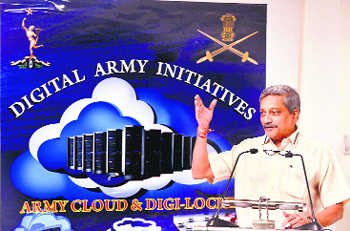
No more concessions on OROP: Parrikar

Tribune News Service
New Delhi, November 9
images (1)

Even as ex-servicemen have expressed their dissatisfaction over the terms of the ‘one rank, one pension’ (OROP) scheme, Defence Minister Manohar Parrikar today ruled out any more concessions on OROP.
Parrikar said “This is democracy. Everyone has the right to demand. But the maximum… their main demand for same pension for same rank has been given. Rest is everything that we had declared (on September 5). Out of that, the confusion about VRS has been removed,” Parrikar said on the sidelines of a function in New Delhi. VRS is known as pre-mature retirement (PMR) in the forces.
The minister said the “basic core issue” had been addressed and if there was a problem, the judicial commission would look into that. He was replying to questions on veterans being unhappy with the OROP notification issued by the government on Saturday.
Meanwhile, Air Force Chief Arup Raha said the government had given directions on the OROP issue and everyone should accept it.
He said if anomalies were still persisting, these could be sorted out in due course of time. The notification does not include the demands for an annual equalisation of revised pension, for pegging the pension to the maximum of the current pensioners, and for appointing an expert commission with serving military personnel and ex-servicemen representatives.
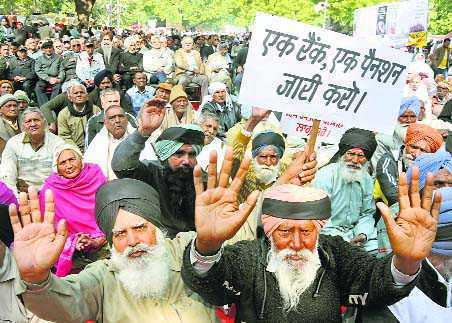
Ex-servicemen, who have been protesting at Jantar Mantar in New Delhi since June, rejected the notification. Maj Gen Satbir Singh (Retd), Chairman of Indian Ex-Servicemen Movement spearheading the protest, had said, “The notification will not be acceptable to the rank and file. It is not one rank, one pension but one, rank, five pensions”.


Indian Army, PLA commit to peace on LAC in Ladakh

army_china_festive_meet_07_11_2015
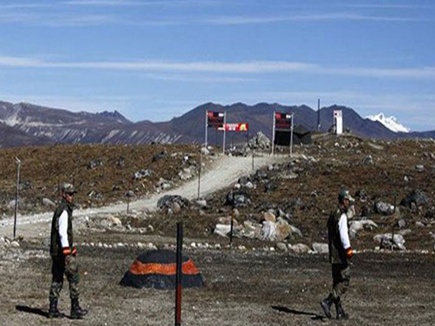
The Indian Army and People’s Liberation Army (PLA) of China Saturday held a meeting along the Line of Actual Control (LAC) in Chushul Sector of Ladakh in Jammu and Kashmir to ensure peace on borders.

“A Ceremonial Border Personnel Meeting (BPM) on the occasion of ‘Diwali Festival’ was conducted at Indian BPM hut in Chushul Sector of Eastern Ladakh and at Dulat Beg Oldie (DBO) in eastern Ladakh. The Indian delegation was led by Brigadier R S Raman in Chushul and by Colonel B S Uppal in DBO. The Chinese delegation was led by Colonel Cao Guasheng in Chushul and by Colonel Song Zhang Li in DBO,” defence spokesperson S D Goswami said in a statement.

He said both the delegations interacted in a free, congenial and cordial environment and parted amidst feeling of friendship and commitment towards enhancing the existing cordial relations and maintaining peace along the LAC.

“Both sides also sought to build on the mutual feeling to uphold the treaties and agreements signed between the Governments of the two sides to maintain peace and tranquillity along the LAC,” the defence spokesman said.

He added that both the sides also sought to build on the mutual feeling to uphold the treaties and agreements signed between the governments of the two sides to maintain peace and tranquillity along the LAC.

Indian and Chinese troops, last year, locked in a three-week long stand-off in the Chumar and Demchok areas of eastern Ladakh, which was resolved by way of an understanding reached between the two sides to carry out disengagement and redeployment of border troops to restore the “status quo ante.”


ਇੱਕ ਰੈਂਕ-ਇੱਕ ਪੈਨਸ਼ਨ ਦੀ ਚੁਣੌਤੀ

ਕੇਂਦਰ ਸਰਕਾਰ ਵੱਲੋਂ ਸਾਬਕਾ ਫ਼ੌਜੀਆਂ ਨੂੰ ‘ਇੱਕ ਰੈਂਕ-ਇੱਕ ਪੈਨਸ਼ਨ’ ਦੇ ਫਾਰਮੂਲੇ ਤਹਿਤ ਪੈਨਸ਼ਨ ਦੇਣ ਸਬੰਧੀ ਨੋਟੀਫਿਕੇਸ਼ਨ ਭਾਵੇਂ ਜਾਰੀ ਕਰ ਦਿੱਤਾ ਗਿਆ ਹੈ, ਪਰ ਇੰਡੀਅਨ ਐਕਸ ਸਰਵਿਸਮੈੱਨ ਮੂਵਮੈਂਟ ਵੱਲੋਂ ਇਸ ਨੂੰ ਰੱਦ ਕਰਨ ਕਰਕੇ ਰੇੜਕਾ ਹਾਲੇ ਵੀ ਬਰਕਰਾਰ ਜਾਪਦਾ ਹੈ। ਸਾਬਕਾ ਫ਼ੌਜੀਆਂ ਵੱਲੋਂ ‘ਇੱਕ ਰੈਂਕ-ਇੱਕ ਪੈਨਸ਼ਨ’ ਦੀ ਮੰਗ ਲਗਪਗ ਚਾਰ ਦਹਾਕਿਆਂ ਤੋਂ ਕੀਤੀ ਜਾ ਰਹੀ ਹੈ। ਇਸ ਸਮੇਂ ਦੌਰਾਨ ਵੱਖ-ਵੱਖ ਸਰਕਾਰਾਂ ਵੱਲੋਂ ਇਸ ਮੰਗ ਦੀ ਪੂਰਤੀ ਲਈ ਸਮੇਂ ਸਮੇਂ ਕੀਤੇ ਵਾਅਦਿਆਂ ਉੱਤੇ ਅਮਲ ਨਾ ਹੋਣ ਕਾਰਨ ਸਾਬਕਾ ਫ਼ੌਜੀਆਂ ਨੇ ਆਰ-ਪਾਰ ਦੀ ਲੜਾਈ ਲੜਨ ਵਜੋਂ ਮੁਲਕ ਦੀ ਰਾਜਧਾਨੀ ਵਿੱਚ ਜੰਤਰ-ਮੰਤਰ ’ਤੇ ਅਣਮਿੱਥੇ ਸਮੇਂ ਦਾ ਧਰਨਾ ਸ਼ੁਰੂ ਕਰ ਦਿੱਤਾ ਸੀ। ਇਸ ਧਰਨੇ ਨੇ ਨਾ ਕੇਵਲ ਸਾਬਕਾ ਫ਼ੌਜੀਆਂ ਦੀ ਇਸ ਮੰਗ ਵੱਲ ਸਮੁੱਚੇ ਦੇਸ਼ ਵਾਸੀਆਂ ਦਾ ਧਿਆਨ ਖਿੱਚਿਆ ਸਗੋਂ ਲੋਕਾਂ ਨੂੰ ਇਹ ਵੀ ਅਹਿਸਾਸ ਕਰਵਾਇਆ ਕਿ ਸਰਕਾਰ ਦੇਸ਼ ਦੀ ਰੱਖਿਆ ਲਈ ਹਰ ਕੁਰਬਾਨੀ ਕਰਨ ਵਾਲੇ ਸੈਨਿਕਾਂ ਨਾਲ ਵੀ ਬੇਇਨਸਾਫ਼ੀ ਕਰ ਰਹੀ ਹੈ। ਇਸ ਧਰਨੇ ਸਦਕਾ ਲੋਕਾਂ ਵਿੱਚ ਸਾਬਕਾ ਫ਼ੌਜੀਆਂ ਦੀਆਂ ਮੰਗਾਂ ਦੇ ਹੱਕ ਵਿੱਚ ਪੈਦਾ ਹੋਏ ਵੱਡੇ ਉਭਾਰ ਅਤੇ ਸਰਕਾਰ ਪ੍ਰਤੀ ਰੋਸ ਦੇ ਮੱਦੇਨਜ਼ਰ ਕੇਂਦਰ ਸਰਕਾਰ ਨੇ 5 ਸਤੰਬਰ ਨੂੰ ਸਾਬਕਾ ਫ਼ੌਜੀਆਂ ਦੀ ਇੱਕ ਰੈਂਕ ਇੱਕ ਪੈਨਸ਼ਨ ਦੀ ਮਹੱਤਵਪੂਰਨ ਮੰਗ ਸਵੀਕਾਰ ਕਰ ਲੈਣ ਦਾ ਐਲਾਨ ਤਾਂ ਕਰ ਦਿੱਤਾ ਸੀ, ਪਰ ਨੋਟੀਫ਼ਿਕੇਸ਼ਨ ਜਾਰੀ ਕਰਨ ਲਈ ਕੁਝ ਸਮਾਂ ਮੰਗਿਆ ਸੀ। ਰੱਖਿਆ ਮੰਤਰੀ ਮਨੋਹਰ ਪਰੀਕਰ ਵੱਲੋਂ ਕੀਤੇ ਗਏ ਐਲਾਨ ਨਾਲ ਭਾਵੇਂ ਯੂਨਾਈਟਿਡ ਫਰੰਟ ਆਫ਼ ਐਕਸ ਸਰਵਿਸਮੈੱਨ ਨੇ ਧਰਨਾ ਤਾਂ ਖ਼ਤਮ ਕਰ ਦਿੱਤਾ ਸੀ, ਪਰ ਕੁਝ ਮੁੱਦਿਆਂ ’ਤੇ ਸਹਿਮਤੀ ਨਾ ਹੋਣ ਕਰਕੇ ਦਵੰਦ ਬਰਕਰਾਰ ਰਿਹਾ ਸੀ। ਮਗਰੋਂ ਪ੍ਰਧਾਨ ਮੰਤਰੀ ਵੱਲੋਂ ਸਪਸ਼ਟੀਕਰਨ ਦੇਣ ਅਤੇ ਰਹਿ ਗਈਆਂ ਊਣਤਾਈਆਂ ਨੋਟੀਫ਼ਿਕੇਸ਼ਨ ਜਾਰੀ ਕਰਨ ਸਮੇਂ ਖ਼ਤਮ ਕਰਨ ਦੇ ਦਿਵਾਏ ਗਏ ਵਿਸ਼ਵਾਸ ਤਹਿਤ ਸਾਬਕਾ ਫ਼ੌਜੀਆਂ ਨੇ ਆਪਣਾ ਅੰਦੋਲਨ ਵਾਪਸ ਲੈ ਲਿਆ ਸੀ।
ਦੋ ਮਹੀਨਿਆਂ ਮਗਰੋਂ ਕੇਂਦਰ ਸਰਕਾਰ ਵੱਲੋਂ ਸਾਬਕਾ ਫ਼ੌਜੀਆਂ ਦੀਆਂ ਮੰਗਾਂ ਸਬੰਧੀ ਨੋਟੀਫ਼ਿਕੇਸ਼ਨ ਜਾਰੀ ਕਰਨ ਨਾਲ ਵੀ ਸਾਬਕਾ ਫ਼ੌਜੀ ਸੰਤੁਸ਼ਟ ਨਹੀਂ ਹੋਏ ਜਾਪਦੇ। ਜੰਤਰ ਮੰਤਰ ਵਿਖੇ ਧਰਨਾ ਸ਼ੁਰੂ ਕਰਨ ਵਾਲੀ ਸਾਬਕਾ ਫ਼ੌਜੀਆਂ ਦੀ ਜਥੇਬੰਦੀ ਇੰਡੀਅਨ ਐਕਸ ਸਰਵਿਸਮੈੱਨ ਮੂਵਮੈਂਟ ਨੇ ਸਰਕਾਰ ਵੱਲੋਂ ਜਾਰੀ ਕੀਤੇ ਗਏ ਨੋਟੀਫ਼ਿਕੇਸ਼ਨ ਨੂੰ ਰੱਦ ਕਰ ਦਿੱਤਾ ਹੈ। ਉਨ੍ਹਾਂ ਅਨੁਸਾਰ ਨੋਟੀਫ਼ਿਕੇਸ਼ਨ ਵਿੱਚ ਪੈਨਸ਼ਨ ਦਾ ਆਧਾਰ ਕੈਲੰਡਰ ਸਾਲ 2013 ਦੀ ਥਾਂ ਵਿੱਤੀ ਸਾਲ 2013 ਹੋਣਾ ਚਾਹੀਦਾ ਹੈ। ਜਾਰੀ ਕੀਤੇ ਗਏ ਹੁਕਮਾਂ ਅਨੁਸਾਰ ਇੱਕ ਰੈਂਕ-ਇੱਕ ਪੈਨਸ਼ਨ ਦੀ ਥਾਂ ਪੰਜ ਪੈਨਸ਼ਨ ਵਾਲੀ ਸਥਿਤੀ ਬਣ ਗਈ ਹੈ। ਸਾਬਕਾ ਫ਼ੌਜੀਆਂ ਨੇ ਇਹ ਹੁਕਮ ਪਹਿਲੀ ਜੁਲਾਈ 2014 ਤੋਂ ਲਾਗੂ ਕਰਨ ਦੀ ਥਾਂ ਇੱਕ ਅਪਰੈਲ ਤੋਂ ਲਾਗੂ ਕਰਨ ਲਈ ਕਿਹਾ ਹੈ। ਦੂਜੇ ਪਾਸੇ ਸਰਕਾਰ ਦਾ ਦਾਅਵਾ ਹੈ ਕਿ ਜਾਰੀ ਕੀਤੇ ਗਏ ਨੋਟੀਫ਼ਿਕੇਸ਼ਨ ਨਾਲ 25 ਲੱਖ ਤੋਂ ਵੱਧ ਸੈਨਿਕਾਂ ਅਤੇ ਮਰਹੂਮ ਜਾਂ ਸ਼ਹੀਦ ਸੈਨਿਕਾਂ ਦੀਆਂ ਪਤਨੀਆਂ ਨੂੰ ਲਾਭ ਮਿਲੇਗਾ ਅਤੇ ਭਵਿੱਖ ਵਿੱਚ ਹਰ ਪੰਜ ਸਾਲ ਬਾਅਦ ਪੈਨਸ਼ਨ ਨਿਰਧਾਰਿਤ ਕੀਤੀ ਜਾਵੇਗੀ। ਨੋਟੀਫ਼ਿਕੇਸ਼ਨ ਤਹਿਤ ਸਵੈ-ਇੱਛਾ ਨਾਲ ਪੈਨਸ਼ਨ ਲੈਣ ਵਾਲੇ ਫ਼ੌਜੀਆਂ ਨੂੰ ਇੱਕ ਰੈਂਕ-ਇੱਕ ਪੈਨਸ਼ਨ ਦਾ ਲਾਭ ਨਾ ਮਿਲਣਾ ਵੀ ਇੱਕ ਵਿਵਾਦਤ ਮੁੱਦਾ ਮੰਨਿਆ ਜਾ ਰਿਹਾ ਹੈ। ਇਸ ਤੋਂ ਇਲਾਵਾ ਨਵਾਂ ਪੈਨਸ਼ਨ ਫਾਰਮੂਲਾ ਵੀ ਵਿਵਾਦਾਂ ਦੇ ਘੇਰੇ ਵਿੱਚ ਹੈ।
ਰੱਖਿਆ ਮੰਤਰਾਲੇ ਨੇ ਭਾਵੇਂ ਜਾਰੀ ਕੀਤੇ ਗਏ ਨੋਟੀਫ਼ਿਕੇਸ਼ਨ ਨੂੰ ਹਾਂ-ਪੱਖੀ ਤਰੀਕੇ ਨਾਲ ਲਾਗੂ ਕਰਨ ਦਾ ਵਿਸ਼ਵਾਸ ਦਿਵਾਇਆ ਹੈ, ਪਰ ਸਾਬਕਾ ਫ਼ੌਜੀ ਇਸ ਤੋਂ ਸੰਤੁਸ਼ਟ ਨਹੀਂ ਜਾਪਦੇ। 5 ਸਤੰਬਰ ਨੂੰ ਸਾਬਕਾ ਫ਼ੌਜੀਆਂ ਦੀਆਂ ਮੰਗਾਂ ਪ੍ਰਵਾਨ ਕਰਨ ਦਾ ਐਲਾਨ ਅਤੇ ਹੁਣ ਦੋ ਮਹੀਨਿਆਂ ਦੀ ਸੋਚ ਵਿਚਾਰ ਮਗਰੋਂ 7 ਨਵੰਬਰ ਨੂੰ ਇਸ ਸਬੰਧੀ ਜਾਰੀ ਕੀਤੇ ਗਏ ਨੋਟੀਫ਼ਿਕੇਸ਼ਨ ਨਾਲ ਵੀ ਜੇ ਸਾਬਕਾ ਫ਼ੌਜੀ ਸੰਤੁਸ਼ਟ ਨਹੀਂ ਹੋਏ ਤਾਂ ਇਹ ਕੇਂਦਰ ਸਰਕਾਰ ਅਤੇ ਰੱਖਿਆ ਮੰਤਰਾਲੇ ਦੀ ਅਸਫਲਤਾ ਹੀ ਮੰਨੀ ਜਾ ਸਕਦੀ ਹੈ। ਜੇ ਇਸ ਸਥਿਤੀ ਵਿੱਚ ਸਾਬਕਾ ਫ਼ੌਜੀ ਮੁੜ ਸੰਘਰਸ਼ ਦਾ ਰਾਹ ਅਖ਼ਤਿਆਰ ਕਰਦੇ ਹਨ ਤਾਂ ਸਰਕਾਰ ਇਸ ਜ਼ਿੰਮੇਵਾਰੀ ਤੋਂ ਭੱਜ ਨਹੀਂ ਸਕਦੀ। ਸਾਬਕਾ ਫ਼ੌਜੀਆਂ ਨੂੰ ਚਾਹੀਦਾ ਹੈ ਕਿ ਉਹ ਆਪਣੀਆਂ ਮੰਗਾਂ ਨਾਲ ਸਬੰਧਿਤ ਵਿਵਾਦਮਈ ਮੁੱਦਿਆਂ ਬਾਰੇ ਆਪਣਾ ਪੱਖ ਤਰਕ ਨਾਲ ਸਰਕਾਰ ਅਤੇ ਰੱਖਿਆ ਮੰਤਰਾਲੇ ਸਾਹਮਣੇ ਪੇਸ਼ ਕਰਨ ਤਾਂ ਜੋ ਢੁਕਵਾਂ ਹੱਲ ਨਿਕਲ ਸਕੇ।


Notification for implementation of OROP issued

Ajay Banerjee
Tribune News Service
New Delhi, November 7
2015_11$largeimg07_Saturday_2015_221615770

The Central Government tonight notified the much-awaited One Rank One Pension (OROP) for ex-servicemen, a move that comes less than 12 hours before counting of votes for the Bihar assembly elections.
Giving out details of the OROP, Ministry of Defence (MoD) spokesperson Sitanshu Kar said: “The government today issued the notification regarding implementation of One Rank One Pension.”
Salient features of the OROP include revision of pension every five years. The protesting ex-servicemen had demanded that revision be done every two years.
Notably, the issue of giving pension to those opting for premature retirement (PMR) has been settled but could have long term repercussions.
Deciding on the issue of PMRs, the MoD has said those who opt to get discharged henceforth on their own request under Rule 13(3)1(i)(b), 13(3)1(iv) or Rule 16B of the Army Rule, 1954, or equivalent Navy or Air Force Rules will not be entitled to the benefits of OROP. This shall be effective prospectively, meaning officers and jawans who took PMR in the past shall be benefitted but those opting for PMR now onwards will not get the benefit. It also means there will be fewer PMR applications, straining existing housing and infrastructure as officers will stay on. An officer is allowed to opt for PMR after 20 years of service or by the time he is 43 years of age. Some opt out when superceded.
On pensions to the entire lot of retirees, the notification says, “Pension of (all) the past pensioners would be re-fixed on the basis of pension of retirees of calendar year 2013 and the benefit will be effective with effect from July, 1, 2014.”
Pension will be re-fixed for all pensioners on the basis of the average of minimum and maximum pension of personnel retiring in 2013 in the same rank and with the same length of service. Pension for those drawing above the average shall be protected.
Arrears will be paid in four equal half-yearly instalments. However, all the family pensioners, including those in receipt of Special/Liberalised family pensioners, and Gallantry award winners shall be paid arrears in one instalment.
The government has also decided to appoint a Judicial Committee to look into anomalies, if any, arising out of implementation of OROP. The Judicial Committee will submit its report in six months.
“Detailed instructions along with tables indicating revised pension for each rank and each category, shall be issued separately for updation of pension and payment of arrears directly by Pension Disbursing Agencies,” Sitanshu Kar said.
The issue of OROP was a long-standing demand. Defence Forces had been demanding it for almost four decades but the issue could not be resolved. However, Prime Minister Narendra Modi had made a commitment to implement it for the welfare of the ex-servicemen. Accordingly, the government had announced modalities for implementation of OROP on September 5. The Government Order by Ministry of Defence, which could not be issued due to model code of conduct, has been issued today, a statement of the MoD said.


Army men organise Sampark Sammelan

Army men organise Sampark Sammelan
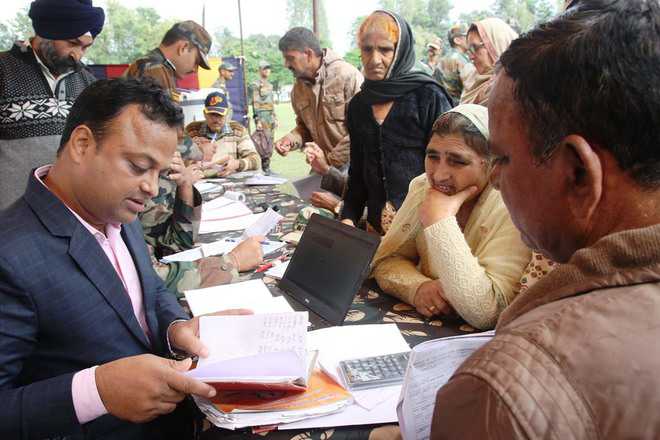
Ex-servicemen and their families at the veteran ‘Sampark Sammelan’ in Jammu.

Our Correspondent

Jammu, November 15

Army’s Tiger Division organised a mega ex-servicemen meet in the Satwari Cantt area of Jammu on Friday.

The Army is observing 2019 as the ‘Year of next of kin’ aimed at resolving their grievances and disseminating useful information about different welfare schemes of the Government of India. A large gathering of 800 next of kin and 400 ex-servicemen assembled at the veteran ‘Sampark Sammelan’ which was inaugurated by Maj Gen Sharad Kapur, GOC, Tiger Division accompanied with Mukesh Kumar, IG, Jammu.

To assist the next of kin and ex-servicemen, a number of mobility, medical equipment such as wheelchairs, crutches, walking sticks, and hearing aids were distributed. The programme was organised with support of the Red Cross Society, Department of Social Justice Government of J&K, Rotary Club, Jammu, and a number of NGOs.


India’s past holds the key

Up in the mountains

Vehicles slowly move after snow was cleared from Rohtang Pass and opening of the Manali-Keylong road for vehicular traffic, in Manali, on Tuesday. PTI

Jammu & Kashmir

India’s past holds the key

Honest political process and empowerment
of the local populace
is more important
than development
dole from the Centre

TAUSEEF MUSTAFA

An Indian security personnel stands guard during a lockdown in Srinagar on November 5, 2019.

Lt Gen (r) Bhopinder Singh

Pursuant to the Jammu and Kashmir Reorganisation Act 2019, the bifurcation of the erstwhile state into the two Union Territories of Ladakh and Jammu and Kashmir, has come into effect. For the change in governance with a Lieutenant Governor and the legislative assembly of the Union Territory of Jammu and Kashmir, it has been expressly stated, “On and from the appointed day, the provisions contained in article 239A, which are applicable to “Union Territory of Puducherry” shall also apply to the “Union Territory of Jammu and Kashmir”. This is an important clarification as the conditions applicable to the Union Territory of the Andaman & Nicobar Islands are different, as are the peculiar specificities of the ‘semi-state’ in the Union Territory of Delhi.

The bifurcation was accompanied by the repealing of Article 370 and Article 35A, which has had more resonance and decibel inside and outside of the Kashmir Valley, with contrasting emotions. Prime Minister Narendra Modi linked the serendipitous co-timing of the change in the constitutional status of Jammu and Kashmir and that of the 144th birth anniversary of Sardar Vallabhbhai Patel, to hail the moment as, “taking a step towards a new future today.”

An important likening of the changed equation between the North-East states vis-à-vis the rest of the country was also invoked by the prime minister, describing the evolution as moving from ‘algaav to lagaav’ (separatism to attachment) – an unequivocal lodestar of the similar aspiration in Jammu and Kashmir, too.

The most important component involved in the journey from ‘separatism’ to ‘attachment’ is not in working on the dominant mood of the rest of the country, in as much as it is in winning over the mood in the conflict zone. The end of popular support for the sentiment of ‘separatism’ lies in the deliberate co-opting of the locals in the affected area sensitively, honestly and democratically – this was how the insurgency was overcome in Mizoram and Punjab.

The sentiment of ‘separatism’ springs from the fount of historical wounds, socio-economic neglect and the stoking of emotions towards generating a sense of disaffection towards the sovereign. Jammu and Kashmir has followed a similar pattern and was routinely mismanaged by the political classes of all hues (as were Mizoram and Punjab), who were content to lay the blame on the various ‘others’, but the essential spirit of all dispensations, had been of short-termism.

Only when the practical form of healing, reconciliation and recharging of the democratic impulses in the restive lands was effected by way of the Mizo Peace Accord (1986) and the Rajiv-Longowal Accord (1985), did the mainstream tide turn in true earnest. Importantly, both these accords were met with local opposition by some who protested that these were “sell-outs”, but the process and spirit of reconciliation within the liberal contours of the Indian Constitution were set in motion irrevocably.

Both these accords were followed by state elections that ushered in political parties that were in the forefront of the protests earlier – a clear case of the invaluable political vent exercised by the local populace. All through that journey, the tone, phraseology and tenor emanating from Delhi during this tentative phase was consistently inclusive, liberal and restorative to those in the insurgency-affected area.

Today, the Union Territory of Jammu and Kashmir will benefit from the energy of a new team, focus and access to Delhi, and generous amounts of development funds to address the socio-economic needs of the region. However, the lever of recharging the democratic process and framework will be pivotal. The importance of participatory democracy can never be understated in the process of healing in an insurgency-affected area, as the citizens need to feel empowered, involved and responsible for their destiny in equal measure as everyone else in the country.

This natural instinct for continuous democratic empowerment is visible in the otherwise peaceful Union Territories of Delhi and Puducherry, too, which are in the throes of demanding ‘full statehood’, as an expression of wanting to maximise their emotive, political and administrative destiny.

Conversely, the absence of a thriving political-democratic culture gives way to extremism, bigotry and even militancy, as expression of the desperation of locals wanting to assert their ‘equality’. Most extremist strains are borne in the suffocating air of political vacuum, illiberality and control. The continuous shaming of the prevailing political options has diminishing returns in the long-term as the administrative efficiencies and largesse from the Centre by itself can never compensate for the overwhelming sense of political irrelevance in the national imagination.

The emotional relevance of the wounded Kashmir Valley in the national heartbeat must go beyond what is statistically warranted by hosting three seats out of the 545 in Parliament. Also, wanting to maintain the security steel is not inversely-linked to the efforts to democratise the environment – both can and should go hand-in-hand, as they did in Mizoram and Punjab.

The prime minister has spoken about nearly 40,000 people being killed by terrorists in the last three decades in Jammu and Kashmir, a colossal loss that was perpetuated by not addressing the fundamentals of counter-insurgency in a border state. The constitutional idea of India has always been lofty and generous enough to embrace its temporarily disenchanted, whenever it has persisted and insisted with its constitutional morality in dealing with trying situations – an oft forgotten fact is that the situation in Mizoram had deteriorated so much that it was the only place where the Indian Air Force had bombed its own citizens. Thankfully, that is a distant memory that has since healed.

Beyond a point, the stand across the Line of Control will remain unchanged and the onus of managing our own issues, citizens and fractures will reside, within. India remains a rare nation that has successfully overcome insurgencies, unlike the much-bandied countries like Israel, United States, Russia or China. As a new era starts in Jammu and Kashmir, introspection about not just what went wrong, but also what went right, will hold us in good stead.

(The writer is former Lieutenant Governor of Puducherry and Andaman & Nicobar Islands)


Indian army chief with ‘blood of innocents on his hands’ seeks to become defence staff head: ISPR

Indian army chief Bipin Rawat. — Photo courtesy The Hindu

The Pakistan Army’s media wing on Friday said that Indian army chief Bipin Rawat with “irresponsible statements” and “blood of innocents on his hand” seeks to become the Indian Chief of Defence Staff.

The Chief of the Defence Staff (CDS) is a proposed position for the combined head of the Indian army, Indian air force and Indian navy. The creation of the post was announced by Indian Prime Minister Narendra Modi in his independence day speech in August.

Director general of the Inter-Services Public Relations (ISPR) Maj Gen Asif Ghafoor said that Gen Rawat has been “repeatedly provoking war” through his statements, which threaten peace in the region, with the aim of facilitating “electioneering of political masters”.

“From the fake surgical strike (on Feb 26) to date, his only success has been to turn Indian Army into a rogue force and getting them killed,” said Maj Gen Ghafoor.

He said that Gen Rawat’s statements, together with “blood of innocents (on his hands), losses to Indian forces at the hands of Pakistan Armed Forces, helicopter crashes due to so called technical fault-cum-fratricide” all to become the Indian CDS “is actually at the cost of professional military ethos”.

The ISPR chief’s remarks come just four days after his challenge to the Indian army to share locations of the alleged terror camps the latter had claimed to have targeted in Azad Jammu and Kashmir.

“Indians have no grounds to support [the] false claim made by their COAS.

“We will take foreign diplomats & media tomorrow on those given locations. Let all see facts on ground,” he had said.

Subsequently, in a visit jointly organised by the Foreign Office and the Pakistan Army, a group of 23 diplomats was taken to Jura to witness the targets and the damage caused by Indian shelling in which six people, including a soldier, were martyred, while six others were injured.

India, on the other hand, neither allowed its diplomats based in Islamabad to visit the Line of Control (LoC) along with the group nor provided the coordinates of the alleged ‘terror launch pads’ it had claimed to hit.


US ‘concerned’ over J&K, says Pak must stop terror

US ‘concerned’ over J&K, says Pak must stop terror

HT Correspondents

letters@hindustantimes.com

Washington/New Delhi : The US believes a dialogue between India and Pakistan is the most effective way to reduce bilateral tensions, but the success of such talks depends on Islamabad taking “sustained and irreversible steps” against terrorists on its soil, America’s top diplomat for South Asia said on Tuesday.

US acting assistant secretary for South and Central Asian affairs Alice Wells said the US supports the Indian government’s stated objectives for scrapping Jammu & Kashmir’s (J&K) special status, such as increased economic development, but the state department “remains concerned about the situation in the Kashmir Valley, where daily life for the nearly eight million residents has been severely impacted since August 5 [when India scrapped the region’s special status and put in place a security and communications lockdown that has now been partially lifted].”

Testifying in a hearing on the human rights situation in South Asia, including in Kashmir and Assam, convened by the US House committee on foreign affairs, Wells said that Pakistan’s continued backing for groups engaged in cross-border terror was the “chief obstacle” to creating trust between the two sides.

“While conditions in Jammu and Ladakh have improved, the Valley has not returned to normal. The department has raised concerns with the Indian government regarding the detentions of local residents and political leaders, including three former Chief Ministers of Jammu and Kashmir. We have urged Indian authorities to respect human rights and restore full access to services, including internet and mobile networks,” she said.

Wells and assistant secretary Robert Destro of the US bureau of democracy and human rights faced pointed questions from members of Congress such as Ilhan Omar and Pramila Jayapal on the detention of people without charge, the lockdown in J&K, and the exclusion of 1.9 million people from the National Register of Citizens (NRC) in Assam.

In her statement at the hearing, Wells said the US believes a direct bilateral dialogue under the Simla Agreement “holds the most potential for reducing tensions”. She said: “We believe the foundation of any successful dialogue between India and Pakistan is based on Pakistan taking sustained and irreversible steps against militants and terrorists in its territory.”

Wells added: “Restarting a productive bilateral dialogue requires building trust, and the chief obstacle remains Pakistan’s continued support for extremist groups that engage in cross-border terrorism.”

She said there were historical precedents of India and Pakistan being able to make progress in talks, such as backchannel negotiations during 2006-07, when the two sides “reportedly made significant progress on a number of issues, including Kashmir”.

Describing the ties between the US and India, Wells said: “It’s not a relationship of dictation, it’s a relationship of partnership.”


Halt terror funds in 4 months: FATF to Pak

Anti-terror body warns of strong action if Pakistan fails to comply

anirban bhaumik
NEW DELHI, DHNS

China may have saved Pakistan from being placed on the “blacklist” of the Financial Action Task Force (FATF) for now, but the inter-governmental organisation has warned Imran Khan’s government of strong action if it fails to stop the flow of funds to terrorist organisations within four months.

The FATF, an inter-governmental organisation coordinating global efforts to stop terrorist organisations from receiving funds, on Friday set February 2020 as the deadline for Pakistan to tighten legal framework to curb money laundering and squeeze flow of funds to terrorist outfits.

If Pakistan fails, the FATF said it would take severe action, including calling on financial institutions of other nations to be cautious while dealing with counterparts in Pakistan.

Concluding its plenary in Paris on Friday, the FATF “strongly” urged Pakistan to “swiftly complete” its full action plan to plug the loopholes by February 2020.

“Otherwise,” it warned, “should significant and sustainable progress not be made across the full range of its action plan by the next plenary, the FATF will take action, which could include the FATF calling on its members and urging all jurisdictions to advise their Fis (financial institutions) to give special attention to business relations and transactions with Pakistan”.

“Pakistan needs to do more and it needs to do it faster,” FATF President Xiangmin Liu said.

The FATF expressed “serious concerns” with the “overall lack of progress by Pakistan to address its TF (terror financing) risks, including remaining deficiencies in demonstrating a sufficient understanding of Pakistan’s transnational TF risks and, more broadly, Pakistan’s failure to complete its action plan in line with the agreed time-lines and in light of the TF risks emanating from the jurisdiction”.

The FATF also noted that Pakistan had only largely addressed five of the 27 items on the action plan, with varying levels of progress made on the rest.

India, the US, France argued in favour of putting Pakistan on the “blacklist”.


Indian Army TGC 131 and TES 43 Notification: Online Application started for Technical Entry Scheme Course, Apply Online @joinindianarmy.nic.in

Indian Army TGC TEC Short Notification Released

Indian Army TGC 131 and TES 43 Notification & Apply Online: Indian Army has started the online application for TES 43. A total of 90 vacancies are available under 10+2 Technical Entry Scheme Course (TES – 43). The last date for submitting Indian Army TES course application is 13 November 2019.

Indian Army has invited online application for TGC and TES course on its official website i.e. http://joinindianarmy.nic.in.Indian Army TES online application has been already started, today, 15 October 2019. Indian Army TGT Online application will start from 16 October and will end on 14 November 2019.

Job Summary

Notification Indian Army TGC 131 and TES 43 Notification Released, Apply Online for Technical Graduate Course & Technical Entry Scheme Course
Notification Date Oct 12, 2019
Last Date of Submission Nov 14, 2019
Official URL www.joinindianarmy.nic.in
City new delhi
State Delhi
Country India
Education Qual Graduate, Secondary
Functional Engineering

Indian Army released the recruitment notification for Technical Graduate Course (TGC-131) commencing in July 2020 and 10+2 Technical Entry Scheme Course (TES – 43) commencing in July 2020 for Officer posts.

Candidates can check more details on Indian Army TGC TES such as eligibility, selection process on the basis previous notifications:  

Indian Army TGC 131 and TES 43 Important Dates

  • Application Dates for Technical Graduate Course (TGC-131): 16 October to 14 November 2019
  • Applications for 10 + 2 Technical Entry Scheme Course (TES-43): 15 October to 13 November 2018

Indian Army TGC 131 and TES 43 Courses Details

  • Technical Graduate Course (TGC-131)
  • 10 + 2 Technical Entry Scheme Course (TES-43) – 90 Posts

Indian Army TGC TES Eligibility Criteria

Educational Qualification:

  • Technical Graduate Course – BE/B.Tech from a recognized University.
  • 10 + 2 Technical Entry Scheme Course – 12th passed from a recognized board or equivalent qualification.

Age Limit:

TES –  16½ years to 19½ years

How to apply for Indian Army TGC 131 and TES 43 2019?

Eligible candidates can apply online on Indian army official website. Candidates are advised to keep the printout of the online application submitted for future reference.

Indian Army TGC TES Short Notification PDF

Indian Army TES 43 Notification

Online Application (Application from 15/16 October 2019)

Official Website