Sanjha Morcha

What’s New

Click the heading to open detailed news

Current Events :

web counter

Print Media Reproduced Defence Related News

Modi’s monumental mistake S Nihal Singh

Modi’s monumental mistake
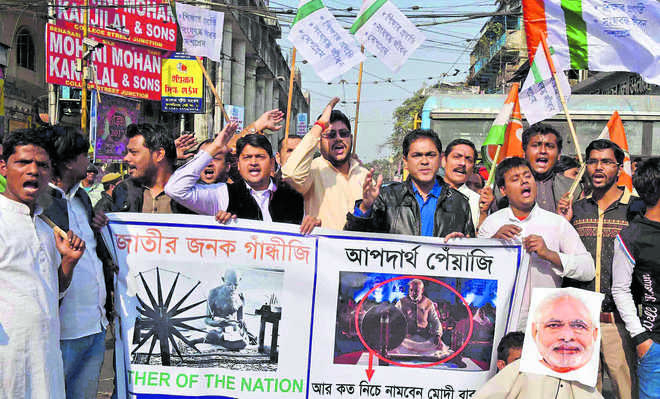
In deed: There cannot be a substitute for the Mahatma.

ITS symbolism was devastating: the replacement of the familiar image of Mahatma Gandhi at the charkha in the traditional calendar and diaries of the main khadi institution by PM Narendra Modi. What was intended to be left unsaid was made explicit by the Haryana Minister in the BJP government, Anil Vij. He declared that Modi was a better brand than Gandhi, forced though he was to withdraw his remarks under pressure from an embarrassed BJP. This was undoubtedly Modi’s biggest misstep in the domestic arena in his first three years in office. Having hogged space in the political arena and in social media, the Prime Minister has done himself no service to proclaim that he has arrived, to rub shoulders with one revered as the Father of the Nation. Assuming that the change in the calendar would not have been made without a nod from the Prime Minister’s office, it was a disastrous decision because it proclaimed Modi’s narcissism and desire to distinguish himself from other politicians across the political board. This comes after he has disregarded the convention that apart from a symbolic speech, the holder of the highest political office in the land does not get into campaigning for his or her party in Assembly elections. As we have seen in the past and continue to witness in campaigning for Uttar Pradesh and Punjab elections, Modi is the star campaigner lusty in his castigation of the Opposition and his party men are not shy in seeking votes for state Assemblies in his name. His persona is writ large in his election speeches, typically suggesting that the Opposition wants to remove Modi while he wants to remove black money. Modi has made two major mistakes in running his administration. In addition to wearing the crown of the Mahatma, his one mistake in foreign policy was to persist in seeking membership of the Nuclear Suppliers’ Group after China made it clear in private and publicly that it would block it. Beijing administered a clear snub by vetoing the move. Indeed, it is a mystery why Modi decided to declare a losing hand, rather than waiting to fight another day. This is not to denigrate the Prime Minister’s astute foreign policy moves in wooing former US president Barack Obama or making a dash to Lahore to greet Pakistan PM Nawaz Sharif. However, Modi’s calendar move is of far greater import politically because he is in danger of living in a bubble glorifying his own prominence and the reverential tones his party men are adopting in referring to him are building an aura of invincibility. The Mahatma never held public office although he was the guiding spirit of the Independence movement in which the BJP’s mentor, RSS, played an ambiguous role.In realpolitik terms, by transposing his picture for the Mahatma’s, Modi has peaked too early. Granted, he is thus far the unchallenged and tallest leader of the BJP, but the danger lurking in the background is his propensity to take major decisions alone. Take the demonetisation issue. The new man in charge at the Reserve Bank, Mr Arjit Patel, is suggesting that the demonetisation move was months in the making. If so, why was no homewok done on the urgent steps required to fill the gap after the old notes were withdrawn? The tussle with the judiciary establishment is another facet of the government’s desire to control as many levers of power as it can.Is Modi then leading the country to a virtual president form of government? The Prime Minister appears uncomfortable with the parliamentary system, spending little time in participating in the cut and thrust of debate, unlike his predecessors. Indeed, his metier seems to be one-way communication — through tweets and Facebook — because there is no scope for hostile questioning.The question to ask today is: where Modi’s caravan will go in the remaining term of his office. If he does not believe in the Oscar Wildean adage of “nothing succeeds like excess”, he must trim his sails as he reaches out for a second term. It is all very well to present the country’s problems as a contest between the rich and the poor, but there is a limit determined by credibility to how far you can reduce everything to this simplistic code. Bashing the Opposition parties as dens of the rich is likely to prove unproductive. In his armoury are the double-edged demonetisation issue for its boldness and of course the “surgical strikes” on Pakistan. The tipping point in Modi’s three years of rule at the Centre has arrived inadvertently. But it is a warning signal that there are treasured institutions that cannot be denigrated. Granted that Modi is the big chief, but even big chiefs have to respect icons of the age. There cannot be a substitute for the Mahatma. A presidential system is beyond the horizon of the next general election in 2019 and even when we arrive at that point there is bound to be stiff resistance to the idea. The framers of our Constitution had good reasons to opt for the parliamentary system because of the diversity of the nation. Indira Gandhi’s experiment with the Emergency showed the weaknesses of an over-centralised system of governance, apart from the very repugnance of the regime. What remains to be determined is how far Modi will seek to buttress his own powers even before he can change the parliamentary to a presidential system. The Prime Minister is capable of staking positions that involve risks such as the demonetisation measure. The danger, of course, is that he is so convinced of his own infallibility that he can overreach himself. The outcome of the Uttar Pradesh Assembly elections is important not only for the BJP, but also for Modi’s own political future. He is banking on his “magic touch” by failing to name a chief ministerial candidate. It is Modi all the way.


Tejas to debut on R-Day

Tejas to debut on R-Day

Tribune News Service

New Delhi, January 19

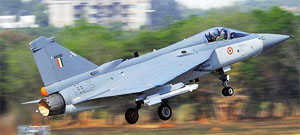
Indigenous fighter jet, Tejas, has finally come of age. It will make its debut during Republic Day flypast on January 26.Tejas would fly over the Rajpath in New Delhi during the parade, said Air Commodore Rajiva Ranjan, Principal Director, Air Defence. It will lead the display formation of fighter jets of the IAF inventory. The IAF will use three Tejas, which are designed by the Aeronautical Development Agency (ADA) of the DRDO and produced by public sector giant Hindustan Aeronautics Limited.The IAF has contracted 123 Tejas in various configurations; the first lot has been inducted. It will be after three decades that a homemade jet will fly during the Republic Day parade. The last time an indigenous fighter jet was part of Republic Day, it was in 1980s when HF-24 Marut, a 1960s’ German-designed plane was part of the flypast. Marut notably took part in the battle of Laungewala in 1971.A team of Tejas has been forward located at the IAF base Nal, near Bikaner. It will fly in from there and return to its temporary base. Tejas was inducted into 45 Squadron the ‘Flying Daggers’ on July 1, 2016. It’s based in Bangalore.‘Tejas’ is the first advance fly-by-wire (FBW) fighter aircraft designed, developed and manufactured in India. It has flown more than 3,000 sorties and 2,000 hours without any accident. It’s equipped with state-of-the-art satellite-aided inertial navigation system. It has a digital computer-based attack system and an autopilot. It can fire air-to-air missiles, bombs as well as precision-guided munitions.The next version of Tejas will incorporate Beyond Visual Range (BVR) missiles, improved, better stand-off weapons, air-to-air refueling capability, new generation Active Electronically Scanned Array (AESA) Radar and an integrated advanced electronic warfare suite.Besides Tejas, as many as 34 aircrafts of the IAF will be part of the Republic Day flypast. There will be 19 fighters, 11 helicopters and four transport aircrafts enthralling the public this year. UAE crown prince Sheikh Mohammed bin Zayed Al Nahyan is the chief guest.


Navy exorcises data leak ghost

SCORPENE SUBMARINE Says data leaked was from pre-2008 when the boat wasn’t even on drawing board

Khanderi, India’s second Scorpene class submarine, was launched at Mumbai’s Mazagon docks on Thursday, adding to the nation’s naval might with a vessel possessing superior stealth technology. The submarine will undergo extensive trials at sea and harbour till December to test equipment before it is commissioned into the Indian Navy. 


NEW DELHI: India on Thursday launched its second Frenchdesigned Scorpene class diesel-electric attack submarine, Khanderi, at Mumbai-based Mazagon Dock Shipbuilders Limited, exorcising the ghost of a data leak scandal that threatened to derail the project in August 2016.

Khanderi is one of the six Scorpene submarines being constructed in the country with technology transfer from French firm DCNS under a `23,562-crore programme called Project 75.

In what was seen as a major setback for the project, a leaked cache of 22,400 documents in 2016 detailed key secret stealth capabilities of the submarines, including the frequencies at which they gather intelligence, their diving depths, range and endurance, and specifications of their torpedo launch and combat systems.

Navy spokesperson Captain DK Sharma said the data leak was a closed chapter. “The data was from pre-2008 when the boat wasn’t even on the drawing board. The project has evolved significantly in all aspects and there’s no problem.”

The Scorpene is expected to become the main conventional submarine of the Indian fleet and replace the ageing Russian Kilo class and German HDW vessels that are almost three decades old.

Commodore C Uday Bhaskar (retd), strategic affairs expert and director, Society for Policy Studies, said a submarine acquires its acoustic signature only after it becomes fully operational. “Suggesting that the leak compromised submarine safety is misplaced. The programme is on track,” Bhaskar said.

Minister of state for defence Subhash Bhamre and Navy chief Admiral Sunil Lanba were present when the Khanderi was floated out. The boat derives its name from a Russian Foxtrot class submarine the Navy retired in 1989. It is likely to be commissioned into the Navy by year-end after extensive trials.

Kalvari, the first Scorpeneclass submarine to be built in India, is expected to be commissioned into the Navy in the coming months. All the six submarines are expected to join the Indian fleet over the next three years. Sharma said the third boat would also be launched this year.

The Scorpene project was delayed by five years due to issues related to transfer of technology. At present, the Navy operates 13 conventional submarines.

clip


PROPOSALS For EX-SERVICEMEN (PB):: BY SANJHA MORCHA

      SANJHA MORCHA CONVEYS ITS HEARTFELT

images (1)

THANKS TO CAPT AMRINDER SINGH AND MANPREET BADAL  FOR HAVING INCLUDED MAXIMUM PROPOSALS IN THE MANIFESTO PROPSED BY SANNJHA MORCHA AND

salute


SALUTE BOTH OF THEM


 There is sea change in the outlook and approach  of the ex-servicemen of Punjab towards Pb political scenario ,as maximum are contemplating to get united to support a strong and popular political party or get into alliance.

   The basic reason is that ex-servicemen of Punjab have felt continuously neglected and rejected by various State Governments. Many are being dragged to support AAP party by Capt Bikram Singh Pahuvind Convenor ESM wing AAP (Pb) who is on tour to all segments of Pb .

Suggested proposals to redress ESM grievances needs to be addressed in various gatherings of ESM at priority areas under

  1.    

    13% vacancies

    earmarked in every department of Punjab to be filled with ESM. The govt rejects ESM for not meeting the criteria and vacancies are filled by the politicians for their like ones.

  2. Unskilled Labour

    :Great injustice being done to Ex-servicemen as PESCO treat them as unskilled labour and enrols them as security guards at prevailing DC rates of wages, overlooking that ESM are highly skilled force to be reckoned with. They are technical qualified as carpenters, electricians, Engine fitters, Mechanics, machine operators, drivers, Dozer operators, education field, nursing assistances, telephone operators,barbers,Dhobis,cooks,waiters etc and many more.

  3. Exception from Toll Tax

    on all State owned Toll tax barriers

  4. Reservation of seats in private Institutions

     At the time of retirement a ESM becomes more loaded with responsibilities to complete his children education, marriages, build his own house etc but unable to seek admission in good private schools because of financial constrains as central schools are only available in cantonments hence needs reservations in private  Schools/colleges/universities) for their  children.  Keeping in view the deteriorated conditions of Punjab govt Institutions/Colleges/schools

  1. Excess Levy of tax on CSD Canteen liquor items in Punjab

      The Liquor in Punjab CSD canteens are levied with heavy Excise tax in canteen from 10-12% and in addition excise duty  4 to 12 % as per IMFL . Where as in Haryana the tax is 4%. for e.g a  beer cost Rs 84 in Mohali CSD but Rs 45 in Ch5andigarh CSD and cheaper in Panchkula. 

  1. Ex-Servicemen not permitted to use Liquor quota in marriage palaces.

Keeping in view the high cost of liquor in Punjab Thekkas due to monopoly of present SAD govt, the ESM is not permitted to use his saved quota to celebrate marriages of his children. On all marriages the custom duty team along with Punjab Police raids the Marriage palaces and create an embarrassing scene compromising the reputation of the ESM and fine them heavily. To get liquor licence from civil without obligation is not possible.

  1. Duel Pension including Old age especially widows.

  It’s a long pending demand of ESM of Punjab but till date Punjab govt has not implemented as per central govt orders of 2013 and have just now issued a notification keeping eye on vote bank.

  1. Compulsory NCC

      NCC should be made compulsory in all institutes ( Govt or Private) and Ex-servicemen should be employed as instructors to stream line youth into a discipline force.

  1. Recruitment in Punjab Police

      A discipline soldier joining the Punjab Police will create a discipline Punjab Police force and will reduce the cost of training as every ESM from Punjab retiring has a minimum qualification of  senior secondary(12th class) . After selection a small capsule of 3 months training in Police academy will make them suitable for Police service. The other states like Bihar, Delhi,etc and recently Haryana is enrolling 3000 ESM is police force..

  1. 10. Army recruitment training Institutes

              The State must open more Institute to train youth of Punjab to join Army as a soldiers or as an officer. The services of Ex-servicemen should be explored for such institutes which boost character building of Punjab Youth in the line with Mai Bhago Institute at Mohali opened for Girls and Maharaja Ranjit Singh Armed forces Institute and Army Law College are inadequate. There should be SSB training Institutes too.


  1. Lambardar appointment Racket/Scams

           The present State govt has deliberately done away with a one family lambardari system and have made number of claimants for a lambardar post in all village of Punajb. The Farmers are fighting litigation case to claim the right to claim Lambardari in all DC’s office of the state. Though the priority is to be given to ESM but even ESM are fighting cases in DC’s office to retain their ancestors crown of Lambardari. A total wasteful of litigations and workload on DC’s office all are being exploited by the office bearers of DC office with continuous future dates.

  1. Indian Prisoner’s of War in Pakistan jails since 1971.

   Need to be taken up with the central govt which has denied having no information to the supreme court  but the relatives are receiving messages and letters from their brave hearts. Though ESM are conducting candle light marches with POW relatives but to no consequences.

  1. 13. Formation of ESM Cell

       There should be ESM cell formed directly under control of CM apart of Director Sainik welfare which function under constrains of a sectary (IAS)  and a Sainik welfare minister, the portfolios Sainik welfare minister is considered as  low prestige politically. Thus the Director is not able to do justice to the welfare of State ESM being controlled by IAS Babus. The transport of the department are equally misused by these Babus and are at disposal of their families. The Minister has no interaction with ESM at any level.

14 . The War Jageers

 It has been observed that gallantry awards emoluments are increased every year but no respite is provided to the widows nor the war Jageers as promised in the laid down orders of Punjab State Govt  are not implemented. However now days due to paucity of land in Punjab Govt must consider to provide one time financial relief to all dependents.

15 . Safety and security of property

 Due to prevailing land mafia in the state with nexus of politicians and police the properties of serving soldiers are forcibly occupied (Land/ House) by this Mafia as   by preparing fake documents in conveyance with the revenue department sheltered by Politicians. All properties of ESM and serving soldiers need to be made secured as provision exits  to NRI

16   Priority to complain of Soldiers

 The serving soldiers are facing day to day problems at their home but complains are not attended even forwarded by the Commanding officers of the unit to Police Stataions.The Ex-servicemen not given due respect in the police stations nor heard which needs to be ensured as it directly affect the morale of defence forces serving in operational area and after retirement hence recruitment of ESM in Police force will pay dividends.However the ESM cell formed should be tasked to look into these issues.

17 Non-payment of Cash Incentives

   Many Youth have joined defence forces as soldiers or as officers through NDA ,they are entitled to get incentive from Rs 25000/- to Rs 100000/- but many have not been paid and are pending , even director Sainik welfare is helpless to distribute the incentives due to paucity of funds and records of those joined the forces. Even number of war decorated soldiers are not paid their dues by the State govt.

  1.  Condition of Sainik Rest House .

  The Sainik Rest House need lot of improvement in all districts and provision of refreshment canteen and other facilities need to be made available as no provision of tea is also available in these rest houses nor the desert coolers or Ac’s are functional. Once the ESM cell is formed its member can be nominated to supervise these rest houses etc.

  1. Completion of Sainik Sadan at Phase X,Mohali

                 The ESM dependant on Mohali ECHS,CSD Canteen and District welfare officer or stay in Sainik Rest House are deprived of these facilities at one place. The Sainik Sadan at PhaseX , has been designed for the very purpose. The grants /Funds allocated for completion has been diverted to other sector by the Punjab Govt which were in crores. The superstructure of the building is complete but construction held up due to fund crunch. At present only DSW has occupied area earmarked for ECHS. Myself has been the technical advisor to the Director Sainik welfare Pb for this purpose. Need to be promised to the ESM of SAS Nagar.

  1.  ESM Involvement in Development works

 ESM will be the right choice to make them enter the village panchayats, Block samite’s ,Zila Parishads, Cooperated socities,as reserved seats for them once announced will fetch dividends in elections.

                   The above are the various burning Issues in the minds of ESM community which is suggested to be fulfilled and need to be spoken to them in all ESM gatherings. Any further delay in clubbing the ESM under congress banner may not fetch dividends.

With warm regards

   PS: 

Col Charanjit Singh(Retd)

*Congress social media coordinator (Ex-Servicemen) Punjab

*General Secy, All India Ex-Servicemen Joint Action Front (Sanjha Morcha)


Locals joining militancy is not a happy situation: Army chief

Locals joining militancy is not a happy situation: Army chief

New Delhi, January 5

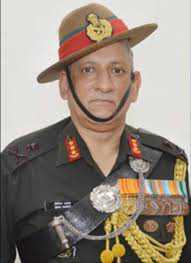
Plans are on the anvil to bring in a shift in the counter-insurgency strategy in Kashmir in which “false” propaganda inspiring youth to take up arms will be targeted rather than individuals alone, says new Army chief Gen Bipin Rawat.

He is also concerned at the rising number of Kashmiri youth joining militancy.

(Follow The Tribune on Facebook; and Twitter @thetribunechd)

Gen Rawat, who has experience in handling the Kashmir militancy, said that unlike naxalism in which locals are joining due to feeling of deprivation, it is not the case in Kashmir, which has been under the siege from Pakistan-backed insurgency since late 1980s.

He said that the “false propaganda” and developments in the Middle East has affected some of the local youth and that is why one finds “more and more educated youth” getting driven towards militancy.

“When the local youth join insurgency and pick up gun it is a matter of concern because our own countrymen getting involved in insurgency is not a happy situation,” Gen Rawat said.

Since the killing of Hizb-ul Mujahideen commander Burhan Wani on July 8 last year, 59 local youth have joined militant groups as per official figures though security experts say the figure is much higher.

Gen Rawat questioned if the local youth in Kashmir are getting into insurgency because of feeling of deprivation, which he said was happening in other areas.

“Is it similar to what is happening with naxalism? It is not. It has something to do with the false propaganda that is being propagated. I think we need to reach out to people.

Rather than seeing them as targets, we need to sympathise with them and undo the kind of false propaganda that is being spread among the youth,” he said. —PTI


Bihar to have 3-day holiday on Guru’s 350th birth anniversary of the Warrior-Saint Sri Guru Gobind Singh Ji.


143551179710885196 588239011319519 2158878627388580814 n

Bihar to have 3-day holiday on Guru’s 350th birth anniversary
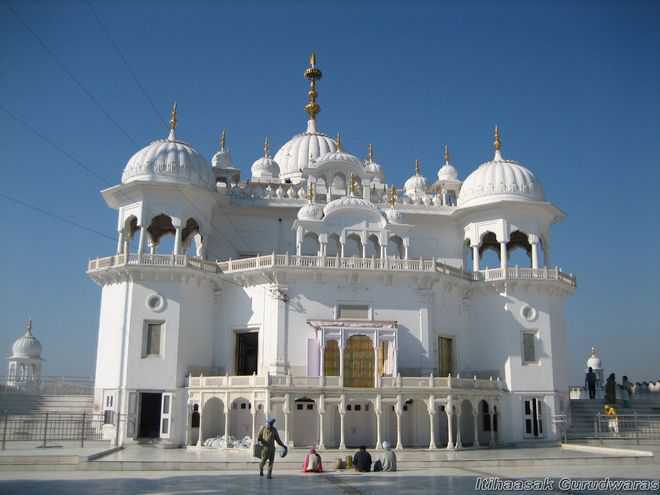
Takht Sri Harmandir Sahib in Patna. File photo

143582574410984079 686643654812387 7030427162781823080 n

Jitendra K Shrivastava

Tribune News Service

Patna, September 16

link to open below on Red Fonts

350 Prakash Praw of Takht shri harmandir sahib ji gurudwara lighting patna.mp4

Bihar will observe a three-day state holiday on the occasion of the 350th birth anniversary of the tenth Sikh guru — Guru Gobind Singh — early next year in Patna.The state would observe three days government holiday on January, 3, 4 and 5 next year during weeklong celebrations.Chief Minister Nitish Kumar announced three days state holiday during Prakashotsava on Thursday, while he also launched a website www.350thprakashparv.bih.nic.in to facilitate tourists visiting Patna on the occasion.The weeklong birth anniversary celebration would begin on December 30 this year. At least ten lakh devotees from different corners of the world are expected to arrive in Patna.Three tents would be erected covering an area of 60.91 acres in Gandhi Maidan. Two other tents would also be erected at Gurdawara Kangan Ghat and near Bypass to accommodate the devotees.The state tourism department would be the nodal agency of the grand celebration.

guru


Throughout his life, Guru Gobind Singh Ji embodied values that help define India and her aspirations today:

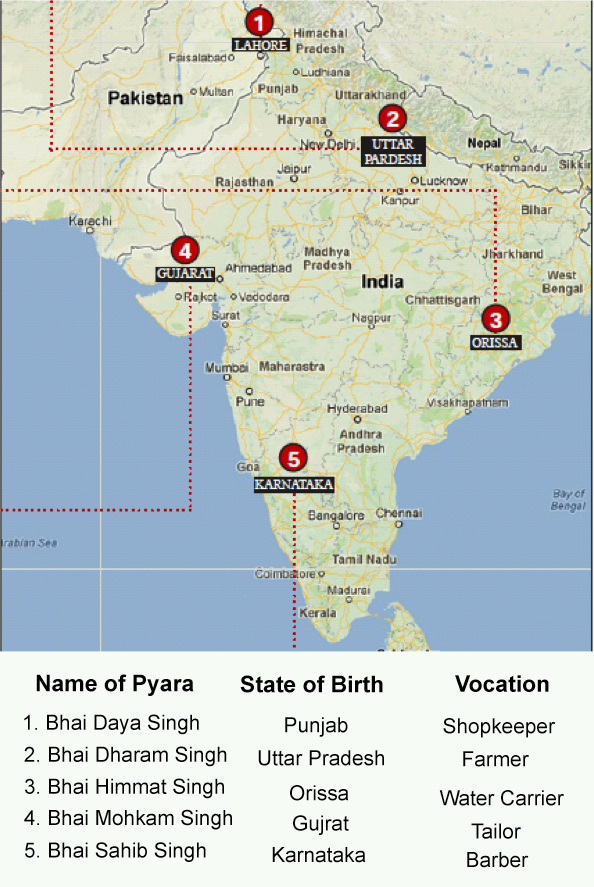
National Cohesion: In 1699, Guru Gobind Singh Ji, formed the Khalsa, by choosing the five Pyaras (beloved ones) from different castes, different locations and different vocations. This act reinforces the Guru’s much needed vision of creating a spirit of unity amongst all peoples beyond perceived boundaries of caste, vocation and ethnicity, and is an important value for India in the present day and beyond.

Click here to see a map showing the different vocations and locations of birth of the Panj Pyare

Freedom of Religion: Before becoming the tenth Guru, a young Gobind Rai, prompted his father, Guru Tegh Bahadur Ji, to make the supreme sacrifice in order to defend the rights of Hindu Pandits to practice their religion. During the Moghul reign of Aurungzeb, Hindu’s were being forcibly converted to Islam, and Guru Tegh Bahadur was executed after defending the Hindu’s rights to practice their own religion. Unparalleled in the history humankind, this willing martyrdom in the defence of another religious community earned Guru Tegh Bahadur the title of “Hind ki Chadur” i.e. The Shield of India. It has often been noted that this act, together with Guru Gobind Singh Ji’s formation of the Khalsa as “Saint-Soldiers” to defend righteousness, was a major factor in preventing mass forced conversions to Islam across northern India. India has a proud history of not just religious tolerance, but of religious respect, and the importance of Freedom of Religion is enshrined in the Indian Constitution.

Sarbat da Bhalla (the good and welfare of all): Guru Gobind Singh Ji championed universal solidarity by proclaiming “manas ki jaat sabae ek hee paechanbo” (recognise the whole human race as one family) and Guru Ji’s further hukam: “sach kaho sun leho sabhae jin prem kiyo tin hee prabh paiyo” (all those who wish to meet up with God must exercise love for God’s entire creation) is a guiding light for us all to be inspired and motivated in pursuing global “Sarbat da bhalla”.

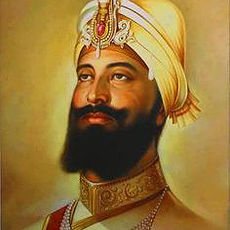
Guru Gobind Singh Ji

FastFacts

  • Father    Guru Tegh Bahadur Ji
  • Mother    Gujri Ji
  • DATE OF BIRTH     12/22/1666
  • PLACE OF BIRTH      Patna Sahib
  • WIFE        Mata Sundari Ji
  • CHILDREN      Ajit Singh, Jujhar Singh, Jorawar Singh & Fateh Singh
  • AGE, YEAR & TIME AT GUR GADHI    11/11/1675, 33 Year
  • REGIMES

    Aurangjeb, Bahadur Shah

  • CONTRIBUTION OF BANIES

    Jap Sahib, Akal Ustat, Chopai, War Shri Bhagoti, Vachitar Natak, Chobis Avtar Chandi, Charitar, Shastar Nam Mala (Dasam Granth)

  • AGE     42
  • JYOTI-JOT DAY      10/07/1708
  • JYOTI JOT PLACE     Nanded

It may not be out of the way to say here that throughout the annals of human history, there was no other individual who could be of more inspiring personality than Guru Gobind Singh. At its climax the tenth Nanak infused the spirit of both the saintlihood and the undauntedness in the minds and hearts of his followers to fight oppression in order to restore justice, righteousness (Dharma) and to uplift the down-trodden people in this world. It is said that after the martyrdom of Guru Tegh Bahadur, the tenth Master declared that he would create such a Panth (nation) which would not be cowed down by tyrant rulers but it would rather challenge the oppressor in every walk of life to restore justice, equality and peace for mankind. He further resolved that he would feel worthy to be called Gobind Singh only when any single member of his Khalsa Panth would successfully and undauntedly challenge the army of one hundred and twenty-five thousand opponents in the field. This point was rightfully proven at Chamkaur Sahib when Sahibzada Ajit Singh (Guru’s about 18 years old eldest son) challenged the Mughal forces and their allies, the hilly Rajas.

“The Divine Guru hath sent me for religion’s sake On this account, I have come into the world; Extendthe faith everywhere Seize and destroy the evil and sinful. Understand this, ye holymen, in your mindsI assumed birth for the purpose of spreading the faith, saving the saints and extirpating all tyrants.”(Guru Gobind Singh- Chaupai, Bachitar Natak)

The moment child Gobind Rai was born in Patna,
Pir Bhikan Shah of Thaska offered his prayers
facing East instead of towards West, contrary to
his daily practice. He left for Patna immediately.
On arrival at the Guru residence, Pir placed two
bowl of milk and water before the divine child.
The child Guru Gobind put his hands on both the
bowls, thus signifying: The entire humanity is
from the same divine fountain: How can some be
good and others evil?’

Guru Tegh Bahadur’s martyrdom symbolized in itself the resistance to the tyranny of Muslim rule in favor of a new society. When evil is holding its head high, should a holy man knuckle under it or take up arms to combat and destroy it? The young Guru, Gobind Rai, decided in favor of the latter course i.e. to combat evil and uphold righteousness. He thus enjoined upon his followers to make use of the sword if all other means failed to liquidate the wicked and his wickedness. In order to achieve this mission, he issued ‘Hukamnamas’ (circular letters of authority) to his followers to present to him arms of different designs. The Guru’s orders were obeyed with great zeal and devotion. He himself wore uniform and bore arms and induced others to practise archery and musket- shooting. He encouraged various muscle-developing and strenuous sports as part of the program of physical culture. Many followers with martial instincts whose forefathers had served the Guru’s father and his grandfather, flocked to him. His principal companions at that time were his aunt Bibi Viro’s (Guru Har Gobind’s daughter) five sons, Sango Shah, Jit Mal, Gopal Chand, Ganga Ram, Mohri Chand; his uncle Suraj Mal’s two sons- Gulab Rai and Sham Das; his maternal uncle Kirpal Chand; Bhai Daya Ram, the friend from his youth; and Bhai Nand Chand, a favorite masand.

The Guru instructed his followers to lead a well-meaning and disciplined life. He according to the customs of his redecessors, used to rise early in the morning and perform his devotions. He was particularly delighted to listen to Asa di Var. After day-break, he gave divine instructions to his Sikhs and then practised martial exercises. In the afternoon, he received his followers, went shooting or raced horses; and ended the evening by performing the divine service of ‘Rehras’.

The Guru’s handsome exte rior was much admired both by men and women. A person called Bhikhia from Lahore came to visit him. Seeing the handsome young Guru, Bhai Bhikhia offered the alliance of his daughter Jito to him. The proposal was accepted and there were great rejoicing at Anandpur on the occasion of the betrothal ceremony. The twenty-third of Har, Sambat 1734 (1677 A.D.) was fixed for the marriage. The Guru sent orders in all directions for this occasion and the Sikhs thronged from various places including Lahore. A place was set up near Anandpur, which was called Guru ki Lahore where the marriage ceremony took place.

VISIT OF DUNI CHAND AND RAJA RATTAN RAI:

Surging crowds of people with their hearts filled with love and devotion to the Master, thronged to see him.Some came from Kabul, Qandhar, Gazni, Balkh and Bukhara. They brought several priceless gifts- rugs, carpets, shawls and other valuables when they came to pay homage to their Lord. Duni Chand, one of the devotees, visited Anandpur in 1681 and presented to the Guru a woolen tent, ‘Shamiana’ or a royal canopy which surpassed in excellence. It was embroidered in gold and silver studded with pearls. It is said that its splendor surpassed that of the Emperor’s canopy.

Through the grace of Guru Tegh Bahadur, Raja Ram of Assam was blessed with a son, Rattan Rai. Raja wanted to take his son to the Guru but he died soon and could not visit Anandpur. His last injunction to his Rani (wife) was that the prince should be brought up as a devout Sikh. The Rani faithfully carried out the behests of her husband and imparted the knowledge of the lives and teachings of the Gurus to the growing prince. When Rattan Rai, the prince, attained the age of twelve, he felt an inclination to see the Guru. Accordingly he with his mother and several of his ministers proceeded to Anandpur. He brought with him an offering of five horses with golden trappings, a very small elephant, and a weapon out of which five sorts of arms could be made, a pistol, a sword, a lance, a dagger, and a club.

The Raja was accorded a great reception. He offered his presents and prayed to the Guru to grant him the Sikh faith. He was granted all his desires. The Raja exhibited the traits of his presents. He caused the elephant to wipe Guru’s shoes and placed them in order for him. At the word of command the animal took a chauri and waved it over the Guru. The Raja requested the Guru never to let the elephant out of his possession.

The prince and his party remained at Anandpur for five months and during this time, he enjoyed kirtan and Felt uplifted by the Guru’s sermons. At the time of departure, the Guru accompanied them to some distanceand then bade them good-bye. They were sent off with presents. Besides these tangible gifts, the Guru gave Rattan Rai a RATTAN – a jewel of Nam, which was the ultimate gift of life:

“Nam is the priceless Jewel that the perfect Guru hath;
If one dedicates oneself in love to the True Guru,
He lights in one’s heart the Light of Wisdom, and Nam is then revealed.
Blessed is the fortunate one who goeth to meet the Guru.”
(Sri Rag Mohalla 4, p-40)

RANJIT NAGARA:

The wooden sandals of Guru Gobind Singh Ji at
his birth place Patna Sahib

The Guru’s army was swelling day by day and he was now set for the construction of a big beating drum which was deemed necessary to enthuse his army and without which he considered his equipment was incomplete. The work of the drum was entrusted to his Dewan, Nand Chand. In those days, only an independent chieftain was to use such a drum within the limits of his territory. The beating of the drum within the bounds of another chief’s domain was an hostile act and meant an open invitation of war. The completion of the big drum which was called Ranjit Nagara, or victorious drum on the battle- field, was celebrated with prayers and the distribution of Parshad (sacred food). When it was beaten, the men and women of the city came to behold it and there were great rejoicing.

The Guru and his men went for hunting the same day and when they reached near Bilaspur, the capital of Kahlur, the drum was beaten and it sounded like a thunder to the hillmen who became apprehensive of some danger. Raja Bhim Chand of Kahlur consulted his prime minister who advised him that it was the Guru’s drum who was worthy of worship, secondly, he maintained a large army and was greatly feared; and thirdly the Guru was brave, and such men were sometimes useful as allies. On hearing this Raja Bhim Chand desired to meet the Guru and despatched his prime minister to arrange for an interview which was granted. The Raja accordingly went with his courtiers to Anandpur.


Tributes paid to martyr Capt Navpal

Tributes paid to martyr Capt Navpal
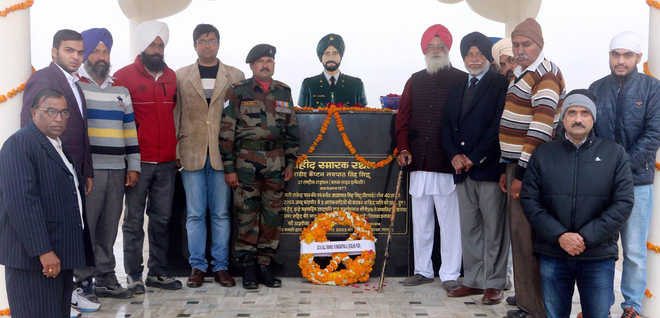
People pay tributes to Captain Navpal Sidhu at 40RB village near Padampur. Tribune Photo

Our Correspondent

Abohar, January 3

Army Havildar Anil Patil travelled all the way from Jammu and Kashmir to offer a wreath on behalf of Commanding Officer Colonel Bhaskar Kataria of the 19 Maratha Light Infantry at the memorial of Captain Navpal Sidhu at 40RB village near Padampur.A function had been organised on Captain Sidhu’s 14th death anniversary today. Anil said he had served with the martyred officer for two years and was keen to salute Navpal at the memorial.Anil was joined by hundreds of people who braved dense fog and chill to pay their tributes to Captain Sidhu at his memorial in the Sriganganagar region. Sehaj Path bhog was also performed in the village gurdwara.Navpal of 19 Maratha Light Infantry was killed in 2002 after he gunned down three PoK-trained terrorists in the Surankote area of Poonch region in Jammu and Kashmir.He was awarded the Shaurya Chakra posthumously. Navpal’s father Lieutenant Colonel Agyapal Singh Sidhu had led the offensive against Pakistan in 1965 and 1971.Shaheed Navpal Trust secretary Ghanshyam Harwani and other social activists urged the Rajasthan Government to complete the Navpal Stadium, the foundation of which was laid in 2003.Rajasthan Minister for Mining Surinderpal Singh TT and former Union Minister Nihal Chand offered floral tributes to the martyr and assured that they would request the Chief Minister to sanction funds for the stadium.Earlier, the trust organised a free medical camp in collaboration of Shaheed Bhai Sukha Singh Mehtab Singh Memorial Hospital.

IAF employee attempts suicide

Tribune News Service

Panchkula, January 3

A 25-year-old Indian Air Force employee today tried to kill himself by consuming poison at a park in Sector 5 here.The police took the victim, Vikas Kumar, to the Civil Hospital, Sector 6, here, where he is recovering after treatment. The police have recovered a suicide note from him.Investigating Officer Ishwar Singh of Sector 5 police station said Vikas was having an affair with a girl, who, along with two others, had started blackmailing him. According to the police, the three were demanding Rs 5 lakh and a flat from Vikas. Fed up with the blackmailing, the IAF employee attempted suicide.According to sources, the youth is posted at the Zirakpur Air Force Station. The police have registered a case against the three accused and have started investigations.A case of attempt to suicide has also been registered against Vikas.


Armoured, artillery corps to get postings in anti-insurgency operations: Defence ministry

At present, the chances of an armoured corps officer commanding a Rashtriya Rifles or an Assam Rifles unit are rare.

Picture for representation

With counter terrorist experience helping Lt Gen Bipin Rawat become the next Army chief, Defence Minister Manohar Parrikaris now planning to give more postings to armoured and artillery corps officers in anti-insurgency operations to avoid the situation faced by superseded officer Lt Gen Pravin Bakshi.

Despite being the senior most and competent, the government chose to appoint Lt Gen Rawat over Lt Gen Bakshi due to the former’s experience in counter-insurgency operations in Jammu and Kashmir and the northeast.

Senior government sources told Mail Today that Lt Gen Bakshi had discussed the issue of armoured corps officers being in a disadvantageous position in light of the recent approach of the government to give weightage to counter insurgency experience in appointing Army chiefs.

MINISTRY TO OPEN NEW AVENUES

“We would find out ways to give more exposure to armoured and artillery corps officers in counter insurgency operations so that they don’t miss out on important appointments due to lack of stints in anti-terrorist missions and operations,” senior Defence Ministry sources told Mail Today.

Also read: Government may assign post at par with Army chief to superseded Lt Gen Praveen Bakshi

Also read: Why Indian Army Special Forces are way behind US Navy SEALs or Israel’s IDF despite upgrade  

At present, officers from infantry get to command their units in Jammu and Kashmir and Northeast but officers of the armoured corps generally get that opportunity in the deserts of Rajasthan or plains of Punjab, as they have to command tanks and mechanized combat vehicles as they can operate in that terrain only.

Tanks and infantry combat vehicles cannot be deployed in hills and mountainous terrain of Jammu and Kashmir except for the China border in eastern Ladakh, which has vast plains where the tanks can have a free run. Moreover, tank regiments are supposed to penetrate and soften any Pakistani resistance in case of a conventional war and Punjab and Rajasthan are perfect terrain to do so in case of hostilities.

Officers from armoured and artillery corps get to do their mandatory stint in counter insurgency force Rashtriya Rifles in Kashmir valley but that is done when they are relatively very young in their military lives.

OFFICERS NO LESS THAN INFANTRY MATES

“We don’t want that the officers from these arms to feel that they are any less from their infantry mates and that is why we will find out ways how they can be given command of battalions, brigades and divisions in the regions where we have antiterrorist operations,” the sources said.

Also read: Why Lt General Bipin Rawat, man who led surgical strikes in Myanmar, is best suited to be Army chief

Sources in Indian Army Headquarters said such a thing can be done by the army by fixing vacancies for armoured corps and artillery officers in Rashtriya Rifles units so that they can also get counter insurgency operations if they want to.

At present, the chances of an armoured corps officer commanding a Rashtriya Rifles or an Assam Rifles unit are rare. The government is of the view that more than conventional wars, the biggest security challenge before India is from non-state actors and small groups of terrorists. Along with Bakshi, Southern Army Commander Lt Gen PM Hariz was also senior to Rawat and was overlooked. Hariz is from the Mechanised Infantry, which handles infantry combat vehicles.


MoD to review rules for pregnant staff

Vijay Mohan

Tribune News Service

Chandigarh, December 26

The Ministry of Defence has accepted the recommendation of an expert committee to review some of the rules concerning pregnancy of women officers during the course of their service.The five-member committee, constituted to review service conditions and suggest ways to reduce litigation, had recommended a review of certain formats issued by the Coast Guard Headquarters relating to termination of services of women officers in case of pregnancy.  Defence Minister Manohar Parrikar has said this recommendation “may be agreed to in principle.”The committee had observed in its report that the Coast Guard, after selection of women officers, takes an undertaking from them that they shall not get pregnant within three years of completion of training. Some other “incongruous restrictions” such as that they shall not get pregnant more than twice during their service careers, and if they do so, their services would be terminated have also been placed upon them.Pointing out that such terms of service were absolutely at odds with reality, the committee had questioned the legal validity of such rules.The committee had also observed that no such undertaking was taken from women in other services or even from women in other uniformed services. “Any such stipulation shows the entire organisation in a regressive light and should not be allowed to remain valid,” the committee had remarked.The MoD has also agreed to in principle another of the committee’s recommendations that decisions to challenge verdicts rendered by the courts in favour of women officers must be taken after consultations with all stakeholders.The committee had said any decision to file appeals should be taken at the highest level of the Defence Minister after discussions involving representatives of the defence services and by inducting on any such study panel at least one serving woman officer and one released woman veteran.



Panel objects to Coast Guard’s conditions

  • A five-member committee, constituted to review service conditions, has questioned the legality of the undertaking sought by the Coast Guard from new officers that they shall not get pregnant during three-year training period
  • It has also questioned the threat of termination to women if they get pregnant more than twice during their career