Sanjha Morcha

What’s New

Click the heading to open detailed news

Current Events :

web counter

Print Media Reproduced Defence Related News

Militarising students by S Nihal Singh

Militarising students
Taking it too far: A tank should have no place on any campus.

S Nihal Singh

THE amazing proposal of JNU VC Jagadesh Kumar to station an Army tank on the campus is the tip of the iceberg. In reality, it represents the second phase of the Sangh Parivar’s programme to change the idea of India.The first phase of the ruling dispensation was to “catch’em young”, as the old adage would have it. It began with the indoctrination of young schoolchildren by revising textbooks, banning foreign language instruction. For older school-goers, a drastic revision of textbooks was undertaken, with the Mughal period airbrushed, new heroes lauded and the myths of the RSS propagated. The indefatigable RSS warrior, Dina Nath Batra, is still at it, calling for editing of India’s Nobel laureate poet Rabindranath Tagore to take out words of foreign origin.   The second phase of the BJP’s programme is the militarisation of Indian society. The Parivar has always been jingoistic in its nationalism and what the world witnessed in the 20th century through the rise of Nazism and Mussolini’s fascism comes naturally to it. Employing the venue of the JNU has a ring of triumphalism for the Parivar’s supporters because the institution has long been in its sights. The JNU is all that the Parivar abhors: free thinking along several shades of the Left, a fraternity of rebels, as every such institution should be, and scholarship combined with testing the limits of conventions. Like the early morning drills with staves that are the staple of the RSS, the Parivar prizes obedience also to the myths of a bygone age.Thus the appeal of Jagdesh Kumar to the former Army chief and now a junior minister, Gen VK Singh (retd), to get him a tank for the university is a natural follow-up of the Parivar’s philosophy. Nationalism has to be clothed in the Tricolour to be effective after the examples of Hitler and Mussolini. And with the elections of 2019 looming on the horizon, few high-level decisions are taken without the electoral calendar in mind. The Parivar misses few occasions to conflate religion with politics. Its very ideal of a Hindu India derives from the nation being a Hindu country with Muslims and other minorities living on sufferance, as it were. Religion can be a potent force, as we have seen in the Arab world in more recent times, but it is ultimately raw nationalism that, given the right circumstances, drives peoples to frenzy.Cow protection vigilantes, fake or genuine, and their fondness for lynching those transporting cattle often to death are one aspect of mixing religious creed and the Hindu veneration of the cow with criminal activity. Prime Minister Narendra Modi’s dilemma is that he cannot cross the red lines drawn by the RSS and after long delays in commenting upon brutal acts of barbarity, he has now chosen to pass on the buck to the BJP-ruled states. But the problem will not go away.The problem of the militarisation of the country is of a different order. It is, in a sense, moulding the mind of the young into an attitude of obedience because discipline is a sine qua non of a good Army. And in the Parivar, discipline and obedience are valued above all virtues. The Parivar is obsessed with discovering the cause of foreign conquerors ruling India over centuries. Its simple conclusion seems to be that it was the people’s unpreparedness for war and the martial arts that let foreigners invade and rule. Thus far, its recipe is two-fold: the morning drill with staves substituting for guns and building of and conjuring up a golden ancient age in which India was a superpower.We have it on the authority of Modi that modern planes flew in ancient India, a country then proficient in cosmetic surgery and transposing heads and reaching a very high level of knowledge. His speech at an opening ceremony of a Mumbai hospital lauding the wonders of ancient India was quickly deleted on the web, but his beliefs are a reminder that he spent his formative years in the RSS cradle.Thus far, the JNU Vice-Chancellor’s suggestion of installing a tank on the campus has invited much derision and a riposte from the JNU Teachers Association suggesting that the university cannot be made into a “theatre of war”, and that the JNU was not a “boot camp”. But the ruling dispensation is serious about its intent to spread the message across institutions of learning that the armed forces must be an object of adulation and the discipline that keeps them alert and ready for all eventualities is the new motto of the patriotic student.This new campaign to reboot the country’s student population is bound to fail because although the BJP’s student wings will do all they can to burrow their way into unions’ leadership posts, the young are by nature rebellious and somewhat wild. It is an acknowledged fact that every conservative in later life was once a fire-breathing Left-wing student. If the space for dissent in student politics is closed, the young can only go to extreme philosophies to express themselves. There is little reason to doubt the seriousness of the Parivar in militarising the student body. But it remains an open question whether it has thought through the seriousness of the consequences of its decision on the country’s future. Leaving students with no option but to espouse extremist creeds to express their rebelliousness even as the country’s security forces are already fighting Maoists and others is a bad idea.The occasion for pronouncing Kumar’s words of wisdom was the celebration of the Kargil Vijay Diwas for the first time in the university’s history. Whether the tank will duly arrive remains to be seen but the thought processes of the Parivar and its supporters are clear. The RSS has reluctantly given up shorts for trousers for its obligatory morning drill but its thought processes have not changed.


China is building a great wall of silence in the US

As Aadhaar becomes the norm in India, and gets skewered for the involuntary nature of its imposition, our northern neighbours, as is their wont, want to do a number that will make this appear benign. That’s the proposed ‘social credit’, which the non-profit Freedom House, in its latest report, describes as a regime that “would connect each citizen’s financial, social, political, and legal data to produce a single numerical rating of his or her behaviour and trustworthiness.” Fittingly, it’s coordinated by the Orwellian-sounding Central Leading Group for Comprehensively Deepening Reforms. This reality contrasts with the alternate vision seen by some in recent months of China occupying a central place in the world as Donald Trump’s America withdraws into itself.
That the Chinese machinery has managed to further such propaganda is no surprise. As China unveiled a monumental $200 million new embassy building in Washington in 2010, it was a symbolic and in-yourface marker of its outsize ambitions. It employs lobbyists across the K Street corridor of the Beltway, including some dedicated to image-making for its ambassador. American companies with manufacturing bases in China are force multipliers for Beijing, while inroads into American academia and media add to its influence. China has ventured capital into Silicon Valley. Its investments into Hollywood, for instance, have made support for Tibet within the film community nearly non-existent.
Those are credible reasons why voices once raised over China’s actions, in Tibet or Xinjiang, have been muted to whispers, of the sort that country’s netizens have to resort to in questioning the regime, since even Winnie the Pooh can be blacklisted by the Chinese checkers for bearing an alleged resemblance to President Xi Jinping. Money can talk but, even better, it can buy silence.
As a result, the death by negligence of Nobel laureate Liu Xiaobo attracts bromides from the White House. As China watcher Jocelyn Ford poignantly noted in an article for Asia Society, this summer as Liu was essentially condemned to death, the World Economic Forum had its annual summer meeting in China. Despite its tagline ‘committed to improving the state of the world’, she wrote, it “self-censors on issues that China may take as an affront.” Beijing uses its support for a globalism, for example the Paris climate agreement, as it segues into its practical and tactical agenda.
Yet another Nobelist, the Dalai Lama, meanwhile, once had to exit the Obama White House via the back, walking out amidst ranks of garbage bags. While the human rights industrial complex hums along nicely in the democratic world, it confronts a barrier in the Great Wall of China.

The world, led by the United States, has vacated the moral space in challenging China. And that has allowed Beijing to, literally, push the boundaries of its megalomania. India’s vaunted soft power projection may have its votaries, but the Chinese velvet glove has punched its way into the heavyweight category.


Ladakh gets bridge at Chumathang

Ladakh gets bridge at Chumathang
The new bridge inaugurated at Chumathang on the Leh-Loma road. Tribune Photo

Tribune News Service

Jammu, July 21

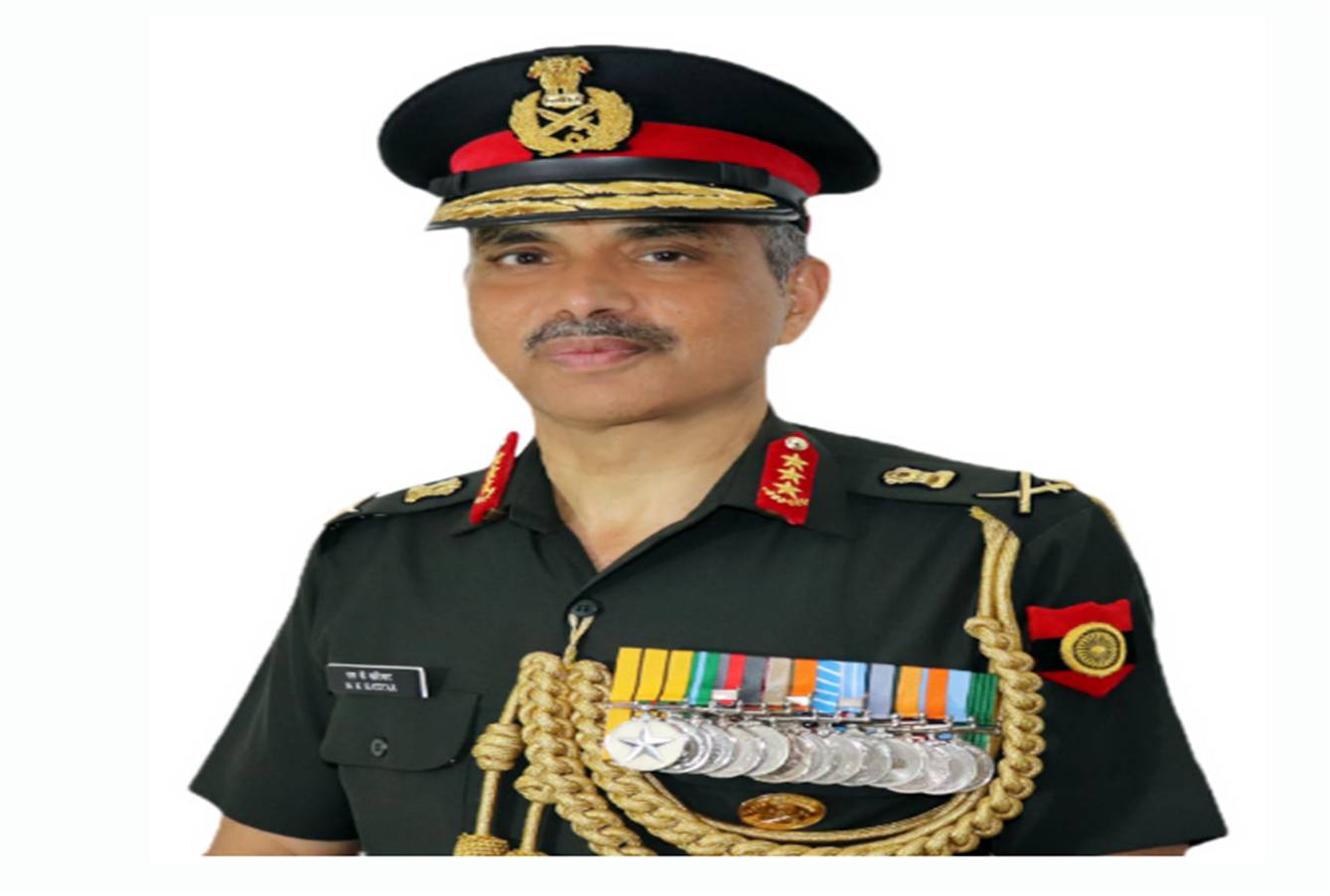
The Border Roads Organisation (BRO) in eastern Ladakh has created yet another landmark by constructing the Chumathang bridge in the region.The bridge will connect Leh with important towns like Hanle and Loma in addition to the upcoming tourist destination of the Tso Morari lake.The 111 Road Construction Company (RCC ) of the 16 Border Road Task Force (BRTF) under Project Himank led by Brigadier DM Purvimath, Chief Engineer, has launched this 50-metre class 70 ton steel structure across the Chumatang nullah, which will facilitate smooth movement of various military and civilian vehicles on this important axis.The BRO is executing the work for upgrade of the Leh-Loma axis from the existing single lane to double lane, including replacement of existing temporary bridges.The Chumathang bridge was inaugurated by Lt Gen SK Shrivastava, Director General Border Roads, on Thursday during a solemn inauguration ceremony. He complimented the team of the 111 RCC for having completed the bridge despite the extreme working conditions in the region.Speaking on the occasion, he asked all ranks of Project Himank to make efforts to expedite the double-laning work of the Leh–Loma road as well as efficient maintenance and upgrade of other roads in the eastern Ladakh region.



Memorable moments with Sher Company at Dokala by Brig Jasbir Singh Bawa (retd)

There was a time when hostilities had not marred the pristine beauty of the landscape. With the recent month-long India-China impasse, the areas of Doklam plateau, Dokala, trijunction in east Sikkim and the Chicken’s neck-Siliguri corridor have been in the news for all the wrong reasons.

Memorable moments with Sher Company at Dokala
TOUGH TERRAIN: The belligerence between two big neighbours calls for tough diplomacy

Brig Jasbir Singh Bawa (retd)MY mind goes back to the “Hindi-Chini  bhai-bhai” days of friendship at Dokala in 1990-1991. As the Company Commander at Dokala, I was the presiding deity for friendly Chinese patrols once a quarter or so. That was a period of peace on the tactical surface that let you enjoy the sheer beauty of Dokala and the freedom of an independent command.    On my return from a posting abroad, I had the fortune of going back to command my old company,  “Delta,” at that time deployed at Dokala. This is fortunate for those of us who return to the unit after an outing. I had christened the Company as “Sher Company” and  men were  “Sher ka Bachcha”— surreptitiously  borrowed from the much-revered, late Papa Pande, our ex-Colonel of the regiment. Getting back to Sher Company was indeed a cause for much joy. The men were happy to see me again for we shared a very healthy rapport. I was fortunate to have my Company 2IC Sub Indra Bahadur still in the chair but a lot of the senior NCOs had moved away on posting or had retired. It was a great feeling to see the young sepoys and NCOs one had tutored and mentored, take up varying  positions of responsibility with confidence and pride. Dokala was the abode of an exceptionally happy family on the eastern-most tip of east Sikkim that descended sharply to the Jaldhaka wildlife sanctuary thence to the Siliguri corridor. Dokala, the most beautiful area in all of east Sikkim, is a lush green meadow in sharp contrast to the surrounding countryside that is characterised by jagged and  rocky ridgelines without a blade of grass for miles together. Significantly lower in altitude than the Batangla-Nathula ridge line, Dokala is approximately a two-km-long pass with a width varying from 150 to about 400 m. The Sher Company was deployed at its north-western base. The meadow is green except during the four winter months. Almost through the year, the green turf of the meadow is interspersed with clumps of wild flowers. Wild blue poppy, small rhododendrons and numerous tubular flowers add to the kaleidoscope of daisies in white, yellow, shades of red and blue. I have enjoyed many a walk with my trusted buddy and radio operator on the soft surface of Dokala, on our way up and down the formidable Gamochin Peak which dominates the pass from the south. Gamochin, a huge rocky feature, towers over the neighbouring heights and Dokala. The climb to Gamochin is a sheer wall and can only be negotiated by fixed rope — a challenge even for seasoned climbers. Troops deployed on the feature would welcome us with hot pakoras to be downed with a drink of warm jam water and glucose. As you regain your breath after the gruelling climb, the reality of scaling an impossible-looking massif sinks in. The view from its top is mesmerising. On a clear day you could catch the Kanchenjunga in all its glory, with just a speck of cloud covering the summit. Come winters and the ascent on snow and ice walls gets toughe,r while coming down is sheer ecstasy thanks to the innovative  snow slides that the Rhinoboys would develop. Any talk of the area would be incomplete without mention of the mighty Kanchenjunga. The Company Commander’s hut at Dokala is designed to host senior visiting officers should they get stuck due to the savagery of weather. It has huge perplex glass windows on three sides, with a breathtaking view of the mother of all Himalayan peaks. At day break on clear winter mornings the crimson glow that drapes the eastern slope of mount Kanchenchenga, the sight transports you to another world. The colours gradually change from a riveting deep crimson to orange to golden yellow, seamlessly meshing into each other as dawn gives way to a fresh bright day.  Hold your breath, the full moon nights at Dokala were also so special. The Kanchenchenga looked more than glorious while the snowy shine of the majestic Gamochin would be complemented by a seemingly endless silver sheen on  Dokala. Many such nights were spent by a bonfire, memories of which refuse to fade. There was a routine patrol that we would send to the trijunction then down to the Jaldhaka, circuit the base of our deployment, eventually  to emerge at the northern entrance of Dokala. This meant climbing about 1,000 feet from the post, going down a steep descent to a height of about 4,000 feet and again climbing up to 11,500 ft  or so getting  back to Dokala. The distance covered was approx 15 kilometre. The bulk of the area fell within the Jaldhaka wildlife sanctuary. In keeping with a compulsive tribal trait, a large number of animal traps were set up by  the Sher ka bachcha in this area before it was declared a sanctuary. There would always be a rush of volunteers for this tri-weekly patrol and understandably so — the boys would reap the fruits of their labour returning  with plenty of small game caught in the traps. These patrols would generally get back in the late afternoon to a hero’s welcome, particularly so on Saturdays for that meant a big bonfire, generous drinking and endless kahanis and  singing by the guitar and makeshift degchi drums followed by a feast for dinner. The Sher ka bachchas —  driven very hard on training, keeping watch, patrolling and negotiating tough climbs to fetch stores and rations through the week —looked forward to their Saturday  party. That was also the evening when Sher Company would open its liquor chest and come alive. Soon after dusk, Dokala would witness rising flames of the bonfire and reverberate to peppy song and music.  Those were dreamlike days that I would love to relive. The reality however lies in the increasing belligerence between the two big neighbours. That calls for tough diplomacy, difficult options and a strong military response that is thoroughly vetted for implications from the sub-tactical to the strategic. The response must hinge on deft diplomacy but has to be holistic with carefully orchestrated synergy between the stakeholders.The writer, an Infantry veteran, was the Company Commander at Dokala in the early 1990s.

clip


China holds live-fire drills in Tibet Tests combat capability in remote regions | Experts say it’s battle-ready message to India

China holds live-fire drills in Tibet
Reuters file photo

Beijing, July 17

China’s military today said it had conducted live-fire exercises in the remote mountainous Tibet region to test its strike capability on plateaus, amid the standoff between Indian and Chinese troops in the Doklam area in the Sikkim sector.The People’s Liberation Army (PLA) conducted the 11-hour-long live-fire exercises at an altitude of 5,000 metres on the plateau in Southwest China’s Tibet Autonomous Region, aimed at improving the combat capability on such locations, the military said.(Follow The Tribune on Facebook; and Twitter @thetribunechd)The exercise was conducted by a ground combat brigade of the PLA Tibet Regional Command this month and involved scenarios such as rapid deployment, multi-unit joint strike and anti-aircraft defence, state-run China Daily quoted a PLA press release as saying.The exercise effectively tested the brigade’s joint strike capability on plateaus, according to the press release. The brigade that conducted the drills was from the PLA’s Tibet Military Command and is one of China’s two plateau mountain brigades.The PLA Tibet command guards the Line of Actual Control (LAC) of the India-China border along several sections connecting the mountainous Tibetan region.Analysts believe that the drill is an apparent attempt by the military to reassure the Chinese public about the combat readiness of its troops.“Showing an opponent that you are combat ready is more likely to prevent an actual battle,” Wang Dehua, South Asia studies expert at Shanghai Institutes for International Studies, said.Broadcasting the drill on CCTV was also likely designed to keep the public happy, he said. “It could also reassure the Chinese people that a strong PLA force is there, capable and determined to defend Chinese territory,” Wang told Hong Kong-based South China Morning Post.The CCTV report did not disclose the location of the drills but said the brigade responsible for frontline combat missions has long been stationed around the middle and lower reaches of the Brahmaputra (Yarlung Zangbo in Chinese). Brahmaputra flows into India from Arunachal Pradesh border.“The PLA wanted to demonstrate it could easily overpower its Indian counterparts,” Beijing-based military commentator Zhou Chenming told the Post.The Chinese force that took part in the drill is stationed in the Lizhi region of eastern Tibet, close to the stand-off, the Post said.China has a clear advantage in terms of speed of movement, firepower, and logistics, Zhou said. “By staging a small-scale drill, China wants to control the problem and lower the risk of shots being fired,” he said.Separately, Tibet’s mobile communication agency conducted a drill on July 10 in Lhasa, capital of Tibet, where members of the agency practiced setting up a temporary mobile network to secure communications in an emergency.China and India have been engaged in a standoff in the Dokalam area in the Sikkim sector, where Indian troops stopped road construction by Chinese soldiers on June 16. — PTI 

Amid Sikkim standoff, key ITBP post restored

  • The government has restored a crucial senior-level post in the Sino-India border guarding force ITBP after three years, a development seen as strengthening the paramilitary in the wake of frequent military standoffs between the two sides
  • RK Mishra, a 1986-batch IPS officer, on Monday took over as the new additional director general of force with the strength of 90,000 personnel
  • The lone ADG post of the Indo-Tibetan Border Police was diverted to the NDRF in February, 2014 by the Union Home Ministry, under which the two forces function PTI

PRAYERS FOR WG CDR DHILLON; CM INVITED

PATIALA: The two-day antim ardas (final prayer) for wing commander Mandeep Singh Dhillon, who died in a chopper crash during a rescue sortie last week in Arunachal Pradesh, began at his house in Patiala on Saturday. Squadron leader PS Dhillon (retd), father of the Indian Air Force officer, urged CM Capt Amarinder Singh to attend. On July 4, Dhillon, the commanding officer of the Tezpur-based advanced light helicopter (ALH) unit, met with a tragic end. He is survived by wife Prabhpreet Kaur Dhillon, daughter Sehaj and son Eshar.


MAJ GEN SATBIR SINGH ::ISSUE RECEIPTS TO VETERANS FOR DONATEDAMOUNTS TO UFEM FOR TAX EXEMPTION–Part V

medals

No doubts that veterans have donated in thousands and in Lakhs for the cause of OROP. Donations contributions were given by the veterans in the Name of UFESM but you played dirty and because of your non-transparency in collections and expenditure and where are you depositing the donations as IESM accounts were seized hence  the organisations like IESL, had to part with due to your attitude and not giving accounts of the collections.

 Wg Cdr CK Sharma the treasure along with Lt Pandey your security company employ were collecting the donations in cash. At the end of the day you collected all the collection and personally took along with you.

There was more emphasizes on the filling up of IESM member ship forms to regularize the donation but veterans who donated and had the right to ask for proper receipts were made fools that the proper receipt of UFESM will be send at their home address or collect them next time as printing was under way. No amount bwas deposited in UFESM account as it fragmented but you kept all veterans in dark about the fragmented UFESM .Later you termed the UFESM(JM) to further fool the veterans of the Nation because UFESM got registered under the President ship of Col Charanjit Singh Khera(Retd). However on the cheques you got it in the name of IESM reissued from the donors from UFESM and they were only deposited in the account.

Till date you have not disclosed where is the Cash donated amount of Veterans and the Donation received from Abroad in crores had been deposited in personal acconuts along with your team as alleged and information recieved and in circulations among veterans.

Maj Gen Satbir must provide why Veterans have been deprived off to obtain Tax Relief in the IT return .

Untitled

The Contents of the CK Sharma  Email speaks volumes of your deception plan of concealing the amounts of Donations till date

On Tue, Jul 11, 2017 at 10:24 am, CK Sharma seekayess@gmail.com [IESM_GovBody]
<IESM_GovBody@yahoogroups.com> wrote:
Dear Veteran
Please be advised that none of these donation entries have been made in IESM records. Did you fill the Donation Forms?
I suspect that you did not and, as such, the entries were not duly made.
For any further clarification, please feel free to get in touch with Maj Gen Satbir Singh on the matter.
__________________
Wg Cdr CK Sharma
22nd NDA :: 84th PC
Treasurer, IESM
Untitled
On 11 July 2017 at 08:19, Swarajinder Singh <swarajindersingh@gmail.com> wrote:
Dear Sir,
On 30 Apr 2017 four of us as under had jointly donated 11000 at Jantar Mantar:
May I request for Income Tax Exemption Certificate under 80 G for my share of 2750.
Brig B S Gill
Brig S S Jaswal
Col Pradeep Garg
Lt Col Swarajinder Singh
Regards,
Lt.Col.Swarajinder Singh,
9876744261
Untitled
.


Army gets powers to buy ammo

Army gets powers to buy ammo
File photo

Ajay Banerjee

Tribune News Service

New Delhi, July 12

In a significant move, the Ministry of Defence has permanently authorised the Army to make emergency purchases of ammunition and spares for selected weapons platform.The Army Vice-Chief has been tasked to ensure that the force is always in a state of preparedness for “short intense war”, top sources said. The Vice-Chief will not follow the circuitous route to purchase through the MoD.A total of 56 kinds of ammunition and  spares for 10 such  arms platforms, such as infantry combat vehicles and  half a dozen mines, fall under this category. The Vice-Chief  shall be spending from the “revenue” side of the defence budget and not under the head of ‘capital acquisition’ plan. An executive order has been issued in this regardIn September last, the Master General Ordnance (MGO) had conducted an audit, revealing a critical shortfall in artillery ammunition, tanks shells, fuses and spares for weapons platforms. As an emergency measure, the Army was authorised to make emergency purchases till March 31, 2017. The system worked well. Now these now powers have been extended till “further notice.


China denies Modi-Xi ‘bilateral’

Simran Sodhi

Tribune News Service

New Delhi, July 10

China today categorically stated that there was no “bilateral” meeting between Prime Minister Narendra Modi and Chinese President Xi Jinping when the two met in Hamburg, Germany, on the sidelines of the G20 Summit.Indian and Chinese troops continue to hold their positions in the Doklam region in Sikkim, leading to a state of heightened tension between the two nations. China reiterated that for any “meaningful dialogue” to take place between the two nations, Indian troops first need to withdraw.”According to my information, the two said leaders did not hold any bilateral meeting,” Chinese Foreign Ministry spokesperson Geng Shuang said in response to a question about the issues discussed between the two leaders. Geng added that Xi chaired an informal meet of BRICS leaders during which PM Modi was present. The withdrawal of troops from Doklam was the precondition for any meaningful dialogue between both sides, Geng said.India, meanwhile, said both leaders had a “conversation” during which a range of issues were discussed. While refusing to divulge details as to what were the issues discussed between the two leaders, Ministry of External Affairs spokesperson Gopal Baglay said Saturday, “We have tweeted that the two leaders discussed a range of issues. A range of issues means a range of issues. I don’t want to add anything further… I leave it to you to draw your conclusion.”


Malabar drill begins, focus on hunting subs

Malabar drill begins, focus on hunting subs
US and Japan Navy ships at a harbour during inauguration of joint naval drill with India, in Chennai. AFP

Tribune News Service

New Delhi, July 10

The eight-day joint naval exercise ‘Malabar’ between India, US and Japan commenced in the Bay Bengal today with special focus on hunting submarines at sea.Started in 1992 between the Indian and US navies, the exercise has steadily grown in scope, complexity and participation into a multifaceted exercise with the participation of Japanese Maritime Self Defence Force (JMSDF). This is the 21st edition of the exercise and the primary aim is to increase interoperability amongst the three navies as well as develop common understanding and procedures for maritime security operations. The scope of the exercise includes wide-ranging professional interactions during the ‘Harbour Phase’ at Chennai from July 10-13 and a diverse range of operational activities at sea during the ‘Sea Phase’ from July 14-17. (Follow The Tribune on Facebook; and Twitter @thetribunechd)The thrust of the exercises at sea this year would be on aircraft carrier operations, air defence, anti-submarine warfare, surface warfare, visit board search and seizure, search and rescue, joint manoeuvres and tactical procedures. In addition, officials from the three countries will be flown onboard the ships at sea on July 15.The Indian Navy will be represented by aircraft carrier INS Vikramaditya with its air wing, guided missile destroyer Ranvir, indigenous stealth frigates Shivalik and Sahyadri, indigenous ASW corvette Kamorta, missile corvettes Kora and Kirpan, one Sindhughosh class submarine, fleet tanker INS Jyoti and Long Range Maritime Patrol Aircraft P8I. The US Navy will be represented by the ships from the Nimitz Carrier Strike Group and other units from the US 7th Fleet. The US Navy forces will include the Nimitz-class aircraft carrier Nimitz and a Los Angeles-class attack submarine among other ships.The Japanese shall be represented by JS Izumo, a helicopter carrier with helicopters and JS Sazanami, a missile destroyer.Highlights

  • 16 warships, two submarines and more than 95 aircraft of Indian, US and Japanese navies are participating in the exercise
  • 8 day drill comprises professional interactions from July 10-13 and a diverse range of operational activities at sea from July 14-17