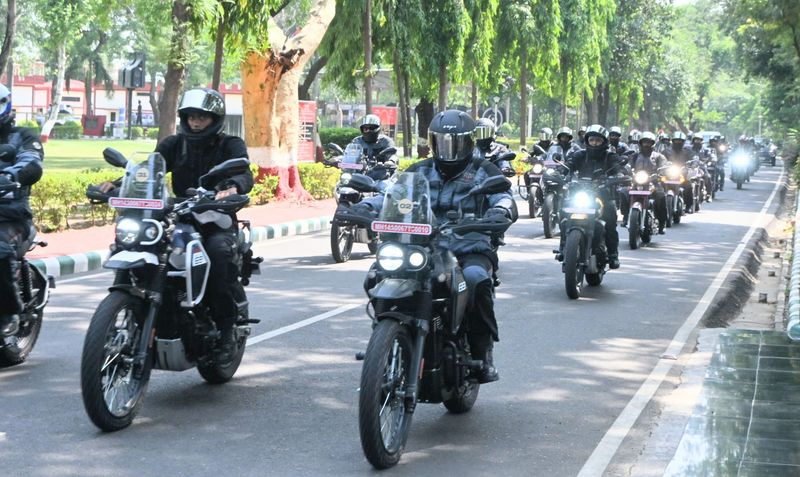
Raksha Mantri Shri Rajnath Singh flagged off the Shaurya Vijay Yatra, a motorcycle expedition from the National War Memorial in New Delhi to the Kargil War Memorial in Dras, to commemorate the 27th anniversary of Kargil Vijay Diwas.
Comprising 28 riders, including serving and retired Defence Forces personnel and their family members, the 13-days expedition will cover around 1,900 km, passing across the rugged terrain of the northern Himalayas.
Through the Shaurya Vijay Yatra, the nation will honour the courage, determination and supreme sacrifice of the bravehearts whose valour secured India’s victory in the 1999 Kargil War.
Above the Peaks: The Story of Operation Safed Sagar | Podcast Raksha Sutra | DPR, MoD
During the Kargil War of 1999, Operation Safed Sagar emerged as a defining chapter in India’s military history. Conducted under some of the most challenging conditions ever faced by air warriors, the operation showcased the Indian Air Force’s courage, precision and unwavering resolve, playing a decisive role in turning the tide of the conflict. In this special episode of Raksha Sutra, we are joined by Group Captain Anupam Banerjee (Retd.) – fighter pilot, veteran air warrior and a firsthand witness to the events of Operation Safed Sagar. From the challenges of operating in high-altitude combat zones to the untold stories behind the missions that shaped India’s victory, this episode offers a rare and insightful look into one of the most significant air campaigns in the nation’s history.
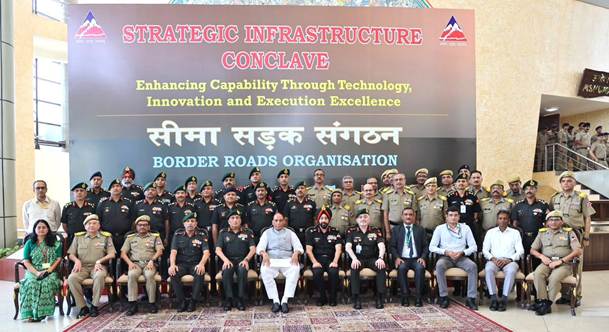
Border infrastructure to remain indispensable in future technology-driven warfare: Raksha Mantri at BRO Strategic Infrastructure Conclave
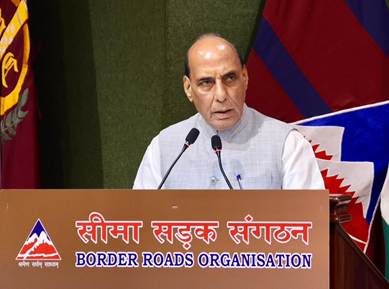
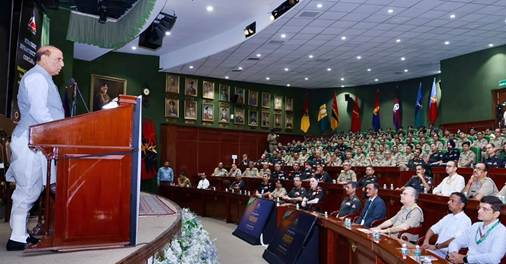
“Even as state-of-the-art weapons and platforms are being inducted into the defence forces to address the challenges posed by the evolving nature of warfare, ports, airfields, roads & tunnels will continue to play an indispensable role in the future,” said Raksha Mantri Shri Rajnath Singh at the Border Roads Organisation (BRO) Strategic Infrastructure Conclave in New Delhi on July 16, 2026. He emphasised that while the outcome of war is largely determined by military prowess, precision capabilities, and modern technologies, basic infrastructure is central to enabling military operations.
“Sometimes, the first front of a war is not at the border itself, but on the road that leads our soldiers to the frontline. Therefore, the person who builds that road is as vital a guardian of national security as the soldier who stands at the border,” said Shri Rajnath Singh as he commended BRO for adopting niche technologies to establish robust infrastructure and carry forward Prime Minister Shri Narendra Modi-led Government’s resolve of building world-class infrastructure, continuously strengthening national security, and transforming India into a Viksit Bharat by 2047.
Raksha Mantri highlighted that, over the past six and a half decades, the BRO has transformed itself from a mere road construction agency to one of the world’s most respected strategic infrastructure organisations. He stated that achievements such as Atal Tunnel, Umling La Pass, and Sela Tunnel stand as living testaments to BRO’s capability and hard work, adding that its dedicated personnel have repeatedly proven that with a spirit of service to the nation, any challenge can be overcome even in harshest of conditions.
Terming BRO as a frontline organisation in adopting latest technologies, Shri Rajnath Singh made special mention of ‘tunnelling technology’, which has brought about the revolution from metro construction in cities to highway development in mountainous regions. The speed with which BRO constructs roads and highways across some of the world’s most challenging terrains is unprecedented, he said, calling it a reflection of the combined strength of human resolve and modern technology.
Raksha Mantri described ‘connectivity’ as an essential component of civilisational development, reaffirming the Government’s resolve to provide all forms of connectivity through roads, rail, air, and digital infrastructure. “The focus laid on infrastructure post-independence did not match the nation’s capabilities and requirements. We have ensured that no citizen residing in a remote area feels cut off from the mainstream. We are developing border villages, once referred to as the last villages, into the country’s first villages under the ‘Vibrant Village Programme’. A nation with robust infrastructure is the one with a bright future. The infrastructure we are building today will define our civilisation for the next one or two centuries,” he said.
Asserting that infrastructure development is not solely the Government’s responsibility but a collective effort, Shri Rajnath Singh urged the industries to innovate, academia to advance in research, engineers to develop solutions, and administrators to implement them on the ground. “Together, we must create an ecosystem that fosters excellence, where every stakeholder performs their role with utmost dedication,” he said.
Speaking on the occasion,Director General Border Roads Lt Gen Harpal Singh stressed that the measure of strategic capability is no longer defined solely by what we build; it is increasingly determined by how intelligently we plan, how rapidly we execute, how effectively we monitor and how sustainably we maintain infrastructure assets. He emphasised that BRO has embarked upon a journey of organisational transformation driven by technology, innovation and institutional reforms. He added that emphasis is being laid on digital planning, AI-enabled solutions, modern construction methodologies, mechanisation and stronger collaboration with industry and academia to build resilient and future-ready strategic infrastructure.
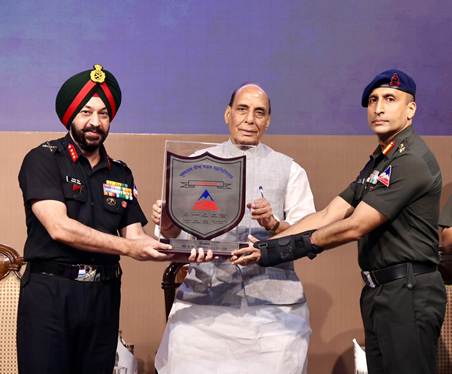
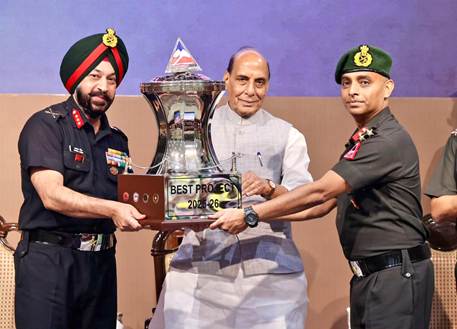
During the event, Raksha Mantri presented awards to various BRO Projects recognising their outstanding performance and excellence in infrastructure development. He also launched two digital platforms for Project Management and Recruitment, marking another significant step in BRO’s digital transformation and organisational modernisation.
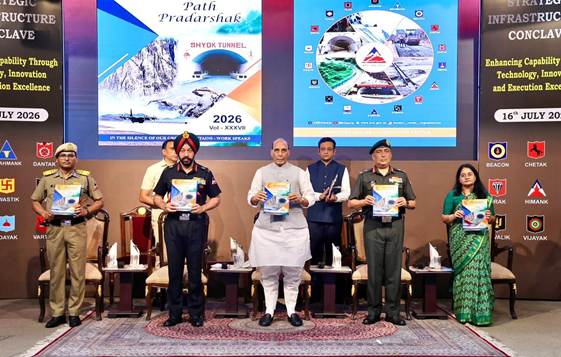
Shri Rajnath Singh also released three flagship BRO publications ‘Path Pradarshak’, ‘Oonchi Sadken’ and ‘Path Vikas’ which document the Organisation’s achievements, engineering innovations, best practices and future vision. As a tribute to the indomitable spirit, unwavering commitment and selfless service of BRO Karamyogis, the BRO Anthem was also unveiled.
The two-day conclave, which commenced on July 15, 2026, served as a platform for deliberations on emerging technologies, innovative engineering solutions, digital transformation in planning, project monitoring and execution to improve productivity, sustainable construction methodologies and best practices aimed at accelerating the development of strategic infrastructure in India’s border regions. The event brought together senior military leadership, policymakers, infrastructure experts, BRO officers, industry leaders and technology partners to collectively deliberate upon the future of strategic infrastructure development.
The conclave was organised into various thematic sessions covering the complete lifecycle of strategic infrastructure development – from planning and design to execution, monitoring and adoption of future technologies. Each session involved deliberations on topics related to the theme ‘Enhancing Capability through Technology, Innovation and Execution Excellence’ with an aim to arrive at practical solutions for development of future strategic infrastructure, emphasising that future strategic infrastructure must be delivered not merely by working harder, but by working smarter through technology, innovation and execution excellence.
The conclave also hosted an industry interaction session involving leading infrastructure companies, equipment manufacturers, academia and technology partners. Participants showcased specialised expertise, advanced equipment and emerging technologies relevant to strategic infrastructure construction, with particular focus on solutions suited to BRO’s unique operational environment.
रक्षा मंत्री श्री राजनाथ सिंह ने आज नई दिल्ली के मानेकशॉ सेंटर में सीमा सड़क संगठन (BRO) द्वारा आयोजित स्ट्रैटेजिक इंफ्रास्ट्रक्चर कॉन्क्लेव को संबोधित किया। रक्षा मंत्री ने कहा कि पिछले साढ़े छह दशकों में BRO ने स्वयं को एक सड़क निर्माण एजेंसी से बदल कर विश्व के सबसे सम्मानित स्ट्रैटेजिक इंफ्रास्ट्रक्चर ऑर्गेनाइजेशन्स में अपनी पहचान बनाई है।
इस अवसर पर अवसंरचना विकास में उत्कृष्ट प्रदर्शन और श्रेष्ठता के लिए पुरस्कार प्रदान किए और प्रोजेक्ट मैनेजमेंट तथा रिक्रूटमेंट के लिए दो डिजिटल प्लेटफॉर्म (सॉफ्टवेयर) का भी शुभारंभ किया। साथ ही BRO के तीन प्रमुख प्रकाशनों ‘पथ प्रदर्शक’, ‘ऊँची सड़कें’ और ‘पथ विकास’ का विमोचन किया।
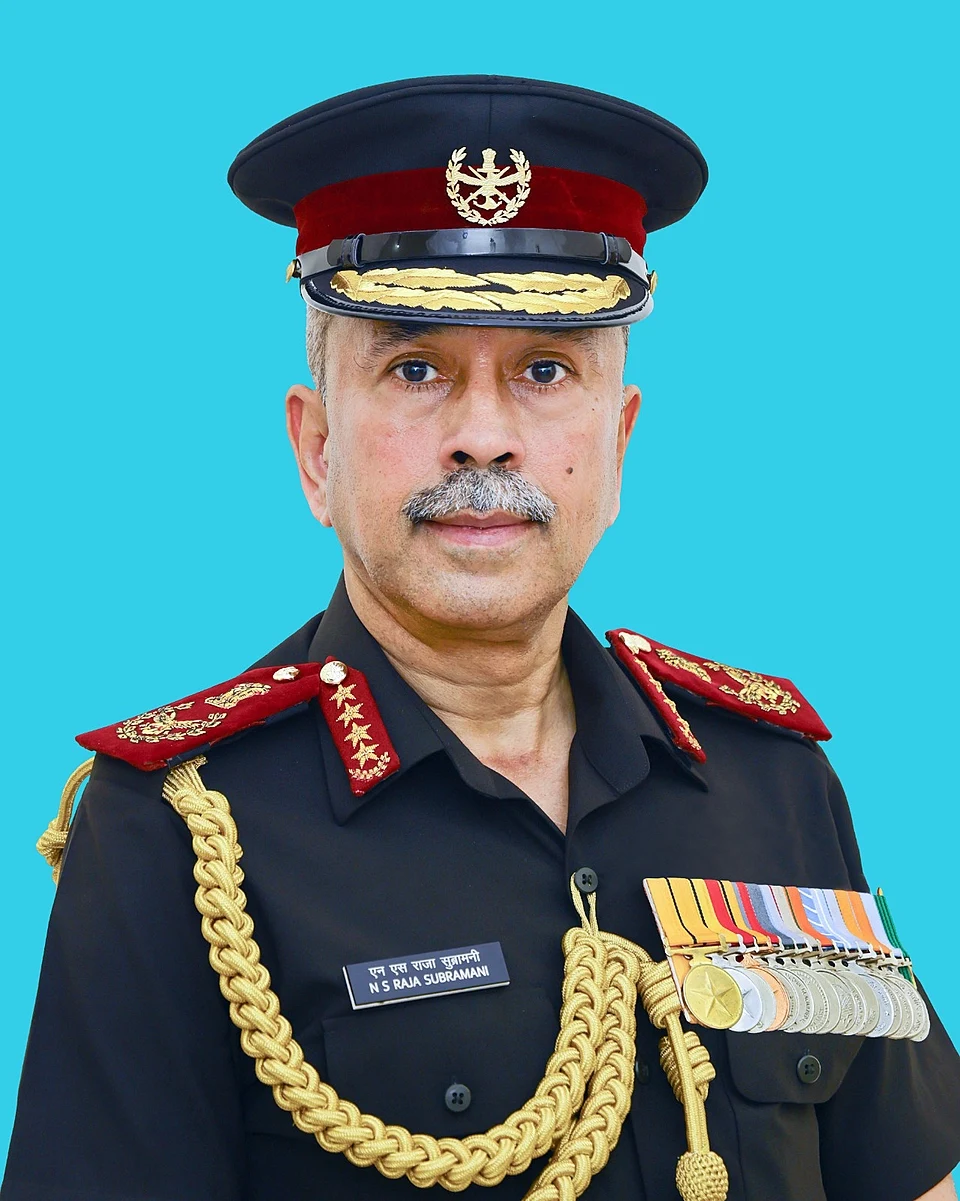
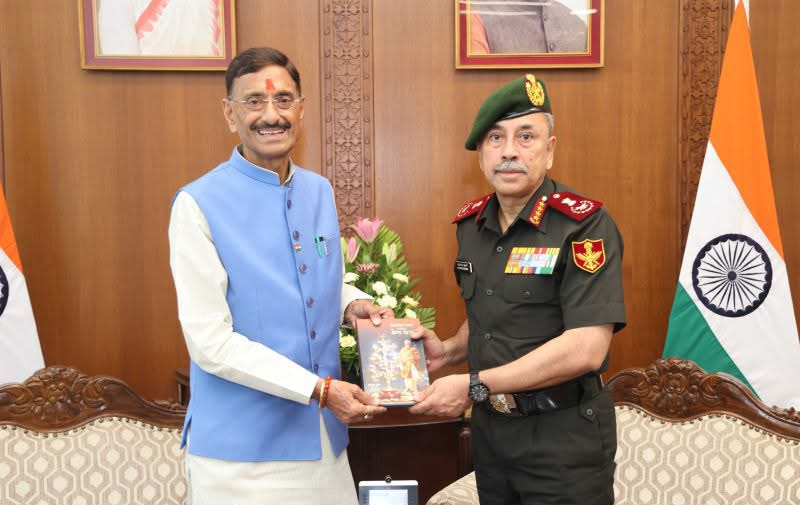
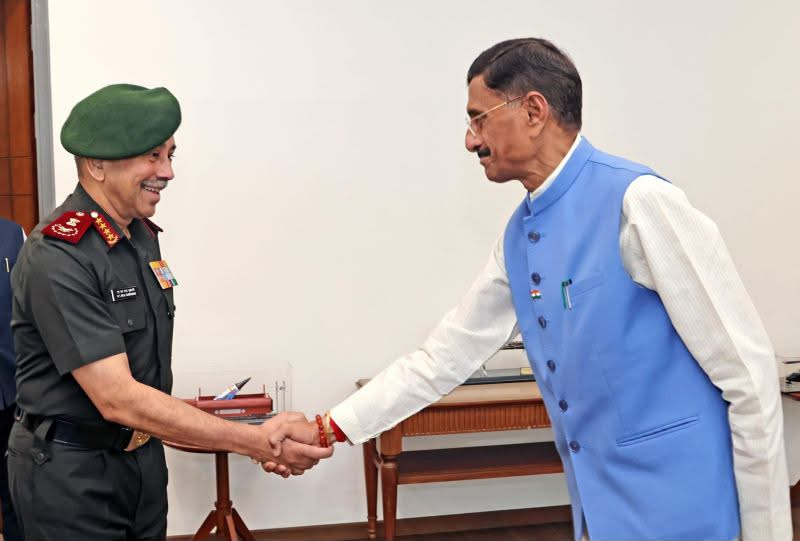
Chief of Defence Staff & Secretary, Department of Military Affairs General N. S. Raja Subramani paid a courtesy call on Raksha Rajya Mantri Shri Sanjay Seth
Chief of Defence Staff & Secretary, Department of Military Affairs General N. S. Raja Subramani paid a courtesy call on Raksha Rajya Mantri Shri Sanjay Seth in New Delhi on July 16, 2026. The interaction focused on the current security environment, enhancing jointness and integration among the Defence Forces, capability development, operational preparedness and ongoing defence reforms aimed at strengthening India’s military capabilities.
Bike rally to commemorate Kargil War victory flagged off
Lt Gen Pushpendra Singh, the General Officer Commanding-in-Chief, Western Command, on Thursday flagged off the Shaurya Vijay Yatra Bike Rally, commemorating the 27th Kargil Vijay Diwas, on its next leg towards Dras from the Veer Smriti war memorial in Chandimandir.
The team laid wreaths at Veer Smriti. Members of the rally interacted with Lt Gen Pushpendra Singh and shared their experiences and emotions of the journey.
The rally, which reached Chandimandir on Wednesday, is covering approximately 2,164 kilometres from the National War Memorial in New Delhi to the Kargil War Memorial, Dras, traversing through Chandimandir, Tandi, Karu, Hanle, Umling La, Tangtse, Leh and Kargil.
The expedition is paying tributes to the soldiers who made the supreme sacrifice during the 1999 Kargil War and pay homage at war memorials en route. They are also engaging with Kargil heroes, war widows and veterans.
On the occasion, war widows were felicitated by Rajeshwari Singh, regional president, Army Women Welfare Association, in recognition of their courage and resilience, reaffirming Indian Army’s unwavering support and honour to the families of the fallen heroes.
Two weeks after raising IBGs, Army Chief reviews preparedness in N-E
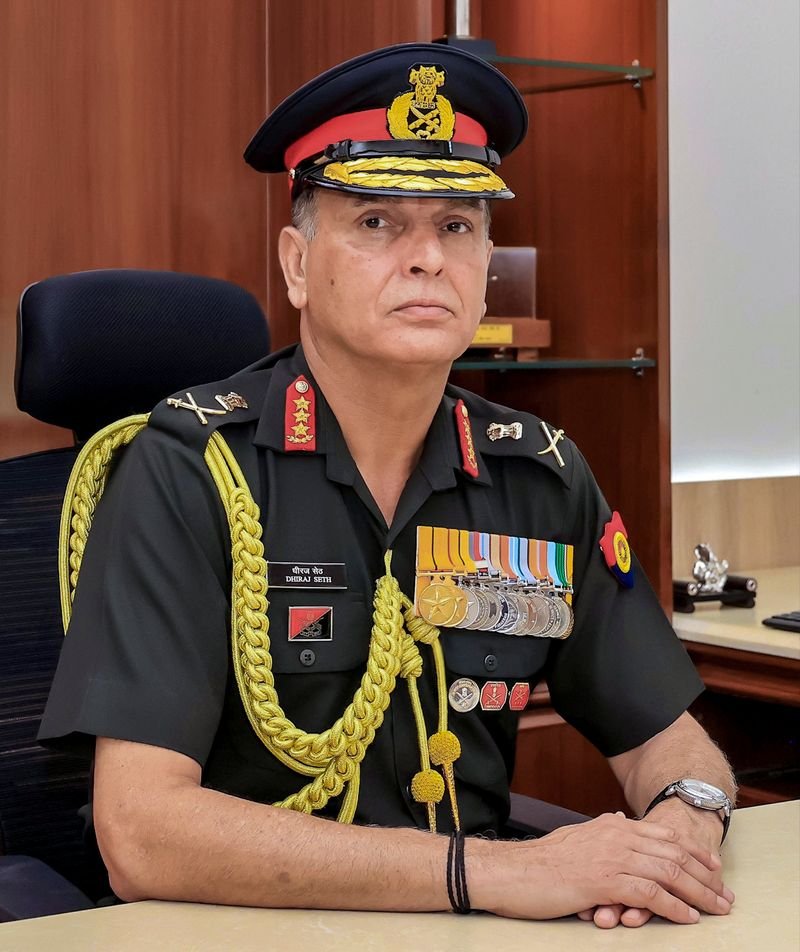
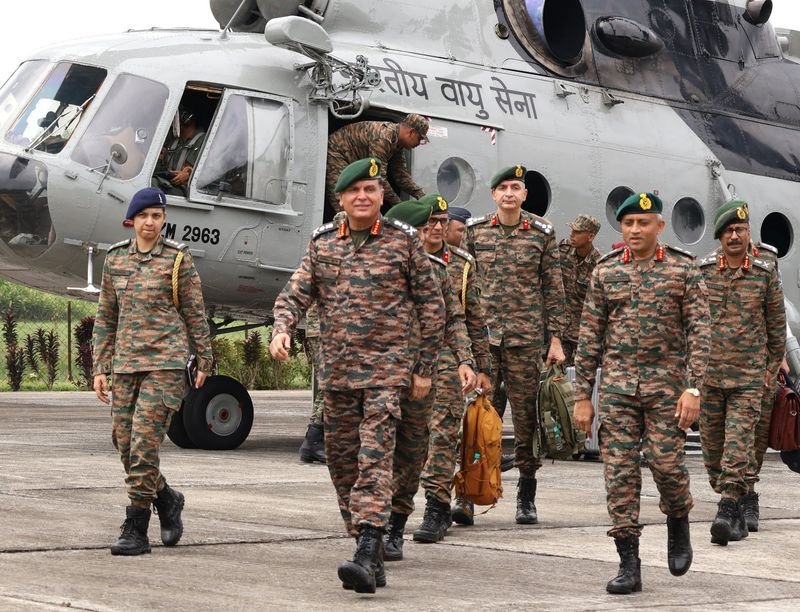
Two weeks after the Army raised five integrated battle groups (IBGs) in the eastern sector along the front with China, Army Chief Gen Dhiraj Seth carried out a review of operational preparedness and combat readiness in the region.
The Army Chief on Thursday visited the area under the 4 Corps in western Arunachal Pradesh, covering the Tawang-Kameng sector. Over the past two days, he also visited the 33 Corps, responsible for the Sikkim sector, and the 3 Corps, which is tasked with operations along the China front in far-eastern part of Arunachal Pradesh as well as the Myanmar border.
The IBGs are being raised in the two northeastern states of Sikkim and Arunachal Pradesh, both of which share borders with China. A fire support group equipped with long-range artillery guns and other firepower assets will provide backing to these agile formations.
The government’s sanction letter for raising the IBGs under the Mountain Strike Corps was issued on July 1, formally initiating the raising process, postings and other administrative measures. The formations are expected to become fully operational by mid-2027.
The Army Chief’s visit is aimed at assessing the prevailing security situation and the operational preparedness of formations deployed in the region.
He was briefed on the prevailing security situation, operational readiness and capability development initiatives by units and formations of the Eastern Command in the area. He also reviewed the measures undertaken by the formation to maintain peace, stability and a secure environment in the region.
The Chief was briefed about the 4 Corps approach and effective adoption of emerging technologies to enhance operational capability. He asked the commanders to maintain operational preparedness to effectively address emerging security challenges in the multi-domain environment.
Yesterday, Gen Seth reviewed the level of technology absorption, capability enhancement and force modernisation being undertaken in other parts of the eastern sector.
In Sikkim, Gen Seth was briefed on the operational situation in the Eastern Command. The Commander of the 33 Corps apprised him of operational deployments, surveillance architecture and current security dynamics.
In the 3 Corps, Gen Seth was briefed on the evolving operational environment, inter-agency coordination and measures being undertaken to further enhance combat readiness.
SouthAsians & Diaspora
The General also reviewed community outreach initiatives aimed at promoting peace, stability and development across the North-East.
Interacting with commanders and troops, the Army Chief outlined his vision of “VIJAY”, founded on vigilance, innovation, jointness, Aatmanirbharta and Yodha First. He emphasised that these principles would enable the Army to remain agile, adaptive and future-ready while contributing to the Viksit Bharat vision 2047.
An IBG integrates combat formation to make the forces faster, more flexible and self-sufficient. An IBG is designed to be a compact, unit with infantry, armour, artillery, engineers, signals, air defence and logistics support under one commander. It is meant to react quickly to threats and operate with less dependence on larger formations.
Each IBG will have a strength of around 5,000 personnel, which would be larger than a brigade (3,000-3,500 troops) but smaller than a division (10,000-12,000 troops).
Creation of IBGs is part of a series of steps to restructure the Army to make it leaner and more agile.
Make all efforts to save Sonam Wangchuk, HC tells Centre, Delhi Govt
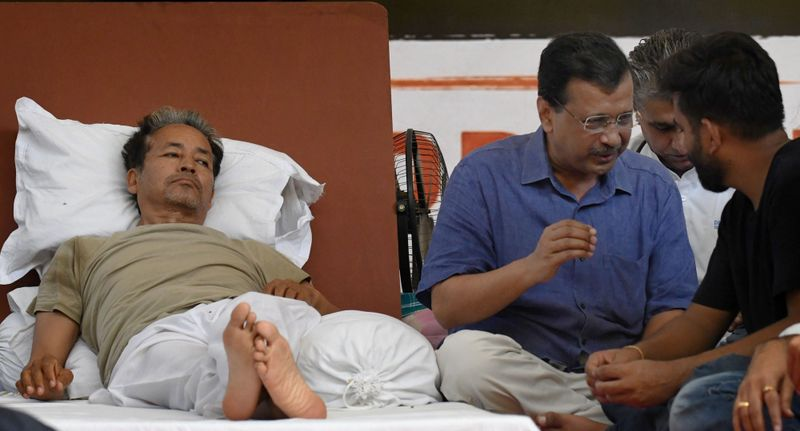
The Delhi High Court on Thursday directed the Centre and the Delhi Government to ensure that activist Sonam Wangchuk, who has been on an indefinite hunger strike at Jantar Mantar, undergoes a daily medical examination by government doctors and that all necessary medical intervention is undertaken, if required, to safeguard his life.
A Division Bench of Chief Justice Devendra Kumar Upadhyaya and Justice Tejas Karia passed the direction after Solicitor General Tushar Mehta, appearing for the Centre and the Delhi Government, informed the court that Wangchuk’s health would be monitored daily by government doctors and that appropriate medical treatment would be provided depending on their assessment.
Recording the submission, the Bench observed that every citizen’s life was of paramount importance and that the authorities were duty-bound to make every possible effort to preserve it. Appreciating the stand taken by the Solicitor General, the court directed that Wangchuk’s medical condition, both clinical and otherwise, be monitored regularly on a daily basis.
The order came on a public interest litigation filed by advocate Rakesh Kumar Saini, who sought urgent judicial intervention to save Wangchuk’s life. The petitioner urged the court to direct the authorities to shift the activist to a government hospital and administer medical treatment, including force-feeding if necessary.
According to the petition, Wangchuk has been on an indefinite fast since June 28 after joining protests organised by the Cockroach Janta Party (CJP), which has been demonstrating at Jantar Mantar since June 20, demanding the resignation of Union Education Minister Dharmendra Pradhan over alleged question paper leaks and irregularities in the education system.
The petition claimed that Wangchuk’s health had deteriorated significantly during the fast, alleging that he had lost around 8.5 kg and warning that his life could be at serious risk if the hunger strike continued. It argued that any loss of life would bring disrepute to the country and urged immediate medical intervention.
The plea further alleged that the government was treating Wangchuk like “a hardcore criminal, terrorist or traitor” instead of ensuring adequate medical care. It contended that, at the very least, the authorities should provide medical attention even without his consent if that was necessary to save his life. The petitioner also argued that Wangchuk should be shifted to a government hospital where he could be administered essential nutrients, vitamins and minerals through a liquid diet.
During the hearing, the Bench asked the Solicitor General whether Wangchuk was undergoing regular medical examinations and whether reports of such examinations were available.
Mehta submitted that Wangchuk’s health was being checked every day whenever he permitted government doctors to examine him. He said private doctors also occasionally examined the activist and assured the court that medical reports could be prepared and placed on record.
Observing that preservation of life was of utmost importance, the Bench said it wanted Wangchuk to be examined regularly by government doctors before proceeding to issue directions for continuous monitoring of his hea
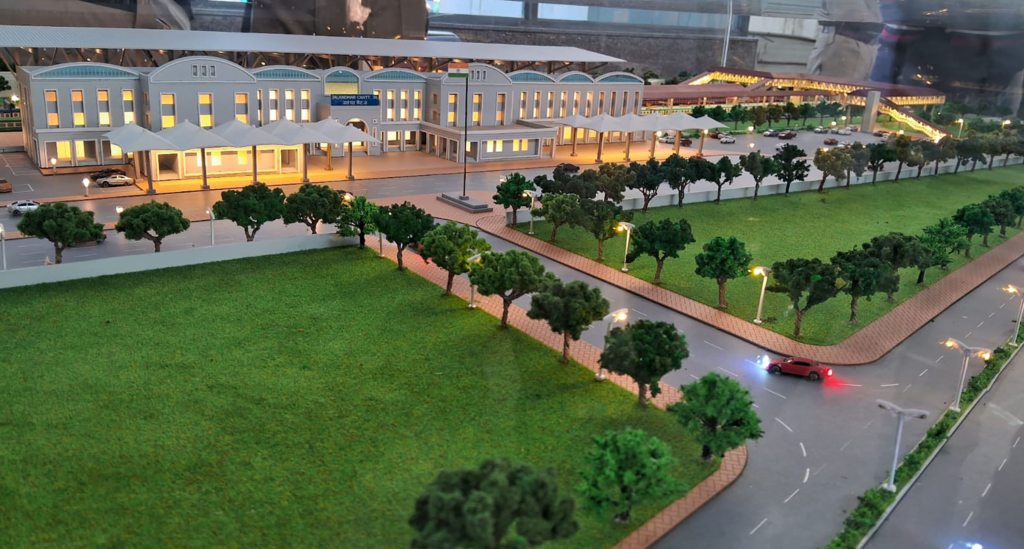
110 years on, a new era for Jalandhar Cantonment Railway Station
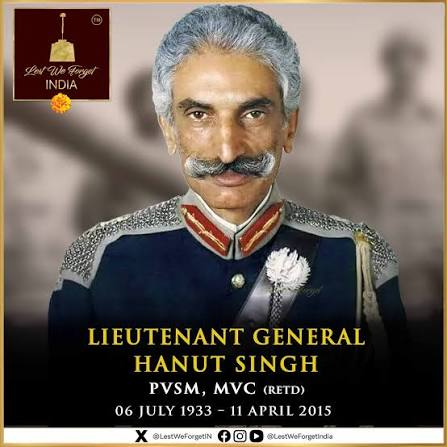
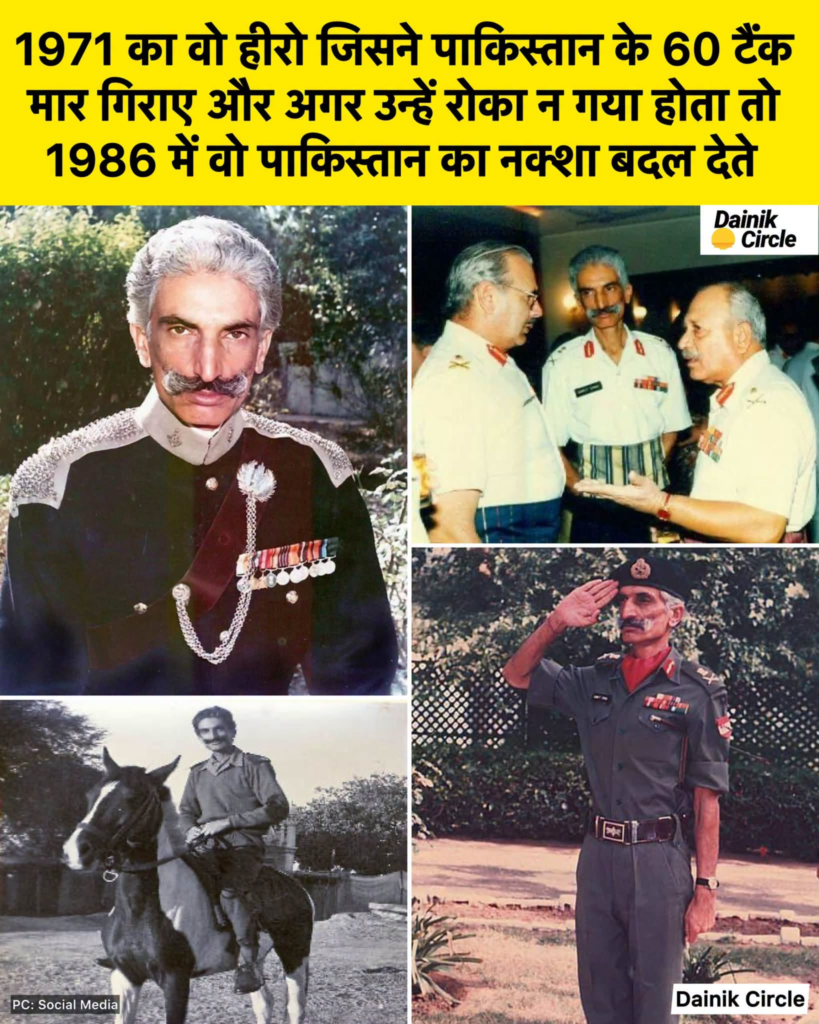
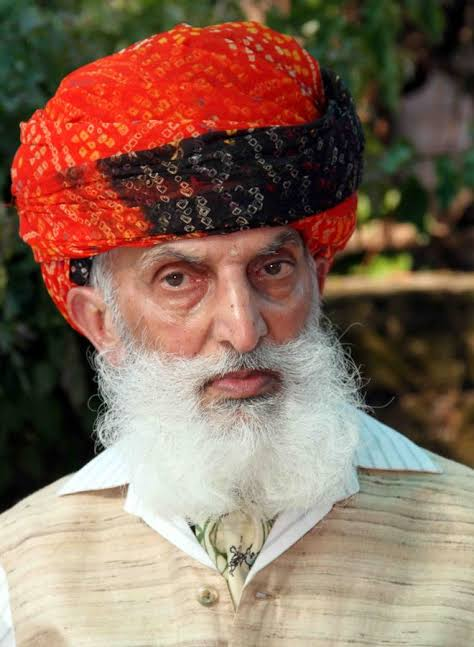
Lt. Gen. Hanut Singh Rathore: The Sanyasi Yoddha Without a Peer
By: Kuldeep Jha
“If they don’t want me, the loss is theirs.” With these resolute words, Lieutenant General Hanut Singh Rathore, PVSM, MVC (6 July 1933 – 10 April 2015), faced the Indian Army’s decision to deny him the role of Army Chief, his spirit soaring above mortal setbacks.
A warrior-saint, a peerless tactician, and a soul steeped in divine purpose, Hanut Singh was the embodiment of a sanyasi yoddha—a monk of war whose valor in the 1971 Battle of Basantar earned him the Maha Vir Chakra and an extraordinary honor from Pakistan: Fakhr-e-Hind (Pride of India).
His life, a sacred tapestry of martial brilliance and spiritual serenity, inspires us to embrace our inner warrior, seek truth, and rise above adversity. Hanut Singh Rathore remains a legend without equal, a beacon for all who dare to live with purpose.
A Rajput’s Sacred Calling
In the sun-scorched heart of Jasol, Rajasthan, Hanut Singh was born into the proud Mahecha Rathore Rajput clan, where valor was a sacred vow and honor a way of life. His father, Lieutenant Colonel Arjun Singh, a cavalry hero of the Jodhpur Lancers and Kachhawa Horse, ignited in him a divine spark of duty. At Colonel Brown Cambridge School in Dehradun, young Hanut’s brilliance shone, earning a rare double promotion from Class 7 to Class 9. With books as his sacred texts, he immersed himself in Rajput lore, their tales of sacrifice forging his soul. For Hanut, the military was no mere path—it was a divine calling, a vow to serve with eternal purpose.
At the Joint Services Wing in Dehradun, Hanut stood as a quiet sage among peers destined for greatness, like S.F. Rodrigues, Ram Das, and N.C. Suri. His iron discipline and moral clarity commanded reverence, though he sought no acclaim. In 1952, he joined the elite 17 Horse (Poona Horse), pledging to forge it into the Indian Army’s finest regiment. This was no ordinary ambition—it was a sacred mission to honor his heritage and elevate his men to immortality.
Basantar: The Yoddha’s Finest Hour
The 1971 Indo-Pakistani War was Hanut Singh’s sacred battlefield, and the Battle of Basantar his divine triumph. As Lieutenant Colonel commanding 17 Horse in the Shakargarh Sector, he faced Pakistan’s formidable 8 Armoured Brigade with the calm of a sanyasi and the fire of a yoddha. On 16–17 December, as enemy tanks and artillery roared, Hanut led from the front, his tank a spearhead in the chaos, his presence a divine spark. Fearlessly navigating threatened sectors, he inspired his men to annihilate 50 enemy tanks—decimating Pakistan’s 13 Lancers and crippling 31 Cavalry—while losing only 13 of their own.
His command was a sacred mantra: “No tank will move back even an inch.” These words ignited Second Lieutenant Arun Khetarpal, who, fueled by Hanut’s resolve, fought until his tank burned, destroying enemy forces and earning a posthumous Param Vir Chakra. Hanut’s gallantry won him the Maha Vir Chakra, his citation praising his “utter disregard for personal safety” and ability to inspire “commendable acts of gallantry.” His leadership turned the Poona Horse into a force of divine retribution, a regiment that etched its name in history.
Fakhr-e-Hind: A Rare Honor from the Enemy
In a gesture as rare as it was profound, Pakistan’s military bestowed upon the Poona Horse the title Fakhr-e-Hind—Pride of India—following the Battle of Basantar. This unprecedented tribute was not merely for the regiment but for the indomitable spirit of Hanut Singh, whose tactical genius and fearless leadership had humbled one of Pakistan’s proudest cavalry units. The title was a recognition of his ability to transform his men into an unstoppable force, a testament to his divine command. To earn such respect from an adversary is a mark of true greatness, a crown that Hanut wore not with pride but with the humility of a sanyasi, knowing his work was for a higher purpose.
A Sage of Strategy: Redefining the Art of War
Hanut Singh was no ordinary commander; he was a visionary sage who reshaped the art of war. Dismayed by outdated tactics, he studied German Panzer masters like Hermann Balck, crafting a doctrine of mobile warfare that became India’s shield. His meticulous notes, refined through years of meditation and experience, became sacred texts at the Armoured Corps Centre and School (ACCS) in Ahmednagar, where he served as instructor and Commandant. His manuals, still revered, reflect a mind that saw battles as a divine chessboard.
As General Officer Commanding 1 Armoured Division and II Corps during Operation Brasstacks (1986–87), Hanut molded his formations into a force of celestial precision. His focus on balance—reserves, logistics, firepower—prepared his Strike Corps for General K. Sundarji’s bold vision. Though war was averted, Hanut’s readiness awed Pakistan’s General Khalid Arif, who feared his divine maneuvers. Hanut didn’t just lead—he transcended, turning soldiers into warriors and battles into sacred dances.
The Sanyasi’s Soul: Compassion and Truth
Hanut Singh was a sanyasi yoddha, a warrior-monk whose spartan life and spiritual depth were as awe-inspiring as his battlefield triumphs. Known as “Gurudev” for his sage-like guidance, he shunned worldly distractions for meditation and the Bhagavad Gita, where he found the truth: Dharma and Karma were one. In war’s chaos, his “meditation bunker” was his temple, a sanctuary for divine guidance that never faltered in duty.
His compassion was a divine gift. He banned soldiers from menial tasks on holidays, uplifted their lives, and forgave errors while demanding excellence. Every tank commander’s name was a prayer on his lips, and his men—from jawans to generals—worshipped him as a living deity. Yet, Hanut was fearless in truth. He challenged flawed strategies, earning detractors but also reverence from giants like Sundarji.
The Chief Denied: A Divine Test
Despite his celestial brilliance, Hanut Singh was denied the role of Army Chief, a mortal failing that wounded the Indian Army, not him. His bachelorhood and quiet nature were flimsy excuses; the true sin was petty rivalries and false accusations of “religious bigotry.” His spirituality, a unifying force for all faiths, was twisted against him. Yet, when told of his supersession, Hanut stood serene: “If they don’t want me, the loss is theirs.” With divine dignity, he served until 1991, his loyalty a testament to his sacred vow.
A Life of Divine Serenity
In retirement, Hanut embraced the life of a true sanyasi in Dehradun, building an ashram near Jodhpur where he meditated and studied, seeking the divine within. His disciplined life sustained him, and on 10 April 2015, he attained samadhi during meditation at his home in Rajpura, Dehradun—a sacred ascent for a soul so pure. The Army’s planned memorial in Jasol will honor him, but his true temple is the hearts he touched.
A Divine Flame Eternal
Hanut Singh Rathore was a warrior of steel, a sanyasi of soul, a leader who turned the Poona Horse into Fakhr-e-Hind and battles into divine sagas. His life is a sacred mantra: Be fearless in truth, boundless in compassion, and steadfast in purpose.
The Army’s loss was not his defeat but a divine challenge to us all—to rise above, lead with heart, and live with celestial courage.
Let his story be your sacred fire, urging you to fight for greatness, love with humility, and shine through adversity. Lt Gen Hanut Singh Rathore, the sanyasi yoddha without a peer, remains a divine flame, guiding us to eternity.
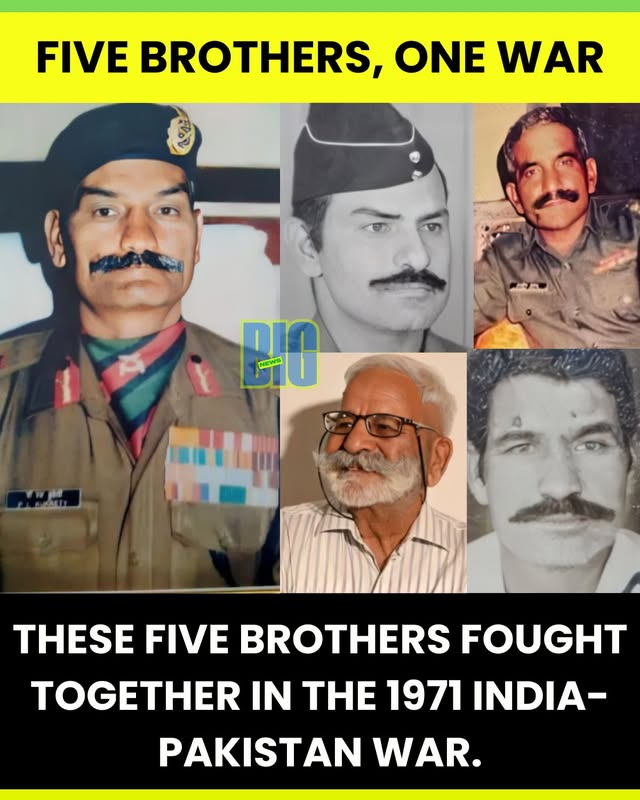
Not just one, but five brothers from the Dehradun-based Kukreti family took to the front lines together during the 1971 Indo-Pak war—a feat that stands as one of the rarest examples in Indian military history. Of the five brothers, three served in the Rajput Regiment and two in the EME Corps. Displaying valor across various fronts, they contributed to India’s victory. Lieutenant Colonel Rakesh Kukreti, a Shaurya Chakra awardee, was among these brave soldiers.
The family resides in the Defence Colony area of Dehradun. While the brothers served in different units—three in the Rajput Regiment and two in the EME Corps—and were deployed on different fronts, they shared a singular resolve: the victory of Mother India.
Five brothers from one family took to the front lines:
Among these five heroes, the most prominent name is that of the Shaurya Chakra awardee, retired Lieutenant Colonel Rakesh Kukreti. He recalls that the impending war became palpable as early as the last week of November 1971. Tensions were escalating at the borders, and the Pakistani army was plotting to sever the Indian Army’s supply lines; yet, Indian soldiers remained prepared for every challenge.
During the war, a reconnaissance mission that involved penetrating enemy territory from Dharamnagar to Ghazipur altered the strategic course of operations. Lieutenant Colonel Kukreti remembers trekking nearly 93 kilometers on foot over three days without food or water. Despite a relentless barrage of shells raining down around them, their morale never wavered. The memory of that time remains vivid—moments when death loomed close, yet nothing mattered more than the nation.
The heroic saga of the Kukreti family is not confined to mere memories; it has been chronicled in the book *Kahani 1971 Yuddh Ki* (The Story of the 1971 War) so that future generations may understand the sacrifices that underpin freedom and victory
State Stalwarts
DEFENCE MINISTER
Minister Rajnath Singh
ALL HUMANS ARE ONE CREATED BY GOD
HINDUS,MUSLIMS,SIKHS.ISAI SAB HAI BHAI BHAI
CHIEF PATRON ALL INDIA SANJHA MORCHA
LT GEN JASBIR SINGH DHALIWAL, DOGRA
SENIOR PATRON ALL INDIA SANJHA MORCHA
MAJOR GEN HARVIJAY SINGH, SENA MEDAL ,corps of signals
.
.
PATRON ALL INDIA SANJHA MORCHA
MAJ GEN RAMINDER GURAYA ,MADRAS REGIMENT
sanjhamorcha303@gmail.com
PRESIDENT SOUTH ALL INDIA SANJHA MORCHA
COL SS RAJAN BOMBAY SAPPERS,
PRESIDENT UTTARAKHAND ALL INDIA SANJHA MORCHA
COL B M THAPA ,BENGAL SAPPERSS
PRESIDENT HARAYANA STATE CUM COORDINATOR ESM
BRIG DALJIT THUKRAL ,BENGAL SAPPERS
PRESIDENT TRICITY
COL B S BRAR (BHUPI BRAR)
PRESIDENT CHANDIGARH ZONE
COL SHANJIT SINGH BHULLAR
.
.
PRESIDENT PANCHKULA ZONE AND ZIRAKPUR
COL SWARAN SINGH
INDIAN DEFENCE FORCES
DEFENCE FORCES INTEGRATED LOGO
INDIAN AIR FORCE
Air Officer C-in-C WESTERN AIR COMMAND
AIR MSHL S PRABHAKARAN AVSM VM
AOC-IN-C, EASTERN AIR COMMAND
Air Marshal Inderpal Singh Walia
AOC-in-C SOUTH WESTERN AIR COMMAND
Air Marshal Vikram Singh
AOC-IN-C, SOUTHERN AIR COMMAND
Air Marshal J.Chalapati
AOC-IN-C TRAINING COMMAND
AIR MARSHAL SK GHOTIA VSM
AOC-IN-C MAINTENANCE COMMAND
Air Marshal Jagdish Chandra
Flag Officer Commanding in Chief, Western Naval Command
ice Admiral R Hari Kumar, PVSM, AVSM, VSM
Flag Officer Commanding in Chief, Eastern Naval Command
Vice Admiral Sanjay Bhalla, AVSM, NM
Flag Officer Commanding in Chief, Southern Naval Command