










































Current Events :








NEW DELHI: Finally, the ‘burst of fire’. The Prime Minister Narendra Modi-led government on Wednesday cleared the much-awaited deal to buy 36 fighter jets from France’s Dassault Aviation.
The green signal for the deal worth ¤7.87 billion ($8.84 billion) was taken in a meeting presided by Modi.
The deal is expected to be signed on Friday, as French defence minister Jean-Yves Le Drian is arriving in Delhi on that day. Of the ¤7.87 billion, about 50 per cent will be covered under offset, which means either France will reinvest this amount in India or source equipment of this value from India.
French President Francois Hollande and Modi had intervened in the procurement of the nuclear-capable Rafale jets in 2015, ordering government-to-government talks after several years of commercial negotiations with Dassault had collapsed.
Besides other features that make the Rafale a strategic weapon in the hands of the IAF is the Beyond Visual Range Meteor air-to-air missile with a range of over 150 km. Its integration on the Rafale jets will mean the IAF can hit targets inside both Pakistan and across the northern and eastern borders while still staying within Indian territory.
Pakistan currently has only a BVR with 80 km range. During the Kargil war, India used a BVR of 50 km while Pakistan had none. With Meteor, the balance of power has again tilted in India’s favour. Scalp, a long-range air-to-ground cruise missile with a range of over 300 km also gives the IAF an edge over its adversaries.
Tough negotiations by the MoD-IAF team extracted many concessions from the French before arriving at a price that is almost ¤750 million less than what was quoted by France in January.

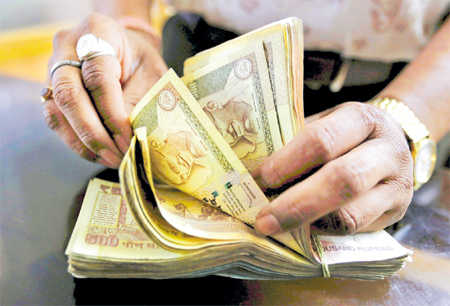
नई दिल्ली: सातवें वेतन आयोग (पे कमिशन) की रिपोर्ट लागू हो गई है। नरेंद्र मोदी सरकार ने 1 जनवरी 2016 से इसे लागू करने की घोषणा कर दी है। कुछ ही दिनों में सारी प्रक्रिया पूरी कर ली जाएगी और जुलाई या फिर के अंत तक मिलने वाले वेतन में इसे शामिल कर दिया जाएगा। सरकार ने घोषणा भी कर दी है कि इसी साल जनवरी से एरियर भी दे दिया जाएगा। इसे लेकर तमाम वेबसाइटों और आज सुबह के अखबारों में तमाम बातें लिखी गई हैं। बातें इतनी हैं कि कर्मचारियों के मन में तमाम सवाल पैदा हो गए हैं। इन सिफारिशों से 1 करोड़ से भी ज्यादा कर्मचारी लाभान्वित होंगे। इनमें 47 लाख से ज्यादा केंद्रीय सरकारी कर्मचारी और 53 लाख पेंशनभोगी शामिल हैं, जिनमें से 14 लाख कर्मचारी और 18 लाख पेंशनभोगी रक्षा बलों से संबंधित हैं।
वेतन आयोग लागू करने संबंधी केंद्र सरकार के वित्त मंत्रालय ने यह बयान दिया है। 11 बिंदुओं में यह बयान जारी किया गया है।
1. पे बैंड एवं ग्रेड पे की वर्तमान प्रणाली समाप्त कर दी गई है और आयोग की सिफारिश के अनुरूप एक नई वेतन संरचना (पे मैट्रिक्स) को मंजूरी दी गई है। अब से कर्मचारी के दर्जे का निर्धारण पे मैट्रिक्स में उसके स्तर के आधार पर होगा, जबकि अभी तक ग्रेड पे के अनुसार इसका निर्धारण होता था। अलग-अलग वेतन संरचनाएं असैन्य (सिविलयन), रक्षा कार्मिकों और सैन्य नर्सिंग सेवा के लिए तैयार की गई हैं। इन संरचनाओं के पीछे सिद्धांत और तर्क एक समान हैं।
2. सभी वर्तमान स्तरों को नये ढांचे में समाहित कर दिया गया है। कोई नया स्तर शुरू नहीं किया गया है और न ही किसी स्तर को हटाया गया है। वेतन संरचना के हर स्तर पर न्यूनतम वेतन तय करने के लिए सुव्यवस्थीकरण के सूचकांक को मंजूरी दी गई है, जो वरिष्ठता क्रम में हर कदम पर बढ़ती भूमिका, जिम्मेदारी और जवाबदेही पर निर्भर करता है।
3. न्यूनतम वेतन को 7000 रुपये से बढ़ाकर 18000 रुपये प्रति माह कर दिया गया है। न्यूनतम स्तर पर किसी भी नवनियुक्त कर्मचारी का शुरुआती वेतन अब 18000 रुपये होगा, जबकि नवनियुक्त ‘क्लास I’ अधिकारी का शुरुआती वेतन 56100 रुपये होगा। यह 1:3.12 के संकुचन अनुपात को दर्शाता है, जिससे यह पता चलता है कि सीधी भर्ती वाले किसी भी ‘क्लास I’ अधिकारी का वेतन न्यूनतम स्तर पर नवनियुक्त कर्मचारी के वेतन से तीन गुना अधिक होगा।
4. वेतन एवं पेंशन में संशोधन के उद्देश्य से 2.57 का फिटमेंट फैक्टर वेतन संरचनाओं में शामिल सभी स्तरों पर लागू होगा। प्रचलित दर पर डीए को शामिल करने के बाद सभी सरकारी कर्मचारियों/पेंशनभोगियों के वेतन/पेंशन में 1 जनवरी, 2016 को कम से कम 14.29 प्रतिशत की बढ़त दर्ज हो जाएगी।
5. वेतन वृद्धि की दर को 3 प्रतिशत पर बरकरार रखा गया है। उच्च मूल वेतन की बदौलत कर्मचारी भविष्य में लाभान्वित होंगे, क्योंकि भविष्य में उनके वेतन में जो वार्षिक वृद्धि होगी वह वर्तमान के मुकाबले 2.57 गुना ज्यादा होगी।
6. कैबिनेट ने स्तर 13ए (ब्रिगेडियर) के लिए सुव्यवस्थीकरण सूचकांक में वृद्धि कर और स्तर 12ए (ले.कर्नल), 13 (कर्नल) और 13ए (ब्रिगेडियर) में अतिरिक्त स्तर (स्टेज) सुनिश्चित करके रक्षा संबंधी वेतन संरचना को और बेहतर कर दिया है, ताकि संबंधित स्तरों के अधिकतम पायदान पर संयुक्त सशस्त्र पुलिस बल (सीएपीएफ) के समकक्षों के साथ समता लाई जा सके।
7. रक्षा और संयुक्त सशस्त्र पुलिस बल (सीएपीएफ) कार्मिकों समेत विभिन्न कर्मचारियों पर असर डालने वाले कुछ अन्य निर्णय भी लिए गए हैं, जिनमें निम्नलिखित शामिल हैं।
• ग्रेच्युटी की सीमा 10 लाख रुपये से बढ़ाकर 20 लाख रुपये कर दी गई है। जब भी डीए 50 प्रतिशत बढ़ जाएगा तब ग्रेच्युटी की सीमा 25 प्रतिशत बढ़ जाएगी।
• असैन्य एवं रक्षा कार्मिकों के लिए अनुग्रह राशि एकमुश्त मुआवजे के भुगतान हेतु एक आम व्यवस्था की गई है, जो उनके परिजनों को देय होगा और इसके तहत वर्तमान दरों को विभिन्न श्रेणियों के लिए 10-20 लाख रुपये से बढ़ाकर 25-45 लाख रुपये कर दिया गया है।
• रक्षा बलों के कर्मियों की विभिन्न श्रेणियों के लिए सैन्य सेवा वेतन की दरें 1000, 2000, 4200 एवं 6000 रुपये से संशोधित करके क्रमश: 3600, 5200, 10800 एवं 15500 रुपये कर दी गई हैं।
8. कैबिनेट ने आवास निर्माण से जुड़ी अग्रिम राशि को 7.50 लाख रुपये से बढ़ाकर 25 लाख रुपये करने संबंधी आयोग की सिफारिश को भी मंजूरी दे दी है। कर्मचारियों को कोई दिक्कत न हो, यह सुनिश्चित करने के लिए 4 ब्याज मुक्त अग्रिमों को बरकरार रखा गया है, जिनमें चिकित्सा इलाज के लिए अग्रिम, टूर/स्थानांतरण के लिए टीए, मृतक कर्मचारियों के परिवार के लिए टीए और एलटीसी शामिल हैं। अन्य सभी ब्याज मुक्त अग्रिमों को समाप्त कर दिया गया है।
9. कैबिनेट ने केंद्र सरकार कर्मचारी समूह बीमा योजना (सीजीईजीआईएस) में किए जाने वाले मासिक अंशदान में भारी वृद्धि करने की सिफारिश को भी न मानने का निर्णय लिया है, जैसी कि आयोग ने सिफारिश की थी।
10. आयोग ने कुल मिलाकर 196 वर्तमान भत्तों पर गौर किया और इन्हें तर्कसंगत बनाने के उद्देश्य से 51 भत्तों को समाप्त करने और 37 भत्तों को समाहित करने की सिफारिश की है।
11. सातवें सीपीसी द्वारा लगाए गए अनुमान के मुताबिक, वर्ष 2016-17 में इसकी सभी सिफारिशों पर अमल से अतिरिक्त वित्तीय बोझ 1,02,100 करोड़ रुपये का पड़ेगा। इसके अलावा वर्ष 2015-16 के दो महीनों के लिए वेतन एवं पेंशन से जुड़ी बकाया राशि के भुगतान हेतु 12,133 करोड़ रुपये का अतिरिक्त बोझ वहन करना पड़ेगा।
Amir Karim Tantray
Tribune News Service
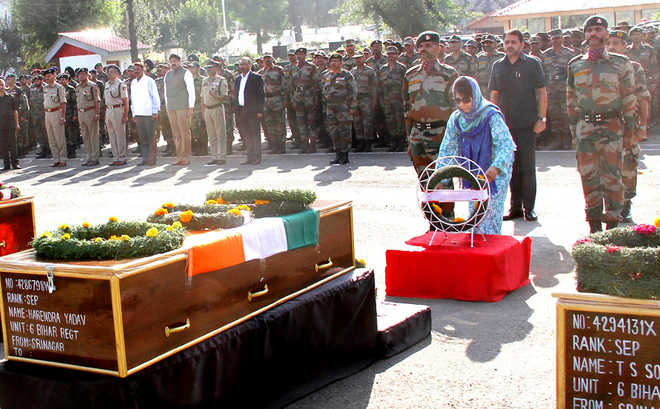
Sarwa (Vijaypur), September 19Thousands of people and Army men bid a tearful adieu to Havaldar Ravi Paul and Subedar Karnail Singh, two of the 18 soldiers killed in the Uri attack on Sunday, at their native villages in Samba and Jammu districts, respectively.Mortal remains of both soldiers were brought to the Jammu technical airport on Monday afternoon in an Army helicopter and from there they were taken to their respective villages — Sarwa in the Vijaypur area of Samba district and Shibu Chak in the Bishnah area of Jammu district.In Sarwa village, since morning all roads led to the house of Havaldar Ravi Paul (42), who is survived by wife and two sons, Vansh Salotra (10) and Sudhansheesh Salotra (7).This village is situated a few kilometres away from the international border in the Ramgarh sector. Around 50-60 people of the village are working with the Army. Ravi Paul, youngest of six siblings, was in 10 Dogra Regiment while his two elder brothers have also worked in the Army. His children want to continue the tradition by joining the Army.“My father wanted me to become a doctor and I will fulfil this by becoming a doctor in the Army,” Vansh Salotra told The Tribune. His younger brother Sudhansheesh also thinks on similar lines.Vansh said it was routine that his father used to call them early in the morning to wake them up so that they could get ready for school. “On Sunday also, we got a call from my father at around 5 am and our talk was about routine things,” he said, adding, “I know why people have gathered today here. Because my father has died and they are waiting for his mortal remains to reach the village.”Ravi Paul’s elder brother, Mohan Lal, who is working with Defence Service Corps (DSC) at Ludhiana after taking retirement from the Jammu and Kashmir Light Infantry (JAKLI) Battalion, said they used to take leave at the same time and visit the family. “We spent good time together. We also used to talk over phone regularly. The last time we talked was on September 17,” he said.Once the mortal remains of Ravi Paul reached his home, people raised slogans in favour of the Army and against Pakistan. Paul was cremated with full military honours as a galaxy of people including state minister Chander Prakash Ganga, Lok Sabha member Jugal Kishore, Rajya Sabha member Shamher Singh Manhas, the Jammu IG, Army officers and people from all walks of life were present.While on the one hand people felt proud of the sacrifice of the son of the soil, on the other hand there was anger among them over the death of soldiers while they were sleeping.“We don’t want our soldiers to die in sleep. If they have to die, let them die in a battlefield but not inside tents. It is the time to shun rhetoric and do something concrete,” said Roop Lal, naib sarpanch of the village.Meanwhile, thousands of people also attended the last rites of Subedar Karnail Singh at his native village Shibu Chak in the Bishnah area of Jammu district. He was cremated with full military honours.
The Pampore attack ‘has the stamp of LeT written all over it.’
‘They are exactly like the so-called fidayeen of the 1999-2003 phase, when J&K witnessed a surge in suicide attacks on various important garrisons,’ says Lieutenant General Syed Ata Hasnain (retd), who served as the General Officer Commanding 15 Corps in Kashmir.
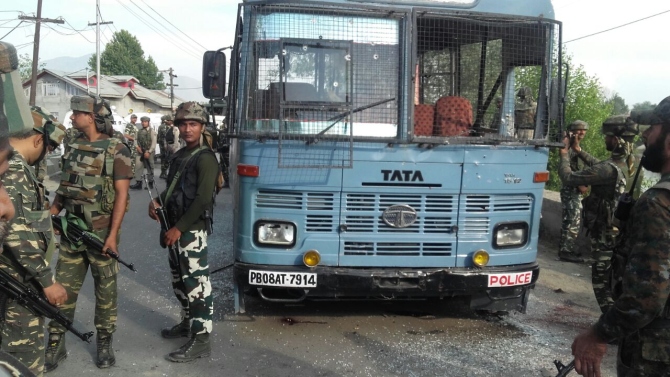
Experinced practitioners of counter insurgency and counter terror operations (CI/CT) usually have a tendency to take setbacks in the stride. A sort of one bad day after ten good ones.
However, the public does not see it that way and it is public opinion that matters. The public pressures the political leadership which in turn places pressure on the security forces. If nothing else it ensures introspection.
Some years ago when the CRPF lost 75 men in Dantewada in a Naxalite ambush in which nothing went right for the policemen, it became a landmark event for analysis and corrective action. While everything may not be copybook in the Red Corridor, but definitely the tactical concepts, conduct of operations, leadership and command and control have all seen an upward spiral in quality.
The same now needs to be done in Jammu and Kashmir where the CRPF has suffered its first major setback and that too in a semi operational mode. However, to do that without a realistic perspective of the situation would be an exercise in futility.
On this website itself Archana Masih interviewed me a little more than a year ago. I spoke of the Last Mile, a phenomenon which invariably takes place when the nature of insurgency changes.
I quote from an earlier article of mine when Pampore was in the news during the Entrepreneurship Development Institute (EDI) building stand off — ‘the lesser the terrorist presence and more that the Army tries, the results will never be commensurate with statistics of the past. Take it from me; there will be casualties on the Army side higher in ratio than at the time when there were a larger number of terrorists.’
Granted that the casualties this time in the Pampore ambush on the CRPF bus were that of the CRPF, but how does that make a difference? It was Indian blood which has been spilt, blood of policemen who were not even involved in operations at that time. It is heart wrenching for us all.
How does one view this? The first observation which comes to mind is that the terrorists are well trained, prepared to die while undertaking strikes and willing to take chances while operating in small teams.
It has the stamp of LeT written all over it. They are exactly like the so-called fidayeen of the 1999-2003 phase, when J&K witnessed a surge in suicide attacks on various important garrisons and buildings including the Tourist Reception Centre and the J&K assembly.
Terrorists have hit the core of the weaknesses of the overall CI/CT grid
The second is that the planners and the directors sitting across the LoC are being reported the situation meticulously and based on that they are making tactical changes.
Obviously they have hit the core of the weaknesses of the overall CI/CT grid in the Kashmir Valley; that is the issue of road security.
The National Highway is slowly becoming the deathtrap of the Valley. This needs a little more analysis.
Even in the heyday of militancy in the late nineties and the early millennium the National Highway between Srinagar and the Jawahar Tunnel saw some successful IED attacks.
Troops and officer buses, which bear maximum potential for high casualties, were the objectives. Ambush was a less common mode of strike although only in 2007 many attempts were made. The IED capability of the terror groups also dried up after 2008.
In June 2013 a major strike on a small convoy of 35 Rashtriya Rifles near the airport crossing sent shock waves as eight soldiers were killed with impunity. Grenade throwing in built up areas, especially in Bijbehara, was a common phenomenon for long, partially countered with more proactive domination of the town.
Yet, ambush was only a one off type of strike which terrorists adopted. In 2016 it appears that planners from across the LoC have directed focus on the National Highway.
In February 2016, a similar ambush on the CRPF convoy led to the standoff at the EDI building and this month we have had the BSF convoy also being ambushed at Bijbehara.
The question arises: Are the security rorces so vulnerable that they cannot effectively secure themselves from these hit and run methods adopted by the terror groups?
The answer is a blanket NO. However, the unpredictability factor in CI/CT operations always militates against them. It is not as if only the National Highway alone is vulnerable. No one speaks of the acute vulnerability of helicopters and even fixed wing aircraft which take off and land at the Srinagar airport.
Each time any aircraft is at a lower height a determined terrorist can fire small arms at it and cause huge damage. Helicopters land at all kinds of helipads to pick up casualties or drop commanders. It isn’t difficult to take them on and there is no need for missiles; AK 47s or even RPGs used for rocket attacks are sufficient, notwithstanding helipad securing drills.
However, it hasn’t happened yet and mercifully so. Road Opening Procedure (ROP), the well-known and practiced drill for securing a road is executed every day for securing the National Highway. Some other arterial roads are similarly secured for move of logistics and troops.
But every single road cannot be secured. Operational tracks near the LoC are as vulnerable and the Army takes its chances with these. If the actual recommended drill for ROP is followed it will be extremely expensive in manpower.
What does the real procedure actually involve? It means virtually 24×7 domination of the corridor which is supposed to be three km either side of the road.
Domination largely means patrolling, showing physical presence and emplacing some troops in hides so that any terrorist movement through the area is intercepted.
The corridor domination is joint responsibility of the Army and CRPF, but there is no clear cut division of responsibility. The road per se is checked every morning with assistance of technical explosive detecting equipment and dogs. No chances can be taken on this.
Subsequently, troops occupy static positions on the road; they actually need to be away from the road and dominate the stretch by observation. Convoys are then given the green signal for the morning move. Through the day different routine structured convoys from Srinagar to Udhampur or vice versa and many other unstructured ones roll past the ROP parties.
In the late afternoon the ‘up’ convoys reach from Udhampur. The built up areas such as Pampore, Bijbehara and many others which are especially vulnerable are required to be strengthened at such times through mobile patrolling and perhaps infusion of additional strength.
I remember that in 1999 I once rang up the Commander of 1 Sector RR at Anantnag at 4 PM. I was told by the duty officer that the commander and all his staff were out on the road to reinforce the ROP as the convoy was expected from Udhampur.
I have not forgotten that and always recount it to bring home lessons to people. Whatever strength can be mustered must reinforce the ROP when the huge lumbering convoys go past townships. These are not drills, but improvisations that formations and units follow based on experience and it is this experience in CI/CT operations that saves lives and achieves results.
Pampore needs reinforcement, as much does Avantipur and Bijbehara.
The need for hardening of buses and more bullet proof jackets
It is easy to blame a force for a failure, but it needs to be remembered that there are many facets that do not have copybook execution of procedures. However, I do agree that after the recent spurt of attacks on the National Highway there should have been more brainstorming to ascertain ways of defeating the terrorists.
The density of ROP was increased in recent weeks as per the DG CRPF himself. Yet what is important is that ROP is extremely stressful and for policemen to have focus all day does become a challenge. They need constant leadership and direction along with motivation. The required degree of rest is never achieved thus making ROP less effective than desired.
Another facet which has come under glare is the lack of bullet proof jackets and hardened buses for move of troops. Two pieces of recall may illustrate previous levels of concern.
In 2003 the then GOC of Dagger Div undertook on his own the procedure of hardening buses of his division. He scouted and found Vijayanta tanks lying in a derelict state at Delhi’s Central Vehicle Depot. The skirt plates were removed, transported and welded on the sides of the buses.
In 2004 a suicide car bomber detonated his car after dashing against one of these buses. The bus driver was killed, but all others in the bus were saved. The bus also had a layer of melted industrial rubber to reinforce the floor. This was a result of the concern that the GOC had for his men and he went the furthest extent to take measures to protect them.
We need replication of that spirit. That led to the hardening of all buses of the Army by the Base Workshop at Udhampur. Progressively those buses may have wasted. I am not sure if Army buses are hardened any longer.
However, it is for public information that with the quantum of men under arms in the Valley there is a constant need for buses for transportation. To supplement the numbers, buses are also hired from the local State Transport Corporation which obviously cannot be hardened.
On bullet proof jackets, it may be sufficient to recall that during 2007 in the tenure of Lieutenant General H S Panag as army commander there was no way that a man could ride on the convoy without his bullet proof jacket.
To reduce casualties in the event of an IED or an ambush the number of troops in a bus or a troops carrying vehicle was reduced to a lower figure. These drills continued for long and may have diluted over time. They need restoration in letter and spirit and application to all forces.
It is after long that road security is being discussed all over; about time. It is the least glamorous of tasks in CI/CT operations and usually fails to draw attention. We have had IED incidents on the National Highway galore during the nineties and even later but it is only a terribly negative incident which has focused us all on this all important aspect.
Perhaps review of many other lesser known weaknesses of the grid need to be highlighted routinely and discussed professionally by the practitioners.
As a last word I may add that whatever investigation and analysis is done of such an incident it should only be done by those who have been practitioners at the tactical and sub tactical levels too. Their contribution will always be far more intrusive and based on practical aspects.
Lastly vulnerability of troops in a CI/CT environment is never force specific. Every effort must be made to revisit and revise SOPs which must be shared across the board. Their execution needs to be the subject of Core Group meetings and informal exchanges at different levels.
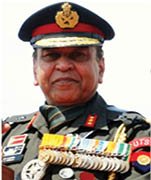
Lieutenant Syed Ata Hasnain (retd) is currently associated with the Delhi Policy Group and the Vivekanand International Foundation.
NDTV VEDIO

Girja Shankar Kaura
Tribune News Service
New Delhi, June 29
The Centre today approved recommendations of the 7th Pay Commission on pay and pension which will boost consumption and economy by putting extra disposable income in the hands of the 47 lakh Central Government employees and 53 lakh pensioners.The decision to implement the recommendations, including 23.5 per cent hike in pay and pension, was taken at a meeting chaired by PM Narendra Modi. Briefing the media, Finance Minister Arun Jaitley said the Cabinet, however, deferred the revision of allowances. Calling the hike “inadequate”, workers’ unions have decided to start protests from next week.A panel headed by Finance Secretary Ashok Lavasa would look into the pay panel recommendations in that regard as there was resentment among employees over the suggestions to scrap four allowances. Till then, existing allowances would continue.In January, the government set up a panel headed by Cabinet Secretary PK Sinha to process pay panel recommendations. The commission had recommended a 23.5 per cent increase in pay, pension and allowances under a “business as usual” scenario. It envisaged a hike of Rs 39,100 crore in the pay bill, Rs 29,300 crore in allowances and Rs 33,700 crore in pension, taking the total financial impact for 2016-17 to Rs 1.02 lakh crore.With allowances deferred, the burden on the exchequer would be Rs 72,800 crore on account of salaries and pension and over Rs 12,000 crore on account of arrears, aggregating to Rs 84,933 crore.Of this, Rs 60,608 crore would come from the General Budget and Rs 24,325 crore from the Railway Budget.The recommendations will be effective from January 1, 2016. The Finance Minister said, “The employees had to wait for 19 months for the implementation of the 5th Pay Commission and for 32 months in case of the 6th Pay Commission. This time, the 7th Pay Commission recommendations are being implemented within six months from the due date.”The Cabinet also decided that pay and pension arrears would be paid in the current financial year (2016-17) itself, unlike in the past when parts of arrears were paid during the next financial year.The minimum pay has been raised from Rs 7,000 to Rs 18,000 per month, while the maximum pay has been capped at Rs 2.5 lakh per month. The starting salary of a newly recruited employee at the lowest level will now be Rs 18,000, while it will be Rs 56,100 for a freshly recruited Class I officer. This reflects a compression ratio of 1:3.12 signifying that pay of a Class I officer on direct recruitment will be three times the pay of an entrant at lowest level. For the purpose of revision of pay and pension, a fitment factor of 2.57 will be applied across all levels in the pay matrices. The maximum pay is set at Rs 2.25 lakh per month for apex scale and Rs 2.5 lakh per month for Cabinet Secretary and others at the same pay level (as against the current Rs 90,000 per month).The report had recommended replacing the present system of pay bands and grade pay with a new pay matrix. Separate pay matrices have been drawn up for civilians, defence personnel and Military Nursing Service. The principle and rationale behind these matrices are the same.The Cabinet approved further improvements in “defence pay matrix” by enhancing “index of rationalisation” for brigadiers and providing for additional stages for Lt colonels, colonels and brigadiers to bring parity with their Combined Armed Police Forces counterparts. The lump sum ex gratia payable in respect of civil and defence personnel has been enhanced from Rs 10-20 lakh to Rs 25-45 lakh. The rate of Military Service Pay has been revised from Rs 1,000, 2,000, 4,200 and 6,000 to Rs 3,600, 5,200, 10,800 and 15,500, for defence personnel.
Govt okays 7th pay commission report1 cr Central govt staff and pensioners to benefitRs 18,000 minimum pay, up from Rs 7,000; maximum hiked from Rs 90,000 to Rs 2.5 lakhRs 84,933 cr additional burden on the exchequer for 2016-17; this includes arrears for 6 months

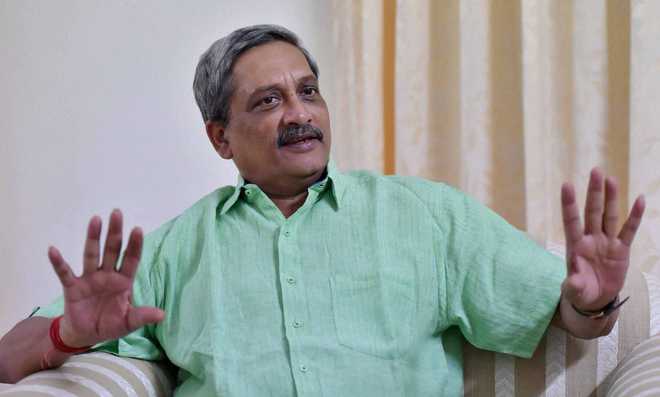
The forces argue that the anomalies lower the status and pay parity of forces vis-a-vis their counterparts in the police and civilian administration. PTI file photo
New Delhi, September 16
Chiefs of Staff Committee (CoSC) Chairman Air Chief Marshal Arup Raha has issued directions to all service headquarters for implementing the 7th Pay Commission.
This means that soldiers will receive their new salary in their pay in September.
The development came after Raha, along with Navy chief Admiral Sunil Lanba, met with Defence Minister Parrikar earlier this week. Parrikar assured them that the central government would consider reviewing the “anomalies” they pointed out in the 7th Pay Commission, defence sources said.
In a surprising move, the three services had on September 9 issued letters to their formations saying they had asked the central government to hold “in abeyance” the implementation of the pay commission due to the “unresolved anomalies”.
Sources claimed Parrikar even had a gazette notification announcing the 7th Pay Commission amended to make sure the military retains its edge over the Central Armed Police Forces.
The Defence Ministry had recently notified the 7th Pay Commission.
Sources pointed out that a cabinet notification could not have been corrected before it was notified.
“The anomalies committees are meant to correct the shortcomings,” sources said.
The forces argue that the anomalies lower the status and pay parity of forces vis-a-vis their counterparts in the police and civilian administration. — PTI
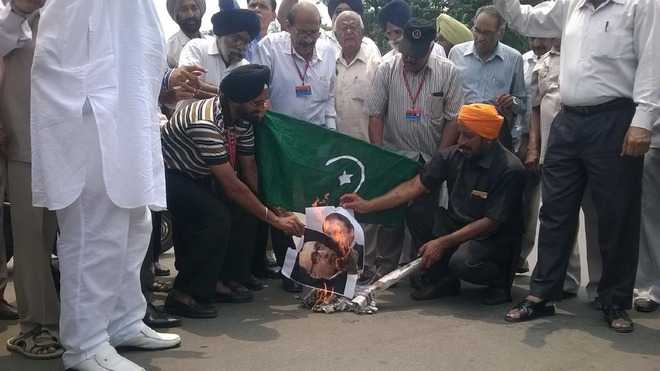
Ambala, June 27
Ex-servicemen under the banner of the Ex-servicemen Welfare Committee, Ambala, today held a demonstration and burnt the national flag of Pakistan to mark their protest against the attack on a CRPF convoy in which eight security personnel were killed in Pampore.Subedar Attar Singh Multani, president of the committee, said, “For how long do we keep mourning our soldiers? We request PM Narendra Modi to take the right decision and direct the Indian forces to attack all militant camps being run in Pakistan.” — TNS



























































