IN his customary address at the Vijayadashami function of the Rashtriya Swayamsevak Sangh (RSS), its chief Mohan Bhagwat tried, in vain, to kill several birds with one stone. He claimed that the term ‘lynching’ was a western construct that was being used to defame India as well as Hindus. He also attempted to dissociate the Sangh from any kind of mob violence and denied charges of Islamophobia against the right-wing outfit. Bhagwat only ended up displaying selective amnesia.
With apologies to Shakespeare, a lynching by any other name would be as heinous. In July last year, the Supreme Court had told the Union and state governments that ‘horrific acts of mobocracy’ could not be allowed to become the new normal, while underscoring the urgency to protect India’s ‘pluralist social fabric’ from bloodthirsty mobs. Five months later, Manipur had become the first state to pass a law against lynching. The fact that a government, and that too BJP-ruled, promulgated the Protection from Mob Violence Ordinance, flies in the face of Bhagwat’s ‘alien concept’ theory.
In most cases of lynchings in recent years, the role of cow vigilantes or religious fanatics has come to light. The chilling murder of Pehlu Khan, a dairy farmer, at Alwar in 2017 and other such hate crimes prompted the Rajasthan Assembly to follow in Manipur’s footsteps. In June this year, Jharkhand’s Tabrez Ansari had died after he was beaten up with rods while tied to a pole and forced to chant ‘Jai Shri Ram’ over an alleged theft. These incidents have largely been the handiwork of elements emboldened by the Sangh Parivar’s Hindutva push amid the BJP’s pan-India hegemony. The RSS has been generally loath to condemn violence directed at the minorities and has made little or no effort to allay their fears. Hate-mongers like Pragya Thakur and Sakshi Maharaj have been allowed to spew venom. The sincerity or otherwise of Bhagwat’s message of maintaining harmony and upholding the rule of law would be demonstrated by how RSS workers and supporters acquit themselves on the ground.
US panel urges India to lift communication blackout in Kashmir
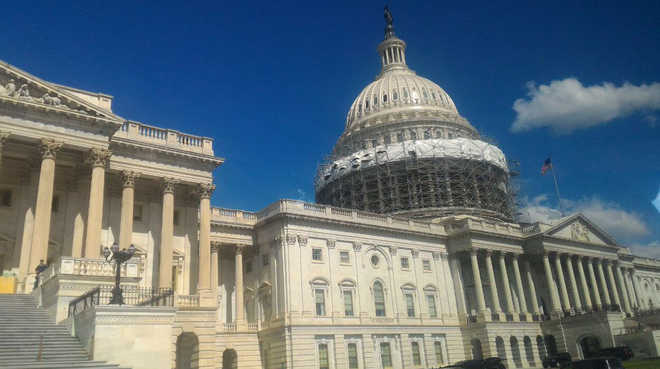
The Asia-Pacific and Non-Proliferation Subcommittee of the House Foreign Affairs Committee has scheduled a hearing on Human Rights in Kashmir and other parts of South Asia on October 22. File photo
Washington, October 8
A powerful US Congressional Committee has urged India to lift the communication blackout in Kashmir, saying it is impacting the lives of the people in the state.
“India’s communication blackout in Kashmir is having a devastating impact on the lives and welfare of everyday Kashmiris,” the powerful House Foreign Affairs Committee said in a tweet on Monday.
“It’s time for India to lift these restrictions and afford Kashmiris the same rights and privileges as any other Indian citizen,” it said.Restrictions were imposed when New Delhi on August 5 scrapped the special status of Jammu and Kashmir under Article 370 of the Constitution and bifurcated it into Union Territories–Jammu and Kashmir, and Ladakh.
Asserting that the abrogation of Article 370 to withdraw Jammu and Kashmir’s special status was its “internal matter”, India has defended imposition of restrictions in the Kashmir Valley on the grounds that they were put to prevent Pakistan from creating more mischief through proxies and terrorists.The Asia-Pacific and Non-Proliferation Subcommittee of the House Foreign Affairs Committee has scheduled a hearing on Human Rights in Kashmir and other parts of South Asia on October 22.
The stand by the House committee comes nearly a month after Indian-American lawmaker Pramila Jayapal, along with 13 other US Congressmen, had urged Prime Minister Narendra Modi to address concerns over the human rights situation in Kashmir and lift the communications blackout. PTI
Silent coup? Imran Khan snubbed as Pakistan Army chief takes charge to revive flagging economy
In the closed-door meetings with businessmen, the army chief discussed the country’s current account deficit, the problem of corruption and slowing foreign direct investment, the people familiar with the interactions said.
At the meetings, arranged through mutual contacts, Bajwa asked business leaders how to fix the economy and what would lead them to make investments, said the people, who asked not to be identified. (File photo)
Pakistan’s already powerful military is taking an even greater role in running the country as the economy stumbles. Army chief Qamar Javed Bajwa has privately met top business leaders to find ways to bolster the economy, according to people familiar with the matter. The three meetings Bloomberg is aware of took place this year at heavily guarded military offices in Karachi, the financial capital, and Rawalpindi, a northern town that houses the army’s headquarters.
At the meetings, arranged through mutual contacts, Bajwa asked business leaders how to fix the economy and what would lead them to make investments, said the people, who asked not to be identified. Some of the meetings resulted in prompt decisions including sending instructions to top government officials, the people said, without giving any specific examples. They said the general was concerned about restoring confidence among the business community.
An army spokesman declined to comment when asked about the meetings, however on Thursday the military issued a statement after Bajwa hosted a gathering of government economic officials and business leaders on Wednesday.
“National security is intimately linked to economy while prosperity is function of balance in security needs and economic growth,” Bajwa said in the statement.
The military, which has staged numerous coups since Pakistan’s founding in 1947, has seen a direct impact from the economic slowdown: Defense spending was frozen in the 2020 fiscal year budget for the first time in more than a decade. That comes as soldiers are on high alert against terrorists based in Afghanistan and conventional forces in arch-rival India, which has put the disputed area of Kashmir under lockdown.
Many business leaders and economic analysts in Pakistan actually welcome a greater role for the generals. They view Prime Minister Imran Khan’s party — less than halfway through its first term in office — as inexperienced compared with the military, which is the country’s most respected and powerful institution.
But others are concerned about what an ever-increasing role for the military means for Pakistan’s democracy and the future of civilian institutions that haven’t been given the space to develop.
“The growing role of the military in the economy’s management in addition to its traditional dominance of the security matters is nothing but a soft coup that is a setback for the democratic process,” said Yousuf Nazar, a former Citigroup Inc. banker and author of a book on Pakistan’s economy. “This will have far reaching repercussions,” he said, adding generally that strong-arm methods for management will not work for basic economic and social issues.
Standing With Khan
The finance ministry downplayed the extent to which the army influences economic policy. While the army chief may have ideas about the economy, “we haven’t seen any kind of process interference,” Finance Ministry spokesman Omar Hamid Khan said. “They have their own scope of activities and civilian government has their own.”
Pakistan is going through an unusual period in which the democratically elected government and the army appear to be working in sync. The army has ruled the country for almost half its 72-year-old history, leading to persistent worries among civilian leaders about a potential coup.
Khan has publicly stated his government and the army have a comfortable working relationship. He gave the 58-year-old Bajwa a three-year extension as army chief in August — only the second time that’s happened in nearly a decade — amid heightened tensions with India over Kashmir. Bajwa was initially reluctant to accept the extension but his personal ties with several top government leaders across the world made the prime minister press him to stay in office, according to army spokesman Asif Ghafoor.
“This is the first government with which the army is standing,” Khan said in a television interview in July. “Historically, the army and the government worked separately. Right now, all institutions are standing with me.”
Economic Managers
The government estimates economic growth in Pakistan at the slowest pace in over a decade — at 2.4% in the year started July. Pakistan secured a $6 billion loan in May from the International Monetary Fund to help stabilize the economy after a deficit blowout.
The nation’s budget deficit rose to 8.9% of gross domestic product in the year ended June, the highest in almost three decades, while record imports about two years ago had left foreign reserves dwindling. Companies across the board, from Toyota’s local unit to Power Cement Ltd. have reduced production while many others, including Nestle SA’s Pakistan unit, have cut their workforce.
In the closed-door meetings with businessmen, the army chief discussed the country’s current account deficit, the problem of corruption and slowing foreign direct investment, the people familiar with the interactions said.
“We need generals looking after every aspect of Pakistan’s economy,” said Faizan Ahmed, research head at Karachi-based Optimus Capital Management Pvt. “The army is the most professionally organized and well-run institution in Pakistan.”
A Gallup Pakistan opinion poll released in 2017 — the most recent data available — showed the vast majority of Pakistanis trust the military more than other institutions even while backing democracy as the best system of governance. The business leaders saw the meetings with Bajwa, who has a reputation for getting things done, as beneficial to them given the military’s power and decision-making clout.
Surprise Move
The army itself has a substantial stake in the private sector. It runs the Fauji Foundation, Pakistan’s second largest conglomerate, with interests in everything from food to power.
Yet despite its business interests and all-pervading presence in most aspects of Pakistani life, the move to seek an active role in shaping economic policy has still surprised many observers.
“While the military has historically played a key role in foreign and national security policy, its role in the economy has mostly been limited,” Uzair Younus, a South Asia director at Washington-based consultancy Albright Stonebridge Group LLC. “However, with the economy slowing down, the stakes have been raised as a persistently weak economy risks defense budget allocations.”
Freeze
Pakistan’s defense budget unchanged for the first time in at least a decade.
Bajwa has been named a member of the high-powered National Development Council, put in place in July to set the country’s long-term economic policy. A member of the army’s Inter-Service Intelligence has also been nominated to a government committee set up to monitor the energy sector.
The nation is looking to avoiding tough financial sanctions to meet global anti-money laundering and counter-terrorism financing standards and has also appointed a high-level committee that includes at least two senior military officials.
The army is stepping into its new economic role at a time when the slowdown has hurt Khan’s ratings.
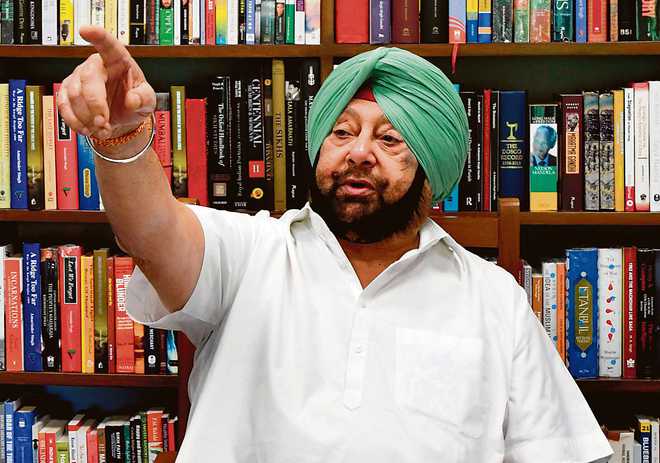
Capt says won’t quit politics till Punjab restored to its number one position and is cured of all ills
CAPT AMARINDER SINGH, PUNJAB CHIEF MINISTER
As the Congress regime in Punjab completes two and a half years in office, The Tribune correspondent Sanjeev Singh Bariana talks to Chief Minister Capt Amarinder Singh on a host of issues, including the promises that have been fulfilled and what are the government’s priorities for the remaining term.
You had promised to wipe out the drug menace within four weeks, but the state is still grappling with it.
I had said I will break the backbone of the drug business within a few weeks and I have done that. This is evident from the data available in public domain. Our special investigation team (SIT) has filed 31,081 cases against drug suppliers and 38,117 persons have been arrested so far. Over 12,000 have been put behind bars and our teams have secured at least 3,600 convictions. Efforts are on to root out the problem completely.
Halfway into the current term, drugs continue to be the biggest problem afflicting Punjab.
Punjab continues to be a big market for drugs and alarmingly, the drug habits of youth have changed too. Instead of traditional ‘bhang’ and opium, youth are now hooked to synthetic drugs. There are several supply lines, including from Pakistan and neighbouring states of Haryana, Himachal Pradesh, Rajasthan and Jammu and Kashmir, which has compounded the problem. Then there is supply from other countries too.
Do you think the drug menace can ever be rooted out?
At the 29th Northern Zonal Council meeting earlier this month, we asked Union Home Minister Amit Shah to immediately formulate a national drug policy. In the earlier meeting of the Chief Ministers in July, we had agreed upon to set up a joint group to eradicate the menace. We are moving ahead… Also, as pointed out earlier, before curbing the supply, we must cure addiction.
Sacrilege of religious text during the previous SAD-BJP regime in 2015 continues to be the Achilles’ heel of your government. Why was the CBI asked to re-probe the case when the SIT was already on the job?
There is no confusion in our commitment to unravel the truth. The Punjab Assembly decided to take back the case from the CBI after it couldn’t make any headway for three years after being assigned the probe by the previous SAD-BJP regime. We constituted a SIT and it took up related cases, including those involving officers. After we heard about the CBI closure report being taken up in the court, we realised the case may be closed in case the court accepted the report. So, the Director of Bureau of Investigation Parbodh Kumar filed the letter showing inadequacy in the CBI report, which forced the central agency to say it will reinvestigate the cases.
It is said that the illegal sand and liquor mafia continues to rule the roost despite change in regime. There are also reports of some Congress leaders being involved.
I am aware about the involvement of politicians, some even from our own party. I don’t deny the existence of sand mafia and am also apprised of the collection of ‘goonda’ tax. We are faced with the problem of liquor mafia sending their supplies from adjoining states. We are actively working on these issues. Following a clearance in a case stuck up in the court, we were recently able to auction sand mines worth Rs 306 crore (compared to Rs 5 crore earlier). So, we are hopeful things will improve drastically once people get easier sand supply.
Teams are being deployed on supply routes of liquor from adjoining states to check smuggling.
Punjabis can’t ride on government luxury buses on important routes, including the one to Indira Gandhi International Airport, as the routes are dominated by private transporters.
I am aware about the problem. I am also aware of the allegations against our government that it is purposely ignoring illegal transport businesses, particularly those owned by the Badal family. The allegations are baseless. The matter is pending in the Punjab and Haryana and High Court. We won the case once, but the affected parties immediately approached the court again and were granted stay. The tragedy is that we cannot have a timetable on certain routes under the current situation. The court, probably, needs to have a hurried look into the crucial issue facing the state so that we can act.
You recently said that the state government had fulfilled 60 per cent of its pre-poll promises. But the Opposition disagrees.
We have been able to deliver on a majority of promises concerning good governance. We have given loan waivers worth Rs 4,600 crore to farmers. Our job fairs have been a major success and around seven lakh youth have got employment. Around 40,000 have got government jobs and another 19,000 will be recruited soon.
What about the remaining issues?
We inherited empty coffers from the SAD-BJP government. Our share of taxes through the GST is also not coming in regularly. Instead of scheduled three months, we get it after four months. If the money inflow is right, a lot of problems concerning public welfare can be taken care of.
How do you see the ‘Howdy, Modi’ programme in the US?
I got to know from newspapers about the good response that Prime Minister Narendra Modi received in the US.
How are your government’s relations with the Centre?
Despite former Finance Minister Arun Jaitley being my opponent during the last Lok Sabha election (2014), I had very good working ties with him. Whenever we approached him with any problem facing the state,
he would always help. The Centre does hear us out.
Will you contest the next elections?
As I have said earlier, I cannot think of quitting as long as Punjab people need me. When I took over as the Chief Minister for my second term in 2017, I promised to wipe tears from the eyes of each and every person in the state. And I will not give up till I have done that. Punjab and its people suffered for 10 years under the SAD-BJP rule. It is my commitment that I will wipe even the memories of those dark years and restore the state’s No. 1 position. If that means contesting the next Assembly polls and leading the state for another term (maybe even more), so be it, as long as I have the physical and mental capabilities to work for the people.
Despite ban, free access to Pak channels in J&K 34 Pak channels are banned in J&K for airing fake news
Despite ban on most Pakistan channels, residents of Jammu and Kashmir are receiving all such channels on a free-to-air dish available easily in the market.
Ever since the abrogation of Article 370, demand for the dish has grown manifold as the authorities have imposed restrictions on local cable operators from transmitting certain channels allegedly spreading vicious propaganda to instigate people. A free-to-air dish launched last year had been popular among subscribers as they received all Indian channels, excluding few paid channels, on one-time payment. However, a bigger dish launched a few months ago has been lapped up by subscribers in the Valley and Muslim-dominated districts of Jammu region as it beams Pakistan channels.
“There is little demand in Jammu city, but people from Doda, Bhaderwah, Kishtwar, Poonch and Rajouri come looking for the dish, as it is in short supply in their area. Dealers from these districts and the Valley procure it directly from Delhi,” said a Jammu dealer.
When the Dragon hides its shine and bides its time by Lt General K J Singh
China recently released a white paper titled “China’s national defence in the new era”, which sets the template and vision for her strategic architecture. The basic thrust is to create modernized People’s Liberation Army (PLA) by 2035 and establish global presence (implying dominance). Considering our geopolitical realities, paper surprisingly has not evoked adequate analysis and debate. While the paper makes only passing and even reassuring references to India, suggesting carrying forward experiences gained in resolution of Doklam crisis to other contentious issues.
The dynamics of unresolved border dispute with continued transgressions, trade war and impending visit of Chinese President Xi Jinping mandate objective and detailed appraisal of document. Paper is in keeping with articulation of ‘aggressively rising China’ and confirms jettisoning of Deng’s approach of ‘hide your shine, bide your time’.
It seeks to upscale and give global context to limited wars under conditions of informationalization (Chinese formulation for high-tech conditions), which was initially spelt out in ‘war zone concept’ in 2004. Leveraging of Belt Road Initiative (BRI) is envisaged to extend footprint to bases like Djibouti and Gwadar, thereby giving PLA capability to manage localized regional environments, in faraway lands. This outreach includes cyber dimension through ‘digital silk road’, backbone architecture of digital and convergence technologies with clear cut aim to achieve spectrum domination. It also places heavy reliance on technology and in specific on non-kinetic cyber warfare, artificial intelligence, quantum convergence technologies among others. At the same time, kinetic delivery means like hypersonic missiles and rocket force continue to provide hard under pinning.
Considerable share of resources is planned to be re-appropriated for Navy to make it truly blue navy. Consequently, only credible official reaction came from Chief of Naval Staff, “We will have to watch China carefully”. The need for dispassionate and thorough analysis is also warranted as psychological warfare is an essential part of ‘three warfares’ mandate of newly configured PLA Strategic Support Force. The exercise will indeed be painstaking one as war zone concept that generated much hype and even some panic till we realized limitations of translation from Mandarin to English. It is also pertinent that many technologies are yet to be operationalized and applied. Most importantly, performance of Chinese troops in low-grade conflicts, even in relatively benign UN deployment, raises its own set of concerns and cynicism. Similarly, sceptics may cite BRI overstretch and fatigue, but Dragon has tentacles firmly in place in relevant places. While we cannot allow ourselves to be psyched or intimidated, yet complacency will be suicidal. The abiding reality is that China is prosecuting long term strategy, which may include some hype but is essentially ‘on course’.
The obvious question is how do we cope with the second largest spender PLA, which, according to Stockholm International Peace Research Institute (SIPRI), has increased its military expenditure by 5% to $250 billion in 2018 against our measly $66.5 billion? It is interesting that China maintains that it is reducing its defence spending as share of GDP. In a burgeoning economy and with high current GDP share, both are indeed possible. Coping, in our context is limited to bare essentials, which are, building ‘credible dissuasive deterrence’ and retaining ‘strategic autonomy’ in our immediate neighbourhood and core areas of interest like energy.
The foremost requirement is to reset strategic compass and, borrowing Admiral Raja Menon’s expression, “Defining our Strategic Environment”, especially with projected aspirations to become $5 trillion economy by 2030. Analytical exercise obviously cannot be driven by gut feelings, hunches and impulses, which appear to be the current trend. This presumption is based on the fact that very limited information on security dialogue is being disseminated by official agencies. It is possible that secrecy is partially driven by urge to build ambiguity and keep others guessing. Ambiguity is normally applied by stronger power against weaker one, but it has its inherent limitations specially when not backed by will and capability. Weaker nations like Iran in standoff with USA and Pakistan have nuanced irrationality to their advantage. We certainly are not aspiring to join this league. It has dangerous implications in exchanges among nuclear powered adversaries and, above all, can even confuse own forces. Hence, it will be in order if we have more inclusive dialogue and apply quantified net assessment and operational research techniques, which currently seem to be on back burner, to forecast and validate.
The dialogue should aim to build national policy after consultations with all parties and political consensus on key parameters. The role of bordering states is also catalytic as progress on key irritants like sharing of river waters as also economic co-operation needs to be driven by states concerned. Our efforts in the past have been stymied by lack of capability and infrastructure, both requiring considerable financial outlay.
Without creating capability for envisaged role of regional security and disaster relief provider, our endeavours even in immediate neighbourhood will remain contingent on friendly governments in power. It is heartening that issue of finding money, including non-lapsing funds for defence capital expenditure has been referred to Seventh Finance Commission. It is hoped that correctives will be applied on priority as with lapsing of time, another election will loom large adding to compulsion for populist measures like subsidies. The stability and political capital of current government should also be leveraged to push down reforms like CDS, theatre commands, National Defence University and genuine integration in MOD.
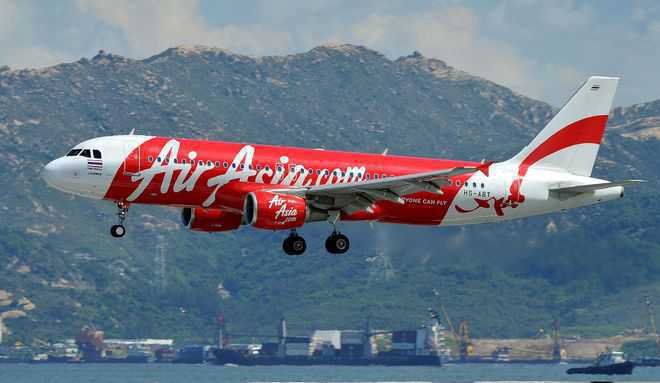
Low-cost carrier AirAsia started its Chandigarh-Delhi-Chandigarh flight operations from the Chandigarh international airport at Mohali today.
The airline’s Chandigarh-Delhi flight took off from here at 12.50 pm and reached Delhi at 1.55 pm. The launch fare of the flight has been set at Rs 1,365 per passenger.
The airline is already operating its Chandigarh-Bengaluru flight from here. The response to the low-cost flight is said to be encouraging.
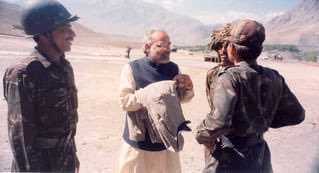
As the nation observes the 20th anniversary of the Kargil war, Prime Minister Narendra Modi on Friday shared pictures of his visit to the area during the conflict and his interaction with the soldiers.
“During the Kargil War in 1999, I had the opportunity to go to Kargil and show solidarity with our brave soldiers,” he said on Twitter.
The prime minister said that in 1999, he was working for the BJP in Jammu and Kashmir and Himachal Pradesh.
“The visit to Kargil and interactions with soldiers are unforgettable,” Modi said.
In the photographs, he is seen interacting with army men and meeting wounded soldiers. PTI
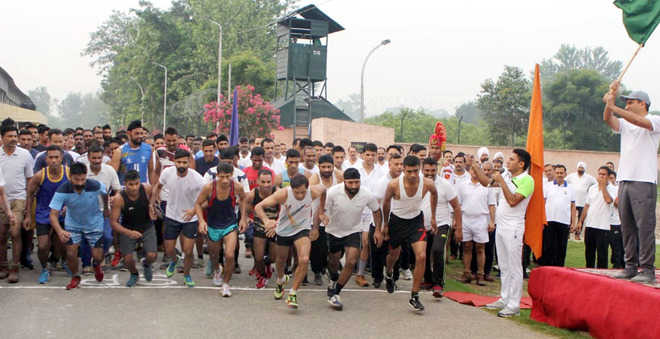
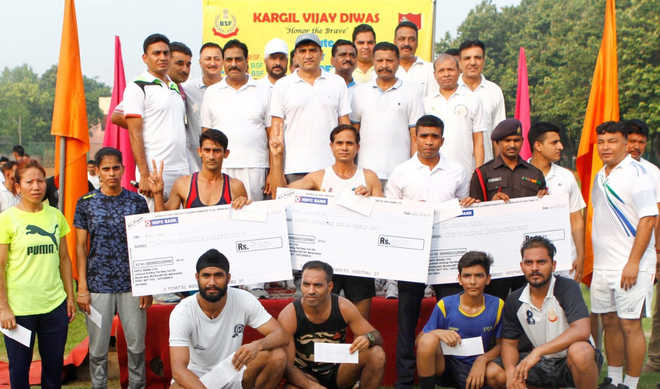
BSF and Army jawans take part in the ‘Run For Martyrs’ to mark the ‘Kargil Vijay Diwas’ in Jalandhar on Wednesday. Photo: Sarabjit Singh
Jalandhar, July 24
As a part of the week-long programme started by the BSF, Jalandhar Frontier, a five-km race, ‘Run for Martyrs’, was organised at the BSF headquarters here this morning to commemorate the 20th anniversary of the ‘Kargil Vijay Diwas’ and to pay tributes to martyrs of the Kargil War.
Mahipal Yadav, Inspector-General, BSF, Punjab, flagged off the race by waiving the green flag.
The run commenced from Ashwani Stadium via BSF Gate No 3 and reached the Army Mill Road, (main road Jalandhar to Ludhiana) and concluded at the Ashwani Stadium.
As many as 350 BSF personnel’s and soldiers of the Indian Army participated in the run. The winners were awarded by Mahipal Yadav.
Arakshak Babu Lal (BSF, Punjab) won the first positions and was given Rs 3,100. Arakshak Rajmal (BSF, Punjab ) remaind second. Sepoy Suman Sen (Indian Army, core camp) bagged the third position.