Sanjha Morcha

What’s New

Click the heading to open detailed news

Current Events :

web counter

Print Media Reproduced Defence Related News

Manipur: Army officer’s wife lodges police complaint against husband’s ‘wrongful’ detention

Ranju Singh, wife of lieutenant colonel Dharamvir Singh, officer commanding (OC) of M-sector Imphal, in a complaint to Imphal police station, said her husband was reportedly taken away by armed jawans, Nanda and Major Rathod on early Sunday morning from their quarter

Manipur: Army officer's wife lodge police complaint against husband’s ‘wrongful’ detention

Ranju Singh, wife of lieutenant colonel Dharamvir Singh along with their kids. (File)

The wife of an army officer posted in Imphal lodged a police complaint against two other officers for kidnapping and wrongful confinement after her husband was allegedly taken away by the accused.

Ranju Singh, wife of lieutenant colonel Dharamvir Singh, officer commanding (OC) of M-sector Imphal, in a complaint to Imphal police station, said her husband was reportedly taken away by armed jawans, Nanda and Major Rathod on early Sunday morning from their quarter.

The officers were charged with under section 346/365/363/120-B IPC and 27 Arms act for wrongful confinement, kidnapping and kept concealing with criminal conspiracy by using arms.

“On July 1 morning at around 6:30 am, I woke up and saw my husband was ready and doing pooja. Then somebody knocked on the door, we both saw 8 to 10 armed jawans in uniform standing outside. With my husband, I also went outside, I saw two officers lt. col. Nanda and Major Rathod along with one JCO”, said Ranju.

Read | Army refutes allegations of wrongful detention made by officer’s wife

The officer-in-charge asked Dharamvir to get dressed in army uniform as he was to be taken under custody as per the direction of Colonel Ranjan Singh CO 3CISU, added Ranju while claiming that no warrant was given to her. Since then, Dharamvir did not return to his family nor did the authority gave information on the whereabouts of the officer immediately.

On Tuesday morning, Dharamvir called his wife on her mobile informing that he was at Corps Military Police (CMP) surrounded by guards and hung up the phone, revealed Ranju. Ranju along with her two daughters came to visit Dharamvir on June 30 at his posting place at M-Sector but they informed that they have moved to a friend’s place out of fear.

“I want my husband to be brought back with same respect, I want him to be respected by Indian Army as he is a good officer. Please help my husband and my family”, appealed Ranju speaking to reporters in Imphal.

According to police, authority from the M-sector post reported to the police that Dharamvir was not arrested but currently at CSIU Dimapur unit.


Pak on FATF grey list Victimhood as the last defence

Pak on FATF grey list

Pakistan’s slow descent into the Financial Action Task Force (FATF) grey list was preordained. The US was chaffing at Rawalpindi’s covert support to the Taliban and now that it had agreed to come to the negotiating table, it was important to keep it under pressure by choking its sources of financing, mainly from Pakistan. Pakistan’s promulgation of an ordinance in February did address a few Indian concerns but none was convinced about their permanency given its back history of slipping upon dutiful promises. However, its leadership’s reflex reaction of blaming a US-India conspiracy is disturbing. By now it should have realised that the worm has turned as far as dirty money is concerned; even rock-solid tax havens have been forced to come clean.Even if the Pakistani leadership’s lament about victimisation is taken on face value — and there may be a grain of truth since most of the other seven on the grey list are politically estranged from the US — it has certainly acted irresponsibly by allowing UN-sanctioned individuals to roam free and test the electoral waters? Pakistan’s nudge-and-wink approach towards some serious purveyors of violence has not just extracted a heavy toll outside its borders but inside as well, including 3,000 of its soldiers. The FATF also needs to be questioned about the effectiveness of its methodology that is six years old for Islamabad remains unreformed despite being put on the grey list and black list for a total of five years since 2008.Pakistan may not immediately feel the pinch of FATF’s listing because of the cushion of Chinese promises to fund the China-Pakistan Economic Corridor. But its development needs far exceed what the yuan can provide and it will have to pay higher costs for international bonds and to borrow from multilateral bodies. At the same time, Pakistan requires time to implement the recommendations because its interim government has no mandate to make policy changes. Yet the leadership needs to realise that the screen of victimhood is no safeguard against the pain it suffers for using militancy as a permanent instrument of state policy.


We can definitely do it again: General in charge of surgical strikes on Pakistan

 HIGHLIGHTS
  • Lt General (Retired) DS Hooda also said the 2016 decision to hit the terror camps came from the Centre and the military agreed with it
  • India “can definitely” hit Pakistan again with surgical strikes, said General Hooda

Lt General (Retired) DS Hooda (Photo: ANI)

NEW DELHI: If India wants to send Pakistan another strong message again, India “can definitely” hit them again with surgical strikes + , said the Army officer who oversaw the first such strikes on terror camps across the Line of Control (LoC), in a comment today to news agency ANI.

Lt General (Retired) DS Hooda also said the 2016 decision to hit the terror camps came from the Centre and the military agreed with it.

“Decision (on conducting surgical strikes) finally came from political leadership but military was in agreement that we needed to do something. If we want to send another strong response to Pakistan in the future we can definitely do it again,” said General Hooda.

Video footage of the surgical strikes + across the LoC, which took place on September 29, 2016, was aired on TV news channels on Wednesday. The eight-minute-long video shows how the Special Forces of the Indian Army crossed over the LoC and destroyed the targets on the Pakistani side of the LoC.The footage was reportedly shot from drones and Unmanned Aerial Vehicles (UAVs) and was captured on thermal imaging cameras used by the Army to monitor the operation.

The operation was monitored from a control room in Udhampur, Headquarters of Indian Army’s strategic Northern Command,” General Hooda, the then Northern Army Commander told Times Now.

“One of the major challenges that the team that went across, faced was that the camps were located close to Pakistan Army posts,” Hooda added.

 He further said that the “feed was also going to Delhi”. “The whole operation lasted for six hours. The first target was hit at midnights and the last at about 6-6.15,” he added.


For jawans, Army plans new pension criteria

For jawans, Army plans new pension criteria

Ajay Banerjee

Tribune News Service

New Delhi, June 27

In what will change the terms of employment and pension eligibility criteria for lakhs of jawans, a new proposal has been mooted by the personnel section of the Army which requires jawans to put in more number of years into service and also a change in pension rules.The proposal for change is for all infantry units and they have been asked to give their opinion by June 30, says an internal letter, a copy of which is with The Tribune.The move comes after the OROP was granted in September 2015. It led to a spike in the number of troops seeking premature retirement. In 2017, 17,438 jawans sought premature retirement. This is nearly double of the 9,296 jawans, who sought the same in 2015.The Army suggestion says the minimum qualifying service for pension be raised from 15 years to 20 years of service. At present jawans retire between ages 35-37 and they can seek premature retirement after 15 years of service. Their ‘term’ is deemed to be completed after 17 years of service.The letter says “due to improvement in life expectancy, an additional five years service spent till approximately 40 years of age may reduce the pension liability manifold”. Another model suggested is to ‘disincentive premature retirement’ which talks about graded pensions.



Proposals mooted

  • Plan A: The minimum qualifying service for pension be raised from 15 years to 20 years of service. At present, jawans retire between age 35-37 and they can seek premature retirement after 15 years of service.
  • Plan B: Give 75% of pension to those who put in 15-17 years of service; 85% to those serving for 17-20 years and 100% to those serving for more than 20 years. At present, the last pay drawn is calculated for OROP.

Maj made 3,000 calls to victim

Blood, hair samples from car match; Amritsar mourns death

Maj made 3,000 calls to victim

Sukaran Kalia, brother of the late Shelja Dwivedi, with her wedding picture in Amritsar on Monday. Tribune photo: Sunil Kumar

Prateek Chauhan &PK Jaiswar

Tribune News Service

New Delhi/Amritsar, June 25

Major Nikhil Rai Handa, arrested for killing fellow officer Major Amit Dwivedi’s wife Shelja, had gifted her a phone and made 3,000 calls this year, show call records. In judicial custody for four days, Major Handa will be taken to Meerut to reconstruct the crime. The police have arrested his uncle and a cousin for “helping” him.In Amritsar, where Shelja was cremated on Monday, her brother Sukaran Kalia, a lawyer, said his sister “did not have an affair with Major Handa. He had been stalking her. Such claims by the police have hurt the family”.The Delhi Police have recovered the clothes Major Handa was wearing when he allegedly killed Shelja as well as two Swiss knives. While fleeing to Meerut, Major Handa reportedly got his car washed to remove the victim’s bloodstains and also threw away her cellphone. But a forensic team took seven blood samples from the car which matched with Shelja’s blood group. The hair samples found in the car matched too. The dumped cellphone has been recovered.Shelja’s husband was to leave for Uganda on a UN peace mission in two months and had decided to move her and their six-year-old son to Amritsar, Shelja’s native town.“Just 10 days ago, we were celebrating her return to the city as her husband moved their belongings to the cantonment area. Now, we are mourning her death,” said Sukaran Kalia, her brother. He and his mother were in Shimla when they were informed of her brutal end.“I got a call from my brother-in-law. He said Shelja had gone missing. The police told him they had found a woman’s body. He identified my sister’s body from a tattoo,” he said. Shelja’s father Subhash Kalia was a local Congress man. He died two years ago.


Governor’s Rule will not affect ongoing anti-terror ops in Valley: Army Chief

Governor's Rule will not affect ongoing anti-terror ops in Valley: Army Chief

Action that was being taken earlier would continue, Rawat asserted. PTI file

New Delhi, June 20

Army Chief General Bipin Rawat on Wednesday said the imposition of Governor’s Rule in Jammu and Kashmir is unlikely to have any impact on ongoing anti-terror operations and noted that there was no political interference.

General Rawat’s response came after President Ram Nath Kovind approved the imposition of Governor’s Rule in the state with immediate effect earlier in the day.

Operations in the Valley would continue as earlier, Rawat told reporters on the sidelines of an event here.

“Operations were being carried out earlier as well. Then we saw a phase of suspension of operations because we wanted people to get a chance to offer their prayers during Ramzan without any kind of problem. Despite that, terrorists continued with their activity, which is why the suspension of operations was cancelled,” he said.

Action that was being taken earlier would continue, Rawat asserted.

Referring to the imposition of Governor’s rule in the state after the BJP pulled out of its alliance with the PDP, he said, “We don’t think there will be any impact. We don’t have any kind of political interference.” There has, he said, never been any kind of restriction on the force on how it should conduct its work.

The security forces have very strict rules of engagement and “take action” in accordance with them, Rawat said.

The ceasefire announced by the Centre for the month of Ramzan was revoked on Sunday. Aurangzeb, an Army jawan, was killed by terrorists and journalist Shujaat Bukhari was shot dead two days ahead of Eid.

Today, Jammu and Kashmir was placed under Governor’s rule for the fourth time in the last one decade after the BJP withdrew support to its alliance partner, prompting Mehbooba Mufti to resign as Chief Minister. PTI


Pak has more N-warheads than New Delhi, says think-tank

London, June 19

Pakistan continues to be ahead of India when it comes to possessing nuclear warheads, with China having double the quantity, according to a report by a leading Swedish think-tank.Pakistan is believed to have 140-150 nuclear warheads this year, 10 more than last year. In contrast, India is said to have 130-140 nuclear warheads, according to the annual nuclear forces data by Stockholm International Peace Research Institute (SIPRI).Russia and the US hold over 92 per cent of the total warheads, it said. SIPRI said nine countries — the US, Russia, Britain, France, China, India, Pakistan, Israel and North Korea — had 14,465 nuclear warheads at the beginning of 2018, of which 3,750 were actually deployed.At start of 2017, the total nuclear warhead count was 14,935, it said. The reduction is largely due to arms control commitments by the US and Russia in 2010 Treaty on Measures for the Further Reduction and Limitation of Strategic Offensive Arms. — PTI


SCO summit and thaw in Indo-Pak ties MK Bhadrakumar

Given Pakistan’s dependence on China, the Sino-Indian rapprochement impacts its thinking. Gen Bajwa’s overtures for better relations with India point towards a change of attitude. Delhi must reciprocate.

SCO summit and thaw in Indo-Pak ties

Qingdao summit of SCO presages a phenomenal change for the better in India”s external environment. Reuters

MK Bhadrakumar

A former ambassador

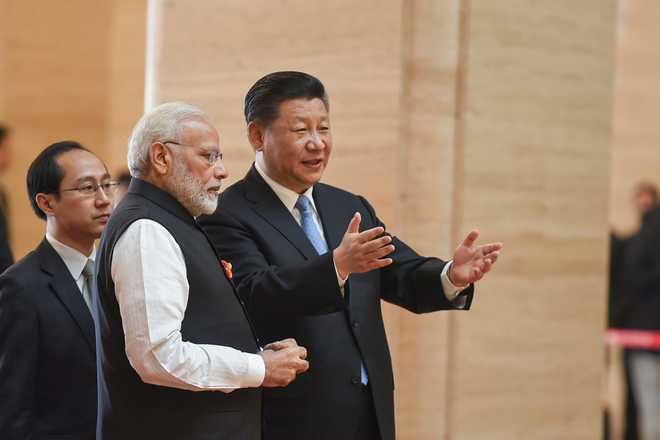
The three summit meetings that Prime Minister Narendra Modi took part during the past 10 weeks — at Wuhan with Chinese President Xi Jinping; at Sochi with Russian President Vladimir Putin; and, at the Qingdao summit of Shanghai Cooperation Organisation — are presaging a phenomenal change for the better in India’s external environment. The new foreign policy narrative focuses on India’s strategic autonomy, regionalism and its rejection of the US-led containment strategies against Russia and China. The leitmotif is a Sino-Indian rapprochement and a makeover of the time-tested India-Russian strategic partnership to inject more vitality in the contemporary world situation. India is positioning itself on the right side of history at a transformative period in the world order when multi-polarity is strengthening. The big question is: what is there in this narrative for India’s relations with its two key South Asian neighbours Nepal and Pakistan, where Indian and Chinese strategies have historically intersected? Most certainly, an improvement in the India-China relations reduces the scope for any country to play India and China each other. Having said that, as a rising world power, China has wide-ranging interests and concerns in the South Asian region and can be expected to be active in the region. But it is a fallacy to regard the Chinese regional policies as “India-centric” or to feel paranoid about them. In fact, we get a splendid view next week as to how far the “Wuhan spirit” is permeating China’s policies in South Asia. Nepal’s Prime Minister KP Sharma Oli begins a five-day official visit to China on June 19. The Chinese foreign ministry announcement described the two countries as “comprehensive cooperative partners with ever-lasting friendship” and said the two countries “support each other on issues concerning each other’s core interests.” Clearly, Nepal’s cooperation to plug the infiltration routes of Tibetan militants is top priority for China. But the thrust of Oli’s visit appears to be on the “practical cooperation” under the framework of the Belt and Road Initiative. Beijing says that Nepal’s “political transformation” provides “important opportunities” for the development of bilateral relations. The Chinese Foreign Minister and State Councilor Wang Yi recently revisited the idea that “supporting the development of Nepal should become the consensus of China and India.” But New Delhi has kept a studious silence. Isn’t it time for a rethink on the Chinese proposal for India-Nepal-China Economic Trilateral Cooperation (INCETC)? A fresh look will be consistent with PM’s call recently at the Shangri La Dialogue in Singapore for a “free, open, prosperous and inclusive” Indo-Pacific. Surely, what is good for the Indo-Pacific must be good for South Asia too?  India’s interests lie in creating synergy between the development agenda of Nepal and of Bihar and Uttar Pradesh. Perhaps, as is being done in the reset with China and Russia, Modi should bring in Dr Rajiv Kumar at the Niti Aayog into the India-Nepal-China equation under the rubric of INCETC. If we need electricity and if Nepal makes money by selling electricity to Bihar or UP, does it really matter that the electricity flows from power turbines made in China? Clearly, having signaled to Beijing a change in our approach to Tibet-related issues, China’s attitude to us in Nepal is also likely changing. The challenge is to be aware of it and tap into it. Similarly, Sino-Indian rapprochement could have positive fallouts on India’s troubled relationship with Pakistan as well. As a matter of fact, the remarks about India-Pakistan relations made by Foreign Minister Wang in the weekend following the Shanghai Cooperation Organisation (SCO) summit in Qingdao must be studied closely.  Wang told the media: “We know there are existing and historical, unresolved issues and conflicts between Pakistan and India. But I think after their joining of the SCO, maybe we can say that their relationship might be better as the grouping provides a better platform and opportunities for building the relations between them. Because, when joining the SCO, a series of agreements had to be signed and pledges had to be made. One of the key pillars (of joining the SCO) is to keep good and friendly relations and they should not see each other as opponents, much less enemies. Because they have signed these agreements, they shoulder a responsibility for implementing them. I feel that the SCO serves as a great vehicle for bettering the two nations’ relations. As a result, it will better safeguard the peace and stability of the region. We see although their relations have seen their ups and downs, if we look at the bigger picture, they are progressing nevertheless.”Of course, it is unthinkable that India will ever seek third party mediation to settle its differences with Pakistan. But beneath that threshold, what Wang’s carefully worded remarks underscore is that China is willing to promote India-Pakistan normalisation. Maybe, China is already playing a role, given its manifest keenness to expand and deepen its cooperation with India bilaterally and regionally where India-Pakistan tensions pose a serious contradiction. The Chinese Communist Party daily Global Times commented on Monday that the SCO provides “multilateral guarantee” for India’s connectivity with Central Asia via Pakistan and promotes cooperation on regional security. Such comments are also to be seen in the backdrop of the mellowing of the Indian opposition to the BRI. Indian Foreign Secretary Vijay Gokhale and his Chinese counterpart ensured that SCO’s support for the BRI didn’t become a sticking point in the Qingdao Declaration (which Modi signed.) A paradigm shift is under way and our analysts have catching up to do.  Meanwhile, given Pakistan’s heavy dependence on China, the Sino-Indian rapprochement profoundly impacts the thinking in Islamabad. Pakistani army chief Gen Qamar Bajwa’s recent overtures for better relations with India point towards a change of attitude. Delhi must reciprocate. The matrix that is shaping up is unprecedented. Timing is everything and therefore, the opportunity to normalise India-Pakistan relations must be explored. Modi broke the ice at Qingdao and exchanged pleasantries with Pakistan President Mamnoon Hussain on the sidelines of the SCO summit. The SCO military exercise in the Urals in Russia in August provides a historic occasion. Hopefully, Indian and Pakistani four-star generals will share a podium and even have a meaningful conversation. The Russian host will be only too happy to be a facilitator. The bottom line is that neither China nor Pakistan is seeking a conflagration over Kashmir. 


Dear Lt Gen Panag, Major Gogoi Is Innocent Till Proven Guilty

Every individual is innocent till proven guilty.

As we grow older, we become more fixated in our views. Despite all criticism, we seek to defend ourselves, even against rational thoughts and use every means to justify our beliefs. This is the background behind the latest article titled ‘A history of transgressions’ published in the Newslaundry this week by respected veteran, Lieutenant General HS Panag. The article is based on an earlier incident involving Major Gogoi and his recent saga in Srinagar.

Immediately after the incident of a civilian being tied to an army jeep in April last year, General Panag, possibly the only veteran against Major Leetul Gogoi then, had tweeted, “The image of an alleged stone pelter, tied in front of a vehicle as a human shield, will forever haunt the Indian army and the nation.”

It goes to his credit that he stuck to his views despite all criticism.

It is to prove that the junior officer in question has a negative streak that the latest article has been written.

The article traces both the incidents which have highlighted the career of Major Gogoi. The first was the tying incident and the second of his presence in Srinagar. General Panag’s assessment of Major Gogoi is based on his belief that what was done in the Valley earlier was wrong and should have been dealt with differently.

File Photo of Major Nitin Leetul Gogoi of the Rashtriya Rifles 53rd battalion.
(Photo: ANI) 

What irked him more was that Major Gogoi was commended by the army chief for his ‘out of the box’ approach in which, without firing a single round, in trying circumstances, he saved multiple lives. To justify his interpretation, Gen Panag has levelled multiple charges against the officer in the latest article, without even awaiting a verdict of ‘guilty or not guilty’ from the army inquiry.

Also Read: Major Gogoi is My FB Friend, Met Him of Own Accord: Kashmiri Woman

Between the Devil and the Deep Blue Sea

In fact, there are three incidents which have occurred in the Valley in the recent past, which need to be assessed for their differences in approach and ramifications. The first is the well-established case of Major Gogoi, who tied Farouq Ahmed Dar to his jeep, thus rescuing a polling team, facing a mob of stone-pelters, without firing a shot.

The second is the case of a team of Garhwal Rifles, which were surrounded by a mob, who were pelting stones and almost lynched the JCO leading the team. The column had to open fire, leading to civilian casualties.

The third is the recent case of a CRPF gypsy, after the government had announced NICO (Non-initiation of Combat Operations), surrounded and attacked by protestors, which had no option but to flee or else open fire in self-defence, which would have led to civilian deaths as also their own. Had it not fled, it could have possibly been set on fire or its occupants dragged out and killed. While fleeing, it ran over a youth and injured two more.

CRPF personnel frisk a civilian.
(Photo: AP/Altered by The Quint)

Also Read: Kashmir’s Vicious Cycle: Militant Ranks Swell With Every Encounter

In the first case, Gogoi was accused of violating human rights, as he did not fire. In the second case, an FIR was lodged against the army for opening fire, which was ultimately squashed by the Supreme Court. In the third case, an FIR has been lodged against the driver (for rash and negligent driving) and unknown stone pelters. The State Human Rights Commission has sought an explanation from the SSP of Srinagar on the incident, including the presence of the vehicle in the area.

Omar Abdullah also tweeted, ‘Earlier they tied people to the front of jeeps and paraded them, now they just drive their jeeps over them. Ceasefire means no guns, so use jeeps?’

Clearly, no matter what action security forces took, they were always blamed.

Maximum Risk, Minimum Gain

Gogoi was defended across the nation for his ingenuity, while the Garhwal unit was supported for its controlled firing. The recent Gypsy case has been most visible on social media and portrays the trauma being faced by those within. In every case, those involved acted in the best manner they could given the circumstances. They had seconds to act or there would have been a high number of fatal casualties.

In the case of the Garhwal battalion, outnumbered army men would have been lynched, whereas in the case of others, local youth would have been killed in firing as also some security forces. Hence, in every case there was massive national support, despite a few dissenting voices.

Also Read: New Cult of Suicide Stone Pelters in J&K Amid Political Breakdown 

Let There Be A Trial First

Moving to the present instance, where Major Gogoi was investigated for his presence in a hotel in Srinagar along with a lady. The investigation by the police has rightly concluded that there was nothing amiss, legally everything was in order and there was no reason for him to be detained. Hence, he was reverted to his unit.

The Chief, during his visit to the valley recently, was questioned on the incident. He stated that the army would investigate and if Gogoi was found guilty, he would be appropriately punished. This itself implies that army authorities are aware and capable of deciding what were the reasons for the officer to be present, sanctions, if any, were taken and the impact of his actions.

The responsibility for investigating rests with his superiors who are capable and knowledgeable.

Panag’s desire is to prove to the world that an individual, who, in his opinion, had earlier committed a crime, but was commended for it, would again do something wrong. For him, proving Gogoi guilty would be a blessing after facing public wrath on his earlier comments. In this article he has declared Gogoi guilty under multiple accounts of army law. He has even asked the army chief to consult his legal advisor on the subject.

Also Read: Court seeks status report in hotel matter involving Major Gogoi

A basic rule in law states than an individual is innocent unless proved guilty. The same rule would also apply to Gogoi, disregarding the fact whether he is a national figure or a criminal.

Judging the rules under which he is to be charged and seeking to declare him a criminal even before the army inquiry is complete, is akin to a media trial, which is incorrect. In case Gogoi is proved not guilty, will General Panag apologise for this media trial?

Also Read: Major Gogoi to face Court of Inquiry

(The author is a retired army officer based in Lucknow. He can be reached @kakar_harsha. This is a personal blog and the views expressed above are the author’s own. The Quintneither endorses nor is responsible for the same.)

(The Quint is now on WhatsApp. To receive handpicked stories on topics you care about, subscribe to our WhatsApp services. Just go to TheQuint.com/WhatsApp and hit the Subscribe button.)


The military and four years of Mr. Modi: Lost victories

In February 2014, in a characteristically cynical move, the Congress led UPA attempted to mollify the Ex Servicemen (ESM) community by granting the One Rank One Pension (OROP) demand that it had actively opposed for decades, just months before the General Elections. It even went to the extent of making a provision in the budget by setting aside a pittance in its efforts to show its sincerity, in hopes of being rewarded with their votes.

This was undoubtedly a pipe dream, given that they had foisted the Services with a horrendous and inefficient Raksha Mantri who single handedly degraded our military capabilities beyond redemption.

The situation had descended to such depths that It even forced a Naval Chief to resign in utter frustration taking responsibility for his inability to get a somnolent Raksha Mantri to approve the purchase of life threatening critical stores, like batteries, for submarines.
In this atmosphere of gloom and doom and simmering anger against a corrupt and venal political leadership, in stepped Mr. Modi, seemingly a knight in shining armour, who would pull the military out by its bootstraps from this morass of ineptitude and neglect that was holding it down.

He revitalized the military community, both serving and retired, with his masterful address to the ESM community at Rewari. It was his first public rally after being nominated as the BJP’s Prime Ministerial candidate, and it is here that he went on to promise that he would ensure the grant of OROP as soon as practicable. Taken for granted was the expectation that it would be carried out as per the recommendations of Koshiyari Committee that had been unanimously approved by Parliament.

Indeed, he could not put a foot wrong in those days as he decisively put in place a pro-active and robust foreign policy initiative that would undo the years of drift and timidity that had characterized his predecessors’ actions. He took on the Hurriyat in Kashmir while simultaneously forging an alliance to govern with the PDP.

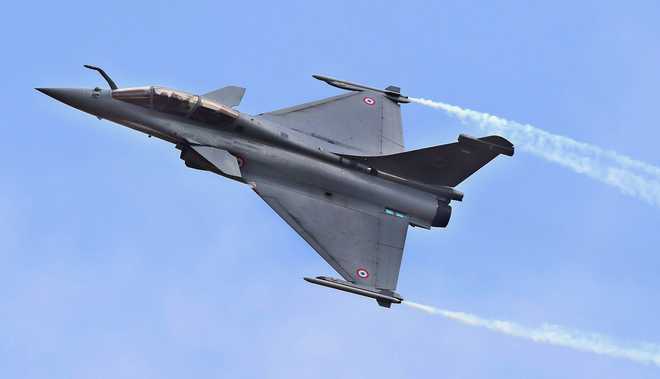
His boldness and decisiveness at throwing aside protocol and process, in the interest of enhancing our Air Force’s dwindling strength and capabilities, by attempting to break the deadlock that was dogging the Rafale deal was commended by the military community, which saw in him a leader with a grand vision and an ability to get things done.

While there have been major achievements in various facets of governance that he can take credit for, it is in his dealings with the military, as we shall see, that he has been an unequivocal failure. We may think of the Battle of Waterloo as the defining battle in the defeat of Napoleon Bonaparte, but it was actually the bruising campaign in Russia in 1812 and is subsequent retreat that was the true beginning of his downfall.

There may be many different issues that may well bring down Mr. Modi in the next elections, but in truth he was derailed by OROP. In a manner of speaking OROP was a financial speed breaker that the government would have had to negotiate carefully to live up to its promises. However, the bureaucrats of the Defence and Finance Ministries, with assistance of their friends in the media, turned it into a brick wall with their less than honest financial projections the government crashed and burned.

Over the past few years there has been a barrage of figures suggesting the adverse impact granting of OROP would cause to our economy. For example, not so long back a leading daily boldly headlined a piece saying “Higher defence pension outgo may stress Centre’s finances.”

It went on to suggest “a steady increase in pensions to defence personnel over the years to nearly Rs 1.08 lakh Crore for 2018-19 from around Rs 45,500 Crore in 2013-14 is further expected to accentuate the stress on government’s finances……The increase in defence pensions is attributed to the one rank one pension scheme, which is the pension scheme for ex-servicemen announced by the government in 2015. Government officials said that they were concerned about the increasing allocation for defence pensions…..”

However, what the paper didn’t say was that in 2013-2014, before implementation of OROP, the expenditure on defence pensions on approximately 24 Lakh service/family pensioners was Rs 33,215 Crore or 73% of the total defence pension, with the remaining amount catering to approx. 5.62 Lakh civilian/family pensioners paid out of defence estimates. In simple terms a military/family pensioner received on average Rs 1.4 Lakh as pension while a civilian/family paid from the defence budget received an average of Rs 2.2 Lakh pension, a full Rs 80,000 higher than a soldier, annually.

The situation was further exacerbated by the fact that approximately 90% of soldiers retired before they reached the age of 40 years, while their civilian counterparts served till 60 years. Thus, the government spent double on the civilian employee for twenty years that he got to serve additionally, which in turn ensured that he received a higher pension, including the benefit of two Pay Commissions. Surely if the military’s job is to fight and win wars, then this was a clear case of putting the cart before the horse apart from being exploitation of the soldier of the worst kind.

One can take this argument further if one were to look at figures for FY2016-17 for which details are available. By this time the vast majority of the ESM had received some, if not most, of their dues from the implementation of OROP. Of the total pension bill on defence of Rs 87,826 Crore, the share of ESM pension was Rs 70,261 Crore or 80% and his average pension was Rs 2.9 Lakh while that of his civilian counterpart was an average of Rs 3.1 Lakh, a far more equitable situation.

While the overall pension bill went up by 90% in the five years between 2013-14 and 2016-17 chiefly due to OROP, the bill for the 2017-218 only went up by 8% while that of 2018-19 is expected to go up by 14% thanks to the 7th Pay Commission, benefits of which hardly impact ESM but help civilian pensioners. It is likely this will further accentuate the differences in pension.

In sum total, by not giving full OROP as well as not carrying out annual equalization, which is what the ESM protests are about, and with the horrendous treatment meted out to them by the Police, Mr. Modi damaged his own credibility and image as well as lost the trust of the military rank and file and that is undoubtedly bound to cost him dearly in the future.

What was worse was that with his ears full of skewed advice, he let his anger, at what he saw as being let down by an ungrateful ESM community, get the better of him. In a fit of vengefulness that does him little credit he launched an all- out war against his own military to bring them down a peg or two and teach them a lesson. He used every method available to degrade, insult and dishonor the forces, destroy their cohesion and politicize their leadership. In one word, reduce them to a militia.

He has been successful in his endeavours and has managed to demoralize them, damaged their credibility and reduced the Service Chiefs and the senior hierarchy to caricatures. That the Army Chief, who has never been short of words, has suddenly been struck dumb speaks volumes. His silence and that of other senior Generals, and their unwillingness to refute the public prevarications of the Raksha Mantri over the opening of the Cantonments and the lack of funds to procure weapons and equipment is utterly shameful and clearly reflects the moral degeneration of the military brass.

At the end of the day Mr. Modi has only managed a pyrrhic victory. By throwing the baby out with the bath water he now finds himself severely constrained, between a rock and a very hard place. The Pakistanis are cocking a snook; his kowtowing to the Chinese hasn’t helped much as they continue to occupy Doklam and start to creep into Arunachal Pradesh.

The Americans are back to their devious ways and are squeezing where it hurts the most. His posturing and illusory 56 inch chest has been seen through. In all of this, the funny thing is that for someone who had the opportunity to do so much, he did so little. He may well win the next elections, given the dismal choices we have, and may be even grant full OROP and reverse the decline of our Forces, but he will never again touch the sky nor connect with our military as he did that day on 15 September 2013 at Rewari. That is gone forever.

Comments from veterans

BJP is on double speed working for 2019 elections .:;WAKEUP CALL 
All its Ministers have one point agenda and that is to get back to power whatever it may cost.
Armed Forces are easy to brow beat since uniformed organisation. Not bothered even in thoughts what we are going thru in Valley ,loosing men every day and are being degraded in every possible manner every passing day
We must also accept a fact that our comrades in uniform cannot do much being in uniform but I am sure  they all must be feeling bad getting disrespected every day in one form or the other.
We as veterans must come together to help our people in uniform as under
1- Pb, Haryana, HP, Rajasthan, Eastern UP, Parts of Maharashtra, Eastern India have lot of people in Armed Forces and so are veterans. So let’s start a social campaign in all local languages to high light the high handed ness of BJP.Families of serving and Ex servicemen in these area can have good impact in voting in 2019
2-Also a campaign to have online casting of vote.if banking transactions can be safe and secure then voting can also be done with adequate firewalls and security set up. This will sort out most of the BJP candidates after all PM’s Digital India. The people in urban and semi urban areas don’t go for voting as they have to stand in line for a long time and if this 20% does the voting , Will break the backbone is all BJP Illusions.
3- All Armed Forces personnel in peace areas and field areas to cast their vote on the day of voting as it is a democratic right . Will sort out all local leaders and politicians will remain aligned to Services requirement including closure of roads.For votes they can do anything.The Election Commission sends EVMs to all remote locations so they can do that in field areas too. HAA can be left out.
BJP had and is using social media to showcase their achievements so let’s use their stick to sort them out with the same stick .Social Media Campaign to show BJP is anti Armed Forces.
4. – can also file a PIL in SC /AFT for online voting right of Services to make CEC wake up and permit right to vote on the day voting by services in peace locations and manageable Field areas.
5.  BJP is concentrating in rural area for rural population as they are the vote bank be it Jan Dhanraj Yogna, provision of Gas cylinders , teen Talaaq issue , toilets in rural india , farmers loan waivers , subsidies etc etc all thru tax payers money and nothing from its policies
Let’s all wake up and fight it out till the last