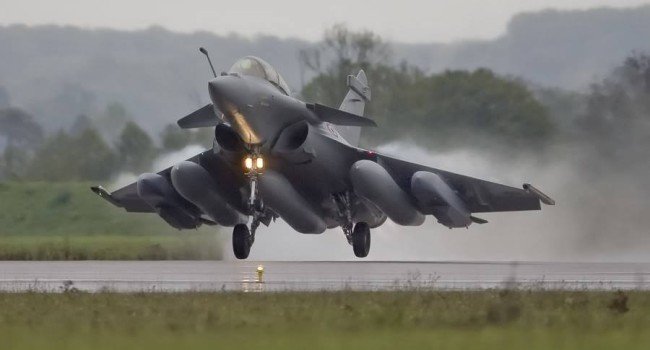
The *acquisition by India of 36 Rafale* fighter aircraft has unfortunately been put through an unnecessary *controversy, where innuendo and mud- throwing* have taken the place of reasoned debate. *India needed* a Medium Multi Role Combat Aircraft ( *MMRCA*) and the process for its acquisition *started as early as 2001,* when the Ministry of Defence (MoD) put in a request for information (RFI). Subsequently, a request for proposal (RFP) for 126 MMRCA was issued six years down the line in August 2007 *to meet the urgent requirements* of the IAF. Of these, 18 aircraft were to be purchased in a fly away condition and the remaining 108 were to be manufactured by Hindustan Aeronautics Limited (HAL) under transfer of technology.
Four years later, there were *six contenders* for supplying the MMRCA to India: Boeing’s F/A-18E/F Super Hornet, Lockheed’s F-16 Fighting Falcon, Mikoyan’s MiG-35, Saab’s JAS 39 Gripen, Eurofighter Typhoon, and Dassault Aviation’s Rafale. After extensive trials, *two aircraft that passed* all technical specifications were *shortlisted in 2011;* the Eurofighter *Typhoon* and Dassault’s *Rafale.* On 31 *January 2012,* it was announced that *Dassault Aviation (DA) had won* the contest on account of lower life-cycle costs and contract negotiations commenced thereafter. *By 2014,* these negotiations had reached a *total impasse.*
*Why an impasse,* one may ask? It perhaps has something to do with a *noting on file by Mr AK Antony,* the then Defence Minister in Manmohan Singh’s government. On file, the minister wrote that *Dassault must give a guarantee for the Rafale planes manufactured by HAL in India.* While *Dassault* was willing to give a guarantee for the products it supplied in a fly away condition, it was obviously *not willing to give a similar guarantee for the products manufactured in India* by HAL. The question to be asked, firstly, is *why was this clause added* by Antony. The deal could have been signed in 2012 itself avoiding a four year delay which consequently accrued, adding to security concerns and cost overruns. There are *rumours* afloat that the deal was deliberately sabotaged because *Dassault refused to entertain Sonia Gandhi’s request* to keep a firm called Offset India Solutions as an *offset partner. Mr Sanjay Bhandari, the owner of Offset India Solutions* had been *working with Robert Vadra,* the son in law of Mrs Gandhi, and Dassault had inhibitions of tying up with a firm which had a shady reputation. *Mr Antony needs to clear the air* on the above.
Second, if *HAL* thought that it was competent enough to make the Rafale, then it *should have openly stated that it was willing to give a guarantee for the parts* it manufactured. Why did HAL not do so? The *IAF* insisted on such a guarantee, *based on its past experience with HAL,* and if HAL was worth its salt, it should have stood up to be counted. It was unethical for the then Defence Minister, Mr AK Antony to ask DA to stand guarantee for the products manufactured by HAL. On all previous licence productions, no ‘Original Equipment Manufacturer’ (OEM) has ever been asked to give guarantee on aircraft manufactured by HAL under licence. Obviously, there was malicious intent in *putting such a condition for the Rafale* deal, and the aim was *perhaps to scuttle it.* It is also a matter of record that HAL assessed man-hours to produce the aircraft were almost three times that taken by OEM, which meant that the *deal worked out by the UPA government when Antony was the defence minister, went into deep freeze.*
When the *NDA came to power in 2014,* the Rafale deal was in a limbo because of the clause inserted by Antony on file. To overrule a former defence minister would have raised considerable eyebrows and would have been political suicide. That was why Mr *Manohar Parrikar,* when he was holding the Defence Minister’s portfolio, acidly remarked that *the ‘deal was as good as dead’.* But that did not take away from the fact that *India still needed a MMRCA.*
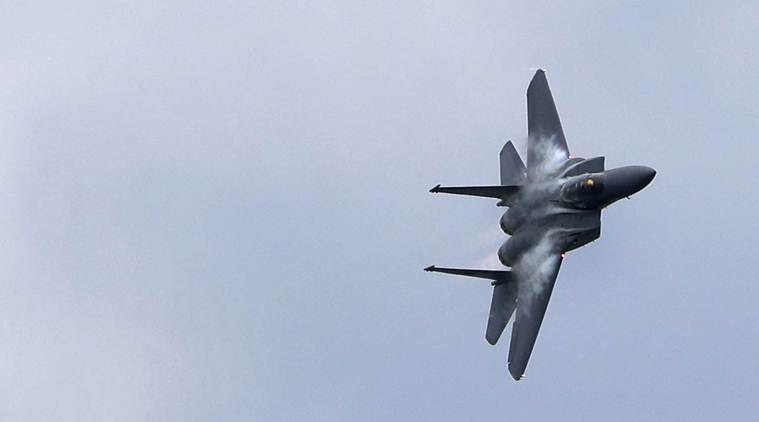
*To address the acute shortage of fighter aircraft,* as seen in the dwindling fighter squadron strength of the IAF, the BJP led NDA government *scrapped the 126-jet MMRCA contract* and decided to *purchase 36 new Rafale fighter jets from Dassault Aviation through an inter-governmental (G-to-G) agreement.* From a projected strength of 44 fighter squadrons, the *IAF is down to 32 and this number too is going down with the retirement of MiG 21 and Sukhoi* fighters which are nearing the end of their life expectancy. The *delay in the Tejas* programme too has contributed to this unhealthy state of affairs.
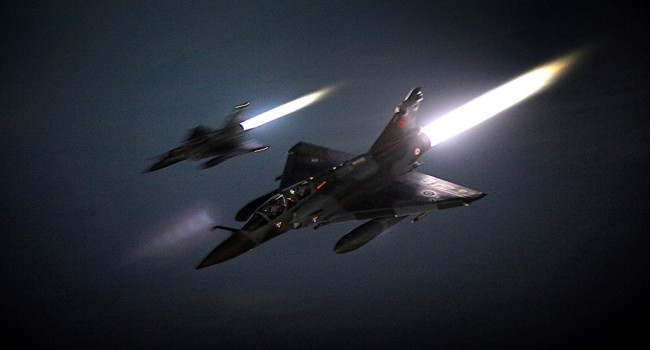
*Why did the NDA only contract for 36 Rafale* aircraft? This question too is frequently asked and deserves a response. It was in 2014 when the NDA took over the reins of government that the *IAF projected their urgent requirement of 36 aircrafts i.e. 2 squadrons.* The Government decided to purchase 36 aircraft in a comprehensive package that would make two squadrons operational at the earliest. It *concluded a deal in 2016,* which included Meteor missile, short range air to air missiles and other weapons, as also training systems, performance based logistic support for 2 squadrons, enhanced period of maintenance support and full maintenance support at two bases. It was a *comprehensive package designed to operationalise two squadrons in the earliest* possible time frame and the 36 aircraft will be delivered within the period 2019-2022. It is worth noting that the *contract envisaged in 2012 by Antony was only for production of bare aircraft.* We would subsequently have had to go in for *many separate additional contracts to procure the weapon systems* and related items to make the aircraft an effective fighting platform. These additional contracts would have dragged on for years, leading to loss of operational capability and additional expenditure to the tune of thousands of crores which the country can ill afford. We must remember that when India procured the *Mirage 2000,* its *weapon systems* came *much later,* leaving India with a flying machine with no battle capability for that duration of time.
The present *controversy pertains to the direct purchase of 36 Rafale* aircraft in a G-to-G route. *Arguments* put forward *against* the deal pertain to *cost, competition and cronyism.* Why, for instance was an equal opportunity not given to *Typhoon,* to quote its best rates, which could have forced DA to quote more competitive terms. The answer to that is however simple. The DPP of 2016, in para 104, clearly states that in a G-to-G route, ‘geo-strategic advantages that are likely to accrue take precedence over competition, transparency and accountability’. In any case, if the Manmohan Singh led UPA government had adequate concerns about national security, they would have taken action to purchase the aircraft at the most favourable terms for the ten long years they were in power? *India badly needed to shore up its air capability, yet the UPA glossed over it.* Did the UPA demanded kickbacks from DA? We shall never know, because the deal never materialised. Why did Antony put such unreasonable remarks on file? Had it something to do with non-materialisation of kickbacks, on the lines of the Bofors deal? Or was it on the insistence of Sonia Gandhi as ‘India Offset Solutions’ was not made an offset partner? Again, we shall never know. But *Antony’s remarks on file effectively killed the purchase of 126 Rafale* fighter aircraft, leading to a loss in capability for the Indian Air Force.
The *opposition now wants to know* what the specific *‘geo-strategic advantages’* were that led the NDA government to seal the deal for the purchase of 36 Rafale aircraft in a fly away condition. However, the very nature of such deals means that they have value only if cloaked in secrecy. We would do well to remember that *major defence deals between two countries are also an instrument of a nation’s foreign policy* objectives and are invariably a part of a larger package, wherein both sides have certain obligations with serious security implications. Such agreements between two nations are never made public.
G-to-G deals come with sovereign guarantees, and the seller government provides logistic, training and exploitation support. Also, such deals are clean and do not involve payment of slush money. It is sad to note that every time India tries to acquire game-changing defence capability, a controversy is deliberately created by inimical forces. Such forces need to be exposed.
On *transfer of technology,* the situation is more complicated. Writing in the Quint, Abhijit Iyer-Mitra postulates that viable transfer of technologies which were possible upto four decades ago, are no longer so as the ground situation has now dramatically changed. Given the extraordinary division of labour that has happened since the 1980s, many of the aircraft components are outsourced to small and micro industries, which means that transfer of technology of those parts are not available for the aircraft manufacturer to give away. In addition, the complex nature of a plane, the limitations of technology transfer and the fluid nature of technology with fast obsolescence rates means that, ‘even if technology is given, forget setting up manufacture, even before the technology is mentally absorbed by domestic engineers, it is obsolete’.
The *cost factor* needs elaboration. Allegations are flying thick and fast that the deal negotiated by the present government is far higher than the one negotiated by the earlier UPA regime. This flies against the face of facts. There was *no deal done by the earlier establishment* as the deal did not fructify. As there was no deal, there could not have been an agreed price. In any case, a non-deal cannot be compared with a deal and a non-starter aborted arrangement cannot be used as a datum for price comparison. More importantly, the earlier quotes were for the platform as such and the add-ons, which gave the aircraft punch, were not concluded. The *present procurement now brings to the fore certain India specific capabilities, and the price paid is commensurate* with those capabilities.
The next charge is of *capital cronyism,* where it is alleged that the government has *favoured the Anil Ambani Reliance* group by *ousting HAL.* This charge has more to do with ignorance or malicious intent than with anything else. For starters, DA is providing 36 Rafales to India, all of which are being manufactured in France. There is no question of a partner here, be it HAL or anyone else. *Reliance hence is not making* any aircraft.
An understanding is also required of what exactly is meant by fulfilment of *offset obligations.* It simply means *compensating the buyer country for the outflow of its resources* through designated offset programmes. India’s offset policy has been spelt out at Appendix D to Chapter II of the Defence Procurement Procedure. This document must be read before people make ill informed comments on the deal. Some relevant points to note are:
All *‘Buy Global’ cases of estimated value of more than Rs 2,000* crore have to carry *offset obligations equal to 30 percent* of the contract value. In the instant case, better terms have been achieved by raising the *offset levels to 50 percent* of the contract value.
As per the DPP, the *foreign vendor is free to select IOP* and the government has no role to play in the same (Para 4.3). The *vendor is also responsible for fulfilment of the contract,* failure of which will invite penalties (Para 5.1) and even debarment from future contracts.
The policy specifies *six avenues for the discharge of offset obligations* (para 3). The foreign vendor is free to choose any one or a combination of them. These include direct purchase of eligible products and services; FDI in joint ventures; and investment in kind/technology. Eligible products/services cover the complete range of defence, inland/coastal security and civil aerospace products. It is a vast choice.
The *above provisions make eminent sense.* If the vendor is responsible for offsets, he must have independence to select IOP in whom he has faith. The government cannot dictate IOP and yet hold the vendor liable for timely completion. Dassault has chosen Reliance as a major IOP. No one can question that.
Writing on the subject in OPINDIA, Raju Das has explained the situation more clearly wherein he states that besides *Reliance, Dassault has finalised agreements with 72 different companies* to supply various products and services as part of its offset obligations. These include other Indian business groups like *L&T, Mahindra Group, Kalyani Group, Godrej & Boyce, Tata group etc.* The offset partners can work on Rafale or on any other project listed in the DPP. The *offset obligations ensures that investment takes place in India* which leads to the *growth of India’s fledgling defence industry* in the private sector and leads to job creation and overall growth of the economy. Thus companies like Snecma HAL Aerospace Ltd, a joint venture between HAL and Snecma (Safran) of France are one of many companies which have to execute the offset obligations and *not Reliance alone.*
It is therefore *sad, that even responsible defence commentators have jumped into the fray* with little more than guesswork *to prove perfidy* in the deal. Writing in his blog, Mr *Bharat Karnad* states:
“Could it not be possible that the Indian PM after announcing the Rafale deal, offhandedly and informally mentioned to Hollande in their one-on-one meeting in the Elysee Palace that the French President may care to consider Anil Ambani’s Reliance Defence as possible offsets partner for Dassault? This mere mention of RD by Modi must have been enough for Hollande to assert, as he has that ‘We didn’t have a say in that [selection]. It was the Indian government that proposed this service group (Reliance), …We didn’t have a choice, we took the interlocutor who was given to us’. Because to Hollande Modi was the Indian government, and he was well aware and as he implied to Mediapart, France was coming up trumps in this transaction, What it had ostensibly lost monetarily by a reduced order of aircraft was being more than made up by the entire Indian order of 36 high-value Rafale aircraft being manufactured in France, giving Dassault’s production line an extended run”.
The above is laughable had it not been said by a person of Karnad’s eminence, who describes himself as India’s foremost conservative strategist. It is *sad to see a responsible person* of his stature, *relying on innuendo and guesswork to buttress his argument.* In the same blog, Karnad also bemoans the fact that his fortnightly column in the New Indian Express was terminated because of his critical writings of the Modi government and states that was done because the paper is “edited” by a BJP-RSS sympathiser. Is this the reason for his angst? It could well be.
A word now about the *figures being bandied* about on the net amount of offset contracts on which there is a great lack of information/misinformation. The DCOAS, *Air Marshal Raghunath Nambiar has cleared the air* by stating that the total *liability of Dassault for offset contracts is Rs 6,500 crore only* and the figure of Rs 6,500 crore being bandied about is incorrect. The amount which the country is paying for the aircraft is Rs 58,000 crore, and in terms of the offset contract, fifty percent of the value of the deal has to be compensated in offsets. That takes us to a *figure of Rs 29,000 crore. How then, can the offset obligations* for Dassault be 6,500 crore? This dichotomy has a simple explanation.
An aircraft when purchased is not bought as one piece like a car, but the major components are bought separately from respective manufacturers which are fitted into the plane by the manufacturer of the plane. Apart from the main airframe, a fighter plane has an engine, weapon systems, missiles, radar systems, electronic warfare systems, evasion systems, ejection seats etc, all of which are made by different companies.
In case of the Rafale fighter aircraft, besides Rafale which manufactures the aircraft, there are others too who have to uphold their share of offsets. Amongst these are three major players, Safran which makes the engine, Thales which makes several electrical, electronic systems and sensors, and MBDA which will supply missiles. Dassaults share in the 58,000 crore deal is Rs 13,000 crore only, which reduces its offset obligations to Rs 6,500 crore. Amongst the *other offset contracts, Safran is partnering HAL, Thales has a deal with Bharat Electronics Limited (BEL) and Dassault is also partnering several other companies including BEL, L&T, Mahindra etc.* It thus becomes clear that the *share of the Anil Ambani Reliance group is only a part of the Rs 6,500 crore* offset obligation of Dassault and not 29,500 crore. it must also be remembered that the Anil Ambani Reliance Defence Systems, along with Reliance Infrastructure, has entered into the defence sector by acquiring Pipavav Defence, a private shipyard based in Pipavav in Gujarat, in an all-cash deal. It thus is in a position to execute its offset requirements.
*Instead of running down each and every government purchase,* which in turn leads to time delays and cost overruns, the *focus should be on further streamlining our procurement systems.* Why for instance is India dealing with seven different types of combat jet fighters? On a long term basis, the focus should be on getting HAL to perform and produce the Tejas Mark I and Mark IA and in future, the Mark II, all as per requirement and as per schedule. We should also focus on getting the indigenous AMCA (Advanced Medium Combat Aircraft) as per schedule.
Besides further *refining of procurement procedures,* we need to see that *those in charge* of such procurements *are well versed in the procedures.* We need to have officers who have been trained in the subject and who then need to be posted for long tenures with the establishment. Unless a holistic view is taken of our procurement needs, we will continue to flounder. Let us also remember that in the very competitive environment of defence deals, the *loser invariably cries foul,* which is then exploited by vested interests. As per *Air Marshal Nambiar, India has got a better price, better maintenance terms, better delivery schedule, and a better performance logistics package* in the deal to buy 36 fighter jets.
*The Rafale deal is thus a good one for the country and the matter should rest here.*