Sanjha Morcha

What’s New

Click the heading to open detailed news

Current Events :

web counter

Print Media Reproduced Defence Related News

After Supreme Court order, MoD panel to re-examine non-functional upgradation for defence services

NFU was a provision recommended by the 6th Pay Commission to give financial parity to officers in Organised Group ‘A’ services two years after their counterparts in IAS are promoted to higher levels, even if they themselves are not promoted

article_Author
Vijay Mohan

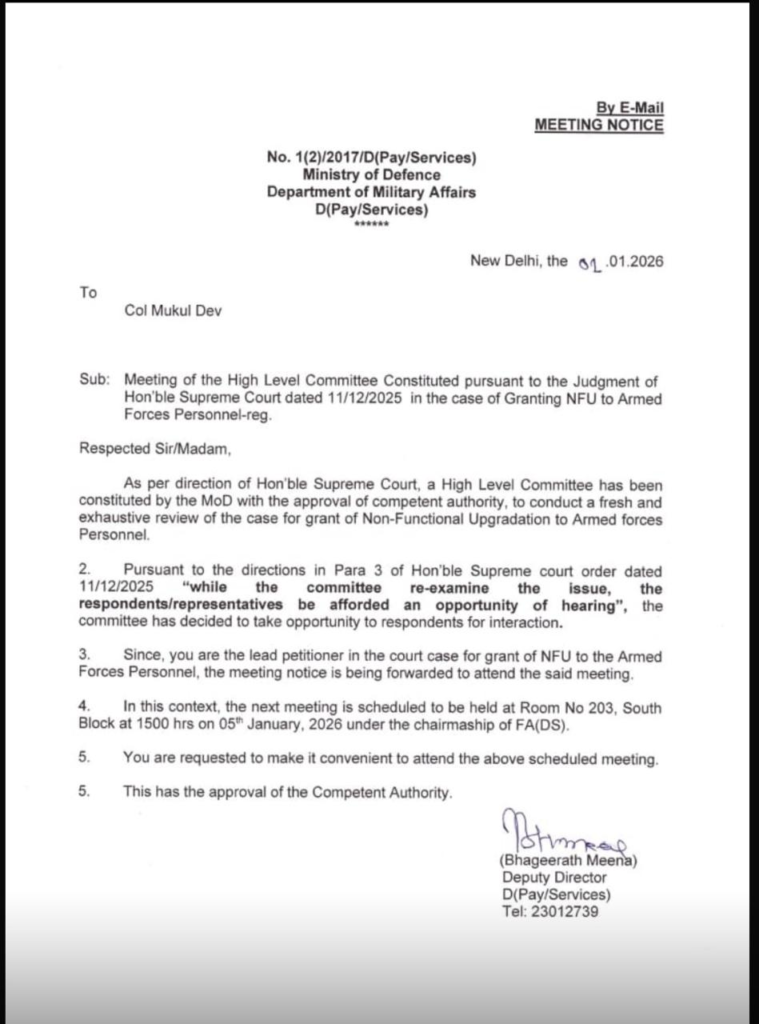
The Ministry of Defence has invited representatives of Armed Forces personnel to present their viewpoint on the grant of Non-Functional Upgradation (NFU) for the defence services, an issue pending for many years.

Following directives by the Supreme Court, a high-level committee set up by the government to re-examine the issue has fixed January 5 as the date to hear the claims and arguments put forward by the representatives in support of NFU. Defence services are the only government organisations to have been denied NFU, which grants higher financial benefits to officers who do not get promoted.

In its last hearing in the matter on December 11, a division bench of the Supreme Court comprising Justice JK Maheshwari and Justice Vijay Bishnoi had observed that the Central Government has constituted a committee consisting of the Financial Advisor (Defence Services) as its chairman, with Joint Secretary, Department of Military Affairs, a representative of the Department of Expenditure and a representative of the Department of Personnel and Training as members to re-look the claim of the Armed Forces personnel.

“Let needful be done within two months. Needless to say that while the committee re-examine the issue, the respondents/representatives be afforded an opportunity of hearing,” the bench directed. The case is scheduled to be heard next on February 25.

A letter sent to the respondents by MoD on January 1 states since a high-level committee has been constituted by MoD to conduct a fresh and exhaustive review of the case for grant of NFU to Armed Forces personnel, the committee has decided to give an opportunity to the respondents for an interaction.

NFU was a provision recommended by the 6th Pay Commission to give financial parity to officers in Organised Group ‘A’ services two years after their counterparts in Indian Administrative Service (IAS) are promoted to higher levels, even if they themselves are not promoted. The purpose was to reduce career stagnation and pay gaps. While all Group A services, including the para-military forces, have been granted NFU, the Defence Services have been left out, leading to prolonged litigation.

In December 2016, the principal bench of the Armed Forces Tribunal, in a detailed judgement in Col Mukul Dev vs Union of India that also clubbed numerous similar petitions, had directed the government to implement NFU for the defence services.

The tribunal’s bench comprising Justice BP Katakey and Lt Gen Sanjiv Langer had then ruled that the denial of NFU to Armed Forces personnel by the government had been unfair, evasive and without valid justification, which has resulted in iniquitous treatment to the defence services. Given their steep pyramidal hierarchy, stagnation in the defence services is the highest amongst any government organisation.

The Central Government appealed against the tribunal’s orders before the Supreme Court in 2019, contending potential disruption to the defence forces’ unique command structure. The government had also averred that the defence forces are not classified as Organised Group ‘A’ Service and are treated separately.
Rajnath flags ‘alarming trend’ of white-collar terror modules

Cites Delhi blast to highlight role of moral education

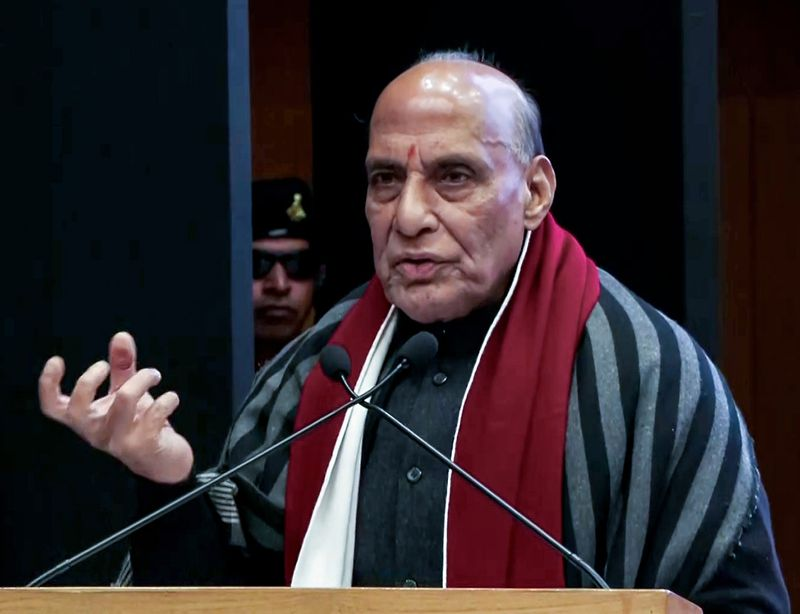
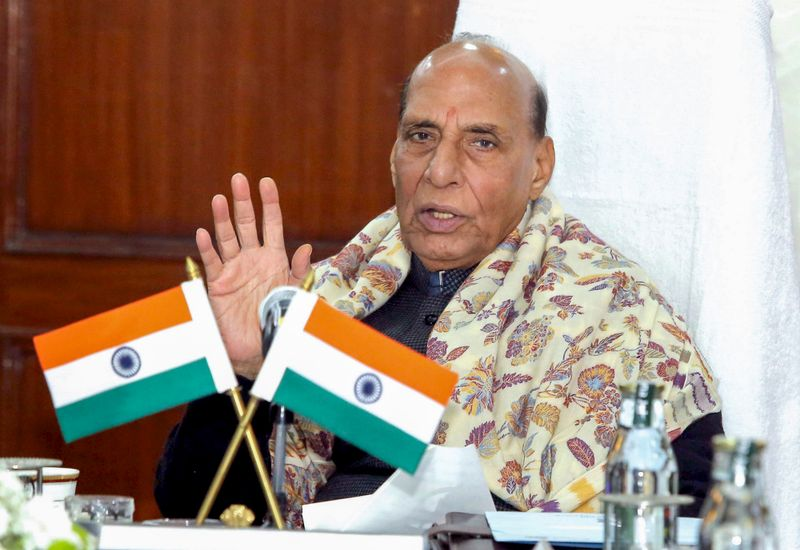
Defence Minister Rajnath Singh on Friday said that an alarming trend of white-collar terrorism was emerging in the country, wherein highly-educated people are engaging in anti-social and anti-national activities.

Singh pointed at the November 10 car bomb blast near the Red Fort in Delhi, where the perpetrators were found to be doctors. “Today, an alarming trend of white-collar terrorism is emerging in the country. Highly-educated people are working against society and the country,” Singh said at the 104th Foundation Day event of Bhupal Nobles’ University here.


“The perpetrators of the (Delhi) bomb blast were doctors – those who write ‘Rx’ on prescriptions, yet have RDX in their hands. This highlights the need for knowledge to be accompanied by values and character,” the Defence Minister said.

“The purpose of education is not only professional success but also the development of morality, ethics and human character,” he said.

Singh added that knowledge leads to competence, which leads to prosperity, and prosperity leads to righteousness, and ultimately, true happiness comes only from righteousness. “Any education system that cannot fulfil this objective, which does not impart humility, a sense of character and ‘dharma’ (righteousness) along with knowledge, is incomplete,” Singh said.

“When I talk about religion, it should not be associated with going to the temple, mosque or church for prayer. Religion is a sense of duty. Education devoid of religion and morality will not be useful to society, and sometimes it can even prove fatal. This is why educated people are sometimes found to be involved in crimes,” Singh said.

Terrorists are not necessarily illiterate; they can hold university and college degrees, yet they become terrorists because they lack wisdom, the minister said.

Singh also hailed defence startups for doing remarkable work in the country. “I am confident that in the next 15-20 years, India will become fully self-reliant in weapons,” the defence minister said.

He also said that artificial intelligence, machine learning and other technologies are transforming people’s lives and work, and they must be used positively to drive India’s development.

India is the world’s fourth-largest economy, which is on track to become the third-largest by 2030, Singh said, noting that universities have a big role to play in this journey. He also emphasised the importance of understanding the delicate balance between self-respect and ego, and urged people not to cross the fine line between the two.

“Today, the world is facing problems such as environmental issues, health crises and digital ethics, which cannot be solved with a single discipline. Solutions can only be found through a multidisciplinary approach. Universities must teach the students not only what to think, but also how to think. They must create an environment where students can think holistically,” he said.

Advertisement


CDS opens upgraded runway at Car Nicobar

Located about 535 km south of Port Blair, it is also close to the Malacca Strait

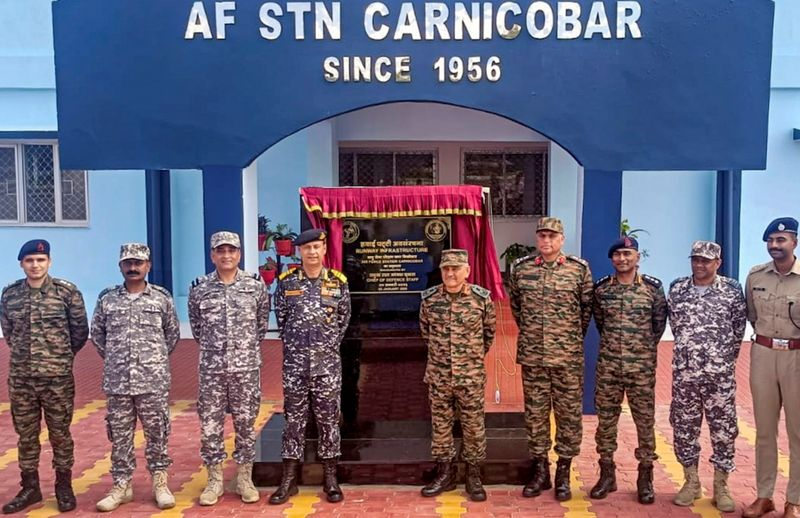
Chief of Defence Staff (CDS) General Anil Chauhan on Friday inaugurated the resurfaced and upgraded runway at the Indian Air Force’s Car Nicobar air base in the Andaman and Nicobar Islands, significantly enhancing operational capability.

The apron area – where planes can be parked – has been expanded to ensure smoother aircraft movement. Now, multiple aircraft can be parked, refuelled and turned around faster in the area, accelerating the operational tempo.

Facilities have also been created to allow basing of the Sukhoi 30MKI jets. These jets can be armed with the BrahMos missile with a 500-km range, expanding the envelope of operations. Besides, the resurfacing allows planes with heavy cargo to operate. Upgraded storage facilities will also result in improved logistics support, and supporting infrastructure to sustain prolonged air operations.

The upgraded runway would strengthen India’s strategic posture as Car Nicobar is located about 535 km south of Port Blair (Sri Vijaya Puram) and is close to the Malacca Strait. More than 96,000 vessel cross through the Malacca annually (a daily average of 260 ships), estimates the Maritime and Port Authority of Singapore (MPA).

The Air Force Station on Car Nicobar is situated in the northern Nicobar Islands and comes under the Andaman and Nicobar Command, which is India’s only tri-service theatre command integrating the assets of the Army, Navy and Air Force in a single structure.

Separately, India has formally initiated the process to make a second airfield at the strategically located Great Nicobar island, the country’s southern-most territory overlooking Straits of Malacca.

There existing operational Naval air base named INS Baaz at Campbell Bay on the Great Nicobar island is being expanded. The base has facilities to operate special operations planes, C-130 J, of the Indian Air Force, the Airbus C-295 and also maritime surveillance planes, the Dornier’s.

The Navy has another air base at Sri Vijay Puram and there are expansion plans for a runway at navy base INS Kohassa, Shibpur North Andaman, to accommodate larger military aircraft, along with new ammunition dumps and capacity upgrades for fighter jets.


MoD sets up panel for non-functional pay upgradation

A meeting has been scheduled for January 5 at the South Block.

The Ministry of Defence has constituted a high-level committee to conduct a “fresh and exhaustive review” for granting a salary increase to armed forces personnel who do not get promoted beyond a certain rank due to paucity of vacancies, but have served for specific number of years.

Called the non-functional upgradation (NFU), it is given to the entire civilian bureaucracy. It results in a hiked pay-band after a certain number of years of service, but the armed forces personnel do not get it.

The MoD formed the committee after the Supreme Court, while hearing the matter last month, asked the ministry to re-examine the issue. Respondents and legal representatives of those who moved the court have been invited by the MoD for an interaction. A meeting has been scheduled for January 5 at the South Block


14 Maoists, including 2 wanted ultras, killed in separate encounters in Chhattisgarh

Gunfights break out in Sukma and Bijapur forests during anti-Naxalite operations

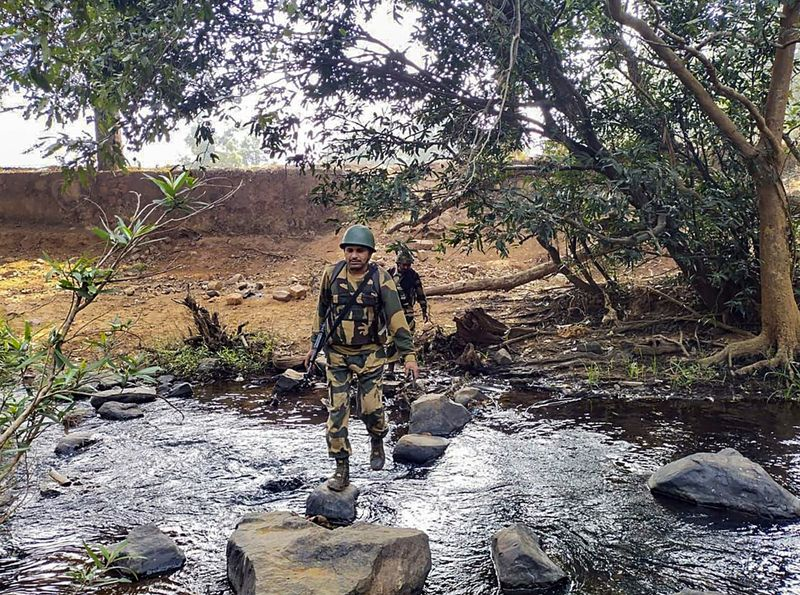
Security forces killed 14 Naxalites, including wanted ultras Mangtu (DVCM) and Hunga Madkam, in separate encounters in Chhattisgarh’s Sukma and Bijapur districts in the Bastar region on Saturday, officials said.

While 12 Naxalites, including Mangtu (DVCM), were neutralised by the security forces during an exchange of fire in Sukma, the bodies of two Maoist cadres, including Hunga Madkam, were found in the forests of Gaganpalli village in Basaguda, Bijapur, senior officials in the Ministry of Home Affairs said.

In Bijapur, the forces recovered one SLR rifle and one 12-bore rifle, along with the bodies of two Naxalites, they said.

A senior police official said the encounter broke out in the southern region of Sukma district when the team of security personnel was out on an anti-Naxalite operation.

In Bijapur, the gunfight broke out in a forest in the southern region of the district when a team of the District Reserve Guard, a unit of the state police, was out on a similar operation around 5 am, another official said.

Intermittent firing was underway when the last reports were received. Further details were awaited, the official said.

Last year, 285 Naxalites were gunned down in separate encounters with security forces in Chhattisgarh.


Nepal’s future uncertain

Pre-poll alliances are now the norm in Nepal — precisely the instability Gen Z sought to undo

article_Author
Maj Gen Ashok K Mehta (retd)

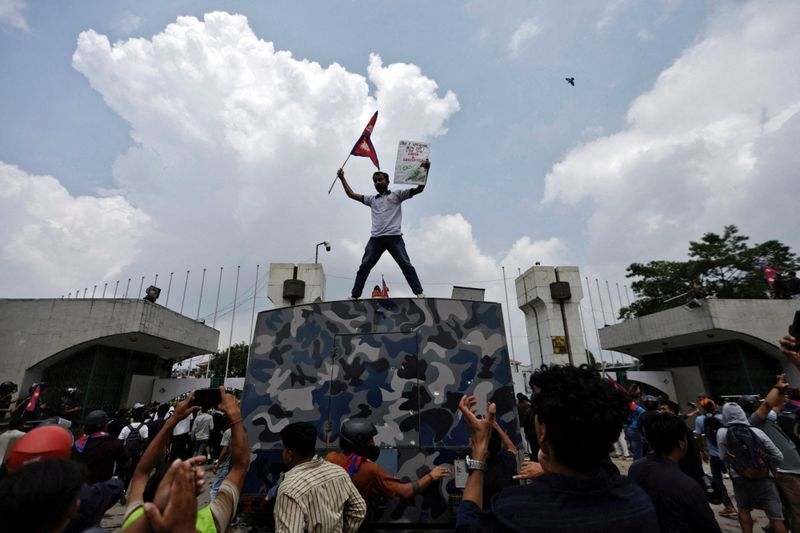
The outcome of Nepal’s fifth revolution (Jan Andolan) in September was the announcement of elections on March 5, 2026. Cadres of the ousted KP Oli-CPN (UML) government had clashed with Genji (Z) revolutionaries. The vandalism during the protests cost $5 billion (the government’s estimate puts the figure at $572 million). On September 9, all state institutions had collapsed, forcing Oli to resign; in the vacuum that ensued, the army was unable to protect government property. In its response to an inquiry, the army said it had to make a choice between protecting people (leaders and officials) and property. The Genji protests were ‘not all that spontaneous’. There is evidence that the US had stirred the pot. Further, doubt lingers over whether elections will be held; or, held on time.

The Genji protests were ostensibly against the Internet ban, which escalated after police firing killed 17 protesters. That figure shot up to 77 martyrs. The people’s uprising that piggybacked Genji protests expanded the latter’s demands — from good governance, elimination of corruption and job creation to constitutional amendments restoring political stability and voting from abroad. About 2,000 youth leave the country every day for employment. Genji is a collective of 49 disparate groups, whose leader is Sudan Gurung, a musician-turned-head of a humanitarian organisation. He signed at least three agreements with Karki, most notably the 10-point agreement in December. It includes amendments, which, according to advocate Radhesham Adhikari, will be difficult to implement and become a hurdle to timely elections.

Though the Nepali Congress and CPN (UML) have filed petitions for the restoration of Parliament, they will fight the elections. Some Genji members are joining the Bibeksheel, Ujyaalo Nepal and Rastriya Swatantra parties. The RSP president, Rabi Lamichhane, jailed for fraud cases, has been released. Ujyaalo Nepal was lit by the dynamic Kulman Ghising, who rid Kathmandu of load-shedding. The Mayor of Kathmandu, Balen Shah, struck a no-surprise deal as the PM face of the RSP, with Ghising also merging Ujyaalo with the RSP to become its vice-president. Genji leaders Gurung and Purushottam Yadav are backing the RSP, making it formidable. Pre-poll alliance is the new normal. Even the NC and UML are considering it after the boost of the RSP — precisely the virus of political instability that Genji wants to remove.

Despite being ousted from the government, four-time PM Oli won a landslide third-term chairmanship of the UML. Add to this, his party’s strong grassroots organisation and most government officials being his appointees, Oli may spring a surprise. While five-time PM NC leader Deuba will step down as party president, he will fight elections for an unprecedented eighth time. The party is factionalised into three groups, led by India-backed Shekhar Koirala, US-supported Gagan Thapa and with motley-backers Bimalendra Nidhi/KP Sitaula. Four-time PM Prachanda, minus the Maoist tag, is a survivor and coordinator of the reminted Nepal Communist Party, consisting of 10 Left parties. The new crop of political parties will not make much dent on grassroots parties, which are likely to come back but with smaller vote share and seats. The Left’s majority in Parliament is expected to reduce to less than 50 per cent.

The elections will be held in March, but could go into phases. 2026 promises some surprise and plenty of uncertainty for Nepal.


HEAD LINES 01 JAN 2026

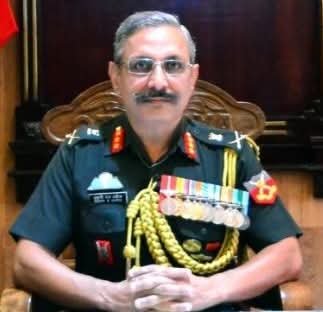
Lt Gen SS Dahiya,SM, VSM, COS ARTRAC, elected the Colonel Commandant of The Bengal Sappers & Military Survey…

Defence ministry clears procurement of long-range rockets, missiles, radar systems worth Rs 79,000 crore


Import bill down, 90% Army ammo now made in India

Jalandhar: War tensions, heavy rains disrupted city life

Frozen passes, unyielding resolve: The saga of Ladakh’s defenders

Army, J&K Police intensify vigil in Chenab valley to thwart terror threat

Air Marshal Nagesh Kapoor takes charge as Vice Chief of Air Staff

India, Pakistan exchange list of nuclear installations

No China role in truce with Pak, says India as Opposition targets govt


Lt Gen SS Dahiya,SM, VSM, COS ARTRAC, elected the Colonel Commandant of The Bengal Sappers & Military Survey…

Heartiest congratulations to Lt Gen SS Dahiya, COS ARTRAC, on being elected the Colonel Commandant of The Bengal Sappers & Military Survey…May the Bengal Sappers and Mil Survey achieve ever greater heights of excellence under his leadership !

Bengal Sappers bid a heartfelt farewell to Lt Gen Raghu Srinivasan, PVSM, VSM, outgoing Col Comdt for his exemplary service and timeless guidance, we extend our deepest gratitude. Sir, your legacy of leadership and inspiration will endure.

We now warmly welcome Lt Gen SS Dahiya, SM, VSM, our new Colonel Commandant to this group. Sir, we stand ready under your command, committed to excellence in 2026 and beyond.

MESSAGE FROM NEW COLONEL COMMANDANT

It is my proud privilege to be nominated as the 20th Col Comdt, The Bengal Sappers & Mil Svy. It shall be my sincere endevour to live up to the onerous task assigned and look fwd to some invigorating interactions with the esteemed members of this forum.

Equally grateful to Lt Gen Raghu Srinivasan, PVSM, VSM, for setting a very vibrant relationship with the Gp.

Profound regards and best wishes for the new year TO ALL Bengal Sappers


Defence ministry clears procurement of long-range rockets, missiles, radar systems worth Rs 79,000 crore

Loiter munition will be used for precision strike of tactical targets, whereas low level lightweight radars will detect and track small size, low flying unmanned aerial systems

The defence ministry on Monday approved procurement of long-range rockets, missiles, radar systems and military platforms worth Rs 79,000 crore to bolster the military’s combat prowess.

The Defence Acquisition Council (DAC), chaired by Defence Minister Rajnath Singh, green-lighted the proposals.

The DAC approved procurement of loiter munition systems for the Army’s artillery regiments.

It also cleared acquisition of low level lightweight radars, long-range guided rocket ammunition for Pinaka rocket system and integrated drone detection and interdiction system (Mk-II) for the Indian Army, the defence ministry said.

Loiter munition will be used for precision strike of tactical targets, whereas low level lightweight radars will detect and track small size, low flying unmanned aerial systems, it said.

It said long range guided rockets are being procured to enhance the range and accuracy of Pinaka rocket systems for effective engagement of high value targets.

Integrated drone detection and interdiction system (Mk-II) with enhanced range will protect the vital assets of the Indian Army in tactical battle area and hinterland.

For the Indian Navy, approval was accorded for procurement of high frequency software defined radios (HF SDR) Manpack and for leasing high altitude long range (HALE) remotely piloted aircraft system (RPAS).

The unspecified number of RPAS is being taken on lease for continuous intelligence, surveillance and reconnaissance over the Indian Ocean region, the ministry said.

For the Indian Air Force, approval was given for procurement of automatic take-off landing recording system, Astra Mk-II missiles, full mission simulator and SPICE-1000 long range guidance kits, etc, it said.

“Induction of the automatic take-off landing recording system will fill the gaps in the aerospace safety environment by providing high definition all-weather automatic recording of landing and take-off,” the ministry said.

It said Astra Mk-II missiles with enhanced range will increase the capability of the fighter aircraft to neutralise adversary aircraft from large standoff range.

The full mission simulator for light combat aircraft Tejas will augment pilots’ training in a cost effective and safe manner, while SPICE-1000 will enhance long range precision strike capability of the Indian Air Force, according to the ministry.

Advertisement


Import bill down, 90% Army ammo now made in India

The Army has reduced its reliance on imported ammunition and now secured indigenous sourcing for 90 per cent of its needs. The push for indigenisation is reshaping ammunition preparedness and long-term war-fighting capability.

Almost 200 variants of ammunition and precision ammunition is used by the Army across its weapon systems – which range from a pistol at the lowest-end and Brahmos missile at the highest. This array of weapons includes, rifles, automatic machine guns, anti-tank missiles, artillery guns, rockets like Pinaka and ammunition used by the Army aviation.

Multi-crore orders 

As off today, there is an order of around Rs 16,000 crore worth of ammunition on the domestic industry

In past three years, ammunition supply orders worth Rs 26,000 crore placed on indigenous manufacturers 

A policy reform and industry engagement with the private sector has resulted in more than 90 per cent of the ammunition being indigenised and is now sourced through domestic manufacturers.

To have a make-in-India option for the remaining imported ammunition, the Army is also working with research agencies, public sector manufacturers and other private players. To give an example, sources said the precision-guided artillery ammunition, the Excalibur, used effectively in Operation Sindoor, is imported from the US. Efforts are on to make a precision ammunition.

Over the last four to five years, procurement processes have been restructured to promote competition and multiple sourcing options. As off today, there is an order of around Rs 16,000 crore worth of ammunition on the domestic industry. In the past three years, ammunition supply orders worth nearly Rs 26,000 crore have been placed on indigenous manufacturers.

Vendor diversification has improved supply resilience, with many ammunition variants now supplied by multiple domestic sources.

India’s security environment is increasingly shaped by uncertainty, rapid technological change and prolonged crises. In this backdrop, military readiness depends not only on advanced weapons but also on the ability to sustain operations over time. For this, the supply chain needs to be localised, sources said.

Ammunition, spares and logistics form the backbone of combat endurance. Recognising this, the Army has placed self-reliance in ammunition production at the core of its preparedness strategy. This was kicked off in the past five years or so and has picked up speed after Operation Sindoor.

For years, ammunition supply relied heavily on legacy production systems in the public sector and overseas sourcing, leaving it vulnerable during global disruptions. Recent conflicts like the longdrawn Russia-Ukraine conflict highlighted a reality — nations that can sustain ammunition supplies domestically are better positioned to maintain operational momentum.

Reacting to the changed global scenario, the Army accelerated indigenisation in line with the national vision of Make in India. The next phase focuses on consolidating gains. Priority areas include strengthening domestic raw-material supply chains for propellants and fuzes, modernising manufacturing infrastructure, accelerating technology transfers and ensuring rigorous quality standards. Together, these measures aim to build a robust and self-sustaining ammunition ecosystem.