Sanjha Morcha

What’s New

Click the heading to open detailed news

Current Events :

web counter

Print Media Reproduced Defence Related News

1971 war veteran moves apex court for repatriation of PoWs

1971 war veteran moves apex court for repatriation of PoWs
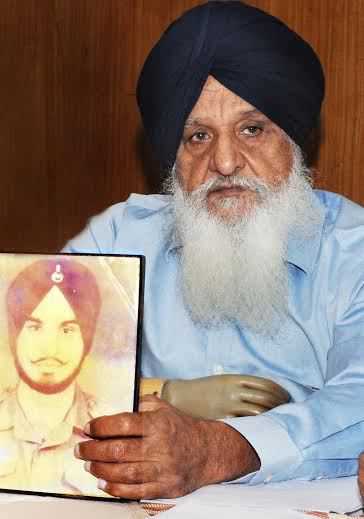
Capt Chanan Singh Sidhu (retd) with the portrait of Sepoy Balwinder Singh, an Indian PoW said to be languishing in a Pakistan jail. TRIBUNE FILE

Vijay Mohan

Tribune News Service

Chandigarh, July 15

A disabled Special Forces officer, who took part in the 1971 India-Pakistan war, has petitioned the Supreme Court, seeking directions to the Centre to earnestly work towards the repatriation of Indian prisoners of war (PoW) believed to be languishing in Pakistan jails for decades.“We filed the petition this week and expect it to be listed for hearing within the next few days,” Capt Chanan Singh Sidhu (retd) said. “Substantial evidence, including excerpts of books authored by eminent persons, extracts of official reports of human right commissions and affidavits have been attached with the petition,” he said.Last year, the Centre had in an affidavit submitted to the SC claimed that it had no details regarding the ‘missing’ defence personnel believed to be held captive in Pakistan jails after the 1965 and 1971 wars, but would continue making efforts for their repatriation. The SC had fined the government Rs 20,000 for laxity in placing the information before it.Capt Sidhu served with the Special Forces (5 Para) from 1968-1978 before being discharged on medical grounds after losing his right arm and suffering severe head injuries while deployed on the border with Tibet. He was posted at the Pathankot airfield during the 1971 Indo-Pak war. He now runs his business from Amritsar and Mullanpur near Chandigarh.Speaking to The Tribune, he claimed that over 78 persons ‘gone missing’ in the 1971 war were rotting in Pakistani jails and there was enough evidence ‘on their existence.’He said among the annexures attached with the petition were excerpts from the biography of a former US Air Force Chief, wherein he had mentioned that during his stint in Pakistan as part of a training team, he had interrogated 16 IAF PoWs to glean information on Soviet war machines. Also, in a book authored by Pakistani Premier ZA Bhutto’s lawyer it had been mentioned that Bhutto was unable to sleep at night while incarcerated in jail because of Indian PoWs screaming for help.Capt Sidhu pointed out that members of a human rights organisation, who had gone to meet alleged Indian spy Sarabjit Singh in Pakistan’s Kot Lakhpat jail, were greeted with appeals of help by some inmates who claimed to be Indian PoWs.Affidavits of prisoners released from Pakistan jails vouching for the Indian PoWs there had also been made part of the petition. Capt Sidhu said he would be petitioning the International Court of Justice and the International Human Rights Commission too.


NHAI redesigns Mohali-Kharar flyover To come up at a cost of Rs 368 crore by December 2018

Akash Ghai

Tribune News Service

Mohali, July 14

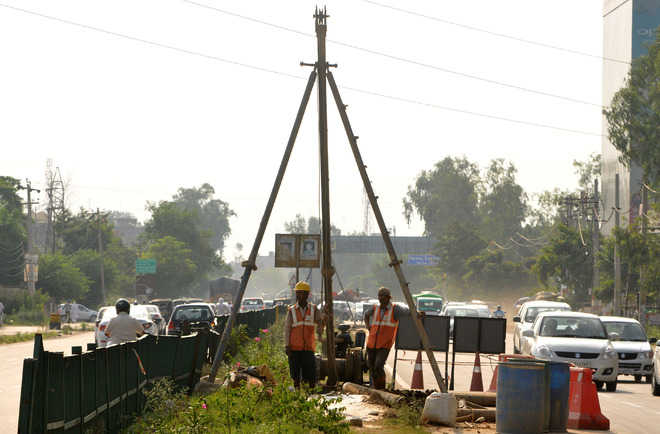
The National Highways Authority of India (NHAI) has redesigned the Mohali-Kharar flyover, which will come up at a cost of Rs 368 crore by December 2018.After two previous designs were shelved following widespread protests by area residents, the flyover has now been designed as a “mix of elevated and surface project”. To be built by L&T Constructions, the 7.3-km-long flyover will start from Balongi and end at the Khanpur T-point in Kharar on the National Highway-21.A senior official of the NHAI said the project “is on since June 9 with a completion deadline of 30 months”.He said the new flyover design was with the higher authorities in Delhi. “It may be revised. The final decision is expected within a fortnight,” the official said.Under the new design, there will be a 3-km elevated road starting from the Balongi light point till Sunny Enclave. From Sunny Enclave to the BSNL building in Kharar, there will be a 2.96-km road on the surface and from the BSNL building to the Khanpur T-point, there will be again a 1.3-km elevated road.

Earlier designs were shelved

Under the original plan, the NHAI had decided to construct the flyover from Sector 39, Chandigarh, to Khanpur village. Later, the plan was shelved and the authorities redesigned the flyover from the Mohali-Chandigarh border at Phase VI to Khanpur village. The plan was again shelved following a protest by residents of Phase VI and members of the Phase VI Gurdwara Committee as some parts of the gurdwara and a number of houses had to be demolished for the construction of the flyover.

Shopkeepers up in arms

At present, another protest is being staged against the construction of the flyover. The protest is being led by the Chandigarh-Kharar Highway Sangharsh Committee, formed by owners of commercial establishments and shopkeepers of the area. The protesters claim that the construction of the flyover will destroy the business of at least 1,500 shopkeepers and other businessmen.

Expert’s viewpoint

An expert said the construction of a flyover here was not the solution. “According to a recent study, about 35,000 vehicles ply on the road on an average. On Madhya Marg in Chandigarh, about 60,000 vehicles ply daily and still there is no traffic jam. When we construct flyover, it mainly facilitates cars, that too those heading for long distances. Other vehicles such as buses, trucks, auto-rickshaws, two-wheelers and cyclists hardly use the flyover. The study here shows that the number of cars on this stretch is very less in comparison to other vehicles,” said the expert.

What traffic adviser says

“The viewpoint of affected people must be considered. A detailed socio-economic study should also be taken into consideration to find out the merits and demerits of the elevated road,” said Navdeep Asija, traffic adviser to the Punjab Government.


Hooda briefed on Rajya Sainik Board activities

Tribune News Service

Jammu, July 12

Brig (retd) Harcharan Singh, Director, Rajya Sainik Board, today called on vice-president of the Rajya Sainik Board, Lt Gen DS Hooda, Northern Command chief.Brig Harcharan Singh briefed the Northern Command chief on various activities of the Rajya Sainik Board.The director has already carried out visits to various districts of the state and held meetings with various functionaries of state government and senior Army officials. The director also met the defence pension dispersing officers (DPDO) and discussed issues related to pension of veterans and war widows.The director informed the Northern Command chief that a “one-window” clearance had been established by the DGP (J&K) to address the grievances of ex-servicemen and the same was functioning to the utmost satisfaction of all. The director thanked the Northern Command chief for the assistance rendered by various Army units/formations to support zila sainik welfare officers in the smooth functioning, application of the “Suvigya” package and help for “Jeevan Praman”.The Northern Command chief appreciated the close liaison of all agencies while working for the welfare of ex-servicemen and their wards and widows. The director said software was being developed to help computerise the data bank of ex-servicemen.The Northern Command chief assured the assistance from the Army for reaching out to ex-servicemen in remote areas for speedy execution of the computerisation process of data bank of veterans and war widows.The director briefed the Northern Command chief on priority of work on checking of correctness of pension being drawn by the veterans. The Ex-servicemen Cell website of the Army Headquarters would also be made use of to contact and progress cases online with the PCDA, Record Offices, etc.


Military has to take the info war plunge ::::::Dinesh Kumar

Information warfare today is all pervasive and intrusive. It transcends geography, distances and societies. The Indian armed forces, however, have been conservative in their approach.

Military has to take the info war plunge
making sense of it: The Forces may need to create a distinct public relations ‘service’.

WORDS are the new weapons, satellites the new artillery… Ceasar had his officers, Napoleon had his armies. I have my divisions: TV, news, magazines,” were the telling words of Elliot Carver, a media baron and arch villain in the movie ‘Tomorrow Never Dies’, to James Bond.The movie, released in 1997, was in an era when the world had just been introduced to the Internet while 24×7 TV news channels were already well established. Social media networks such as YouTube, Facebook, WhatsApp, Twitter, Instagram and the like were still non-existent. In the last 10-12 years, however, the ‘armoury’ of information warfare has dramatically changed with the advent of social media that, as a medium, have been used to spark conflict, hatred, horrific violence and deaths and public unrest with greater frequency in societies and countries around the world.‘Each age has had its own peculiar form of war’, observed 19th century Prussian military strategist, Major General Carl Philipp Gottfried von Clausewitz. Indeed, with the ongoing revolution in information and communication technologies (ICTs), Information Warfare or IW has become a highly active tool for both militaries and terrorist groups worldwide. Terrorist groups such as the ISIL and so many other Islamisc groups are engaged in provocative propaganda inciting violence.Militaries the world over consider their relationship with the media as adversarial. The conflict between the media and military arises because of competing requirements. Whereas successful military operations require an element of surprise, the media’s success lies in being the first to break news. And in their effort to produce stories in a time-constrained environment, journalists usually reach for the ‘lowest hanging fruit’ and report what is the most easily observed or what results in the most spectacular images.Several countries have done ‘lessons learned’ exercises and taken pragmatic measures to address this challenge. The Americans, learning from their Vietnam experience, have over the years developed detailed doctrines such as the JP 3-13, a joint doctrine on information operations. The Sidle Panel established after the 1983 US invasion of Grenada to examine ways to allow news coverage of military operations recommended most perceptively, among several measures, that public relations planning for military operations be conducted concurrently with operational planning.More recently in July last year, the British armed forces, which are relatively less militarily engaged compared to the Indian Army, took the pragmatic step of creating a special force of warriors skilled in psychological operations and the use of social media to engage in unconventional warfare in today’s information age. The approximately 1,500 strong tri-service 77 Brigade, which is divided into six columns, operates across the Royal Army, Navy and Air Force, and is responsible for non-lethal warfare with non-military methods against 24-hour news, smart phones and the various forms of social media. Each of the six columns has its respective speciality that assists in objectives such as ‘shaping behaviours through the use of dynamic narratives’.Interestingly, this new brigade has been named the ‘77th’ in tribute to the Chindits, the British guerrilla force which was deployed deep behind enemy lines where it successfully operated with unorthodox and controversial tactics against the Japanese in Burma (now Myanmar) during World War-II. Just like the US military which is active on various forms of social media, the Israeli Defence Force (IDF) is active on 30 such platforms, including Twitter, Facebook, YouTube and Instagram, in six languages, thus enabling them to engage with an audience that they otherwise wouldn’t be able to reach.The question is whether the Indian armed forces, which are among the world’s busiest, engaged as they are in vast and varied operations, are drawing appropriate lessons to deal with the revolutionary changes brought about by ICTs? While some attempt is being made, the Indian armed forces have been relatively conservative in their approach. While part of the reason lies in the manner in which the Ministry of Defence is structured with the armed forces having little influence in policy making, the Services too are inherently hesitant and cautious.In today’s game of information warfare, perceptions have come to matter more than facts. The armed forces will need to take the initiative and engage the media and not expect the media to interpret their (the military’s) actions the way the latter views them. The armed forces no longer have the luxury to dismiss the media in today’s era governed by the phenomenon of everything instant — instant global communication and 24×7 news coverage and instant response and impact.Information warfare today is all pervasive and all intrusive. It transcends geography, distances and societies.Given its diverse engagements across and beyond the country, the Indian armed forces will need to equip themselves to handle various forms of media that will increasingly be perceived as ‘intrusive’, ‘unfair’, ‘biased’ and ‘exaggerating’ in their (the armed forces’) professional world of ‘black and white’, ‘own and enemy’, ‘right and wrong’. Perhaps the day is not far when the armed forces will need to create a distinct public affairs or public relations ‘service’ on the lines of an Army Service Corps, with qualified officers with firsthand media education to handle a dynamic media environment.


7वें वेतन आयोग में न्‍यूनतम सैलरी 7 हजार से बढ़ाकर 18 हजार रुपये, एरियर का भुगतान इसी साल : वित्तमंत्री जेटली

7वें वेतन आयोग में न्‍यूनतम सैलरी 7 हजार से बढ़ाकर 18 हजार रुपये, एरियर का भुगतान इसी साल : वित्तमंत्री जेटली

नई दिल्ली: केंद्रीय वित्तमंत्री अरुण जेटली ने सातवां वेतन आयोग की रिपोर्ट लागू करने के कैबिनेट के फैसले के बारे में मीडिया को जानकारी दी। उन्होंने बताया कि इस आयोग की रिपोर्ट को लागू करने से सरकार पर सालाना 1.02 लाख करोड़ रुपये का सालाना भार आएगा।

जेटली की कही बातों का मुख्य अंश –

  • 3 बड़े हाइवे प्रोजेक्‍टस को कैबिनेट की मंजूरी।
  • पंजाब, ओडिशा और महाराष्‍ट्र में हाइवे का प्रस्‍ताव।
  • महिलाओं के लिए रोजगार का अवसर बढ़ाने की कोशिश।
  • महिलाओं को देर तक काम करने की इजाजत का प्रस्‍ताव।
  • 5वां पे कमिशन आया था तो सरकार को उस पर निर्णय लेने के लिए 19 महीने लगे, जबकि 6वें में 36 महीने लगे थे।
  • पे और पेंशन के संबंध में कमिशन की सिफारिशों को सरकार ने स्‍वीकार किया है। 1 जनवरी 2016 से लागू होंगी।
  • 47 लाख सरकारी कर्मचारी और 56 लाख पेंशनर्स पर प्रभाव पड़ेगा।
  • निजी सेक्‍टर से सरकारी सेक्‍टर की सैलरी की तुलना की गई। निजी सेक्‍टर से तुलना के आधार पर सिफारिश की गई।
  • कमेटी की सिफारिशें आने तक मौजूदा भत्‍ते जारी रहेंगे।
  • सातवें वेतन आयोग की सिफारिशों को अधिकतर स्वीकार किया गया है।
  • ग्रुप इंश्‍योरेंस के लिए सैलरी से कटौती की सिफारिश नहीं मानी।
  • इस साल एरियर का 12 हजार करोड़ का अतिरिक्‍त बोझ पड़ेगा।
  • क्लास वन की सैलरी की शुरुआत 56100 रुपये होगी।
  • वेतन आयोग रिपोर्ट में जो भी कमी है उसे एक समिति देखेगी।
  • ग्रैच्युटी को 10 लाख बढ़ाकर 20 लाख किया गया।
  • एक्स ग्रेशिया लंपसम भी 10-20 लाख से बढ़ाकर  25-45 लाख रुपये किया गया।
  • वेतन आयोग द्वारा सुझाए गए भत्तों पर वित्त सचिव अध्ययन करेंगे और फिर इस अंतिम निर्णय होगा।
  • कुछ कर्मचारी संगठनों के विरोध के प्रश्न पर जेटली ने कहा कि विरोध का कोई औचित्य नहीं है।

इससे पहले जेटली ने ट्वीट कर कहा था कि सरकारी कर्मचारियों के वेतन और पेंशनभोगियों के पेंशन में ऐतिहासिक वृद्धि करेगा। प्रधानमंत्री नरेंद्र मोदी की अध्यक्षता में केंद्रीय मंत्रिमंडल ने बुधवार को सातवें वेतन आयोग की सिफारिशों को मंजूरी दे दी।

मंत्रिमंडल की बैठक के बाद जेटली ने एक ट्वीट में कहा, “सातवें केंद्रीय वेतन आयोग द्वारा केंद्र सरकार के अधिकारियों, कर्मचारियों और पेंशनभोगियों को उनके वेतन और भत्तों में ऐतिहासिक वृद्धि पर बधाई।” वेतन आयोग की सिफारिशों को मिली मंजूरी का लाभ केंद्र सरकार के करीब 47 लाख कर्मचारियों और 52 लाख पेंशनभोगियों को मिलेगा। जेटली बुधवार को ही बाद में अन्य विवरणों की और जानकारी देंगे।


7th Pay Commission: Here’s why govt staffers aren’t really celebrating windfall

The Narendra Modi government’s decision to accept the 7th Pay Commission recommendations, promising Rs 1 lakh crore of hikes in salaries, perks and pensions for over 1 crore serving and retired government employees, has been hailed as a big bonanza for the top executives in the government. Besides, this is also a booster dose for the growth-hungry Indian economy that’ll benefit from a consumption boost.

But, no government employee is really celebrating the 7th pay commission hike — neither the top babu nor the class C employee, who is the lowest cadre. Why?

Reasons will vary depending on who you talk to.

If it is a top executive, he will complain about the huge difference in compensation with the private sector. Even after the 7th Pay Commission hike, the highest salary drawn by a government employee, the cabinet secretary, is Rs 2.5 lakh per month.

Representational image. Reuters

If one compares this with that drawn by a chief executive of a medium-sized private sector company with an annual turnover of Rs 1,000-2,000 crore, this figure is a pittance. The private sector counter part will be drawing anywhere between Rs 10 lakh and Rs 25 lakh per month, besides generous provisions for annual bonuses and performance-linked perks.

“This is one reason why there is a drain form the government to private sector that has escalated of late,” observes a senior government official who wished not to be identified. “And many of those who stay back have a feudal-sort of mentality. They make up for their losses for serving the government by way of hefty ‘under table’ payments,” the official said.

The government has announced salary increases in the range of 14. 27 percent to 25.5 percent. The government has put on hold allowance payments. This is against about 40 percent rise in pays implemented by the sixth pay commission in 2008. The 7th pay hike, the employee unions argue, is the lowest in the last 70 years.

Unlike the private sector, where the compensation is revised annually depending on the performance and skills, government employees have to typically wait for a decade for any substantial revision in their wages, if one sets aside the 3 percent routine annual pay increase.

Often, even the well performing bureaucrats feel that there is no value for their work, beyond the element of mental satisfaction, since the reward is same for the performers, laggards, sleepy heads and those who take a detour during their morning walks to office only to punch in their attendance and later return post lunch.

Performance-based pay dumped?

A quick glance at the 7th pay commission recommendations show that the government hasn’t so far accepted the Mathur panel recommendation of performance-based pay or has watered down the key proposal to nothing.

Finance minister Arun Jaitley largely dodged questions on performance pay saying administrative issues will be looked at by a separate committee. This has irked many bureaucrats who were batting against uniform pay for all.

This was suggested by the sixth pay panel too, but remained on paper since there was no methodology to effectively assess performance. Mathur panel, noting that now the systems are in place, had pushed for performance pay and even sought to change the bonus mechanism.

“We are also of the view that there should not be automatic payment of bonus and all existing schemes of payment of bonuses should be linked to productivity,” it said.

Until the time the performance-linked pay scheme is implemented, the existing bonus schemes should be reviewed and linked with increased profitability and productivity under well-defined parameters, the panel had proposed.

This recommendation was critical since if the pay is linked to performance that can change the very ‘sarkari’ nature of the government staff and improve the productivity of the government departments. The Mathur panel also talks about how the civil servants need to be more efficient focusing more on targets and not processes.

Now, in the case of non-executive cadre (the C-class employees, there is no more class-D peons), their salary is now better than their counter-parts in the private sector. Jaitley, during the presser, cited an IIM-Ahmedabad study that said the pay of government employees is now distinctly greater than their private sector counter parts leaving no room for protests.

But, they too are unhappy. Why?

The fundamental reasons can be tracked to the rising aspirations of middle class and a sharp spike in the cost of goods and services over the period, though inflation figures indicate otherwise. When it comes to ambitions, the class difference almost nil. The wish for better education and lifestyle among the lower-income group is as high as the upper class.

“Even a clerk wants to send his son to a top engineering college or even abroad for higher studies. That is one side of the ‘problem’ why the class C staff isn’t satisfied with even a marginal increase in pay. On the other hand, the cost of living and prices of food items have gone up so much since the sixth pay commission that a salary of Rs 20,000 means nothing for him,” said the official who quoted earlier.

That’s a valid argument. The pay package of non-executive staff, which makes up majority of the total government workforce, hasn’t gone up commensurate with the sharp rise in the costs of expenses. This is possibly the reason why they lament despite the pay increase, the official said.

If indeed the government has dumped the proposal to link the pay increase and bonus provisions to performance and targets, that is a big regressive step and mistake by the Modi government. It wouldn’t do any good to improve the efficiency and work culture of the government staff.

As for the Rs 1 lakh crore bonanza, yes it will certainly fuel the consumption growth in the economy. But, don’t get it wrong thinking that the government staff are happy. They are not.http://www.firstpost.com/business/7th-pay-commission-heres-why-govt-staffers-arent-really-celebrating-windfall-2864594.html?utm_source=FP_CAT_LATEST_NEWS



VVIP chopper deal: ED freezes Rs 86-cr shares

VVIP chopper deal: ED freezes Rs 86-cr shares
File photo

New Delhi, June 20

Initiating fresh action in the VVIP chopper deal money laundering case, the ED today conducted searches in Delhi, Mumbai and Hyderabad on at least 10 premises of some “involved” firms and froze shares worth over Rs 86 crore kept by them in foreign shores.Officials said during the searches, conducted under the provisions of the Prevention of Money Laundering Act (PMLA), the agency seized many documents and issued orders to freeze shares of certain firms located in Dubai, Mauritius and Singapore.(Follow The Tribune on Facebook and Twitter @thetribunechd)The agency had recently filed a fresh chargesheet in the case naming British national and alleged middleman Christian Michel James as part of its probe.The ED had registered a PMLA case in this regard in 2014 and named 21 people in its FIR. It had also arrested Delhi-based businessman Gautam Khaitan in the case, who is out on bail now. — PTI


Terrorists hiding near Pathankot airbase: Parliamentary panel

Terrorists hiding near Pathankot airbase: Parliamentary panel
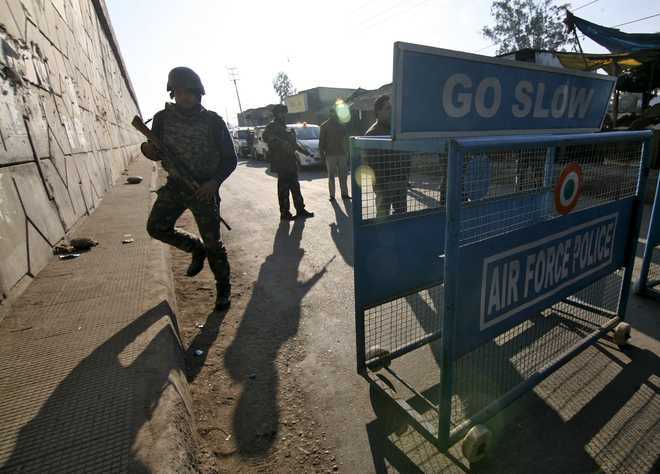
This photo taken on January 2, 2016, shows security personnel stand guard next to a barricade outside the Indian Air Force base at Pathankot in Punjab. Reuters file photo

Jammu, June 21

Some militants are suspected to be hiding in villages near Pathankot and could attack the Indian Air Force base that had been attacked in January, the Parliamentary Standing Committee (PSC) on Home Affairs said on Tuesday.

The committee, which was in Jammu to review the security along India’s international border, had earlier gone to Pathankot.

“After going back from Pathankot, we made our suggestions to the government and said that there can be further attack on Pathankot… We were told by the villagers that some terrorists were still hiding in the villages there,” committee Chairman P Bhattacharya told reporters.

(Follow The Tribune on Facebook and Twitter @thetribunechd)

After the recommendation of the committee, the government has alerted the CRPF, BSF and the army and handed over the security of the airbase to them, he said.

“Do you know that a few days ago, government asked the CRPF, BSF and the Army to guard the air force station because some terrorists are hiding there? How they are hiding there, it is not my business to find out but as we got the information from the villagers, it was very clear to us that they are hiding somewhere. We have informed the Government of India about it,” Bhattacharya said.

When asked to comment on the permission granted by the Indian Government to Pakistan’s joint investigation team to visit the airbase to investigate January’s attack, he said he was not in favour of allowing Pakistani intelligence officers to visit the strategic facility.

“The committee does not support the idea of the Government of India of bringing this intelligence branch of Pakistan here. What for? But for any foreign policy of the Government of India, we are not the proper forum, we cannot take the decision to do this and not to do this”, he said.

A five-member Joint Investigation Team (JIT) from Pakistan had visited India between March 27 and 31 to collect evidence with regard to the attack.

Bhattacharya said the policy guidelines have to be framed by the Indian government.

“The committee conducted intensive tours of Indo-Bangla border and India-Pakistan border and now we are heading towards Srinagar. We went to Pathankot which is the most vulnerable area”, he said.

The committee said it was satisfied with the measures being taken by the BSF to check infiltration, but advocated providing fully modern equipment to the force.

“As of now, they have explained to us the way they are trying to prevent infiltration. You cannot say what is happening today or tomorrow but up till now, it is all right,” Bhattacharya said.

Replying to a question regarding Pakistan violating international norms on the IB by constructing concrete bunkers, Bhattacharya said India should take up the matter very seriously with Pakistan.

“As I understand from the government of India’s stand, they have taken a strong stand on this issue,” he said.

He added that the BSF jawans guarding the international border in Jammu and other parts of the country need the most modern amenities and equipment.

Referring to the problems faced by troops at the border, Bhattacharya said the committee will submit its recommendations to the ministry of home affairs and the ministry of foreign affairs, but refused to give details. — PTI

India always tried to maintain ‘hegemony’ in South Asia: Pak

India always tried to maintain ‘hegemony’ in South Asia: Pak
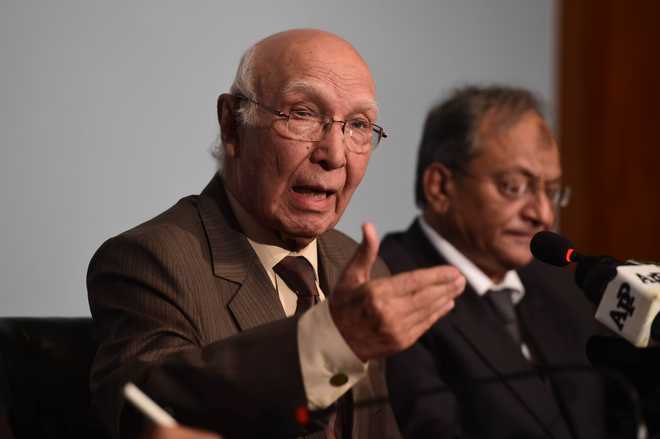
Pakistan Prime Minister’s Adviser on Foreign Affairs Sartaj Aziz. AFP file photo

Islamabad, June 21

India always tried to maintain its “hegemony” in the South Asia region and Pakistan has rejected this while “effectively” protecting its interests, Prime Minister’s Adviser on Foreign Affairs Sartaj Aziz has claimed.Answering a question about the Indo-Pak ties in an interview to Samaa TV, Aziz said India has always tried to maintain its hegemony in the South Asia region.(Follow The Tribune on Facebook and Twitter @thetribunechd)“Pakistan rejected this (Indian) hegemony and has effectively protected its interests and its stance over Kashmir, nuclear deterrence and conventional balance,” Aziz was quoted as saying.He maintained that “protecting Pakistan’s sovereignty and vital interests is a great achievement as a nation”.Talking about the Afghan refugees problem, Aziz said it became a security issue for Pakistan as refugee camps have become “safe havens for terrorists” due to unregulated movement.“We have re-established our writ over FATA (tribal areas) but if the Afghan border remains unregulated, our tribal areas can’t stay safe,” he said.Calling for repatriation of Afghan refugees, Aziz said the repatriation would be a gradual movement and Pakistan would need a plan of action for the process.He said Pakistan is paying for the policies it adopted during the Russian invasion of Afghanistan which resulted in five million refugees coming to Pakistan with “drugs, guns bringing instability”.Aziz claimed that when the current government came to power, it decided to pursue the policy of non-interference which meant Pakistan would not fight someone else’s wars. PTI


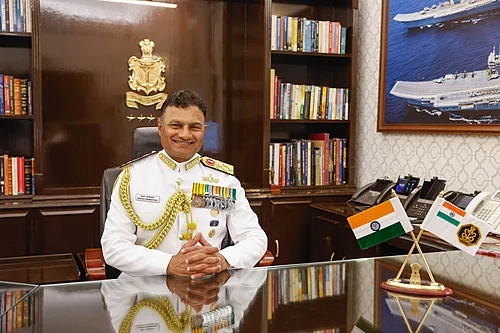
Palwal’s Admiral Lanba takes over as Navy Chief

Palwal’s Admiral Lanba
takes over as Navy Chief
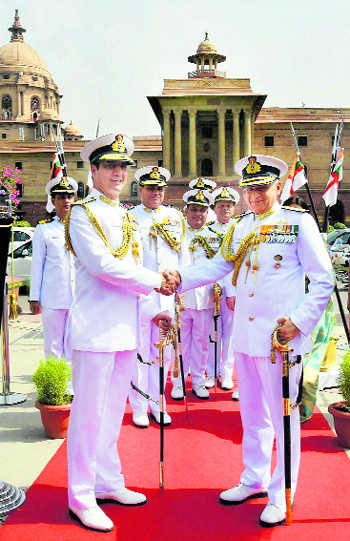
Admiral Sunil Lanba (R), hailing from Palwal in Haryana, on Tuesday took charge as Navy Chief. Succeeding Admiral Robin Dhowan, he will have a full three-year tenure till May 31, 2019, becoming the 23rd Navy Chief. PTI

Admiral Sunil Lanba (R), hailing from Palwal in Haryana, on Tuesday took charge as Navy Chief. Succeeding Admiral Robin Dhowan, he will have a full three-year tenure till May 31, 2019, becoming the 23rd Navy Chief. Prior to this appointment, he was heading the Mumbai-based Western Naval Command. A navigation and direction expert, Admiral Lanba has four decades of experience in both Eastern and Western Fleets. A former chief of the National Defence College, he has provided impetus to skill development, synergising combat operations, coastal security and infra development along the Western seaboard. 


3 women fighter pilots to ride on wings of history tomorrow

3 women fighter pilots to ride on wings of history tomorrow
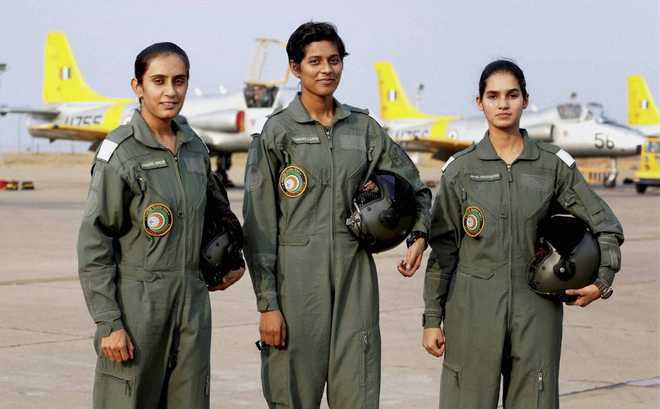
(From left) Mohana Singh, Bhawana Kanth and Avani Chaturvedi. PTI

Raj Sadosh

Our Correspondent

Abohar, June 16

Flight Cadets Bhawana Kanth of Darbhanga in Bihar, Avani Chaturvedi of Madhya Pradesh and Mohana Singh of Rajasthan, undergoing training for commissioning in the Fighter Stream of the IAF flying branch, will create history as they pass out of the Air Force Academy in Hyderabad on June 18. The fiesty women comprise the first batch of women flight cadets.Mohana Singh, who studied at the Global Institute of Management and Emerging Technologies (GIMET), Amritsar, belongs to Jhunjhunu in Rajasthan. Her father is in the Air Force and mother is a teacher. Mohana said as a Flt Gunner in the Aviation Research Centre, her grandfather would go to different places on various missions. She wanted to live the same life. Mohana’s aim is to be a part of future combat missions.“Night flying was exhilarating. I remember the small puffs of crackers bursting 1,000 feet below on my first take-off. During my first sector solo sortie at night, blinding lightning left me frightened. As I descended, I encountered clouds. I faced difficulty in discerning between the stars in the dark sky above and the small clusters of light on the dark ground beneath. “I was unable to keep a connect between the instruments and the visual indications of the aircraft altitude. I recalled what my Instructor had taught me: ‘No unnecessary head movement, switch over to instruments, trust your Instruments.’ I disregarded the visual indications and continued the descent, relying totally on the instruments,” she said. Cadet Bhawana did BE (Medical Electronics) from BMS College of Engineering, Bengaluru. It was her dream to “fly like a free bird”. “I want to be a good fighter pilot and make my country and parents proud,” she said. Cadet Avani Chaturvedi, who has done BTech (Computer Science) from Banasthali University, Jaipur, had a few hours of flying experience in the flying club of her college. This motivated her to join the IAF.  “I want to fly the best fighter aircraft and learn more and more each day,” she said.

clip

clip

clip