Sanjha Morcha

What’s New

Click the heading to open detailed news

Current Events :

web counter

Print Media Reproduced Defence Related News

ITBP seeks more men to guard China border

SHIMLA: At the time when China is gradually building up it’s infrastructure along the Indian border, Indo-Tibetan Border Police (ITBP) has sought more sentinels to guard it’s borders in tribal Lahual and Spiti along with Kinnaur districts of Himachal.

The state shares around 190 kilometres of its boundary with China of which, 80 kilometers is in Kinnaur and 110 in Lahaul and Spiti. The borders areas have usually been peaceful but lately, China has been expanding its infrastructure along the borders of Himachal.

ITBP, which mans the frontiers along China, has now demanded more posts for guarding the porous borders in Lahaul and Spiti district. “We have sent our proposal to the government. Lets us see how things shape up,” an ITBP official told Hindustan Times, requesting anonymity. “There are nearly 20 ITBP posts along the Chinese border,” he added.

What makes matter worst is the fact that there is no fencing along the border. Shipki La is a high mountain pass and border post on the Indo-China border at a height of 18,599 feet above the sea level. It is through this pass, the Sutlej river enters India from Tibet. Shiplki La pass is the main pass through which, the IndoChina trade gets carried out annually. There are many other mountain passes including Lepchala Rangla and Ranisha Dob Rang.

But, between the passes, there are many transit routes which are used by the villagers of bordering Kinnaur and Lahaul and Spiti to cross over to meet their relatives across the border.


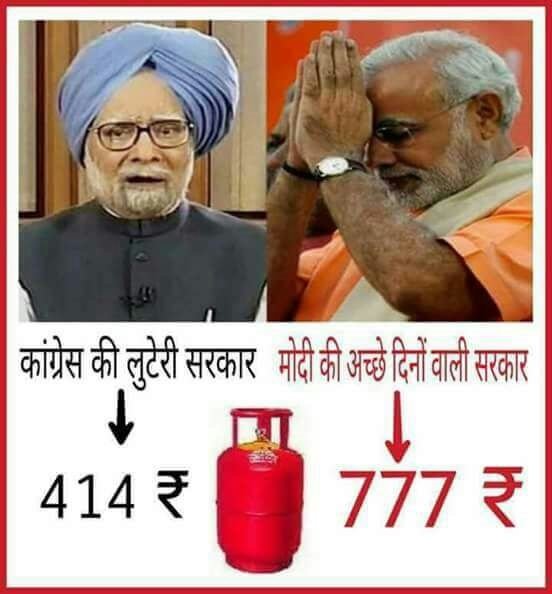
why BJP leaders not holding Morcha against LPG Rates Now

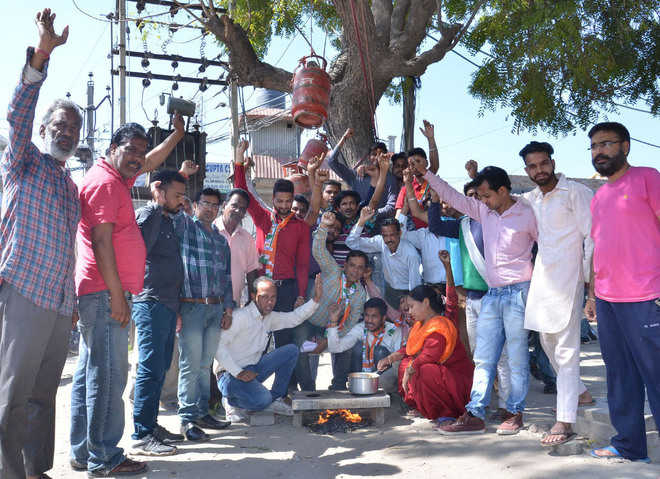
Youth Congress workers protest hike in LPG price

Youth Congress workers protest hike in LPG price
Youth Congress workers protest against the hike in the price of LPG gas cylinders at Partap Nagar in Bathinda on Saturday. A TRIBUNE photograph

Bathinda, March 4

Youth Congress workers headed by former Youth Congress city president Ashu Thakur today staged a protest against the hike in price of LPG cylinder by the Union government at Partap Nagar.The protesters raised slogans against the Narendra Modi-led Union government and demanded a rollback of the decision.Ashu Thakur said people were not over with the problems of demonetisation and the government had given yet another blow.The Modi government has hit at people who can hardly make their both ends meet, he added.He claimed that the double face of the BJP had been exposed as in 2012, BJP leaders were on road raising slogans when the LPG cylinder price was increased to Rs 399 but now the same leaders were proud of the hike to Rs 810. — TNS

IMG-20170304-WA0070


BJP LEADERS MADE HUE AND CRY WHEN LPG RATES WERE JUST HALF THAN NOW ::LISTEN TO THEM .DO BJP DESERVE TO REMAIN IN POWER


Jawan in viral ‘sahayak’ clip dead, Army questions role of website

Jawan in viral ‘sahayak’ clip dead, Army questions role of website
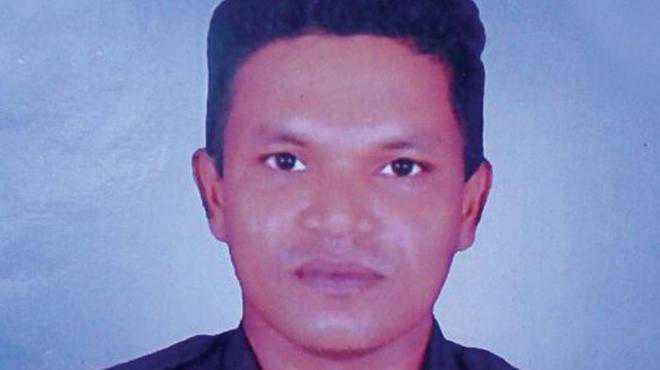
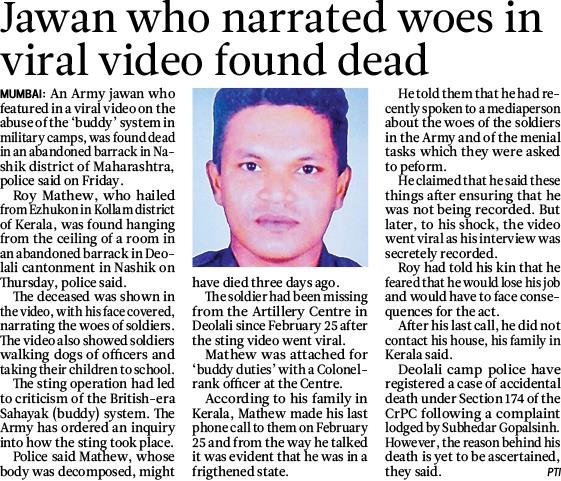
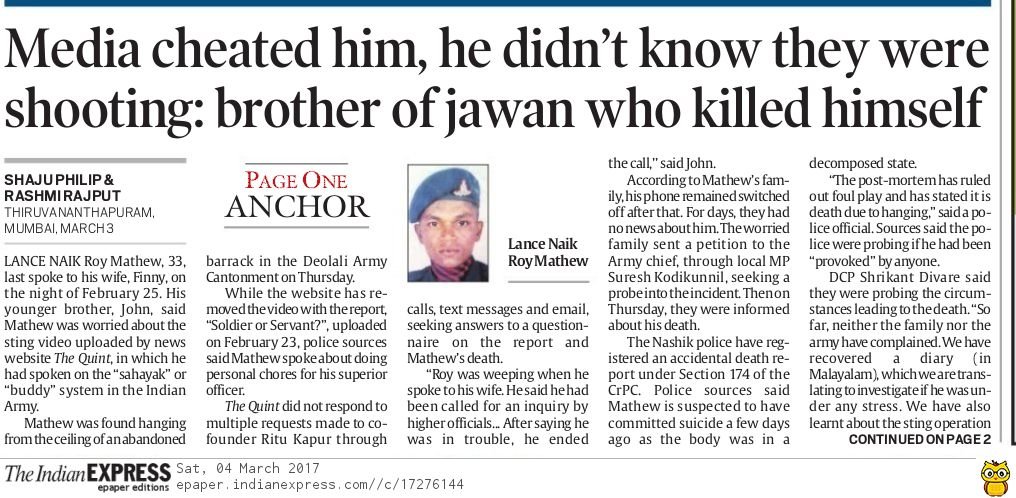
Lance Naik Roy Mathew

New Delhi, March 3

A “sting operation” by a website is being blamed for having triggered a series of events that led to suicide by Lance Naik Roy Mathew, 33.Posted at Devlali, near Nashik, he was found dead yesterday in an abandoned barrack at the military station which is the artillery centre of the Army. He had been missing since February 25 and was being treated as “absent without leave”. (Follow The Tribune on Facebook; and Twitter @thetribunechd)Mathew’s battalion is presently on field firing practice in Rajasthan and he formed the “rear party” — some soldiers staying back at “other designated stations”.A press note said the probe revealed the death “may be a result of the series of events triggered by media personnel managing to videograph the deceased by asking leading questions on his duties as a buddy (‘sahayak’) without his knowledge”. The video has been removed from the website.It was “very likely”, said the ministry, that the “guilt factor of letting down his superiors or conveying false impression” pushed him over the edge. The Army has denied that Mathew was questioned after the video; as the soldier’s face was masked, so he could not be identified. But sources say he did send a one-word SMS to an officer saying “sorry” last Saturday.The soldier’s family approached the police as his phone had been switched off since February 25.  — TNS

64748 eaf8b8e5-0602-41fb-8ab8-06ae8ef73c4a


Her father died in Army Op, 10 days after Kargil

Her father died in Army Op, 10 days after Kargil
Gurmehar stands by her father pic

New Delhi, February 28

Capt Mandeep Singh, father of Gurmehar Kaur, had died in an Army operation on August 6, 1999 — 10 days after the Kargil war that ended on July 26.Capt Mandeep Singh of the 49 Army Air Defence unit was posted at Kupwara in Jammu and Kashmir when the unit fought terrorists and seven of them died. Sources said all those martyred in such operations were treated on a par with battle casualties. Though Kargil war, termed Operation Vijay, had ended after international intervention, some “mopping up” operations were conducted in the areas located east of Kargil. Capt Mandeep Singh had died on the spot in an encounter with terrorists that had commenced at 1.15 am on August 6. — TNS

Won’t be cowed, says Jalandhar girl’ s grandpa

Won’t be cowed, says Jalandhar girl’ s grandpa
Kanwaljeet Singh

Deepkamal Kaur

Tribune News Service

Jalandhar, February 28

Kanwaljeet Singh, grandfather of Gurmehar Kaur who has been facing hate messages and rape threats on the social media, today said he was not intimidated by the threats. “What harm can these trollers do to my granddaughter? They can kill her at the most. So what? We, who have faced the martyrdom of our young son, are bold enough to withstand any eventuality. My son was martyred on August 6, 1999, after killing 26 men on the enemy side,” he told the media here.(Follow The Tribune on Facebook; and Twitter @thetribunechd)He said he stood by his granddaughter’s statement. “I am shocked at the treatment meted out to a martyr’s daughter. There is a campus fight going on. This young girl has something to say on the issue. At least, hear her out patiently. Is this the tribute the country is paying to my son’s martyrdom?”Blaming the BJP for the trolling, he alleged when his son was killed the then BJP government did not even ensure that they were issued ID cards. “Today when my granddaughter is being victimised and branded anti-national, it is again the BJP in power,” Kanwaljeet said.Gurmehar’s paternal uncle Davinder Singh, who teaches English at a Nakodar college, said Gurmehar was mature enough to have said what she wanted to. ” I am a little upset over the discussion on the place, date and time of my brother’s martyrdom. We as a family stand by Gurmehar.”A worried Rajwinder Kaur said she wanted the controversy around her daughter to end. “My daughter’s security is an issue bigger than any other,” she said.“No statements from me, my family or my behalf. I request to be given privacy. Thank you,” Gurmehar tweeted. She later closed her Facebook account.

Now, Yogeshwar mocks Gurmehar

Day after Sehwag, Haryana wrestler joins slugfest on Twitter, Phogat sisters too pitch in

Now, Yogeshwar mocks Gurmehar
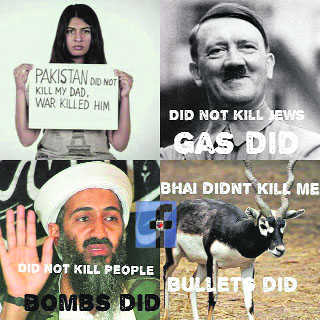
Unsocial war: A picture posted by Yogeshwar Dutt on Twitter in response to Delhi University student Gurmehar Kaur’s message

New Delhi, February 28

Olympic wrestler Yogeshwar Dutt has become the latest celebrity to join the social media slugfest that was triggered by Delhi University student Gurmehar Kaur.Dutt took to Twitter comparing the student, who belongs to Nakodar in Punjab and is daughter of martyr Capt Mandeep Singh, with Adolf Hitler, Osama bin Laden and a black buck in Salman Khan’s alleged poaching case.Former Indian cricketer Virender Sehwag had yesterday appeared on Twitter with a placard post reading: “I didn’t score two triple centuries, my bat did”. (Follow The Tribune on Facebook; and Twitter @thetribunechd)It all started in the aftermath of Ramjas College violence in Delhi when Gurmehar tweeted her picture holding a placard that read: “I am a student of DU. I am not afraid of ABVP. I am not alone. Every student of India is with me.” Sehwag’s tweet yesterday, however, came in response to another post by Gurmehar a few months ago amid India-Pakistan tension when she wrote: “Pakistan did not kill my father, but war did.”Also to join the fight on social media were famous wrestler sisters from Haryana, Babita and Geeta Phogat. Babita condemned alleged rape threats to Gurmehar, but refused to stand by her saying she supposedly “did not speak up for her country”. “When I saw Gurmehar’s video, I tweeted on one thing that I found wrong. She said her father was killed by war, and not Pakistan. I found it wrong as it is an insult to our nation and bravehearts. How can her father’s soul rest in peace if she speaks against the nation?” said Babita.Echoing similar views, Geeta said it was obvious the countrymen would “not spare her if she spoke against India”. “If someone goes against the nation, he or she won’t be spared irrespective of gender,” she said. — Agencies

Tharoor takes on Viru

  • Congress MP Shashi Tharoor on Tuesday voiced regret over cricketer Virender Sehwag’s move to “trivialise a serious issue like war”. I am disappointed that my cricket hero Virender Sehwag chose to enter the wholly politicised debate over Gurmehar Kaur’s words on Twitter.

DSGMC out in support

  • Delhi Sikh Gurdwara Management Committee chief Manjit Singh GK has announced support for Gurmehar Kaur after she received “rape threats”. In a message sent to Gurmehar and her family, GK assured them of his support “under all circumstances.” “Threats to daughter of a martyr can never stand for nationalism.”

It’s moral bankruptcy: BKU

Chandigarh, February 28

Bharti Kisan Union president Balbir Singh Rajewal said his organisation was with Gurmehar Kaur and that the BJP and its affiliates had exhibited moral bankruptcy by targeting a young girl whose father had sacrificed his life while defending the country.He said film actor Randeep Hooda should tender an unconditional apology to Gurmehar or the BKU would oppose the screening of his films in Punjab. Former Deputy Speaker Bir Devinder Singh said Gurmehar Kaur had taken a brave step. “Students in universities and collages are not captive slaves of the ABVP”, he said. “Gurmehar Kaur, daughter of a Kargil hero, deserves all our support in her bold endeavour to strengthen free voice in secular India,” he added. — TNS

Ramjas issue: DU students, teachers take out protest march

Ramjas issue: DU students, teachers take out protest march
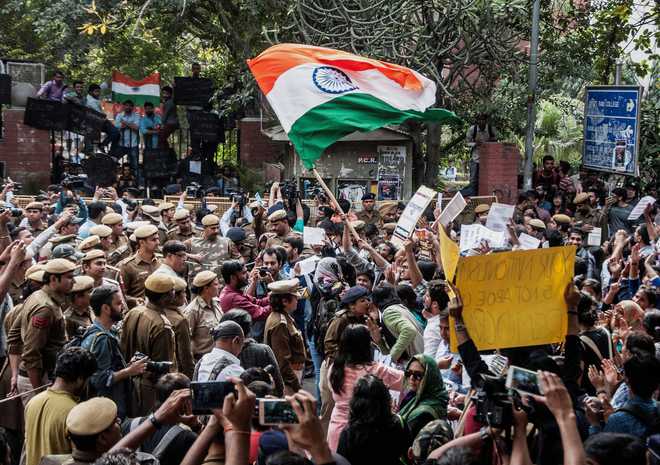
Students and teachers of Delhi University, JNU and Jamia during their protest march against ABVP at North Campus in New Delhi on Tuesday. PTI

New Delhi, February 28Angered by what they say is “stifling of voices,” hundreds of university students and teachers took out a protest march on Tuesday aimed at the ABVP as a controversy over free speech in the country gathered pace.

(Follow The Tribune on Facebook; and Twitter @thetribunechd)

The large-scale participation of Delhi University students, said to be largest in recent times, was remarkable given that the institution is not known for volatile students activism like the Jawaharlal Nehru University, whose students also added their voice at the march besides many eminent academicians and scholars of other colleges.”The protest is essentially against stifling of voices on campuses across the country, including the Delhi University. We want to reclaim the space to discuss and dissent,” said All India Students Association leader in DU, Kanwalpreet Kaur.ABVP, which is also backed by the RSS, faced criticism after it was involved in violence at Ramjas college last week.Several students and teachers of the college were beaten, allegedly by ABVP members, for inviting JNU students Umar Khalid and Shela Rashid to a seminar on free speech which was eventually cancelled.Twenty-year-old DU student Gurmehar Kaur became the centre of the controversy after she launched a social media campaign against ABVP, which immediately drew threats of rape, allegedly by ABVP members, and ridicule by a Union minister, a BJP MP and former cricketer Virender Sehwag.Today, as the march made its way through the North Campus of Delhi University, with hundreds of students of JNU, DU and Jamia, she tweeted, “All my friends. Our lovely faculty! how I wish I was there.”JNU student Kanhaiya Kumar, who is out on bail in a sedition case, also joined the anti-ABVP protest march at DU.”You (ABVP) can’t enforce one particular ideology on anyone and there should be room for discussion,” he said while addressing the protesters.Slogans of ‘Azaadi’ and ‘cheeky ABVP why so creepy’Cries for ‘azaadi’ and the ‘cheeky ABVP why so creepy’ reverberated the DU campus during the anti-ABVP march.Students, teachers and non-teaching staff from various universities including JNU, Jamia and Ambedkar University, participated in the protest march.Massive police deployment was in place at the North Campus.Two AISA members were allegedly attacked by ABVP supporters following which an FIR has been registered by Delhi police.The protest march which comes a day after ABVP’s ‘Tiranga March’ was also joined by few politicians, including Left leaders Sitaram Yechury and D Raja, Swaraj Abhiyan’s Yogendra Yadav and AAP’s Pankaj Pushkar, who discarded the ABVP’s “idea of violence for nationalism”.Fearing rerun of last-week violence, massive police deployment was seen on the varsity’s North Campus as protesters continued with their march till they reached the Vivekananda statue in the Art’s faculty– the traditional protest site of ABVP.Buoyed by the turnout at today’s protest, DU students have decided to take out another march from Mandi House to Parliament on March 4 in protest against ABVP.Addressing the protesters, Swaraj Abhiyan leader Yogendra Yadav said, “We will learn our nationalism from Bhagat Singh and not from them whose forefathers never hoisted the national flag at their headquarters. Neither will we tolerate nor will we engage in violence. The protest is not about Left or Right but wrong and right”.Yadav was apparently referring to RSS which till recently did not hoist the tricolour at their Nagpur headquarters.CPI leader Sitaram Yechury said, “They cannot win this with their intellectual skill and want to replace it with violence. Humara nationalism is “we are Indian’ and not ‘who is a Hindu’?””This is a collective fight to defend our constitutional rights. We will be raising the issue of DU in Parliament,” CPI (M) leader D Raja said.Later in the evening, the Congress-affiliated National Students Union of India (NSUI) took out a “mashal rally” against “ABVP’s attempts to curb students’ freedom of expression and misusing ‘nationalism’ to further their agenda”.The NSUI, at the same time, condemned the “violent ways” of the Left in handling of the situation. PTI


Rare night ambush leaves 3 jawans dead in Shopian Lt Col, Maj among 5 hurt | Army Chief rushes to Valley

Majid Jahangir

Tribune News Service

Srinagar, February 23

Three Army men were killed and five others, including two officers, wounded in a militant attack in south Kashmir’s Shopian district last night. A woman was also killed in the exchange of gunfire.The attack prompted Army Chief General Bipin Rawat to rush to Srinagar to assess the situation. In less than two weeks, nine Army men, including an officer, have been killed and 15 injured.

The high casualty level in the Army is being seen with concern by the security establishment.In the latest attack, personnel of 44 Rashtriya Rifles  were ambushed at Mulu Chitragam, 60 km from here, while they were returning after a search operation at Kungnoo village. Incidents of militants laying a night ambush are rare. This incident clearly indicates that the militants are now adopting offensive strategies to counter anti-insurgency operations by the Army and other security agencies.

Sources said the militants suddenly appeared from narrow alleys and targeted Army vehicles with automatic weapons. An Army vehicle came to a halt after a bullet hit its driver. The militants then fired volleys of bullets on the vehicle, injuring eight soldiers, including a Lt Colonel and a Major. Three soldiers, including one from south Kashmir, succumbed to their injuries at the Army’s 92 base hospital in Badamibagh, Srinagar.The troops travelling in other vehicles fired at the militants, but they managed to escape taking advantage of darkness.

“The condition of the injured Major is stated to be critical,” an official said.A woman was also killed in the crossfire. “She was hit by a stray bullet inside her house,” he said. Hizbul Mujahideen has claimed responsibility for the attack.A police officer said they were trying to ascertain whether the forces were given false information about militants’ presence at Kungnoo. 

Terror trail in Valley

  • Feb 12: Two soldiers, four militants and a civilian killed in a gunfight in south Kashmir’s Kulgam district, igniting clashes in the area that left another civilian dead and over 20 injured
  • Feb 14: Three soldiers and a Pak commander of LeT killed and 12, including two officers, wounded in Bandipore
  • Feb 14: Army Major and three Pakistani Lashkar militants killed in Handwara gunfight
  • Feb 23: Three Army jawans killed and five injured in a militant attack in south Kashmir’s Shopian district

Grenade-lobbing drones, ‘dogo robots’ in NSG kitty 3D fly-on-the-wall radar among weaponry added

New Delhi, February 19

A grenade-dropping drone, 3D fly-on-the-wall radar to see through a 20-metre-thick wall and a ‘dogo robot’ armed with a remote pistol are some of the latest weaponry provided to the NSG to undertake lethal counter-terror operations with a punch of stealth.The federal contingency force, drawing from its experiences in combating terror attacks and hostage situations in closed spaces, has inducted some of the smartest gadgets and arms used by Special Forces and SWAT teams the world over.A senior official said the ‘black cats’ force has recently inducted the German PSG1 A1, which carries an enhanced number of 20 rounds to engage and pin down targets for a longer time and is complemented with a longer range and extreme accuracy. The 7.2-kg rifle with telescopic sight is an upgrade of the PSG1 sniper variant used by the marksmen of the National Security Guard till now.While the usage of drones or Unmanned Aerial Vehicles (UAVs) by security forces is common, the elite force has armed its crack teams with an indigenously-made ‘munition launcher system’ that can carry a pair of 38 mm grenades to stealthily drop in enemy territory with the aide and precision of an in-built spy camera.The most lethal and clever gadget that is now adding to the strike potential of the NSG is the Israel-made ‘dogo robot’ that drags its 11.5-kg weight towards a holed-up terrorist and informs the commando teams about his exact position and arms and ammunition holding via a camera feed. It also sports a two-way encrypted audio system that allows the operator to listen and intervene in hostage situations without the flat device itself getting noticed.The NSG, officials said, has procured a few pieces of the ‘dogo robot’ at a cost of Rs 76 lakh each, and it is named so taking inspiration from the capabilities of the Argentine Mastiff.A 3D ‘through wall radar’, upgraded from the 2D variant which the NSG is understood to have used during last year’s attack on the Pathankot IAF base, will give the commandos pictures from across a 20-metre thick wall with a 80 degree field of view.The 14-kg radar sports a price tag of over Rs 1 crore and can be placed on the outside of a closed room like a fly-on-the-wall, an official said. — PTI

Munition launcher

  • Indigenously made ‘munition launcher system’ can carry a pair of 38 mm grenades to stealthily drop in enemy territory using in-built spy camera. The drone has four rotors and is handled remotely by an operator

Death on wheels

  • Israel-made 11.5-kg ‘dogo robot’ can move towards a holed-up terrorist and send his exact position and weaponry via camera feed. A small Glock pistol on board can shoot the target using a joystick

General Rawat, hold your fire. All Kashmiri youth are not aides of jihadis

General Bipin Rawat

Let’s start with a disclosure. I’m sympathetic to the fauj and to all men in fatigues who serve in conflict zones. It is far from easy to work in Kashmir where you are alienated from your own people; where you are seen as an oppressor and are constantly told that you’re an ‘Indian dog’.

But even for me – and I have fauji blood in my veins – the words used by the army chief jarred. They should, actually, make most of us cringe. General Bipin Rawat, while speaking to the media after saluting the dead bodies of his own men, said that stone pelters in Kashmir would be treated as ‘aides of the jihadis.’ He said a lot more: That those who try to disrupt terror operations in the state would be treated as ‘over ground workers of terrorists’ and would be fired on.

It is understandable that no General likes to see his men in coffins and he may, therefore, have been overwrought. It is also completely understandable that as the leader of one of the largest armies, he was trying to motivate his men, who have taken two quick knocks in the Valley in the past week.

Read: Will use weapons on locals interfering in anti-terror ops: Army chief Rawat

What is difficult to stomach, however, is the fact that Rawat – as the senior- most army officer – did not think of what impact his words would have on the people of Kashmir, particularly after last year’s uprising that followed the killing of Hizbul Mujahideen militant commander, Burhan Wani.

The stone pelting youth brought the Valley to a complete standstill. Boys aged nine to 15 took over the streets and were unafraid of walking up to armed garrisons that dot the landscape of a Valley.

The Valley limped back to a semblance of tenuous normalcy after an intense phase of stone pelting in the summer of 2016 but the signs of another ‘hot’ summer are visible even before the snows have melted.

Neither Rawat nor anyone from his organisation have tried to soften or even clarify the tough words that had almost the same lethal force as the pellet guns.

The General, in so many ways, articulated a policy that was being practised in the Valley, particularly during the summer of 2016, when hundreds were maimed, blinded and killed. Were they all ‘aides of the jihadis’ and ‘overground workers of terrorists’?

Read: Rijiju backs Army Chief’s comment on tough action against hostile locals in J-K

Rawat is partially right when he says that locals sometimes prevent the army from conducting their operations. There are several instances of a large group of Kashmiri women shouting slogans while the troops are out on operations. Is Rawat now going to shoot at women who dare to vent their frustration because they are tired of living wretched lives in a militarised zone?

The army has been a part of the protracted Kashmir problem for over two decades. As the head of an organisation that has lost ranks and officers at the hands of terrorists – and sometimes because jawans have turned their guns on their own colleagues – Rawat should be asking some basic questions.

Rawat, who superseded two competent officers, to don the mantle of the chief mainly because of his experience in dealing with counter-insurgency operations (so we were told) should be asking these questions in particular.

Why are the youth so enraged?

Why are they unafraid of dying?

Why are the women unafraid?

Why is the Valley back in a phase where local Kashmiri militants outnumber the foreign terrorists?

Why is an entire population alienated?

The answers are obvious.

Rawat, for the sake of his own men – who don’t deserve to be in coffins – should be gently nudging the government towards a political resolution of the problem. There is already a report, painstakingly put together by interlocutors, available with the home ministry.

The unfortunate bit is that Rawat sounds like the government in Delhi. Rajnath Singh promised to review the use of the pellet guns but stopped short of banning them and now his deputy, Kiren Rijiju has endorsed the General’s stance saying, “There should be action against the stone pelters and whoever works against national interest as national interest is supreme.”

The national interest would be better served in engaging with the Valley’s youth. For the sake of the Kashmiris, our nation and of course, our soldiers, I fervently hope the General does not carry through with the threat of opening fire.

The author tweets as @shammybaweja


‘My two-year-old daughter gave her dad to the nation’

ROHTAK/CHANDIGARH:Major Satish Dahiya of the 30 Rashtriya Rifles was cremated with full state honour on Wednesday at his native village Banihari in Mahendragarh district. He was among the four soldiers killed in two separate encounters in Jammu and Kashmir on Tuesday night.

Major Satish Dahiya’s wife Sujata being consoled by her family members at Banihari in Mahendragarh district and (below) the army officer with his daughter Priyasha. HT PHOTOS

A pall of gloom descended in his village when the family heard news of his death on Tuesday night.

“Meri do saal ki beti ne uska pita de diya desh ko..bas isse zada aur nai hai dene ko..(My twoyear-old daughter has given her father in nation’s service…we don’t have anything left to give),” said his wife Sujata.

She had received her Valentine’s Day gift sent by Major Dahiya via courier after the news of his death on February 14. “February 17 was our wedding anniversary. He had sent me a card, cake and flowers. He wrote I love you Pooja (my another name), you are my inspiration. Since morning he was telling me that I will receive a surprise..I did after receiving call that he was no more.”

Major Dahiya was the only son of his parents and was commissioned in 2009.

The Army said he was a gallantry award winner and had been part of several operations. He laid down his life while leading an operation in Handwara, Jammu and Kashmir, wherein three militants were also gunned down.

The mortal remains of Major Dahiya reached Narnaul at around 6 pm on Wednesday in an army chopper.

He was then taken to his native village and was cremated with full state honours.

Major Dahiya completed his schooling from Uttar Pradesh and pursued higher studies from Rajasthan University. He is survived by his parents, wife Sujata and a two-year-old daughter Priyasha.

His uncle Bhoop Singh, also a retired sepoy, said he loved playing with his daughter and had joined duty on January 6, after completing a 20-day holiday with his family.

KHATTAR, ABHIMANYU MOURN MAJ OR ’S DEATH

Haryana chief minister Manohar Lal Khattar on Wednesday expressed grief over the demise of Major Satish Dahiya.

He also mourned the death of three other soldiers who were killed in another encounter at Hajin in Bandipora district, the same day.

In a condolence message Khattar said the brave soldiers were always ready to sacrifice their lives to safeguard the nation’s honour. Paying tributes to Major Dahiya, Haryana finance minister Captain Abhimanyu tweeted: “Salute to Major Satish Dahiya, who made supreme sacrifice for the motherland at Handwara, JK.”

‘Ravi planned to come home on Feb 18 for daughter’s admission’

JAMMU : Amid a pall of gloom, a swarm of people including family members, relatives and friends bid adieu to rifleman Ravi Kumar at his native village, Tabela Meen Sarkar in Sarore area of Samba district, on Wednesday.

Body of soldier Ravi Kumar (inset) being taken for cremation in Samba district of Jammu and Kashmir on Wednesday. HT PHOTO

Ravi Kumar, 33, was among the three soldiers who were killed in an encounter with terrorists at Hajin in Bandipora district of Kashmir on Tuesday.

The same day, in another encounter in Handwara, an army major was killed, taking the toll of slain soldiers in a single day to four.

Kumar is survived by his wife Esha Devi, his three-year-old daughter Rusani Ratta, father Rattan Lal and younger brother Kavi Kumar, an employee in the judicial services.

Rattan Lal reportedly told media that “Modi sarkar ko kuch kade kadam uthane chahiye, nahi to humare jawan aise hi jate rahenge. Har doosre ghar mein matam pasra hua hai (Modi government needs to take some strict steps, otherwise we will keep losing our soldiers. Death seems to be stalking every other house).”

He also asked New Delhi to take some “tough decisions” against Pakistan. “I am proud of my son because he has sacrificed his life for the nation but the government needs to take some affective steps,” he added.

Lal recalled how, in 2003, Ravi Kumar had joined the army without informing him.

“He told me that he wanted to serve the nation.”

“Ravi was planning on coming home on February 18 for admission of his daughter Rusani and to attend a family function,” a local resident told Hindustan Times.

Ravi Kumar was posted in 31 Rashtriya Rifles a year ago


MES staff under EPFO scanner

Rachna Khaira

Tribune News Service

Jalandhar, February 13

The Employees and Provident Fund Office (EPFO) has begun to scrutinise the employee records of contractors hired by the Military Engineering Services (MES) and also by the Ex-servicemen Contributory Health fund (ECHS).According to Dheeraj Gupta, Regional Provident Fund Commissioner, the Central Provident Fund Commissioner had taken up the matter with the Ministry of Defence (MoD) to issue necessary directions to the offices concerned of the MES and ECHS to comply under the EPF and MF Act 1952. In this regard, the MoD asked the ECHS polyclinics concerned to register online through their respective station headquarters.“It may be possible that the regional centres may not have the PAN cards for online registrations. In such cases, their registration may be completed at the respective regional EPF portal registration and secure the compliance,” said Gupta. He further added that the regional office has already begun the enrolment campaign 2017.Applicability of EPF to ECHS contractual staffThe EPF is applicable to all staff members of the ECHS who are drawing contractual fees equal or less than Rs 15,000.The station headquarters are required to liaison with the regional PF officials for online registrations. Online registrations can only be done at the PF office. There is no requirement of PAN for government establishments, including the station headquarter. Online registrations can be done with the TAN number also.In case the staff is hired through a contractual agency, all labour laws are required to be followed by the same service provider. It is for the station headquarters to ensure that the staff receives contractual fees as authorised by the government and the PF contribution is deposited accordingly.


A KINGDOM AND ITS SENAPATI by LT GENERAL N.S BRAR

NEW DELHI: End 2016 the government broke convention and went three down on the seniority ladder to nominate the next Chief of the Army Staff. It is the prerogative of the government to select and appoint a service chief, however, no prerogative or right can be exercised if divorced from application of mind and sound reasoning.

Presumably, it had good reasons to do so and hopefully it weighed up the long term hazards of doing so. It predictably generated much debate and not the least in political circles. In a country where everything from garbage to governance is mired in politics this is unexceptional. Nevertheless, the hazards need to be highlighted.

Much as it appears hide bound and even comical to the ordinary civilian, rank and seniority are a functional necessity and the backbone of the military’s culture and ethos worldwide. Supersession, even at the very lowest levels of the Army – in Army parlance Number Katna – is not taken lightly or easily accepted unless there are convincing reasons. More often than not extraneous reasons are cited and much rancour generated.

Given the pyramidcal rank structure, which becomes an Eiffel Tower at the senior levels, less than two percent of a batch makes it to the rank of Lt General after intense scrutiny, assessment and competitive professional qualifications over more than three decades. Competence at that level need no longer be in question. The other issue is one of ‘suitability’.

We are unique amongst all major democracies where civilian control over the military has come about as bureaucratic control, instead of control by the elected political executive.

In nominating the next Army Chief the political leadership appears to have exercised such control which is to be welcomed. Having done so the political leadership has to take ownership and continue to exercise such control on associated issues and other important matters such as force structuring, higher defence control, modernisation, personnel policies, pay commissions and so on. Appointing a service chief cannot be a onetime ownership.

The political leadership has more often than not chosen to ignore the service chief’s recommendations while accepting the bureaucratic inputs. Appointing a service chief and expecting him to deliver better than another would be meaningless unless his professional views are respected.

Given the extremely limited if not nonexistent interaction between the senior military leadership and the political leaders, compounded by abysmally low understanding of matters military, for the political class to make an informed choice about the professional suitability of senior military leaders is again very unlikely.

In the present case it would not be wrong to assume that the decision was driven by bureaucratic inputs and not on professional military considerations. Military leadership is built upon credibility and mutual trust. Any perception amongst the rank and file that the senior leadership has secured its appointment by unsoldierly means cannot but destroy faith in the leadership with disastrous consequences. Any deep selection and consequent supersession must therefore be exercised with extreme caution.

The prevailing view and sentiment amongst the middle and lower rung of the officer cadre and the ranks is that the senior leadership has been unable or incapable of addressing their concerns and safeguard the service interests. It is seen as not doing enough about organisational structures, infrastructure, critical personal equipment like bullet proof jackets and mundane items like PT shoes, pay commission anomalies, OROP and degradation of rank equivalence and status.

This dent in mutual confidence will only be enlarged if selection to senior ranks is seen as another compromise by the services. Having nominated the next chief based on his ‘suitability’ would the political leadership help build his credibility by addressing these issue? Unlikely. The consequence would be the reinforcement of the perception that the senior leadership is unable to safeguard the service interests and consequently further dent the mutual confidence and trust between the leader and the led.

Much political mileage was sought to be derived from the cross LOC action post the Uri attack and the cross border action into Myanmar is again sought to be highlighted. Much as the ownership of the strike was played up for public consumption, accepting responsibility for the inevitable casualties thereafter was hard to come by. It was conveniently passed off as laxity, slip ups in adhering to standard operating procedures and so on. In military terms these were small actions carried out in the past and will happen in the future. Such actions are at best creditworthy at the junior execution level.

Historically in the past, supersession in appointing service chiefs was politically and personality driven. It can only be hoped that this time it is different. The consensus in the Army till today is that when Lt Gens Thorat, Bhagat and Sinha were superseded the Army was the loser. Much was expected of them by the Army. All three were known to be highly competent and strong personalities and interestingly all three proved their worth post retirement in areas and appointments in which they would normally be seen as ‘unsuitable’. Combat experience or relative competence was cited then; the same arguments are advanced today. Hopefully, in the long term interest of the Army and the country they are validated.

Promotion from Maj Gen to Lt Gen is the last rank when formal selection based on comparative merit by a duly constituted selection board is carried out. Those empanelled are thereafter promoted by seniority as and when vacancies arise. Appointment as Corps Commander requires three years residual service and the criteria for elevation to Army Commander is two years residual service when a vacancy arises.

Consequently very competent and highly rated Lt Gens do not make it to Army Commander. Similarly elevation to Army Chief is again decided by two years residual service when that vacancy arises. It has often been debated and settled that much as it would be desirable to base such senior promotions on merit based selection, objectively drawing up a comparative inter se merit at that stage is a difficult proposition as also the hazards of parochialism, lobbying, political patronage and so on are worse than the system of seniority and residual service.

In our milieu such hazards are very much present. As appointment of Corps Commanders and Army Commanders is based on residual service and seniority, extending the concept of selection by suitability may appear logical and tempting. The consequences are not hard to imagine – every senior commander from Division onwards working towards his ‘suitability’ rather than devoting his energies towards his command functions. What needs to be addressed in the present system is the extremely short tenures of General Officers. It would need major restructuring of personnel management policies to address this issue.

The regimental system is a great strength of the Indian Army. Pride in the arm and regiment contributes immensely towards its professional excellence and fighting spirit. Unfortunately, it is carried into the functioning at senior levels generating much resentment against inter se advantages derived purely on regimental affiliations. This issue has been echoed in the present controversy also. Without delving into its veracity in the present case, it needs to be said that the issue needs to be addressed.

Matters military require a deep understanding of not only the national security imperatives and the role of the military therein but also the working culture, ethos, values, customs and traditions of the military. Service chiefs embody the pride, prestige, hopes and aspirations of the service. Anything to do with them must be done with due care and consideration.

When Akbar appointed Man Singh of Jaipur as his Senapati the object was to secure an alliance with the most powerful Rajput state, prevent a confederation of Rajputs against the Mughals and ensure safety of the vital trade route from Agra to Surat. Such imperial empire building considerations do not exist today.
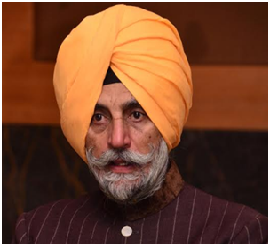
LT GENERAL N.S BRAR
(Lt Gen NS Brar (Retd) is former Deputy Chief, Integrated Defence Staff)