




















Sanjha Morcha

What’s New

Click the heading to open detailed news

Current Events :

web counter

Print Media Reproduced Defence Related News

As Voltaire said, ‘The (Pak) army has a nation’

The promotion of Gen Asim Munir to the rank of Field Marshal is very clearly an indication of the consolidation of the military’s position in Pakistan.

article_Author
TCA Raghavan

THERE is something about epigrams, coined for different contexts and geographies, and the explanatory and analytical capacity they show with regard to Pakistan. The elevation of General Asim Munir to Field Marshal status readily evokes French political philosopher Voltaire, who, in describing central Europe in the 18th century, had noted: “Some states have an army, the Prussian army has a state.” For those who study Pakistan, this seems unusually apposite to describe a Prussian-type entity from the mid-20th century South Asia.

Similarly, British historian AJP Taylor, characterising Germany during the 1848 “revolutions” in Europe, had noted of that conjuncture: “German history reached its turning point and failed to turn.” Again, this seems a tailor-made analysis of our western neighbour and the numerous times that it has continued on a particular path, notwithstanding all expectations that it was on the threshold of change. Thus, quite regardless of its breakup in 1971 or numerous other traumas such as the assassination of Benazir Bhutto in 2007, Pakistan’s tryst with the military and with terrorism has continued undeterred.

Natwar Singh, former High Commissioner to Pakistan, former Foreign Minister and a gifted litterateur and writer, also realised the value of epigrams to capture that frustrating and enigmatic quality of India-Pakistan relations. “The future lies in the past,” he once cryptically noted about the inner dynamic of India-Pakistan relations.

Has the recently ended 17-day crisis in April-May 2025 caused by a most egregious terrorist attack on innocent tourists altered that dynamic? Some novel elements do stand out in the otherwise sterile and repetitive world of India-Pakistan relations. The announcement regarding keeping the Indus Waters Treaty in abeyance fans a key Pakistani anxiety. Its message is equally clear — providing sanctuary and support to terrorist groups means that no aspect of the India-Pakistan interface will be left untouched.

For most, perhaps all, Pakistanis, this announcement is the ultimate act of bad faith and the conviction that its lower riparian rights are being trampled upon. To many Indians, this was a long overdue measure and its delayed invocation only underlines the latitude Pakistan has enjoyed to provoke and harm India.

The May 7 strikes on Muridke, Bahawalpur and other locations also represent a change. In the past, as in the case of the 2016 surgical strikes or the 2019 Balakot air strike, the targets were either adjoining the border or the LoC or relatively remote places.

The May 7 locations were hardly that. The underlying message is also self-evident — that India’s counter-terrorism response would henceforth cover the whole of Pakistan and no part of its territory can be considered safe sanctuary for terrorist groups.

How strongly have these messages registered? It is tempting to think that the alacrity with which Pakistan accepted the cessation of hostilities suggests that it has understood a new reality has emerged. But such a conclusion may also be premature.

To many Pakistanis, India has behaved in much the same way as it always has and nothing therefore has changed. Insofar as the mood in Pakistan can be read, it appears bellicose about having stood up to “India’s aggression” both militarily and diplomatically.

To a narrower but still significant section, the fact that the United States has spoken at the highest levels about mediating in the Kashmir dispute and that the IMF tranche release went through without a hitch despite India’s opposition suggests that Pakistan has come out on top from the April-May crisis.

This may well be delusional, but a certain amount of this kind of thinking has always had deep roots in Pakistan. In any event, there is so far little sign of it being chastened or introspective about where its policies are leading the country. If there are contrary sentiments, for the moment at least, they remain deeply buried and are not visible to the outside world.

That the two countries can read a particular set of events completely differently is also not new. Indian and Pakistani narratives about 1965, 1971, Kargil, and in fact of each of the crisis situations that have occurred in the past, remain radically opposed.

So what has changed, given the long history of acrimony, conflict and markedly different readings of the same event that has been so representative of the India-Pakistan interface? Perhaps, the most significant change is the mood in India, with a willingness to go further than before in inflicting punishment on Pakistan for its repeated transgressions.

This new mood may be the result of different factors and forces. One of these certainly is the confidence which has emerged from the consistently growing asymmetry between the two countries over the past quarter century. This asymmetry is political, economic and strategic. Its overall quality and presence is self-evident and that it will also express itself increasingly to an even greater extent in short-term calculations is inevitable. Pakistan’s long crisis, which now manifests itself as periodic poly crisis, is the obviously causal factor. But it is also useful to pose a qualifier that strategic asymmetry does not translate immediately into tactical military advantage.

Alongside this, it is also of use to recall another basic feature in the India-Pakistan interface: India has always loomed larger than life in the Pakistani mind and psyche. To that extent, the impact of its numerous fault lines, internal crisis and the poor state of its economy all retreat into the background in the face of an Indian threat — real or imagined.

The promotion of General Asim Munir to Field Marshal rank is very clearly an indication of the consolidation of the military’s position in Pakistan and, to that extent, it means that its dented reputation has to a great extent been salvaged in popular esteem.

So, to return to epigrams from other contexts, it is useful to recall another one: “Russia is never as strong or as weak as she appears.” Attributed variously to different authorities, from Bismarck in the 19th century to Winston Churchill in the 20th, perhaps this applies to the most recalcitrant of our neighbours also.

TCA Raghavan is former High Commissioner to Pakistan.


8 villages transferred from Patiala to Mohali in bid to boost land prices

The villages to be included are Manakpur, Khera Gajju, Urna, Changera, Ucha Khera, Gurditpura, Hadayatpura, and Lehlan

article_Author
Mohit Khanna Tribune News Service

Cashing in on the booming real estate prices in Mohali and surrounding towns, the state government has officially transferred eight villages from Rajpura sub-division of Patiala district to Banur Sub-Tehsil in SAS Nagar (Mohali) district, as per a notification issued by the Department of Revenue, Rehabilitation and Disaster Management on May 20.

A notification issued by Anurag Verma, Additional Chief Secretary-cum-Financial Commissioner Revenue, Department of Revenue, Rehabilitation and Disaster Management, states that the transfer has been executed under the powers conferred by Section 5 of the Punjab Land Revenue Act, 1887, and Section 5 of the Registration Act, 1908, and all other powers enabling him in this behalf. The Governor of Punjab is pleased to transfer the villages.

The authorities in the Patiala district administration confirmed the development regarding the notification of transferring land from Patiala district to SAS Nagar. Sources in the department said that while landowners in the villages falling under Mohali’s jurisdiction were receiving high returns, the land prices in villages falling under Patiala district were not appreciating as desired. The hassles of finalising land deals by visiting Rajpura and obtaining other bureaucratic approvals were stated to be the reason behind the dip in land prices.

The villages to be included are Manakpur (HB No. 272), Khera Gajju (HB No. 269), Urna (HB No. 2), Changera (HB No. 243), Ucha Khera (HB No. 271), Gurditpura (HB No. 268), Hadayatpura (HB No. 270), and Lehlan (HB No. 267). These villages will now fall under the jurisdiction of Sub-Tehsil Banur in SAS Nagar (Mohali) district. The changes come into effect from the date of publication of the notification in the official gazette.


From threat to punishment, message to Pak loud and clear: General Katiyar

Says India has demonstrated a shift in its strategic thinking by striking hard and with precision deep inside Pakistan

article_Author
Jyoti Malhotra Vijay Mohan

ndia has sent a strong message of intent and capability by not just punishing Pakistan’s act of terror in Pahalgam with punitive missile strikes in the heart of Pakistan Punjab, but also by successfully calling its nuclear bluff.

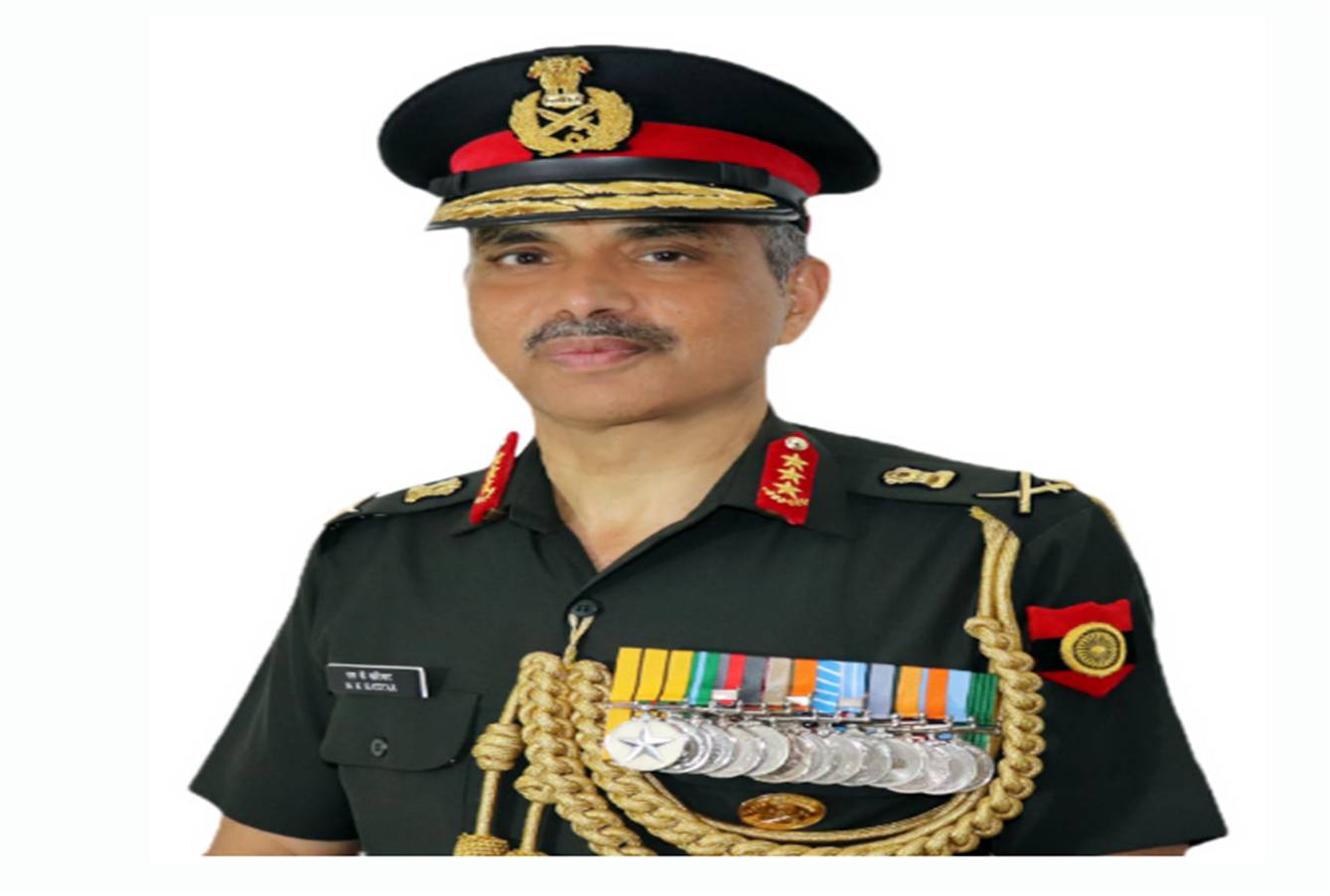
“By carrying out strikes deep inside Pak, we showed our resolve to strike with impunity at a time and place of our choosing. The message has gone home to the Pakistan leadership about the intent of our leadership and the capability of our Army”, says Lt Gen Manoj Kumar Katiyar

In an exclusive interview with The Tribune, Lt Gen Manoj Kumar Katiyar, General Officer Commanding-in-Chief of the Western Command, stated that India had demonstrated a shift in its strategic thinking since Operation Parakram in 2002 by striking hard and with precision both in Pakistan Punjab as well as on 11 airbases across the length and breadth of the neighbouring nation.

“By carrying out strikes deep inside Pakistan, we demonstrated our resolve to strike with impunity at a time and place of our choosing. The message has gone home to the Pakistan leadership about the intent of the Indian leadership and the capability of the Indian Army,” said General Katiyar, who heads the Western Command, tasked with protecting India’s western frontier facing Pakistan. He was speaking at his office in Chandimandir.

Significantly, he noted that India had called Pakistan’s nuclear bluff, which had loomed over the subcontinent since both countries went overtly nuclear in the summer of 1998.

Pakistan believed it could carry out repeated terror strikes against India — in the J&K Assembly in 2000, in Parliament in 2001, in Mumbai in 2008, in Uri in 2016, in Pulwama in 2019, and in Pahalgam in 2025 — assuming India would not retaliate due to fear of international restraint over a potential nuclear flashpoint. With Operation Sindoor, India has called Pakistan’s nuclear bluff, General Katiyar asserted.

Highlighting that this key achievement of Operation Sindoor serves as a message for both Pakistan and the world, General Katiyar emphasised that the operation had made clear the linkages between Pakistan’s military establishment and its terror groups.

“Linkages between Pakistan’s ISI and various tanzeems (terror groups) in Pakistan have been well documented,” he said, adding, “The world should take notice of the collusion between terrorism and the Pakistan establishment.”

General Katiyar pointed to photos of men in Pakistani military uniform attending the funerals of terrorists killed in the strikes on terror camps in Muridke and Bahawalpur in Pakistan Punjab as proof. “Why would you have Pakistani military men attending these funerals otherwise?” he asked.

The Army Commander explained the shift in India’s strategic doctrine since Operation Parakram in 2002, when the Indian Army mobilised along the western frontier for 10 long months following the terror attack on Parliament in December 2001 —without firing a shot.

“Since Operation Parakram in 2001-02, the thinking has changed from deterrence by threat to deterrence by punishment. We saw it happening post-Uri in 2016. We saw it happening post-Pulwama in 2019. Now, what we have done in Operation Sindoor is on a completely different scale and the scope was very big,” he said.

Following the Pahalgam massacre, the General said the Pakistan army had enhanced its deployment in border areas, occupying most forward posts while mobilising some of its reserve and mechanised formations.

“There was a possibility of some misadventure by Pakistan, but we were prepared for any eventuality. Our defensive safeguards, including air defence and surveillance elements, were deployed and offensive formations were geared up to undertake operations at short notice,” the General said, referring to the seamless synergy between the three services in executing Operation Sindoor.


ED crossing all limits: Supreme Court slams probe agency over TASMAC raids

Stays probe against Tamil Nadu State Marketing Corporation (TASMAC) in row over liquor shop licences

The Enforcement Directorate is crossing “all the limits” and violating the federal concept of governance, the Supreme Court on Thursday said while staying the money laundering probe against Tamil Nadu-run liquor retailer TASMAC over alleged corruption in grant of wine shop licences.

Issuing notice to the ED on pleas filed by the Tamil Nadu government and the Tamil Nadu State Marketing Corporation (TASMAC), a Bench comprising Chief Justice B R Gavai and Justice Augustine George Masih told Additional Solicitor General S V Raju, appearing for the anti-money laundering probe agency, that “Your ED is crossing all the limits.”

“The Enforcement Directorate is violating the federal concept (of governance),” the Bench observed, adding that the ED’s probe against the state-run TASMAC will not proceed in the meantime.

The law officer opposed the order, saying the issue involved corruption over Rs 1,000 crore and the ED is not crossing the limits “at least in this case.”

The Bench took note of the submissions of senior advocates Kapil Sibal and Amit Anand Tiwari that the state itself has lodged over 40 FIRs in cases related to allotment of liquor shop licences from 2014 and now the ED jumps in the picture and raids the TASMAC.

“How can you raid the state-run TASMAC,” the Bench asked.

The DMK-run state government and TASMAC moved the top court against the raids conducted by the ED at the premises of TASMAC.

The pleas challenged an April 23 order of the Madras High Court dismissing its pleas giving the go ahead for the ED action.

The ED was allowed to proceed with its action under the Prevention of Money Laundering Act (PMLA).


Soldier killed in encounter with terrorists in J-K’s Kishtwar

Four terrorists are said to be trapped in the area

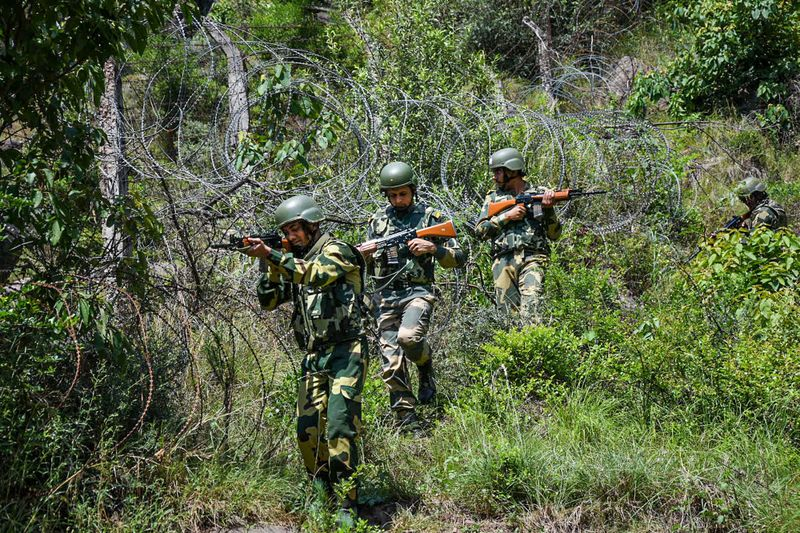
A soldier was killed in an encounter with terrorists during a cordon and search operation launched by security forces in Jammu and Kashmir’s Kishtwar district on Thursday, officials said.

The gunfight took place when the security forces were conducting a search operation following a tip-off about the presence of terrorists in the Shingpora area of Chhatru, they said.

Four terrorists are said to be trapped in the area.

“Contact has been established with terrorists during a joint operation with police at Chhatru in Kishtwar this morning,” the Indian Army’s White Knight Corps said in a post on X.

Additional troops have been deployed and the operation is ongoing to neutralise the terrorists, it said.

“During the ongoing operation, fierce gunfight is continuing. One of our bravehearts sustained grievous injuries in the exchange of fire and has succumbed despite best medical efforts,” the White Knight Corps said.The operation is in progress, it added.


Jaishankar counters Trump’s claim, reveals what led to India-Pakistan ceasefire

The External Affairs Minister says India clearly told everyone, including the US, that only Pakistan could tell them if it wanted to stop fighting

The India-Pakistan understanding on cessation of hostilities was arrived at following direct negotiations between the two sides, External Affairs Minister S Jaishankar has said against the backdrop of US President Donald Trump’s claim that Washington played a role in brokering the truce.

Jaishankar also said that India will again hit terrorists in Pakistan in response to any future terror strikes like the one in Pahalgam, suggesting that it was the reason why Operation Sindoor has not been concluded.

In an interview to Dutch broadcaster NOS, he said that the government was very clear that “if there is such an attack, there will be a response”.

Jaishankar was in The Hague as part of his three-nation tour of the Netherlands, Denmark and Germany.

“The operation continues because there is a clear message in that operation – that if there are acts of the kind we saw on April 22, there will be a response, that we will hit the terrorists,” he said.

“If the terrorists are in Pakistan, we will hit them where they are. So, there is a message in continuing the operation but continuing the operation is not the same as firing on each other,” he said.

Under Operation Sindoor, India carried out precision strikes on nine terror infrastructures early on May 7 in response to the April 22 Pahalgam terror attack.

Following the Indian action, Pakistan attempted to attack Indian military bases on May 8, 9 and 10. The Pakistani attempts were strongly responded to by the Indian side.

Foreign Secretary Vikram Misri on May 10 announced that India and Pakistan reached an understanding to stop all firings and military actions on land, air and sea, with immediate effect.

In his remarks, Jaishankar said the arrangement on cessation of hostilities was firmed up by the Indian and the Pakistani sides.“When two countries are engaged in a conflict, it is natural that countries in the world call up and try to sort of indicate their concern,” he said.

Jaishankar added: “But the cessation of firing and military action was something which was negotiated directly between India and Pakistan.”

“We made one thing very clear to everybody who spoke to us, not just the US but to everybody, saying if the Pakistanis want to stop fighting, they need to tell us. We need to hear it from them. Their general has to call up our general and say this. And that is what happened.”

Following the cessation of hostilities between India and Pakistan, Trump repeatedly claimed credit for it saying that he played a role in brokering the “ceasefire” between the two sides.

In his comments, Jaishankar described the April 22 Pahalgam attack as “barbaric” and said the terrorists “murdered” the innocent civilians in front of their families after ascertaining their “faith” with an aim to create “religious discord”.

“It was imperative that we have a response because the lack of response…was impossible in such a situation,” he said.

Jaishankar said India is willing to hold talks with Pakistan on return of the illegally occupied part of Kashmir by that country to New Delhi, and on terrorism.

Asked about security concerns emanating from frontiers along China and Pakistan on India’s economic growth, Jaishankar indicated that economic growth and security are part of the same coin.

“Our security challenges were far more threatening than yours (Europe’s). So we had to prioritise security. You don’t choose between security and economic prosperity. Today, you are realising that they are part of the same coin.”


HEADLINES : 20 MAY 2025

Op Sindoor global outreach begins: First all-party delegation heads to UAE tomorrow

He died for the country’: Mother refuses to immerse ashes until Agniveer declared martyr

The story behind Dhruv Rathee’s AI visuals of Sikh gurus; video the YouTuber deleted later

SGPC rejects Army’s claim of Pak attempt to attack Golden Temple

Indian Navy stood tall in Operation Sindoor

Engage unemployed youths instead of ex-servicemen for guard duties: Mehbooba urges CM

All retired HC judges entitled to full equal pension: SC

Retreat ceremony at Attari-Wagah border to resume for public from May 21

Russia, Ukraine to begin truce talks immediately: Trump after Putin call

India strikes, Trump blinks: Tale of two powers


Op Sindoor global outreach begins: First all-party delegation heads to UAE tomorrow

Congress MP Shashi Tharoor and BJP leader Ravi Shankar Prasad will lead separate all-party delegations departing on May 25 to engage with international counterparts

article_Author
Ajay Banerjee Tribune News Service

India’s diplomatic outreach following Operation Sindoor will begin on Wednesday, with the first of seven all-party delegations departing for the United Arab Emirates (UAE).

The delegation, led by Shiv Sena MP Shrikant Eknath Shinde, will also visit Congo, Sierra Leone, and Liberia.Over the next four days, until May 25, the remaining six delegations will embark on visits to various countries to address audiences, policymakers, and elected representatives.

Each delegation will be led by a political party leader and will include Members of Parliament from various parties, prominent political figures, and distinguished diplomats.

The delegations will reflect India’s national consensus and firm stance against terrorism in all its forms and manifestations, carrying to the world a strong message of zero tolerance.

On May 25, two delegations will depart: one led by Congress MP Shashi Tharoor to the United States, Brazil, Colombia, Guyana, and Panama; and another led by BJP leader Ravi Shankar Prasad to France, Italy, Denmark, the United Kingdom, Belgium, and Germany.

On May 22, Sanjay Kumar Jha of the JD(U) will lead a delegation to Japan, South Korea, Singapore, Indonesia, and Malaysia. On the same day, another delegation headed by Kanimozhi Karunanidhi of the DMK will leave for Russia, Slovenia, Greece, Latvia, and Spain.

Baijayant Panda of the BJP will depart on May 23 to visit Bahrain, Kuwait, Saudi Arabia, and Algeria, while NCP leader Supriya Sule will lead her team to Qatar, South Africa, Ethiopia, and Egypt on May 24.

These visits come in the context of Operation Sindoor, launched on May 7 in retaliation for the April 22 terror attack in Pahalgam. The operation targeted and destroyed nine terrorist bases in Pakistan and Pakistan-occupied Kashmir.

The delegations are also scheduled to visit several key partner countries, including members of the UN Security Council.


He died for the country’: Mother refuses to immerse ashes until Agniveer declared martyr

Akashdeep Singh, a young soldier, died in Jammu and Kashmir last week

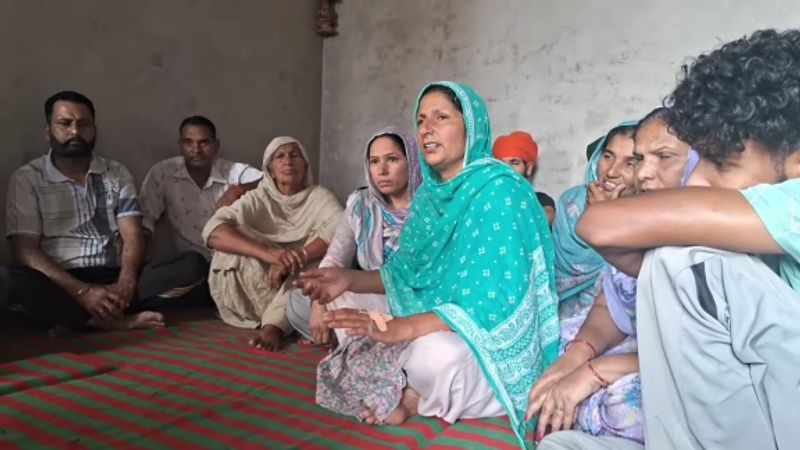
The mother of Agniveer Akashdeep Singh, a young soldier who died in Jammu and Kashmir last week, has refused to perform his final rites until the government declares him a martyr.

Akashdeep, a resident of Kothe Chahal village in Faridkot district, was killed by a bullet while on duty under the Agnipath military recruitment scheme.

His mother, Karamjit Kaur, said she fainted when her son’s body arrived home and later found out that he was not given martyr status.

“He gave his life for the country, but the government is not giving him the respect he deserves,” she said. “Until they declare him a martyr, I will not immerse his ashes. ”

She also demanded the government cancel the Agnipath scheme, which she believes puts the lives of young soldiers at risk.

The scheme allows youth to serve in the military for only four years, and critics say it does not offer the same benefits or recognition as regular Army service.

The family’s protest has drawn attention and support from many in the community, with calls growing for the government to recognise Akashdeep Singh as a martyr.

She also claimed that promises made by Baba Farid University of Health Sciences to start an award in her son’s name and provide lifelong free medical care to the family had not been communicated to them officially. “We only heard about it through the media. No one from the administration or government has contacted us so far,” she said.

Echoing similar sentiments, Akashdeep’s relative Daljit Kaur said denying martyr status to someone who laid down his life for the nation was deeply unjust. “Such negligence will discourage other youth like Akashdeep from joining the forces. If this continues, we will escalate this struggle to the state level,” she warned.The controversy surrounding Agniveer Akashdeep’s recognition comes at a time when the Agnipath scheme itself is under intense scrutiny, with critics raising concerns about the lack of post-service benefits and recognition for young recruits who die in service.


The story behind Dhruv Rathee’s AI visuals of Sikh gurus; video the YouTuber deleted later

Rathee on Monday took down his AI-generated video depicting Sikh gurus in the face of opposition from viewers

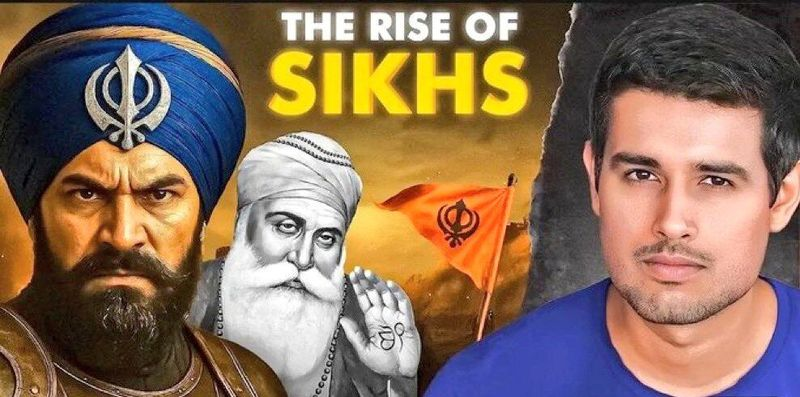
YouTuber Dhruv Rathee uploaded an AI video titled “The Sikh Warrior Who Terrified the Mughals” on Sunday.The video ran for 24 minutes and 37 seconds.

Related news: Akal Takht, SGPC slam YouTuber Dhruv Rathi, seek strict action

On Monday, Rathee took down his AI-generated video depicting Sikh gurus in the face of opposition from viewers.

The Shiromani Gurdwara Parbandhak Committee (SGPC) and the Shiromani Akali Dal also registered strong protests against depicting the religious figures in human form or in films.

In a post on Instagram, Rathee said that even though many people had appreciated the video and “would like it to stay on the (YouTube) channel, I have decided to remove it because some viewers feel strongly that any animated depiction of the Sikh Gurus conflicts with their beliefs.”

“I do not want this to become a political or religious controversy, because the video was simply an effort to showcase the stories of our Indian heroes in a new educational format,” he said.

The Akal Takht, Shiromani Gurdwara Parbandhak Committee (SGPC), and the Shiromani Akali Dal (SAD) had demanded an immediate takedown of the video, which features artificial intelligence-generated images of Guru Gobind Singh and his four sons known as “Sahibzadas.”

They had also sought the possible strictest action by the government in the matter. “Such portrayals violate Sikh principles and traditions. In Sikhi, the gurus, Sahibzadas, and their families cannot be represented in human form or in films. Therefore, this YouTuber has acted against the tenets of Sikhism,” said SGPC president Harjinder Singh Dhami. SAD chief Sukhbir Singh Badal said, “Such portrayals violate Sikh ‘rehat maryada’ which prohibits visual representations of Guru Sahiban. It has deeply hurt the sentiments of the community.”

He also alleged that the misleading narrative in Rathee’s video titled “The Sikh Warrior Who Terrified the Mughals” and the lack of respectful language had further aggravated the issue. In a post on X, Badal urged all content creators to exercise utmost caution and sensitivity while dealing with Guru Sahiban or Sikh history.

“Respect for religious traditions and accurate historical representation are non-negotiable. I request the immediate removal of the offending content and call for responsible storytelling that honors the sacred legacy of Sikhism,” he had said.

Badal called for promoting education and awareness with reverence without disrespecting a community’s beliefs. Dhami had said that the history of Sikh gurus and Sikh personalities is a sacred and inviolable heritage that no individual has the right to distort or misrepresent. He reminded people that the SGPC has already imposed a ban on portraying the gurus or their families in films or through animation. Besides historical inaccuracies, the inclusion of AI-generated visuals of Sikh gurus has hurt the religious sentiments of the Sikh community, he had added, and warned Rathee of legal action if the video is not taken down.


In a statement, Akal Takht’s officiating Jathedar Giani Kuldeep Singh Gargaj said that by uploading such a video on YouTube, Rathee has “insulted” Sikh traditions, history, and sentiments. He underlined that Sikh principles clearly prohibit visual representation or animation of the gurus, the Sahibzadas, members of the guru’s family, and Sikh martyrs. Gargaj had demanded that Rathee remove the objectionable video from his channel without delay. He further mentioned that during a recent gathering of the Akal Takht concerning films, the matter of AI animation was also discussed.

The jathedar had directed the SGPC to contact the ministries concerned for a takedown of Rathee’s video. He further instructed the SGPC to widely publicise its past resolutions and decisions regarding films to ensure that such actions are not repeated. With PTI inputs