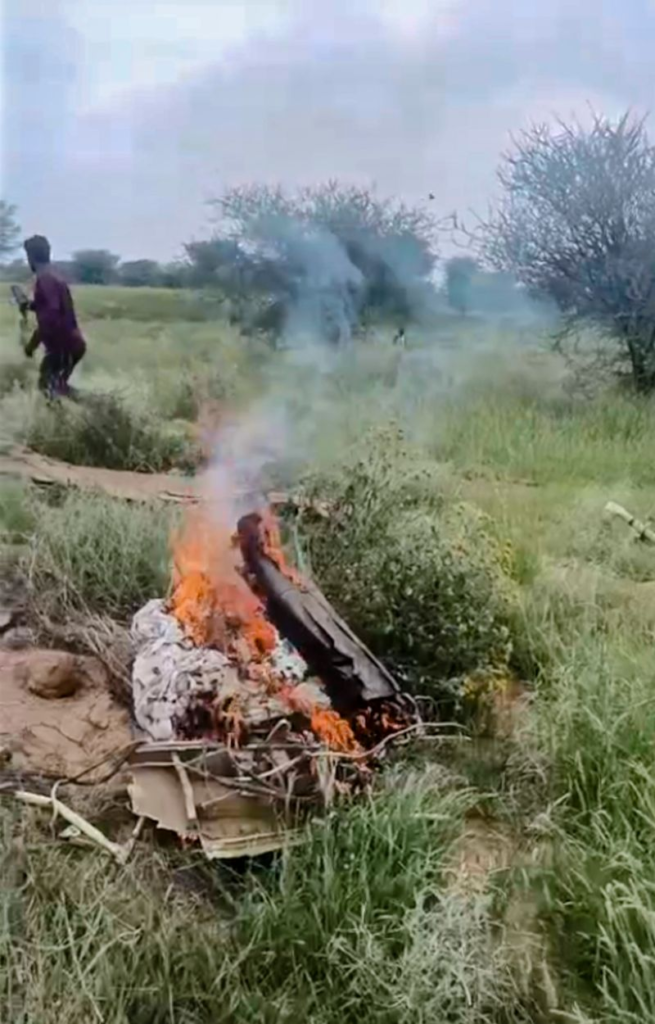
The two pilots who died in the Jaguar fighter jet crash on Wednesday have been identified as Squadron Leader Lokendra and Flight Lieutenant Rishi Raj Singh.
The Indian Air Force (IAF) today released the names of the two pilots. Squadron Leader Lokendra hailed from Rohtak in Haryana and is survived by his wife and a month-old son. His co-pilot, Flight Lieutenant Singh, belonged to Pali in Rajasthan.
The jet had taken off from the Suratgarh airbase in Rajasthan before it crashed near Churu in Rajasthan, killing both the pilots. This was the third crash involving the Jaguar in the past four months.
On March 7, a Jaguar went down near Ambala during a routine sortie. The pilot was able to eject safely.
On April 3, another Jaguar jet crashed in Jamnagar, Gujarat, after it developed some critical technical problem, killing the pilot, Flight Lieutenant Siddharth Yadav.
The Jaguar was inducted into the IAF in 1979. The twin-engine fighter aircraft forms an important part of India’s nuclear triad. Britain, France, Ecuador, Nigeria and Oman, which once had Jaguars in their fleet, have retired them long ago, with some jets put on display in air museums. The IAF, too, is expected to begin phasing out its older Jaguar models after 2027-28 onwards.
Explainer: Why SC has overruled EC & included Aadhaar in Bihar electoral roll revision
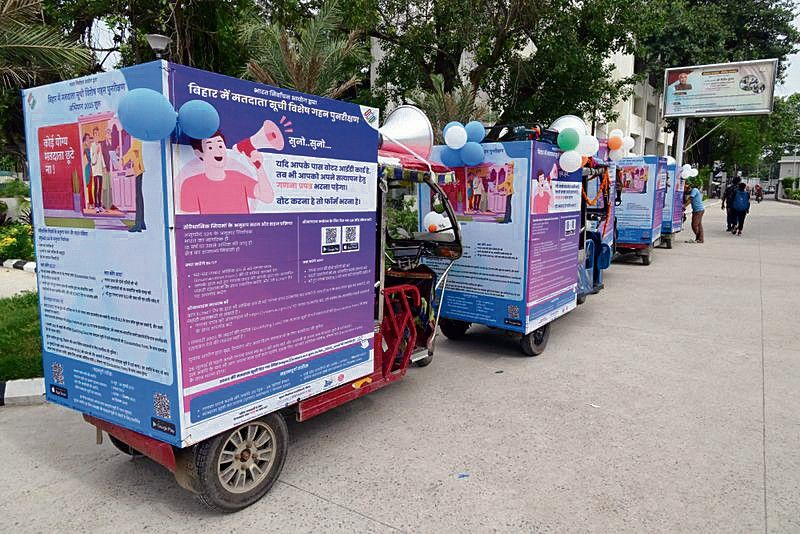
Aadhaar’s non-inclusion among the set of 11 documents mandated by the Election Commission to prove domicility or citizenship of voters in Bihar during the ongoing special intensive revision (SIR) of electoral rolls has turned into a full blown controversy. The Opposition claims it is aimed at excluding millions of migrant voters, both poor and Dalit, in the garb of weeding out illegal immigrants.
A two-judge Bench of the Supreme Court on Wednesday directed the ECI to consider Aadhaar, Election Photo Identity Card (EPIC) and ration card also for voter registration. The ECI had asked voters to give any one of the following 11 documents to indicate that the voter is not an illegal immigrant or one who has managed to sneak his name into the rolls, which were revised in 2003.
What are EC’s 11 documents
1. Any identity card/Pension Payment Order issued to a regular employee, pensioner of any central or state government or a Public Sector Unit
2. Any identity card, certificate, document issued by the government, local authorities, banks, post office, LIC, PSUs prior to July 1, 1987
Advertisement
3. Birth certificate
4. Passport
5. Matriculation or other educational certificates issued by recognised boards, universities
6. Permanent residence certificate
7. Forest right certificate
8. OBC/SC/ST or any caste certificate issued by the competent authority
9. National Register of Citizens
10. Family register prepared by state or local authorities
11. Any land or house allotment certificate by the government.
What is EC’s objection to Aadhaar
EC believes Aadhaar is only a document to authenticate identity, not citizenship. EC’s counsel Rakesh Dwived told the court that Aadhaar was also issued to non-citizens. “The ECI cannot exalt the status of the Aadhaar,” Dwivedi said.
Supreme Court’s view
The two-judge Bench of Justices Sudhanshu Dhulia and Joymalya Bagchi in its short order said ECI’s 11-document list is not exhaustive, which is why “in the interest of justice”, the EC should also consider Aadhaar, EPIC — which is issued by the ECI itself — and ration card. Justice Dhulia said Aadhaar a primary document of identity and pointed out that SIR was, in fact, about proving the identity of a person who wanted to exercise her right to vote.
Justice Dhulia cited the example of seeking a caste certificate, for which Aadhaar is needed, because it is a pre-requisite for getting other documents. “Caste certificate is one of the documents among the 11, but not Aadhaar? The entire exercise of SIR is about identity only. You want to know whether this person is A or B,” Justice Dhulia asked. Justice Bagchi agreed that none of the 11 documents the ECI had listed in its June 24 notification were telltale ones for citizenship.
What happens now
The SC Bench has not passed any interim order of stay as the petitioners did not press for a stoppage of the exercise. The matter is now listed for July 28, mere days before the publication of the draft electoral rolls in Bihar on August 1.
However, the Bench noted that its judicial review of SIR would focus on the EC’s power to undertake this exercise, the way it is being held as well as the timing, which it noted, was too short.
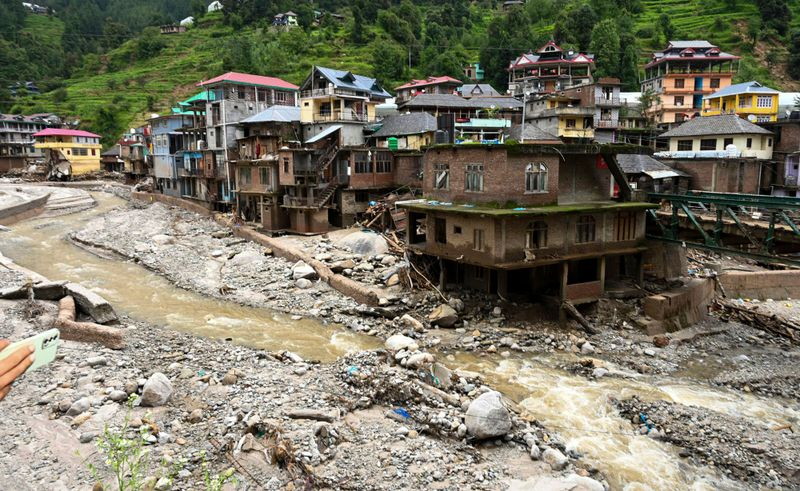
The Indian Army continues to extend critical support to the civil administration in Himachal Pradesh as part of the ongoing humanitarian assistance and disaster relief operations after recent flashfloods in Mandi district.
In close coordination with the State Disaster Response Force (SDRF), National Disaster Response Force (NDRF) and the local authorities, the Indian Army has deployed dedicated relief columns, stated a statement issued here today.
Indian Army columns have been mobilised across key locations like Thunag, Bagsiad and Pandoh.
Army teams have been actively engaged in the opening of vital access routes, including mule tracks that were used to ensure the delivery of supplies.
The Army’s medical teams have been sent to provide assistance and distribute relief material. First-aid kits and ration have been provided to the affected families.
The Army in partnership with the civil administration has ensured relief material is sent to remote villages that have been cut off due to the flashfloods. All Army teams are communicating using satellite phones to ensure uninterrupted operational connectivity. A team of the Army met Chief Minister Sukhvinder Singh Suhku today. A Brigadier has been asked to visit Mandi for an operational update and interaction with the relief columns.
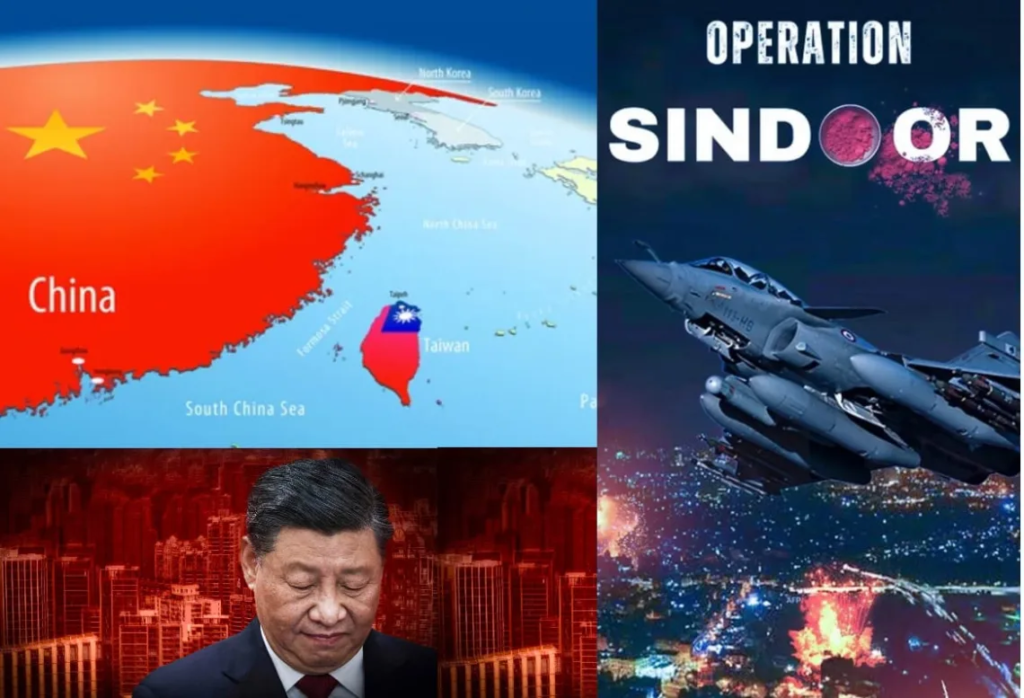
Operation Sindoor shakes Indo-Pacific: How Pakistan defeat exposed Chinese weapons
& shattered Taiwan invasion plans India’s swift and surgical Operation Sindoor not only decimated Pakistan’s terror a…
Read more at: https://organiser.org/2025/07/08/301777/bharat/operation-sindoor-shakes-indo-pacific-how-pakistan-defeat-exposed-chinese-weapons-shattered-taiwan-invasion-plans/
In a span of just four days, from May 7 to May 10, 2025, India’s Operation Sindoor delivered a decisive blow to Pakistan’s terror and military infrastructure in retaliation for a brutal terrorist atta…
Read more at: https://organiser.org/2025/07/08/301777/bharat/operation-sindoor-shakes-indo-pacific-how-pakistan-defeat-exposed-chinese-weapons-shattered-taiwan-invasion-plans/
Gunmen kill 9 bus passengers from Pakistan’s Punjab in Balochistan
The armed insurgents check ID cards of passengers and offload 9 of them from the bus going from Quetta to Lahore, and shoot them dead
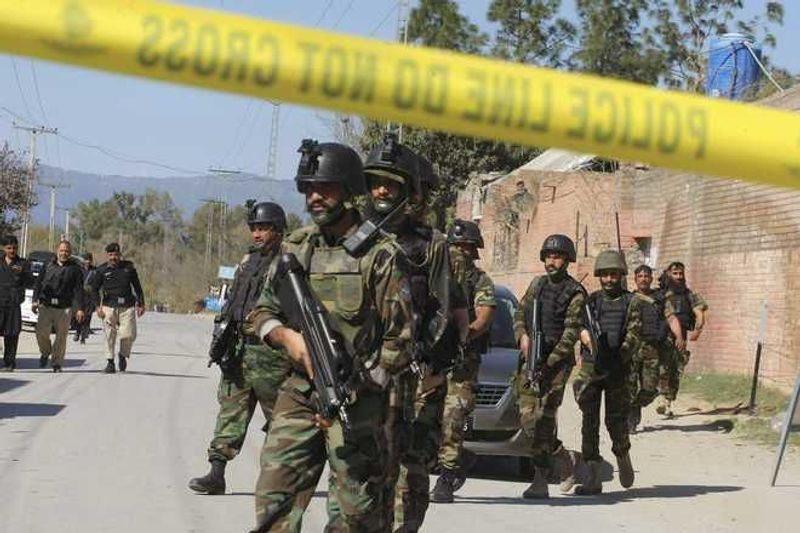
Insurgents shot and killed nine passengers from Punjab after offloading them from a passenger bus in Pakistan’s restive Balochistan province on Friday, according to authorities.
The incident took place on the national highway in Zhob area of the province, said Zhob Assistant Commissioner Naveed Alam.The armed insurgents checked ID cards of passengers and offloaded nine of them from the bus going from Quetta to Lahore, and shot them dead.All nine belonged to different parts of the Punjab province, Alam said.
“We have moved the nine bodies to the hospital for post-mortem and burial procedures,” he said.
This is not the first time that insurgents have targeted people belonging to the Punjab province and passenger buses plying on different highways in Balochistan.
No group claimed responsibility for the attack, but in the past, ethnic Baloch terrorist groups carried out such targeted attacks against the people of Punjab.Meanwhile, insurgents also carried out three other terrorist attacks in Quetta, Loralai and Mastung, but spokesperson for the Balochistan government Shahid Rind claimed security forces repulsed these attacks.
Unconfirmed reports in the Balochistan media claimed that insurgents had struck at several places in the province during the night and engaged security forces by attacking check posts, government installations, police stations, banks and communication towers.While Rind confirmed the attacks, he said there were no reports of casualties in any of them.
Bordering Iran and Afghanistan, Balochistan is home to a long-running violent insurgency.
Baloch insurgent groups frequently carry out attacks targeting security personnel, government projects and the USD 60 billion China-Pakistan Economic Corridor projects in this oil- and mineral-rich province.
In March, five people working on long body trailers were shot dead in the Kalmat area near Gwadar port, while in February, insurgents offloaded seven passengers belonging to the Punjab province and killed them on the spot in the Barkhan area.
In the next 3 to 5 years, the IAF intends to have about 30 to 50 units of small to large UAVs for specific combat roles, says Air Commodore (Operations) Sandeep Singh
The move to put a structure to the scattered use of different kinds of drones is in sync with global development of unmanned air forces several countries are actively pursuing.
Ukraine has gone ahead and established the world’s first Unmanned Systems Forces, a dedicated branch for unmanned and robotic warfare which it’s using decisively to sustain battle against Russia.
The IAF has also worked out an acquisition roadmap for the unmanned force. For the short term, the IAF will be procuring MALE (medium altitude long endurance) UAVs that fly at an altitude of 10,000 to 30,000 feet for extended durations of time.
Likewise, for the medium term, the Force will go for HALE (High Altitude Long Endurance) UAVs that operate at altitudes above 30,000 feet and have extended range.
“We have already on paper envisioned Indian Air Force’s unmanned force plan, in which we are looking in the next three to five years, about 30, 40, 50 units of all nature, between small, medium and large UAVs,” said Air Commodore (Operations) Sandeep Singh at FICCI’s seminar on “Weaponised Drones: Opportunities and Challenges.”
This unmanned force paper was written by the IAF in 2013 before the UAVs emerged as strategic assets to redefine battle engagement, the Air Commodore stated in his speech delivered at the FICCI event on Friday.
The IAF has opened a school of Unmanned Aerial Systems at Bhatinda. It will basically look into all domains, for carrying out R&D, interact with the academia and the industry, besides offering the test range and help handhold the industry to achieve what is needed, he said.
The operation requirements broadly would be to go off base, have long capability to reach deeper inside the enemy territory, Sandeep Singh told the gathering of armed forces personnel and industry representatives.
He invited the industry to join hands with the IAF in its effort for indigenous procurement of different kinds of UAVs that operate in GPS denied or EW contested environments and for counter-UAV systems that can neutralise frequency hopping drones.
Like in other ongoing global conflicts — Russia-Ukraine, Israel-Hamas and Iran-Israel and US — and in Operation Sindoor, drones were key to the offensive launched from both sides.
Giving a sense of the proposed unmanned force, the Air Commodore also stated that the IAF is looking at flexibility to operate from anywhere and with minimum human resources.
“I should have a flexible mobile system that goes and deploys anywhere, under a tree, mount, deploy and get back… So a small man team is what I’m looking at from the Air Force point of view, which delivers, remains concealed and deploys from anywhere and can be controlled from elsewhere ,” Singh informed.
A 100 km long drone corridor close to Hyderabad is also coming up that will offer every guidance and solution needed for it.
Indian Army unveiled comprehensive defence modernisation roadmap
The roadmap aims at transforming Indian Army’s capabilities across multiple domains and prepare it for the challenges of future warfare.
Key Highlights of Modernisation Roadmap
Advanced Weapon Systems: Development of ultra-fast and highly manoeuvrable weapon systems, including hypersonic glide vehicles, hypersonic air-breathing engines (HEBs), and advanced fourth, fifth, and sixth-generation missiles.
Highlights need to transition from conventional dump category ammunition to smart, precision-guided munitions such as loitering munitions.
Advancing efforts in directed energy weapons, such as high-energy lasers and microwave systems, for counter-drone operations, missile defence, and anti-satellite capabilities.
Cyber & Electronic Warfare (EW): Aiming spectrum dominance through developing next-generation cyber defence tools, autonomous EW solutions, and resilient satellite systems.
Soldier-Centric Modernization: Equip soldiers with exoskeletons, human augmentation systems, smart body armour, and augmented reality-based battlefield management systems.
Also includes integration of AI-powered helmets, smart apparel, and real-time health monitoring to enhance battlefield effectiveness.
Logistics & Infrastructure:Modernizing supply chains through AI, blockchain, and IoT integration to create green, sustainable, cyber-resilient logistics systems.
Synergy: Synergy between three key stakeholders: Military, which must clearly define operational needs; Policymakers, who must create enabling frameworks; and Industry, which must innovate and deliver tailored solutions.
India’s Initiatives for modernisation of armed forces Long term Modernisation Planning through 10 Years Integrated Capability Development Plan (ICDP).Raising of niche capability structures in terms of Defence Space Agency, Defence Cyber Agency & Armed Forces Special Operations Division.Innovations for Defence Excellence (iDEX) supporting startups with funding up to ₹1.5 crore.Atmanirbharta in defence manufacturing through initiatives such as positive indigenisation lists, SRIJAN portal, liberalization of FDI in defence R&D.
Chandigarh: ‘Courage, dedication & sacrifice’: Army pays tribute to Capt Batra
The commemorative event honoured the legacy of the 13 JAK Rifles officer, whose bravery and sacrifice during Operation Vijay on July 7, 1999, remain etched in the nation’s memory
The Indian Army on Monday paid a heartfelt tribute to Captain Vikram Batra, the valiant Kargil war hero, at DAV College, Chandigarh, on the occasion of the 26th anniversary of Kargil Vijay Diwas.
Captain Vikram Batra’s father, Girdhari Lal Batra, being felicitated at an event organised to commemorate the 26th Kargil Vijay Diwas, at DAV College, Sector-10, Chandigarh, on Monday. The PVC awardee’s brother, Vishal Batra (extreme right) was also feted. (HT)
The commemorative event honoured the legacy of the 13 JAK Rifles officer, whose bravery and sacrifice during Operation Vijay on July 7, 1999, remain etched in the nation’s memory.
The tribute ceremony began with Naib Subedar Ghanshyam Dass recounting Captain Batra’s fearless contributions during the war, which led to the recapture of crucial peaks in Kargil. In a poignant moment, Capt Batra’s father Girdhari Lal Batra and twin brother Vishal Batra were presented with a memento and a letter of gratitude from the Indian Army, in recognition of the family’s sacrifice and unwavering strength.
As part of the army’s broader outreach initiative to honour the families of fallen soldiers, the event served as a reminder that the sacrifices of martyrs will never be forgotten.
Addressing the gathering, Brigadier VS Chauhan, group commander of NCC Chandigarh, urged cadets to draw inspiration from Captain Batra’s life. “His courage, dedication, and ultimate sacrifice should guide and motivate every youth aspiring to serve the nation,” he said.
Mona Narang, principal of DAV College, expressed immense pride in Capt Batra being an alumnus of the institution. “His heroism continues to make this college proud.”
India Successfully Tests Indigenous Anti-Submarine Rocket System
Defence Minister Rajnath Singh congratulated the Defence Research and Development Organisation, Indian Navy and the industry involved in development and trials of the system.
New Delhi:
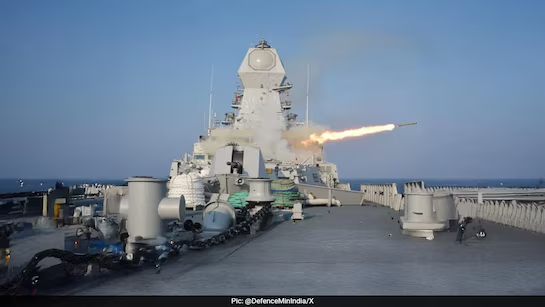
India has tested an extended range anti-submarine rocket system that is expected to significantly enhance the Indian Navy’s fire power. The user trials of Extended Range Anti-Submarine Rocket (ERASR) have been successfully carried out from warship INS Kavaratti from June 23 to July 7, officials said.
Defence Minister Rajnath Singh congratulated the Defence Research and Development Organisation, Indian Navy and the industry involved in development and trials of the system.
“He has added that the successful induction of this system will boost the striking power of the Indian Navy,” Singh’s office said on ‘X’.
The rocket system is a totally indigenous anti-submarine weapon.
“It has twin-rocket motor configuration to meet a wide spectrum of range requirements with high accuracy and consistency,” the Indian Navy said.
A total of 17 ERASRs were successfully test evaluated at different ranges.
All the specified objectives of the trials such as range performance, electronic time fuze functioning and warhead functioning were successfully demonstrated, the Navy said.
(Except for the headline, this story has not been edited by NDTV staff and is published from a syndicated feed.)
State Stalwarts
DEFENCE MINISTER
Minister Rajnath Singh
ALL HUMANS ARE ONE CREATED BY GOD
HINDUS,MUSLIMS,SIKHS.ISAI SAB HAI BHAI BHAI
CHIEF PATRON ALL INDIA SANJHA MORCHA
LT GEN JASBIR SINGH DHALIWAL, DOGRA
SENIOR PATRON ALL INDIA SANJHA MORCHA
MAJOR GEN HARVIJAY SINGH, SENA MEDAL ,corps of signals
.
.
PATRON ALL INDIA SANJHA MORCHA
MAJ GEN RAMINDER GURAYA ,MADRAS REGIMENT
sanjhamorcha303@gmail.com
PRESIDENT SOUTH ALL INDIA SANJHA MORCHA
COL SS RAJAN BOMBAY SAPPERS,
PRESIDENT UTTARAKHAND ALL INDIA SANJHA MORCHA
COL B M THAPA ,BENGAL SAPPERSS
PRESIDENT HARAYANA STATE CUM COORDINATOR ESM
BRIG DALJIT THUKRAL ,BENGAL SAPPERS
PRESIDENT TRICITY
COL B S BRAR (BHUPI BRAR)
PRESIDENT CHANDIGARH ZONE
COL SHANJIT SINGH BHULLAR
.
.
PRESIDENT PANCHKULA ZONE AND ZIRAKPUR
COL SWARAN SINGH
INDIAN DEFENCE FORCES
DEFENCE FORCES INTEGRATED LOGO
INDIAN AIR FORCE
Air Officer C-in-C WESTERN AIR COMMAND
AIR MSHL S PRABHAKARAN AVSM VM
AOC-IN-C, EASTERN AIR COMMAND
Air Marshal Inderpal Singh Walia
AOC-in-C SOUTH WESTERN AIR COMMAND
Air Marshal Vikram Singh
AOC-IN-C, SOUTHERN AIR COMMAND
Air Marshal J.Chalapati
AOC-IN-C TRAINING COMMAND
AIR MARSHAL SK GHOTIA VSM
AOC-IN-C MAINTENANCE COMMAND
Air Marshal Jagdish Chandra
Flag Officer Commanding in Chief, Western Naval Command
ice Admiral R Hari Kumar, PVSM, AVSM, VSM
Flag Officer Commanding in Chief, Eastern Naval Command
Vice Admiral Sanjay Bhalla, AVSM, NM
Flag Officer Commanding in Chief, Southern Naval Command