



Sanjha Morcha

What’s New

Click the heading to open detailed news

Current Events :

web counter

Print Media Reproduced Defence Related News

Surgical strikes across LoC hit 6 terror pads

Army raid from midnight to dawn at 5 places on other side of J&K | Says terrorists neutralised in swift operation; Pak denies claim
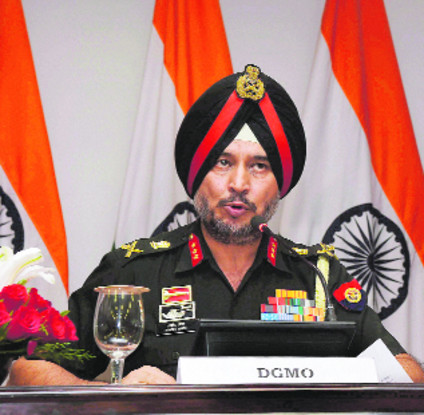
  •  Lt Gen Ranbir Singh,

Director General Military Operations

” style=”border: none; vertical-align: middle; max-width: 100%; display: block; max-height: 100%; width: 70px; height: 70px;”>

Previous ImageNext Image

The resolute action by India came 11 days after 18 soldiers were killed in the Uri sector. AFP

Tribune News Service

New Delhi, September 29

Mounting a swift counter-terror operation across the Line of Control in Jammu and Kashmir, the Indian Army today announced it had neutralised terrorists waiting to infiltrate. The brave military manoeuvre was hailed across the country.The ‘surgical strikes’ was a resolute action by India 11 days after 18 soldiers were killed in the Uri sector in an attack by Jaish terrorists from across the border. The action came days after Prime Minister Narendra Modi promised that the blood of the jawans will not go in vain and the Army, asserting it will act at a place and time of its choosing, did so from midnight to dawn at five places and six launch pads.“Based on specific and credible inputs that some terrorist teams had positioned themselves at launch pads along the LoC to carry out infiltration and conduct terrorist strikes inside J&K and in various metros, the Indian Army conducted surgical strikes at several of these launch pads. The operations were focussed on ensuring that these terrorists do not succeed in their design to endanger the lives of our citizens,” the Director General of Military Operations, Lt. Gen Ranbir Singh, said at a joint briefing with the Ministry of External Affairs. He said he had shared the information with his Pakistani counterpart.Pakistan rejected across-LoC strikes as a “fabrication of truth”, suggesting it was a move to cater to the domestic media and public. “There has been no surgical strike by India; instead, there had been cross-border fire initiated and conducted by India which is an existential phenomenon,” the Pakistan army said. It admitted the loss of two soldiers and injuries to nine.Stating that significant casualties were caused to terrorists and those providing support, the DGMO said while India does not have any further plans to continue, it was fully prepared for any contingency that may arise.An immediate fallout was that border residents of Punjab were asked to move to safer locations and India stepped up its international outreach with Foreign Secretary S. Jaishankar briefing envoys from 25 countries. Earlier, National Security Adviser Ajit Doval spoke to his counterpart in the US.Prior to the announcement on the successful conduct of the operation, Prime Minister Modi chaired a meeting of the Cabinet Committee on Security that was briefed about it. He later briefed President Pranab Mukherjee and spoke to Vice-President Hamid Ansari and former Prime Minister Manmohan Singh. On his part, Home Minister Rajnath Singh briefed several chief ministers and leaders of various political parties, all of whom came out in support of the action against terrorists.

What he said…

  • Significant casualties have been caused to the terrorists andthose who are trying to support them. India’s intention is to maintain peace in the region,
  • but we can certainly not allow terrorists to operate across LoC with impunity and attack our citizens.
  • In line with Pakistan’s commitment made in January 2004 not to allow its soil or territory under its control for any terrorist activities against India, we expect the Pakistani army to cooperate to erase this menace of terrorism. — Lt Gen Ranbir Singh,Director General Military Operations

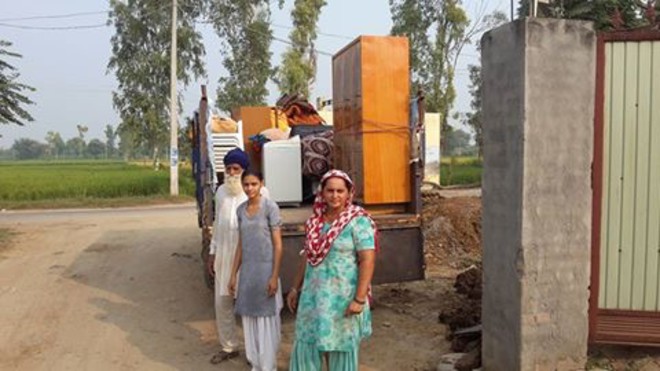


Evacuation ordered along border in Punjab

The evacuation has already started in Ferozepur. Tribune photo: Anirudh Gupta

Tribune News Service

Chandigarh, September 29

Following instructions from the Centre, Punjab has ordered the evacuation of people from villages falling within 10 km of the border with Pakistan after India conducted surgical strikes across the LoC on Wednesday night.Chief Minister Parkash Singh Badal on Thursday put the entire government and political machinery in an emergency mode following reports of developments on the India-Pakistan border.

(Follow The Tribune on Facebook; and Twitter @thetribunechd)

Union Home Minister Rajnath Singh spoke to Badal on phone in the morning to request him to immediately start the process of evacuation of people residing in villages falling within 10 km of the international border in view of the escalating situation.During an emergency meeting convened at his official residence, Badal directed the Chief Secretary and DGP, who were present, to ask deputy commissioners (DCs) and senior superintendents of police (SSPs) to oversee the entire evacuation process in the border districts of Ferozepur, Fazilka, Amritsar, Tarn Taran, Gurdaspur and Pathankot. The Chief Minister directed the DCs to identify suitable locations for setting up camps and ensure that none of the residents being evacuated were put to any inconvenience.The Chief Minister also spoke to the cabinet ministers and MLAs to camp in these border districts in which their assembly constituencies fell, to keep close liaison with the district administration to ensure the safe movement of the residents of the villages within close proximity of the border.Badal also directed the Chief Secretary to immediately release Rs 1 crore each to all deputy commissioners of six border districts to meet out any exigency arising out of the prevailing situation.The Chief Minister has also called an emergency meeting of the state Cabinet at 6 pm on Thursday to review the situation in the wake of the recent developments on the border and the advisory issued by the Ministry of Home Affairs.The meeting was attended by Chief Secretary Sarvesh Kaushal, Principal Secretary to Chief Minister SK Sandhu, DGP Suresh Arora and Special Principal Secretary to Chief Minister Gaggandip Singh Brar.According to reports, schools in border areas have been closed.

Meanwhile, district administrations have been arranging buses for people to move away from villages along the border. Medical staff has been asked to remain on duty. Civil surgeons have been told to put things in place in emergency wards.

Marriage palace owners have been asked to keep their palaces vacant. In case of need, people moving out of the border belt can be put there. All government employees who were on leave asked to report back in the border district. Revenue officials asked to make arrangements to set up relief camps.


Pak warplanes conduct drill but experts say war unlikely

ISLAMABAD/NEW DELHI: Pakistani warplanes landed on a highway linking Peshawar and Rawalpindi on Thursday as part of an exercise, fuelling speculation that the armed forces were preparing for possible hostilities with India.

APAnti­India protestors gather in Islamabad on Thursday to express solidarity with Kashmiris.

A Pakistan Air Force (PAF) spokesman said F-7 and Mirage jets touched down on the M1 Motorway, a 155-km highway, as part of the “Highmark” exercise, media reports said.

Pakistani social media users posted footage of a jet landing on the highway.

Highmark, one of the PAF’s largest wargames, is expected to end on September 24.

Despite officials insisting that the exercise was planned in advance, the closure of the airspace and flights by combat jets led to rumours that Pakistan’s armed forces were preparing for a possible Indian attack, the Dawn newspaper reported.

Despite the air exercise, most Pakistani analysts and commentators ruled out a military confrontation .

“We are seeing a lot of tough talking but whether that translates into anything more substantial is doubtful,” commented leading analyst Lt Gen (retired ) Talat Masood. He said India-Pakistan ties have now settled into a “comfortable pattern” which usually has its high and low points. The only fear this time was whether India would want to break the pattern due to pressure on the Modi government.


Tributes paid to Uri martyrs

Tributes paid to Uri martyrs
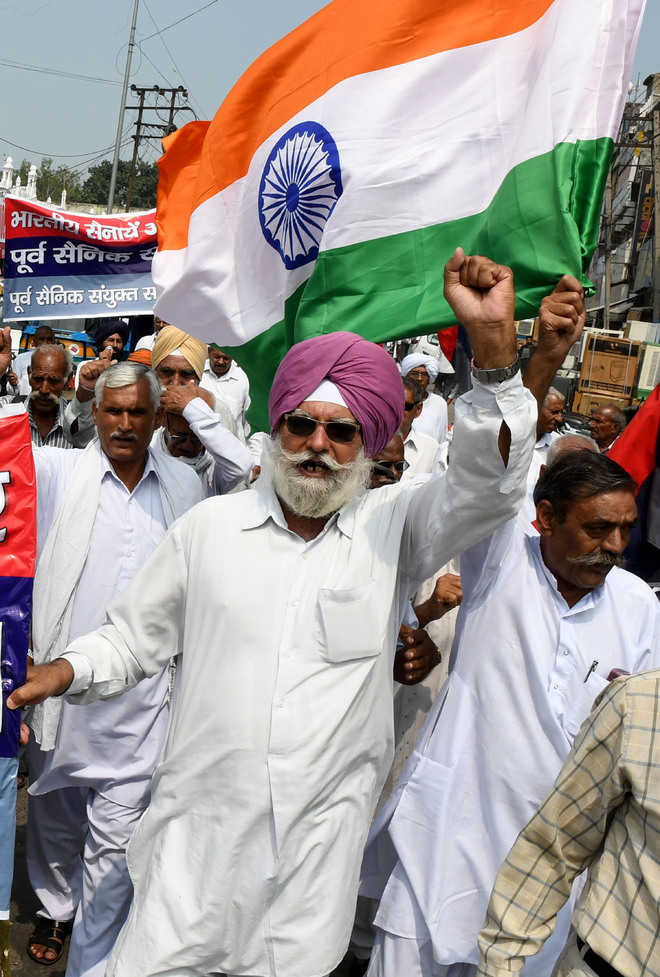
Ex-servicemen raise anti-Pakistan slogans in Karnal on Thursday. Tribune photo: Ravi Kumar

Tribune News Service

Karnal, September 22

Members of the Purv Sainik Sanyukt Sangharsh Samiti today protested against the terrorist attack on the Army camp in Uri sector on Sunday. They burnt the flag of Pakistan and extended their support to the Army and said that they would join hands with the Army in the war-like situation. Besides, they also paid tributes to the brave soldiers.Rajbir Singh Chauhan, chairman of the sangh, led the protest and handed over a memorandum addressed to the President to SDM Yogesh Kumar. He said that members of their sangh had given their consent to extend support to the Army in any situation of war.He said that the sangh condemned the cowardly act and demanded equal compensation for the family members of the Uri martyrs.


Ending unrest in Kashmir:::———————LT GEN HARWANT SINGH (RETD)

WITH THE TRIFURCATION OF J&K, THE CHOICE TO LIVE WITH ARTICLE 370 OR ABROGATE IT SHOULD BE LEFT TO THE THREE STATES. AT THE SAME TIME, STEPS TOWARDS ABROGATION OF INDUS WATER TREATY SHOULD BE TAKEN UP WITHOUT DELAY

That the Jammu and Kashmir problem has been grossly mishandled right from the start needs no recalling. What is of concern is that it continues to be mismanaged. Killing a known terrorist led to widespread disturbance, loss of life and injuries to hundreds, including police personnel. Stonepelting has become a routine form of protest, where those indulging in this unlawful activity are paid Rs 200 to Rs 500 a day. That the authorities have failed to track down the source of this money and those making these payments, speaks volumes of the poor state of administration, intelligence and the law and order. Those instigating these protests from the precincts of mosques too have been given a free run. Else by now most of those indulging in anti-national activities should have been rounded up.

Given the unrest in the valley, Pakistan was expected to not only exploit the situation but also give impetus to the disturbance by staging cross-border raids in continuation of its policy of ‘thousand cuts’. That the Uri attack has caused so many casualties speaks volumes about the equally poor state of alertness and security arrangements at the military camp.

WATER WAY OUT

While there is much chest-beating and clamour in India for an immediate and strong retaliation, what is not being appreciated is that India has been left with few options. In any case, the political class needs to enunciate its policy taking into account the full ramifications of it, and leave it to the military to execute it in the manner it finds appropriate.

At the diplomatic level, to hope that concerted efforts by India can result in Pakistan being declared a terrorist state by the United Nations is to overlook the veto power of China. In any case, diplomacy has never been India’s asset.

What is possible, and must be played out to full, is the abrogation of the Indus Water Treaty with Pakistan.

After all, terrorism and friendly treaties cannot go hand in hand. There is, therefore, the need to put both Pakistan and World Bank on notice. The Indus water treaty was negotiated through the World Bank. To let Pakistan know that we are serious about abrogating this treaty, work on diverting waters of the Chandrabagha tributary of the Chenab river into the Beas at Manali needs to be started. At the same time, India should begin work on the Salal Dam to convert it from a run-of-the river project to a storage dam.

hese steps alone will be enough to make Pakistan fall in line.

Much of the discontent in the Valley is hype. There is no absolute poverty there as it is in other parts of Jammu and Kashmir or parts of India. Billions of rupees that the Indian government has been doling out to the state since Independence have mostly been deployed in the Kashmir Valley. Admittedly, a good part of these funds have ended up in political and bureaucratic pockets. What India has been overlooking is the imperatives of the trifurcation of Jammu and Kashmir into three independent states: Kashmir Valley, including areas across the Nasthachun Pass, Jammu region, including KishtwarDoda, and Ladakh, including Kargil, Zanskar, and Nubra Valley.

BANE OF ARTICLE 370

While Article 370 has been a major impediment to economic development of Jammu and Kashmir, those in the valley have been made to believe that its abrogation will be their ruin. This line has suited the political class and others with vested interest to the great disadvantage of the common man.

With Article 370 in place, no large-scale industry has come to the state. No major investment from outside has taken place in the tourist industry though the scope for it in Jammu and Kashmir is enormous. Nor has the state drawn any outside investment in education and healthcare.

Article 370 has resulted in the stagnation of price of properties and land. The absence of industrialisation has denied the youth lakhs of jobs, which industry and tourism would have, otherwise created. Therefore, unemployment haunts the youth who have become more disgruntled not only in Kashmir but also in the rest of the state. In the valley, they are easily exploited by the separatists and the Inter Services Intelligence of Pakistan, pinning the cause of their distress on India.

With the trifurcation of Jammu and Kashmir, the choice to live with Article 370 or abrogate it should be left with the three states. At the same time, steps towards the abrogation of the Indus Water Treaty should be taken up without any delay and dithering.


Did army ignore intelligence inputs about possible strike?

POLICE SOURCES CLAIM OFFICIALS AT THE URI BRIGADE WERE GIVEN SPECIFIC INPUTS, BUT THEY WERE NOT TAKEN SERIOUSLY

From page 1 SRINAGAR: A day after the attack on army base in Uri, questions are being raised whether intelligence inputs about a possible strike were ignored by the army.

Police sources said army officials at the Uri brigade were given specific inputs about possibility of an attack on their installation, but the inputs, however, were not taken seriously. “We had reports of militant presence in the area and the same was shared with army,’’ said an official.

Sources also said the Intelligence Bureau (IB) had passed on a specific information about the presence of militants near a launch pad across the border. It had also warned about a possible infiltration bid as well as a strike.

Considering the 73-day unrest in the Valley that could have helped militant handlers across the border take advantage of the situation, experts in Kashmir had also warned of a possible strike.

There has also been a spike in infiltration bids across the Line of Control. According to the army, over 10 bids to push militants into the Indian territory were made after the killing of Hizb commander Burhan Wani on July 8.

Police sources suggest militant presence in the Valley has also increased since the unrest.

Gen Syed Ata Hasnain, former Corp commander of Srinagarbased Chinar Corp, said he had also warned against the attack.

“Uri attack, this is my old HQ. Warned the Cdr specifically on 8 Sep. Happened in 10 days. Done to remove pressure from hinterland Army move,” Hasnain tweeted on Sunday. He, however, said preventing the attacks was not possible but “some measures could have been taken’’.

“Preventing suicide attack is difficult, damage control is always possible. Main danger is of suicide bombing not witnessed since 2004,’’ he said in another tweet.

While army sources say deployment is less on rear side, locals claimed concertina wires at a certain patch were also not intact as locals would venture to the other side to arrange grass for cattle.

According to the army, all four militants killed were foreigners and had some items with Pakistani markings.

“Initial reports indicate that the slain terrorists belonged to Jaishe-Mohammed tanzeem. Four AK 47 rifles and four Under Barrel Grenade Launchers along with other war-like equipment were recovered from them,’’ DGMO Ranbir Singh said.


No hasty reaction to fury over Uri

Mukesh Ranjan

Tribune News Service

New Delhi, September 19

Emotions won’t drive India’s response to the attack by Pakistan-based Jaish-e-Mohammed terrorists on a military establishment at Uri on Sunday was the intent that emerged out of the two back-to-back high-level security review meetings held here today. Prime Minister Narendra Modi was briefed in detail  in the presence of Cabinet colleagues Rajnath Singh, Manohar Parrikar and Arun Jaitley. In the evening, he drove down to the Rashtrapati Bhawan and briefed President Pranab Mukherjee about the attack and overall situation in Jammu and Kashmir.(Follow The Tribune on Facebook; and Twitter @thetribunechd)Sources privy to the meetings — the first one chaired by the Home Minister, which was immediately followed by a huddle at the PM’s official residence — indicated that the government mulled all options. Modi, it is learnt, has sought “concerted efforts at the global level to diplomatically isolate Pakistan as an immediate step”.“Modi wants clear evidence of Pakistan’s complicity to be presented at all major global fora, including the UN General Assembly,” a source said. Besides the diplomatic effort to “isolate Pakistan”, several other options were being deliberated upon.Senior officials of the security establishment, including NSA Ajit Doval, Army Chief Gen Dalbir Singh Suhag and RAW Chief Rajinder Khanna, are learnt to have briefed the PM about the use of “incendiary” ammunition by terrorists, which can only be found with army establishments — pointing to the Pakistan army’s role in backing terrorists. Modi reportedly asked security and other investigative agencies to collect all evidence that pointed to Pakistani involvement in the attack for presentation at the international fora. Sources said the broad thinking was that India must act without getting into the trap of emotions and anger and that action should be taken only after considering both short-term and long-term implications.There were indications that the PM might also use the option of calling an all-party meeting to take on board Opposition leaders as regards the Indian response.Union Minister VK Singh said, “Having seen the Army closely, I feel, it needs to be analysed as to what happened there… It needs to be investigated how the incident took place and what were the lacunae. The action has to be taken without getting influenced by emotions and anger. It has to be taken coolly and with proper planning.” Sounding tough, MoS  (Home) Kiren Rijiju said: “We must not pay heed to Pakistan’s reaction. Everything is in front of the people. We will take our next steps carefully. It does not matter what Pakistan says.”Global Support

(I hope) perpetrators of the attack would be brought to justice and all stakeholders would meet their responsibilities to maintain peace and stability Ban Ki-moon, UN Secretary GeneralFrance remains at India’s side in the combat against terrorism. It calls on every State to fight effectively against terrorist groups operating on their territory or from their territory against other countries French foreign ministryWe are appalled by these attacks and stand with the Government of India in the fight against terrorism Canadian Acting High Commissioner


clip

clip

clip


Attack on military camp highlights India’s defence-related incompetence

From Atal Bihari Vajpayee’s Lahore Declaration to Manmohan Singh’s peace-at-any-price doctrine and Narendra Modi’s Lahore visit statement, India’s readiness to trust Pakistan’s anti-terrorism assurances draws attention to the adage: “Fool me once, shame on you. Fool me twice, shame on me”. India has been fooled repeatedly.

The bloody attack by Pakistan-backed terrorists on yet another military camp in Jammu and Kashmir, however, represents double shame for India: Coming after the terrorist strike at the Pathankot air base earlier this year, the attack on the army headquarters at Uri highlights defencerelated incompetence. If Modi wishes to send a clear message, he must begin at home by firing his bumbling defence minister and fixing the drift in his Pakistan policy.

For more than a quarter-century, India has been gripped by a vacillating leadership and a paralytic sense of indecision and despair over cross-border terrorism. This year’s series of terrorist attacks on Indian targets — from Jalalabad and Mazar-i-Sharif to Pampore and Uri — signals that the ISI terror masterminds, learning from the international outrage over their November 2008 strikes on civilians in Mumbai, are now concentrating their spectacular hits on symbols of the Indian state, including security forces.

The Uri attack is similarly intended to make India feel vulnerable and weak while seeking to minimise the risk of Indian retaliation. This attack, however, is likely to represent a turning point for India, especially given the number of soldiers killed. Indeed, the lesson for India from its restraint despite Pathankot is that all talk and no action invites more deadly terrorism, besides encouraging Pakistan to fuel unrest in Kashmir and “internationalise” the J&K issue.

For Modi in particular, the Uri attack constitutes a defining moment. He has completed half of his five-year term with his Pakistan policy in a mess.

Indeed, despite terrorists testing India’s resolve from Herat to Gurdaspur and Udhampur after his election victory, Modi’s response to the Pathankot siege underscored continuing strategic naïveté. Even before the siege ended, New Delhi supplied Islamabad communication intercepts and other evidence linking the attackers with their handlers in Pakistan.

India later granted Pakistani investigators access to the Pathankot base. It was like treating arsonists as firefighters. Pakistan set up its investigation team not to bring the Pathankot masterminds to justice but to probe the operational deficiencies of the Pathankot strike and to ensure that the next proxy attack left no similar telltale signs of Pakistani involvement.

Today, India has little choice but to overhaul its strategy as both diplomacy and restraint have failed to stem Pakistan’s relentless efforts to export terrorism and intermittently engage in border provocations.

India needs a comprehensive, proactive approach. The choice is not between persisting with a weak-kneed approach and risking an all-out war. This is a false, immoral choice that undermines the credibility of India’s nuclear and conventional deterrence and encourages the enemy to sustain aggression. It is also a false argument that India has no choice but to keep battling Pakistan’s unconventional war on its own territory.

To deter Pakistan’s unconventional warfare, India’s response must be spread across a spectrum of unconventional options that no nation will discuss in public. Nuclear weapons have no deterrence value in an unconventional war. If the Pakistani security establishment is to get the message that the benefits of peace outweigh hostilities, it should be made to bear most of the costs that India seeks to impose. New Delhi should also be ready to downgrade diplomatic relations with Pakistan and mount pressure on its three benefactors, China, America and Saudi Arabia.

India’s goal is narrow: to halt cross-border terrorist attacks. In keeping with the United Nations Charter, which recognises selfdefence as an “inherent right” of every nation, India must impose measured and pointed costs on the terror exporters without displaying overt belligerence or brinkmanship


Army says attackers ‘belonged’ to Jaish, had equipment with Pak markings

Army says attackers 'belonged' to Jaish, had equipment with Pak markings
Director General Military Operations Lt Gen Ranbir Singh briefing the media in New Delhi on Sunday. Photo courtesy: Indian Army
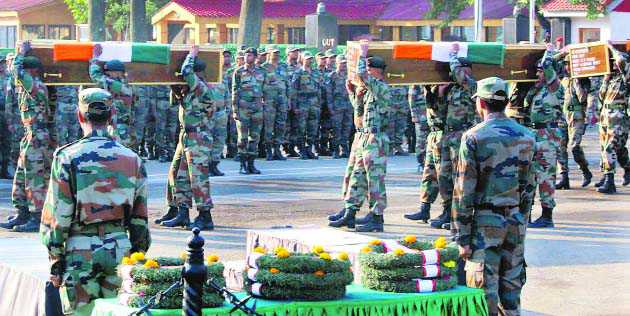
New Delhi/Islamabad, September 18Stung by the deadliest ever attack on the Army in Jammu and Kashmir, DGMO Lt Gen Ranbir Singh on Sunday called up his counterpart in Pakistan expressing “serious concerns” over Pakistani markings found on the equipment used by four “foreign” terrorists suspected to be belonging to Pakistan-based terror group JeM.Pakistan, however, refuted as “unfounded and premature” India’s charge that it was behind the Uri terrorist attack, with its army demanding “actionable intelligence” to support New Delhi’s accusation.Initial reports suggest the four terrorists killed in the Uri attack were from Jaish-e-Mohammad, the Director General Military Operations Lt Gen Ranbir Singh said in a brief statement to the media at the South Block in New Delhi.(Follow The Tribune on Facebook; and Twitter @thetribunechd)He added that since “the terrorists had some items with Pakistani markings, I have spoken to Pakistan DGMO and conveyed our serious concern on the same”.He said the terrorists had fired incendiary ammunition along with automatic fire of small arms that led to army tents and temporary shelters catching fire.”There have been a total of 17 Army fatal casualties. Of these, 13-14 casualties have been due to these tents/shelters having caught fire,” he said.The senior Army officer, in charge of the force’s operations, asserted that the Indian Army remains prepared to thwart any nefarious designs and any evil designs of the adversary shall be given a befitting reply.The DGMO said that four AK 47 rifles and four Under Barrel Grenade Launchers along with a large number of other war-like stores were recovered from the group of heavily armed terrorists.He said the operation for clearance of the area is still in progress and a very deliberate search is being carried out in the entire area around the military complex in Uri.”As such, complete details of the operation are not yet available. However, the operation is being carried out by the Indian Army in a very professional manner and the Army personnel have displayed exceptionally high standards of courage and gallantry while neutralising the terrorists,” Lt Gen Singh said.Amid reports that intelligence agencies had warned of a possible attack, he said all the intelligence agencies are working in close synergy with the security forces and regular intelligence inputs are received from concerned agencies and necessary action is being taken accordingly.He said Army chief Gen Dalbir Singh Suhag has visited the site of operation and taken an “on the ground” assessment of the situation.Defence Minister, who too visited Srinagar, will be updated by Suhag on the situation.”We salute the supreme sacrifice made by our brave soldiers following the highest traditions of Indian Army,” he said.Pakistan army spokesman Lt Gen Asim Saleem Bajwa said following the Uri attack DGMOs of the two countries discussed the situation along the Line of Control through hotline.”Refuting the unfounded and pre-mature Indian allegation, Pakistani DGMO asked his counterpart to share any actionable intelligence,” Radio Pakistan reported citing an ISPR release.Bajwa reiterated that no infiltration was allowed from the Pakistani soil because of “water-tight arrangements” in place on both sides of LoC and the Working Boundary. — TNS/PTI


CONTENTS OF EMAIL FROM ::MAJOR GENERAL S.G.VOMBATKERE

MAJOR GENERAL S.G.VOMBATKERE

Tuesday, September 13, 2016

MYSURU: News of the unhappiness of the Armed Forces (Fauj, for short) with the bureaucracy is old hat. The contempt in which the bureaucracy holds the Fauj is also old hat, reflected most recently in the 7CPC making the already unfavourable position of the Fauj even more unfavourable.

When the 7CPC recommendations were to be implemented for all government servants, all the three Service Chiefs went to THE government and asked the existing pay anomalies be rectified before the 7CPC recommendations were implemented for the Fauj.

That is, the 7CPC award was unacceptable to the Fauj as it was unjust. This move by the three Service Chiefs was in their understanding of the widespread outrage among the rank-and-file and the officers, that the 7CPC had given them a raw deal.

This outrage had already gone viral on social media, and the signal from Service Headquarters informing All Ranks that the matter has been referrred to government and that they should patiently await the outcome, was to pre-empt any overt demonstrations of outrage, which would go against military discipline.

Now the outcome of the Service Chiefs’ approaching the government is that Defence Minister Manohar Parrikar has overruled them and directed them to implement the 7CPC award for the defence services. This has created a very grave situation, in which there can be three possible outcomes, which we will consider along with the repercussions.

One, the Service Chiefs follow Parrikar’s directions. If this is done, they will have to face the fallout of their decision among the rank-and-file and the officers, who are already keyed-up with anger at continuing injustice from the Sarkar (the combination of politicians and bureaucrats). This is wholly unpredictable, and if the worst happens, it will have extremely serious repercussions on military functioning.

Two, if the Service Chiefs argue with the Defence Minister and insist on having anomalies are attended to before implementing the 7CPC award, it will amount to disobedience of orders. This would be a constitutional crisis of hitherto unseen magnitude, and in the worst case, may result in dismissal of the Service Chiefs.

Three, the Service Chiefs have the option of tendering their resignations. (One may presume that all three would do so, in the present circumstance). If government accepts their resignations, the officers next-in-line to take their places would be faced with the same situation.But if on the other hand, the government does not accept the resignations, it will possibly require a resignation from the Defence Minister.

In any of the three contingencies, the nation’s defence preparedness will be irretrievably compromised. All this is at the end of many happenings … Prime Minister Narendra Modi’s promises at Rewari when he addressed Veterans in the run-up to the 2014 election, and his subsequent promises after he assumed office, to get more for the military, have all been proven false.


PM Modi has probably not understood that the soldier is not a fool, and also that the Fauj is the nation’s instrument of last resort.

Defence Minister Parrikar’s contempt for the defence services is a matter of discussion within the serving and retired Fauji fraternity, who noted that he inspected a military guard of honour wearing chappals, that he “saluted” at the Amar Jawan Jyoti with his vest showing, and that he attended the International Fleet Review in February wearing casual clothes, whereas he dresses appropriately when he is abroad.

Parrikar’s peremptory direction to the three Service Chiefs to implement the 7CPC award without delay is the latest itdisplay of his dismissive approach to the Fauj. It is being said that both the Prime Minister and his Defence Minister are jointly responsible for the present contretemps.

(Major General S.G. Vombatkere, VSM, retired as Additional DG Discipline & Vigilance in Army)