Sanjha Morcha

What’s New

Click the heading to open detailed news

Current Events :

web counter

Print Media Reproduced Defence Related News

Civil-military gap must be bridged

Successive pay commissions have served to aggravate the asymmetry

article_Author
Admiral Arun Prakash retd

IN April 2006, the Chairman, Chiefs of Staff Committee, wrote a letter to Raksha Mantri (RM) Pranab Mukherjee, seeking his “…personal intervention for the appointment of a Service officer as a constituted member of the 6th Central Pay Commission (CPC)” and reminding him that “…a lack of Service representation was perhaps one of the main reasons for the dissatisfaction expressed by the Services post 5th CPC award…” While expressing agreement in principle, the RM regretted his inability to comply with this request.

The recommendations of the 6th CPC initially evoked a positive response due to an overall salary hike, but this quickly soured as specific anomalies emerged that were seen as unjust to the military. In an unprecedented move, the three Service Chiefs delayed submission of revised salary bills, effectively deferring implementation to send a message to the government. The reaction to the 7th CPC was even more severe, with the Service Chiefs, in 2016, taking the extraordinary step of writing to the Prime Minister about holding the implementation in abeyance; they executed it only after “assurances at the highest level” that anomalies would be addressed.

Civil-military dissonance has been an issue of long-standing concern in India, and it constitutes a major flaw in our national security matrix. The root of this problem lies in two convictions of the politician; firstly, that “civilian control” of the military can/should be exercised on its behalf by the bureaucracy, and secondly, that civil-military relations are a “zero-sum game” in which civilian control can be maintained/enhanced only by balancing and blunting the military’s influence/prestige. An indicator is the progressive blurring of lines between the military and the Home Ministry-helmed 1.1 million-strong Central Armed Police Forces (CAPFs).

Since relative seniority in the government hierarchy is based on a functionary’s “basic pay”, the easiest way of altering established relativities is by changing the pay structures. The best instrument to effect such changes is the decadal CPCs staffed by bureaucrats. This is how successive pay commissions, all of which have excluded military representation, have served to aggravate this civil-military asymmetry.

Typical of the anomalies that have caused serious concern to the military leadership is a policy termed “Non-Functional Upgrade” (NFU), which guarantees civilians automatic higher pay entitlements, even without a merit or vacancy-based promotion. By according this unjustifiable benefit to the civilians and then to the CAPFs, but denying it to the military, the CPC not only depressed the latter’s relative status but also dealt a blow to morale.

This sense of systemic discrimination was further fuelled by other measures, including a drastic cut in pensions for soldiers disabled on duty and a system of “hardship allowances” that favoured civilians in peace areas over the military in combat zones. A dive into history is necessary in order to get to the root of these problems.

At the time of Independence, a hurried reorganisation of the imperial defence structure took place to suit the new republic’s needs. During this turmoil, the military leadership remained blissfully ignorant of a significant development orchestrated by the civil services; the armed forces HQs, instead of being designated independent “departments” of the Ministry of Defence (MoD), were reduced to “attached offices” and made subaltern to the Department of Defence. This “act of commission” was to be followed by equally significant “acts of omission”.

The Constitution, vide Article 312, created two new “All-India Services” — the IAS and the IPS (to be joined later by the Indian Forest Service). Inherited from the empire was another category of bureaucracy, known as the Central Civil Services, consisting of 89 Group ‘A’ and ‘B’ services.

In 1961, the President promulgated the Allocation of Business (AoB) and Transaction of Business Rules, which provided the administrative framework and guidance for civil service functionaries of the Government of India (GoI).

For 58 years, in none of these documents was there any mention of the military till, in 2019, the 353rd amendment to the AoB Rules incorporated the new Department of Military Affairs (DMA). However, the constitution of the Chief of Defence Staff — a historic step — still did not find mention in these rules.

Since their status vis-à-vis the All-India as well as Group ‘A’ and ‘B’ civil services has remained undefined, successive CPCs, maintaining that the armed forces do not fall into any “recognised category”, have employed whimsical logic to depress their emoluments and, consequently, their status.

Apart from upsetting historic relativities with the IAS, IPS and the CAPFs, such alterations have created awkward situations for military commanders. Civilian personnel of organisations such as Border Roads, Military Engineering Services, Naval Armament Services and Armed Forces HQ Cadre, created to support the armed forces, having overtaken their military superiors in terms of pay grades, now demand an altered relationship.

The Service Chiefs, too, receive perfunctory attention from politicians and bureaucrats because they have no locus standi as per rules of the GoI. It is the civilian Secretary, Department of Defence, who is deemed responsible for the “…defence of India, and every part thereof” and speaks for the Services. This is an iniquitous situation which has stimulated civil-military friction for decades.

As the constitution of the 8th CPC has been promulgated, the issues highlighted above assume urgency. It is incongruous that the standing of the armed forces of the Union should remain unspecified and open to repeated misinterpretation vis-a-vis civilian and police organisations. It is similarly inappropriate that the Service Chiefs and the CDS — responsible for national defence — should be denied due recognition in GoI rules and remain “invisible” in the MoD.

A clear definition of the status of the armed forces as being on a par with the All-India Services and spelling out the role and functions of the military hierarchy will lead to smooth and harmonious civil-military functioning in the MoD and the inclusion of a Service officer as a constituted member of the 8th CPC will raise the military’s morale and bolster national security.

If NFU is considered a rational measure, it must not be denied to the military.

Army officer found fit at enrolment but disabled later entitled to disability pension: HC

Government plea against AFT Chandigarh order dismissed

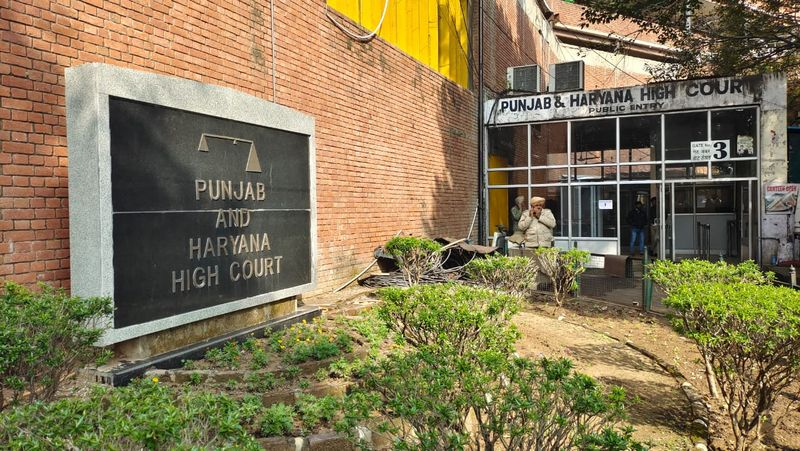
Any officer serving in the Armed Forces who was found medically fit at the time of enrolment but was subsequently diagnosed with a disability is entitled to disability pension by rounding off the same, the Punjab and Haryana High Court has ruled.

The ruling came while dismissing a writ petition filed by the Government of India against an order of the Armed Forces Tribunal (AFT), Chandigarh, dated September 15, 2023. The Tribunal had directed the government to give benefits of disability pension in favour of ex-servicemen Kashmir Singh by rounding off the disability element of disability pension at 50 per cent for two years from May 01, 2001 to April 30, 2003, which was assessed at less than 20 per cent (6-10 per cent).

Counsel for the Government submitted that Kashmir Singh had joined the Army on September 14, 1983, and was discharged from service on April 30, 2001 in a low medical category due to “dulodenal ulcer and reflux esophagitis’. The disability was at 6-10 per cent by the Medical Board and was held to be neither attributable to nor aggravated by military service. As the disability was not assessed up to 20 per cent, which is a condition precedent for the grant of disability pension, the Tribunal, the Centre argued, had exceeded its jurisdiction in granting disability pension.

After hearing the arguments, the Bench of Justice Harsimran Singh Sethi and Justice Rohit Kapoor upheld the AFT’s order.

The Bench said in the present case it was undisputed that no note of any disease has been recorded at the time of appellant’s acceptance for military service.

“In the absence of any perversity in the impugned order, either on facts or settled principle of law, no ground is made out for interference by this Court,” the Bench held, dismissing the writ petition.

The Bench further said that as per judgment in Dharamvir Singh’s case, noting that when an Army personnel is found fit at the time of enrolment but later contracts with a disease, the disability is presumed to have been aggravated by and attributable to military service.


Arms consignment dropped by drone seized near International Border in J-K’s Samba

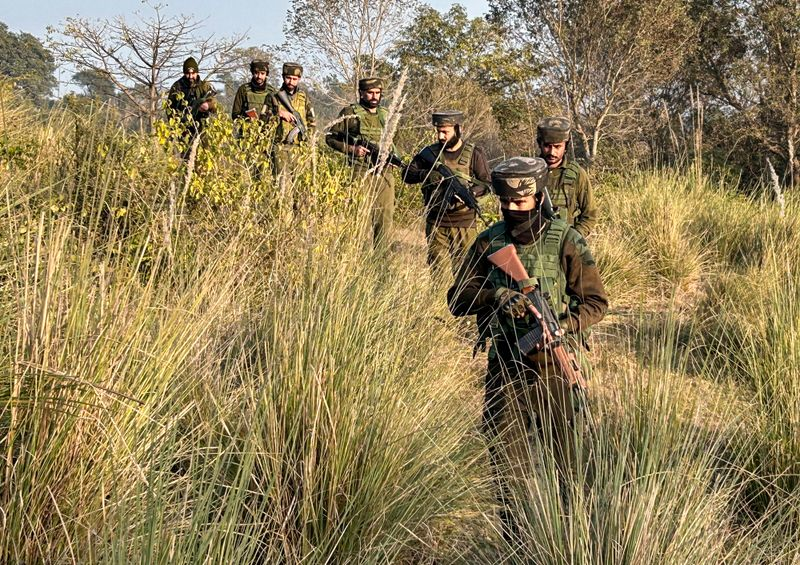
An arms consignment, apparently dropped by a drone from Pakistan, was recovered from a forward area near the International Border in the Samba district of Jammu and Kashmir, officials said on Saturday.

The recovery of the consignment, including two pistols, three magazines, 16 rounds and a grenade, was made amid heightened security to thwart any attempt by terrorists to disrupt the upcoming Republic Day celebrations, the officials said.

They said a joint team of the Border Security Force (BSF) and Special Operations Group (SOG) of J&K Police launched a search operation in the Paloora village of Ghagwal late Friday night following information about suspected movement of a drone from across the border.

The search parties found a packet, wrapped in yellow tape, from the banks of a stream and opened it with the help of a bomb disposal squad, leading to the recovery of the weapons, the officials said, adding the operation was still continuing when the last reports were received.


A memorial for supreme sacrifice of 66 Kuka Sikhs

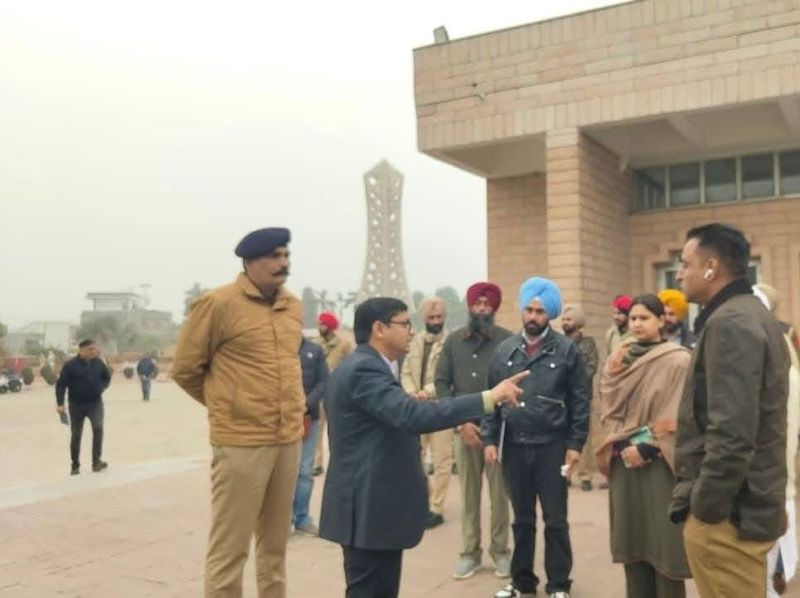
Namdhari Kuka Smarak, constructed in about seven acres of former defence land along the Jarag road to Khanna, lies in memory of the supreme sacrifice of 66 Sikhs executed by the British in 1872.

The memorial features a 66-feet- tall Khanda with 66 holes, each representing a martyr. The youngest among the group was Bishan Singh, just 12 at the time. A large dome-shaped meditation hall, a museum-cum-library and a prayer hall have also been constructed at the venue, now considered to be of profound historical significance. It attracts visitors wanting to pay homage to martyrs on January 17 every year. A state-level function is held at the memorial annually as a tribute to the martyrs.

The Sikhs were executed via cannon on January 17 and 18, 1872, under orders of British Empire representative, Deputy Commissioner John Lambert Cowan. The execution came over an attack on a fort at Malaudh in Ludhiana district and another in the erstwhile state of Malerkotla. A total of 49 Sikhs were executed on the first day, and the remaining on the second.

The execution continued despite orders that read: Avoid any hasty action. The orders were received mid-action.Cowan had also misguided his superiors in British Government, labelling the Kuka Sikh’s resentment as a “revolt” that could disturb the tranquility.

Though Cowan was dismissed for violating orders to keep the detainees in custody, he tried to justify his actions saying “I acted from no vain motive or from cruelty or a desire to display authority. The punishment was imperatively necessary to prevent the spread of an insurrection.”

Satguru Ram Singh founded the Kuka sect on April 12, 1857, at Bhaini Sahib in Ludhiana district. He roped in and encouraged the people for the freedom of the country. Singh was a pioneer among those who used non-cooperation as a weapon to free India from the British rule. His movement included boycott of government services, foreign goods, educational institutes and courts of law. A “Kuka Platoon” was created in Kashmir during the late sixties. Earlier, three Namdhari Sikhs were hanged on August 5, 1871, and two in Ludhiana on November 26, 1871. This came after attacks on slaughterhouses in Amritsar and Raikot.

On January 15, 1872, a group of 200 Kuka Sikhs, led by Hira Singh and Lehna Singh, attacked Malerkotla. They surrendered following loss of lives on both sides.

Ignoring orders from his seniors to detain them pending trials, Cowan ordered to blow them in groups of seven. They were tied to cannons and blown.

Given a chance to save his life by denouncing the sect, 12-year-old Bishan Singh chose otherwise. Enraged, he even pounced on Cowan. His hands were chopped by Cowan’s soldiers before he was killed.

Waryam Singh, who was asked to return as he was too short to reach the cannon, brought stones and sand from nearby fields to prepare a platform to stand on.

Satguru Ram Singh and prominent chiefs, known as subas, were arrested and exiled as the Malerkotla attack had given the British Government a reason to snub their movement.

Followers’ repeated requests to include the function in the calendar of national functions have fallen on deaf ears of successive governments.

The administration, led by Deputy Commissioner Viraj S Tidke and Senior Superintendent of Police (SSP) Gagan Ajit Singh, is busy making arrangements for comfort and safety of visitors to the function scheduled for the next weekend.


When Pakistan Defence Minister calls for Israeli PM’s ‘kidnapping’ like Maduro, interview cut short on Live TV

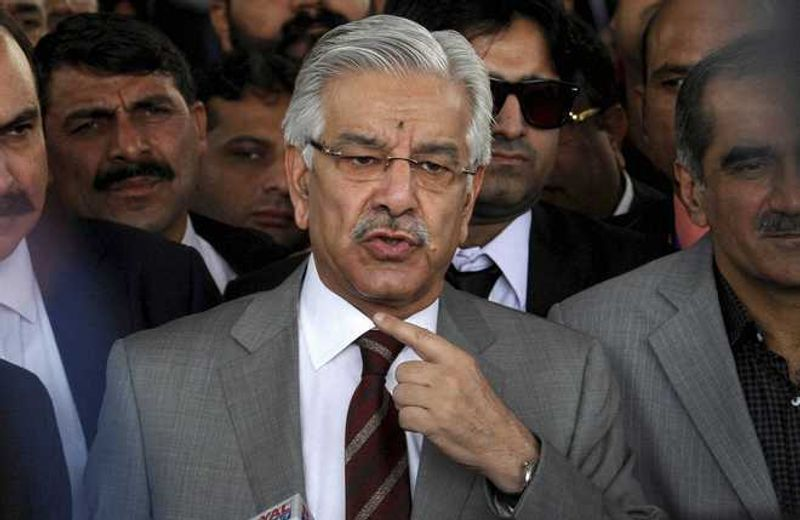
Pakistan’s Defence Minister Khawaja Asif sparked controversy during a televised interview after calling on the US and Turkey to “kidnap” Israeli Prime Minister Benjamin Netanyahu and bring him to trial over Israel’s military actions in Gaza.

Speaking to senior journalist Hamid Mir on Geo News, Asif described Netanyahu as the “worst criminal of humanity” and referred to arrest warrants issued by the International Criminal Court (ICC) against the Israeli leader. “Netanyahu is the most wanted criminal. America should abduct him and bring him to trial. If the US is humanity’s friend, it will do it,” Asif said.

He made the remarks while referencing the recent US capture of Venezuelan President Nicolás Maduro, suggesting Washington should take similar action against Netanyahu. When Mir raised the possibility of Turkey detaining the Israeli prime minister and bringing him to Ankara, Asif responded, “Turkey may abduct Netanyahu, and we Pakistanis are praying for it.”

Asif further alleged that Israel’s actions against Palestinians were unprecedented, claiming, “No community has done what Israel has done to Palestinians in the last 4,000–5,000 years. He is the biggest

The interview took a tense turn when Asif appeared to imply that countries backing Netanyahu should also be punished. Without naming any leader, he remarked, “And the people who are supporting him, what does the law say about those supporting the guilty…”

At that point, Mir abruptly cut him off, calling for a commercial break. “Khawaja sahab, you are the defence minister of Pakistan. After hearing your words, many people may think you are talking about [US President] Donald Trump. I don’t know who you are referring to, so I will take a break,” Mir said.

Following the break, Geo News announced that Asif would not continue on air. According to The Jerusalem Post, the interruption appeared to be a damage-control effort, as Pakistan has been seeking to improve relations with the United States in recent months.

Islamabad has been cautious in managing its foreign policy, particularly after tensions with India during Operation Sindoor. Pakistan has publicly praised US President Donald Trump in recent weeks, even backing him for the Nobel Peace Prize, while also balancing its close ties with China.

Pakistan does not recognise Israel and has consistently opposed its military operations in Gaza. It strongly supports the establishment of an independent Palestinian state and remains one of the few Muslim countries whose passports explicitly prohibit travel to Israel.


116 protests in 22 locations in a day; Iran’s unrest surges despite Internet shutdown

The Institute for the Study of War, a policy research organisation, on Saturday said it recorded 116 protests across 22 provinces since 3:30pm (local time) on January 8.

As per the report, Iran saw 20 huge protests- ones that have a turnout of over 1,000 people.

In a post on X, the Institute said, “Critical Threats and ISW have recorded 116 protests across 22 provinces since 3:30 PM ET on January 8. Twenty of these protests were large protests, which CTP-ISW defines as protests with more than 1,000 participants. CTP-ISW’s protest data since its last data cutoff likely reflects only part of the protest activity that has taken place in Iran since that time, given that the internet shutdown restricts protesters’ ability to publish and share videos of the protests. Some protesters have reportedly used Starlink to send reports of protests to foreign media.”

MORE: @criticalthreats and ISW have recorded 116 protests across 22 provinces since 3:30 PM ET on January 8. Twenty of these protests were large protests, which CTP-ISW defines as protests with more than 1,000 participants. CTP-ISW’s protest data since its last data cutoff likely… 

Earlier in the day, the Institute said that the regime had sustained the internet shutdown in a bid to dampen the protests, but they have been going on regardless.

n a post on X, the think tank said, “The Iranian regime has sustained its nationwide internet shutdown, likely to disrupt protest coordination and obscure the scale of its repression. Widespread protest activity has continued to take place across Iran amid the internet shutdown.”


Shooting rampage in Mississippi leaves 6 dead as gunman opens fire at 3 locations

The authorities say a person was in custody on Saturday after six persons were killed in a series of related shootings in eastern Mississippi.

Clay County Sheriff Eddie Scott said in a Facebook post that “multiple innocent lives” were lost “due to violence” in the town of West Point, near the Alabama border. The sheriff told WTVA that six people were killed in three locations.

A suspect was in custody and there was no threat to the community, the sheriff wrote on Facebook.

“I ask that you lift our victims and their families in your prayers. Law Enforcement is busy investigating and will release an update as soon as possible,” he wrote.

The sheriff’s office did not provide further details early Saturday, but planned a morning news conference.


Himachal youth among 3 Indians detained after US seizes Russian oil tanker

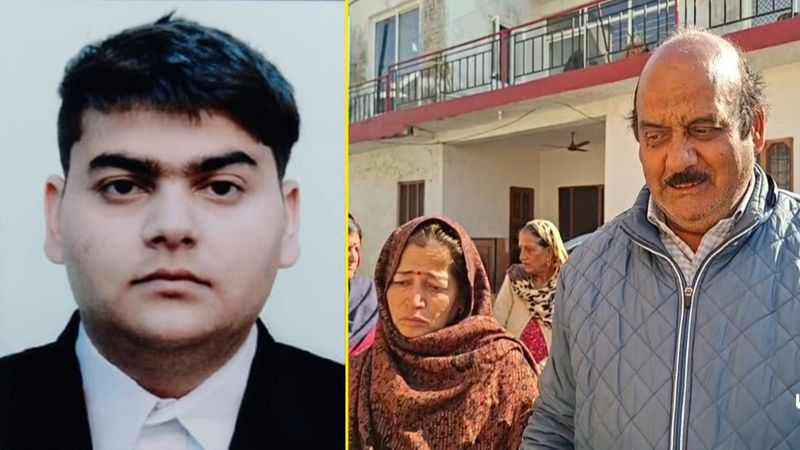
A local youth, Rikshit Chauhan, is among the three Indian nationals detained by the United States after the oil tanker Marinera was seized by the US Coast Guard in the North Atlantic on Wednesday. 

The tanker, which was earlier named Bella 1, was operating under the Russian flag and had been chartered by a private trader. It was reportedly carrying crude oil linked to Venezuela and was en route to Russia when it was intercepted.

At the time of the seizure, the vessel had a total of 28 crew members on board, including three Indians, 20 Ukrainians, six Georgians and two Russians. All crew members are currently under detention by the US authorities, pending further legal and diplomatic procedures.

A team from The Tribune this afternoon visited Rikshit’s family which resides in Ward 7 on the outskirts of Palampur under the Palampur Municipal Corporation. The family is anxious and distressed over the sudden loss of contact with their son.

Ranjit Singh, father of Rikshit, said that they had last spoken to their son five days ago over the phone. “We have not received any information from any official source. Neither the Indian Government nor the Russian authorities have contacted us so far,” he said with tears in his eyes. “Our entire family is extremely worried about his safety and well-being.”

He added that Rikshit had joined Merchant Navy in August last year, marking his first assignment at sea. The family had been proud of his new career, but now fears and uncertainty have overshadowed their hopes.

Family members further stated that a representative of the Merchant Navy Officers Association of India had reached out to them and informed that the Russian Government was closely monitoring the situation. Russia has reportedly urged the United States to ensure humane and dignified treatment of all 28 crew members and has demanded that their rights and interests be strictly respected. Moscow has also called for no hindrance to the prompt repatriation of the crew to their respective home countries.

In the meantime, local MLA Ashish Butail contacted the family and assured them of all possible assistance. He has requested the Chief Secretary, Sanjay Gupta, to take up the matter urgently with the Ministry of External Affairs so that diplomatic efforts can be intensified for the early release and safe return of the local youth.

The incident has triggered concern not only among the families of the detained crew but also within diplomatic circles, as it involves international maritime law, sanctions, and the rights of civilian seafarers. Families of the crew members are now anxiously awaiting official communication and a humanitarian resolution to the situation.


The Gnat pilot who downed Pakistan’s Saber jet in 1965 war

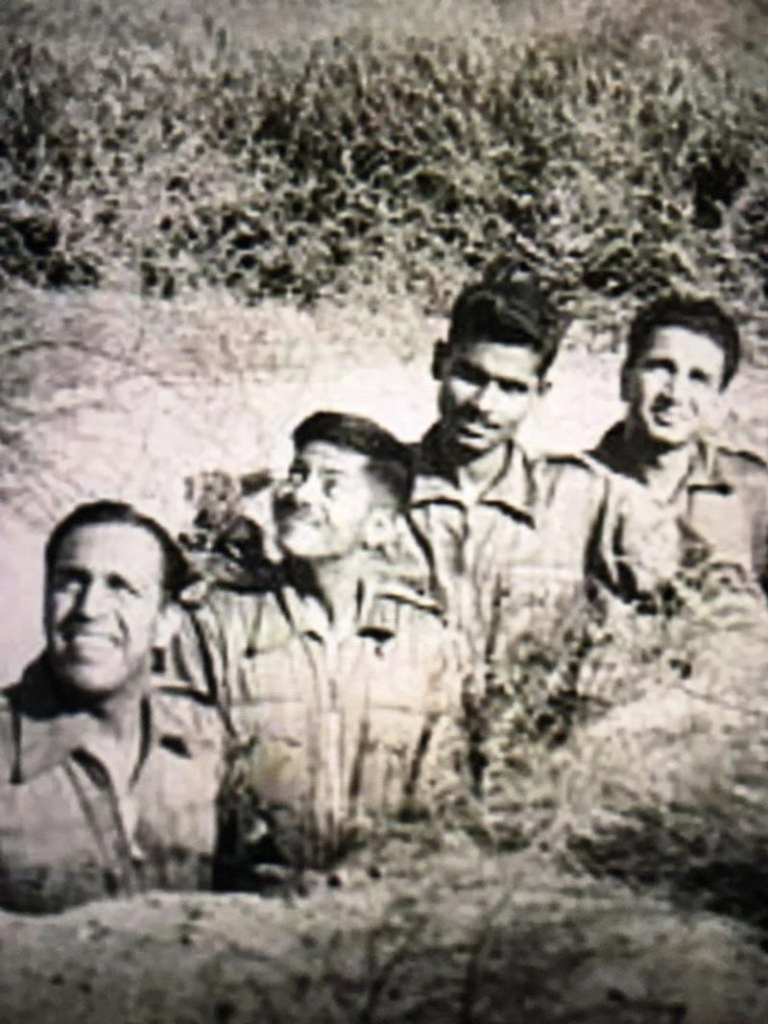
In the pre-dawn skies of September 4, 1965, as the war with Pakistan intensified, a young fighter pilot from the hills of Kangra registered his name in the Indian aviation history. Flying a nimble Folland Gnat, Flight Lieutenant Virendra “Pat” Singh Pathania engaged a formation of Pakistani F-86 Sabre jets — the aircraft famed for their speed and firepower. Minutes later, one of the Sabre jets fell onto the ground.

It was the first confirmed air combat kill of the Indian Air Force (IAF), a defining moment that should have made Pathania a household name. Instead, his legacy slowly faded from public memory.

That morning above Pathankot, however, his brilliance was unparalleled. As the Sabre jets swerved, dived and climbed, Pathania held his nerve. His manoeuvres were crisp and instinctive. In a dramatic dogfight, he outpaced the enemy, slipped behind one of the jets and fired with deadly precision. The Sabre plunged earthward, marking India’s arrival in the modern aerial warfare.

The victory proved far more than a single kill. It lifted morale and helped the IAF assert air superiority during the 1965 war with Pakistan, demonstrating that Indian pilots could match the best in the region through skills and courage.

For this act of exceptional gallantry, Flight Lieutenant Pathania was awarded the Vir Chakra, one of India’s highest wartime honours. Today, as his story resurfaces, he is remembered not only as a fighter pilot but also as a pioneer whose legacy continues to inspire generations of aviators.

From Nurpur’s royal lineage to the skies

Virendra Singh was born into the royal Pathania family of Nurpur on November 6, 1937, and inherited a legacy of warriors. Yet, unlike his forebears, his ambitions lay not on land but in the skies. Known affectionately as “Bhoti” among friends, his childhood was shaped by disruption. Partition forced him to leave Burnhall School in Srinagar and continue his education in Rey village and later in Dharamsala.

Watching aircraft thunder over the Kangra valley, the young Pathania found his calling. His choosing the Air Force over the family’s traditional Army lineage was seen as an act of defiance. Even after clearing the Joint Services Wing examination (now the NDA), he was urged to reconsider. He did not.

Commissioned into the IAF in 1956, Pathania served with Squadron No. 23 and 18, flying Vampire jets before transitioning to the Hawker Hunter. Postings in Poona, Kalaikunda and Bagdogra sharpened his combat skills. In 1963, he was selected for the elite Pilot Attack Instructor Course, the IAF’s equivalent of a Top Gun programme. Graduating among the finest dogfighters in the country, Pathania returned to Squadron No. 23 unaware that the history awaited him.

When Pakistan’s Sabre jet fell on that September morning in 1965, Pathania not only defended Indian airspace but also etched Nurpur’s name into the annals of military aviation.

Life beyond the cockpit

After the war, Pathania returned to civilian life with quiet dignity. In December 1965, he married Asha from the royal family of Keonthal (Junga). Their eldest son, Trigun Vir, is associated with Eagle Riders (India) while their second son, Karan Vir, chose agriculture over aviation. Their daughter Preeti has pursued her own professional ventures. The family today divides its time between Patiala and their ancestral home in Rey, preserving the cultural and historical legacy of the Nurpur royal family.

Overlooked for decades, Flight Lieutenant Virendra “Pat” Singh Pathania exemplifies how the greatest heroes often remain unsung, despite their extraordinary contributions.

Advertisement


Colonel attached with Rajputana Rifles suspended for misconduct

The Army has initiated disciplinary proceedings against a Colonel attached with the Rajputana Rifles Centre for various irregularities and professional misconduct and has been placed under suspension for three months.

The officer, who was earlier commanding an infantry unit based in Rajasthan, is facing 10 charges under Section 63 of the Army Act for acts prejudicial to good order and military discipline and two charges under Section 54 for behaving in a manner unbecoming his position as an officer.

A court of inquiry convened to investigate the allegations against him had held him blameworthy for several acts of omission and commission, including interference in an ongoing investigation against a jawan by the Military Police.

Subsequently, disciplinary action was ordered against the Colonel and he was attached to the regimental centre for further proceedings which included hearing of charge and recording of summary of evidence, a prelude to a possible trial by general court martial.

The officer, on his part, has averred irregularities in the proceedings against him and violations in compliance of mandatory provisions of law and has submitted a representation in this regard to Army Headquarters.