Sanjha Morcha

What’s New

Click the heading to open detailed news

Current Events :

web counter

Print Media Reproduced Defence Related News

Northern Command chief visits Valley, reviews security situation

Northern Command chief visits Valley, reviews security situation

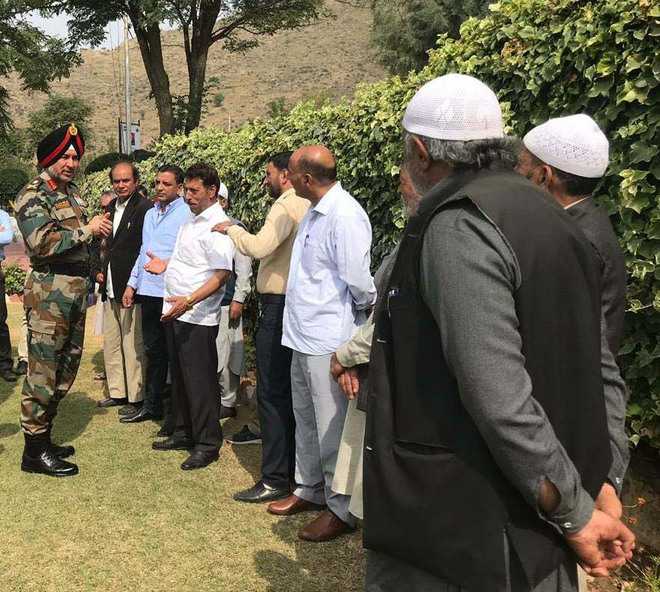
Lt-Gen Ranbir Singh, GOC-in-C, Northern Command, interacts with locals in Kashmir. Tribune photo

Our Correspondent

Jammu, September 20

To review the prevailing security situation, Lt-Gen Ranbir Singh, General Officer Commanding-in-Chief, Northern Command, visited the Kashmir valley on Friday.

The General was accompanied by Chinar Corps Commander, Lt Gen KJS Dhillon who visited formations and units in the hinterland and Line of Control (LoC). He was briefed on the counter-terrorist operations undertaken in the hinterland and the measures taken by the Commanders on ground to ensure safety and well-being of the people.

He was apprised of the atrocities being committed by the terrorists against innocent civilians. He also interacted with people from all walks of life and took a firsthand review of the prevailing situation in the valley and on the Line of Control.

The Army Commander was briefed by the Commanders on ground about the counter infiltration grid and the befitting response being given to the enemy on ceasefire violations. The Army commander lauded the alertness, bravery and motivation of the troops in discharging their duties.

He also commended the exemplary synergy among all security forces and the civil administration.He reinforced the need to be fully prepared to defeat the enemy designs.


War is won in the mind by Lt Gen Raj Kadyan (Retd)

Lt Gen Raj Kadyan (Retd)

I had developed a sore eye during the course of the war. After the ceasefire, I decided to consult a doctor. Since our medical facilities hadn’t yet been set up, I went to the Pakistani military hospital in Dacca on December 18, 1971.

The Registrar, a Punjabi Major, was genial and friendly. As I was waiting for the ophthalmologist to be free, he ordered tea and we engaged in general conversation. On learning that I too hailed from erstwhile Punjab (now Haryana), and that my father had a gallantry award land grant in Montgomery, Pakistan, he seemed to warm up even more. Our conversation covered the usual military topics: accommodation, schooling, salaries, etc. Conspicuously, there was no talk of the war. Assuming that he wanted to avoid the embarrassment of the vanquished, and conscious of the universal admiration the victorious Indian Army had since acquired, I too kept away from the subject.

When the ophthalmologist got free, the Registrar gave me a ‘see you later’ handshake and sent a staff member to guide me to the department. He had already told the doctor on telephone that he was sending a special case.The eye specialist was more serious. He was also a thorough professional. After peeping into my eye with a pencil beam and having made me read wall charts through different lens combinations, he luckily found nothing more serious than an infection. Handing me a bottle of eye drops, he said reassuringly that my eye would be perfectly fine. Just to lighten the atmosphere, I jokingly said, “Thank you doctor, whenever we fight next, I will be able to shoot better.” But the humour failed to elicit any change in his somewhat wooden demeanour.

The telephone connection to India had reportedly been established. On return to the Registrar’s office, I asked him to book a call to Delhi, which he promptly did. I waited and further conversation followed, now also covering a larger canvas about our respective countries. Still there was no talk of war.

Soon it was time for lunch. Their officers’ mess had closed and the food was to come from the ‘langar’ — the soldiers’ cook house. All other doctors also assembled in his office and the Registrar made introductions. They customarily thanked me for accepting their invitation to join them for lunch. The menu comprised large and thin roomali rotis and some delicious dal. The conversation flow was easy, with the Registrar being the lead talker.

It was now past 2:30 pm. There seemed no chance of the call materialising. The Registrar had enquired from the operator in the interim to learn that the call was still in queue. I thanked my hosts and got up to leave. It was then that the Registrar first spoke of war. There was no bitterness or rancour and the words seemed to come deep down from his heart.

“Major Sahib,” he said in a matter-of-fact manner without being squeamish, “we are doctors and none of us fought at the front. We, therefore, do not know who won and who lost.” He looked around at others, who nodded in agreement. “But seeing the behaviour of the Indian Army, I have no doubt that we have lost the war.”

He gave me a warm parting hug.

I was reminded of the truism — while battles are won or lost fighting through minefields and barbed wire entanglements, a war is won in the mind.


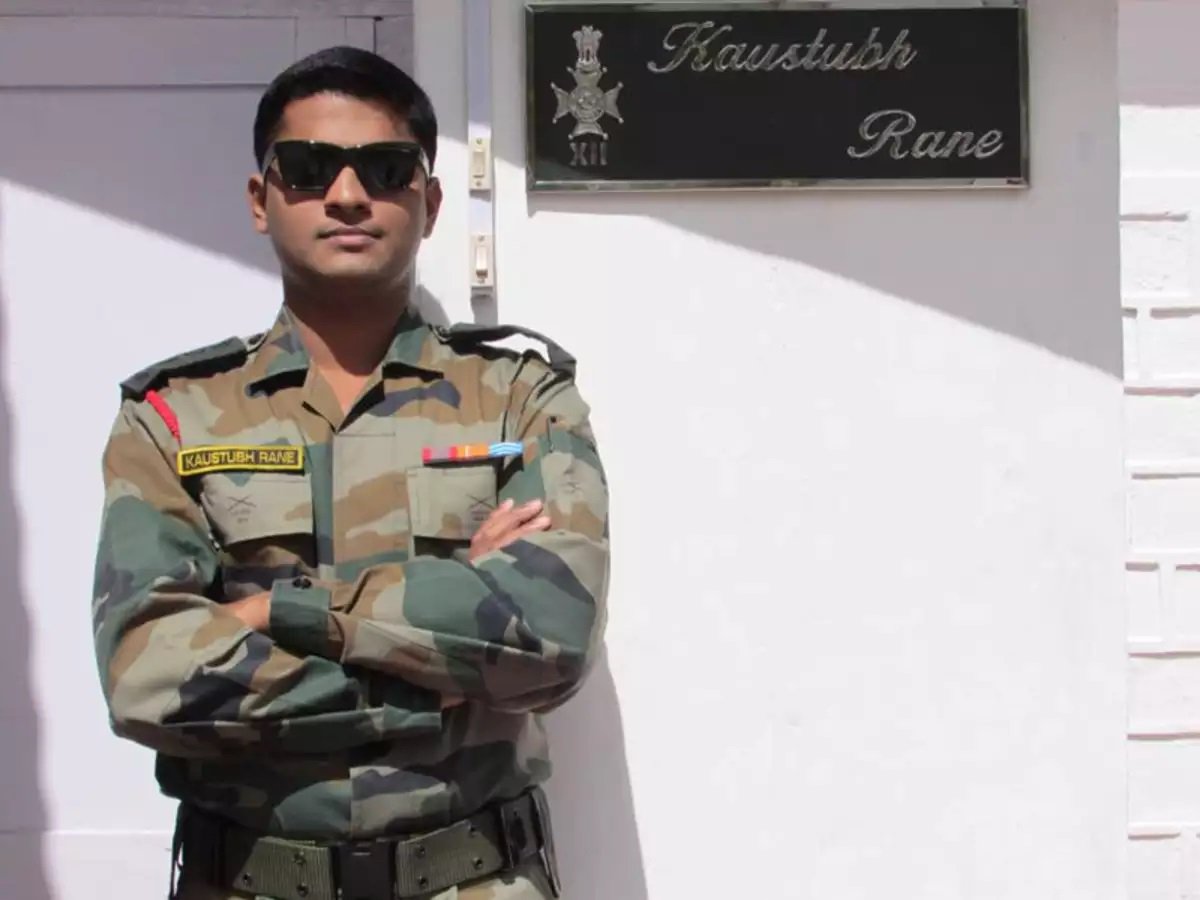
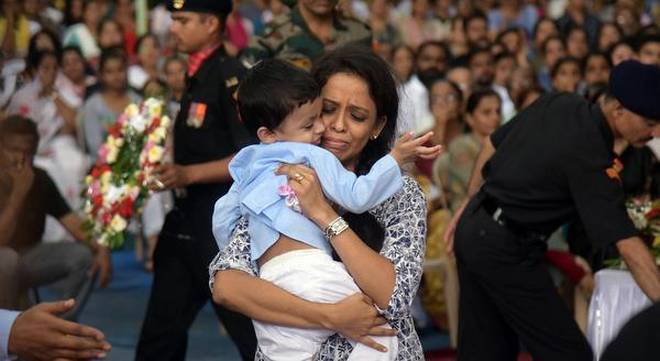
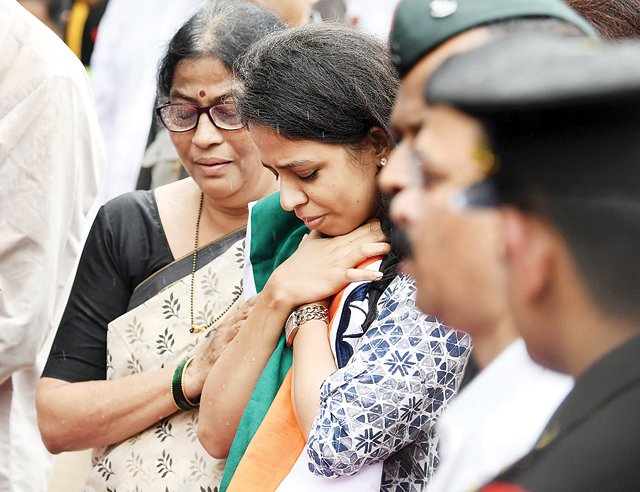
One Year After Her Husband Was Martyred, Kanika Rane Is Now Set To Join Indian Army

Major Kaustubh was one of the 4 soldiers who got martyred in an attack by the infiltrators in Kashmir’s Bandipora district last year.

While the infiltrators couldn’t implement what they had set out to do, 4 brave officers including Major Kaustubh lost their lives in the process of stopping them.

Source: Times of India

Showing great spirit, his wife Kanika has decided to join the Army and will begin training at the National Defence Academy (NDA) soon. She has already cleared the Service Selection Board exam and once her training period is over, she will be serving the nation exactly like her husband.

Source: The Hindu

Talking to Mirror Now, Kanika said that it was her husband who taught her to face life’s challenges boldly.

Kaustubh used to say that if life pushes you down, you always have the harness to pull yourself back.

Source: DNA

A project manager until few months ago, Kanika is ready to turn her life around and we salute her for that.


The costs of Narendra Modi’s morality governance paradigm

The policies for a nearly $3 trillion economy cannot be based on good versus evil storytelling

Don’t let people game the system, deal with tax evaders firmly” is what the finance minister, Nirmala Sitharaman, supposedly told the income tax department on July 25, soon after she presented the Union Budget in Parliament. The finance minister has set a lofty target of a 23.3% increase in income tax revenues for financial year 2020, compared to a meagre 7% growth in the current year. In other words, Sitharaman wants income tax revenues for the next year to grow three times faster than it did this year. Hence, the putative pep talk to income tax officers.

AFP■ The purported suicide note of VG Siddhartha is a grim reminder of the devastating impact that an aggressive tax revenue targeting policy can unleash on our economy and societyThe premise behind this policy goal is flawed, and disturbing. The tone and tenor of the finance minister’s budget this year is symptomatic of a larger and deeper malaise of a “morality governance” paradigm that is threatening to derail our society and economy, as seen in the recent tragic suicide of the founder of the successful Café Coffee Day business, VG Siddhartha.

There is a “good versus evil” framework that defines economic policymaking of the Narendra Modi government. The playbook seems to be to portray an “evil”, then position oneself or a policy as the “good”, to kill and triumph over this “evil”.

It started with the demonetisation policy in November 2016 that constructed a false narrative of an “evil” of millions of Indians, hoarding illegal cash in their homes, and under their

pillows. The PM’s demonetisation idea was supposed to be the “good” that will destroy and triumph over this “evil” of black money hoarders. It did not matter to the government that evidence pointed to the fact that hoarded black money was typically not stored in cash. It did not also matter that eliminating 86% of all currency was bound to impact hundreds of millions of innocent others who did not possess any black money. All that mattered was the popular narrative that the government was fighting a “good versus evil” battle.

Similarly, the fundamental economic idea behind the Goods and Services Tax (GST) was to ease bottlenecks for inter-state trade and boost commerce. Instead, the Modi government once again applied its morality governance paradigm, and turned GST into a narrative of the “good” (GST) that will destroy and triumph over the “evil” of informal businesses that remain outside the tax net. The GST initiative was recast as a policy aimed at demolishing the evil informal businesses that evaded taxes, and formalise them into the mainstream economy. Again, it did not matter to the government that economic history tells us that no major country has set out to explicitly formalise its economy as a stated goal, and formalisation is an inevitable outcome of economic development. The net result of this was a botched-up GST, with a messy structure and harassment of small businesses, portrayed as the villains. This crushed the economy, which is still reeling under these twin shocks of demonetisation and a messy GST.

The latest in this playbook is the underlying tone of the recent budget presented by Sitharaman. The prevalent notion that India has a vast population of tax evaders is unfounded and baseless. Individuals earning less than ₹5 lakh a year need not pay income tax, as per the latest income tax slabs and exemptions. Going by India’s income distribution, less than 10% earn more than ~5 lakh a year. In other words, 90% of Indians are anyway legally exempt from having to pay income tax. India’s income tax exemption limit for its level of per capita Gross Domestic Product is among the highest in the world, and it is one big reason why the percentage of Indians that pay income taxes is very low. While there surely are income tax evaders, it is not the case that a vast majority of Indians evade tax, and need to be dealt with “firmly”, as it is made out to be.

But in the morality governance paradigm of this government, there is this big “evil” of hundreds of millions of tax evaders, and the government is apparently fighting this evil through aggressive tax scrutiny and collections. Like demonetisation and GST, this belligerent tax collection policy is fundamentally flawed in its premise. At a time when business confidence is low, the finance minister’s license to the income tax department to go after imaginary tax evaders, and extort sacks of tax revenues, will paralyse business activity and destabilise the economy even further. The purported suicide note of Siddhartha, alluding to the pressure he faced from the income tax department, is a grim reminder of the devastating impact that an aggressive tax revenue targeting policy can unleash on our economy and society.

Ostensibly, commentators may argue that this morality governance paradigm of portraying the PM and his government as the “good” triumphing over the “evil” of the nation has reaped rich electoral dividends for the ruling party, regardless of its economic consequences. Electoral victories aside, I hope that the Modi government will also appreciate that economic policy for our nearly $3 trillion economy needs careful thought and analysis, and cannot be based on some whimsical “hero versus villain” or “good versus evil” morality storytelling.


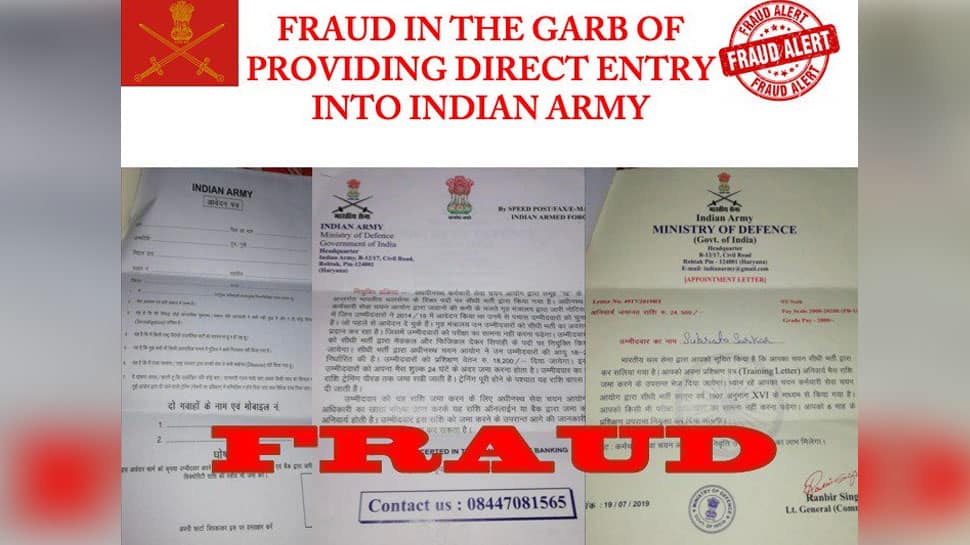
Indian Army warns against fraudsters using fake letters claiming to provide direct entry as officers, jawans

Taking to Twitter, the Army said, “Number of fraudsters are using fake Indian Army letters claiming to be providing direct entry into Indian Army. Some reported to have been duped. Be Careful! Do not fall for such deceit & trap.”

Indian Army warns against fraudsters using fake letters claiming to provide direct entry as officers, jawans

The Army on Wednesday issued a warning to the people against fraudsters who are using fake letters claiming to provide direct entry into the Indian Army. Some people have also been, according to the Army. The Army has asked people to be careful and not fall for such trap and deceit.Taking to Twitter, the Army said, “Number of fraudsters are using fake Indian Army letters claiming to be providing direct entry into Indian Army. Some reported to have been duped. Be Careful! Do not fall for such deceit & trap.”


Politicians should read The Guns Of August’

Lt Gen NS Brar, PVSM, AVSM, VSM (retd) has authored Drummers Call: An Anthology Of Writings While Following The Drum. He had a distinguished military career spanning 40 years. Notably, he was appointed colonel commandant of the artillery regiment and was honorary ADC to the president of India.He speaks to HT’s Aishwarya Khosla.

Three books one must read before one dies

In the present environment with Kargil in the news, politicians and laymen should read The Guns of August by Barbara W Tuchman. The Revenge of Geography: What the Map Tells Us About Coming Conflicts And The Battle Against Fate by Robert D Kaplan and The Rise And Fall Of The Great Powers: Economic Change And Military Conflict from 1500 to 2000 by Paul Kennedy. The regime makers will perhaps be more deliberate with their speech if they read these books.

Growing up, what were your favourite books?

Frederick Forsyth’s Day Of The Jackal, which chronicles the story of a professional assassin contracted by a French dissident organisation to kill president Charles de Gaulle,was a favourite, as was Reader’s Digest. I also grew up on a steady diet of Commando comics, which are sadly disappearing .

Your autography will be called…

Up Front. It will be anecdotal and factual with no holds barred.

Advice for budding writers

Amateurs should strive to keep their language simple and sentences short and crisp. Whatever facts and figures are put out should be checked and rechecked multiple times. For instance, Khushawant Singh never used highflown language. He made a point and moved, to leave an impact on the reader.


How to file ITRs yourself

STEP-BY-STEP GUIDE
The government may extend the deadline to file returns, but it is better not to wait till the last minute. A breakdown of all you need to know.

MUMBAI : It is the time of the year when everybody is busy filing their income tax returns (ITR). Though the current deadline to file your ITR is July 31, the government is likely to extend this owing to the delay in the release of Form 16 — a document required by salaried individuals for the process.

Usually, Form 16 is supposed to be issued by your employer by June 15. This year, the date was extended to July 10. Even if there is a change in the deadline, you still have to file your ITR. Hence, instead of waiting for the last date, you should do it right away. Did you know that you can file your ITR yourself? Usually, individuals seek help from a chartered accountant or financial advisor to do the ITR process. However, this time if you are planning to do it on your own, here is the process.

STEP 1

The first thing you need to do is collect all the relevant documents required to file your ITR. The Income Tax (I-T) department doesn’t ask you to attach any of the documents during the filing process, but you will need the documents to fill the details.

Since you have to fill your personal details, you will need your Permanent Account Number (PAN) card and Aadhaar card. You will also need Form 16, Form 16A, details of dividends, long-term and short-term capital gains statements, interest statement of your bank account and any other income-related documents. Since you also have to cross-check details of taxes paid earlier, you will require your TDS certificate and 26AS. Additionally, you must keep your bank IFSC code and other account details handy as you will have to mention your bank account details. If you have made tax saving investments and expenses, such as insurance premiums, home and education loans, and donations, you need to keep the proofs ready.

STEP 2

After you have collected all the necessary documents, check for the right ITR forms. Currently, the I-T department provides seven ITR forms. You have to pick the relevant one. The form varies based on the source of your income and if you use the wrong form to file your ITR, it will be considered invalid. Individuals can use ITR-1, ITR-2, ITR-3 and ITR-4.

ITR-1 is the most basic form to file your returns. It is meant for individuals who have income from salary, income from one house and income from other sources such as lottery and horse race. Also remember that the income should not exceed ₹50 lakh.

ITR-2 will be relevant to you if you have income from a business, capital gains income, income from more than one house property, and other incomes. Considering that the tax department has now made it mandatory to provide additional details, you will need to have your documents handy for it.

The ITR-3 form is for individual businessmen and professionals. If you are filing ITR under Presumptive Taxation Scheme (PTS), you can use the ITR-4 form.

“If you are looking to file ITR-1 and ITR-4 then you can do it without taking help from anyone. You just need to have some knowledge of the taxation and ability to operate the website. However, if you have to file ITR-2 or ITR-3, then it is suggested that you take the help of a chartered accountant or tax return preparer (TRP) as these are more complex,” said Naveen Wadhwa, deputy general manager, Taxmann.com, a tax service provider.

STEP 3

Once you know which ITR form to choose and have your documents ready, visit the income tax department website: www.incometaxefiling.gov.in. Once you login in, you can start filing your returns. You will get a pre-filled form with details of taxes paid and income in the financial year. Make sure to go through the details of the form and cross check for any errors. In case there is a mismatch, you can make the change. Once you have filled it, you can submit it and e-verify it.


Veer Naris remember great sacrifices

Veer Naris remember great sacrifices

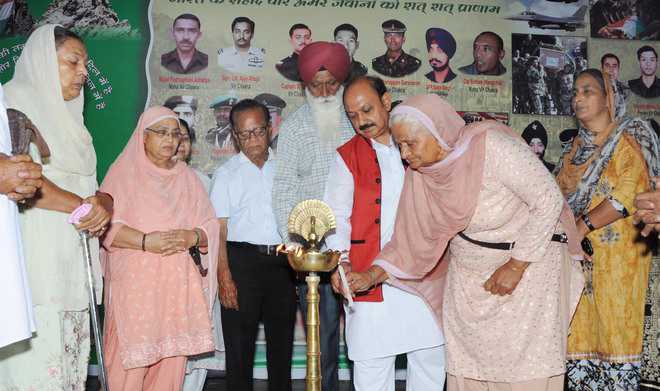
Parents of Kargil martyrs light the ceremonial lamp at a function to mark the 20th anniversary of the war in Jalandhar. Photo: Sarabjit Singh

Avneet Kaur

Jalandhar, July 26

Tears rolled down the cheeks of 75-year-old Gurbachan Kaur as she recalled the day when she got the news of her husband Harbhajan Singh’s martyrdom, who along with five others personnel was killed in the 1965 India-Pakistan war.

Gurbachan Kaur was present here today along with other widows of army-men, who attained martyrdom, to receive honour for being ‘Veer Nari’ from Additional Deputy Commissioner (General) Jasbir Singh, on Kargil Vijay Diwas at Punjab State War Memorial.

She said she lived with her husband for only a year. “I got married in 1964 while my husband sacrificed his life in the war of 1965. I’ve lived all these years without him. I have no children, so I pass my time with my neighbour’s children telling them stories of brave martyrs,” she said, adding that once a soldier was martyred, their families cry for government attention.

Similar was the tale of Manjit Kaur, whose husband head constable Sukhdev Singh was killed by terrorists at the Jalandhar district courts in 1986.

Remembering his last day with her husband, she said, “It was April and he told me to get ready as we would go to the market after he returned. Since he got late, I went to the hospital where I was then working as a nurse.”

Manjit Kaur said she was shocked to see a huge crowd gathered in front of her house when she returned around 3 pm as she was not aware of the tragedy till late in the evening.

Though she is now leading a quiet life after both her children were provided jobs by the state government the only grudge she had against the government was that she was promised full salary of her husband as pension till his year of retirement but she was only getting Rs 20,000 even after so many years.

Another retired army-man from Jalandhar, Arjan Singh, who was associated with the Punjab Regiment and was present at the event, said these functions were just a formality by the state government while in reality no one bothered to know about the martyrs’ families and retired army personnel.

He said he used to get a pension of Rs 4,500 per month. However, it has been since long that he hasn’t received his pension, he added.

“For one month or two, if I am fortunate enough, I get my pension, while for other months all I have to do is wait,” he said.

Meanwhile, apart from Gurbachan Kaur and Manjit Kaur, other Veer Naris who were felicitated included Rajwinder Kaur, Harpreet Kaur, Urmila Paul, Harjinder Kaur, Pal Kaur, Kulwinder Kaur, Harcharan Kaur and Gurdeep Kaur

District Defence Services Welfare Officer Major Yashpal Singh (retd) welcomed the dignitaries at the function. He said it was a solemn occasion to pay respects to the brave soldiers for their heroic deeds.




Saga of Sada Kaur, the guiding force behind Ranjit Singh’s spread of dominion

SADA KAUR HAD THE FORESIGHT TO SEE THAT PUNJAB WAS UP FOR GRABS AND HER SON-IN-LAW COULD BE POSITIONED TO FILL THE VACUUM

CHANDIGARH : If there was one woman who played a key role in the spread of dominion by Maharaja Ranjit Singh (17801839), the founder of the Sikh Empire, it certainly had to be Sada Kaur (1762-1832), his mother-in-law and the matriarch of the Kanhaya misl.

For, she had the remarkable foresight to see that Punjab was up for grabs and her son-in-law could be positioned to fill the vacuum created by the decline of the Mughals and the Afghans.

The saga of this extraordinary woman is penned in detail by Boston-based author Sarbpreet Singh in his newly published book ‘The Camel Merchant of Philadelphia: Stories from the Court of Maharaja Ranjit Singh’ which has been received with great interest and curiosity by many at book readings and launches in cities.

“Chroniclers of Sikh history like Muhammad Latif and Khushwant Singh acknowledged in passing the role played by Sada Kaur in guiding Maharaja Ranjit Singh in taking on the Afghans and spreading his dominion over Punjab, including the conquest of Lahore,” Sarbpreet Singh told HT.

TRUTH STRANGER THAN FICTION

Sada Kaur was the wife of Gurbaksh Singh Kanhaiya who was killed by Ranjit Singh’s father Maha Singh. Sensing that Ranjit Singh was the rising star, she married off her daughter Mehtab Kaur to him.

When young Ranjit spoke to the Sikh chieftains at the Sarbat Khalsa to unite and unify Punjab, he was speaking the words of his motherin-law.

Sarbpreet adds, “Then Sada Kaur spoke with passion invoking the Sikh Gurus and reminding the assembly of their valour and rest is history. But Ranjit Singh’s marriage to the beautiful but haughty Mehtab was not a success as the she never forgot that her father was killed by her father-in-law. When Ranjit Singh married Raj Kaur and declared Kharak Singh his heir, Sada Kaur was devastated. The relationship grew bitter and ended on a sad note but it was Sada who rode with the Maharaja in the conquest of Lahore.”

COURTESAN MORAN

The other woman about whom the author has written in detail is the Maharaja’s beloved Moran, a 13-year-old nautch girl of Lahore who bewitched him with her “peacock-like dance and bewitching glances.

The Pul Kanjari (the prostitute’s bridge) was the meeting place for the two but obstacles arose when the Maharaja expressed his desire to marry her. The author remarks: “Moran’s father Mian Samdu, a leader of the Kanjar community, opposed the match because they were Muslims.

The hurdlewas that he would have to build a fire in his father-in-law’s kitchen with his own hands. Many thought that the Maharaja would never do the lowly task but he agreed without batting an eyelid.”

The orthodox Sikhs were not pleased and the Maharaja’s wives did not like it. The Akal Takht summoned Ranjit Singh for an apology which he offered with bowed head and folded hands.

Giving up her profession of a courtesan after marriage, Moran lived the life of a devout Muslim woman and was called Bibi Moran. The author says: “The Maharaja built her a mosque in the walled city of Lahore. The year of Moran’s death is not known but after the Maharaja passed away, she spent her time and money setting up schools for studying Persian and Punjabi.”

WHY NO GIRL CHILD?

Sarbpreet says that a question he is often asked by women readers and relatives is that how come the Maharaja never had a girl child. “My answer is that he may have had but his official biographer Sohanl Suri would not have dared to write about her and the European biographers had no access to the harem,” he says.


Gen Bipin Rawat Visits Drass Sector; Reviews Operational Preparedness

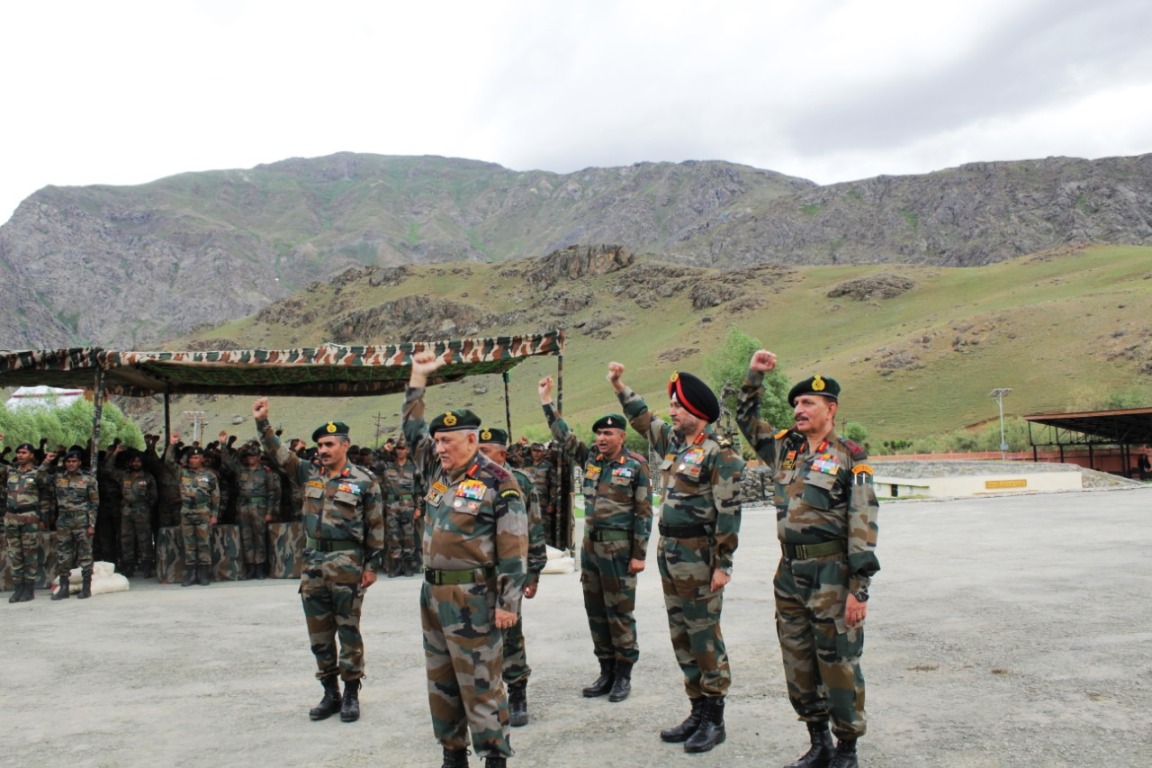
Chief of Army Staff, General Bipin Rawat, on Friday visited Drass sector. During the visit, he was briefed by the General Officer Commanding, ‘Fire & Fury’ Corps on the prevailing situation and operational preparedness in the Sector. General Bipin Rawat also interacted with army personnel deployed on the Line of Control (LC). The Army Chief was accompanied by the General Officer Commanding-in-Chief, Northern Command.

While interacting with the army men, the COAS appreciated the tenacity and resolve of the soldiers guarding the borders in the harsh terrain and extreme weather conditions. Recalling the valour and sacrifice of troops who fought in Operation VIJAY in this sector in 1999, he exhorted all ranks to execute their assigned tasks with the same vigour and responsibility. He also called upon all ranks of the ‘Fire & Fury’ Corps to re-dedicate themselves towards upholding the values that the Army stands for, an army spokesman said in a statement issued to media.