Sanjha Morcha

What’s New

Click the heading to open detailed news

Current Events :

web counter

Print Media Reproduced Defence Related News

France pitches for another batch of 36 Rafale jets procurement by India

France pitches for another batch of 36 Rafale jets procurement by India
The issue of Rafale deal figures in the talks between Prime Minister Narendra Modi and French President Emmanuel Macron.

New Delhi, March 10

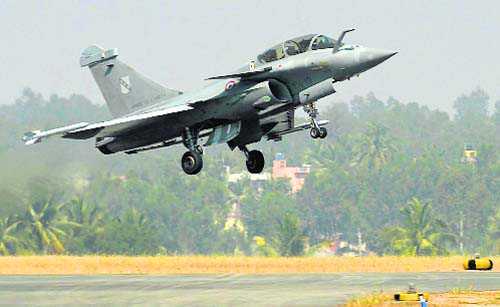
France on Saturday pitched for starting negotiations over procurement of another batch of 36 Rafale jets by India with French President Emmanuel Macron describing the fighter jet programme as a key aspect of the bilateral defence cooperation.Sources said there was a communication from the French government recently indicating its eagerness in making an announcement by the two sides favouring additional procurement of Rafale jets for the Indian Air Force.They said the issue of Rafale deal figured in the talks between Prime Minister Narendra Modi and Macron.”India had made a sovereign decision in this respect (Rafale fighter jet) and we are monitoring the progress in the field. We very much want to continue the programme.”It is a long-term contract which is mutually beneficial. I personally consider it as the heart of the strategic partnership,” Macron said in a statement to media after talks with Modi.India had signed a government-to-government deal with France in 2016 to buy 36 Rafale fighter jets at a cost of about the Rs 58,000 crore. The Congress has been demanding details of the deal, alleging that the deal negotiated under its rule was much cheaper than the contract signed by the Modi government.Officials said the French side pitched for procurement of another batch of 36 Rafale jets by India during the talks between French Defence Minister Florence Parly and her Indian counterpart Nirmala Sitharaman.In the meeting, Parly said extending the current deal will further bolster defence cooperation between the two countries, they said. The Indian side conveyed that no decision has been taken yet on the issue.The Indian Air Force has also been favouring procurement of more Rafale jets from France. It had communicated to India earlier too, seeking additional orders of Rafale jets.In the talks, Modi and Macron noted with satisfaction the “on-schedule” progress in the implementation of acquisition — related agreements, including the Rafale aircraft deal, a joint statement issued after Modi-Macron talks said.”They looked forward to continue their discussions to expand and deepen the ongoing defence manufacturing partnerships,” it said. – PTI


Fearing ‘hot summer’ along LAC, India ups patrolling in Arunachal

Fearing ‘hot summer’ along LAC, India ups patrolling in Arunachal

Ajay Banerjee

Tribune News Service

New Delhi, March 31

India, it seems, is militarily preparing for a “hot summer” along the Line of Actual Control (LAC) — the de facto 3,448-km boundary with China running all along the Himalayan ridge line.Post the 73-day (June 16 to August 28, 2017) Doklam stand-off, India has increased patrolling along the far-eastern part of Arunachal Pradesh. The remote mountainous terrain at Kibithu, Walong and the Lohit valley are in greater focus. Surveillance is not possible through UAVs due to dense tree foliage. Hence, patrolling has to be on foot in the valleys of Lohit, lower  Subhansiri, upper Subhansiri, Siang,  Dibang,  Delai and Dau.These are very narrow valleys in which the invader will have a military disadvantage, said a senior military officer.Walong, Kibithu and Lohit were the locations of pitched India-China battles in 1962, but things have changed. India has militarily tailored its response to stall any incursion.A rather candidly written ‘History of the conflict with China’ produced 30 years after the war by the Historical Division of the Ministry of Defence describes the battle of Walong: “A defensive battle against heavy odds, the troops fought bravely, but being out-numbered and out-weaponed in automatics and ammunition, suffered heavily.” But it was no walkover. “Indian troops offered stiff resistance, but they had to vacate their positions,” says the MoD’s book.After that, India has had a fully functional airstrip at Walong and a division (some 20,000 troops) located in the eastern-most corner of India. All key bases have road connectivity, a far cry from 1962 when a 14-day Tezu-Walong trek was the only option.India’s move has come after Beijing’s troops have taken to intensive patrolling in areas that are disputed all along the LAC and have been building military infrastructure. US confirms military build-up on both sides

  • On January 25,  US-based think tank Stratfor released a report ‘Preparing for a rematch at the top of the world’. It said India and China have continued with a build-up of military resources on either side
  • It released satellite images of airbases of both countries and said “the imagery confirms that both China and India are pursuing a wide-ranging strategic build-up that has only accelerated in the wake of the August agreement (to dis-engage)”

AFT: Outing with permission to be considered on duty

Vijay Mohan

Tribune News Service

Chandigarh, March 4

Ruling that a person who has gone to watch a movie after duty with due permission of the authorities will be considered as being on duty for the purpose of benefits in case of any mishap, if he meets with an accident, the Armed Forces Tribunal (AFT) has granted special family pension to the mother of an airman almost a decade after his death.Corporal Vishal Raj, who belonged to Pathankot, had died in a road accident in 2009 when the motorcycle on which he was travelling along with another airman met with an accident while they were returning to Kalaikunda Air Force Station in West Bengal after watching a film in a nearby town.The Ministry of Defence, however, refused to sanction special family pension that is applicable for armed forces personnel who die on duty on the grounds that his death was not attributable to military service. His mother, Tripta Devi, was sanctioned only ordinary pension.Thereafter, she approached the AFT, claiming that her son was on active military service and was not on leave at the time of accident. In her petition, she contended that before going for the movie, he had made the necessary entries in the records of his squadron and had properly booked-out of the sub-guard room. The ministry, on the other hand, argued that based upon the court of inquiry proceedings, he was not performing any military duty at the time of the accident and consequently his family was not entitled to the special pension.Drawing inference from past judgments on the issue by the high courts, the AFT and the relevant provisions of law, the tribunal’s Chandigarh Bench comprising Justice Mohammad Tahir and Lt Gen Munish Sibal held that in view of the facts and circumstances of the case, Vishal had sustained injuries while he was on duty and the injuries because of which he died, can be attributable to military service.The tribunal had directed the Ministry of Defence to calculate the special family pension and release it to Tripta Devi within three months. The arrears of the pension, however, have been restricted to three years preceding the date of filing the petition as she had moved the AFT after a lapse of seven years from the incident.Relief to airman’s kin AFT’s Chandigarh Bench allowed special family pension to the mother of an airman from Pathankot who died after sustaining injuries in an accident during his posting at Kalaikunda Air Force Station in West Bengal. The victim was returning after watching a film in a nearby town

.


Modernisation of Army under way: Sitharaman

Modernisation of Army under way: Sitharaman

Tribune News Service

Dehradun, March 25

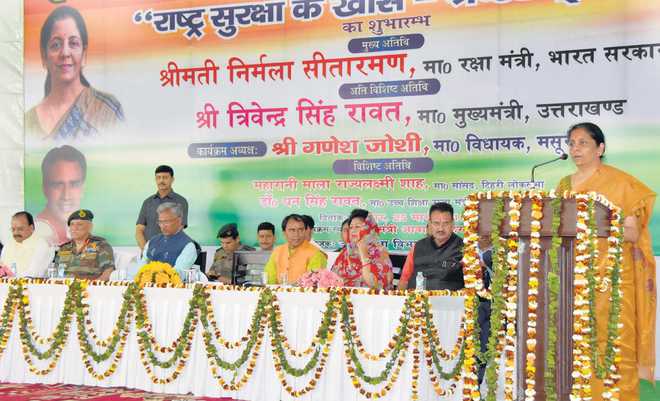
Union Defence Minister Nirmala Sitharaman said modernisation of Indian Army was under way. She credited Prime Minister Narendra Modi with the modernisation programme. The Defence Minister was here on Sunday to honour students of the state, who have been selected in Indian Military Academy and National Defence Academy in the recent years. “When you join the forces after competition of training at your respective academies, you will be proud to join a modernised Indian Army”, Sitharaman said addressing the gathering of successful students. She also asserted that the Army was fully prepared to deal with any situation. The minister recalled her visit to the Uttarakhand region during childhood days, pointing that the region was then known for Char Dham yatra. “But today Uttarakhand is also known as Veer Bhumi as a large number of youth from the state join defence forces these days”, she said. The minister also praised Col Ajay Kothiyal, Director, National Institute of Mountaineering, Uttarkashi, for his efforts towards motivating the state youth to join the armed forces.   Nirmala Sitharaman also handed over a cheque of Rs 50,000 each to the successful student of Uttarakhand, who have been selected in Indian Military Academy and National Defence Academy from 2014 to 2018. A total of 140 selected students were felicitated by the minister. She also honoured family members of Victoria Cross awardee Late Gabbar Singh Negi, Veer Chandra Singh Garhwali and other defence forces martyrs.Chief Minister Trivendra Singh Rawat said it was a matter of honour that Prime Minister had reposed faith in a daughter of the country by making Nirmala Sitharaman as defence minister of the country.Chief of Army Staff Gen Bipin Rawat, Uttarakhand Higher Education Minister Dhan Singh Rawat and Mussoorie BJP MLA Ganesh Joshi were among the prominent persons present on the occasion.


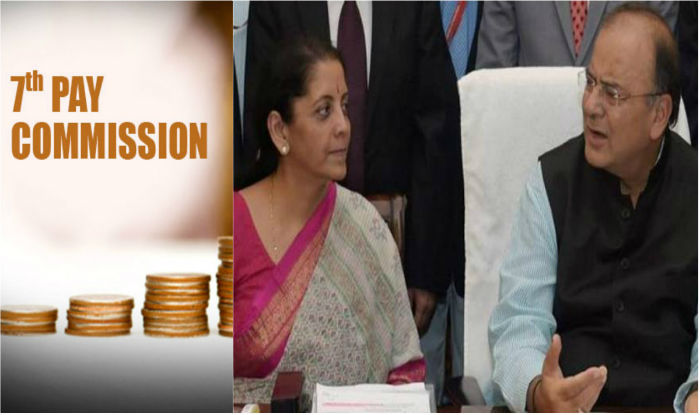
7th Pay Commission: Defence Minister Nirmala Sitharaman Requests Finance Minister Arun Jaitley to Remove Education Fee Cap For Martyrs’ Children

The savings have been reported to be Rs 3.20 crore approximately. The highest amount drawn has been reported to be Rs 18.95 lakh per annum per student,” said Bhamre.

New Delhi, February 10: Defence Minister Nirmala Sitharaman on Saturday requested Finance Minister Arun Jaitley to remove the education fee cap under 7th Pay Commission for children of soldiers who lost their lives while serving the country.

Earlier in January, the government made it clear that there will be no immediate review of its decision to put a cap of Rs 10,000 per month on educational assistance given to children of martyrs or of those disabled in action.

Replying to a question in the Rajya Sabha, Minister of State for Defence Subhash Bhamre said the educational assistance has been capped as per the recommendations of the 7th Pay Commission and those demanding its review have been communicated about the government’s position on it.

Indian Navy Chief Admiral Sunil Lanba wrote to Defence Minister Nirmala Sitharaman requesting the government to look into it s prior order that limits education reimbursement to the children.

“Reply has been sent (to them) stating that the combined amount of tuition fee and hostel charges has been capped at Rs 10,000 per month in accordance with the recommendations of the 7th Central Pay Commission as accepted by the government,” Bhamre said.

Under the scheme, rolled out in 1972, tuition fee of children of martyrs or those disabled in action were completely waived in schools, colleges and other professional educational institutions.

However, on July 1, the government had issued an order capping the amount to Rs 10,000 per month, triggering discontentment among all the three services.

The Chiefs of Staff Committee (CoSC), comprising the Army, Navy and the Air Force chiefs, had written to the defence ministry requesting the issue to remove the cap.

Approximately 250 students have been reported to be affected during current financial year following the government’s decision to cap the assistance, Bhamre said, adding that “the allowance shall go up by 25 percent each time DA rises by 50 per cent.”

He said that out of a total 2,679 students during the year 2017-18 (up to December 27, 2017), 193 students have been reported to be drawing more than the capped amount.

“The savings have been reported to be Rs 3.20 crore approximately. The highest amount drawn has been reported to be Rs 18.95 lakh per annum per student,” said Bhamre.


Status quo at Doklam, says Indian envoy

Status quo at Doklam, says Indian envoy

Beijing, March 24

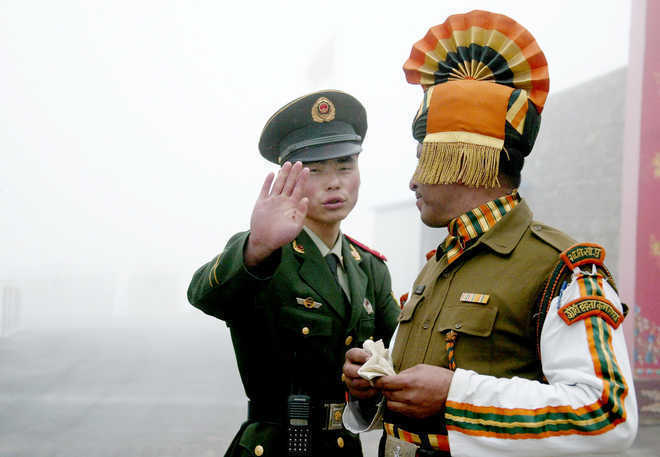
“No change” has taken place at the Doklam standoff area after it was resolved last year, India’s envoy Gautam Bambawale said and blamed China squarely for the face-off, saying it happened because Beijing tried to alter the “status quo” which it should not have.The 73-day standoff ended on August 28 last year after China agreed to halt the road building activities at Doklam in Sikkim section.“No, I can tell you that in Doklam area, which we call close proximity or sometimes the face-off site, the area where there was close confrontation or close proximity between Indian and Chinese military troops, there is no change taking place today,” India’s Ambassador to China Bambawale said, reacting to reports of Chinese military stepping up infrastructure build-up in the area.The Chinese side may be putting more military barracks to put in more soldiers, but that is well behind the sensitive area, he said in an interview to Hong Kong-based South China Morning Post. — PTI


Modi, Trump talk Maldives turmoil

Island nation should fix crisis on its own’

WASHINGTON: Prime Minister Narendra Modi and President Donald Trump have “expressed concern” over the political turmoil in the Maldives during a phone call that appeared to signal to the Indian Ocean nation that it needs to fix the crisis without involving other countries.

PTI FILEPrime Minister Narendra Modi and US President Donald Trump pledged to continue cooperation on the Indo­Pacific region.

The two leaders’ discussions about the Maldives seemed to be the point of the call on Thursday given President Abdulla Yameen’s decision, taken in a desperate bid to save his embattled government, to rope in other actors by sending special envoys to China, Pakistan and Saudi Arabia. The Maldives has insisted it had no intention of cutting out India from its outreach though a proposal to send an envoy to New Delhi was cancelled at the request of the Indian government.

“Both leaders expressed concern about the political crisis in the Maldives and the importance of respect for democratic institutions and rule of law,” the White House said in a readout of the phone call, the first between Modi and Trump this year.

The Indian Ocean archipelago was plunged into turmoil last week after Yameen, who has tilted towards China to shore up his position, refused to implement a Supreme Court order freeing imprisoned political leaders. Yameen instead imposed a state of emergency and detained two top judges. Modi and Trump also “pledged to continue working together to enhance security and prosperity in the Indo-Pacific region” .


clip


Russia at the crossroads MK Bhadrakumar Putin — a ‘villain’ abroad, ‘hero’ at home

Russia at the crossroads
What next? As per Russian constitution, this will be Putin’s last six-year term.

MK Bhadrakumar

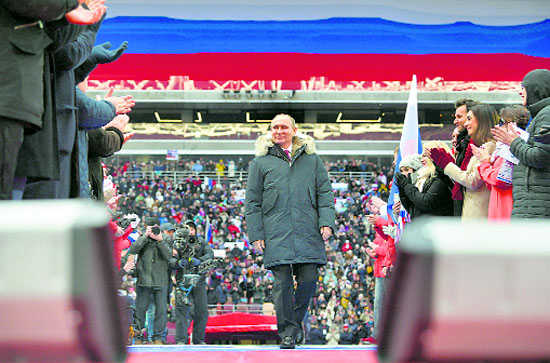
The Russian presidential elections on March 18 can be seen as the most transparent in the country’s “post-Soviet” history. But genuine political competition was still lacking and the electorate’s choices were limited. The leading candidate, Vladimir Putin, consistently enjoyed a popular rating above 80 per cent among the Russian people in the recent years and will walk away the winner. A December survey by the independent polling firm, Levada Center, estimated that 81 per cent adults approve of Putin as President, including 86 per cent Russians, 18 to 24 years old; meaning that most of the country supports Putin.What accounts for it? In a nutshell, over successive terms as Prime Minister and President, Putin has overseen an economic boom, military expansion and the country’s emergence as a major power on the world stage. Levels of poverty are significantly lower than before; most Russians enjoy a higher living standard; there is a sense of stability and national pride. During Putin’s first term as President, wages consistently grew 10 per cent annually while in his second term since 2012, although economic growth slowed down (what with the fall in income from oil exports and Western sanctions), disposable income still grew by 11 per cent between 2011 and 2014, and the Putin era has seen Russia’s consumer economy expand considerably. Today, more people own a car and there are more microwaves than households.  This was how an AFP dispatch from Moscow last week on the Russian elections captioned its story: ‘Putin Is a Villain Abroad, Hero At Home’. Curiously, Putin’s villainous reputation featuring on the cover of Western news magazines — variously as public enemy number one, an octopus, The Terminator, Hitler and Batman’s nemesis, The Joker — may even be a factor adding to his popularity among Russians. As one Russian put it to the AFP, “If they’re scared of you, it means they respect you.” For millions of Russians, Putin is the man who restored Moscow’s standing on the world stage following the humiliating collapse of the former Soviet Union. Nonetheless, challenging times lie ahead for the newly elected President. The high support ratings of Putin notwithstanding, ordinary Russians are anything but satisfied with their lives and pro-market economists are demanding radical structural reforms. In the international arena too, there are huge uncertainties facing the Russian diplomacy. Arguably, therefore, Sunday’s elections cannot be regarded as irrelevant to Russia’s trajectory. Like in India, social media has created a “horizontal society” in Russia, cutting across cultural and class lines, and the Internet remains free compared to the rest of the media.The yearning for change brings to mind the backdrop that provided momentum for Bernie Sanders in the US or Jeremy Corbyn in the UK — except that this is Russia where the channels for expression of social discontent and the political processes that can give it a sense of direction are rudimentary. Another Levada poll found that close to 90 per cent of Russians feel powerless to influence the future trajectory of their country and 60 per cent disavow any responsibility for what is happening around them. Simply put, while Putin remains a towering figure, the Russian political class, on the whole, carries an unsavoury reputation. Fundamentally, is the Russian elite willing or capable of change? There are rumours of internal rivalries, turf wars and trust deficit amongst the elite. These realities contradict the picture of stability, continuity and order that Russia projects even as a transition looms ahead — the Constitution stipulates that this will be Putin’s last six-year term. Suffice to say, the nationalistic rhetoric harping on Russia’s status as a great power may work less and less in the period ahead to subsume Everyman’s discontent with the hybrid system that Putin built on the basis of Russian nationalism, Soviet nostalgia and a striving for international respect.Russia regards itself as part of Europe in cultural, historical, economic and political terms. But Europe does not regard Russia as part of the liberal world order. An embittered Russia constantly runs down the liberal world order, pointing a finger at the inexorable decline and challenging the leadership role of the US, weakening of the European security system and disarray in European integration, rise of populist political doctrines and so on. Russia’s preference is that the essence of the liberal world order should be a system of international relations rather than about bona fide democracies.Indeed, the liberal world order tolerates the Indian or Chinese variants of democracy but holds Russia to an exacting, absolute standard. (Russians today enjoy freedoms of speech, assembly, religion, travel, politics, and the Press that the generations before 1989 never knew — and on a scale that is unthinkable in the more repressive single-party Communist state that is China.) China and India are having the cake and eat it too — making developmental leaps through globalisation while also preserving their political autonomy. Thus, within the BRICS grouping, while China and India join Russia to envisage the multipolar world as the bright future, they are perfectly at ease with the prevailing system as well, which gives them scope to get richer and stronger while also maintaining independent foreign policies.But then, China and India have largely avoided direct disputes with the West and do not strive to undermine the existing world order. Period. On the contrary, the Russian elite has too many hang-ups regarding the country’s great power status, which means that its integration into the liberal world order has to be on its terms. The result is, Russia is pining for the day when following the inevitable collapse of the US as superpower, the world order transforms as a balance of forces of individual countries and alliances, allowing the coexistence of various poles of power. Meanwhile, Russia’s golden moment lies in a serious confrontation breaking out between the West and China — or if the liberal world order excludes China too on account of political differences. The problem here is that hope does not make strategy. China won’t get into a collision course with the West — nor is the West seeking one. China leverages its tools of economic globalisation to moderate political differences with the West.What could be the directions of Putin’s foreign policy as he embarks on the new term? Basically, it will largely depend on the international environment and can be expected to be risk-evasive than risk-taking; willing to reach compromises but not via unilateral concessions or dilution of national interests; and, it will remain linked to domestic needs in the social, economic and technological spheres.The writer is a former ambassador


3 soldiers killed in Machil avalanche

3 soldiers killed in Machil avalanche
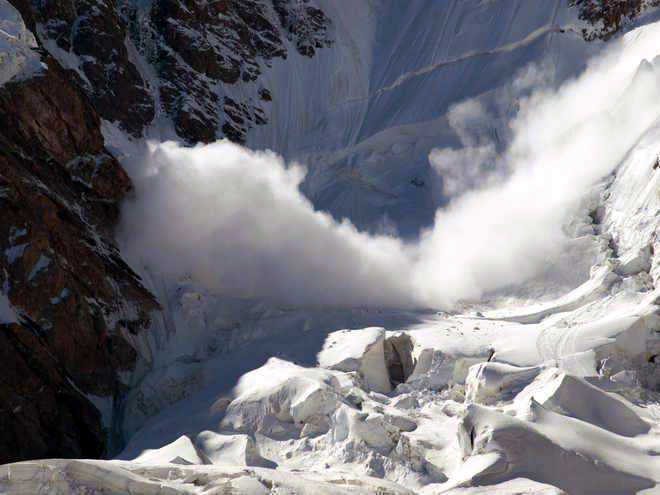
Photo for representational purpose only. Thinkstock

Majid Jahangir

Tribune News Service

Srinagar, February 2

Three soldiers were killed and another injured when an avalanche hit an Army post in Machil sector of north Kashmir’s Kupwara district on Friday afternoon. Sources said the avalanche struck the post of 21 Rajput in the Sonapindi Gali area along the Line of Control (LoC). The authorities had issued a medium avalanche warning earlier this week.(Follow The Tribune on Facebook; and Twitter @thetribunechd)“Four soldiers went missing after the avalanche, triggering a rescue operation in the area by a quick reaction team. The rescuers retrieved the soldiers, who were still breathing. However, one of them died immediately and two others succumbed to their injuries on way to a medical facility,” a defence source said. The deceased, all from Rajasthan, are Havildar Kamlesh Singh (Jhunjhunu), Naik Balveer (Bharatpur) and Sepoy Rajinder (Alwar).This is the second major avalanche-linked tragedy the Army has suffered in north Kashmir in two months. On December 12, five soldiers were killed when two avalanches hit the LoC in Bandipora and Kupwara. In the first week of January, 11 persons, including a BRO officer, died in two avalanches in Tangdhar area of Kupwara.

Two Pak-trained LeT militants arrested

Srinagar, February 3

Security forces have arrested two Lashkar-e-Taiba (LeT) militants, who had gone to Pakistan on valid visas to obtain arms training, the police said.They have been identified as Abdul Majeed Bhat of Mughalpora, Saloora Kreeri and Mohammad Ashraf Mir of Nilla Palpora, Pattan.“The militants were nabbed immediately after returning via the Wagah-Attari border before they could formally join the militant ranks here in Kashmir,” a police spokesperson said.On questioning, the duo revealed that “they were trained along with large number of Pakistani boys, most of them from Balochistan and as young as 10 years old”.“The said terrorist training camps are located near Burma Town, Islamabad, and being run by a terrorist commander operating under code names Hanzala, Adanan and Omar. The arrested militants have been given Pakistani visas by the Pakistan High Commission in New Delhi,” he said.The spokesperson said for the past couple of years, the police had unearthed several such modules where in youths had gone to Pakistan on valid passports for arms training. “In the past, several such boys have been arrested and some of them killed in encounters,” he claimed. — TNS3 injured in Tral grenade attackAnantnag: A CRPF man and two civilians were injured after militants hurled a grenade at a paramilitary patrol party at Tral in Pulwama district on Saturday. The explosion took place around noon in the Batgund area of Tral town. Police sources said the grenade was aimed at a CRPF patrol party. “It fortunately exploded some distance away. Three persons received minor injuries in the explosion,” a senior police officer said. He said the injured were rushed to a hospital. Following the attack, the area was cordoned off and a search operation was carried out. However, it triggered clashes. oc

2 CRPF personnel among 4 injured in grenade attack in Pulwama


2 CRPF personnel among 4 injured in grenade attack in Pulwama
Militants lobbed a grenade at a CRPF party in Batagund area of Tral, a police official said. Tribune file

Srinagar, February 3

Four people, including two CRPF personnel, were injured in a grenade attack in Pulwama district of south Kashmir on Saturday, police said.Militants lobbed a grenade at a CRPF party in Batagund area of Tral, a police official said.

(Follow The Tribune on Facebook; and Twitter @thetribunechd)

Four people, including two CRPF jawans, were injured in the incident, he said.The area had been cordoned off and a search operation was under way, the official said. PTI


Marching to a patriotic beat by Lieut Gen Baljit Singh (retd)

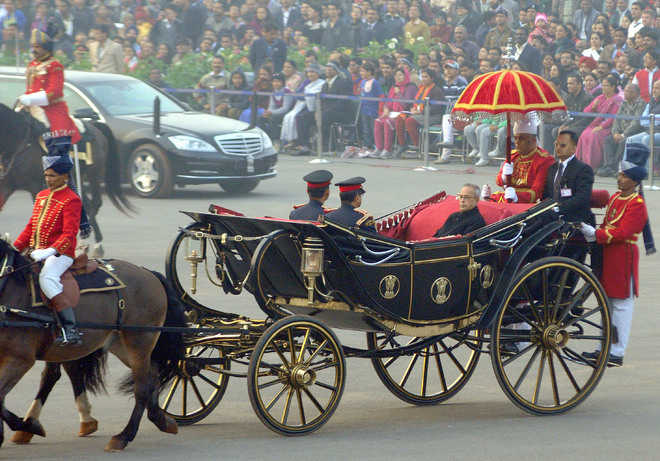
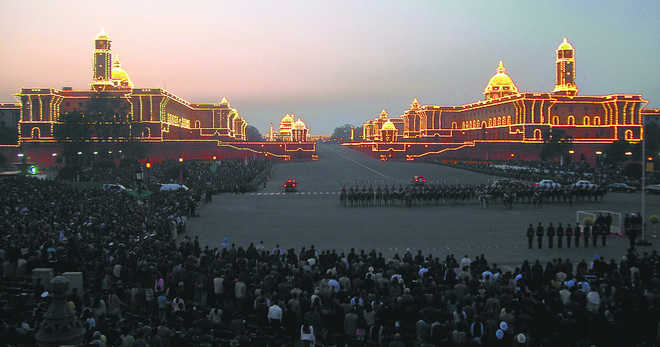
The President, the chief guest at the Beating Retreat ceremony, arrives in an antique nine-decade-old coach; Marching bands from the Army, Navy and Air Force during the ceremony that marks the culmination of the four-day long Republic Day celebrations
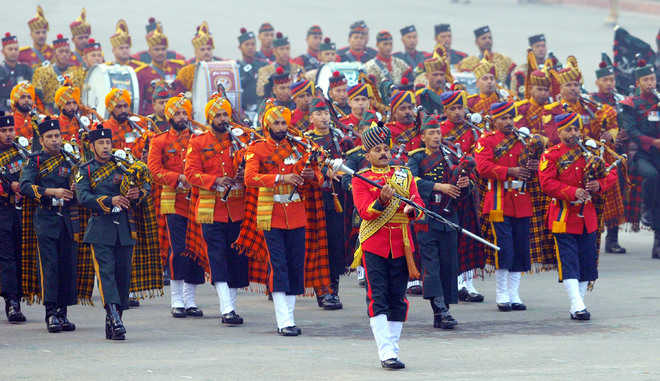
 

THe sombre and yet flamboyant performances by the bands of the three wings of the defence forces, the Army, the Navy and the Air Force, and pipe bands from the Army, (and since 2016, a massed formation of bands of the Central Armed Police Forces and the Delhi Police),  bring to an end the four-day-long Republic Day celebrations on January 29. Those who have never witnessed this magic one-hour event, perhaps among the few such events in the world, should book a seat right away.

The audience comprises several thousand Indians, right from the common man up to the heads of the country’s Legislature, the Executive, the Judiciary, foreign dignitaries and guests from various diplomatic missions. There is a specially created, open amphitheatre near Vijay Chowk where people are expected to be seated 20 minutes before the commencement of the ceremony.

Around this time of the year, a gossamer mist usually softens the sharp edges of the minarets of the South and North Blocks and cloaks the central dome of Rashtrapati Bhavan in velvety smoothness. That is the surreal setting almost every year, when the President of India, who is the chief guest of the event, emerges from one of the grandest presidential residences in the world. He descends down a broad flight of steps, to receive the Presidential Salute from his Mounted Body Guards before alighting the State Coach, drawn by six horses. The coach in itself is a work of art and antiquity of over 90 years. The exterior of the coach, finished in black ebony and trimmed in silver piping, looks spectacular. It is harnessed to black horses (each with a diamond-shaped white birthmark in the middle of forehead), creates a grand contrast as majestic-looking animals go trotting over the brick-red pathway.



In clock-work precision, two posses of eight trumpeters (four from the Army and two each from the Navy and the Air Force), in ceremonial full dress, signal the passage of the cavalcade in between the North and South Blocks, first with a ‘Fanfare of Trumpets’ followed moments later by the music score, “Herald the Chief”. The statuesquely trumpeters, beneath the domes surmounting the two domineering towers of North and South Blocks, directly above the Vijay Chowk, look quite captivating.

Adding to the ceremonial ambience is a picked contingent from the President’s Mounted Body Guard, attired in scarlet tunics, intricately worked with gold lace and contrasting, white mole-skin breeches, astride well groomed and manicured horses. It is a tradition that goes back to the Madras Governor General’s Guard, raised way back in 1773. The Commandant of the Guard, facing the President, orders the National Salute and the massed bands strike up the National Anthem as the Tricolour is hoisted at the venue. The silent audience bursts in vigorous clapping, with maybe a few misty eyes here and there and almost every face wearing a broad smile, symbolic of the enduring spirit of India.

Over the next forty-five minutes, the audience cannot help but tapping their feet to the rhythm of martial music. The underlying theme of every tune is based on patriotism and glory of the Republic, such as “Kadam kadam badhaye chal, khushi ke geet gaya chaal, yeh zindgi hay kaum ki tu kaum par lootaye chal.” As though to fortify this resolve, they next play the rousing “Dhawaj kay rakshak”, (a motivational marching song, with lyrics by Capt Ram Singh and music by Maj HP Brar of the Army).  The “Drums Roll”, which follows, creates an auditory crescendo of the thunder and volley and the clash of swords on the battle field.

The ultimate track is a favourite hymn of Mahatma Gandhi. As the sun tips over the horizon, the soldier-bandsmen translate this Biblical hymn into solemn music.

“Abide with me, fast falls the eventide

The darkness deepens Lord, with me abide

When other helpers fail and comforts flee

Help of the helpless, oh, abide with me …”

The Army Music School, which is part of the Army Education Corps, over time have successfully adapted the inherited western martial music to Indian sensibilities. Of late, they even showcase a few de novo music scores using instruments unknown to martial music, such as the tabla, sitar, violin, flute, oboe and even jaltarang. These orchestra creations are remarkably pleasing and the “Salam to the soldier” in particularly, is quite stirring. However, none of them classify as the martial music to march to.

As the “Last Post” is played, and the National Flag is lowered, some four hundred battle-inoculated, soldier-bandsmen wearing immaculate ceremonial uniforms, symbolising their loyalty to the country and a heritage of valour, march up the Raj Path playing to perfection …

“Saare Jahaan Se Accha

Hindustaan Hamaara

Ham Bulbulain Hai Is Ki,

Yeh Gulsitaan Hamaara …”

As though to underline this feeling, the Rashtrapati Bhavan, North and South Blocks, Houses of Parliament are floodlit. Simultaneously, the lotus fountains at Vijay Chowk cascade water in the colours of the National Flag, embodying the idea of India and spirit of Indians.


A colonial legacy

The Beating Retreat ceremony, grand finale to the Republic Day celebrations, was the brain child of India’s first Prime Minister, Pandit Jawahar Lal Nehru. It began in 1961. The idea was occasioned by the first state visit of Queen Elizabeth II and Prince Philip after Independence.As the British monarchy is intimately associated with military ranks, uniforms and ceremonials, the Indian Army was given the task of developing a display by the massed bands of the Army, the Air Force and the Navy consisting of pipes, drums, buglers and trumpeters from various regiments. The colourful ceremony has since become an annual official practice with the President of India as its chief guest