Sanjha Morcha

What’s New

Click the heading to open detailed news

Current Events :

web counter

Print Media Reproduced Defence Related News

The biggest Tiger in town————–Lt Gen KJ Singh (retd)

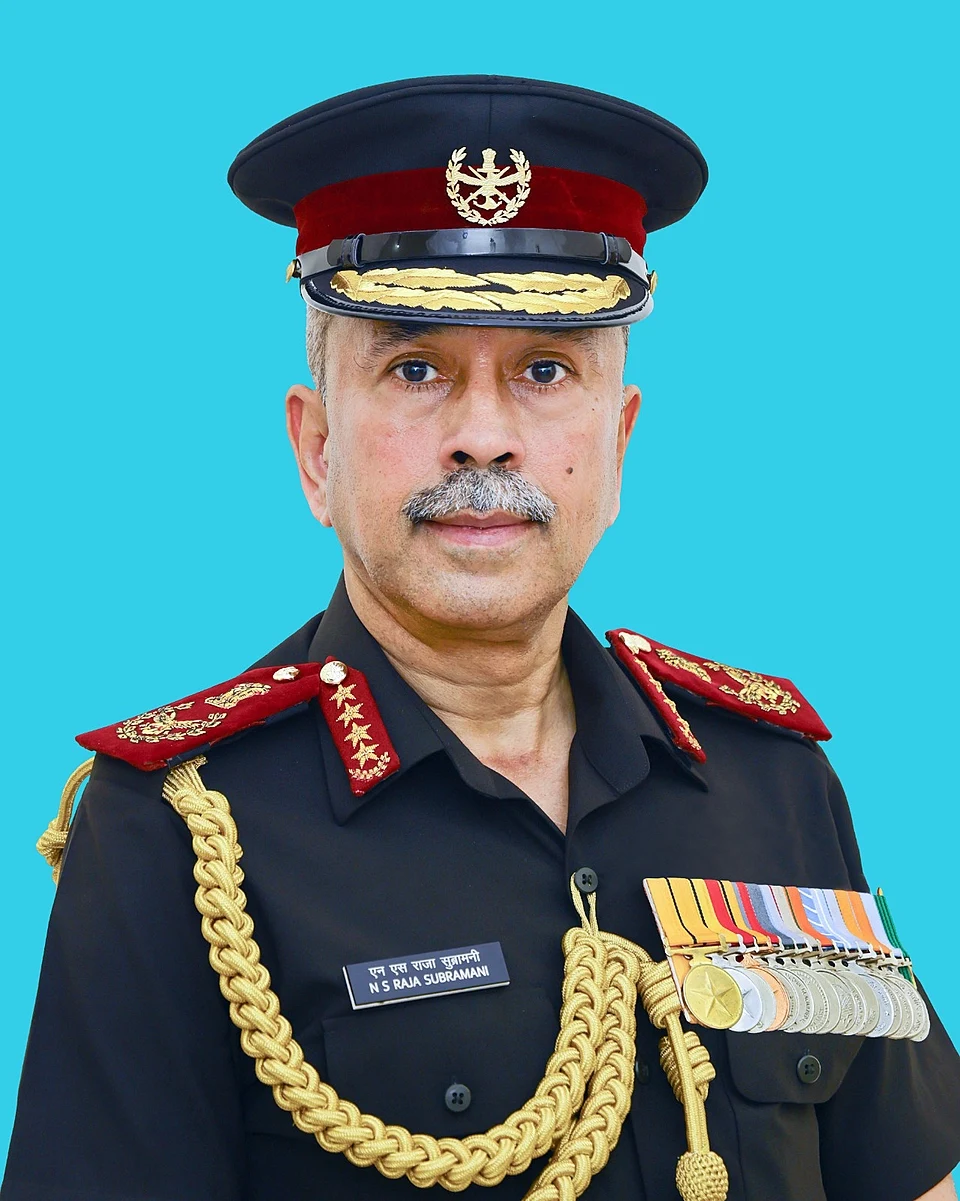
THIS is a tiger tale, albeit of a different variety as it is about a General (also called ‘Tiger’) out on his morning walk. There was a buzz in Jodhpur in 1998 as a new Corps, referred to as 12 Corps, or Desert Corps, was being raised. The new Tiger in town — the Corps Commander — was most unlike the wild beast. A short, simple South Indian, he looked every inch (though he had a limitation in this physical dimension)  an approachable, large-hearted and sensitive General. Due to the initial problems in getting his personal staff, compounded by an injury to one of the incumbents in an accident, I was drafted to serve as a temporary MA- cum-ADC; also probably because I had got a competitive vacancy on the Staff College examination. My friends said “you are now officially qualified to be in the rat race”, and so it was a double bonanza to be a rat in the company of the Tiger in town.The Corps Commander was addicted to his morning walks and liked to set a target for himself. Every morning he would get dropped out of the cantonment and would walk back 5-8 km. Being a simple soldier, he detested an accompanying entourage, but allowed me to accompany him, though with a direction to walk a minimum 10 paces behind. Defying age, the old Tiger set a fast pace. As we were entering the Jodhpur Cantonment, we passed the Quarter Guard of 74 Armoured Regiment. This being the Corps Commander’s first week, there was no reaction from the guard. I tried to catch up and signal to the Guard Commander to present arms and give a General Salute. The General noticed that my hand signals evoked no response and asked the Guard Commander: “Aap jaante hain, hum kaun hain?” The NCO in a state of panic responded: “Saheb, aap Poona Horse ke naye RM saheb lagte hain.” Now, a Corps Commander being told that he is Risaldar Major can unleash a tsunami as a chain reaction. It is to the credit of this real Tiger that he just smiled and walked back to the MES Inspection Bungalow.  Being a fitness freak and a simple man, the General wore big boots to get extra exercise, white T-shirt and shorts sans the “cap with stars” which seems to be a signature statement currently.He insisted on the usual tea and dismissed my apologies, his only direction was to expedite the display of his photographs in offices and Quarter Guards. Though I did see marginal changes in his walking attire, yet to his credit there was not even a minor storm in the proverbial tea cup. The incident was forgotten and there was no victimisation of the unit or the NCO despite repeated suggestions by the staff. The lesson that I learnt and carried till my Army Commander days is that real Tigers keep their cool!


Hydro-diplomacy with Pakistan: Time to dilute Indus Waters Treaty

A SYSTEMATIC DILUTION OF THE INDUS WATERS TREATY TO THE ADVANTAGE OF INDIA’S STRATEGIC AND ECONOMIC SECURITY WILL BE A GOOD BEGINNING TO REMIND PAKISTAN THAT AGGRESSION ALONE IS NOT THE ONLY OPTION INDIA HAS

The dastardly attack in Uri has once again challenged India’s security and brought into focus the proxy war in Jammu and Kashmir. It has driven Indo-Pakistan relations to an alltime low. National interest being supreme and the connect between India’s foreign affairs and its fundamental security and development priorities, India’s resolve to punish Pakistan for involving itself in the proxy war is an inevitable imperative. One of the measures being considered is to revisit the Indus Waters Treaty under which Pakistan has been receiving about 80% of the water from the Indus basin system for 56 years. This thought process is based on the fact that “mutual trust and cooperation” is important for such a treaty to work.

Water plays an important role in today’s global affairs. Pakistan is a water-stressed country with each citizen getting about one-sixth of the share of water as compared to the situation at the time of Independence. The Indus provides water to over 80% of Pakistan’s 54 million acres of irrigated land. Farming generates 21% of the country’s gross domestic product (GDP) and any depletion in the discharge will derail the agrarian economy of Pakistan.

That Kashmir and the water disputes are interwoven is an inescapable truth. Jammu and Kashmir, even though an upper riparian state, is the worst-affected state due to restrictions imposed by this treaty. Pakistan, apart from fomenting discontent and violence in Kashmir, has adopted an obstructionist tactics strategy since 1977 by raising issues regarding run-of-the-river projects under construction on the Western rivers by India at Salal, Baglihar, Kishanganga, Wullar Barrage, Uri, Nimo-bazgo, Chutak Hydroelectric Project, and the Dumkhar Hydroelectric Dam.

UNTAPPED POTENTIAL

Pakistan’s fears are twofold: One, that stored water can be used to inundate its land and property, and, two, that these projects will reduce the water flow in critical times, especially during the sowing seasons. Such an attitude has not only stressed the treaty itself but has also had a negative impact on the economic progress of Jammu and Kashmir. Abiding by the terms of the treaty, the state exploits just one-eighth of the power potential (about 20,000 MW) and through run-of-the river hydropower projects produces only 2,500 MW. Similarly, India maintains the limitations placed on the extent of area to be irrigated with the waters of the western rivers. Hence, as per a conventional estimate, these restrictions have imposed a loss in terms of development of industry, power and agriculture equal to some `40,000 crore annually.

Further, contrary to the decision of neutral expert Dr Raymond Lafitte in the Baglihar case that gated spillways were consistent with the treaty’s provisions to help flush out silt, the International Court of Arbitration imposed restriction (in the case of design of Kishanganga Hydroelectric Project) against drawdown flushing. This is likely to impact all future run-of-theriver hydel projects, thereby having a serious bearing on the commercial viability of such projects. To counter such a hostile environment, India should, in a gradual manner, start diluting provisions and restrictions imposed by the treaty on the western rivers.

WATER DOWN TREATY

As a short-term measure, India should,

i) bring additional area under irrigation as per provisions of the treaty;

ii) prevent flow of unaccounted and unutilised 2-3 MAF of the eastern rivers to Pakistan;

iii) construct cost-effective multi-arched check dams on tributaries as limited storage is permitted as per the treaty, which will assist in reviving borewells/springs in the vicinity;

iv) put completion of hydro-power projects under construction on fast track;

v) construct flood spill/diversion channels and reservoirs in areas prone to flooding;

vi) increase the degree of forestation in the catchment/upper course areas of the Jhelum and Chenab rivers that will not only assist in breaking the momentum of water but allow the utilisation of the discharge as well; and vii) consider disregarding the ruling of the International Court of Arbitration with regard to the drawdown flushing from future designs.

For the long term too, options exist such as, i) there is a need to construct large storage dams on the Jhelum and Chenab at strategic locations for power generation and control of additional discharge. The confluence of the Veshav, Lidder and Rambiyaar into the Jhelum within a few kilometres of each other in south Kashmir is a good example of where a dam can be constructed to good effect. Similarly, Wular Lake near Sopore also presents a natural waterstorage option. Its capacity to hold a large quantity of water could be enhanced, as envisaged by the Wular navigation project. Water available in the raised reservoirs in times of drought can fulfil water requirements of the people. This will assist in charging aquifers to improve the ground water level. In addition, the water storage facilities will safeguard against any inundation threat in north Kashmir; ii) Provision also should be made to transfer water from the western rivers to the eastern rivers. Inter-linking of rivers is technically viable. iii) We should simultaneously encourage Afghanistan to reduce flow in the Kabul river by constructing dams.

Our purpose should be to follow the United Nations International Water Convention (UNIWC, 1997) which permits a nation total sovereignty over the water flowing through it. The expenditure incurred on infrastructural development, in the long-run shall prove to be a viable investment and can be easily recovered in future, as water is an economic resource. This will also give a fillip to the economy of J&K. Thus, a systematic dilution of the Indus Water Treaty to the advantage of India’s strategic and economic security will be a good beginning to remind Pakistan that blatant aggression alone is not always the only option that India has.

  • LT GEN PRAMOD GROVER (RETD)
  • groverp999@gmail.com The writer is an expert on the Indus Water Treaty. Views expressed are personal


Will respond at time, place of our choice, says Army

Will respond at time, place of our choice, says Army
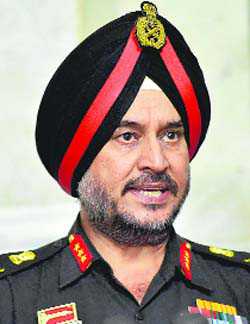
We have the desired capability to respond to such acts of aggression and violence. Lt Gen Ranbir Singh, DGMO

Ajay Banerjee

Tribune News Service

New Delhi, September 19

Even as the government has been holding strategy-planning meetings on dealing with yesterday’s attack on a military camp at Uri, Director General of Military Operations (DGMO) Lt Gen Ranbir Singh today said the Army had the “desired” capability and it reserved the right to respond at a time and place of its own choice.The DGMO held a second media briefing in as many days this evening at the South Block. His words indicated that the Army was evaluating its options and if military action was opted for, it would be sudden and precise.(Follow The Tribune on Facebook; and Twitter @thetribunechd)“We have the desired capability to respond to such acts of aggression and violence,” Lt Gen Ranbir Singh said. “We reserve the right to respond to any act of the adversary at a time and place of our own choosing,” he added.The DGMO’s words are a re-run of the statements made in January 2013 after Lance Naik Hem Raj was beheaded by Pakistan army regulars along the Line of Control in J&K. The then Army Chief, Gen Bikram Singh, had said: “I have given very categorical directions to the Northern Command. When we are provoked, we shall respond immediately. We will retaliate to Pakistan’s attack at a place and time of our choosing.” In July 2014, on the day he was demitting office, General Singh, on being asked if India had responded to the beheading, said, “It has been done (the response)… when we use force, (it) is from tactical to operational to strategic levels.” The DGMO said the Army had displayed considerable restraint while handling the terror situation along the LoC and in hinterland. Lt Gen Ranbir Singh said infiltration attempts had shown a marked increase in comparison to the past three-four years. In 2016, 17 infiltration bids were thwarted along the LoC. Of the 110 terrorists eliminated in Jammu and Kashmir, 31 were killed while attempting to cross the LoC. “It indicates a desperate attempt to infiltrate more terrorists with a view to create disturbance,” he added.

No


Uri attack: Another soldier succumbs to injuries; toll reaches 18

Uri attack: Another soldier succumbs to injuries; toll reaches 18
The gunbattle had lasted five hours. PTI

Tribune News Service

Srinagar, September 19

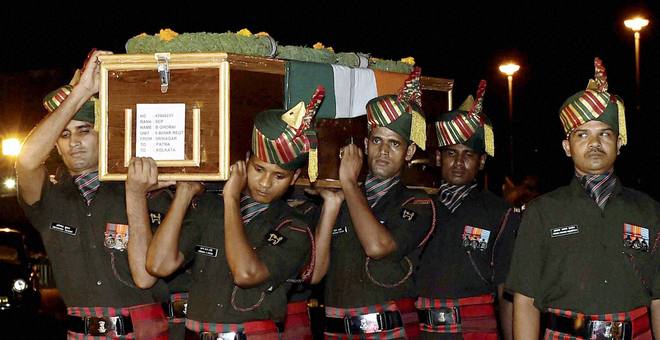
Another soldier succumbed to injuries in a New Delhi hospital, taking the toll in the Uri attack on Sunday to 18.Sepoy K Vikas Janardhan who was shifted to R&R Hospital, New Delhi, on Sunday in a critical condition succumbed to his injuries on Monday morning.In a deadly attack on an Army base in Uri, close to the Line of Control (LoC), 17 soldiers were killed and 23 others were injured when four members of Jaish-e-Mohammad stormed the base. The four militants were also killed in the gunfight.

(Follow The Tribune on Facebook; and Twitter @thetribunechd)

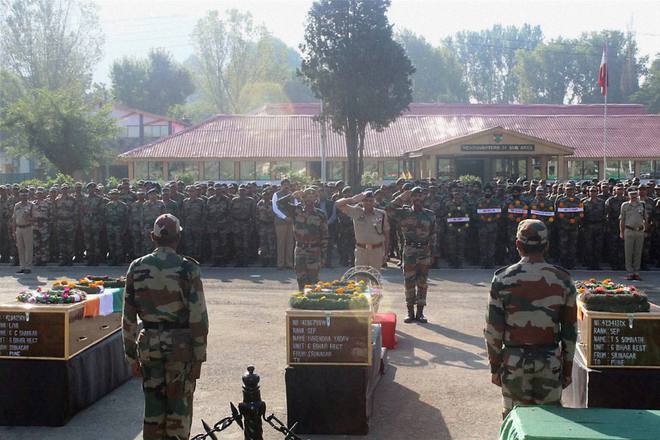
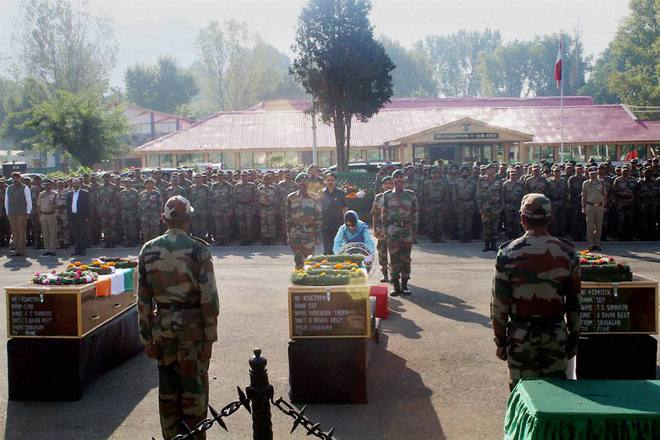
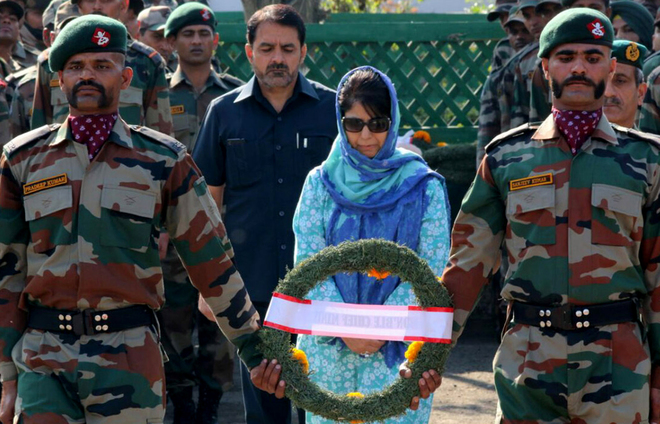
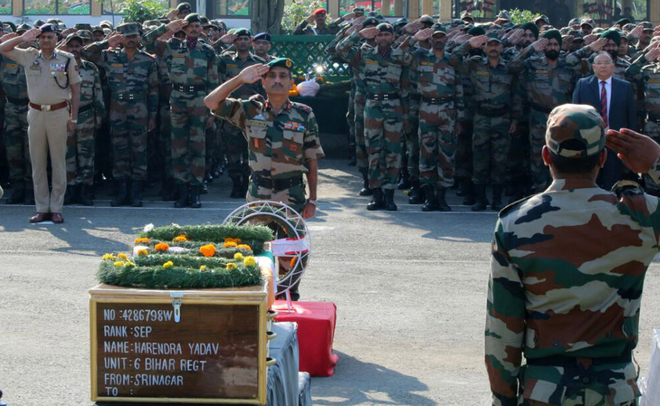
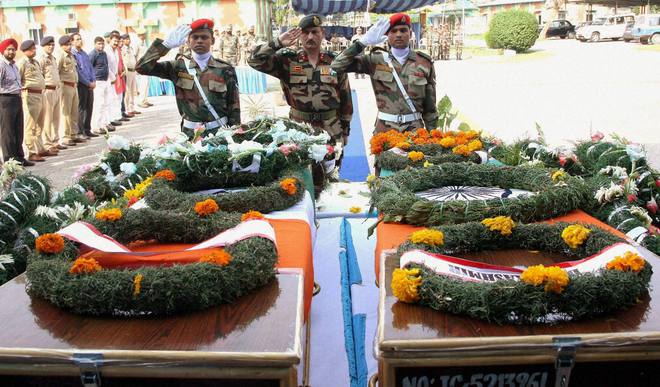
Meanwhile, Chief Minister Mehbooba Mufti on Monday led senior Army and police officials in paying tributes at the wreath-laying ceremony for the killed soldiers at the headquarters of Army’s 15 Corps in Badamibagh.

The 18 slain soldiers

Subedar Karnail Singh of Shibu Chak village, Jammu (J&K)Havildar Ravi Paul of Samba (J&K)Sepoy Rakesh Singh of Baddja village, Kaimur (Bihar)Sepoy Javra Munda of Meral village, Khuti (Jharkhand)Sepoy Naiman Kujur of Gumla village, Chainpur (Jharkhand)Sepoy Uike Janrao of Nandgaon village, Amravati (Maharashtra)          Havildar NS Rawat of Rajawa village, Rajasmand (Rajasthan)Sepoy Ganesh Shankar of Ghoorapalli village, Sant Kabir Nagar (UP)Naik SK Vidarthi of Boknari village, Gaya (Bihar)Sepoy Biswajit Ghorai of Ganga Sagar village, South 24 Parganas (West Bengal)Lance Naik G Shankar of Jashi village, Satara (Maharashtra)Sepoy G Dalai of Jamuna Balia village, Howrah (West Bengal)Lance Naik RK Yadav of Balia village (UP)Sepoy Harinder Yadav of Ghazipur village, Ghazipur (UP)Sepoy TS Somnath of Khadangali village, Nashik (Maharashtra)Havildar Ashok Kumar Singh of Raktu Tola village, Bhojpur (Bihar)Sepoy Rajesh Kumar Singh of Jaunpur village (UP)Sepoy K Vikas Janardhan of Pitas village, Yavatmal (Maharashtra)


17 SOLDIERS KILLED, MODI VOWS ACTION

DEATH TOLL COULD RISE 10 of the more than 20 soldiers injured are critical, having received gunshot wounds and severe burn injuries; all four militants killed
Army confirms Jaish-e-Mohammad behind attack ahead of key UN session; PM says perpetrators will

Heavily armed militants attacked an army base in north Kashmir early Sunday and killed 17 soldiers, triggering calls for a swift retaliation that could squeeze the space for any détente between India and Pakistan.

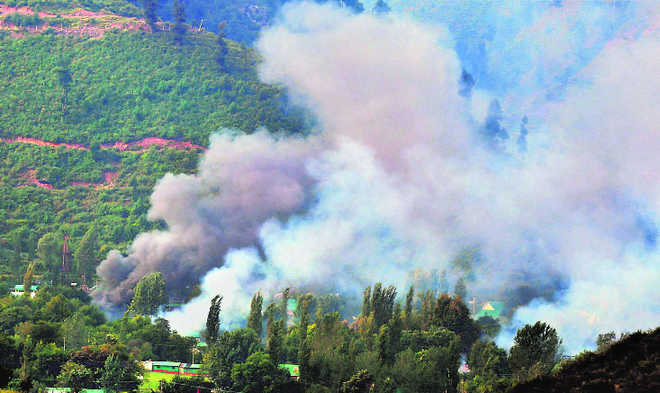
The dawn raid surprised soldiers in their sleep as attackers lobbed grenades and set fire to tents and shelters. The blaze killed 12 troopers and the rest died in the gunfight, sources added. TV images showed helicopters flying to evacuate the wounded and smoke billowing from the mountainous base at Uri, which houses about 12,000 troops.

Soldiers killed four “fidayeen” — or commando-style gunmen willing to fight to death — after an hours-long gunbattle to end what was the worst single attack on the army in years. More than 20 soldiers were wounded, some of them seriously.

The attack jeopardised hopes of peace returning quickly to Kashmir which has been rocked by two months of violent protests in which 86 people have been killed and thousands injured. Sources said the raid was part of a fresh wave of infiltration by militants from across the Line of Control, the heavily militarised de-facto border with Pakistan.

CALL FOR RETALIATION A top army official said the attack pointed to the involvement of the Pakistan-based Jaish-e-Mohammad, which was also blamed by India for the Pathankot airbase attack in January. Islamabad denied any involvement.

Sunday’s attack led to calls for an aggressive response, with Prime Minister Narendra Modi vowing to punish those behind the “cowardly” and “despicable” attack.

No one has so far claimed responsibility but home minister Rajnath Singh hit out at Pakistan, calling it a terrorist state that needed to be “identified and isolated”.

MADE-IN-PAKISTAN Lt Gen Ranbir Singh, director general of military operations, said the militants could be from the JeM as some of the equipment recovered from them had Pakistan markings. He said four AK-47 rifles, four under barrel grenade launchers and ammunition were found on the dead militants.

Islamabad rejected the charge with the foreign office saying that New Delhi always blamed Pakistan for such incidents even before completing a probe.

The attack is likely to further roil Kashmir that army sources say has seen scores of infiltration attempts since protests broke out against insurgent leader Burhan Wani’s killing in July.

The Uri attack came within hours of the Uttarakhand police chief revealing that the Centre had sent out an alert for possible terrorist strike on defence installations in North India.

Defence minister Manohar Parrikar visited Srinagar for a meeting with top army commanders and home minister Rajnath Singh cancelled scheduled trips to Russia and the United States. Army chief Dalbir Singh and northern command head DS Hooda also rushed to Uri. Home secretary Rajiv Mehrishi will visit Srinagar on Monday.

WHAT NEXT? THE OPTIONS BEFORE INDIA

SURGICAL STRIKE

Covert strike on terror camps in Pakistanoccupied Kashmir. But India might run the risk of a full-fledged war with a nuclear state

AGGRESSIVE POSTURING

Move forces to the border in an eyeball-to-eyeball deployment, close Indian skies to Pak flights. Move may not be of any help in long run

DIPLOMACY

Isolate Pak internationally. India has pursued this line for decades without success. Now that terrorism has emerged as a global threat, India has more diplomatic leverage

BILATERAL TALKS

Engage the civilian leadership in Pak. This, however, goes against New Delhi’s stated line that terror and talks can’t go together

BACK CHANNEL TALKS

Engage the Pakistani army, which controls the levers of power, through back channels. But their interest in peace is suspect

WAR OF ATTRITION

Scale up the offensive over Balochistan. Make Pak pay for its interference in J&K. But this might strengthen anti-India elements in Pak

HOT PURSUIT

After 18 soldiers were killed in an ambush in Manipur last year, Indian forces went across the border into Myanmar and eliminated them. This option was mooted against Pakistan-backed militants but never exercised. Pakistan is a different kettle of fish to Myanmar, though.


PATHANKOT ATTACK Sharif kept Senate in dark?

Islamabad: Opposition members in Pakistan have accused the Nawaz Sharif government of misleading the Senate by concealing information about the Pathankot terror attack in India, it was reported on Saturday. The accusations came on Friday when PPP Senator Farhatullah Babar alleged that the government was patronising militants, a claim Leader of the House Raja Zafarul Haq strongly denied, the Express News reported.“Why else did the government not share details of the investigation into the alleged involvement of Pakistani nationals in the Pathankot attack with the House?” asked Babar. — PTI


Fill vacancies, AFT Bar urges CJI

Tribune News Service

Chandigarh, September 9

With most of the posts of judicial members in the Armed Forces Tribunal (AFT) lying vacant, the AFT Bar Association has approached the Chief Justice of India, saying the situation has resulted in “a complete breakdown” of the system of administration of justice for defence personnel and their families.At present there are only five judicial members against the sanctioned strength of 17 and out of eight AFT Benches located across the country, only three are functional as no fresh appointments have been made. This will be further reduced to two as another judicial member will be retiring this month.Stating that “incoherent and disjointed” legal provisions are equally to blame for the sorry state of affairs, Bar members have decided to protest by wearing black badges on September 22.“Other arbitrary provisions of the Armed Forces Tribunal Act, 2007, have not only resulted in a grave threat to administration of justice but have also placed the military community at a major disadvantage as compared to their civilian counterparts, resulting in blockage of effective access to justice and judicial review,” said a letter written by the Bar to Chief Justice TS Thakur.Claiming that quicker dispensation of justice through the AFT is just a myth, the Bar has averred that the biggest disappointment with the creation of the AFT is lack of any effective remedy of judicial review over its orders, thereby making it the first and the last court for litigants.While civilians get a three-tier system of justice and judicial review, military litigants, under the current provisions, cannot seek judicial review of AFT orders in the High Court and can seek review in the Supreme Court only on a point of law of general public importance.







Scorpene leak: DCNS moves Aussie court for injunction against ‘The Australian’

Scorpene leak: DCNS moves Aussie court for injunction against ‘The Australian’
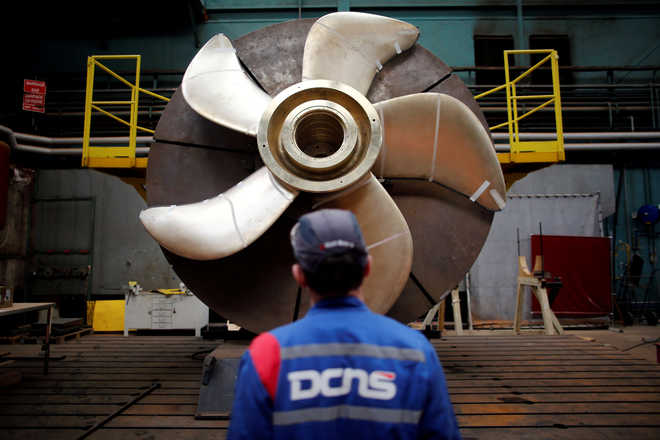
An employee looks at the propeller of a Scorpene submarine at the industrial site of DCNS in La Montagne, France. Reuters/file

Melbourne/New Delhi, August 28

Embattled French defence firm DCNS has approached the Supreme Court in Australia seeking an injunction against ‘The Australian’ from further publishing the leaked documents of India’s Scorpene submarine project.The DCNS has also sought a court order to the newspaper to hand over the documents in its possession and removal of the contents from its website.”The publication of this highly valuable document causes a direct harm to DCNS and its customer in terms of spread of sensitive and restricted information, image and reputation,” The Australian quoted an affidavit by DCNS lawyer Justine Munsie.The newspaper had said it will publish the documents regarding the weapons system of the submarine on Monday.Over 22,000 pages of top secret data on the capabilities of six highly advanced submarines being built for the Indian Navy in Mumbai in collaboration with a French company have been leaked.The move by DCNS comes after a former commander of US Pacific fleet Submarine Force warned that the leaks would undermine the confidence in the ability of French companies to protect classified information.Rear Admiral John Padgett (retd), who is also the president of the US Naval Submarine League, has said aggressive action needed to be taken to probe the leak and that France should share the outcome with Australia.The secret data included details of the capabilities of SM39 anti-ship missile expected to be used on the Scorpene and classified information about the number of targets the missile was capable of processing.Explaining the implications of the leak, Admiral Padgett said “It is never good for an opponent to have your playbook.””As a member of NATO, the French government and French military demonstrate that they enforce effective security controls and have a solid reputation with their allies,” he said.He said the investigation had to determine exactly how the breach occurred and what “aggressive action” would be taken to correct deficient security controls.His comments came as a French public prosecutor opened a preliminary investigation into the data leak, with DCNS filing a complaint for breach of trust.”We filed a complaint against unknown persons for breach of trust with the Paris prosecutor,” said a DCNS spokesman.The DCNS has won a contract to design Australia’s new $50 billion submarine fleet. — PTI