Sanjha Morcha

What’s New

Click the heading to open detailed news

Current Events :

web counter

Print Media Reproduced Defence Related News

A shot in the arm for defence IPRs

Union Defence Minister Nirmala Sitharaman. File

Defence Minister Nirmala Sitharaman on Tuesday inaugurated an ambitious mission, “Raksha Gyan Shakti”, to promote self-reliance in Intellectual Property Rights (IPR) in defence.

“The DRDO should introspect to make themselves more nimble towards innovation,” Ms. Sitharaman said. after formally launching the mission.

She observed that there is a “pre-conceived” notion that defence sector is difficult to break in as it has a long gestation.

Under the mission, the target for the year 2017-18 is to train 10,000 personnel of Defence Public Sector Undertakings (DPSU) and Ordnance factory Board (OFB) on IPR and facilitate filing of at least 1,000 new IPR applications.

Ajay Kumar, Secretary, Defence Production (DP), which is spearheading the mission, said the Director General of Quality Assurance (DGQA) is the lead agency and has already created a separate vertical for this under the rank of Additional DG.

Stating that the country has made significant progress in indigenous manufacturing but design capabilities need to be improved further, Dr. Kumar said, “As long as we are reliant on Transfer of Technology (ToT), we cannot talk of self-reliance.”

He noted that India has accumulated several technologies gained through Transfer of technology (ToT) agreements but for any design adjustments in the platforms, we have to go back to the original manufacturer.

“We are at a stage where design or IP accounts for over 50% of the cost. In some cases it is 70-80%,” Dr. Kumar said and added that typically when indigenisation results in cost savings of about 50-70%.

Between March and October this year, 5,283 people have been trained and 204 IPRs have been filed. The first level of IPs will be filed with the Controller of Indian Patents which would then take them up at the global level.


Kartarpur corridor green lit, India and Pakistan to begin construction soon

India today announced that it will start construction of the Kartarpur corridor up to the international border.

The corridor will begin from Dera Baba Nanak in Gurdaspur district of Punjab and will end at the international border, on the Indian side. The government says it will ask Pakistan government to build a similar corridor stretch on its land up to the Gurdwara Darbar Sahib in Kartarpur.

The corridor is being built to facilitate the visit by Indian pilgrims to the holy Gurdwara Darbar Sahib Kartarpur, where Guru Nanak spent his last 18 years.

The Kartarpur corridor will be built as an integrated development project with funding from the Indian government.

Pakistan, on its part, too has decided to begin building the Kartarpur corridor later this month, with Prime Minister Imran Khan likely to lay the foundation stone of the project.

According to officials, while a date for beginning the construction has not been set, the Pakistan government wants the announcement to coincide with the arrival of Sikh pilgrims, who are currently in the country to observe the birth anniversary of Guru Nanak Dev, the founder of the Sikh faith.

They said that a survey in this regard has already been conducted, and the government plans to complete the corridor’s construction by next year.

The Kartarpur Sahib corridor was first proposed in 1999 when the then Prime Minister Atal Bihari Vajpayee took a bus ride to Lahore. The Sikhs had been demanding that the two countries should revoke restrictions on movement of pilgrims to the holy shrine.

Currently, there is no restriction on an Indian pilgrim going to Pakistan on a regular visa. So, anyone can visit Gurdwara Kartarpur Sahib without requiring any special permission from Pakistani authorities.

Sikh jathas are known to visit Gurdwara Kartarpur Sahib on four occasions every year — Guru Nanak’s birth anniversary, Baisakhi, Guru Arjan Dev’s martyrdom day and Maharaja Ranjit Singh’s death anniversary.


Army man’s martyrdom in J&K shocks family

Army man’s martyrdom in J&K shocks family

Martyred Vijay Kumar

Tribune News Service

Hisar, November 20

The family members of Army man Vijay Kumar are in a state of shock after the news of his martyrdom appeared in the media on Tuesday.

A resident of Sagwan village in the Tosham subdivision of Bhiwani district, Vijay (37) was killed in an encounter with militants at Shopian in Jammu and Kashmir. A para commando with the Army, Vijay had been recruited in the 6 Para Regiment in 2001. He is survived by his parents, wife and three children.

Vijay’s elder brother Satpal Singh said Vijay talked to his wife and children early on Monday morning and assured them that he would join them during holidays next month. Satpal said Vijay had come to the village on the occasion of Diwali and celebrated the festival with his family. Satpal said the body was expected to arrive in the village on Wednesday.

Vijay’s father Jai Dayal is a farmer. His wife Suman, son Monu and daughters Nisha and Tannu are staying at Pilani.


Negotiated better price and complied with procedure in Rafale deal: Centre to SC

Negotiated better price and complied with procedure in Rafale deal: Centre to SC

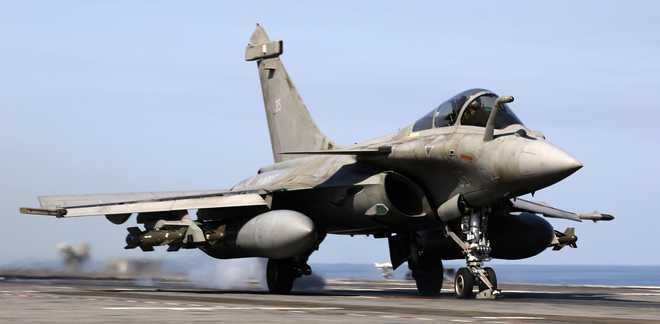
The document was supplied to the petitioners as per the apex court’s October 31 order. File photo

New Delhi, November 12

The Centre on Monday disclosed to the Supreme Court the pricing details for the 36 Rafale jets that were negotiated on “better terms” and said it “completely followed” the Defence Procurement Procedure laid out in 2013 and secured the CCS approval before the deal that has whipped up a political storm was inked with France.

The submission by the Centre was made in a 14-page document titled “Details of the steps in the decision making process leading to the award of 36 Rafale fighter aircraft order” that has since been made public.

But the pricing details provided in a sealed cover remained in the custody of the top court. Initially, the Centre was reluctant to part with the information on pricing saying it was not even disclosed in Parliament.

The details of the decision making process and pricing were placed in the court in compliance with its October 31 order. The court will now peruse both the documents and take up the matter on Wednesday.

A senior law officer, who did not want to be identified, said, “subject to various reservations, the price details of the deal have been filed in a sealed cover in the apex court”.

The document said the process as laid down in the Defence Procurement Procedure-2013 has been “completely followed” in procurement of the Rafale aircraft and the Cabinet Committee on Security (CCS)  on August 24, 2016 approved the agreement which was arrived at after negotiations between the Indian and the French sides. The UPA was in power in 2013.

“The approval of Defence Acquisition Council (DAC) for procurement of 36 Rafale aircraft was taken, Indian Negotiating Team (INT) was constituted which conducted negotiations with the French side for about a year and approval of CCS being Chief Financial Authority (CFA) was taken before signing the IGA.”

The inter-government agreement (IGA) was signed by the defence ministers of both countries on September 23, 2016.

“As mandated by Defence Acquisition Council, Indian negotiating team completed negotiations and arrived at better terms relating to price, delivery and maintenance as compared to the earlier offer of Dassault Aviation,” the document said.

The Congress has alleged that the NDA government was procuring each aircraft at a cost of over Rs 1,670 crore as against Rs 526 crore finalised by the UPA government when it was negotiating a deal for procurement of 126 Rafale jets.

The document also addressed often repeated allegations by Congress president Rahul Gandhi that Prime Minister Narendra Modi forced the French company Dassault Aviation to select a Reliance group firm of Anil Ambani as an offset partner to help it “pocket” Rs 30,000 crore.

It stated that as per the Defence Offset Guidelines, the vendor is “free to select its Indian Offset Partners (IOPs) for implementing offset obligation”.

The document dealt in detail as to why state-owned PSU Hindustan Aeronautics Ltd (HAL) failed to become an offset partner in the deal as there were several unresolved issues it had with Dassault.

The Congress has alleged that Dassault has been pressured by the government to do away with the HAL as strategic offset partner by saying the future of India’s aerospace industry has been destroyed by snatching Rafale from HAL.

“The contract negotiations could not conclude mainly due to unresolved issues related to 108 aircraft to be manufactured in India. These issues pertained to lack of common understanding between HAL and Dassault Aviation on following,” the document said.

The document said HAL required “2.7 times higher man-hours compared to the French side for the manufacture of Rafale aircraft in India”.

The Congress said the government’s reply to the court is a “virtual admission” that the CCS was not consulted before finalising the contract with the French.

“There is a virtual admission that the Cabinet Committee on Security was not consulted before. You will consult after giving the contract or you will consult before the contract — contract meaning before giving a word to President and country of France,” Congress spokesperson Abhishek Singhvi told reporters.

The Rafale deal was announced in April 2015 in Paris after summit talks between Modi and French President Francois Hollande.

Referring to the earlier aborted deal, the document said Dassault was required to undertake necessary contractual obligation for 126 aircraft (18 direct flyaway and 108 aircraft manufactured in India) as per RFP requirements and contractual issues with HAL on manufacturing of 108 jets in India could not be resolved.

The NDA government referred to the failed deal during the UPA regime and said India’s adversaries in the meantime inducted modern aircrafts and upgraded their older versions and this necessitated the urgent need to procure the jets at a fly-away condition.

“As per available information, our adversaries inducted more than 400 fighters (equivalent to more than 20 Squadrons) during the period from 2010 to 2015. They not only inducted 4th Generation Aircraft but also inducted 5th Generation Stealth Fighter Aircraft,” it said.

The first petitions in the matter were filed by advocates M L Sharma, Vineet Dhanda and later AAP MP Sanjay Singh, through advocate Dheeraj Singh, also moved the apex court.

Thereafter, former Union Ministers Yashwant Sinha, Arun Shourie along with advocate Prashant Bhushan also filed a joint petiiton for registration of an FIR in the Rafale deal. — PTI



Centre hands over document on Rafale process to petitioners

Centre hands over document on Rafale process to petitioners

The document was supplied to the petitioners as per the apex court’s October 31 order. File photo

New Delhi, November 12

The Centre on Monday complied with a Supreme Court order and handed over to petitioners, who sought a court-monitored CBI probe into the procurement of 36 Rafale fighter jets from France, the document detailing the decisions taken to procure the aircraft.

The document titled ‘Details of the steps in the decision making process leading to the award of 36 Rafale fighter aircraft order’ stated that the process as laid down in the Defence Procurement Procedure-2013 had been followed in procurement of the Rafale aircraft.

It said the procurement process laid down in the Defence Procurement Procedure (DPP) had been completely followed for the procurement of aircraft and approval of Defence Acquisition Council for aircraft taken for the same.

The documents said the Indian Negotiating Team was constituted which conducted negotiations with the French side for about a year and approval of the Cabinet Committee on Security, being the Competent Financial Authority, was taken before signing the Inter-Government Agreement.

The document was supplied to the petitioners as per the apex court’s October 31 order.

The top court had said details, including the steps in the decision-making process for the procurement of jets, which could “legitimately” be brought into public domain, be made available to the parties who had filed petitions before it in the matter.

It had also asked the Centre to place before it in a sealed cover within 10 days the pricing details of 36 Rafale fighter jets India is buying from France.

The apex court, which had posted the matter for hearing on November 14, had categorically told the Centre that if the pricing detail was “exclusive” and could not be shared with the court then the Centre should file an affidavit in this regard and say so.

The petitions seeking the probe in the Rafale deal were first filed by advocates Manohar Lal Sharma and Vineet Dhanda.

Later, AAP MP Sanjay Singh had also filed the petition.

Former Union Ministers Yashwant Sinha, Arun Shourie and activist lawyer Prashant Bhushan had also filed a joint petition. PTI



350 NCC cadets take part in training camp

350 NCC cadets take part in training camp

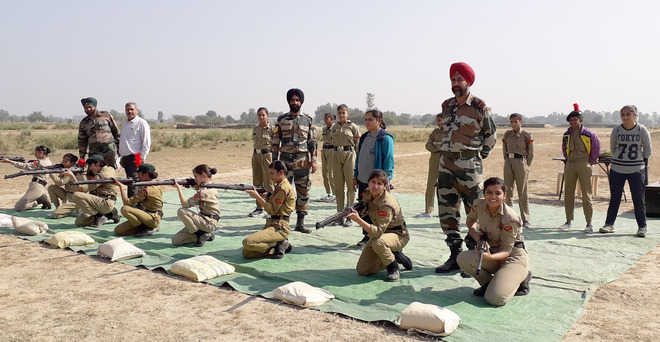
oung cadets take part in shooting practice in Amritsar. Tribune photo

Tribune News Service

Amritsar, November 8

Around 350 students are participating in the annual cadet training camp with RDC launch held at Gharinda, near Indo-Pak border. The cadets from Amritsar, Gurdaspur and Tarn Taran are taking part in the camp to be concluded on November 11. The camp is being organised by the First Punjab Battalion, NCC. The cadets are being trained in mental ability and physical fitness. On Thursday, the cadets were given shooting lessons.

Addressing the students, Colonel Sushant Sharma said, “It is important to get trained before one start shooting. Firm grip and usage of trigger are important aspects of learning shooting.”

Sukhpal Singh, an associate NCC officer, said, “We have cadets from Majha region. A number of activities are being held for the betterment of these young cadets. A number of competitions will also be conducted in the camp.”

Earlier in the day, to inform these young minds to fight corruption in the country, a seminar on vigilance was also conducted. The cadets debated upon corruption in the country and need to fight the issue. Besides, a rally was also taken out by the cadets. The cadets also pledged to make country corruption free. Among present included, Capt. Rajiv Dhawan, Subedar Sunit Singh, Havildar Kulwant Singh and others


A new alliance in Afghanistan by G Parthasarathy

A new alliance in Afghanistan

Russia, China & Pakistan are playing a dubious game of diverting attention from Taliban

G Parthasarathy 
former diplomat

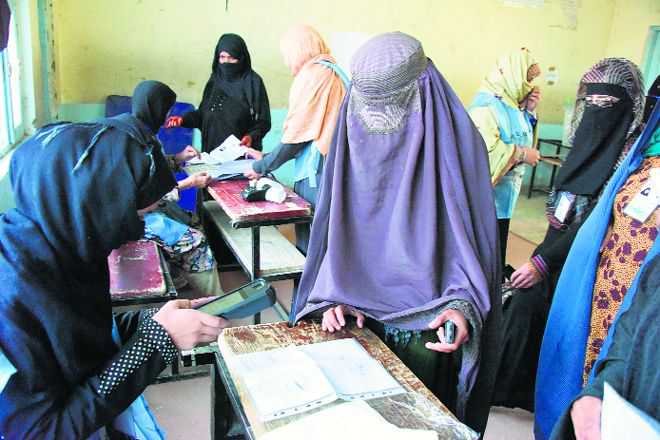
THE resilience and courage of the people of Afghanistan was evident in parliamentary elections held on October 21. While there are varying estimates about the number of eligible voters in the country, about 4 million voters, comprising around 33% of the electorate turned out to vote, braving Taliban threats, bomb explosions, suicide bombers and mortar shells.  Over 170 voters were killed, or wounded. What was noteworthy was the significant turnout of women voters — over 30% of those registered. Nothing shames the Taliban and their medieval practices regarding women more than the large turnout of women voters. Interestingly, while the Afghan government controlled 229 districts with 56.3% of population, 59 districts with 14.5% population were under Taliban control, with control of 119 districts, comprising 29.2% population, being contested.

Barely three days before the elections, the southern Afghan city of Kandahar witnessed a murderous Taliban attack, demonstrating the uncertainty in the loyalties of individual members of the armed forces and the police because of the infiltration of Taliban cadres into their ranks. The attack occurred at a meeting between US Commander-General Austin Miller and Provincial Governor Zalmai Wesa. Two Afghan bodyguards opened fire, killing the Governor, his police chief, Gen Abdul Raziq, who had conducted anti-Taliban actions ruthlessly and successfully for over a decade, and the provincial intelligence chief. Brigadier-General Jeffrey Smiley, who was accompanying the US Commander, was seriously wounded.

The attack has immense symbolic significance, given Kandahar’s historical and spiritual importance to the Taliban. The main mosque in Kandahar, described as the ‘Shrine of the Cloak’, houses what is believed to be the Prophet’s cloak. Ahmed Shah Durrani, regarded as the founder of Afghanistan and its hero, brought the cloak from Bukhara in Uzbekistan in 1768. This was done just a few years after Ahmed Shah’s victory in the Third Battle of Panipat (1761), which extended Pashtun control over the whole of what is today Pakistan’s Punjabi heartland, north of the Sutlej.

When Mullah Omar reached Kandahar with Pakistani backing in 1996, he sought to emphasise his legitimacy by blasphemously appearing in public, donning the cloak. Control, or appearance of control, over the mosque is symbolically more important to the Taliban, than even the control of Kabul! Hence, the relentless Taliban attacks on Kandahar, where we now have an Indian Consulate. Few in India, unfortunately, recognise or appreciate the dangers our diplomats and staff in diplomatic and consular missions, and the Indo-Tibetan Border Police face daily in Afghanistan.

With presidential elections scheduled for the first half of 2019 in Afghanistan, India must realise that the greatest diplomatic and strategic challenges it will face in coming months are going to arise in Afghanistan. With Imran Khan, popularly known as ‘Taliban Khan’, now heading the civilian government in Afghanistan, it is clear that more than ever before, Pakistan army’s hard-core Islamists are going to call the shots in Afghanistan.  Establishing a Taliban-dominated setup will remain their highest priority. They are going to be emboldened by the fact that virtually every external power that matters — the US, the EU, Russia, China and Iran — are reconciled, one way or another, to ‘accommodate’ the Taliban. This is their thinking at a time, when the Taliban impetuously seizes control over urban centres like Ghazni and shows little interest in negotiating with the Afghan government.

The role of external powers in the Afghan cauldron is also getting more complex. President Trump was dissuaded from his desire to pack up and leave from Afghanistan, when he was warned that he would be judged by many as a ‘weak’ President who ‘lost’ Afghanistan. He has since, on the advice of Defence Secretary Mattis, augmented the US air power, especially in the use of attack helicopter gunships, which can play a crucial role in dealing with Taliban attacks. He has, more or less, frozen US troop levels, but kept options open for a ‘face-saving’ withdrawal. The shrewd Zalmay Khalilzad, an American of Afghan origin who played a leading role in Afghanistan during the Bush Administration, has been made Special Envoy for talks with the Taliban, which he initiated recently in Qatar.

In the meantime, Pakistan has released a founding member of the Taliban, Mullah Abdul Ghani Baradar — a leader it had distrusted and incarcerated since 2010. The Taliban has welcomed Baradar’s release. He could play an important role in talks with the Taliban, which can pick up steam only after the 2019 elections. Both Russia and China have played duplicitous roles. Russia has made friends with the Taliban and even reportedly supplied it with weapons. Pakistan has midwifed secret Chinese contacts with the Taliban, for over a decade now. Russia, China and Pakistan are playing a dubious game of diverting attention away from Taliban depredations. They are trying to make the world believe that the real terrorist challenge in Afghanistan comes not from the Taliban, but from the ‘Daesh’ (IS), which has regrouped in Afghanistan. Americans wanting to leave Afghanistan have conveniently bought this argument. China also has other worries, based on its fears that its Muslim Uighurs, whom it is treating brutally, could cross the border, seek shelter in Afghanistan and threaten Beijing’s internal security.

With the growing poll fervour in India, New Delhi should not ignore these developments. A Pakistan-backed takeover of large tracts of Afghan territory has to be thwarted. Afghan leaders should put aside personal rivalries and face the challenges posed by Pakistan and the Taliban. President Ghani would be well advised to see, even as the Afghan armed forces are strengthened and their morale restored, that powerful regional satraps like the Provincial Governor of Balkh, Atta Mohammad Noor, are fully associated in what should be a united effort to meet the challenges.


China consolidating its string of pearls by Lt-Gen Kamal Davar (retd)

China’s growing naval build-up in the Indo-Pacific region is to overcome its “Malacca Dilemma” as the narrow Malacca Strait is the conduit from where over 70 per cent of China’s energy needs get transported from West Asia. China is wary of the US and Indian naval capabilities and, thus, it is in an overdrive to protect its interests by consolidating its ‘string of pearls’ .

China consolidating its string of pearls

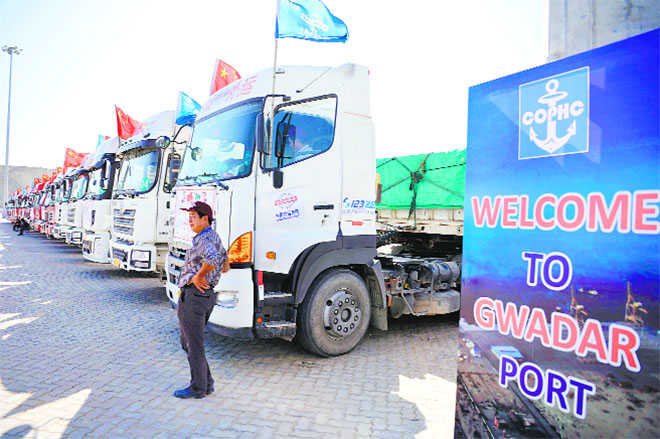
Gwadar sea port: This Pakistani port is a part of China’s ‘string of pearls’ stratagem that has geo-political and military repercussions for India.
Lt-Gen Kamal Davar (retd)

Lt-Gen Kamal Davar (retd)
First chief of India’s Defence Intelligence Agency

Down the ages, even when its empires and ruling dispensations suffered inglorious defeats or political ignominy, China consistently managed to display uncanny steadfastness in its goals and ambitions. That a rare amalgam of strategic patience, statecraft, deep pockets and resoluteness in the pursuit of its long-term objectives, characterises the Dragon’s ever-growing footprint across Asia, Africa and the oceans, lapping the increasingly strategic region from the Strait of Hormuz to the bottleneck of the Strait of Malacca. That China has successfully kept at bay, in its area of operational interest, specifically in the South China and East China Seas even the world’s sole superpower’s naval might, speaks volumes of China’s military ascendancy in the Indo-Pacific expanse.

China’s string of pearls

The ‘string of pearls’ stratagem, originally an American think tank’s expression for strategic encirclement, is since a couple of decades, a virtual Chinese hallmark as it asserts itself in the Indo-Pacific region. That the Chinese avatar of the ‘string of pearls’ is directed also against India brooks no elaboration notwithstanding China’s frequent unconvincing denials stating that China’s increasing activities in the Asia-Pacific (being now largely referred to as the Indo-Pacific) are predominantly economic and commercial in nature. 

Equally, China’s growing forays and naval build-up in the Indo-Pacific region is to overcome its “Malacca Dilemma” as the narrow Malacca Strait is the conduit from where over 70 per cent of China’s energy needs get transported from West Asia. China is understandably wary of the US and Indian naval capabilities to interdict its sea-lanes and, thus, it is in an overdrive to protect its interests by consolidating its ‘string of pearls’ to hem in India’s military resources.

In the last 15 years or so, China has assiduously perfected its strategic encirclement of India. Commencing with the port of Hambantota in Sri Lanka over which it has acquired a 99 years’ lease, China’s $1 trillion ambitious project — the Belt and Road Initiative and the China Pakistan Economic Corridor (CPEC) — traversing the Gilgit-Baltistan disputed territory in India’s north-west — the proposed China-Pakistan-India-Bangladesh-Myanmar Economic Corridor, the Chinese-supported and -built Gwadar deep sea port in Baluchistan, its first foreign naval base in Dijbouti and efforts to set up naval facilities in Maria Atoll in the Maldives are all part of its ‘string of pearls’ stratagem which have marked geo-political and military repercussions for India. 

Adding to India’s woes

In addition, a road is under construction from its Yunan province to the Myanmar’s deep sea port of Kyunkpyu, China’s offer of major improvements to Bangladesh’s Chittagong port and China’s growing interests in Afghanistan will add to Indian discomfiture — both militarily and economically. China’s ever-increasing financial, military and nuclear largesse to Pakistan — all form a deliberate part of the Chinese grand design using Pakistan as a low-cost proxy against India.

To add to India’s diplomatic woes in the neighbourhood, China has successfully driven a wedge between India and Nepal by unifying the two Communist parties in Nepal. Both the militant Nepali Communist leader, Prachanda, and its PM, KP Sharma Oli, are solidly pro-Chinese and already have taken some steps to distance themselves from Nepal’s traditional fraternal relationship with India.

Nepal withdrew from participation in counter-terrorism exercises for BIMSTEC nations hosted recently by India, besides, seeking access to far-distant Chinese ports to nullify any future Indian blockade of their mountain kingdom. Nearly a lakh of Nepalese serve in the Indian Army and other security forces. Besides, India has been providing employment to many lakhs of Nepalese citizens. India will have to deal with the current Nepalese establishment with caution, maturity and factor in scenarios if the crafty Chinese manage to further worsen India-Nepalese relations.

India has to further ensure that its traditional relations with its tiny but strategic neighbour, Bhutan, does not follow the Nepalese pattern. After the Chinese engineered Doklam crisis in September, 2017, Bhutan too appears to be re- thinking its historical relationship with India. It is now apprehensive of a strong China creating political problems for them.

Silver lining for India

However, the silver lining for India in its neighbourhood has been the surprise defeat of the Chinese-supported Maldives President Abdulla Tameen by Ibrahim Solih in the Maldives presidential elections. It is expected that the wily Chinese will do their utmost to retain their influence in the strategically located Maldives.

India will now have to marshal all its genius, build its capabilities and synergise its resources to counter China’s machinations to strategically encircle India. It must not fall a prey to China’s off-on-off guiles to lull it into complacency. Thus, India must endeavour towards far greater blue water capability to the Indian Navy, especially augmenting its submarine strength and a minimum of two additional aircraft carrier borne-task forces. Additionally, added military muscle to and cooperation among the QUAD nations is sine qua non. US and Japan themselves are seriously concerned with increasing Chinese assertiveness in the Indo-Pacific.

All-out efforts to regain its influence among India’s neighbours must be earnestly strived for. An unambiguous message should be conveyed to all our neighbours that the economic muscle of China will ensure their colonisation and subservience by dragging them into gigantic debt traps as Sri Lanka and Pakistan have realised.


7th Pay Commission: Dussehra Bonanza Far From Reality For Central Govt Employees

Further hike in the minimum pay of the Central government employees as against the recommended hike by the 7th Pay Commission has become a matter of hope and disappointment – sunrise gives birth to hope and sunset vehemently crushes it.

After much expectations for a hike announcement on Independence Day, which didn’t happen, expectations were there that the Narendra Modi -led NDA government would consider the demand of the CG employees and at least make an announcement in the regard before Dussehra.

Odisha govt DA hike 7th pay commission

However, the same has been repeated again as the Modi government is not going to make any announcement related to the minimum pay hike before the end of the festive season.

Besides, Finance Minister Arun Jaitley had also promised on June 30, 2016 to hike the minimum pay of the CG employees and he also reportedly reiterated it in Rajya Sabha on July 19, 2016.

Earlier news were making rounds that the Centre will increase the minimum pay but it would not be Rs 8,000 as demanded by the CG employees, rather it will be around Rs 2000, citing that as elections are around the corner and the Modi government would try to calm down the brewing resentment among the CG employees.

7th pay commission

Also Read: BSNL Dussehra Offer: Get Unlimited Data Almost Free; Know Details

The Central government employees are presently getting a minimum pay of Rs 18,000. They are demanding a hike of Rs 8000- Rs 26,000- an increase in the fitment factor by 3.68 times from the existing 2.57 times.

Of all, the Central government employees still hope that the Centre will consider their demand and some up with an announcement in this regard soon.


Army jawan arrested on spying charges from Meerut Cantonment

Army jawan arrested on spying charges from Meerut Cantonment

The arrested jawan is associated with the Army`s Signal Regiment.

MEERUT: An Army jawan has been arrested for spying and allegedly leaking vital military secrets from Meerut Cantonment on Wednesday.

The jawan, whose identity has not been revealed, is associated with the Army’s Signal Regiment.He is currently being interrogated for more information.

The authorities are also trying to ascertain if more people are involved in this espionage racket. The jawan was on the radar of the Military Intelligence for some time. He has been arrested as part of the ongoing probe into the BrahMos missile leak case which was unearthed recently.

The arrest of the jawan in Meerut comes days after Nishant Agarwal, a BrahMos Aerospace engineer, was arrested on charges of spying. Agarwal was arrested earlier this month in a joint operation by the anti-terrorist squad (ATS) units of Maharashtra and Uttar Pradesh, following which the UP ATS was granted his transit remand.

Nishant Agarwal was taken from Nagpur to Lucknow, where he was interrogated.He was in touch with suspected Pakistani intelligence operatives through two Facebook accounts with names – Neha Sharma and Pooja Ranjan.

Agrawal was arrested from BrahMos’ Wardha Road facility for allegedly leaking “technical information” to Pakistan.

BrahMos Aerospace is a joint venture between India’s Defence Research and Development Organisation (DRDO) and the ‘Military Industrial Consortium’ (NPO Mashinostroyenia) of Russia.

Agrawal, despite being engaged in “highly sensitive work”, was “casual” on the internet and made himself an “easy target”, the UP-ATS officer said.He said Agrawal was active on LinkedIn also.

The engineer has been charged under sections 3,4, 5 and 9 of the Official Secrets Act, sections 419,420, 467, 468, 120 (B) and 121 (A) of the Indian Penal Code as well as 66 (B) of the Information Technology Act.