









Sanjha Morcha

What’s New

Click the heading to open detailed news

Current Events :

web counter

Print Media Reproduced Defence Related News

Pilgrims advised to leave Valley

AMARNATH YATRA Terror threat suspected; Oppn says move will cause panic

Although this unprecedented order would seem to suggest a genuine fear of a massive terror strike directed at Amarnathji yatris or/and tourists, this will do nothing to dampen the sense of fear and foreboding in the Valley.
OMAR ABDULLAH, NC leader and ex-CM
Complete chaos on the streets of Srinagar. People rushing to ATMs, petrol pumps & stocking up on essential supplies. Is GOI only concerned about the safety of yatris while Kashmiris have been left to their own devices?
MEHBOOBA MUFTI, PDP leader and ex-CM

SRINAGAR/NEW DELHI: The Amarnath yatra ended 14 days ahead of its scheduled close on August 15 and the counter-insurgency grid in Jammu & Kashmir was strengthened with the additional deployment of security forces following the recovery of a large cache of ammunition, a Pakistanmade anti-personnel mine, and a US-made sniper rifle along the route of the yatra, and intelligence reports that highlighted the increased possibility of suicide bombing attacks in the Kashmir valley.

NITIN KANOTRA/HT■ Visibly upset pilgrims at the base camp in Jammu on Friday.The cancellation of the yatra to one of Hinduism’s holiest shrines, and an alert issued to pilgrims and tourists to return home resulted in panic and a scramble for air tickets — the road from Srinagar to Jammu is closed on account of landslides — even as it unsettled residents of the valley and intensified speculation of a big move in the offing, perhaps the scrapping of Article 35A which restricts some benefits (such as government jobs and property ownership) to permanent residents of the state. Last weekend, the deployment of 100 companies of security forces (around 10,000 men) set off such speculation; HT learns that at least 150 more companies have now been deployed since.

The Union home ministry on Friday issued a guarded statement, saying, “Deployment of paramilitary forces in Jammu and Kashmir is based on the security situation there and requirements of rotation, and such things are not discussed in the public domain.”

In a press conference in Srinagar, the corps commander of the strategic 15 Corps, lieutenant general Kanwal Jeet Singh Dhillon; J&K director general of police Dilbag Singh; special DG, Central Reserve Police Force (CRPF), Zulfiqar Hasan; and inspector general of police, Kashmir, SP Pani presented the reasons for the scrapping of the yatra, although they sought to play down the increase in deployment.

General Dhillon said searches have underway for the past three to four days after specific inputs of attempts to disrupt the Amarnath yatra by “terrorists, the Pakistan army and Pakistan”. He said that joint teams of the army, police and CRPF carried out extensive searches on both the routes of the yatra and the adjoining areas on the highway as well as the foot track leading up to the holy cave. “We have major successes in these searches, some improvised explosive devices and caches of weapons and explosives have been recovered on these routes. A Pakistan army mine has been recovered,” he said. The general also showed an M-24 American sniper rifle that was also recovered. “The searches are still going on,” he said. The mine, whose pictures were shown to media, General Dhillon said, has “Pakistan ordnance factory markings”.

The decision to curtail the yatra was taken after Indian intelligence picked up heightened activities of Pakistan-based terror groups including the Jaish-e-Mohammed and Lashkar-e-Taiba (LeT). “With major threat coming from Pakistanbased groups, particularly JeM, and recovery of M-24 sniper rifle and an anti-personnel mine along the Amarnath pilgrimage route, the government decided not to take any chance. With personnel freed from yatra duties, the security forces can now concentrate on counter-insurgency grid,” said a senior J&K police offer who asked not to be named.

According to inputs conveyed to the national security establishment, Ibrahim Azhar, elder brother of JeM chief Masood Azhar, was sighted in Muzaffarabad in PoK last month. He is believed to have been headed to Kashmir. Intelligence reports indicate that Ibrahim Azhar, the main orchestrator of the Indian Airlines IC-814 flight hijacking in 1999, wanted to infiltrate into the Valley and lead attacks against the Indian establishment. JAMMU:An advisory issued by the state government on Friday asking Amarnath yatris and tourists to return homes immediately has caught pilgrims to one of Hinduism’s holiest shrines unawares.

Though no official announcement was made at the Yatri Niwas base camp till 5.30 pm, pilgrims from Tamil Nadu, Kerala, West Bengal, Odisha, Maharashtra, Karnataka and other states were upset at not being able to complete their pilgrimage.

Narayan Sain, 62, a marginal farmer from Hoshangabad in Madhya Pradesh, said he borrowed money to undertake the pilgrimage, and started crying when he came to know about the government advisory.

“The dream of having a darshan of the lord has been shattered,” said Sain with tearsin hiseyes.

Mohan Rao, 65, from Bidar in Karnataka, one of a group of 40 pilgrims from the state said, “We have travelled over 2,000 kms in buses to reach here. Each one of us has spent ₹30,000 for the Yatra. Now, cancelling it and asking us to return home is totally a wrong decision,” he said. Some pilgrims were still hopeful. Baba Krishnajee Achalkar, 66, from Kottyam said, “We have travelled over 3300 km with a desire to pay obeisance at the shrine. We have come here for the first time and we urge the government to review its decision and allow the remaining pilgrims to visit the shrine.”

In the wake of the prevailing situation and the government order in the Kashmir valley, Indian airlines including Air India, Vistara, GoAir and IndiGo have announced a full fee waiver on rescheduling or cancellation of flights to and from Srinagar.


US approves armed drones’ sale to India

US approves armed drones’ sale to India

Washington, June 8

The Trump administration has approved sale of armed drones to India and has offered integrated air and missile defence systems aimed at helping the country boost military capabilities and protect shared security interests in strategically important Indo-Pacific region.

The approval-cum-offer from the US came in the aftermath of the February 14 Pulwama attack in which 40 Indian soldiers were killed and the increasing militarisation and assertiveness of China in the Indo-Pacific ocean.

During the June 2017 meeting between PM Narendra Modi and President Donald Trump, the US had agreed to sell surveillance version of the Guardian drones. India was first non-treaty partner to be offered a MTCR Category-1 Unmanned Aerial System, the Sea Guardian UAS made by General Atomics. — PTI


Aadhaar PAN name mismatch? Don’t panic! Here’s how to match PAN name and Aadhaar Card name

Aadhaar-PAN name mismatch: If your name is different in PAN and Aadhaar Card, you will face difficulties in linking your PAN and Aadhaar Card.

aadhar pan mismatch news

Aadhaar-PAN name mismatch: If you are trying to link your Aadhaar Card with the PAN Card but it is not happening, you need to check details registered with PAN and Aadhaar cards. If you want to link Aadhaar Card with PAN, you need to make sure that your demographic details such as date of birth, name and gender should match in both the documents. Unique Identification Authority of India (UIDAI) issues Aadhaar Card, which is a verifiable 12-digit identification number. It is issued free of cost. The Income Tax Department issues the ten-digit alphanumeric identifier which is Permanent Account Number (PAN). One must remember that each assessee – individual, firm, company etc – gets a unique PAN.

How can I match my PAN name and Aadhaar Card name?

Often people search for what would happen if names in PAN and Aadhaar Card mismatch. If your name is different in PAN and Aadhaar Card, you will face difficulties in linking your PAN and Aadhaar Card. If there is a minor mismatch in the name registered with Aadhaar Card with that of PAN, you will get an Aadhaar One Time Password (OTP) on your mobile number that is registered with Aadhaar card. However, to get that OTP, PAN cardholders must ensure that details pertaining to gender and date of birth in Aadhaar and PAN remain the same. If names in the Aadhaar and PAN mismatch completely then the linking will fail. In that scenario, the concerned individual will need to make the necessary changes in either PAN database or Aadhaar.

How can I change my name on Aadhaar Card?

If you want to update your name in Aadhaar Card database you can do it online or at an enrolment center.

If you want to change your name on the Aadhaar Card, you need to visit SSVP Portal

You need to select the fields which you want to update or change.

Subsequently, you need to fill the data in the selected fields.

You need to submit the form and a Unique Request Number (URN) will be generated.

Then you need to select the BPO for review of update. After that, you need to attach the original scan of the supporting document.

Finally, you can check the Aadhaar update status by using the URN.

If you want to change the name in Aadhaar card in the traditional way you can visit an enrolment center. You can also download the Aadhaar update form at https://uidai.gov.in/images/aadhaar_enrolment_correction_form_version_2.1.pdf .

How can I change my name on PAN Card?

If you want to update your name in PAN, you need to visit https://www.onlineservices.nsdl.com/paam/endUserRegisterContact.html .

You need to selection Application Type – Changes or Correction in existing PAN Data/Reprint of PAN Card (No changes in existing PAN Data).

You need to fill in other application information such as Title, Last Name, First Name, Date of Birth, Email Id, PAN Number.

After that confirm that whether you are a citizen of India or not and submit captcha code.

After that, a Token Number will be generated and you need to continue with PAN Application Form. You can get the PAN correction form online https://tin.tin.nsdl.com/pan/correctiondsc.html .


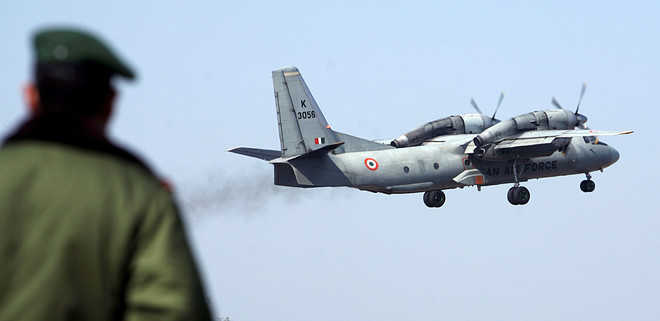
Five days on, no trace of missing AN-32 of IAF

Five days on, no trace of missing AN-32 of IAF

File photo of AN-32 transport plane. Reuters

Itanagar, June 7

There was no breakthrough in the search of the AN-32 aircraft of the Indian Air Force that went missing with 13 persons on board with operations continuing for the fifth day on Friday amid inclement weather, officials said.

IAF spokesperson Wing Commander Ratnakar Singh said despite inclement weather, the joint search operations by IAF, Army and local administrations were continued.

“Search operations by helicopters, P-8I of the Indian Navy, besides C130J and ground parties of the Indian Army and locals were conducted but there was no sight of the aircraft,” Singh said.

He added that the search operations by helicopters were called off due to low lights and would resume on Saturday morning.

Ground teams of Indian Army and Indo-Tibetan Border Police along with locals and district administration officials are searching areas around Siang district, official sources said.

A senior IAF official said P-8I of the Navy undertook a search mission from Arakonnam base on Friday morning.

“The helicopters, transport aircraft, UAVs and other sensors are involved in extensive search and rescue whenever weather is permitting. The search area continues to expand to look at all possibilities. All electronic, radar, optical and infrared sensors, including satellites, are being employed to scan the area for any probable clues,” he said.

The IAF said Army, police, state government, paramilitary forces and local people are lending crucial support in the search operation.

“Army search parties have been in the area for over two days, going through thick forest trying to locate the aircraft. Senior Air Staff Officer of Eastern Air Command is coordinating and supervising search operations at Along.

“IAF is not sparing any effort in locating the missing air warriors. We stand in support of the families in these difficult times,” the officer said.

The search operation encompasses an area of about 2,500 square km which falls under Kaying and Payum circle of Siang district.

“The IAF is in regular touch with the families of missing air warriors. All possible assistance is being provided to the families. Some family members met Defence Minister Rajnath Singh on June 6 and they were briefed about the search efforts. AOC-in-C, Eastern Air Command, Air Marshal R D Mathur had earlier met the families of missing air warriors at Jorhat,” the official said.

The Russian-origin transport aircraft took off from Assam’s Jorhat at 12.27 pm on Monday for the Mechuka Advanced Landing Ground in Shi-Yomi district of Arunachal Pradesh. Its last contact with the ground control was at 1 pm.

Eight crew members and five passengers were on board the aircraft. —


Together in war and peace

Together in war and peace

Sudhirendar Sharma

Despite my wife’s trepidation, I couldn’t resist travelling to support local communities in their post-war rehabilitation, just about the time when the guns were falling silent during the Kargil War. The occasional thunder from the burning ammunition dump that had been targeted by the enemy didn’t bother the locals who had been through the worst.

Some 30,000 people were uprooted from their homes, had lost their animals, and more importantly, the productive three summer months. Having extended unconditional support to the armed forces during those testing months, the locals expected more than what came their way as relief. There were several, like the chaiwallah at Drass, overlooking the imposing battlefield of the infamous Tiger Hills, who had extended their undeterred services under gunfire.

From the treacherous heights of Batalik to the undulating dry slopes of Mushko valley, I gathered stories of trauma and courage from hundreds of villagers in Chanigund, Drass, Holiyal, Kharboo and Trespone. Village residents dreaded going to their fields as unexploded bombs were suspected to be still scattered around. That such bombs had claimed the lives of two young boys was still fresh in their minds. I spotted a half-buried mortar in an abandoned field in Kharboo. For humans and cattle, the agricultural farms had become the new killing fields.

In all, some 4,000 families were evacuated from as many as 52 villages, not a small number in a sparsely populated cold-desert region. Noticeable was the resilience of the communities, and their hand-holding. Trespone, a village with 370 households located about 20 km from Kargil, had played host to all families from the border village of Kaksar — the first village to be evacuated. I had made a failed attempt to seek benevolence of the resource-stretched district administration for the households. One from the village, Tahir Hussain, had questioned if seeking compensation for the goodwill extended to their brethren wasn’t unethical!

It wasn’t easy to convince the administration that as much as the displaced, the hosts too needed to be counted in the relief and rehabilitation package. Much to my surprise, affected households demanded fuelwood and not food as relief. Survival during harsh winter, which was already knocking at their door, could be possible without food, but not without fuelwood to keep the homes warm and liveable.

War had traumatised a large number of children. Eleven-year-old Mohammad Abuzor was one of the several children who witnessed the unfolding war. Alone at home when the war erupted, he was the first to see bullets hit his grandmother. He had sought help from an Army picket before the entire village of Kaksar was evacuated. Like others, his blank eyes were reflective of a gloomy future.

As I recall those days, I wonder how might have Abuzor grown as one of those directly affected by the war.


What are the prospects in paramilitary forces?

Pervin Malhotra

Q.I will be taking the NDA exam this year, but would like to keep my options open. Could you tell me something about the prospects in the paramilitary services? — Sarvesh Datta

A.The CAPF comprises the following seven forces functioning under the Union Home Ministry:

1. Border Security Force (BSF) for manning the land borders of the country, except in the mountains. (186 Battalions) Headed by Indian Police Service Officer

2. Indo-Tibetan Border Police (ITBP) for manning the border with China on the Himalayan portion of the Tibetan plateau. (55 Battalions) Headed by Indian Police Service Officer

3. Central Reserve Police Force (CRPF): The largest of the Central Armed Police Forces (200+ battalions). The CRPF includes the Rapid Action Force (RAF), a 10 battalion anti-riot force trained to respond to sectarian violence, and the Commando Battalion for Resolute Action (COBRA) which is an anti-Naxalite force.

4. Central Industrial Security Force (CISF): 130+ Battalions

5. Sashastra Seema Bal (SSB) guards the Indo-Nepal & Indo-Bhutan Borders. 8.

6. Railway Protection Force (RPF) protects the railways of India and ensuring safety of citizens in trains.

7. National Security Guard (NSG) which is Headed by Indian Police Service officer), also includes the Special Protection Group (SPG), whose personnel provide protection to India’s political leadership.

8. The Assam Rifles (AR) (led by Indian Army officers reporting to the M/o Home Affairs)

Now, Paramilitary Forces refers to three organisations that closely assist the Indian armed forces:

The Special Frontier Force (SFF) is led by Indian Army officers reporting to Indian Intelligence.

The Indian Coast Guard (29 stations) is led by Indian Navy officers and reporting to the M/o Defence.

Maoist-affected states remain the main battleground for our paramilitary forces. About 38 per cent of the total strength of the 3,000-odd companies is deployed in these areas, followed by 26 per cent in insurgency-affected Northeast and 21 per cent in J&K. Only 15 per cent are deployed in other states.

While retaining their individuality, the forces come under one unified command and function homogeneously to combat insurgency and border security. This also helps upgrade and share their operations, weaponry, training and intelligence to improve the country’s internal security management.

The UPSC conducts a Joint Entrance Exam for recruiting Assistant Commandants for the Central Police Forces and the Services Selection Board (SSB) for  the BSF, CRPF, CISF, ITBP and Special Services Bureau (on the lines of the NDA exam) to ensure uniformity in the selection process.

Paper-I of the Written Exam comprises questions on General Ability and Intelligence (Objective Type) 250 Marks

Paper-II includes an Essay, Précis writing and Comprehension (Conventional Type) 150 Marks

Those who qualify the written exam have to clear the physical & medical standards test.

Selection Interviews (for Personality Test 200 marks) are subsequently conducted by the respective paramilitary forces.

Tradesmen in Technical Trades, Ground Duty Staff and Medical Corps staff are recruited directly by the respective battalions.

Recently, they’ve announced recruitment of Assistant Commandants through an All-India Exam on August 18, 2019. Details re: eligibility, syllabus and examination scheme are available on their website: www.upsc.gov.in)

Apply online on: https://upsconline.nic.in

Incidentally, there’s a 33 per cent quota for women in the CAPF.


Check out BDes at DU

Q. I could not make it to NID this year. Neither did I prepare for the BDes programme at the IITs. Is there any programme of similar repute offered by a govermnent college in product design? I don’t wish to drop a year and can’t afford to pay for the expensive private design schools. — Saudamini Sharma

A.Well there’s one option of a few such options that’s still open. Admission to the four-year BDes programme offered by Delhi Technological University (DTU) is  on the basis of merit in the UCEED 2019. The Entrance Exam is open to students of all subject streams (science, commerce, humanities). The online application process starts on June 8, 2019.

The total intake at DTU, which comes under the Govt of NCT of Delhi, is 60. Besides the usual reservation quota that applis to government insttutions, there is a regional quota as follows:

Delhi region: 85 per cent  seats are reserved for candidates who’ve passed their qualifying exam from a school in National Capital Territory (NCT) of Delhi.

Outside Delhi region: 15 per cent seats are for candidates who’ve passed their qualifying exam from a school located outside the NCT of Delhi.

Eligibility: Class XII pass

Make sure you register and fill the online application on: www.dtu.ac.inwhich will be open from June 8 – 30, 2019


Can science stream students opt for BBA?

Q.I am a science student, but wish to go in for a good business studies programme at the undergraduate level. Can you recommend some good BBA or any undergraduate course for that matter, (other than BTech) that is industry-oriented?— Arnav Bhatia

A.There are quite a few such offerings, particularly those offered by some of the good private universities. But here’s one that recently caught my eye:

To bring in a transformational change in the country’s transportation sector the Indian Railways established India’s first university focused on transport and allied industries. The National Rail & Transportation Institute (NRTI), a deemed to be university offers two specialized courses: a) BSc in Transportation Technology (b) BBA in Transport Management

Started in 2018, the programmes focus on experiential learning and practice, and cutting-edge research and innovation.

Academic partnerships with top-ranked global universities offer opportunities for student and faculty exchange, joint research and learning, including Cornell University (USA), University of California Berkeley (USA), Russia University of Transport (MIIT) Moscow (Russia), St. Petersburg State Transport University (Russia).

There are 105 seats across both courses and the selection is based on merit obtained in the NRTI Undergraduate Admission Aptitude Test (NRTI-UAAT) which is common for both BBA as well as BSc programmes.

The applications close on June 7, 2019. For details, check NRTI-UAAT-BBA and NRTI-UAAT-BSc


Email your queries to careers@tribunemail.com 


IPS lobby can hurt our growth, paramilitary officers fear, seek Amit Shah’s intervention

Two letters requesting for a meeting have been written to Amit Shah by former Inspector Generals of Police (CRPF) – V.P.S. Panwar and S.S. Sandhu – on behalf of the paramilitary forces.

CRPF

New Delhi: The Narendra Modi-government may have approved the proposal to grant the status of organised cadre services to the Central Armed Police Forces (CAPFs), but paramilitary personnel still fear that IPS officers may circumvent the new rules to scuttle their career growth.

Worried that the ‘IPS lobby’ will not allow CAPF officers to avail benefits they are now entitled to, several retired officers from the Central Reserve Police Force (CRPF) – the oldest paramilitary force in the country – have sought a meeting with Home Minister Amit Shah.

Former Inspector Generals of Police (CRPF) – V.P.S. Panwar and S.S. Sandhu – have written to Shah requesting him for a meeting.

According to sources in the government, Shah is expected to visit the CRPF headquarters in Delhi on 29 July.

Given that serving officers in the force are bound by their service rules, and still report to IPS officers, the retired officers are in a better situation to express concerns of the forces, a serving CRPF officer told ThePrint.

“IPS officers are suddenly scared that they will lose hold over their fiefdom. They can do everything to scuttle our rights,” the senior officer said, on condition of anonymity.

‘Vested interests not inclined to execute order’

The Union Cabinet on 3 July gave its nod to the proposal to grant Non-Functional Financial Upgradation (NFFU) and other pay benefits to officers of the paramilitary forces, which their counterparts in all ‘Group A’ organised services are entitled to.

“Despite the fact that the Ministry of Home Affairs has issued directions for implementation of the above order, the general perception prevailing in the minds of the officers is that the vested interests are still not inclined to execute the orders in a holistic manner,” Sandhu, a 1976 batch officer, has written in his letter addressed to Shah.

While the Cabinet’s nod now allows CAPF officers to head their own forces, it will still require framing of new rules for the cadre. The CAPF personnel worry that IPS officers will use all their clout in the government to “delay” this.

According to the Department of Personnel and Training rules, in ‘Group A’ organised services, appointments up to the position of SDG can take place only through promotions and lateral entry or appointments through deputation is only permissible if the former is not possible.

“Efforts are still being made to deny the rightful benefits and career aspirations of these officers,” Sandhu’s letter says.

Seeking “an exclusive hearing” for the officers of the CRPF, the letter further states: “I am afraid that efforts are being made by hectic and active parlance among DGs (directors general) and senior IPS officers to find ways and means to delay the implementation of government orders according to the guidelines of DoPT.”

“According to the circulated programme of your visit to the CRPF headquarters on 29 July, even the serving cadre officers have not been included for any interaction with you lest the design of the IPS officers brought to your kind knowledge by them,” the letter further reads.


Also read: The inside story of what CRPF jawans go through to keep our marathon elections free & fair


‘Deep roots of discrimination’

Both Panwar and Sandhu have cited the absence of a proper platform for retired CAPF officers to bring forth their grievances before the government. This, CAPF officers believe, is in contrast to to the Indian Army and other armed forces, which have designated platforms to voice their protest.

According to the serving CRPF officer quoted above: “The roots of discrimination against them are so deep that the initial jubilation among CAPF officers has been shadowed by some real concerns.”

Sandhu’s letter also throws light on other specific concerns. According to it, since 2008, “not a single post of policy decision-making has ever been given to (an) experienced officer of the cadre.”

“This is a pertinent point which needs attention of the Hon’ble Home Minister.”

“The post of IG (personnel) which deals with promotions, posting and establishment matters of officers, ministerial cadre, subordinate officers, cadre reviews, disciplinary proceedings also vigilance matters have been held by an IPS officer for the last more than four decades,” the letter further contends.

“These are deliberate efforts to project the cadre officers in poor light not only before the government but also in the eyes of their own subordinates.”

Serving CRPF officers also say that they cannot transfer or post their own subordinates even after 30-35 years of service and this dampens the morale of the entire force, diminishes their authority in front of their subordinates.

Similarly, the post of inspector general (operations) – which deals with operational matters and deployment of forces – and the inspector general (northern sector) – which deals with allocation of resources such as vehicles, infrastructure and accommodation – have all been kept “under IPS control,” Sandhu’s letter states.

“The reason for this is to keep the cadre officers out of decision making and authoritative positions to run their writ and to utilise the force and its resources as per their whims and fancies,” the letter reads.

In a separate letter to Shah, Panwar, who spent 39 years in service, has said it is important that the home minister is aware of the difficulties faced by both the retired and serving officers of the force so that “privations can be adequately addressed for future generation of officers and their families…”

This would “motivate them to perform their duties and serve the country with more zeal, dedication and determination.”


Also read: Pulwama makes it to election speeches, but CRPF & its problems are left out


Israel to honour late Lt Gen Jacob

Israel to honour late Lt Gen Jacob

New Delhi, April 20

Lt Gen JFR Jacob, who played a key role in negotiating the surrender of Pakistani troops in Dhaka (then known as Dacca) after the 1971 India-Pakistan war, will be honoured by Israel.

Lt Gen Jacob, who after retirement was Governor of Punjab (November 1999 to May 2003), was a Jew by birth and religion and Israel is a Jewish country. He will be honoured by unveiling of a plaque on the wall of Honour at Jerusalem Ammunition Hill for Jewish soldiers men, women and who served with distinction in armies of other countries. A special ceremony is scheduled on April 30.

At that time of the 1971 war, Lt Gen Jacob was a Major General and the Chief of Staff of the Kolkata-based Eastern Army Command. He later became the eastern Army Commander (August 1974-July 1978). He died on January 23, 2016, at the age of 92 in New Delhi. — TNS


Remove jets or won’t open airspace: Pak India says military deployment its sovereign choice

Remove jets or won’t open airspace: PakRemove jets or won’t open airspace: Pak

Islamabad/New Delhi, July 12

Pakistan has told India it will not open its airspace for commercial flights until New Delhi removes its fighter jets from forward IAF airbases, Pakistan’s Aviation Secretary Shahrukh Nusrat has informed a parliamentary committee.

Pakistan had closed its airspace on February 26 after the Indian Air Force (IAF) fighter jets struck a Jaish-e-Mohammed (JeM) terrorist training camp in Balakot following the Pulwama attack.

Aviation Secretary Nusrat informed the Senate Standing Committee on Aviation that his department had intimated Indian officials that Pakistani airspace would remain unavailable for use by India until the country withdrew its fighter jets from forward positions, a news report said.

“The Indian Government approached asking us to open the airspace. We conveyed our concerns that first India must withdraw its fighter planes placed forward,” Nusrat told the committee. This is probably the first time a senior Pakistani official has publicly stated Islamabad’s precondition for reopening its airspace after the Balakot airstrikes.

India rejected the statement, with sources pointing to two flaws. First, military deployments are a country’s sovereign choice and no other country can demand a particular military posture. Second, it is Pakistan that had first closed the airspace and, hence, must take the first initiative towards opening closed air corridors. Pakistan had last month extended the airspace ban till July 12. — PTI/TNS


Saeed moves Court against terror cases 

  • Jamaat-ud-Dawa (JuD) chief Hafiz Saeed on Friday challenged terror-financing cases lodged against him in the Lahore High Court
  • Saeed, along with Amir Hamza, Abdur Rehman Makki, M Yahya Aziz and four others, filed a plea, naming the federal government, Punjab government and the counter-terrorism department as respondents
  • The plea urges the court to declare the FIR against them null and void and claims Saeed has no relation with the LeT, Al-Qaida or any other such outfit


Army veteran shares ‘apni baat’

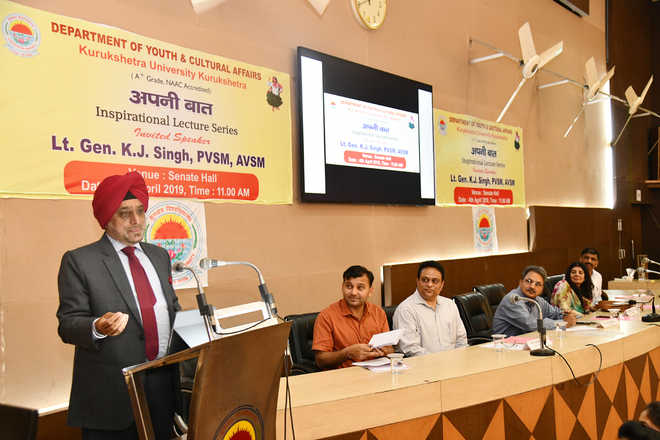
Kurukshetra: During the third inspirational lecture series organised by Kurukshetra University, named as ‘apni baat’, Lt Gen general KJ Singh (retd) said when a soldier guards the nation at the border under adverse circumstances, he is guided by utter devotion to his country. In his interaction with students, the decorated ex-Army officer explained various types of borders, namely, the International Border, Line of Control, Line of Actual Control, Actual Ground Position Line, etc, that India shares with neighbours. He said in case a soldier comes across news that his own countryman are fighting against each other and raising questions on his commitment to the nation, he gets demotivated.