



Sanjha Morcha

What’s New

Click the heading to open detailed news

Current Events :

web counter

Print Media Reproduced Defence Related News

Leak of classified info threatens India’s on-order Scorpene subs

‘CAUSE OF CONCERN’ Navy insists vessels not compromised, report sought from French shipbuilder

NEW DELHI: India was scrambling on Wednesday to assess the vulnerability of its key Scorpene submarines being built in collaboration with a French company after seemingly crucial details of its combat capabilities were leaked.

The government sought a report from French shipbuilder DCNS, which bagged the `23,562crore ($3.5 billion) contract for six submarines in 2005, after The Australian newspaper reported that the documents could prove an “intelligence bonanza” for India’s rivals such as Pakistan and China.The leak runs into 22,400 pages.

The military establishment insisted that the leak was a “cause of concern” but was not serious enough to compromise the Scorpene submarines. However, an official statement issued by DCNS in Paris acknowledged that the sensitive data made public was a “serious matter”.

“This investigation will determine the exact nature of the leaked documents, the potential damages to DCNS customers as well as the responsibilities for this leakage,” DCNS said.

Defence minister Manohar Parrikar sought a report from the Indian Navy chief Admiral Sunil Lanba on the “extent of the leak”. Parrikar, who said he learnt of the leak at midnight on Tuesday, described it as a “case of hacking”.

“The first step is to identify if it’s related to us, and anyway it’s not all 100% leak,” said Parrikar, who also met the navy chief to assess the situation.

The Indian Navy said the source of the leak was apparently “from overseas and not in India”. A naval spokesman said the “available information is being examined” at the defence ministry and that “an analysis is being carried out by the concerned specialists”.

The main opposition Congress demanded a “complete security audit” of the defence ministry following the leak. Party spokesman Randeep Surjewala said the audit should be done by a sitting Supreme Court judge.

India has ordered six Scorpene-class submarines and the first vessel built at Mumbai’s state-run Mazagon Docks began sea trials in May and is expected to be inducted early next year. The Scorpene is expected to become the main conventional submarine of the Indian fleet and replace the ageing Russian Kilo-class and German HDW vessels that are almost three decades old.

The report in The Australian said the DCNS documents, marked “Restricted Scorpene India”, detail highly classified information such as the levels of noise the submarines make at various speeds, where the submarine crew can speak safely to avoid detection by the enemy, magnetic, electromagnetic and infra-red data, and noise specifications of the propeller and radiated noise levels when the submarine surfaces.

The leak could also trigger alarm in countries that operate a variant of the Scorpene, or have ordered the submarine, including Malaysia, Chile and Brazil, the report said.

The Australian posted several redacted pages from what appeared to be an operating manual for the submarine on its website. It reported it had seen 4,457 pages on the Scorpene’s underwater sensors, 4,209 pages on its abovewater sensors, 4,301 pages on its combat management system, 493 pages on its torpedo launch system and specifications, 6,841 pages on the communications system and 2,138 on its navigation systems.

The report said DCNS had “implied – but did not say directly – that the leak might have occurred at India’s end, rather than from France”. However, The Australian said it had learnt the data on the Scorpene was written in France for India in 2011 and is suspected of being removed from France in the same year by a former French Navy officer who was at that time a DCNS subcontractor.

The data is then believed to have been taken to a company in southeast Asia, possibly to assist in a commercial venture for a regional navy.

Peter Roberts of the Royal United Services Institute in London said the most serious implications from the leak were the “frequency signature details” associated with the Scorpene. “The major risk, following this disclosure, is from the exposure of data related to propeller and radiated noise – as a result, Indian submarines will be more vulnerable after the data breach,” he told HT.

“The implications of the data loss for the arms community are important in the short term, but probably procedural in the medium to long term. DCNS will obviously have to make some reassurances to the Indian government, and possibly undertake some mitigation work.”
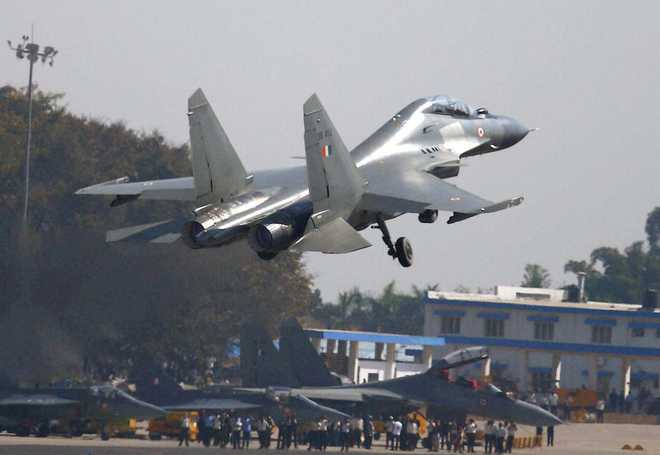
MoD’s $223-bn plan for purchase of fighter jets, submarines, warships

MoD’s $223-bn plan for purchase of fighter jets, submarines, warships
Under the plan, the Defence Ministry has set a target of induction of an additional 170 fighter jets apart from other equipment. — PTI file photo

Ajay Banerjee

Tribune News Service

New Delhi, August 23

In a major shift to ramp up military readiness, the Indian Ministry of Defence (MoD) has prepared an ambitious plan to spend some $233 billion over the next 11 years on buying or producing new equipment, including warships, fighter jets, submarines, aircraft carriers and some 500 helicopters.The sum of $223 billion dollars translates into some Rs 15,00,000 crore (Rs 15 lakh crore) and is projected as part of the financial requirements for the long-term integrated perspective Plan (LTIPP) for the period 2012-2027.(Follow The Tribune on Facebook; and Twitter @thetribunechd)The MoD seeks an annual 8 per cent hike in existing capital spending that allocated in each year’s budget for new military equipment meant for the Army, Navy and the Indian Air Force (IAF).Under the ambitious plan, the MoD has set a target, including induction of an additional 170 fighter jets for the IAF, 12 additional submarines, 500 various types of helicopters, additional artillery guns and tanks for the Indian Army and another indigenous sea-borne aircraft carrier.Though the plan looks very big, the MoD seeks a gradual and assured hike. The capital spending for the present fiscal ending March 31, 2017 is Rs 86,340 crore (approx $12.69 billion). The entire planned hike for the next 11 years will average out to an annual spend of $20.27 billion.The move comes after Defence Minister Manohar Parrikar asked the Ministry to layout the financial cost of the military equipment acquisition planned and bring it ‘within sync’ of the existing average hikes possible in the Union Budget. “An annual hike of 8 per cent for capital spending is within sync of the anticipated hikes that for now vary on a year-to-year basis,” sources said.The LTIPP lists out the equipment that is needed but it did not have the detailed cost of each thing. LTIPP already has a Technology Perspective Capability Road Map (TPCRM) to enable the DRDO, Defence Public Sector Unit and the private industry to plan their research and development.The LTIPP lays down the expected contingencies of the services and what would be the response. It lists capabilities and expected time frames. Further how these options would be achieved whether by indigenous development or by procurement from aboard.In the case of targets form copters, submarines, fighter jets, warships and aircraft carrier, the plan is ‘Make in India’. Various joint ventures are being encouraged with foreign manufacturers.The MoD has also laid down a plan to cut on unnecessary expenditure by clubbing together procurement of three services to prevent duplication of efforts and wasteful expenses.

81dbb28a-5953-4fdf-a510-45a7e9e188cd 62448


Strategic sophistry India, China sweet talk ahead of summits

Junior minister Kiren Rijiju broke from the usual BJP mould of sweeping categorisations and provided a nuanced explanation for entry by the Chinese forces into Indian territory. These were instances of transgression and not of incursion, he explained. Last month, New Delhi rapped Uttarakhand Chief Minister Harish Rawat on the knuckles when he described the camping of Chinese soldiers as an incursion. Rawat soon recanted, describing the incident as a transgression. But before the Modi government was swept into office, its parliamentarians were routinely railing against the government of the day for the Chinese forces’ entry into India. Most of the time, the word they used was incursion. Pray, what has changed to warrant this sophistry?On its part, China too is putting its best foot forward. It dispatched its envoy on South China Sea for a discussion with South Block mandarins while its media have suggested that the “door is still open” for India’s entry into the Nuclear Suppliers Group. This is also totally out of place with Chinese behaviour, especially after India laid the blame for the failure of the Modi-led diplomatic exertions to enter the NSG on Beijing’s door. Both countries are putting their best foot forward because they will host two high-level summits.India needs an acquiescing China at the BRICS summit at Goa to take forward talks regarding the BRICS Bank. India needs huge dollops of investment to build its infrastructure and has decided on a high debt model to achieve the aim. China must keep India in good humour at the G-20 summit at Hangzhou, where they must put up a united front in insisting that the West honours its promise of putting up $100 billion to combat climate change and make the Bretton Woods more democratic. The truce will be temporary because their strategic interests put them on a collision course, be it the South China dispute, the China-Pakistan economic corridor or the border separating them. With new combinations shaping up in the Middle-East and South East Asia, both countries need nimble diplomatic footwork to seize the chances without stepping on the other’s toes.


India names Pak exports: Terror, infiltration, drugs Rebuffs Islamabad on proposal to send supplies to J&K

India names Pak exports: Terror, infiltration, drugs
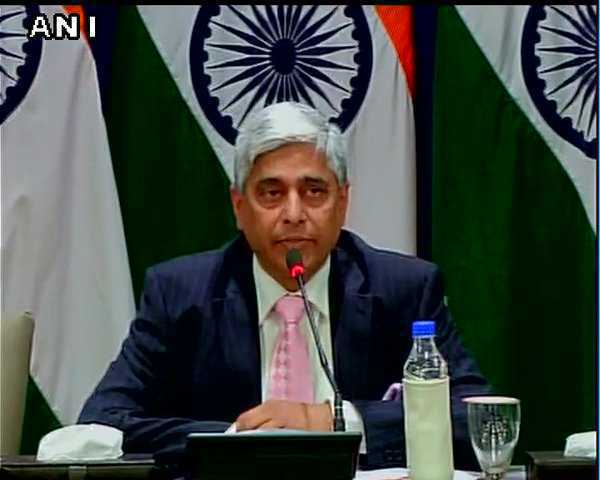
External Affairs Ministry spokesperson Vikas Swarup dubs Islamabad’s aid proposal ‘absurd’. ANI photo

Simran Sodhi

Tribune News Service

New Delhi, August 14

India today hit back at Pakistan for proposing to send supplies to Jammu and Kashmir. It bluntly said India and others in the region had received enough of Pakistan’s trademark exports, including international terrorism, cross-border infiltrators, weapons, narcotics and fake currency.“I can only characterise its contents that propose sending supplies to the Indian state of J&K as absurd,” official spokesperson of the Ministry of External Affairs Vikas Swarup said. “We completely and categorically reject this purported communication from the Pakistan foreign Ministry,” he added.(Follow The Tribune on Facebook; and Twitter @thetribunechd)The India-Pakistan narrative seems to have touched a new low with Pakistan High Commissioner Abdul Basit dedicating Independence Day of Pakistan to the independence of Kashmir. He made these comments at a function at the Pakistan High Commission here today. The Congress called Basit’s remarks the “greatest breach of diplomatic etiquette”, while BJP’s Shrikant Sharma said, “Pakistan is speaking out of frustration after Modi showed it the mirror over atrocities being committed by its army against people in PoK and Balochistan.”With both countries hurling accusations and counter-accusations at one another on an almost daily basis, the much hyped dialogue that was supposed to start with Prime Minister Narendra Modi’s Lahore stopover last December seems to be a closed chapter.Modi on Friday hit out at Pakistan saying, “The fundamental reason for disturbances in Kashmir is cross-border terrorism promoted by our neighbouring country. Due to terrorism, normal life in Kashmir valley is affected.”With the situation in Kashmir worsening and Pakistan determined to internationalise the issue, the bilateral process is likely to be stuck in the foreseeable future.


Pak offer absurd: MEAI can only characterise its contents that propose sending supplies to the Indian state of J&K as absurd… We completely and categorically reject this purported communication from the Pakistan foreign Ministry. – Vikas Swarup, MEA SpokespersonCeasefire violationJammu: After a lull of over four months, the ceasefire on the Line of Control was violated again with Pakistan Army firing at two places and shelling mortars in Poonch sector of Jammu and Kashmir on Sunday. Indian troops retaliated to the firing which was still going on when last reports came in. TNS


Martyr’s statue unveiled

Martyr’s statue unveiled
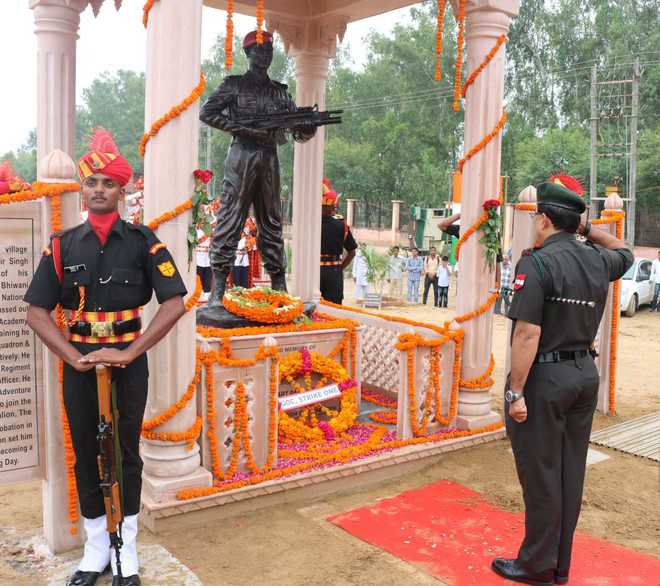
Lt-Gen Shokin Chauhan pays tributes to martyr Capt Pawan Kumar in Jind on Thursday. TRIBUNE PHOTO

Jind, August 11

A statue of martyr Captain Pawan Kumar was unveiled at CRS University here today. Rajbir, father of the martyr, said he was unhappy with the attitude of the state government over the demand of a medical college in memory of his son at his ancestral Badhana village. He said, “I am surprised that our government is taking so much time to take a decision in this regard. The village panchayat has already offered 90 acres for the establishment the college.”The VC said, “The varsity will set up a shooting range in memory of Capt Pawan, for which a foundation stone has already been laid by former governor. — OC


India summons Pak envoy, issues demarche over cross-border terror

India summons Pak envoy, issues demarche over cross-border terror
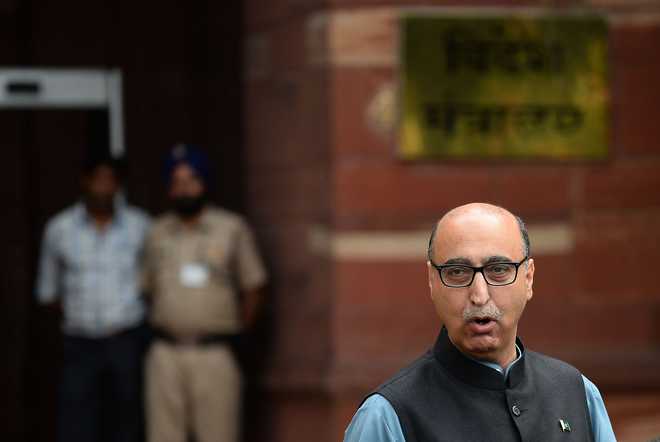
Abdul Basit, Pakistan High Commissioner to India. — AFP file photo

New Delhi, August 9

Amid growing strain in ties, India on Tuesday summoned Pakistani envoy Abdul Basit and issued a strong demarche over Pakistan’s continued support to cross-border terrorism in Kashmir, which has fuelled unrest in the Valley.Foreign Secretary S Jaishankar called Basit to his South Block office and lodged a strong protest over the issue as he made a specific reference to LeT terrorist and Pakistani national Bahadur Ali, who was captured recently in north Kashmir during an encounter.(Follow The Tribune on Facebook; and Twitter @thetribunechd)“Jaishankar called in the Pakistan envoy and issued a strong demarche on continuing cross border terrorism from Pakistan.”Demarche made specific reference to LeT terrorist and Pak national Bahadur Ali who was apprehended recently,” External Affairs Ministry Spokesperson Vikas Swarup said.Ali, born in the Zia Bagga village of Pakistan, was arrested by the Indian authorities in Jammu and Kashmir on July 25 with weapons (AK 47 rifle, live rounds, grenades, grenade launcher, etc.,) as also sophisticated communication equipment and other material of Pakistani/international origin, according to the demarche issued to Basit.“Bahadur Ali has confessed to our authorities that after training in Lashkar-e-Toiba camps, he was infiltrated into India. He was thereafter in touch with an ‘operations room’ of LeT, receiving instructions to attack Indian security personnel and carry out other terrorist attacks in India,” it said.Basit’s summoning comes on a day when Prime Minister Narendra Modi reached out to people of Kashmir, which has been witnessing widespread unrest for over a month triggered by the killing of Hizbul commander Burhan Wani in an encounter with the security forces.As many as 55 people have lost their lives in these incidents of violence.The ties between India and Pakistan have seen growing bitterness after Pakistan and its Prime Minister Nawaz Sharif made provocative statements on the Kashmir situation in the wake of Wani’s killing on July 8.Not only did Sharif praise Wani and hailed him as a “martyr” but he also asserted “Kashmir will one day become Pakistan”, a comment which evoked a sharp reaction from External Affairs Minister Sushma Swaraj, who said his dream of the state becoming a part of his country “will not be realised even at the end of eternity”.The chill in bilateral relations was on full display during Home Minister Rajnath Singh’s visit to Islamabad for a SAARC ministerial meet last week when he and his Pakistani counterpart Chaudhry Nisar Ali Khan not only avoided a proper handshake but Singh also left without attending the lunch hosted by Khan. — PTI


When will India stop rewarding incompetence in the military?

In his seminal On the Psychology of Military Incompetence Norman Dixon poses the questions: “How, if they are so lacking in intelligence, do people become senior military commanders? And what is it about military organisations that they should attract, promote and ultimately tolerate those whose performance at the highest levels brings opprobrium on the organisations they represent?”

Fortunately we have not had a major war in recent times to test the mettle of our commanders. But even in peacetime, many have, unfortunately, managed by their acts of omission and commission to bring opprobrium on our military.

The upper echelons of India’s military are now visibly dense with incompetent and uninspiring leaders, who simply managed to get good ACR’s year after year with bland obsequiousness.

Also read: Why India is losing respect for the Army

They then go about expecting the same from their subordinates, and get it in plenty. Outstanding officers with a strong individuality and intellectual curiosity get culled by the stubborn seniority system, adopted from the bureaucracy.

The Indian military, like many others, doesn’t appreciate standout talent and personality, and prefers a uniform greyness. The system beats out the commander and dashing leader in an officer long before he becomes a general. We will never study this, as if this opaque system of evaluation is a military heirloom.

Also read: Hyper patriotism biggest dishonour for Indian Army

Younger officers in Western militaries often challenge mediocrity and are willing to run into their swords for this. Have we any serving officer who will write on this? No, I don’t think so. Even those who are retired seem to have deep tribal loyalties. Tribal loyalty is very different from institutional loyalty.


However, it was not always this way. Thomas Ricks has argued in his book The Generals: American Military Command from World War II to Today that the US military used to expect its generals to fail. In the Second World War, the US Army fired 16 division commanders and at least five corps commanders.

The British Army fired generals Wavell, Auchinleck, Cunningham and Ritchie in North Africa alone. Many were given second chances.

Also read: Why Indian Army looks weak in front of China

Somewhere along the way this tradition has lost. Ricks writes: “To a shocking degree, the (US) Army’s leadership ranks have become populated by mediocre officers, placed in positions where they are likely to fail. Success goes unrewarded, and everything but the most extreme failure goes unpunished, creating a perverse incentive system that drives leaders toward a risk-averse middle where they are more likely to find stalemate than victory.”

At least the Americans have started the debate. In 2007, lieutenant colonel Paul Yingling published an absolutely blistering, full-frontal assault on American generals entitled “A failure in generalship”.

In it he challenged the US Army for producing generals with insufficient education, language skills, creativity and moral courage.

He attacked the general officer promotion system as fundamentally flawed. His core argument was clear: “Our generals are not worthy of their soldiers.”

Amazingly, the article – by a serving officer – was published in theArmed Forces Journal. Less surprisingly, Yingling is now a high school teacher. Can anyone imagine an Indian Army officer writing such an article, or the Army War College Journal publishing it?

Ricks further writes: “We often think of the military with a culture of clear accountability. This is only really true for lower ranks. In contrast, there is absolutely no question that if the British Army were a listed company (heaven forbid), a slew of generals would have been kicked out of theatre early.

“Boards of directors have very little patience for poor performance, and regularly give CEOs months rather than years to prove themselves. Recent examples include GM (four CEOs in eighteen months) and Hewlett-Packard (five CEOs in six years). In fact as many as a third of CEO departures are due to poor performance.”

This begs the question; must all officers be promoted to their levels of incompetence?

Once at the Farnborough Air Show, I ran into a serving Royal Air Force (RAF) pilot who looked well into his middle years and was still a wing commander.

He was flying an aircraft at the show. When he saw the surprise on my face, he explained that he loved flying and to keep doing that he opted out of vying for higher commands.

His juniors wear stars but he prefers to see the stars from close up. He made his choice but many more get passed over and serve under course mates or juniors. Heavens don’t fall when this happens.

But in India a general made a post-retirement career over his supersession, ensuring that the seniority rule is chiselled in stone.

Dwight Eisenhower became a brigadier general in September 1941. In December 1943, he was appointed as the supreme allied commander in Europe.

In January 1944, he also assumed command of the North Africa theatre and was re-designated as Supreme Allied Commander of the Allied Expeditionary Force (SHAEF) making him the overlord of all allied forces in the West. He was also promoted to general of the army, the US equivalent of field marshal. As SHAEF he was the master and commander of famous generals like Bradley, Patton, Montgomery and Dempsey.

Their views about Eisenhower were interesting. Montgomery said: “Nice chap, no general.” Patton wrote: “It’s too bad Ike had no personal knowledge of war.”

But Ike organised the greatest amphibious landing in history and oversaw the defeat of Nazi Germany in Africa and Europe. Not even Zhukov or Rokossovsky commanded such huge forces operating simultaneously in many sectors.

Eisenhower went on to become POTUS (President of the United States of America) and when laying down office after two terms, warned his fellow countrymen against the growing power of the “military industrial complex”. Our problem is that the complexity of military organisation eludes our leaders and the subject has become another sacred cow.

Nearer home, William Slim was a brigadier doing a staff job in the Indian Army in Basra in 1941. He was fortuitously appointed GOC of the 10th infantry division in the Middle East and his performance led to him becoming the GOC of the 14th army headquarters in Imphal.

There he led it to what is now arguably the Second World War’s greatest military victory.

Interestingly enough, he still held the official rank of a colonel with the wartime rank of major general and temporary rank of lieutenant general. He later became field marshal and chief of the imperial general staff (CIGS). He was the only Indian Army officer to become CIGS.

In 1965, an Indian GOC went to war with his briefcase containing papers pertaining to his passing over for promotion.

In the face of a Pakistani counter-attack, he withdrew in haste from his forward position on the Ichogil canal leaving behind his briefcase. The Pakistanis gleefully read the out the contents of his gripe over being passed over on Radio Pakistan. In 1971, an IAF pilot (later an air marshal) landed his Gnat in a Pakistani airfield, but that didn’t stall his climb to a higher command.

Clearly, we need to separate the wheat from the chaff in time before it becomes expensive.


Garhshankar’s Navjot among 29 on board missing IAF plane

Garhshankar’s Navjot among 29 on board missing IAF plane
Navjot Singh

Sanjiv Kumar Bakshi

Hoshiarpur, July 28

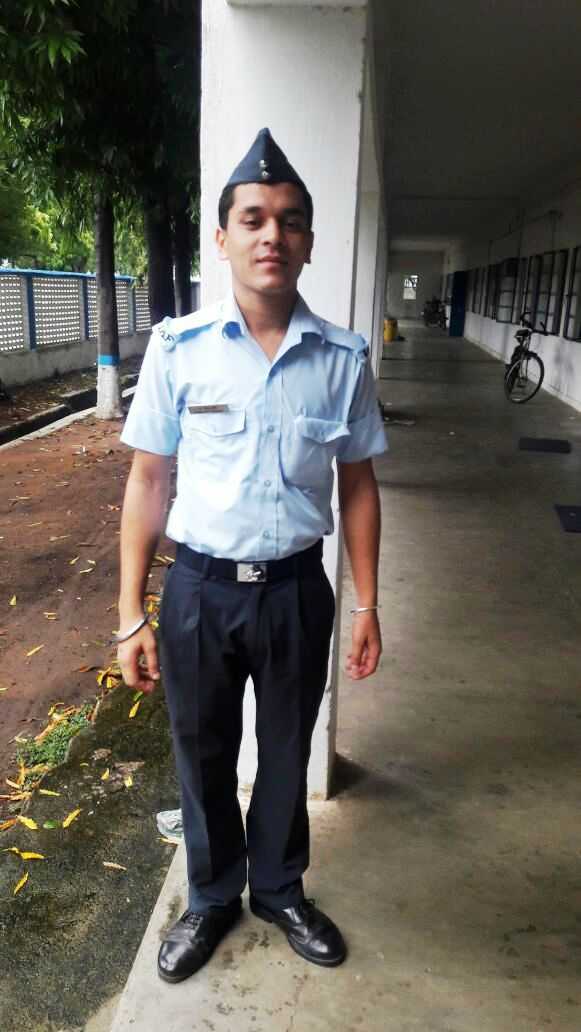
The AN-32 transport plane of the Indian Air Force, which went missing on Friday, has Garhshankar-based non combatant enrolled (NCE) Navjot Singh on board. He had joined the force a year ago.Navjot had come home on June 9 and returned to his unit on July 5 after celebrating his 20th birthday on June 27. His mother Narita Devi, who stays at her maternal home, his grandmother Sudarshana, uncles Shiv Raj Rana and Ranjit Singh Rana are in a state of shock and disbelief.They all are praying for his safety. His mother Narita said Navi always wanted to join the IAF as he was inspired by his maternal uncle Ranjit Singh Rana who also served the force.She said: “My son is the youngest in the family and in his unit too. He told us that everyone in the unit loved him and seniors took good care of him. He is just a child as he doesn’t even know what to do with his salary.”Navi had last called his mother just before boarding the plane. He had told her that there were only two seats left in the plane and he was offered to come on board.Relatives and acquaintances of the family are thronging their house located at Bhattan Mohalla in Ward No. 12.His uncle Shiv Raj said: “We are praying for his safe return. We will not allow him to go back.” He said the government was doing its best to search the plane. “We are getting regular updates from the IAF authorities, but we are getting apprehensive with each passing day. If needed, the government can take help from other countries to search the plane,” he added.Garhshankar SDM Hardeep Singh Dhaliwal also visited Navi’s family and assured all help.



Assam floods: Army called in for rescue operations in Chirang

Assam floods: Army called in for rescue operations in Chirang
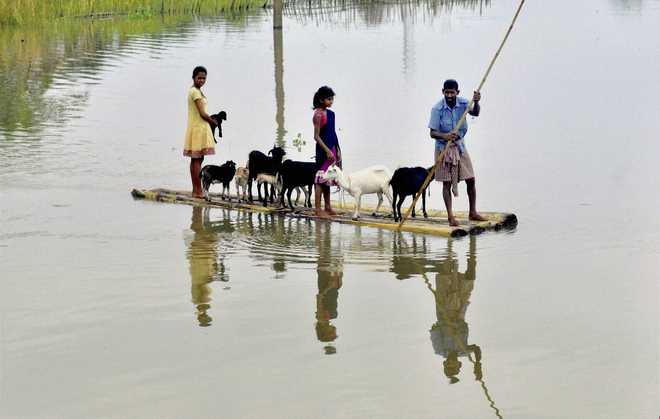
Villagers along with their cattle wade through a Banana raft from the flood affected village of Murkata in Morigaon district, Assam, on July 22, 2016. PTI photo

Guwahati, July 22

Floods on Friday engulfed more districts in Assam amid heavy deluge and pouring waters of overflowing rivers in the state affecting three lakh people, as the Army swung into action in Chirang district for rescue works.

Deluge spread to nine districts on Friday from Thursday’s seven, Assam State Disaster Management Authority (ASDMA) said.

Lakhimpur, Golaghat, Morigaon, Jorhat, Dhemaji, Sivasagar, Kokrajhar, Barpeta and Bongaigain are the districts most affected.

Floodwaters have affected three lakh people in 464 villages.

Overflowing water of the swollen Brahmaputra and its tributaries has overrun roads in many areas snapping surface communication, breached embankments and caused large scale erosion in many areas, ASDMA said, adding the deluge has also submerged over 25,000 hectares of agricultural land damaging standing paddy crops there.

Based on a call for help from the local people, the Army sent its four teams in the Khungring area of Chirang on Friday, rescuing 30 people who were trapped in their marooned village, a Defence spokesman said here.

The Army deployed its boats to reach the marooned people and rescued them making several trips against swift currents to save them and took them to relief camps, he said.

The spokesman said the Army is dedicated towards the safety of the people and despite all odds, is standing by to save people amid concerns of rising water levels in Assam.

The Army Flood Control Centre at Tezpur is also functioning round the clock to monitor the flood situation and coordinate relief and rescue efforts wherever required.

All units under the Area of Responsibility of the Gajraj Corps (4 Corps) are fully alert and geared up to react swiftly to any flood related contingency, he said.  PTI