All posts by webadmin

US-based researcher identifies 100 monuments at Lahore Fort dating back to Sikh Empire

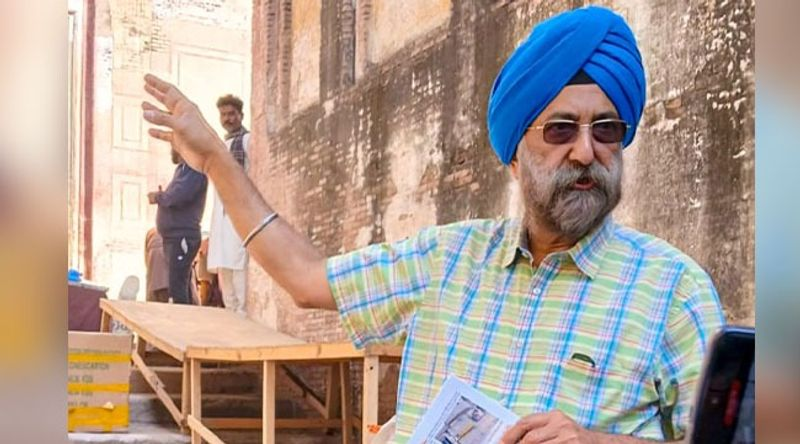
To provide a comprehensive understanding of Lahore Fort and its historical significance during the Sikh Empire, the Walled City of Lahore Authority has engaged Dr Tarunjit Singh Butalia to write a tour guidebookPTI
A US-based researcher has identified some 100 monuments at the Lahore Fort from the era of the Sikh Empire (1799-1849) detailing its historical significance. Of them around 30 monuments do not exist today.

To provide a comprehensive understanding of Lahore Fort and its historical significance during the Sikh Empire, the Walled City of Lahore Authority (WCLA), a government body, has engaged Dr Tarunjit Singh Butalia to write a tour guidebook — Lahore Fort during the Sikh Empire.

“The Lahore Fort, a sentimental monument deeply ingrained in the Sikh psyche, served as the seat of power for the Sikh Empire for nearly half a century.

“It holds a special place in my heart, as my ancestors held esteemed positions within the Sikh court as per Umdat ut Tawarikh – the Persian records of the court,” Dr Butalia said in an interview to PTI on Thursday.

“It is very important for Sikhs in India to recognise that 1947 divided Sikh heritage and places of worship into two parts of the world. For a very long time, Sikhs in India were cut off from their historical sites in Pakistan,” he said.Things have changed now with visa liberalisation and the presence of a large number of diaspora Sikhs settled in Western countries who are able to visit Pakistan, he said.

The Lahore Fort’s rich Mughal history, dating back to the 16th century when Emperor Akbar first constructed it, forms the cornerstone of its importance. Furthermore, the fort’s documented Sikh involvement for half a century adds another layer to its historical narrative.

The expansive Royal Lahore Fort, constructed upon a mud fort by Mughal Emperors Akbar, Jahangir, Shah Jahan and Aurangzeb, was acquired by the Sikh Empire in 1799 and remained under their control until 1849 when the British Empire transformed it into an army garrison.

Maharaja Ranjit Singh, Maharaja Kharak Singh, Kanwar Naunihal Singh and Maharaja Sher Singh preserved many of the fort’s structures and constructed several new ones, including the Hazuri Bagh and its magnificent Baradari.

Maharaja Ranjit Singh also constructed the Gurdwara Dera Sahib, commemorating the site of the martyrdom of Guru Arjan Dev, the fifth Sikh Guru.

“During my first visit in 2019 to Lahore from the US, I experienced a profound connection with the fort. At the Athdhara (pavilion), I could almost sense the footsteps of Sher-e-Punjab Maharaja Ranjit Singh and Ganda Singh Butalia. However, the experience was tinged with sadness, as I was surprised to discover that many of the narratives imparted by tour guides here were predominantly negative when discussing the Sikh era,” he said.

Dr Butalia said going through the records, it was revealed that during the Sikh era, the fort was commonly referred to as Shahi Qila, with occasional instances of being designated as ‘Qila Mubarak’.

“During a restful night in Columbus, Ohio, USA, I was captivated by visions of Lahore and its iconic fort. Driven by this inspiration, I embarked on a global quest, delving into libraries, archives, and museums.

“Through my relentless pursuit, I secured over 20 meticulously crafted maps and sketches of the Lahore Fort and its surrounding walled city, dating back to 1825,” he said, also crediting the Panjab Digital Library in Chandigarh for his research.

Citing some known books about the history of Lahore Fort, he said “these are the source of much of the misinformation about the Sikh Empire that is disseminated in Pakistan”.

He said he has compiled a comprehensive map of Lahore Fort as it stood during the Sikh Empire along with an index of monuments.

This index covers approximately 100 monuments, each identified by its Sikh-era name and detailing its historical significance.

A proposed tour pathway has been devised that commences and concludes at the Bastion Café. “Additionally, historical photographs and sketches have been included for no longer extant monuments, providing a visual representation of the fort’s former glory and allowing visitors to experience the long-lost sites as they existed during the Sikh period,” Dr Butalia said.

MLA Kohli dedicates martyr Lt Kuldip Singh Ahluwalia Memorial to city residents

Aam Aadmi Party (AAP) MLA Ajitpal Singh Kohli today unveiled the bust and Shaheed Monument of Army martyr Lt Kuldip Singh Ahluwalia (Sena Medal, June 26, 1942 – September 18, 1965) of the 7th Punjab Regiment (now 8 Mech), a…

Aam Aadmi Party (AAP) MLA Ajitpal Singh Kohli today unveiled the bust and Shaheed Monument of Army martyr Lt Kuldip Singh Ahluwalia (Sena Medal, June 26, 1942 – September 18, 1965) of the 7th Punjab Regiment (now 8 Mech), a hero of the 1965 Indo-Pak War, at the NIS Chowk here.

Dedicating the memorial to Patiala residents, Kohli paid rich tributes to Lt Ahluwalia, who sacrificed his life at the young age of 23, while defending the nation at the Ichogil Canal, Lahore sector, on September 18, 1965.

He emphasised that martyrs were true legends of the nation and establishing this memorial at a prominent location would serve as an inspiration for the generations to come.

“The Punjab Government under the leadership of Chief Minister Bhagwant Mann, is committed to honouring the sacrifices of our brave soldiers and supporting their families. It is unfortunate that past governments did not recognise the contributions of war heroes like Lt Ahluwalia. However, the present government has taken this step to give due respect to our valiant soldiers and their families,” Kohli said.

MLA Kohli further said this memorial stands as a testament to the indomitable spirit of Lt Kuldip Singh Ahluwalia, ensuring that his sacrifice remains etched in the collective memory of Patiala and continues to motivate the youth of Punjab.

Family members of Lt Kuldip Singh Ahluwalia, including Jaswant Singh Ahluwalia, Gurmeet Singh Ahluwalia, Paramjit Singh Ahluwalia, Anmoljit Singh DA, and RS Sidhu, expressed their gratitude for this long-overdue recognition. They described it as a proud moment for their family to see their beloved’s memory honoured in Patiala, nearly six decades after his supreme sacrifice. They also commended the Punjab Government and the Municipal Corporation for taking this significant initiative.

The event witnessed the presence of dignitaries, including Senior Deputy Mayor Harinder Kohli, Deputy Mayor Jagdeep Singh Jagga, Ghanour Market Committee Chairman Jarnail Mannu, Municipal Commissioner Dr Rajat Oberoi, several councillors, including Ravinder Pal Ricky, Vinod Singla, Sagar Dhaliwal, Jasbir Singh Gandhi, Harpal Singh Bittu, Jasbir Singh Bittu, Jagtar jaggi, Colonel Vinod Singh Rawat, Army veterans, including Lt Gen NPS Hira, Maj Gen ADS Grewal, Maj Gen Rajesh Bawa, Colonel Gurbaksh Singh, Colonel Inder Singh, Colonel Harcharan Singh, Colonel NS Sidhu, Major HS Sidhu, Capt Amarjit Singh Jeji, Commander BS Virk from the Zila Sainik Board, who gathered to pay their respects.

Second Lieutenant Kuldip Singh Ahluwalia

We are in the process of gathering additional information about this fallen soldier and are putting painstaking efforts in scouring the data available in public domain, towards that end. You may appreciate that it is a humongous task to curate the information about all the martyrs since 1947 and the endeavor demands huge amount of time and resources. Thus, we need the support of the martyr’s family members, former Unit or Formation colleagues, other comrades and friends in this regard. Please share any information about this soldier, if you have, by virtue of your association with him to make his profile comprehensive and inspirational. The information may be in the form of text, photographs or video clips and may be sent as and when available, since the information is dynamically updated.

We would immensely appreciate your valuable assistance in sharing your knowledge about the inspirational journey of this spirited soldier. We look forward to your help in our mission of spreading awareness about the sacrifices of the fallen heroes of our Armed Forces, who gave it all for our brighter tomorrow.


Security dynamics of the Siliguri corridor

The army units must carry out public training exercises near the Bangladesh border to give a clear message. This should be done in concert with the BSF.

article_Author
Lt Gen Pradeep Bali Retd

THE turbulence and violence in the neighbouring Bangladesh reflect latent security threats and implications which may well spill over across the border, especially in the sensitive region of the Siliguri corridor. The geographical attributes and cartographic peculiarities of this area create vulnerabilities which can be exploited by inimical elements using non-conventional methods.

This corridor, which links India with eight of its states in the north-east, is formed due to the sudden decrease in width as the Indian territory extends eastwards across the land mass linking north Bengal with Assam and with Nepal, Bhutan and Bangladesh hedging in this area from the west, north and south, respectively. The shortest expanse is 20 km, between Naxalbari on the India-Nepal border and Phansidewa on the India-Bangladesh border. Close to this is the 30-km transit route for third-party trade permitted by India between the border checkpoints of Kakarbhitta in Nepal and Banglabandha in Bangladesh. The Indian territory’s width between Bhutan and Bangladesh is 43 km at its narrowest. Known as the ‘gateway to the Northeast’, major communication arteries, including NH 17 and 27, broad gauge rail lines, oil and gas pipelines and the national power grid, pass through it. The strategic airfields of Bagdogra and Hasimara, important military formation HQs, and the large towns of Siliguri, Jalpaiguri and Cooch Behar are located within this corridor.

In the north, this area is over 40 km from the Chinese territory of Chumbi Valley, across the undeveloped mountainous terrain of south Bhutan till the Indian border. However, all along its southern length, it is flanked by the undulating border with Bangladesh as it meanders across the riverine terrain and swampy areas.

Guarding such a border, primarily against illegal immigrants and smugglers, is a herculean task as it is also densely populated on either side.

The conventional threats to the Siliguri corridor appear overhyped. Whether it is the Chinese People’s Liberation Army (PLA) through Bhutan or the Bangladesh forces from the south, the Indian armed forces can deter them and may well carry the battle across in the unlikely scenario of hostilities breaking out.

The real threat lies in the unconventional domain. The high volume of illegal crossings driving a rapid demographic change, ethnic assertion turning to insurgency and support for both from across the borders — these are the actual security challenges.

Illegal immigration from Bangladesh has always been the bane of this region. It has impacted the ethnic composition of the populace in towns and villages. It has built up over the years in the garb of labour, domestic workers and petty businesses, including trans-border smuggling. All this provides a human resource for creating unrest in a vital part of India.

A strong vein of Islamic fundamentalism had existed in East Bengal even before and after 1947, when it became the East of Jinnah’s Pakistan. 1971 did not exorcise these elements. Pakistan recognised Bangladesh in 1974. Ironically, Pak PM Bhutto got a hero’s welcome in Dhaka barely three years after the Pakistan army’s infamous Operation Searchlight in 1971, which led to the Bangladesh liberation war.

Khaleda Zia’s tenure from 2001 to 2006 was the high noon of Pakistan/ISI influence with radical Islamists in government. Harkat-ul-Jihad al-Islami ran terror operations, targeting Indian interests with impunity. Sheikh Hasina did focus on this common enemy, but she could not eliminate the powerful strain of opinion.

Post the regime change in Bangladesh, the emerging alignment between Bangladesh and Pakistan does not augur well for peace and stability in the adjoining regions. The fundamentalist elements who have come to fore in the post-Hasina era would find mutuality of interests with a rogue state like Pakistan, whose ISI, for one, would like to get involved in this part of the sub-continent. This could create turbulence in the adjoining Indian territory that is under favourable ethnic conditions, structured on illegal migrants, with support bases in Bangladesh.

The recent interceptions of suspicious radio signals across the border point at jihadis in Bangladesh working in cohorts with Pakistan’s ISI for nefarious designs against India. A readily available recruitment base of Rohingya refugees gives a further impetus to the launch of anti-India terrorist operations.

The role of guarding the 4,096-km long border with Bangladesh, including the Siliguri corridor, is performed by the Border Security Force (BSF). The largest among the central armed police forces, the BSF is well-structured and well equipped. While there are a few military stations near Siliguri, no army units are deployed opposite Bangladesh, though some formations may have a dual task role on this border.

The Director General-level talks between the BSF and the Border Guard Bangladesh held in New Delhi last week focussed on the contentious issue of erecting border fencing in the remaining areas, attacks on BSF personnel, movement of illegal immigrants, curbing anti-India insurgent groups and smuggling of arms and drugs into India. But all this is as repetitive as it is inconclusive.

The BSF, while doing a stellar job on this border, feels sandwiched between Bangladesh and the Indian villages and towns populated by Bangladeshi illegals and their Indian sympathisers. Any strong check on human trafficking and animal and drug smuggling is strongly resisted.

The focus should be on all issues of concern in this vital corridor. The BSF must be further empowered. The BSF also has the legal sanction to check border-related crimes within 50 km of the IB and this should be done with blazing publicity.

Deterrence and signalling are clear indicators of intent. The army units in the region must carry out public training exercises near the border to give a clear message. This should be done in concert with the BSF. It will be a morale booster for the forces.

Above all, our intelligence agencies need to get their act together, with an ear to the ground. Intelligence failures have often led to initial debacles, leading to blame game. This can be obviated by adopting a thoroughly professional approach in this aspect.

The Bangladesh situation’s possible fallout in the most sensitive part of India must be taken in all seriousness. It cannot be left to the ambiguous and non-tangible confabulations of diplomacy alone. Indian hard power has to be in clear display to protect safety and deter any kind of threat, especially non-conventional threat.


Sir Ganga Ram’s Lahore home unites families across border

Earlier this month, the New Delhi-based descendants of Sir Ganga Ram undertook a dream journey to Pakistan. This was nothing like the cross-border visits they had paid earlier. It was a journey that would cap a two-decade-long search for a…

article_Author
Aditi Tandon Tribune News Service

Earlier this month, the New Delhi-based descendants of Sir Ganga Ram undertook a dream journey to Pakistan. This was nothing like the cross-border visits they had paid earlier. It was a journey that would cap a two-decade-long search for a memory called home.

Magical experience

Staying in the house that was part of the compound where my father, his siblings and cousins — all of whom were grandchildren of Sir Ganga Ram — lived was indeed magical… Parul Datta, Gurugram-based great granddaughter of sir ganga ram

“Staying in the house that was part of the compound where my father, his siblings and cousins — all of whom were grandchildren of Sir Ganga Ram — lived was indeed magical and something I had been searching for since my first visit to Lahore in 2004. My father had visited Lahore in 1986 for the centenary of his school, Aitchison College, built by Sir Ganga Ram, and had found that there was a flyover built over the space on Jail Road, where he remembered his house to be. He described the compound to be large enough for him to have learnt driving there, with multiple homes to house the rather large joint family. However, he found that the compound had been divided and many smaller structures were standing instead. Little did he know that there was a small piece of the home he remembered, tucked away like a hidden gem,” Parul Datta, Gurugram-based great granddaughter of Sir Ganga Ram, told this correspondent today.

Her hidden gem now stands restored to its past glory with Lahore-based interior designer Omer Nabi completing the renovation project which the current leased owners of Sir Ganga Ram’s family home had commissioned to him.

What’s more, Parul and her family have just returned from Lahore where they were guests of Faraz Zaidi and Ali Hassan, who now own the property, which was Sir Ganga Ram’s family home. His family lived here until Partition, after which, like many refugee homes, this was lost to decay and disrepair too. Until, of course, it was saved.

Nabi described the project as personal. He says he was born in Sir Ganga Ram Hospital.

“It was truly a dream come true to be tasked with the renovation of his family home and I did it lovingly,” the designer told The Tribune, underlining the shared legacy of Sir Ganga Ram, famously called the Father of Modern Lahore for his contribution to the city’s architecture.

The current character of the house, the designer says, matches the original which blended colonial and neoclassical.

“The restoration process, for me, was not difficult. The spaces spoke for themselves and I followed that trajectory. A gem that had existed and was crumbling, and despite tampering by the new owners after the Ganga Ram family migrated to India in 1947, the space called for its own aesthetic integrity,” says Nabi.

The interventions involved reinstallation of terrazzo floors in the house and restoration of its courtyard and terrace.

As for Sir Ganga Ram’s family in India, they say they are blessed to have found their family home. “The highlight of our Lahore trip was being able to stay as guests of Faraz Zaidi, who became family the first time we met him. In trying to correlate the home with our parental home, I remembered my mother’s directions to the house. The location of the present haveli exactly matches that description,” says Radhika Seth, Parul’s cousin.


Pakistan a failed state, survives on handouts: India at UN

India today slammed Pakistan saying the country was a “failed state that thrives on instability and survives on international handouts”. The sharp retort came during the seventh session of the 58th UN Human Rights Council (UNHRC). India’s response came as…

India today slammed Pakistan saying the country was a “failed state that thrives on instability and survives on international handouts”. The sharp retort came during the seventh session of the 58th UN Human Rights Council (UNHRC).

India’s response came as a right of reply to what it called “baseless and malicious references” made by Pakistan at the UNHRC. Kshitij Tyagi, representative of India’s Permanent Mission to the UN in Geneva, blamed Pakistan for propagating falsehoods as dictated by its terrorist-military complex.

26/11 records sought ahead of rana extradition

A Delhi court has sought trial records of 26/11 terror attack from a Mumbai court ahead of the expected extradition of alleged mastermind Tahawwur Hussain Rana. In a January 28 order, district judge Vimal Kumar Yadav directed officials of a Mumbai court to supply the records of the case following a plea by National Investigation Agency.

He censured Pakistan for abusing the Organisation of Islamic Cooperation as a propaganda mouthpiece.

Reasserting India’s stance regarding J&K and Ladakh, Tyagi said the region shall forever be a part of India. He said political, social and economic advancement in J&K in recent years was a testament to India’s abiding commitment towards development and stability. India also pointed to Pakistan’s record of human rights abuses, blaming it for persecuting minorities, undermining democratic values and sheltering UN-designated terrorists.

“As a country where human rights abuses, persecution of minorities and systematic erosion of democratic values constitute state policies and which brazenly harbours UN-sanctioned terrorists, Pakistan is in no position to lecture anyone,” Tyagi said.

He also challenged Pakistan to move away from its “unhealthy obsession” with India and look towards tackling its internal failure and crisis in governance.

“India remains focused on democracy, progress and ensuring dignity for its people — values that Pakistan would do well to learn from,” he said.


Cops deploy drones to nab Pune rape accused, announce ~1L for info

The police on Thursday announced a reward of Rs 1 lakh for information about the history-sheeter who allegedly raped a 26-year-old woman inside a bus at Pune’s Swargate bus station and deployed drones as part of their manhunt, officials said….

The police on Thursday announced a reward of Rs 1 lakh for information about the history-sheeter who allegedly raped a 26-year-old woman inside a bus at Pune’s Swargate bus station and deployed drones as part of their manhunt, officials said.

Amid the frantic police efforts to make a breakthrough, Shiv Sena (UBT) leader Sanjay Raut drew parallels between the crime and the 2012 Delhi gang rape and targeted Pune Guardian Minister Ajit Pawar over law and order.

Maharashtra Deputy Chief Minister Eknath Shinde said the government would try to ensure capital punishment for the culprit, even as Shiv Sena MLA Nilesh Rane pitched for restarting the “encounter squad”.

The accused, Dattatray Ramdas Gade (37), is named in half a dozen cases of theft, robbery and chain-snatching in Pune and Ahilyanagar. He has been out on bail since 2019 in one of the offences.

As Gade, a resident of Gunat village in Pune, remained at large for over two days, officials said 13 police teams had been formed to nab him. “A reward of Rs 1 lakh will be given to the person providing information about his whereabouts,” Pune Police Commissioner Amitesh Kumar said.

The police also launched a search operation at Gunat village, including in sugarcane fields, with drones and dog squads. Swargate in Pune is one of the largest bus depots of the Maharashtra State Road Transport Corporation (MSRTC).

According to the survivor, she was waiting for a bus for Phaltan in Satara district at one of the platforms around 5.45 am on Tuesday, when Gade engaged her in conversation, calling her “didi” (sister), and said the bus for Satara had arrived at another platform.

He took her to an empty Shiv Shahi AC bus parked elsewhere on the premises. As the lights inside the bus were not on, she hesitated to get in but the man convinced her that it was the right vehicle. Gade then followed her and raped her, the woman, who works in the medical field, told the police.


Implementing steps to end Ladakh conflict: China

The militaries of India and China are implementing the resolutions to end the standoff in eastern Ladakh in a “comprehensive and effective manner”, the Chinese Defence Ministry has said. Ready to work jointly for peace We are ready to work…

The militaries of India and China are implementing the resolutions to end the standoff in eastern Ladakh in a “comprehensive and effective manner”, the Chinese Defence Ministry has said.

Ready to work jointly for peace

We are ready to work with the Indian side to jointly preserve the peace and tranquillity in the border areas. Senior Col Wu Qian, chinese defence ministry spokesperson

“At present, the Chinese and Indian militaries are implementing the resolutions related to the border areas in a compressive and effective manner,” Chinese Defence Ministry spokesperson Senior Col Wu Qian said at a media briefing on Thursday, replying to a question on the status of the normalisation of the situation in eastern Ladakh sector.

“We are ready to work with the Indian side to jointly preserve the peace and tranquillity in the border areas,” he said.

India and China completed the disengagement process late last year after firming up a pact for withdrawal of troops from Depsang and Demchok, the last two friction points in eastern Ladakh ending over four years of freeze in ties.

After finalisation of the pact, PM Modi and Chinese President Xi Jinping held talks in Kazan in Russia on October 23. In the meeting, the two sides decided to revive the various dialogue mechanisms.

National Security Adviser Ajit Doval and Chinese Foreign Minister Wang Yi later held the 23rd Special Representative (SR) dialogue in Beijing on December 18 last year.

On January 26, Foreign Secretary Vikram Misri travelled to the Chinese capital and held talks with his Chinese counterpart Sun Weidong under the framework of ‘Foreign Secretary-Vice Minister’ mechanism.


Army Chief Visits French Army’s 3rd Division, Discusses Joint Training Plans Including Exercise Shakti

Indian Army Chief General Upendra Dwivedi recently visited the French Army’s 3rd Division at Fort Ganteaume in Marseille as part of his four-day official visit to France. The visit aimed to strengthen military collaboration between India and France, exploring new avenues of cooperation and enhancing strategic partnerships between the two nations’ armed forces.

During his visit to Marseille, General Dwivedi was briefed on the mission and role of the 3rd Division, the bilateral Exercise SHAKTI, India-France training cooperation, and the French Army’s modernisation program known as the Scorpion programme.

Exercise SHAKTI is a significant biennial military drill between India and France, focusing on counter-terror operations, joint command and surveillance, and the use of drones and anti-drone technology.

The discussions on Exercise SHAKTI are expected to expand its scope in future editions, emphasising deeper collaboration in joint combat strategies and tech-driven warfare.

General Dwivedi also visited Carpiagne to witness a dynamic demonstration of the Scorpion Division’s capabilities, which included live firing exercises and high-tech battlefield simulations.

The Scorpion programme is a key modernisation effort by the French Army, designed to enhance mobility, real-time battlefield intelligence, and firepower—elements that India is keen to integrate into its own military doctrine.

Prior to his visit to Marseille, General Dwivedi met with senior French military officials in Paris, including General Pierre Schill, to foster stronger military ties and discuss advancements in AI, cyber warfare, and autonomous systems.

His visit concluded with a tribute to Indian soldiers at the Neuve Chapelle Indian War Memorial and a talk at the École de Guerre, focusing on modern warfare and India’s strategic vision.

ANI


Integration of Air And Naval Power Essential For National Interests CDS Anil Chauhan

On February 25, 2025, Chief of Defence Staff General Anil Chauhan emphasized the critical importance of integrating India’s air and naval power to safeguard national interests and ensure deterrence in the region.

Speaking at a seminar titled “Synergising Air and Naval Forces: Enhancing Combat Power in the Indian Ocean Region,” General Chauhan highlighted India’s strategic location in the Indian Ocean, which makes its maritime domain a pivotal area of interest.

He stressed that technological advancements, strategic partnerships, and joint operational exercises will be crucial in enhancing India’s defence posture.

The seminar, hosted by Headquarters Southern Air Command in collaboration with the Centre for Air Power Studies (CAPS), brought together senior officers from various defence branches to discuss synergizing maritime air operations and enhancing combat power.

Air Marshal SP Dharkar, Vice Chief of the Air Staff, underscored the need for real-time intelligence sharing and seamless coordination between the Indian Navy and the Indian Air Force to address emerging threats.

The discussions covered modern air-sea battle strategies, the role of unmanned systems in maritime security, and the impact of evolving geopolitical dynamics on defence preparedness.

Experts provided recommendations on optimising force readiness and resource allocation to maintain a strategic advantage in the Indian Ocean Region.

The event reaffirmed the Indian Armed Forces’ commitment to fostering inter-service cooperation and advancing India’s strategic posture in the region, serving as a platform for defence professionals to exchange ideas and best practices aimed at ensuring robust maritime security.

General Chauhan’s remarks align with broader efforts to transform India’s military structure through the integration of theatre commands, which aim to combine the capabilities of the Army, Navy, and Air Force to enhance combat effectiveness.

This integration is part of a broader vision to create an all-domain force capable of responding across the full spectrum of conflict by 2047.


Iran Navy’s Warships On Goodwill And Training Visit To Mumbai

Two Iranian warships, IRIS Boushehr and IRIS Lavan, are currently on a goodwill and training visit to Mumbai, India, from February 25 to 28, 2025. This visit aims to enhance maritime cooperation and strengthen mutual friendship between the two nations. The flotilla is part of a training mission in the Indian Ocean and carries nearly 220 officer cadets.

The ships were warmly welcomed by the Indian Navy, with a band in attendance. The deployment is led by Captain Mohammad Saberi as Mission Commander, with Senior Captain Seyed Ali Madani commanding the Lavan and Commander Hamed Bahramian commanding the Boushehr.

During their visit, several activities have been planned to strengthen Navy-to-Navy interactions, including sports and training visits to the Naval Dockyard for officer cadets. The Mission Commander and the Commanding Officers of the two ships met with Rear Admiral Vidyadhar Harke, Chief Staff Officer (Operations) at Headquarters Western Naval Command, to discuss mutual interests and training curricula.

This visit reflects the growing diplomatic ties between India and Iran, particularly in defence-related fields. Recently, the Indian Navy also provided medical assistance to a trainee officer from the IRIS Boushehr, further highlighting the strong cooperation between the two navies.

The visit of the Iranian warships to Mumbai is a significant step towards enhanced cooperation in the maritime domain. It underscores the ongoing collaboration between India and Iran in areas such as maritime security and interoperability training, which is crucial for maintaining stability in the Persian Gulf—a critical region for global energy markets.

Over the years, India and Iran have strengthened their defence ties, with both countries engaging in various naval exercises and port visits to foster mutual understanding and cooperation.

PTI