All posts by webadmin

India’s Strategic Role In The Western Indian Ocean: Convergence of Interest With Friendly Nations

India’s strategic role in the Western Indian Ocean (WIO) is pivotal, driven by a convergence of interests with littoral nations. This region is crucial for India due to its geography, energy resources, trade routes, and natural resources, which underscore its importance in India’s maritime strategy.

India’s main objective in the Indian Ocean Region (IOR) is to secure the Sea Lines of Communication (SLOCs), which are vital for trade and energy security but face threats such as piracy.

The Indian Navy plays a multifaceted role, acting as a “first responder” and “preferred security partner” in the region, enhancing regional stability through anti-piracy operations and maritime patrols.

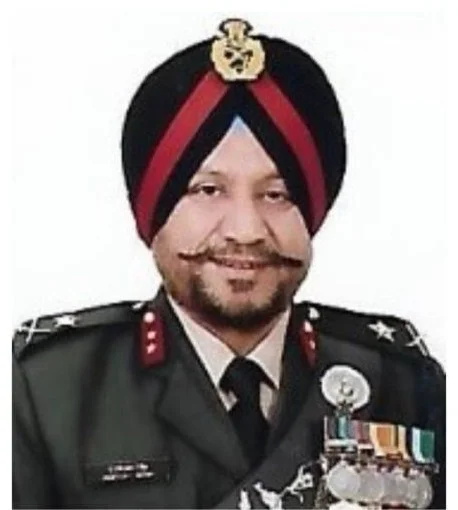
India has significantly enhanced its role as a preferred security partner in the Indian Ocean Region (IOR), particularly through its proactive engagement in maritime security and cooperation with neighbouring countries. Lieutenant Colonel Dhiraj Kumar noted that India’s positive gestures have reaffirmed its suitability as a crisis-mitigator and promoter of regional cooperation.

This shift reflects India’s transition from an inward-looking to an outward-looking strategy, focusing on three key objectives: supporting neighbouring countries, providing humanitarian aid and maritime capacity-building, and preventing hegemonic dominance, especially in response to China’s growing presence in the region.

In recent years, India’s approach to its primary interest area in the IOR has evolved, leading to a broader maritime outlook. The 2015 Indian Naval strategic document played a crucial role in setting this stage by expanding India’s primary interest region. This strategic shift is driven by the need to secure vital sea lanes of communication (SLOCs), counterbalance China’s influence, and foster cooperation with regional partners to uphold a rules-based international order.

India’s role as a net security provider in the IOR involves patrolling vast maritime territories, managing regional crises, conducting anti-piracy operations, and ensuring the safety of key shipping routes. The Indian Navy has been instrumental in these efforts, earning recognition for its successful anti-piracy missions and its position as a first responder in regional crises.

This proactive engagement has positioned India as a valuable security partner not only in the IOR but also in the broader Indo-Pacific, where it participates in alliances like the Quadrilateral Security Dialogue (QUAD).

India’s engagement in the WIO is also influenced by its strategic rivalry with China. India seeks to counter China’s growing presence by strengthening partnerships with small island nations like Mauritius and Seychelles. These partnerships not only serve India’s strategic interests but also contribute to regional stability and security.

The Indian Navy has expanded its presence beyond traditional boundaries, establishing a security presence in the Southwest Indian Ocean through military training, defence equipment, and security advisers.

This proactive approach has positioned India as a significant maritime security provider, leveraging historic ties with littoral nations to enhance its influence in the region.

Furthermore, India’s maritime diplomacy in the Southwest Indian Ocean involves developing strategic relationships with key island nations. These relationships are crucial for projecting India’s naval capabilities and securing strategic advantages such as longer maritime deployments and potential military infrastructure.

The region’s importance is highlighted by its role as a gateway between the Atlantic and Indian Oceans, with the Mozambique Channel being a critical maritime choke-point.

India’s efforts to build a robust naval presence and foster cooperation with other nations like the United States are aimed at maintaining a free and open Indo-Pacific, which aligns with its broader strategic ambitions.

In recent years, India has shifted from a non-aligned stance to a more strategic engagement in the Indian Ocean, emphasising anti-piracy operations and expanding its naval presence.

This shift is part of India’s broader vision for the region, encapsulated in initiatives like the Security and Growth for All in the Region (SAGAR) policy, which underscores cooperation and regional stability.

The convergence of interests between India and littoral nations in the WIO is critical for addressing shared challenges such as piracy and China’s growing influence, while promoting economic stability and security in the region.

Agencies


IAF Requires 35-40 Fighter Jets Annually, Air Chief Marshal Calls For Private Sector Participation

Production of TEJAS fighter jet under progress in Hindustan Aeronautics Limited (HAL) plant

The Indian government is considering involving the private sector in the production of the TEJAS fighter jet to address ongoing delays. A high-level committee, led by Defence Secretary Rajesh Kumar Singh, has been formed to explore ways to accelerate production and meet the urgent needs of the Indian Air Force (IAF).

The committee’s primary objectives include identifying bottlenecks in the TEJAS program and recommending measures to enhance production efficiency.

One potential solution being considered is outsourcing certain Hindustan Aeronautics Limited (HAL) facilities, such as the Nashik plant, to private companies. This move aims to bolster production capacity, reduce reliance on imports, and enhance India’s defence independence under the Atmanirbhar Bharat initiative.

The IAF is facing a significant shortage of fighter jets, with only 31 squadrons currently operational against a required strength of 42. The TEJAS MK-1A, an advanced variant of the indigenous TEJAS, is crucial for modernising the IAF’s fleet.

However, HAL is struggling to meet the production targets for the 83 contracted TEJAS MK-1A jets, and an additional order for 97 jets is pending. The delays have been exacerbated by limitations in engine supply from General Electric, which can only provide a maximum of 12 engines annually.

Involving the private sector could alleviate pressure on HAL and potentially expedite deliveries. Companies already involved in discussions for the Advanced Medium Combat Aircraft (AMCA) program are seen as strong contenders for participating in TEJAS MK-1A production.

Wise Option

This strategic decision would not only impact India’s fighter aircraft industry but also have implications for regional security dynamics with neighbouring countries like China and Pakistan. The committee has been given a deadline of one month to submit its report, which is expected to outline a clear path forward for enhancing private sector participation in fighter jet manufacturing.

Air Force Chief’s Views

Indian Air Force (IAF) Chief Air Chief Marshal AP Singh has underscored the urgent need for India to produce 35-40 fighter jets annually to address the existing gaps and replace ageing fleets. This requirement is driven by the impending retirement of aircraft like the Mirage-2000, MiG-29, and Jaguar, which are set to be phased out in the coming years. Speaking at an event in Delhi, Air Chief Marshal Singh emphasised that adding two squadrons per year necessitates the production of 35-40 planes annually, a capacity that cannot be developed overnight.

Dependence On HAL

Currently, the IAF relies heavily on Hindustan Aeronautics Limited (HAL) for the production of indigenous TEJAS MK-1A jets. While HAL has committed to producing 24 jets next year, Air Chief Marshal Singh highlighted the importance of private sector participation to meet the required numbers. He cited the successful collaboration between TATA and Airbus on the C-295 transport aircraft as an example, suggesting that private industry could contribute an additional 12-18 jets per year.

The slow production of TEJAS MK-1A has been a significant concern, with HAL facing delays in delivering the contracted 83 aircraft. This has prompted the Ministry of Defence to form a high-powered committee to explore solutions, including increased private sector involvement, to accelerate fighter jet production.

Future Outlook

Looking ahead to 2047, Air Chief Marshal Singh envisions a technologically advanced and automated Air Force. The IAF currently operates 31 fighter squadrons, short of the required 42 needed to counter threats from China and Pakistan. With the retirement of approximately 250 aircraft from the Jaguar, MiG-29, and Mirage-2000 fleets imminent, boosting fighter jet production remains a critical priority for India’s air defence preparedness.

Agencies


India In Talks For 10 More Airbus C-295 Aircraft In Ageing Fleet Revamp, Sources Say

India is currently in negotiations to purchase an additional 10 Airbus C-295 military transport aircraft, expanding its original order of 71. This move is part of a broader effort to revamp the country’s ageing fleet, particularly the legacy Avro HS-748 aircraft that have been in service since 1961.

The discussions are seen as a boost to Airbus’ partnership with the TATA Group, following the establishment of a C-295 assembly line in Gujarat last year. In 2021, India signed a $2.52 billion deal for 56 C-295s for the Air Force, and later approved an initial order for 15 more for the navy and coast guard. The additional aircraft are reportedly intended for the Indian Air Force, which has significant transport capability requirements.

The potential expanded order for 25 C-295s could be valued at approximately $1.1 billion, based on the pricing of the initial 56 aircraft purchase. The C-295 is a versatile multi-role transport aircraft capable of carrying up to 70 troops or eight tonnes of cargo, and can perform missions such as airborne warning, surveillance, and reconnaissance. Airbus has noted that the Indian Air Force will soon become the largest operator of the C-295, with all structural components being manufactured locally in India.

The Indian government is also considering further orders for the C-295, with some sources indicating a desire for up to 75 additional aircraft beyond the initial 56. The first 16 C-295s from the original order are being assembled in Spain, while the remainder will be produced at the Airbus-TATA facility in India by 2031. If faster delivery is required, some of the new aircraft might still be sourced from Spain.

This initiative aligns with India’s broader strategy to enhance domestic production and self-reliance in defence manufacturing, particularly in response to China’s growing military capabilities.

Reuters


Western Command conducts large scale exercise to hone logistics capability

Exercise involves multiple stakeholders working in tandem to respond to simulated real-time operational scenarios

Vijay Mohan Tribune News Service

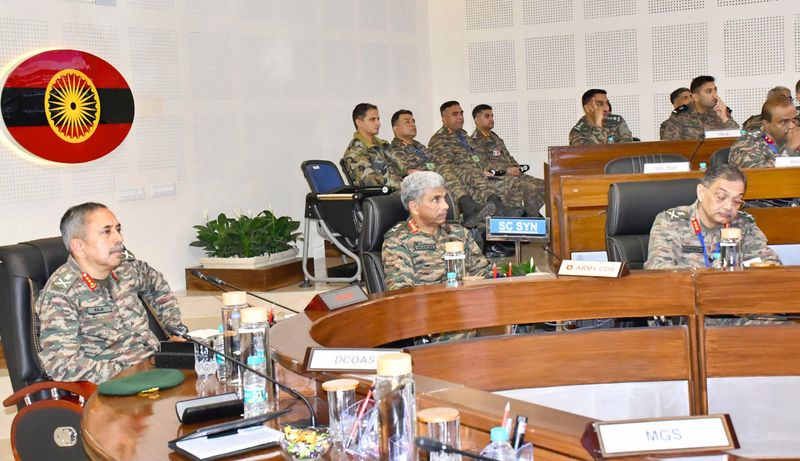
Lt Gen NS Raja Subramani (left), Vice Chief of Army Staff, chairs an exercise on military logistics at Chandimandir Military Station on Friday.

A large-scale military logistics exercise was conducted by Western Command at Chandimandir Military Station on Friday to validate its operational readiness and coordination capabilities.

Lt Gen NS Raja Subramani, Vice Chief of Army Staff, chaired the exercise and called for a discussion on transformation of army logistics in light of the country’s infrastructural development and the infusion of new technology.

He stressed the definitive need for revising the logistic architecture based on evolving operational requirements and said that deliberate studies on these aspects need to be undertaken and implemented in a timely and phased manner.

Director-General level senior military officers heading different logistic verticals at Army Headquarters also presented their perspective on futuristic war logistic concepts and briefed the participants on various actions being taken to improve the logistic efficacy at the national level.

The exercise, designed to test and enhance the efficiency of the existing operational logistic chain, underscored the military’s preparedness to respond to dynamic challenges on the western front in diverse scenarios.

The exercise involved multiple stakeholders working in tandem to respond to simulated real-time operational scenarios. Key components included rapid deployment of equipment, transportation of essential supplies, and seamless communication across different Army Commands responsible for the western theatre.


35-40 jets needed each year: IAF Chief

The Indian Air Force Chief on Friday said the IAF immediately needed 35-40 new fighter jets each year to fill in existing gaps and to factor in phasing out of older fleets – the Mirage, MiG-29 and the Jaguar –…

article_Author
Ajay Banerjee Tribune News Service

Chief of the Air Staff Air Chief Marshal AP Singh.

The Indian Air Force Chiefon Friday said the IAF immediately needed 35-40 new fighter jets each year to fill in existing gaps and to factor in phasing out of older fleets – the Mirage, MiG-29 and the Jaguar — in the next few years.

Speaking at an event in the national capital, Air Chief Marshal AP Singhsaid: “We need to add two squadrons per year, means we need 35-40 planes per year. The capacity cannot come overnight. These many jets are needed to fill in existing gaps and also the gaps after future phasing fleets in 5-10 years from now.

He said: “The Hindustan Aeronautics Limited (HAL) has promised to produce 24 Tejas Mark-1A jets next year, I am happy with that”. He suggested that “we can get 12-18 jets per year from private participation”.

On balancing self-reliance with the needs of the IAF , he said “I can take a vow I will not buy anything from outside. But we are badly-off in terms of numbers. The promised numbers (of deliveries) are slow. There will be a need to look for something to fill these voids”.

Earlier this month at the Aero India in Bengaluru, the IAF Chief expressed concerns at the speed of producing the Tejas Mark-1A jets by the HAL which is running an year or more behind in meeting deadlines of supplying the contracted 83 Tejas Mark-1A jets.

The IAF Chief listed the first priority of IAF as seeking homegrown systems. “Even if we can get homegrown technology to be at 90 per cent of capability of foreign platforms, I am okay,” he added. “That is how we have to move forward,” he further said, sharing a vision of his force by 2047 – the deadline for ‘viksit bharat’ or developed India.

Though the IAF Chief did not mention if the Ministry of Defence had tasked a high-powered committee to suggest a way forward on sluggish production of fighter jets. This include the option of greater participation of the private sector.

The need to add numbers to the jet fleet stems from the fact that the IAF presently has 31 squadrons (16-18 planes each) of fighter jets against a mandated need of 42 squadrons to tackle a collusive two-front threat against Pakistan and China. Also, the fleets of Jaguar, MiG-29 and Mirage 2000 — all inducted in phases during the 1980s – are slated to retire in batches beyond 2029-30. These four types of jets are about 250 in number and are presently operating on an extended life-cycle.

On being asked about ‘future force structure’ of 2047, the IAF Chief said: “In my opinion, it will not be much different in terms of things we have. Yes, the technology will change. We should be able to transfer data and targets to all platforms on the go”. There is expected to be greater automation and have faster decision making. The IAF would be bigger and in terms of technology would be on a par with what was there around the world, he added.


22 still trapped in Uttarakhand avalanche; CM Dhami visits disaster control room

33 out of 55 persons initially trapped at a BRO camp near Badrinath shrine have been rescued

Uttarakhand Chief Minister Pushkar Singh Dhami visited the disaster control room on Friday evening to assess the situation and directed officials to speed up the rescue operation in the state following the avalanche that trapped 52 Border Roads Organisation (BRO) workers.

He has been closely monitoring and reviewing the ongoing efforts, reaffirming the state government’s commitment to ensuring the safety and support of all affected individuals.

CM Dhami said that all agencies were working on a war footing to carry out relief and rescue operations, assuring that the stranded workers woul be evacuated soon.

He also urged the NDRF, SDRF, ITBP and the Army to collaborate efficiently in clearing the snow.

The Uttarakhand CM on Friday announced the establishment of a temporary control room in Joshimath to facilitate better monitoring of the ongoing rescue operations.

“The PMO, HMO, and RMO are constantly taking updates on the situation. Indian Air Force helicopters are also kept on standby, and they will get to work as soon as the weather clears. Some rescue teams are also going by road. We will set up a temporary control room in Joshimath,” CM Dhami told reporters.

He also mentioned that the state government had set up a helpline to assist the families of the trapped workers, who belong to various states.

“Since the workers who are trapped have come from different states, we have issued helpline numbers for them. We are just praying that everyone comes out safe,” he added.

Uttarakhand’s disaster management secretary Vinod Kumar Suman said that 33 trapped labourers had been rescued, while 22 remained unaccounted for amid severe weather conditions.

Providing a correction to earlier reports, Suman clarified that two of the initially reported 57 trapped workers were actually on leave, bringing the actual number of those caught in the avalanche at the BRO camp to 55.

Of these, 33 have been rescued, while efforts continue to locate the remaining 22, he added.

According to a list released by the Uttarakhand State Disaster Management Authority, the trapped workers belong to Bihar, Uttar Pradesh, Uttarakhand, Himachal Pradesh, Punjab and Jammu and Kashmir, among other states. However, the list does not specify the home states of 10 labourers.

Suman acknowledged the difficulties posed by the deep snow, which is nearly seven feet high near the avalanche site. Despite the challenges, he said, more than 65 personnel are actively involved in the rescue efforts.


1098 DAYS OF UKRAINE WARA MIXED BAG OF HITS & MISSES–Maj Gen Harvijay Singh, SM

Wars are filled with successes (hits) and failures (misses), often with profound consequences.

Wars are filled with successes (hits) and failures (misses), often with profound consequences. Russia’s invasion of Ukraine began on 24 Feb 2022 hoping to swiftly topple the government in Kyiv – this turned out to be a significant miss. What if Kiev had been captured early … perhaps the Ukrainian government would have capitulated, … perhaps the destruction of Ukraine avoided saving countless lives …. perhaps Ukraine would have saved its rare earth minerals …….. What ifs of history are indeed intriguing! ‘Rasputitsa’ (impassable muddy slush) and absence of good roads from Belarus border (where the invasion began) to Kiev (just 100 Kms!!!!) made the Russian assault a chaotic crawl. Added to this, ‘Tactical Sloppiness’ made them sitting ducks for shoulder fired missiles and drones. High on hubris and low on battlecraft, it was a humiliating miss. Also, the Russian Army broke out with no Tactical Communications support. Instead, they planned … yes … planned to use Ukrainian mobiles with stolen or purchased SIMs. They also failed to deploy their accomplished Electronic Warfare Systems which got hopelessly scattered in the traffic chaos – a miss for Russia, a big hit for Ukraine. Ukraine Army intercepted, eavesdropped, traced Russian (mobile) calls and developed significant intelligence leading to numerous precision strikes on Russian command posts ….. killing many Generals. Bandwidth of Cellular Networks was enhanced leading up to the war and citizens empowered to report Russian positions; a Russian Ammunition Depot in Zaporizhia Oblast was destroyed by Ukraine’s 45th Artillery Brigade after a 15-year-old boy with a toy drone determined its precise coordinates and passed it to the military. Ukraine also blocked all roaming (In/Out) with Russia & Belarus, cutting the of the invader’s lifeline to their bases and homes. Leading the action against stranded Russian Armour was American Javelin Anti-Tank Manportable Missile with top attack capability. Another transformative concept and weapon introduced by Ukraine to the Tactical Battle Area (TBA) was the FPV (First Person View) Drone – a view as seen from the drone’s nose camera. Small drones loiter in the TBA and drop bombs or crash into a target triggered by a pilot sitting safe some distance away. Ukraine also used Turkish Bayraktar TB2 Drones for surveillance and precision strikes. These early hits in the war left the Russian Army in shambles …… it is to their credit that they swiftly adjusted their strategy and opened up new fronts. Early in the war on 18 Mar 22, Russia fired a Kinzhal hypersonic missile to destroy a Ukrainian ammunition depot in Ivano-Frankivsk region. These missiles became the key component of Russia’s strategy and combined with the lethal Cruise Missiles, Glide Bombs (vintage heavy bombs fitted with small wings and guidance systems) and the Artillery were a big hit for Russia later in the war ………..…. once they found their footing. Russia’s artillery strategy has been central to its military operations in Ukraine relying heavily on massed artillery barrages. They employ multiple rocket launchers, such as BM-21 Grad and BM-30 Smerch, to deliver rapid and devastating strikes. They also use advanced radar systems and drones to locate enemy artillery and direct counter f ire. The artillery kept the Russian heads up even in the initial phase. After early hiccups of 2022, Russian T-90 Tanks have also performed well. The tanks, Electronic Warfare and S 400 Air Defence Systems were a big hit in Russia’s advance into the Donbass region. Notably, while anti-tank weapons shaped the first phase of the war, the tank and the attack helicopter won for Russia built up areas of Avdiivka, Mariupol, Severodonetsk and others in the later phases. NATO Leopard tanks and Bradley vehicles won no battles for Ukraine until the surprise Kursk assault. Ukrainian 47th Mechanized Brigade deployed Bradley Fighting Vehicles for the lightening assault supported by Leopard tanks. This, a big hit has given Ukraine a stronger voice at the negotiations table …… provided their ‘ally’ allows them. British long-range cruise missile Storm Shadow capable of striking targets 250 Kms deep were a hit ‘when used’. Once Russia responded with their Oreshnik missile, an experimental Intermediate-Range Ballistic Missile, equipped with multiple warheads and capable of reaching speeds over Mach 10, the Storm Shadow was withdrawn – a hit for Russia and a miss for Ukraine and NATO. Russian Electronic Warfare became a major hit after the initial phase effectively jamming, disrupting and destroying Ukrainian drones in their 1000s every month. While it may not have completely taken away of the fear of the drones, the hype, hysteria and anxiety (HHA) has reduced. War’s indeed lead to a mix of successes (hits) and failures (misses), they help in lessons learnt and refinement of technologies, tactics and strategies.


Meitei group surrenders arms on last day of Manipur Governor’s appeal

Kukis call it mere gesture, criticise Bhalla for engaging with radical militia

Animesh Singh Tribune News Service

The radical Meitei armed group Arambai Tenggol surrendered a large number of weapons on Thursday, the final day of the seven-day deadline set by Manipur Governor Ajay Kumar Bhalla for all groups to surrender illegally acquired arms. The development came two days after a delegation from the group met the Governor on February 25.

The Kuki community has criticised Bhalla for engaging with the radical militia, which they accuse of committing genocide against them. They dismissed Arambai Tenggol’s surrender as a mere “gesture”, claiming that only 5 per cent of the total weapons looted from Imphal Valley had been returned.

While an exact count of surrendered weapons by Arambai Tenggol was unavailable, reports indicate that only around 200 weapons had been surrendered by various groups and individuals as of Thursday. This is a small fraction of the more than 6,000 weapons and six lakh rounds of ammunition looted from police armouries following the outbreak of ethnic violence in Manipur in May 2023.

On February 20, Governor Bhalla had urged all groups, particularly youth, to voluntarily surrender illegal weapons within seven days, assuring them that no punitive action would be taken against those who complied by the February 27 deadline.

However, following their February 25 meeting with Bhalla, Arambai Tenggol stated that they would surrender weapons only if their conditions were met.

The Governor’s meeting with the radical group has drawn sharp criticism from the Kuki community, who accuse Arambai Tenggol of killings and destruction during the ongoing ethnic violence in the state.

On Thursday, two major Kuki organisations — the Indigenous Tribal Leaders’ Forum (ITLF) and the Committee on Tribal Unity (COTU) — issued a joint statement condemning the meeting.

“The submission of 300 looted arms by Arambai Tenggol members today is merely symbolic. This move is a calculated attempt to improve their public image, especially following their meeting with the Governor. It is a tactical move to garner sympathy and legitimacy. The timing of this surrender raises questions about its true motivations,” the statement said.

The groups also accused the Governor of legitimising violence by engaging with Arambai Tenggol.

“The Governor’s meeting with this radical armed militia sends a disturbing message — that the state is willing to negotiate with perpetrators of violence while ignoring the pleas of their victims. This is a betrayal of justice and an insult to survivors of ethnic violence,” the statement added.

During its meeting with the Governor, Arambai Tenggol submitted a memorandum demanding border fencing with Myanmar, implementation of the National Register of Citizens (NRC) with 1951 as the cutoff, deportation of “illegal immigrants”, abrogation of the suspension of operations agreement with Kuki groups, assurances that no arrests or legal action would be taken against volunteers or armed civilians, including Arambai Tenggol members, and Scheduled Tribe (ST) status for the majority Meitei community.


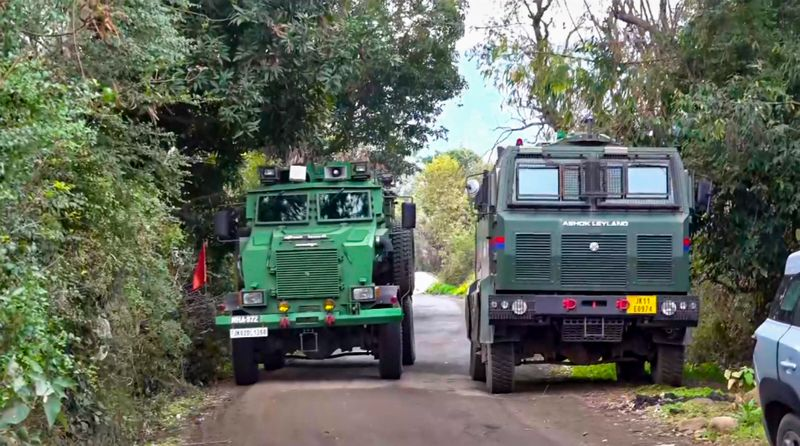
Search op intensified in Rajouri after terrorist attack on Army truck

A day after terrorists opened fire on an Army truck in Sunderbani, security forces launched extensive search operations across the entire region along the Line of Control (LoC) in Rajouri. The cordon and search operation involved teams from the CRPF,…

Our Correspondent

A day after terrorists opened fire on an Army truck in Sunderbani, security forces launched extensive search operations across the entire region along the Line of Control (LoC) in Rajouri.

The cordon and search operation involved teams from the CRPF, Special Operations Group (SOG) of J&K Police and the Army, who entered forest areas to search for the terrorists believed to be hiding in the region.

In addition to the LoC operations, Border Security Force (BSF) and police forces also conducted parallel searches along the International Border (IB) in Kathua. These operations were triggered by the detection of a suspicious wireless frequency in the area.

The attack occurred on Wednesday afternoon when terrorists fired on an Army truck belonging to the 9 JAKLI regiment.

In a post on social media platform X, the Army’s Jammu-based White Knight Corps clarified that no casualties were reported from the attack. “Terrorists opened fire at an Indian Army convoy in Sunderbani, Akhnoor, yesterday. The firing was ineffective and our own troops responded swiftly. Some social media handles are falsely claiming casualties to our troops. This is false and deliberate disinformation,” the post stated.