All posts by webadmin

MAJ GEN SATBIR SINGH MUST STOP FOOLING EX-SERVICEMEN FOR HIS OWN VESTED INTEREST—-PART-II

QUESTION FOR MAJ GEN SATBIR SINGH TO BE  ANSWERED  TO ALL EX-SERVICEMEN OF THE NATION: A LIFE TIME QUESTIONS  BY COL ANIL KAUL Vrc

Now that the court has declared the 2014 General Body (GB) as defunct. I write as a life time member of IESM . The following questions need answering. 

With the 2012 GB in place as per court order: –

  1. Who has authorised continuation of protest at JM?.

2 Who has authorised the daily expenditure of approx Rs 12K for JM?

  1. Where is this money coming from? 
  2. Are IESM Funds being used? If so on what authority?
  3. Who are the so called protesters that hang around for free lunches?.
  4. Have any of the daily letters written by Gen Satbir Singh  got any response ?
  5. Are stores used at JM paid for by IESM funds being further hired out? If so to whom and with what authority?
  6. What is the amount of daily payment to hired protestors and RHS participants, besides free breakfast and lunch courtesy Gurdwara Sahib?
  7. Is UFESM (JM) registered?.
  8. If not how are funds being collected in its name ?

An early reply will be appreciated from 

images-4


Col Anil Kaul

COMMENTS

The above Question Bank sent by Col Anil Kaul Vrc, who had put his heart and soul for OROP Agitation and was the Media Coordinator of the Collected UFEM (intially) when all Organisation of ESM of the Nation supported the Protest is deeply hurt by present situated and  Scenario created by Maj Gen Satbir Singh for his personal Interested and to remain  in Lime Light.

2. The UFEM was formed with Lt Gen Balbir Singh Yadav ,Chairman IESL, Lt Gen Raj Kadiyan, Chairman IESM  and Major Gen Satbir Singh Vice Chairman IESM all as Advisers to the struggle along with Brig Kartar Singh , Vice Chairman IESL  and all state Presidents of IESL along with support from Sanjha Morcha.

3. The UFESM was fragmented by Maj Gen Satbir as he never wanted to give detailed of Donations received in Lakhs /Day from ESM, and he used to carry all donation in form of Cheques/Cash to his home at end of the day,  The other manipulators and supporters were VK Gandhi and Wg Cdr CK Sharma, who were always at collection table along with Lt Pandey. 

4.  However the UFEM was got Registered by fragmented ESM with Col Charanjit Singh As president, Col Dinesh Nain  as Secy Gen and other officer barriers and the first meeting of the registered UFESM was held in Delhi. But Maj Gen Satbir continued to write as Advsior as false Projection of the dissolved UFESM and later he named himself as Chairman of UFESM(JM) , just to keep the memento alive and keep collecting the donations.

IMG-20150721-WA0024


First Meeting of UFESM(Regd) . Col Charanjit Khera(President) along with Lt Gen Raj Kadiyan and Brig Manjit Singh and others.

IMG-20150721-WA0022

5 IESL was the first to withdraw because of non existence of transparency in donation received  followed by Sanjha Morcha and other Organisation after Maj Gen Satbir Lost his credibility of not being transparent and honest in his dealings for the cause of OROP, which he is not till date.

6. Now the sate is such that Govt had closed its doors for any type discussions with Maj Gen Satbir Singh. He is sailing in the same boat when Ex-Defence Minister Anthney did not want to see his face and he did not allow him for 9 years and now the Present govt Def Ministers Mr Parrikkar and Now Arun Jately  including PM dont want to meet him any cost, even Capt Amarinder Singh Prior to Punjab elections did not want to meet him(Story in Part-III Exposure) .

7. If Satbir is so active and fighting for the OROP at Jantar Mantar with his Paid and hired Protesters of his security Firm than why all like thinking Generals,Brigadiers and all ranks have left him to defend himself and his acts.

8 He was never a Chairman of IESM or UFESM or any other Organisation  as he claims and writes his designation . So What can be concluded that he has lost trust of ESM Masses which he is trying to win by distribution of Cash to make him win the IESM Elections by hook and crook( Details in Part-IV exposure). There is no chaiman in the UFESM nor there was only President.

9 Confirmed that Maj Gen Satbir is fooling ESM of the Nation for his own vested Interest other than OROP.He has lost his face to speak to RM or PM. Today ESM are suffering and loosing their respectability because of Satbir own self Portrait  in the eyes of the Nation.

The Following will be covered subsequently in next Parts.

  1. He is provoking ESM of Punjab against Capt Amarinder and winning ESM favour by distribution of booty and wants to Split IESL.
  2.  Why he backed out to Join Anna Hazre.
  3.  Elections of IESM as per Registrar of Company order.
  4.  Fate  of deposited Medals
  5.  Least concern for welfare of ESM/Widows or even Martyrs .
  6. Funds embezzlement of Maj Gen Satbir with New account opening.
  7.  Comments/reactions received from Veterans will be uploaded on Daily Basis
  8.  Jantar Mantar Struggle is no more OROP struggle  but Political Struggle of Maj Gen SAtbir Singh

A Col Khera


Col Charanjit Singh Khera

Ex-Media Adviser of UFESM ( Initial)

Jantar Mantar


BRIEFING OF EX-SERVICE FOR PUNJAB GOVT GOG SCHEME BY MAJ GEN SPS GREWAL AT NAWANSHAHR 07 JUL 2017

The GOG  ( Gurdians of Goverance)  OR Khushali De Rakhe Scheme of Punjab Govt is going to be launched in the month of Aug 2017. The Ex-Servicemen will act as Eyes and Ears to the Capt Amarinder Singh ,CM Punjab.

The  ESM once selected will be provided with training about their Role as GOG at Distt Levels ,however trainers will be trained at MGSIPAP ( Mahatam Gandhi State Institute for Public Administration) mostly Officer Cadre . The GOG will be functioning as follows

(a) State Level Cell supervised by a Brig Rank Officer 

(b) Distt Level to be supervised by Col/Lt Col/Maj

(c) Tehsil Level to be Supervised by Col/Lt Col/Maj.

(b) Village Level- One selected ESM from Each village.

The GOG will not function under control of Constituency MLA bu twill be Independent and will function in close coordination of  SDM/DC/CM. 

ESM BRIEFING AT NAWANSHAHR 07 JUL 2017  FEW PICTURES

The meeting was organised by Col Chuhar Singh(Retd)

IMG-20170708-WA0029


Col Chuhar Singh  Introductory briefing to the ESM Gathering .

IMG-20170708-WA0034


Maj Gen SPS Grewal briefing ESM about GOG

IMG-20170708-WA0035IMG-20170708-WA0032IMG-20170708-WA0030IMG-20170708-WA0031IMG-20170708-WA0033


No need of permit for foreigners in Harsil Home Ministry also allows tourists to visit Nellong valley with permission

No need of permit for foreigners in Harsil
After the 1962 war with China, the Nelong valley was declared a sensitive area by the Ministry of Home Affairs. file photo

Neena Sharma

Tribune News Service

Dehradun, July 5

Foreign tourists will now be able to take a night halt in Uttarkashi’s Harsil and even travel up to the Nelong valley as the Ministry of Home affairs has declared Harsil free from requirement of inner line permits for foreigners and for the first time opened the Nelong valley for both domestic and foreign tourists through a permit.After the 1962 war with China, both Harsil and Nelong valley were declared sensitive areas by the Ministry of Home Affairs.Harsil was off the radar of foreign tourists as they required permits and could not stay there overnight. But the domestic tourists did not require inner line permits to do so.The picturesque Nelong valley was completely out of bounds for both foreign and domestic tourists. Now, both foreign and local tourists will be allowed to visit the valley with permissions for a day.“On June 19 this year, the Ministry of Home affairs issued a notification declaring Harsil free of requirement of inner line permit for foreign tourists and also opened up the Nelong valley for tourists by giving permission for a single-window system. This will boost tourism in the state,” said Satpal Maharaj, state Tourism Minister.The notification of the Ministry of Home Affairs says, “It has been decided to shift the notified protected area and to lift the inner line permit from Harsil town towards the border by 50 m to facilitate the stay of foreign/domestic tourists.”However, the district administration will have to take the consent of military authorities for allowing tourists.“The tourists will no longer have to take multiple permissions to visit the Nelong valley as a single-window system will be set up for them,” said Lokender Bisht, a resident of Uttarkashi, who launched the initiative.In May 2016, he, along with local residents, petitioned the Uttarakhand Governor KK Paul to take up the matter and finally, the state government moved the files to the Ministry of Home Affairs.“In June 2016, we also took up the matter with Central ministers in New Delhi and finally, the notification was issued this year,” said Bisht. The lifting of the inner line in Harsil is likely to give a huge boost to tourism and also open up job avenues for the local residents.


Punjab & Haryana HC Upholds Minimum Age Limit of 17 Years for NEET [Read Judgment)

The Punjab and Haryana High Court on Saturday upheld the minimum age criterion of 17 years prescribed for taking the National Eligibility-cum-Entrance Test (NEET) for admission to MBBS/BDS courses. Justice Rakesh Kumar Jain ruled that taking the test…without fulfilling the age criteria would only amount to exhausting of a chance….

The Court was hearing a Petition filed by a minor, Kuldeep Singh Malik, through his father Ranbir Singh Malik. The Petitioner was supposed to complete 17 years of age in February, 2018, and had challenged an eligibility criterion which prescribed tha…
The Court, however, noted that the Petitioner’s contentions were “fallacious” as a minimum age limit of 17 years is prescribed under Regulation 4(1) of the Medical Council of India Regulation on Graduate Medical Education, 1997, as framed in  accordance with Section 33 of the Act. It further noted that the vires of Regulation 4(1) has already been tested and upheld in the case of Ankit Chaturvedi v. Union of India and others, 2016 AIR (Allahabad) 126….

Moreover, the Petitioner had, during the proceedings, been allowed to fill the online/manual application for NEET-2017 (held on May 7), subject to the outcome of the Petition. He had now pleaded to withdraw the Petition, and avail three chances to o appear in NEET. The chance availed by the Petitioner, under the court order, may not be counted, he had demanded. The Court, however, refused to allow this, and observed, “The contention of the petitioner is totally fallacious… there is no merit  in the present petition and the same is hereby dismissed. It is also ordered that since one chance, under the order of this court, by misrepresenting the facts has already been availed by the petitioner, he can avail two chances more…of the first attempt need not be declared because he was underage.”…

Read more at: http://www.livelaw.in/punjab-haryana-hc-upholds-minimum-age-limit-17-years-neet/#.WVGqFNx4LXg.whatsappi…


Meira Kumar’s tryst with destiny continues Seeks votes to ‘secure constitutional values for future generations’; May file nomination papers on June 27, 28

Meira Kumar’s tryst with destiny continues
LS ex-Speaker Meira Kumar with Congress chief Sonia Gandhi. file

Aditi Tandon

Tribune News Service

New Delhi, June 23

Sudden turn of events over the past week have again brought Congress veteran Meira Kumar face to face with destiny. It’s familiar territory for her though.On June 3, 2009, Kumar was unanimously elected the first woman Speaker of the Lok Sabha. This June, she has emerged the Opposition’s unanimous choice to contest the July 17 presidential election. This may not have been the case had the BJP nominee not been a Dalit. Consciously avoiding the caste reference, Kumar today kept her reaction to the nomination guarded.“I express my gratitude to 17 Opposition parties which have selected me as their presidential candidate. I am delighted by the Opposition’s unity. The post of the President is not symbolic. It carries the responsibility of safeguarding our constitutional principles. I appeal to the members of the collegiums to base their decision on these cherished principles and secure them for our future generations,” Kumar said in her first statement post nomination today.She also described the July 17 fight as ideological, terming the post of President beyond realms of castes and regions. “The Opposition unity represents the coming together of forces which have a strong ideological base. I am going to contest election as their representative. The President’s post embodies the diversity of Indian culture and the vision of our composite ideology. It transcends the considerations of caste, religion or region,” said Kumar as her life came a full circle today.And how? BSP chief Mayawati will back the nomination of Kumar as President, having tasted defeat at her hands in 1985 Lok Sabha elections from UP’s Bijnor. That was Kumar’s first election in which she defeated two Dalit icons — Mayawati and Ram Vilas Paswan.Kumar’s five LS terms later culminated in a dream elevation as Speaker of the 15th Lok Sabha between 2009 and 2014, a House that will be remembered for disruptions. Kumar, however, acquired the reputation as a mild-mannered Speaker, a contrast from Somnath Chatterjee, the forceful Speaker of the 14th LS.As for Kumar’s politics, much of it remained rooted in the ideals of her late father Jagjivan Ram, a freedom fighter and former Deputy PM under PM Morarji Desai.Kumar graduated in law from Cambridge and went on to join the Indian Foreign Services, serving in various missions, including Madrid and London. She turned to politics in 1985. Besides being a LS member, Kumar held high organisational positions in the Congress as general secretary and Working Committee member and later became minister in UPA-I handling social justice and water resources.


China says no change in stand on Masood

China says no change in stand on Masood
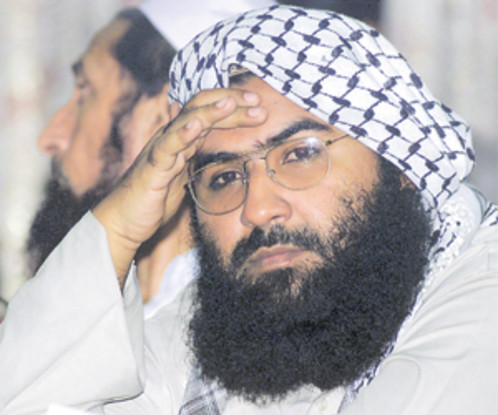
Masood Azhar, Pathankot plotter

Simran Sodhi

Tribune News Service

New Delhi, June 20

A day after BRICS foreign ministers came together to condemn terrorism, China today stuck to its old tune of Masood Azhar and said its position on the issue remained unchanged. For India, it also translates into being back to square one as far as China is concerned.The communiqué issued yesterday after the meeting between BRICS (Brazil, Russia, India, China and South Africa) ministers was emphatic in its resolve to combat terrorism.However, in Beijing today Chinese Foreign Ministry spokesperson Geng Shuang said, “At present, some members still have a disagreement over the listing matter.”Geng was responding to a question on the Azhar issue ahead of its review by the 1267 Committee of the UN next month. The 1267 Committee comprises members of the UN Security Council. Interestingly, Jaish is, as an organisation, proscribed under 1267. India, in the recent past, has made several attempts to get Masood, chief of the Jaish-e-Mohammad (JeM), listed as an international terrorist at the United Nations Security Council (UNSC).China has always vetoed any such move citing lack of evidence, but in effect really standing up for its all-weather friend Pakistan. Azhar is accused by India of being the mastermind behind the Pathankot attacks.  “We have talked about our position many times. We believe the principles of objectivity and professionalism and justice shall be upheld,” Geng said. “China stands ready to remain in coordination and communication with the relevant parties.”(Follow The Tribune on Facebook; and Twitter @thetribunechd)For India, the challenge of going ahead remains China vis-a-vis Pakistan. Whether it is the matter of getting Masood Azhar designated as terrorist or India seeking a berth in the Nuclear Suppliers Group (NSG), the main stumbling block for India is China. In the UNSC, India finds itself facing a defeat time and again because of China’s veto power. And in matters of NSG that works on the basis of consensus among member states, the problem again is an adamant China.China’s statement should come as a wakeup call to the South Block mandarins. With a USD 50 billion Chinese investment in the China-Pakistan Economic Corridor also happening, for India the worry is a growing China-Pakistan nexus where India’s interests are getting squeezed out – See more at: http://www.tribuneindia.com/news/nation/china-says-no-change-in-stand-on-masood/425442.html#sthash.GXS356j3.dpuf


Why India, Pak don’t talk to each other BY Maj Gen Ashok K. Mehta (retd)

The year 2016 was horrible for the dialogue process, what with the Pathankot attack, Burhan Wani episode, Uri strike and the retaliatory surgical strikes. At the recent SCO Summit in Astana, there was no move to initiate dialogue. The red lines are now shallow, cl;oser to the LoC and inside Jammu and Kashmir.

Why India, Pak don’t talk to each other
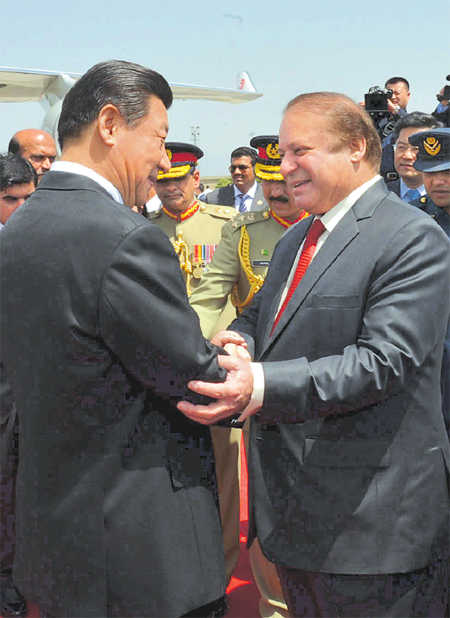
Chill in air: (From L) Prime Minister Narendra Modi, Chinese President Xi Jinping, Kazakh President Nursultan Nazarbayev and Russian President Vladimir Putin and Pakistan Prime Minister Nawaz Sharif gather for a “family photo” at the Shanghai Cooperation Organisation (SCO) Summit in Kazakhstan”s capital Astana. AFP

IN these times of acute famine in dialogue between India and Pakistan, now in its fifth year of suspension following the beheading of an Indian soldier in January 2013, it was gratifying that at the Shanghai Cooperation Organisation (SCO) meet at Astana, Kazakhstan, recently, Prime Minister Nawaz Sharif and Narendra Modi shook hands and exchanged pleasantries. But sadly, that’s only as far as they went, a full 18 months after the two-strand Comprehensive Bilateral Dialogue format was worked out on the sidelines of the Paris Climate Change talks in December 2015. That one was a real quickie because within days, the two NSAs and the two Foreign Secretaries were meeting at Bangkok to enable External Affairs Minister Sushma Swaraj to attend the Heart of Asia conference in Islamabad on December 9, proving that where there’s a will, there’s a way. It was also on the sidelines of the 15th SCO summit at Ufa in July 2015 that bilateral talks were held. At Astana, Modi could easily have pulled Sharif aside for a tete-a-tete to start the comprehensive bilateral dialogue as soon as possible. Modi has the political mandate to pull a rabbit out of the hat though Sharif has less of a say in such matters due to big brother, Gen Bajwa, watching. Swaraj unfortunately had  already robbed the little surprise there was of any structured conversation on the sidelines by announcing that this would not happen. The year 2016 was horrible for the dialogue process, what with the Pathankot attack, Burhan Wani episode, Uri strike and the retaliatory surgical strikes which did not force a clampdown on cross-border terrorism as was claimed by the government. Violence continued without any breakthrough on Track I. The dearth of any official engagement was made up by the number of Track II dialogues, two of which two were held in the last two months at Dubai and Kathmandu which I attended. These happened in April and May when after the winter lull, violence had kicked up again. Panelists from both sides recognised that the time was not conducive for talks given the growing levels of vigilante-ism and high-decibel television frenzy on both sides of the Line of Control to wipe each other off the map. Pakistan has sought moral equivalence with India as a victim of terrorism, thanks to what our Prime Minister, Defence Minister and National Security Adviser have been saying about punishing Pakistan in Balochistan and Gilgit-Baltistan. The charges specifically listed are unleashing of state terrorism in Balochistan through people like Kulbhushan Jadhav, a spy who incidentally was sentenced to death by a military court on the day after the Dubai conference. Reaching out to Baloch leader in exile, Brahamdagh Khan Bugti, financing of Tehreek-e-Taliban Pakistan, colluding with Kabul agencies for disruptive activities in Pakistan and most of all, the desire and intent to break up the CPEC project: these are the allegations now openly made against India. Samjhauta is forgotten. Pakistanis urged India to join CPEC, which eventually might provide an opening to the settlement of the Kashmir dispute.Two new elements have clouded the discourse: firstly, the tolerance threshold of cross-border terrorism never articulated by India has been abridged. Red lines are now shallow, closer to the LoC and inside Jammu and Kashmir. Previously, these were crossed mainly in attacks outside Jammu and Kashmir. Now, 19 dead in Uri would evoke a surgical strike. The red line has now been shifted to inside the state — with Uri becoming  the new normal. Ajit Doval, before he became the NSA, used to say if there is another Mumbai, there will be no Balochistan. Rawalpindi has identified this red line and confined its attacks mainly within Jammu and Kashmir. Secondly, a retired Pakistani General observed at Kathmandu that the equation between India and Pakistan has moved beyond LoC violations to kidnapping of each other’s officials. An advisory governing the attendance of Track II meetings anywhere in the neighbourhood has warned about threats from hostile intelligence agencies. He was referring to the disappearance in Nepal in April this year of one recently retired believed to be ISI Lt Col Mohammad Habib Zahir by R&AW to facilitate the eventual release of Kulbhushan Jadhav. A retired Indian General who was to attend the conference stayed away. A former Pakistan minister attended the conference, ignoring the advice from his party President but kept a low profile and left immediately after the conference. Swaraj has attached three conditions for resumption of talks – resolve all issues through dialogue, bilateral without any third party; and talks and terror cannot go together. It is the last provision which is tricky and one Pakistan has been unable to fulfil even during Gen Musharraf’s time. Then infiltration reduced by nearly half but violence in Jammu and Kashmir did not end. Insurgency in Jammu and Kashmir has acquired a certain grassroot motivation and momentum. The tap of infiltration can be partially closed, not shut at least not till progress is seen to be made on Kashmir. Not long ago, both sides argued endlessly over which of the two core concerns of each other was more important: terrorism or Kashmir. In the end, the principle of simultaneity won the argument. Mentioning only terrorism, not Kashmir, grounded the Ufa agreement.  Further, New Delhi has quietly removed the red line of Pakistani officials not meeting the Hurriyat before the dialogue which wrecked a meeting between Swaraj and Sartaj Aziz in 2015. With a miss at Astana, the next window of opportunity will be on the sidelines of UNGA or a Saarc summit later in the year which was postponed last year due to the tensions between India and Pakistan.  Track II veterans at Kathmandu last month said that the next window of opportunity would arrive only after the elections in  Pakistan, 2018 and elections in India, 2019. Such is the sorry state of India-Pakistan relations.The writer is the convener of an uninterrupted India-Pakistan dialogue.


A new ecosystem for private players

Make the defence industry a centrepiece of the Make in India scheme but choose partners wisely

The government has recently unveiled the long-awaited ‘Strategic Partnership’ policy for defence production. This policy is aimed at creating and nurturing an ecosystem for private defence manufacturing in India. The government has all along insisted that the defence industry would be a centrepiece of Make in India. Strategic partnerships with select Indian firms have long been regarded as essential to enabling significant private sector participation in defence manufacturing. Over a decade ago, a committee led by Vijay Kelkar recommended that the government should identify certain firms based on their technical, managerial and financial strength as ‘champions’ or ‘Raksha Udyog Ratna’ and circulate tenders for major systems to these firms. A subsequent committee was constituted led by Probir Sengupta identified 13 Indian firms that could be designated along these lines.

But the government of the day baulked at the thought of being seen as favouring some companies over others. This concern was overblown and it effectively stymied private sector participation in defence. Although the NDA government has taken its time to approve the policy, it has done well in thinking through its underlying rationale as well as the practical steps needed to unleash the Indian private sector in this critical domain. Nevertheless, there are some lingering problems that the government will need to address as it moves along.

The policy acknowledges that there are few Indian private players with experience in integrating complex defence systems and subsystems. Hence, it seeks to provide a framework for nurturing such capabilities over time. In the initial phase, the government will identify one Indian private entity as a strategic partner to manufacture one major system: single-engine fighter aircraft, helicopters, submarines, and armoured vehicles. This at once caters for the systems most needed by the armed forces and encourages specialisation among Indian firms. The strategic partner will be picked through a well-defined process that will include an assessment not just of the technical capabilities of the entity, but also its plans for indigenisation over time and its ability to foster a network of domestic suppliers. Ultimately, though, the selection of the SP will be based on “the price quoted”. L1 will remain the final arbiter.

In parallel with this process, the government will also prepare a short list of foreign Original Equipment Manufacturers (OEMs) with whom the aspiring strategic partners can tie up for technology transfer. The main criterion on which the OEMs will be identified is the extent of technology they are willing to pass on. The joint ventures between a strategic partner and an OEM cannot, however, have more than 49% FDI. They must be owned and controlled by resident Indian citizens. The OEMs, for their part, must obtain prior licence for technology transfer from their own governments.

These provisions are likely to prove onerous. For one thing, the FDI ceiling of 49% will give pause to foreign manufacturers in tying up with Indian firms. If the experience of the past few years is anything to go by, then OEMs will be reluctant to transfer significant technology for production in India under an arrangement that gives them insufficient control. To be sure, the policy does talk about protecting the property rights of OEMs. But this may not be sufficient assurance. What’s more, the governments of the OEMs may also be disinclined to permit significant technology transfer under these conditions.

In consequence, OEMs may choose to supply the advanced sub-systems and components from abroad while enabling the Indian strategic partner to manufacture only lowerend technology in India. On the flip side, the Indian firms may be uncomfortable with the idea of being forced to bear all the risks associated with the venture without commensurate control over key technology.

Firms on both sides have voiced such concerns in the past. Instead of brushing them aside, the Ministry of Defence could consider other options to circumvent the problem of foreign producers being majority stakeholders. The government could mandate that the control of the entity cannot be transferred without its concurrence, that it be managed and staffed exclusively by Indians. Such workarounds could help secure higher levels of technology transfer, which alone can ensure that the larger, strategic objectives of the policy are met. Srinath Raghavan is senior fellow, Centre for Policy Research, New Delhi .The views expressed are personal


BJP for apology, Rahul says stay off Army Chief

New Delhi, June 12

The BJP today sought an apology from Congress president Sonia Gandhi over her party leader Sandeep Diskshit “sadak ka goonda” remark against Army Chief General Bipin Rawat.The BJP, however, remained mum over the “chatur bania” reference to Mahatma Gandhi by its chief Amit Shah as Dikshit sought to use the observation as a counter-attack. The Congress distanced itself from Dikshit’s remarks with Rahul Gandhi saying “no politician should make comments against the Army Chief”. — TNS

http://


Sandeep Dikshit’s Derogatory Comment Against Army Chief Bipin Rawat

http://


Sandeep Dikshit के विवादित बयान से मचा हंगामा, Army Chief को बताया “सड़क का गुंडा”

http://