All posts by webadmin

Weather permitting, road to Leh open till Dec 31

Weather permitting, road to Leh open till Dec 31
The Manali-Leh road in tribal Lahaul-Spiti. Tribune Photo

Dipender Manta

Tribune News Service

Kullu, November 14

In what could be heartening for residents of tribal district Lahaul-Spiti, the district administration, depending on the weather conditions in the region, has decided to allow the vehicular movement between Kullu and Lahaul via the Rohtang Pass.Generally, after November 15, the 13,050 feet high Rohtang Pass, the gateway to Lahaul, is officially closed for traffic in view of public safety because due to its high altitude the Pass is prone to sudden heavy snowfall which could pose a serious threat to the lives of visitors.The Rohtang Pass yesterday received mild snowfall, but the traffic on the route between Manali and Keylong remained unaffected.Every year, the district administration sets up rescue posts at Marhi on the Manali side and at Koksar on the Lahaul side on November 15 for helping visitors during the inclement weather.The posts remain functional till December 31. The authorities take the help of Atal Bihari Vajpayee Institute of Mountaineering and Allied Sports, Manali, to set up these rescue posts.Director of the Atal Bihari Vajpayee Institute of Mountaineering and Allied Sports, Manali, Captain Randhir Salhuria said, “Our team is heading to the spot tomorrow to set up rescue posts at Marhi and Koksar for the safety of visitors in the region as the high-altitude areas may witness snowfall.” He added that people were advised to ensure their entry on these rescue posts before crossing over to the other side so that timely assistance could be provided if the need arose.Deputy Commissioner, Lahaul-Spiti, Deva Singh Negi said, “The rescue posts will be set up at Marhi and Koksar. I have decided to allow the traffic to continue on this route depending on the weather condition.”Like the previous year, the authority will take help of the Border Roads Organisation this time also for snow clearing to ensure smooth traffic. Rescue posts at Marhi, Koksar 

  • The Rohtang Pass received mild snowfall on Monday, but the traffic between Manali and Keylong remained unaffected.
  • Every year, the district administration sets up rescue posts at Marhi on the Manali side and at Koksar on the Lahaul side for helping visitors during the harsh weather.
  • The posts remains functional till December 31. The authorities take the help of Atal Bihari Vajpayee Institute of Mountaineering and Allied Sports, Manali, to set up the rescue posts.


GST on 177 items of mass consumption slashed to 18%

GST on 177 items of mass consumption slashed to 18%
Union Finance Minister Arun Jaitley along with MoS for Finance Shiv Pratap Shukla and Finance Secretary Hasmukh Adhia (L) at the 23rd GST Council Meting, in Guwahati on Friday. PTI

Guwahati, November 10

The GST Council on Friday decided to reduce tax rate on a wide range of mass use items — from chewing gums to detergents — to 18 per cent from current 28 per cent, Bihar Deputy Chief Minister Sushil Kumar Modi said.

The all-powerful council pruned the list of items attracting the top 28 per cent tax rate to just 50 from 227 previously, Modi told reporters here.In effect, the council, in its 23rd meeting on Thursday, cut rates on 177 goods.Facing intense heat from opposition-ruled states over keeping mass used goods in the 28 per cent bracket which was meant for luxury and de-merit goods, the Council pruned the list to 50 as against 62 that was recommended by its fitment committee.The Goods and Services Tax (GST), implemented from July 1, has five tax slabs: 0 per cent, 5 per cent, 12 per cent, 18 per cent and 28 per cent.”There were 227 items in the 28 per cent slab. The fitment committee had recommended that it should be pruned to 62 items. But the GST Council has further pruned 12 more items,” Modi said.He said all types of chewing gum, chocolates, preparation for facial make-up, shaving and after-shave items, shampoo, deodorants, washing powder detergent and granite and marble will attract lower 18 per cent tax rate.”There was unanimity that in 28 per cent category there should be only sin and demerit goods. So, today the GST Council took a historic decision, that in the 28 per cent slab there will be only 50 items and the remaining items have been brought down to 18 per cent,” he said.Paints and cement have been retained in the 28 per cent tax bracket, he said.”Luxury goods like washing machines and air conditioners have been retained at 28 per cent.”The decision taken by the GST Council will have a revenue implication of Rs 20,000 crore annually.”There is consensus that slowly 28 per cent slab should be brought to 18 per cent. But it will take some time because it has a big revenue implication,” he said. PTI

Panic-stricken’ Modi govt has no option but to change GST rates: PC

‘Panic-stricken’ Modi govt has no option but to change GST rates: PC
P Chidambaram. File photo

New Delhi, November 10Congress leader P Chidambaram on Friday said a “shower of changes” is expected from the GST Council meeting in Guwahati and the “panic-stricken” Modi government had no option but to change the new tax rates.The high-powered committee headed by Union Finance Minister Arun Jaitley is meeting in the Assam city to discuss GST rates.Chidambaram said the government would be forced to heed the advice of the opposition and experts due to the Gujarat Assembly elections next month.“Expect a shower of changes in GST rates from GST Council meeting today. Panic-stricken govt has no option but to concede demands for change.

(Follow The Tribune on Facebook; and Twitter @thetribunechd)

“Thanks to Gujarat elections, government forced to heed advice of Opposition and experts on flaws in implementation of GST,” he tweeted.Chidambaram said the letter from the finance ministers of Congress-ruled states to Jaitley would set the tone for discussions in the GST Council on Friday.“Congress FMs’ letter exposes the structural flaws in the design and implementation of GST. Government can no longer duck these issues,” he said.The Congress leader said the government had avoided debate and voting in Rajya Sabha on GST Bills but it could not avoid a debate in the public domain or in the GST Council.“Congress FMs will force changes in GST Council meeting today. Agra, Surat, Tiruppur and other hub towns are watching,” he said.The finance ministers of Congress-ruled states last week demanded a major overhaul of the Goods and Services Tax (GST), alleging that the tax reform measure had turned out to be a “big disappointment” due to its “poor” implementation.The finance ministers of the Congress-ruled Punjab and Karnataka, Manpreet Badal and Krishna Gowda, alleged that the country had “lost the opportunity” to bring tax reform and that there was “utter chaos and confusion”, forcing many businesses to shut down.They also alleged that there was “poor implementation” with regard to GST’s concept, design, tax rates, exemptions, compliance requirement and technological preparedness.They said the party would demand reduction of tax rates for many items and raise other concerns of the business community in the Guwahati meeting of the GST Council. PTI


And bulk orders go to… China

And bulk orders go to... China
Hug will do: India is viewed as a reliable partner that can be taken for granted.

Jayshree Sengupta

PRESIDENT Trump is going to China on November 8 for three days but will not come to India.  Undoubtedly, the US and China are the two biggest economic powers today.  The one agenda driving the Trump administration is ‘America first’ and ‘Jobs for Americans’. Accompanied by 29 chief executives, Trump hopes to win a big contract from the Chinese state-run oil giant Sinopec for at least $7 billion into areas devastated by hurricanes Harvey and Irma. He also wants to reduce the huge US-China trade deficit ($347 billion in 2016) by trying to gain access to the Chinese agricultural market. India, on the other hand, has been a reliable partner which can be taken for granted. The overtures Modi made in Washington for furthering the US-India trade, investment and strategic ties last summer, in his meeting with Trump, made this amply clear. Modi wants to accelerate India-US trade to $500 billion. Currently, the US buys more from India than it exports. US exports were at $42 billion (2016) whereas imports from India were at $72.8 billion. The US has a trade deficit with India of around $24 billion. India’s big export of IT services and temporary movement of personnel to the US is determined by the H-1B and L-1 visas. Recently, the US administration has made the renewal of H-1B visas more difficult. The US Citizen and Immigration Services,  however, have resumed the premium processing for such visas for a fee of $1,225 in only 15 days. Indian IT workers utilise 70 per cent of the visa quotas every year. The move reflects that only highly qualified IT personnel will be able to work in the US on H-1B visas.Just as Trump wants to protect jobs, India is keen on investment from the US to create jobs. It seems both countries are guided by the same need for job creation. Both leaders came to power promising jobs. Trump was voted to power by the many jobless Mid- West Americans and Modi by the teeming job-seeking youth. Both have to live up to their promises of providing jobs. Trump should be pleased that Indian investment in the IT sector in the Silicon Valley created 52,000 jobs in 2016. Also, Boeing is going to get a huge order from India for civilian planes. Indian Airlines, Spicejet and Jet Airways have ordered 300 planes which should lead to job creation in the US. India has signed energy deals with the US, with Gail signing a 20-year supply agreement to buy 5 to 8 tonnes of US liquified natural gas with Cheniere Energy. India has already taken delivery of one commissioning cargo of gas from the US. India has also started buying crude oil from the US.India is wooing US investment for the ‘Make in India’ initiative. A number of glitches have to be smoothened before American investors choose India as their favoured investment destination. They want freer trade and less regulation. Trump has often said it is greater access to foreign markets what he seeks because the US market is open to all and is the marketplace of the world. One of the recent irritants has been the price regulation that the Indian Government has imposed on heart medical devices called stents. It is considered to be an anti-trade measure by the US. The American companies supplying them have been hit by the nearly 80 per cent cut in prices by the Modi government. Since these stents are now widely used by ordinary people, the government felt it was important to make it more affordable.  India is now also controlling prices of other medical devices like knee implants. But the US government has strongly objected to this regulatory practice and 18 members of the US Congress appealed against such control. Recently, the Government of India has agreed to review the whole business of stent pricing in February 2018. Commerce Minister Suresh Prabhu has asked American companies to make stents in India to reduce costs!The US, just like the EU, wants access to the agricultural sector in India. The dispute in the WTO regarding India banning chicken legs imports was lost by India. US agricultural productivity is much higher than India’s due to the huge direct subsidies the farmers receive from the government. India is not in a position to compete with farm products from the US and will resist opening up. India, however, wants the US to import Indian mangoes and pomegranates.The US business is also very uncomfortable about the Intellectual Property Rights infringements taking place in India. The US business wants strong enforcement of IP protection which can only be achieved through fast-track judicial processes. To be able to win the confidence of American investors, infringement in the digital environment has to be checked. India’s score in the IP Index is at the bottom — 43rd out of 45 countries. The Indian Copyright Act of 1957 was amended in 2012 and monetary and criminal sanctions can be used against those circumventing digital rights. But to do more business with the US companies, greater attention to IPR protection is needed on the ground.Lack of compliance of standards in generic drugs is another problem that the US has, though India exports $4 billion of drugs to the US. The perception of American doctors is somewhat coloured by the notion that Indian drugs are substandard and hence they refrain from prescribing drugs made in India.In ease of doing business, China is ahead of India even though we have achieved the 100th rank recently because of GST and 20 other reforms in the last three years. The fact remains that the US investment in China is huge compared to India. The US business manufactures products in China which are exported back to the US and are part of the global value chain. China is the third most significant market for the US. China’s GDP is a $11.8 trillion economy compared to India’s $2.4 trillion. China is also the largest lender to the US and holds $1.2 trillion of US treasury bonds. Trump’s stakes in alienating China are very high and that is why the rhetoric against China from his election campaign has been dropped in view of the leverage China has over the US, especially regarding the dollar. Next year, Trump will come to India surely!


“Civil-Military Relations: Let’s Not Weaken the Corporate Character of Our Forces by *Lt Gen (Retd) DS Hooda*

Two groups are today dominating discussions about civil-military relations in India. The first group is the veterans who continue to protest over the definition of OROP. Recent images of soldiers and their wives being pushed and shoved into police vans has again brought into focus their long-standing demand. The second is a group of junior officers from the services who think that their career interests have been ignored and have gone to the Supreme Court. Grant of NFU to the military is another case pending in the same court.
There is also considerable consternation in the military leadership over the issue of status parity. And this leadership is not the few Generals, Admirals and Marshals but the approximately 50,000 officers, a vast majority of whom are middle and young level officers. They directly lead men on land, sea and air and put themselves at maximum risk. The whole issue of the military being a Group A or Group B service is bewildering to them. And justifications about the military being neither Group A nor B, being advanced by some of our own senior officers, are inexplicable.
It is often argued that it is only a handful of veterans and serving officers who are actually complaining, and that their demands are unreasonable. Both these statements could be true but it does not naturally follow that these will not have any impact on the character of the military ethic. This is what should worry us all.
One of the cornerstones of the military ethic is its Corporateness. Members share a strong group identity based on common values and pride in their very critical responsibility towards the nation. Within this corporate structure is a strict hierarchy of ranks. If today members of the military prefer to take to the streets or the courts of law, rather than relying on their senior leaders, it could weaken the corporate character of the military.
The military is a unique profession. No other profession demands that your primary role is to lay down your life in the pursuit of your duty. General John Hackett, in his book The Profession of Arms, called it the concept of “unlimited liability”. In Jammu and Kashmir alone we lose more than 200 soldiers each year, not only battling terrorists but also to the brutal terrain and weather.
To get men and women to accept this huge sacrifice requires a forging of character where the best of values come to fore. Hackett wrote that qualities such as courage, fortitude and loyalty are deliberately fostered, not because they are desirable, but because they are “essential to military efficiency.”
What is the current civil-military dispute about? Is it about more pay, privileges or a better lifestyle? There can be no comparison in lifestyle because no individual in any other profession earning an equivalent salary lives in a 10 x 10 foot bunker where you are snowed under for six months. The soot from the 1945-style heater, which is fired by kerosene oil, is an all pervading presence, from your hair to the fingernails to the choked nostrils. The privilege is nothing more than a bunch of great comrades who are suffering the same privations.
The real fight is about honour. Honour or ‘Izzat’ is the edifice on which the ethical and moral foundation of any military rests. Traditionally, the Indian military has given great value to the concept of honour — the honour of the unit which must always be protected and personal honour which drives a man even in the face of certain death. If officers and men feel unwanted and under-privileged it could weaken this edifice. Unfortunately, this fact is not given enough attention. Putting out tweets and spending time with soldiers during festivals is a great gesture but is not enough to assuage the angst.
There are two different models in the structure of civil-military relations. In The Soldier and the State, Huntington recommends ‘‘objective civilian control’’ that ensures civilian control and maximizes professionalism at the same time. He argues that a highly professional military seeks to distance itself from politics, thus strengthening civilian control. In contrast to Huntington, Morris Janowitz, in The Professional Soldier, argued that the military will invariably come to resemble a political pressure group, and that this is not necessarily a problem as long as it remains ‘‘responsible, circumscribed, and responsive to civilian authority’’. He recommends the military’s ‘‘meaningful integration with civilian values’’.
There are supporters of both models but in India, objective control has been followed and has stood the military in good stead. There is no real need for change, and political parties need to be sensitive to this. Constantly evoking the sacrifice of the Indian Army in every political debate is harmful. It could politically influence soldiers. The loyalty of a soldier is to the military ideal, which is a constant, and not to a political ideology. This is the correct democratic way.
Surely it is nobody’s case that the military is completely losing its professionalism. But problems, however small, if not tackled in time can blindside you. If some cracks are visible, they need to be quickly repaired and not papered over. The government practice of forming of one more committee has now lost its credibility. Decisions will have to come from the political executive.
Minor changes in OROP, grant of NFU (non-functional upgrade), an improvement in career progression, and an honourable status to military personnel are a very small price to pay for ensuring that the character of the military ethic is not diluted. Political leaders, the bureaucracy and senior military leadership must join hands and work towards that goal. This will ultimately not only empower the military but also the nation.
I close with a quote from Huntington, “If the civilians permit the soldiers to adhere to the military standard, the nations themselves may eventually find redemption and security in making that standard their own”.
(The author is former Northern Commander, Indian Army, under whose leadership India carried out surgical strikes against Pakistan in 2016. Views are personal.)

Soldier hurt in truce violation

Our Correspondent
Rajouri, October 28
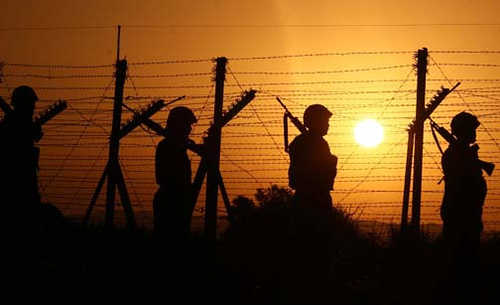
After a lull of one day, the Pakistan army resorted to unprovoked heavy mortar shelling and firing with automatic weapons on Indian forward posts in Shahpur, Kirni and Kasba areas and in the Mendher sector in Poonch district around 8.45 pm on Friday.
Sources said Naik Abdul Haq of Jak Li unit and resident of Gursai village in Poonch district received multiple splinter injuries while manning a forward post and was rescued to an Army hospital where he is said to be out of danger.
Sources added Indian troopers retaliated Pakistan mortar shelling effectively and forced the enemy to stop truce violation.


HEADLINES ::25 OCT 2017

  • MAJ GEN SATBIR MUST LEARN FROM GURDASPUR LOK SABHA ELECTIONS , MESSAGE FOR MILITARY LEADERSHIP?
  • FROM ‘GOOD MAN DI LALTAEN’ TO ‘YES’ MAN: RISE OF SYCOPHANCY IN THE ARMY BY LT GENERAL VIJAY OBEROI
  • 39 SOLDIERS KILLED IN J&K FROM 2015 TO ’17
  • IAF BIG BIRD LANDS ON UP HIGHWAY
  • ICRA TO GET 5 MILITARY FARMS ON LEASE
  • ARMY CHOPPER MAKES ‘PRECAUTIONARY LANDING’ IN JODHPUR
  • ONLINE RADICALISATION A CHALLENGE: NS
  • CAN INDIA STOP RAFALE SCAM?
  • WHATSAPP SHARES LOCATION WITH FRIENDS

China, India can help solve Rohingya crisis: Chinese daily

China, India can help solve Rohingya crisis: Chinese daily
The exodus of Rohingyas to neighbouring Bangladesh began on August 25 when the Myanmar Army launched an offensive in the region following an attack by Rohingya rebels on multiple government posts.

Beijing, October 16

India and China can jointly lead efforts to solve the Rohingya crisis by offering humanitarian aid to Myanmar’s conflict-ridden Rakhine state, an article in the state-run media has said.“Given the interests Beijing and New Delhi share with Myanmar, the two could cooperate in offering humanitarian aid to Rakhine state, assist Bangladesh in resettlement of refugees, enhance economic cooperation with Myanmar,” according to the article in the Global Times.“… China and India can also promote greater integration of trade and investment in the area, including the Bangladesh-China-India-Myanmar Economic Corridor.”

(Follow The Tribune on Facebook; and Twitter @thetribunechd)

The exodus of Rohingyas to neighbouring Bangladesh began on August 25 when the Myanmar Army launched an offensive in the region following an attack by Rohingya rebels on multiple government posts.“As Myanmar’s neighbours, the last thing China and India want is terrorist violence on their doorstep. In the meantime, both countries are well aware of the complexity of the Rakhine ethnic and religious conflict, knowing it will take time for the government to solve such a complex question,” the article stated.“In terms of economics, there are more reasons for the two to cooperate. China’s investment in Myanmar reached $18.53 billion in January 2017 and the country plays a unique role in Beijing’s Belt and Road initiative.“It is impossible for Beijing to remain indifferent. Nor can India’s interests be divorced from peace and stability in a nation (Myanmar) that forms a bridge between South Asia and Southeast Asia,” the article stated.“Myanmar, the gateway for New Delhi’s northeastern states to Southeast Asia, is crucial to India. Prime Minister Narendra Modi’s visit to Myanmar last month, during which the two sides inked a series of economic, trade, defence, energy and strategic agreements, is proof enough.”The support and sympathy offered by Beijing and New Delhi to Myanmar’s ruling National League for Democracy party over its efforts to deal with the Rohingya crisis was portrayed by the Western media as a “scramble” for influence between China and India, the article said.“The possibility of the two big countries (China, India) cooperating to help resolve the ethnic conflict in Myanmar went largely unnoticed,” it said. IANS


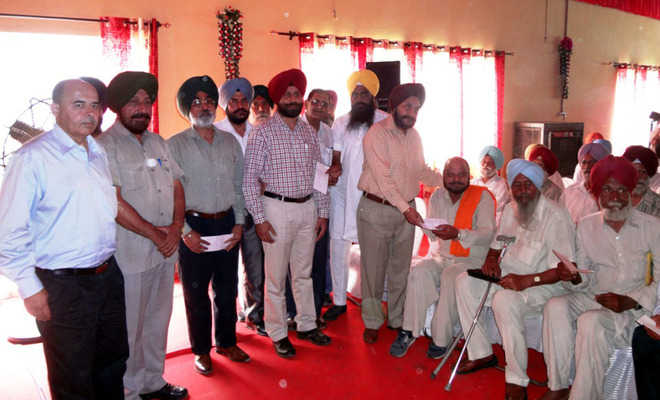
MAHARANI SAHIBA PRANEET KAUR SHOWS CONCERN ABOUT WELFARE OF EX-SERVICEMEN AT :PATHANKOT RALLY

Its a tradition in Army, that Ladies of the Army Personnel takes keen interest in the welfare activities of their subordinates in all unit welfare activities.

The Tradition has be found and proved beyond doubt that Its not Capt Amarinder Singh Honorable CM, Punjab is concern about welfare and to restore Respectability,Pride and dignity of EX-Servicemen in Pun jab but The Lady Maharani Praneet Kaur has equally shown concern about the welfare of ESM at Pathankot Rally.

A Rally which was organised by Big Prahalad Singh, Chairman Sanjha Morcha and President ESMUF ( Pathankpt) and Capt Harminder Singh to support Mr Sunil Jakkar was held at  SARNA,Pathankot attended bu ESM,Veer Nari and Sunil Jakkar and Maharani herself .

AT the end of the function she openly asked ESM who were present to speak out their problems that they  are facing from the Punjab Administration. One of the The point regarding ESM facing the problems from various departments was that they are not given due respect when they approach them for personal works and are harassed  lot.

The result can be seen with 24 hours that Instructions by Capt Amarinder Singh to all DC’s were given.

We Salute Capt Amarinder and Maharani Praneet Kaur to continue the Army traditions in letter and spirit even as CM of Punjab and First Lady of the State.

IMG-20171008-WA0061 IMG-20171008-WA0062 IMG-20171008-WA0063 IMG-20171008-WA0077 IMG-20171008-WA0078 IMG-20171008-WA0079 IMG-20171008-WA0080 IMG-20171008-WA0081 IMG-20171008-WA0082 IMG-20171008-WA0083 IMG-20171008-WA0084 IMG-20171008-WA0085 IMG-20171008-WA0086


NS makes aerial survey of Doklam-Nathula area

NS makes aerial survey of Doklam-Nathula area
Nirmala Sitharaman

Gangtok, October 7

Defence Minister Nirmala Sitharaman today made an aerial survey of the Doklam-Nathula area on the Sino-India border, a day after the government said the status quo at the site has not changed since the disengagement on August 28.Sikkim government officials said the defence minister also made a survey of the new Pakyong Airport in East Sikkim and neighbouring areas this afternoon.Sitharaman is on a day-long visit to Arunachal Pradesh and Sikkim today.(Follow The Tribune on Facebook; and Twitter @thetribunechd)The survey follows the external affairs ministry statement yesterday that there were no new developments at the India-China military face-off site in Doklam and its vicinity since the August 28 disengagement.The statement had come amidst reports that China has maintained a sizeable presence of its troops near the Doklam standoff site and even started widening an existing road around 12 km from the area of face-off.“We have seen recent press reports on Doklam…The status quo prevails in this area. Any suggestion to the contrary is incorrect,” the external affairs ministry had said in the statement.Sitharaman is scheduled to meet Sikkim Governor Sriniwas Patil and Chief Minister Pawan Chamling at the Raj Bhavan and they are likely to discuss several issues related to defence in the border areas with China, the officials today said.Improving strategic infrastructure like border roads in Sikkim, the new airport which is to be inaugurated in November, and development in areas along the Sino-India border in Sikkim are likely to be discussed, they added. — PTI


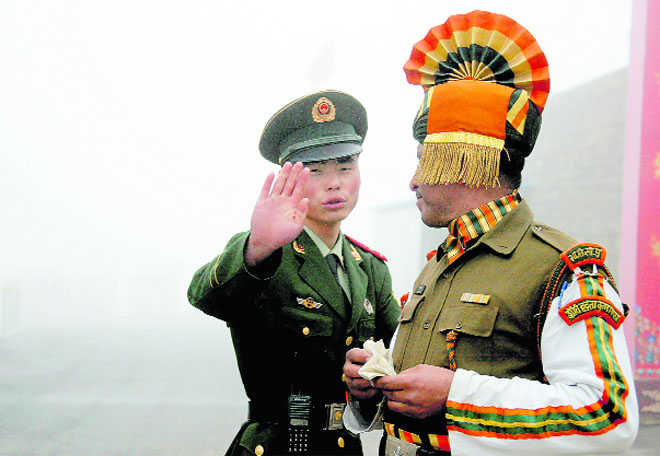
China maintaining sizeable troops near Dokalam: Sources

China maintaining sizeable troops near Dokalam: Sources
The 73-day-long standoff in Dokalam ended on August 28. — File photo

New Delhi, October 5

China has maintained a sizeable presence of its troops near the site of the 73-day-long Dokalam standoff, in an indication that the border tension between Chinese and India armies has not yet subsided.Sources said China has been slowly increasing its troop level in the Dokalam Plateau which could further escalate the current situation as India has reasons to be concerned over it.The indication to the underlying tension due to presence of Chinese forces in the Chumbi Valley in the Dokalam Plateau was also given by Chief of Air Staff Air Chief Marshal B S Dhanoa today.”The two sides are not in a physical face-off as we speak. However, their forces in Chumbi Valley are still deployed and I expect them to withdraw as their exercise in the area gets over,” Dhanoa told reporters.There have been territorial disputes between China and Bhutan over Dokalam and India has been staunchly supporting Thimphu over the issue.Troops of India and China were locked in a 73-day-long standoff in Dokalam since June 16 after the Indian side stopped the building of a road in the disputed area by the Chinese Army. Bhutan and China have a dispute over Dokalam.Bhutan and India were in touch with each other during the course of the face-off that ended on August 28.Days after the face-off ended, Army Chief Bipin Rawat had said China has started “flexing its muscles” and warned that the situation in India’s northern border could snowball into a larger conflict.There are also reports that People’s Liberation Army (PLA) has increased more troops on its forward post in Yatung.Sources said though Chinese troops have been deployed in Dokalam Plateau, they leave the area during winters.But, there were indication that they may leave the areas this time, they added. — PTI