All posts by webadmin

War of words between India and Pak after Sushma’s speech

War of words between India and Pak after Sushma's speech
The External Affairs Minister was in her element at the UNGA. Reuters

United Nations, September 27The message that Kashmir is an integral part of India should be “loud and clear”, India on Tuesday told Pakistan, calling it a “dysfunctional state” that committed atrocities on its own people and preached about tolerance, democracy and human rights.Responding to Pakistan’s Right of Reply (RoR), India also asked Pakistan if it could clarify how terror havens continued to flourish on its soil despite getting billions of dollars in anti-terrorism aid.Pakistan’s envoy to UN Maleeha Lodhi, exercising the RoR to External Affairs Minister Sushma Swaraj’s address to the UN General Assembly here on Monday, earlier said Pakistan rejected “all the baseless allegations” made by her and asserted that Kashmir never was and could never be an integral part of India.

(Follow The Tribune on Facebook; and Twitter @thetribunechd)

She called Kashmir a “disputed territory, the final status of which is yet to be determined in accordance with several resolutions of the UN Security Council”.First Secretary in the Indian Mission to the UN Eenam Gambhir, in India’s Right of Reply to Lodhi’s remarks, said it appeared that the Pakistani envoy “did not hear clearly what our Minister of External Affairs stated during her address earlier”.Quoting Swaraj that Jammu and Kashmir is an integral part of India, and would always continue to do so, Gambhir said “we hope that the message is loud and clear”.In the RoR, Lodhi claimed that the attack on the Indian Army base in Uri, particularly its timing, had all the “hallmarks of an operation designed” to divert attention from India’s “atrocities” in Kashmir.“The international community is well aware that several such incidents have been staged in the past to serve India’s tactical and propaganda objectives,” she said, adding that India is utilising the Uri incident to blame Pakistan for the current Kashmiri uprising and divert attention from its “brutal” occupation.Gambhir, who had given India’s strong RoR to Pakistan Prime Minister Nawaz Sharif’s UN General Assembly address, said the world heard from Pakistan “the views of a dysfunctional state” which built atrocity upon atrocity on its own people, preaching about values of tolerance, democracy and human rights.“We reject entirely these sermons,” she said.Gambhir said the Pakistani envoy was making “a fanciful and misleading presentation” in her RoR on the situation in Kashmir, in yet another attempt to divert international attention from her country’s continued sponsorship of terrorism.Gambhir said Pakistan is not answering questions that are being posed to it by the international community, such as how is it that terror sanctuaries and safe havens in her country continued to flourish despite the Pakistan army’s “much-vaunted counter-terrorism operations, and the billions of dollars of international counter terrorism aid it obtains”.“Can the representative of Pakistan confirm that they do not use terrorist proxies and export terrorism as a matter of state policy?“Can the representative of Pakistan deny that Pakistan had assured in 2004 that it would not allow its territories, or territories under its control, to be used for terror attacks against India? And can the representative of Pakistan deny that it has failed to honour that assurance given at the highest level?” Gambhir asked.India questioned whether the representative of Pakistan would deny that the armed forces of her country committed one of the most extensive and heinous genocides in human history in 1971.“Will the representative of Pakistan deny that its armed forces have used air strikes and artillery against its own people repeatedly? Will the representative of Pakistan explain why is it that Pakistan’s civil society is being silenced by the plethora of heavily armed militias that go by names such as ‘Jaish’ or Army, ‘Lashkar’ or Army, ‘Sipah’ or soldiers and ‘Harkat’ or armed movement,” Gambhir said.Responding to Swaraj’s call that nations that did not join the global strategy to fight terrorism should be isolated, Lodhi said India’s government is “delusional” if it believed it could “isolate” any country.“It is India itself, which because of its war crimes in Kashmir and elsewhere, and because of its warmongering, is likely to be isolated in the international community,” she said.The Pakistani envoy said Swaraj’s statement reflected the “deceit and hostility” of the Indian government towards Pakistan.“These allegations are designed principally to deflect global attention from the brutalities being perpetrated by India’s over half a million occupation force against innocent and unarmed Kashmiri children, women and men in the Indian occupied Jammu and Kashmir,” Lodhi said.In an RoR exercised after Sharif’s address to the UNGA, India had accused Pakistan of committing war crimes by using terrorism as an instrument of state policy.Lodhi in her RoR said the call for freedom of the Kashmiri people had been met with Indian brutality.“This is the worst form of state terrorism, a war crime, that India has continued to perpetrate in the situation of foreign occupation in Jammu and Kashmir for the past many decades,” she said, adding that Pakistan demanded a full and impartial investigation of the Indian “atrocities and massive human rights violations” in Kashmir.“We ask that India accept the investigation proposed by the UN High Commissioner for Human Rights and allow them access for the purpose,” she said.In response to Swaraj’s reference to Pakistani national Bahadur Ali, who was arrested in Kashmir, Lodhi said the recently captured “Indian spy, an intelligence officer,” had “confessed” to India’s support to such terrorist and subversive activities, particularly in Balochistan and Federally Administered Tribal Areas. PTI


Militants attack govt building in Pampore, jawan injured

Azhar Qadri

Tribune News Service

Srinagar, October 10

 

A soldier was injured on Monday in a gunfight that erupted after suspected Jaish-e-Mohmmad militants opened fire on security forces from a government building in Sempora area of Pampore on the outskirts of Srinagar, the police said.

Two to three militants were trapped inside the seven-floor hostel building of Jammu and Kashmir Entrepreneurship Development Institute (JKEDI) located on the banks of the Jhelum River, some 12 km from the Srinagar city centre, police officials here said.

Security forces have laid a cordon around the EDI complex after fires were shot from inside one of its multi-storey building and a fierce encounter is under way, they said.

A soldier was hit by a bullet and has been evacuated to a nearby hospital, a police officer said.

The militants launched the “fidayeen” attack early morning today.

The incident came to light when the top floor of the building caught fire and the fire tenders rushing towards the location were fired upon from inside the building, a police official said.

The militants later also fired at the police, the official said.

The militants are believed to have taken position in the rear building of the EDI complex, which served as a hostel and temporarily housed its office.

The EDI complex was the site of a major “fidayeen” attack earlier this year, which had continued for three days.

The institute, situated on the strategic arterial road connecting Jammu and Srinagar, has three buildings — a guest house, a hostel complex and the main office building — on a 3.5-acre land on the Jhelum. With IANS inputs


Shadow wars Dinesh Kumar in Chandigarh Get real, get smarter

Shadow wars
Special forces across the world keep their operations secret. The euphoria over a ‘kill’ is never celebrated and there is no sense of complacency after an operation ends. National security is a larger concept not based on jingoism or revengeful actions.

The Army’s Sept 28-29 surgical strikes inside Pakistan mark a watershed in our strategy to combat terrorists and their sponsors. Not that such strikes had never happened; this time, a convincing response was well acknowledged. Covert ops are seldom publicized and these have an in-built element of deterrence. Our larger and more significant strategy would be a deeper understanding of the enemy and an ever-vigilant security apparatus. Almost 17 years ago and just six months after the Kargil War, the Indian Army on January 22, 2000, killed 16 Pakistani soldiers after over-running a Pakistani post across the Line of Control (LoC) in the Chhamb sector. The bodies of five Pakistani soldiers were reportedly dragged back by Indian troops and later handed over to the Pakistani Army. This was one of many such attacks carried out from time-to-time by the Indian Army consequent to Islamabad’s continuing proxy war in Jammu and Kashmir. The Pakistani Army, too, has been carrying out similar attacks on Indian positions after crossing the LoC along with enjoying the advantage of having an army of terrorists to whom it routinely outsources terror attacks as it did most recently in Uri.These trans-LoC attacks by both armies stopped for a while after the November 2003 ceasefire came into effect along both the LoC and the Actual Ground Position Line (AGPL) with Pakistan Occupied Kashmir (PoK). But there have been occasions when, even during the current ‘ceasefire’, India has been conducting retaliatory attacks across the LoC such as, for example, in response to the decapitation of two Indian soldiers by the Pakistani Army in January 2013. Indian Army soldiers are reported to have then beheaded between five and ten Pakistani soldiers in response.So what is new about the shallow-distance ‘surgical’ strike carried out in the wee hours of September 29? One, that New Delhi has officially acknowledged what the Indian Army has been doing for many years now. Second, the Army carried out simultaneously coordinated surgical strikes across the LoC at seven launch pads located over an arc of 250 km spread across both the Jammu and the Valley sectors. Third, the attacks were directed specifically against terrorists in their launch pads rather than against the Pakistani Army. In doing so, India has made it publicly known that it has the resolve and capability of crossing the LoC to strike at terrorists who Pakistan officially denies supporting. 

Some questions

Last Thursday’s action gives rise to three questions. First and foremost, how qualitatively and quantitatively effective were the Army’s strikes against terrorists in PoK? The government has indicated it will furnish evidence and some details about the effectiveness of the strikes. Until then, we only have the government’s word for it. Sooner or later questions are bound to rise. Second, and most important, will this deter Islamabad from continuing to support terrorism in Jammu and Kashmir and other parts of the country? Third, will surgical strikes of high intensity and quality henceforth become state policy to be repeated as and when thus truly marking a paradigm shift in India’s response to Pakistan’s support to terrorism? Or, will this be a one-off strike aimed at quelling public anger over the terror attack on an Indian Army camp in Uri? Furthermore, will this action be milked for political gains by the ruling party, especially during campaigning in the forthcoming assembly elections in Uttar Pradesh and Punjab?Such strikes cannot and must not be an end in itself. The aim of such action has to be to make it expensive for Pakistan to support terrorists and also for the terrorists themselves if not altogether stop Islamabad from making terrorism an instrument of state policy. Leave aside ceasing to support terrorists, Pakistan is expected to become more hostile towards India in response to which New Delhi will need to be ever vigilant and prepared. The Army’s limited ‘surgical’ strike on is so far a reactive measure – a response to the September 18 terror attack in Uri. It was not, truly speaking, a pro-active measure initiated without an immediate provocation. Besides, a solitary military action of this nature is never enough. For, this cannot be a number game where the killing of 19 Indian soldiers must be matched by an equal or higher figure after which India waits for the next terror attack to occur before again responding. 

Draw a policy

Rather, New Delhi needs to consider making it a policy to conduct pre-emptive surgical strikes on Pakistani terror factories on a relentlessly continuous basis in order to truly making it expensive for the terrorists and its Pakistani patrons. Prevention, rather than cure, is ideally the answer. But for this, Indian intelligence agencies will need to develop an intelligence gathering network par excellence comprising human intelligence (HUMINT) and electronic intelligence (ELINT) sources to obtain real time actionable information; Well-equipped special forces will have to be on permanent stand-by and work in conjunction with intelligence agencies. The political executive irrespective of the political alliance in power will need to maintain a steely resolve and keep the nerve to ‘go for it’ each time. Both the Indian intelligence and military establishments will need to develop capabilities to overcome Pakistani measures to prevent such attacks; and India will have to be in a ‘state in being’, i.e. in a perpetual state of alertness and preparedness including for setbacks as does happen in this long drawn out game. Only then would India have truly ‘arrived’ such as like Israel, which some Indian commentators love to quote. 

Dangerous game

The question is whether India has the stomach, resolve and capability for this kind of a response? Then again, the September 29 strike was across a shallow distance of up to between 2 and 3 km. How deep will India be prepared to go should Pakistan relocate its launch pads well inside Occupied Jammu and Kashmir? Is India prepared for an escalation, and to what extent? Soon after the terror attacks in Mumbai on November 26, 2008, Air Chief Marshal Fali Homi Major told the government that the Indian Air Force was unable to conduct air strikes on terror camps in Pakistan since they did not have specific coordinates. In other words, there existed no actionable intelligence despite supposed reforms in intelligence gathering carried out after the May-July 1999 Kargil War. 

Covertly overt?

The Army’s trans-LoC action has been greeted with and commented on with much jingoism and chest thumping by some in India, especially by some sections of the ruling party, as had occurred when India exploded nuclear devices in May 1998. Covert operations and surgical strikes are more effective when not publicised. While overt announcements are good for the domestic audience and gives the ruling dispensation political mileage, it does not serve its true purpose; certainly not at such an early stage. Ideally, covert operations should strike hard and remain covert. It should be left on officers to refer to it in passing in their memoirs written well after their retirement. If at all it must be made public by the government, it is best done when Pakistan’s terror factory is sufficiently degraded. Until then maturity lies in silent but relentless continuous action. A tool in the boxDuring the height of militancy in Punjab when Rajiv Gandhi was Prime Minister, the Research and Analysis Wing (RAW) engaged in a series of covert operations in Pakistan which was partial cause for some dent in Islamabad’s support to terrorism in the state. In 1989 killings by terrorists declined to 1,188 from 1,949 in 1988 only to escalate after the VP Singh government came to power. With RAW’s operations then ceasing and the VP Singh government adopting a ‘liberal’ outlook, terrorism escalated and in just two years (1990 and 1991), terrorists killed 5,059 people in the state (2,467 in 1990 and 2,591 in 1991). This was equivalent to the figure of a total 5,070 people killed in the preceding 12 years (1978 to 1989) before terrorism in the Punjab began tapering off following a regime change in New Delhi and the formation of an elected government in Chandigarh.Strategy is the employment of all means for an end. Surgical strikes have to be viewed as a tool in the box. It cannot be the sole instrument. Equally important, the 29th September action must never be a one-off. It should mark the beginning of pro-active measures to end Pakistan’s long standing roguish game of using terror against India. The journey has just begun and India has a long way to go. It is for successive governments in New Delhi to complete this journey.

dkumar@tribunemail.com


URI ATTACK Modi meets armed forces’ chiefs to discuss India’s ‘response’

Modi meets armed forces' chiefs to discuss India’s ‘response’
The Armed Forces chiefs leave after the meeting. ANI

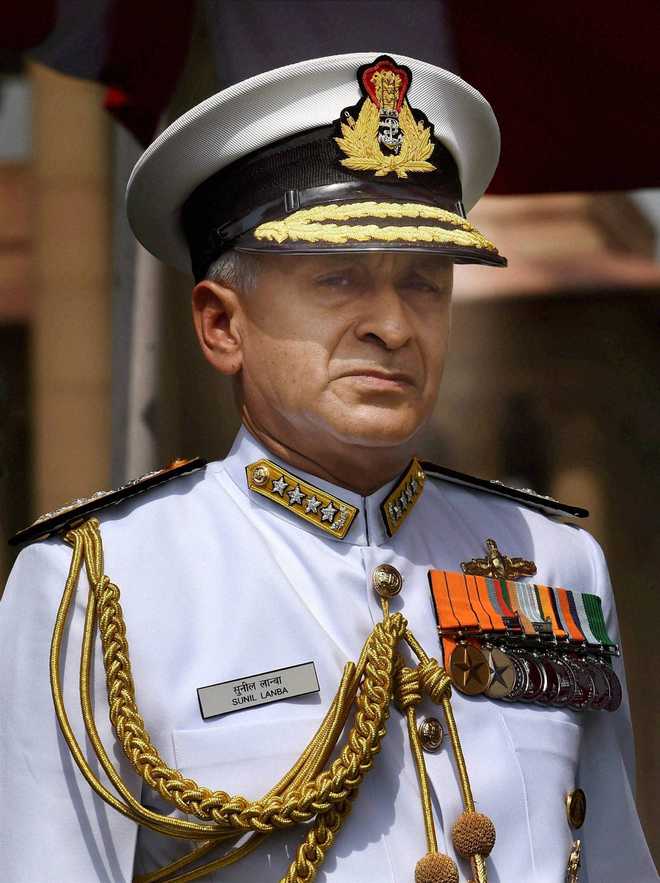
New Delhi, September 24Prime Minister Narendra Modi on Saturday met the Army, Navy and Air Force Chiefs of Staff to discuss the prevailing security condition.Apart from Chief of Army Staff General Dalbir Singh Suhag, Chief of Naval Staff Admiral Sunil Lanba and Air Chief Marshall Arup Raha, National Security Advisor (NSA) Ajit Doval was also present for the meeting at the Prime Minister’s residence at 7 Lok Kalyan Marg here.

(Follow The Tribune on Facebook; and Twitter @thetribunechd)

Besides discussing the prevailing security situation, discussion was also held on India’s response to the Uri attack, for which New Delhi has held Islamabad responsible.Later in the day, the Prime Minister will fly to Kerala, where he will address party office-bearers in Kozhikode and is expected to break his silence on the government’s response to the terror attack on the Army base.Immediately after the Uri attack, the Prime Minister had vowed in a strongly worded tweet that he would not let the perpetrators go “unpunished”.Earlier, Defence Minister Manohar Parrikar had asserted that the Prime Minister’s promise to punish those behind the Uri terror attack would not remain just words.Last Sunday, a militant attack on an army base in Uri, Jammu and Kashmir, had claimed the lives of 18 soldiers.The armed militants lobbed grenades into their tents and barracks, while the soldiers were sleeping. The ensuing fire led to a large number of casualties. Twenty-eight injured soldiers are being treated at a military hospital. ANI


Jaguar catches fire in Ambala, pilot safe

Chandigarh: A Jaguar fighter aircraft caught fire during takeoff roll at the Ambala Air Force Station late Tuesday evening. The pilot, a Squadron Leader,  was able to exit the aircraft while it was still on the ground.(Follow The Tribune on Facebook; and Twitter @thetribunechd)While the Air Force has ordered a court of inquiry to ascertain the cause of the incident, it is suspected that a technical snag may have led to the fire. “It could be an electrical short-circuit or ingestion of a foreign body into the engine,” an IAF officer said. Sources said the aircraft belonged to No.14 Squadron. TNS


Bicycle expedition aims to reach out to veterans

Bicycle expedition aims to reach out to veterans
Major General DN Singh, Chief of Staff, Chetak Corps, interacts with participants before flagging off the expedition in Bathinda on Saturday. Tribune photo: Pawan sharma

Tribune News Service

Bathinda, October 8

Major General DN Singh, Chief of Staff, Chetak Corps, flagged off a bicycle expedition-cum-camel safari of ‘Team AREN’, the Chetak Signallers, here today.This expedition comprising one officer, two junior commissioned officers and 12 jawans will cover 712 km, traversing through Punjab, Haryana and Rajasthan, and culminating in Bathinda on October 22.Steering through the sand dunes of the desert, the team will also reach out to the veterans, to know their problems, to brief them about latest schemes.They will also meet school and college students to spread the message of national integrity and educate the youth about opportunities available for joining the Indian Army.The team will also spread awareness various initiatives of the Government of India viz Digital India, Swacch Bharat Abhiyan and Beti Bachao Beti Padhao.An Army official claimed that the bicycle expedition with camel safari would provide an opportunity to the team members to exploit the arid desert, interact with the local population and reach out to the youth.It is an initiative of Sapta Shakti Command at Jaipur to reach out to veterans of the Indian Army.A number of similar rallies are being organised to spread awareness.


Col Giri cremated with full state honours

Col Giri cremated with full state honours
Sulekha Giri, wife of deceased Col Anil Giri (inset) grieves beside his coffin at Hamirpur. Tribune photo

Our Correspondent

Hamirpur, September 6

Col Anil Kumar Giri, who reportedly died of cardiac arrest during an Army operation in the Bhaderwah mountain ranges of Jammu and Kashmir was cremated with full state honours at Swahal, his native village today.From the Army Signals Corps, Giri was posted at the Corps Battle School (CBS). On Sunday, he complained chest pain. He could not be airlifted immediately as the helicopter reached late due to bad weather.At the wreath-laying ceremony, all officers paid tributes to him.He was decorated with the Vishisht Seva Medal (VSM). A tough and fearless soldier, he had many successful operations to his credit.He is survived by wife Sulekha and two sons Tushar (21) and Pranav (16).

Leaders offer condolences

Former Chief Minister Prem Kumar Dhumal, MP Anurag Thakur, Kangra Central Cooperative Bank Vice-Chairman Kuldeep Singh Pathania, KCCB Director Anil Verma, former CPS Anita Verma, Former Industries Minister Ranjit Singh Verma and many others offered condolences to the bereaved family.Dhumal said it was a huge loss for the country. He said the district was proud to have such brave men.


India says Pak a terrorist state run by war machine

Terror worst human rights violation,’ India replies to Sharif diatribe

WASHINGTON/NEW DELHI: India has called Pakistan a “terrorist state” that hosts “the Ivy League of terrorism” while responding to Prime Minister Nawaz Sharif ’s speech at the UN general assembly that raked up the Kashmir issue and sought a fact-finding mission into alleged brutalities.

The response marked the latest round in a war of words that has escalated after Sunday’s terror attack on an army camp in Uri that killed 18 soldiers. India also said the onus is now on Pakistan to act against terrorist groups engaging in cross-border attacks while threatening to withdraw or downgrade the most-favoured nation status granted in 1996.

During his nearly 20-minute speech on Wednesday, Sharif described the unrest in Kashmir as an “indigenous uprising” and an “intifada” (uprising) and accused India of “brutal suppression” and “gross and systematic violations of human rights”. He also referred to militant commander Burhan Wani, whose killing sparked the unrest, as a “young leader murdered by Indian forces”.

India hit back in a right-ofreply statement, delivered by Eenam Gambhir, first secretary in India’s permanent mission to the UN, who started by saying: “The worst violation of human rights is terrorism. When practiced as an instrument of state policy it is a war crime.

“What my country and our other neighbours are facing today is Pakistan’s long-standing policy of sponsoring terrorism, the consequences of which have spread well beyond our region.”

Recalling the US raid that killed Osama bin Laden in Abbottabad, she said, “The land of Taxila, one of the greatest learning centres of ancient times, is now host to the Ivy League of terrorism.” She added Pakistan is a “terrorist state” that channels billions of dollars to training and backing terror groups used as “militant proxies against it neighbours”.

Minister of state for external affairs MJ Akbar referred to Sharif ’s description of Wani and told reporters, “We heard the glorification of a terrorist. Wani is a declared commander of Hizbul (Mujahideen), widely acknowledged as a terror group. It is shocking that a leader of a nation can glorify a self-advertised terrorist at such a forum. This is self-incrimination by the Pakistan PM.”

Pakistan has been linked to some of the worst terrorists attacks, and attempts, in the US in recent years — the Times Square bombing attempt in 2010, the San Bernardino shootings in 2015, in which 14 people died, and one over the past weekend. Ahmad Khan Rahami, the New York-New Jersey bombings suspect, spent a lot of time in Pakistan, where he married a local woman.


Ex-servicemen laud service chiefs’ move

Jalandhar, September 12

While applauding the three service chiefs for declining the recommendations of the 7th pay commission, the Ex- Servicemen Movement (Jantar Mantra), Punjab, today said the entire community of the ex-servicemen has supported their claim to be at par with their civilian counterparts.“The government is playing with the security of nation by demoralising the Army and its serving soldiers. The government should rectify its mistakes soon,” said Lt Col babir Singh,  Punjab. —TNS


WH petition seeking to declare Pak ‘terror sponsor’ makes record

WH petition seeking to declare Pak ‘terror sponsor’ makes record
There has been no explanation from the White House so far.

Washington, October 5

More than 50,000 new signatures have been added to the final count of the White House petition seeking to designate Pakistan “a state sponsor of terrorism”, making it the most popular US petition so far.

The petition, “We the people ask the administration to declare Pakistan, State Sponsor of Terrorism (HR 6069)”, was archived by the White House on Monday with 613,830 signatures.

By Tuesday afternoon, the number of signatures on the petition had increased to 6,65,769, a jump of 51,939 signs.

(Follow The Tribune on Facebook; and Twitter @thetribunechd)

This is believed to be the most popular White House petition so far as the highest number of signatures received by any White House petition so far had not crossed 3,50,000.

There has been no explanation from the White House so far.

However, it is possible that these signatures, which were signed before the petition was closed by the White House, were added to the final tally after being duly verified.

In that case, the chances of a fraud being committed appear unlikely.

Another possibility could be that the petition was flooded with signatures. And since the petition had already reached the mandatory threshold of 1,00,000 to earn a response from the Obama administration, a decision could have been taken to archive it stop accepting any new signature.

The White House is expected to have an official response to the petition within stipulated 60 days.

Meanwhile, the White House is still looking for signatures that did not meet the criteria for the petition which was created on September 21 by someone who identified himself with initials R G, after Congress man Ted Poe and Dana Rohrabacher introduced a Bill in the US House of Representative, seeking to designate Pakistan as a “State Sponsor of Terrorism”.

It met the threshold of 1,00,000 signatures in less than a week. With various groups both inside and outside the US actively campaigning on the social media for people to support the petition, the signature count increased at a fast pace, sometimes more than 1,00,000 signatures in less than 24 hours.

In the process, it became the first-ever petition to cross half-a-million mark. A day after it was closed for signature, the final count as of now stands at 6,65,769 signatures.

While there is no official ranking of popular petitions, the one seeking “charges against the 47 US Senators in violation of the Logan Act in attempting to undermine a nuclear agreement” in April 2015 appears to be the second most popular petition with 3,20,000 signatures.

According to a website – WHpetitions.info – that keeps track of unanswered petitions, so far 323 White House petitions have met their signature thresholds.

The White House has responded to 318 of them (98 per cent) with an average response time of 117 days. Average waiting time so far for five unanswered petitions is 36 days. This does not include the latest petition.

Baloch-Americans have also launched their own petition on “Free Balochistan from Pakistan’s illegal occupation”. — PTI