All posts by webadmin

mran: Ties tense till polls in India

Imran: Ties tense till polls in India

Imran Khan. File photo

Islamabad, March 26

Prime Minister Imran Khan has said the Indo-Pak relations would remain tense till the general elections in India are over, adding he feared “another misadventure” by Pakistan’s eastern neighbour.

Tensions between India and Pakistan escalated after the February 14 attack by Pakistan-based Jaish-e-Mohammed in Pulwama.

Amid mounting outrage, the Indian Air Force carried out a counter-terror operation, hitting what it said was a JeM training camp in Balakot, deep inside Pakistan on February 26. The next day, Pakistan Air Force retaliated and downed a MiG-21 in an aerial combat and captured an Indian pilot, who was handed over to India later. 

Khan said shadows of war were still hovering over Pakistan and India as Prime Minister Narendra Modi’s administration could go for “another misadventure” before the general elections.

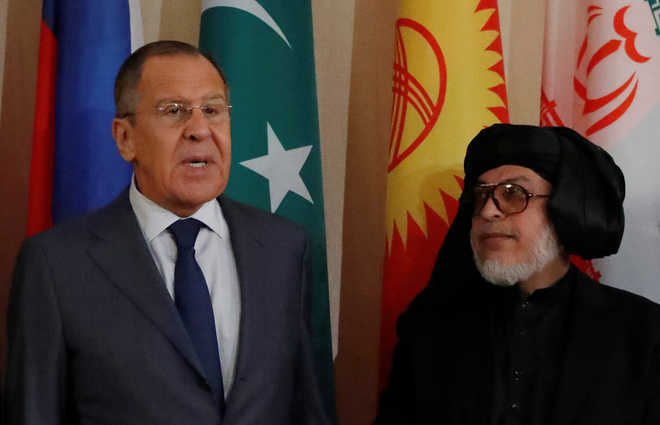
“The danger is not over. The situation will remain tense till the forthcoming general elections in India. We are already prepared to avert any aggression from India,” Dawn quoted Khan as saying. Khan also claimed that he cancelled his scheduled meeting with the Taliban in Islamabad due to “concerns” expressed by the Afghan government. — PTI 


Soldier killed in truce violation

Soldier killed in truce violation

Grenadier Hari Bhakar

Tribune News Service
Jammu, March 24

Another soldier was killed in ceasefire violation in Poonch district today, taking the toll to three in a week as Pakistan kept targeting Indian posts along the Line of Control (LoC).

Grenadier Hari Bhakar (20) of Nagaur district in Rajasthan had suffered serious injuries in a ceasefire violation in Shahpur sector last evening.

According to the defence spokesperson, he was evacuated to the nearest Field Hospital, where he succumbed to his injury around 3.30 am.

Unprovoked firing by Pakistan troops commenced last evening in Kerni and Shahpur sectors in which heavy caliber weapons and rockets were also fired. Indian troops retaliated and inflicted damage and casualties.

Pakistan again initiated unprovoked truce violation using mortars and small arms in Nowshera sector at 11.30 am, after which the Indian Army retaliated. 

Pakistan has been violating the ceasefire along the LoC on a daily basis. On March 21, it used artillery guns for shelling in Akhnoor, Sunderbani and Nowshera sectors. Rifleman Yash Paul (24) of Udhampur lost his life in Sunderbani on Thursday and Rifleman Karamjeet Singh of Moga on Monday.

Mystery blast death 

  • An Army jawan lost his life and another suffered critical injuries in a mysterious blast after a fire in Kalibari Army area of Kathua on Sunday
  • The deceased has been identified as NK Deepan Tawand (35) and the injured as Havildar Lal Parsad Gurang (39)


Corridor headway Talks a step in right direction, but trust deficit remains

Corridor headway

Exactly a month after the Pulwama massacre, India and Pakistan have agreed to work towards an expeditious launch of the Kartarpur corridor. The terror attack and its aftermath had threatened to derail the project, but the two countries have commendably delinked it from the ongoing hostilities for the sake of a pious occasion — the upcoming 550th birth anniversary of Guru Nanak. India has stuck to its oft-quoted stand that ‘talks and terror’ cannot go hand in hand, making it clear to the Pakistani delegates that the Attari meeting should not be seen as a ‘resumption of bilateral dialogue’.

Pakistan had initially stated that the proposed corridor would be opened only for Sikh devotees from India, a decision that had exposed the Pak ploy as Sikh places of worship are revered and frequented by Hindus as well. Quick to see through the divisive agenda, India has finally prevailed upon Pakistan to grant access to all Indian citizens, irrespective of their religion. In another positive move on the diplomatic front, India has managed to make the neighbour give the assurance that it would insulate Kartarpur Sahib pilgrims from Khalistani (and anti-India) propaganda. India and the world will watch closely whether Pakistan walks the talk on this contentious matter. Pakistan has repeatedly demonstrated a soft spot for pro-Khalistan terrorists and campaigners. Incidentally, a day before the Attari talks, PM Imran Khan was reported to have met a controversial Sikh leader, who is considered to be a close aide of Jaish-e-Mohammed chief Masood Azhar.

Such developments should make India wary of Pakistan’s intentions. Misuse of the corridor for the radicalisation of devotees or other nefarious designs will defeat its purpose. The possibility that the passage could be used to push in infiltrators might be slim, considering the high security expected all along the route, but it’s not entirely ruled out. The focus should remain on facilitating hassle-free access to the shrine associated with the first Sikh Guru. Mutual trust is a must to ensure that the project sees the light of day.

Decoding Kartarpur

Pravin Sawhney

Pravin Sawhney
Decoding Kartarpur
Why? India can’t quite understand Pakistan’s ‘amenability’ on the corridor.

Pravin Sawhney
Strategic Affairs Expert

That religious sentiments will always triumph over policy prejudice is evident from the just-concluded first round of talks on the Kartarpur corridor. The joint statement issued after the talks said both sides had a ‘detailed and constructive discussion’, which will be followed up in the second round at Wagah, where issues flagged by India are likely to be addressed. These include the number and nature of pilgrims per day. India wants that Overseas Citizens of India should also be able to use the corridor.

These are small issues, and it is unlikely that under the present circumstances, Pakistan would make these sticking points, especially when it has completely usurped the peace narrative in the subcontinent, despite the recent history of Pulwama attack. As far as India’s larger concern regarding Pakistan misusing this opportunity to peddle Khalistani propaganda goes, this is in the realm of perception. Frankly, India cannot have any control over this. What happens inside Kartarpur, what kind of people will come there and who will interact with whom is something India will just have to accept for the larger issue of deferring to the long-pending request of the Sikhs.

From India’s perspective, the niggling question is why must Pakistan be so amenable on the Kartarpur corridor? And why did the Pakistan army chief mention this to the visiting Indian politician Navjot Singh Sidhu? After all, Sidhu had gone to Islamabad on the invitation of his long-standing ‘friend’ PM Imran Khan. Wouldn’t it have been more natural for the ‘friend’ to communicate this?These questions betray a total lack of understanding of how the Pakistan government — a first-ever military-political joint venture — has been repositioning itself in the region as a reasonable and responsible power committed to human values. We tend to laugh at this, because our policy-making is held captive by the twin forces of deep-rooted prejudice and manufactured public opinion.

Sample the responses from both sides after the first round of talks. An anonymous Indian source told the media that it was disappointed by Pakistan’s recalcitrant attitude during the talks. Whereas, Pakistan High Commissioner to India Sohail Mahmood told me, ‘Since both governments have shown deference to the wishes of the people, this (corridor) has the potential of transformational effect.’ He accepted that there was ‘lack of trust’ between the two sides, but insisted that a number of positives might help mitigate it. According to him, ‘The release of the Indian pilot, resumption of Samjhauta Express train, return of the cross-LoC trade, weekly contact between the two directors general of military operations, return of the high commissioners to work, and the Kartarpur talks are good for the relationship and people-to-people contact.’

Pakistan’s positivity does not mean that it is anxious for an early meaningful resumption of talks with India. It knows this will not be immediately possible with even the next dispensation in Delhi, which, if different, would need time to re-channel the dislike which has currently shaped the public opinion. Given this, Pakistan could well be working for outside mediation, which India has thus far steadfastly refused, on Kashmir.

The starting point for Pakistan is the raising of its geopolitical profile, pivoted on three milestones: CPEC announced in 2013 as the flagship of China’s Belt and Road Initiative (BRI); Pakistan’s entry into the Shanghai Cooperation Organisation (SCO) in 2017 as a member state; and the installation of the Imran Khan government in 2018 with clearly defined division of work between Islamabad and the general headquarters, Rawalpindi. With these, Pakistan’s importance for the US, China and Russia, three geo-strategic nations with capability, capacity and political will to influence events far away, has increased exponentially.

China needs Pakistan for (a) the success of BRI, (b) entry into the Muslim world by CPEC extensions to Afghanistan, Iran, Saudi Arabia and Central Asian republics, and (c) favourable opinion-building in India’s neighbourhood comprising Bangladesh, Sri Lanka, Nepal, the Maldives and so on, which would ease China’s entry into SAARC. In return, China, through its official newspaper, The Global Times, recently said China’s primary aim in the region ‘is to develop poor and backward Kashmir’.

The US needs Pakistan for (a) extrication of its troops from Afghanistan, (b) ensuring that its N-weapons are not accessible to non-state actors, and (c) to maintain some leverage in the subcontinent, which it has assessed as a nuclear flash point. Russia’s interest in Pakistan, which started in 2001, has become prominent. It believes that by strengthening Pakistan’s counter-terror capabilities it can, through proxy, once again have a role in the post-US Afghan dispensation.

Moreover, the trio of Russia, China and Pakistan is fast emerging as an alternative to US-led security matrix in the Indo-Pacific region. This has been helped by the withdrawal of the US from the Trans-Pacific Partnership without a good substitute which caters to both security and prosperity of regional nation states. This explains Russia’s trade cooperation with Pakistan, with a promise of direct arms trade. While this will be a slow process, Pakistan is likely to get Russian military technology through China.

Unfortunately, India remains oblivious to these dynamics. The predominant narrative of Indian policy-makers, analysts and media is that Pakistan is a failing state, one that is deeply in debt and a hotbed of terrorists. For decades, we have been waiting for Pakistan to implode, but it has been refusing to oblige us.

Coming back to the Kartarpur corridor, one of the strongest elements of Pakistan’s soft power is its human resource — polite, humble and apparently in love with Indians. As Sikh pilgrims visit Kartarpur, Pakistan is likely to unleash this charm on them, gradually building the constituency for meaningful talks with India.


Bodies of 2 more Army soldiers

Tribune News Service
Shimla, March 14

The search and rescue operation for tracing soldiers trapped in an avalanche in the Namgya area of Kinnaur district was called off after the bodies of the last two missing soldiers were recovered on Thursday.

The remaining two bodies that have been traced are those of jawans from Himachal and Jammu. The body of NK Videsh Chand of Thrauna village, Nirmand, Kullu district, was shifted to Jhakri today and the last rites will be performed tomorrow morning at his native place.

The body of Rifleman Arjun Kumar of Kattal Brahamana village, Hira Nagar, District Kathua (Jammu) will be airlifted to Janglot tomorrow and will be sent by road from there to his native village.

It was on February 20 that six Army personnel were hit by an avalanche in the Namgya area of Kinnaur, close to the border with China, while they were patrolling along the border. The body of one jawan was found the same day.

Drunk jawan misbehaves, cops let him flee

Our Correspondent

Una, March 15

A Home Guard jawan, attached with the Transport Department and posted at the RTO barrier in Mehatpur, allegedly misbehaved with the Director of the department last evening.

The incident took place during a surprise visit by the official. The jawan was reportedly in an inebriated state.Director, Transport, Capt JM Pathania, said Home Guard jawans had been deployed by the department at RTO barriers for a period of one month, after which their duties were extended. He said the jawan at Mehatpur, identified as Jasbir Singh, was drunk and allegedly began misbehaving when he was inspecting the barrier.

Pathania said he contacted the Superintendent of Police, who sent two constables from the Mehatpur police station. However, instead of conducting a medical examination of the jawan, they allegedly let him flee from the scene.SP Devakar Sharma said on the second complaint of the Director, Transport, he himself visited Mehatpur. He said two police personnel, Head Constable Inder Kumar and Constable Sandeep, who were accused of allowing the inebriated jawan escape, had been called to the Police Lines for departmental action.

He said such dereliction of duty would not be tolerated.

Meanwhile, the Director, Transport, said a disciplinary action would be initiated against the Home Guard jawan. He said the department would also consider making amendments to the service period of the Home Guard personnel attached with the department so that they were more answerable to the system.


Inspirational! Jawan martyred in 2015, his wife now joins Army

J&K: Martyr's wife joins Army as Lieutenant

Sishar was martyred in an encounter with Lashkar-e-Islam terrorists

Sishar of Gorkha Rifles was killed in an 8-hour long gunfight against the Lashkar-e-Islam (LeI) terrorists.

LeI was founded in 2004 by Haji Namdar and Mufti Shakir.

On September 2, 2015, a search party, of which Sishar was a part, was fired upon by the terrorists.

In the ensuing encounter, two army troopers, including Sishar, sustained injuries.

He later died in a hospital.

Sangeeta's mother-in-law asked her to prepare for banking job

Husband’s death, mother-in-law, motivated Sangeeta to join Army

Sangeeta was a teacher when her husband died and probably in that shock, had a miscarriage later that year.

She quit her job eventually to support her mother-in-law.

As time went by, she took a decision to join the forces.

According to her family, Sishar was the inspiration behind her decision to join the Army.

However, her main push came in 2016

Sangeeta’s real push came when husband was given award posthumously

In 2016, Sangeeta attended an investiture ceremony (an oath-taking program) in Ranikhet, where her husband was also awarded Sena Medal posthumously. According to reports, it was then she realized that she wishes to join the Army, like her husband, and serve the country

Sangeeta’s mother-in-law asked her to prepare for banking job

Sushant Malla, Sangeeta’s brother-in-law, said, “My mother supported her and encouraged her to study further and do a banking job.”

However, Sangeeta changed her mind after attending the investiture ceremony.

“She worked hard and cleared the OTA examination,” Sushant added.

After going through the 49-week extensive and rigorous training at the OTA, she qualified as a Lieutenant in Short Service Commission.


Combat drugs’ to reduce casualties in Pulwama-type attacks

New Delhi, March 11

With 90 per cent of gravely wounded security personnel succumbing to injuries within a few hours, DRDO’s medical laboratory has come up with a range of ‘combat casualty drugs’ that can extend the golden hour till the trooper is shifted to hospital.

The spectrum includes bleeding wound sealants, super absorptive dressings and glycerated salines, all of which can save lives in the event of warfare in jungle and high-altitude areas as well as in terror attacks, scientists said. Citing the February 14 terror attack in Pulwama where 40 CRPF soldiers were killed, they said the medicines could have brought down the death toll. — PTI


Hoarding with PM in military fatigues removed

Sunit Dhawan

Tribune News Service

Rohtak, March 9

The hoarding bearing an image of Prime Minister Narendra Modi in military fatigues, which had been put up at the canal rest house located in the heart of Rohtak town, has been removed.

The Tribune had reported that leaders of the Opposition parties, including the Congress, INLD and AAP, had taken umbrage to the putting up of the hoarding bearing a picture of the Prime Minister in military fatigues and accused the ruling BJP of politicising the defence operations and insulting the armed forces for getting votes. The hoarding had been put up in the wake of the recent airstrike in Pakistan and the escalating tension between the two countries.


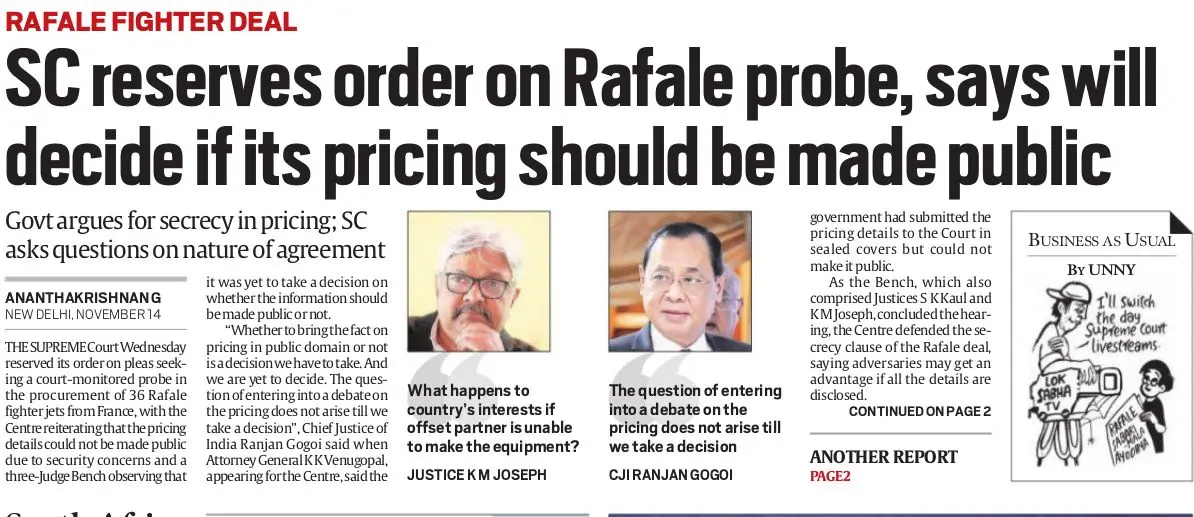
Rafale papers stolen from defence ministry, govt tells Supreme Court

Rafale papers stolen from defence ministry, govt tells Supreme Court

The three-judge bench was headed by CJI Ranjan Gogoi. File photo

Satya Prakash
Tribune News Service
New Delhi, March 6

As the Supreme Court began hearing review petitions on the Rafale jet deal today, the government told the court that Rafale papers were stolen from the defence ministry. The apex court, which is hearing petitions seeking a review of its December 2018 verdict refusing to order a probe into the deal, put off hearing until March 14.

The Centre took a strong exception to advocate Prashant Bhushan reading out from “secret” documents. Attorney General KK Venugopal said these documents were stolen from the government either by current or former officials.

“What have you done about it?” the three-judge Bench headed by Chief Justice Ranjan Gogoi asked the AG, who said an investigation had been ordered into the matter.

The Bench left it to the government to file an affidavit detailing the action taken.

The NDA Government signed a deal with France in 2016 for the purchase of 36 Rafale fighter jets manufactured by Dassault Aviation at an estimated cost of Rs 59,000-crore in flyaway condition. The top court had last year dismissed petitions seeking a probe into the deal.

The top court refused to hear the petition filed by AAP leader and Rajya Sabha MP Sanjay Singh seeking a review of its verdict, saying he had made “very derogatory” remarks on its verdict.

The CJI said the court would take action against him after completing the hearing on the review pleas. Before the action was taken, Singh would be given an opportunity to explain his conduct, said CJI Gogoi.

The CJI also refused to accept any new documents from Bhushan, including The Hindu reports, and asked him to confine himself to the documents on record.

Explaining the government’s case, the AG sought the dismissal of the review petitions. At one point he said without Rafale, how cpuld India resist F-16s (of Pakistan).

Venugopal requested the court to exercise restraint while commenting on the Rafale deal as such statements would be used to target either the government or the Opposition. As he asserted that courts cannot rely upon stolen documents, the Bench asked several pointed questions on the issue.

“When there is an allegation of corruption, can the government take shelter under national security?” asked Justice KM Joseph. The Bench said the government can’t take a general stand that no secret documents can be considered. There were judgments which said courts could look into secret documents even when the government had claimed privilege in terms of Section 123 of the Indian Evidence Act, Justice Joseph pointed out.

As Venugopal insisted that the petitioners must reveal the source of the documents, the CJI sought to know what if an accused established the plea of alibi based on a stolen document. “Should the Court ignore?” he asked.


Won’t give info on source: ‘The Hindu’

New Delhi: Documents related to the Rafale deal were published in public interest and nobody would get any information from The Hindu newspaper on the confidential sources who provided them, The Hindu Publishing Group chairman N Ram said. These were published because details were withheld or covered up, the veteran journalist said as the government told the SC that documents related to the deal have been stolen from the Defence Ministry and an investigation into the theft is on. PTI

Chidambaram demands publication of Rafale deal papers

New Delhi, March 7

Senior Congress leader P Chidambaram on Thursday demanded publication of all documents related to the Rafale aircraft deal, saying Article 19 of the Constitution ensured people’s rights regarding freedom of speech and expression.

He said the celebrated judgment of the US Supreme Court in 1971 in the case of the Pentagon Papers was a “complete answer” to the attorney general’s arguments that the media could not publish “so-called secret papers”.

“We fully support the publication of documents pertaining to the Rafale deal. The argument that they are ‘stolen papers’ flies in the face of Article 19 of the Constitution,” he said in separate tweets.

The Article 19 of the Constitution ensures protection of certain rights regarding freedom of speech and expression besides others.

On June 30, 1971, the Supreme Court of the United States had overturned the Richard Nixon administration’s effort to restrain ‘The New York Times’ and ‘The Washington Post’ from publishing a top-secret history of the Vietnam War called the Pentagon Papers.

The government had on Wednesday told the Supreme Court that documents related to the Rafale fighter jet deal were stolen from the Defence Ministry and threatened ‘The Hindu’ newspaper with the Official Secrets Act for publishing articles based on them.

Those who put documents on the Rafale deal in the public domain were guilty under the act as also of contempt of court, Attorney General KK Venugopal had said before a three-judge bench headed by Chief Justice Ranjan Gogoi. PTI

Pawar targets Modi over stolen Rafale documents

Mumbai, March 7

NCP chief Sharad Pawar on Thursday termed as “shocking” the Centre’s statement that documents related to the Rafale fighter jet deal have been stolen from the defence ministry, and wondered what will then be the country’s situation on the security front.

He said it was now obvious the deal was done for the “benefit of some people” and sought to know why the government hid the theft from Parliament.

He also accused Prime Minister Narendra Modi of politicising the Indian Air Force’s (IAF) air strikes on Jaish-e-Mohammed’s camp in Pakistan in retaliation to the terror outfit’s attack at Pulwama in Kashmir where 40 CRPF personnel were killed last month.

The Centre told the Supreme Court on Tuesday that documents related to the Rafale aircraft deal being stolen, prompting the opposition parties to again raise questions over the Rs 58,000-crore defence deal which is already mired in controversy.

“If confidential papers are stolen, then what will be the situation on the security front,” Pawar wondered while interacting with NCP workers in Kolhapur through video- conferencing.

“How can confidential papers go missing from the Ministry of Defence. It is clear now that the Rafale deal was done to benefit some people. Why did the government hide the theft from Parliament. The papers definitely had some important information,” he said.

Terming the government’s stand on Rafale deal issue as surprising, he said, “These are the same people who are refusing an inquiry into the deal while having demanded a probe into the Bofors case.”

Taking a swipe at the prime minister’s earlier remark “na khaoonga na khane doonga” (would not take bribes, nor let anyone do so), Pawar alleged that during Modi government’s rule, the Rafale aircraft cost was increased.

“The contract was taken away from HAL and given to a new company of industrialist Anil Ambani which had no experience in aircraft manufacturing,” he further charged.

The government and Ambani have, however, been denying any wrongdoing.

Further hitting out at Modi over IAF’s air strikes in Pakistan, Pawar said, “It is not the opposition, but PM Modi politicising the situation, and that’s sad.”

India wanted peaceful and friendly relations with all neighbours, including Pakistan. “But Pakistan’s intentions are not similar,” he said.

Even the families of martyrs are saying sacrifices of soldiers should not be politicised, he added.

Pawar also claimed that during the recent all-party meeting over the issue, the BJP did not have a representative.

Criticising the BJP-led government over its demonetisation, he claimed around 15 lakh people lost their jobs due to the note ban decision.

There is no record of how much black money was unearthed, but people had to face lot of hardships, he said. Pawar also claimed that in the last two-and-a-half years, ” 11,000 farmers have committed suicide”.

He acknowledged the role of social media and said it played a “very important role” in BJP’s victory in 2014.

Referring to the Congress-NCP alliance in Maharashtra, Pawar said two joint rallies have taken place so far and discussions are underway for a couple of seats. “Talks are on for one or two seats. A decision on who will contest those one or two seats will be taken on merits.

There will be no issues. By the time elections are announced, seat-sharing formula will be finalised,” he said. PTI

Why PM can’t be probed; justice should be for all: Rahul Gandhi on Rafale

Aditi Tandon
Tribune News Service
New Delhi, March 7

Congress president Rahul Gandhi on Thursday cited new documents to allege corruption by Prime Minister Narendra Modi in the Rafale deal and wondered why the PM should not be probed.

“Justice should be for all,” Gandhi said addressing his 13th press conference on the Rafale matter.

He targeted the government for telling the Supreme Court that the Rafale documents had disappeared from the South Block.

“A new line has emerged that documents have been stolen. That documents disappeared. Two crore jobs also disappeared, fair price for farmers also disappeared, Rs 15 lakh also disappeared, after demonetisation, jobs disappeared. The court was told files disappeared but the one who committed corruption of Rs 30,000 crore will not face any investigation. The primary purpose is to protect him, no matter what institution and what means,” Gandhi said.
He said the government had only one job—how to save the watchman?
Asked if the Congress would file an FIR after the new documents appeared in the media saying PMO conducted parallel negotiations for the 36 Rafale jets ignoring the Indian Negotiation Team (INT), Gandhi said “I’ve said, do what you want legally, but justice should be for all. On the one hand, you say papers are disappearing. They say the PM was doing parallel negotiation. What were parallel negotiations for if not to help someone? Has there been no motive the PMO would have allowed the INT to do its job.”

Gandhi who addressed an early presser since he was to leave New Delhi for his maiden pre-Lok Sabha poll rallies in Punjab and Himachal, said, “We want courts to give justice to everybody. The PM is being openly named. The file says the PMO carried our parallel negotiations. Why should the PM not be probed?”

On Narendra Modi’s recent charge that the Congress delayed the Rafale jet procurement and had Rafales been around India would have been better placed than Pakistan in the ongoing conflict, Gandhi said, “PM’s parallel negotiations for Rafale delayed the delivery schedule. You delayed the delivery because you wanted to benefit industrialist Anil Ambani and put Rs 30,000 crore in his pocket.”


Playing ping-pong with the forces by Rajesh Ramachandran

Rajesh Ramachandran

How many terrorists were killed in Balakot — 250 or 300? How many more seats for the BJP in the General Election — 30 or 60? Unfortunately, the questions that have come up after the first Indian air strike into the Pakistani territory after 1971 are only political, that too, over possible electoral gains for the ruling party. A minister in the Punjab Government echoed the Pakistani army when he asked whether the Indian Air Force was ‘uprooting trees or terrorists’. Well, the BJP has to be blamed for turning a new Indian doctrine of visible and effective response to a terror attack into a political weapon to subdue its rivals during crucial polls. When the Prime Minister personalised a military success and the ruling party owned it up lock, stock and barrel, the Opposition was left with just one option — to debunk the ruling party’s claims.

Unfortunately, when a military operation is pooh-poohed, the ones who get hit are the men and women who had planned the operation meticulously and executed it to perfection. As a copybook military, which doesn’t meddle in politics or has never allowed the political or communal venom to seep into its soul, the nation owes a great debt to the Indian armed forces. They should be left alone. Sadly, Indian politicians are playing ping-pong with a professional force. The Prime Minister’s play of words on a ‘pilot project’ soon after the Balakot strike and BJP president Amit Shah’s claim of 250 terrorists getting killed there should have been avoided. For an Opposition which was confidently hoping of bringing the government down within two months, the BJP’s appropriation of the aerial strike has brought out the worst instincts within them. It didn’t care for the credibility of the armed forces while seeking proof of the attacks.

The attack on the credibility of the IAF forced Chief of Air Staff BS Dhanoa to say that the Air Force counts only targets, not casualties. As the electioneering hots up, it is only going to get worse. Soon, after every rally where the BJP claims credit for forcing the Pakistanis to ban the terror outfits and to hand over Wg Cdr Abhinandan Varthaman in three days, it will be forcing the Opposition to question all these claims. And there is reason to question these claims. There was probably no basis for the news TV channels to scream about 250-300 terrorists getting killed at Balakot. Once the dust settled, The Tribune reported that the real number could be much less — about 30 — and that the Mirage 2000 jets could have missed the main building.

Yet, the ruling party’s politicisation of the Balakot strike has demolished the Indian media’s credibility, too. In the absence of proper official briefing, the media hung on to every word spelt out by officials tasked to plant stories. This tactic has come back to bite the government, with the Opposition questioning these news reports. Worse, the Indian media has come in for a nasty attack from the international media for being ‘the BJP’s propaganda machine’. Ironically, it is coming from newspapers which had no qualms about inventing Saddam’s weapons of mass destruction, justifying the complete destruction of a fairly progressive country, and had gleefully embedded their reporters with the invading army. After all, these arbiters of the freedom of the press have forgotten how they had refused to report the genocide of 30 lakh people of East Pakistan (going by the Bangladeshi count, which could be nationalistic propaganda) and the displacement of one crore refugees who poured into India in 1971 because it did not suit the US interests of humouring Pakistan, which was brokering a deal with China.

So, if some newspapers like The Tribune did not print the picture of Abhinandan’s bloodied face, it was out of sheer respect for our armed forces and the thorough professionals who run them. And not because the newspaper agrees with anyone’s attempt to own up a hero in captivity. Sadly, the BJP’s attempt to politicise the strike has dampened an otherwise brilliant military move, which is being hailed as a great moment in the history of the IAF. The real questions which the Indian and the international media ought to be asking have all got drowned in dubious claims of the number of terrorists killed. Did an ageing MiG-21 shoot down an F-16? Did the Pakistani establishment use an F-16 against India, violating the contract with the US? Did the Pakistanis send a package of aircraft towards the LoC on February 27 to hit at Indian military assets as a retaliation to Balakot? Why did a certain section of the media term Imran Khan a man of peace after he nearly triggered a full-fledged war with India? After all, the international media is investigating poorly informed Indian journalists and not Lockheed Martin to verify the Indian claim of downing the F-16 or the Pakistanis shooting a US-made AMRAAM missile into an Indian military compound.

Even an honest assessment of the strategic merit of the aerial strike is eluding us as all we have is a partisan attempt to praise or slam the BJP. We may have to wait till the parliamentary polls to examine whether a Kasab strutting around the Victoria Terminus with an automatic rifle in hand is a better memory than a hilltop getting hit by a few Indian missiles. Till then, if the BJP is a truly nationalist party it should keep the armed forces out of the political crossfire, which is only going to get nastier and more feverish. As for the godi media, it too ought to wait for the election results. What if it has to switch masters?


Free flight facility for paramilitary in J&K MHA nod to air travel post Pulwama

Free flight facility for  paramilitary in J&K

Photo for representational purpose only

New Delhi, February 21

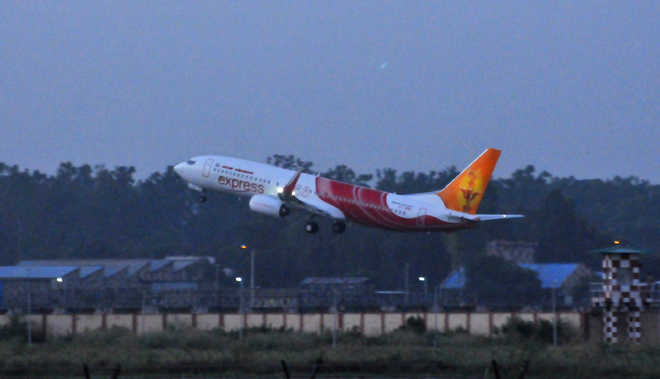
Personnel of the paramilitary forces deployed in the Kashmir valley for counter-terror operations have now been entitled to take commercial flights to either join duty or go on leave, in the wake of the killing of 40 jawans in a deadly attack on their convoy in Pulwama.

The Ministry of Home Affairs said it “has approved the entitlement of air travel on Delhi-Srinagar, Srinagar-Delhi, Jammu-Srinagar and Srinagar-Jammu sectors to all personnel of Central Armed Police Forces (CAPFs)”.

This includes, the order said, their journey for joining duty, transfer, tour or going on leave. The decision is expected to benefit personnel in the ranks of constable, head constable and assistant sub-inspector who were otherwise not eligible. Till now, officers in the rank of inspectors and above were given this air travel facility.

Officials said the facility is in addition to the existing air courier services for CAPFs where an entire aircraft is booked. The decision has been taken to help jawans cut down on travel time. — TNS/PTI