All posts by webadmin

Tributes paid to 1947 martyrs

Our Correspondent

Rajouri, April 12

People of Rajouri today paid homage to martyrs of 1947, killed fighting Pakistan intruders who had laid siege to the city from November 1947 to April 1948.The Pathans and Pakistan army and had captured many areas of Poonch and Rajouri districts.More than 20,000 people of the minority community, including women and children, had sacrificed their lives between November 1947 and April 13, 1948, while fighting the marauders to save their motherland.Residents of old Rajouri city every year organise a function at Balidan Bhavan to pay homage to the martyrs.“The survivors came out of their hiding places only when the Indian Army entered the town on April 13, 1948,” said Krishan Lal, an eyewitness of the 1947 massacre.Rajouri was 28 miles from the 19 Noushera Brigade Headquarters and the road was badly damaged. The enemy had planted mines under culverts to stop the movement of the Army.To chalk out a strategy for launching offensives, Lt Col Zorawar flew over the area along with a senior Engineering Officer who, according to Army records, had said: “Anyone who is thinking of advancing with tanks to Rajouri is in my opinion taking a great risk.”On April 13, 1948, at 10.30 am, the Indian Army had entered Rajouri town and liberated it from the clutches of Pakistanis.


Lieut Gen Balwant Negi visits Roorkee, Raiwala formations

Lieut Gen Balwant Negi visits Roorkee, Raiwala formations
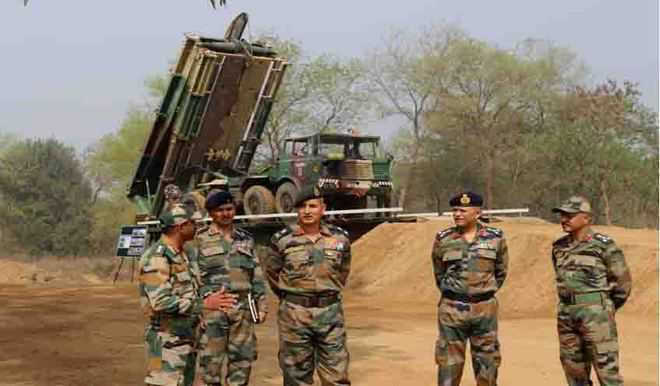
Lieut Gen Balwant Singh Negi, Army Commander, Central Command, with fellow officers, after witnessing an exercise at Purkazi, near Roorkee, on Wednesday. Tribune photo

Tribune News Service

Dehradun, March 2

Lieut Gen Balwant Singh Negi, Army Commander, Central Command, visited formations of Central Command at Roorkee and Raiwala today and witnessed combat engineering training undertaken by Surya Combat Sapper Formation at Purkazi.Lieut Gen Negi reviewed the collective training wherein all combat Sapper specialist units train together to hone their skills by physical execution on ground. He witnessed the complete range of multi-faceted training of mechanical mine breaching using trawl tanks, mechanical dry launch and wet bridging capable of sustained tank traffic and associated myriad activities.Lieut Gen Negi stressed the need to maintain the highest standards of operational preparedness. He commended the Sappers for their ‘josh’ and ‘hard work’ and exhorted them to uphold the glory of the Indian Army.At Roorkee, Lieut Gen Negi visited the Bengal Engineer Group and Centre where he was briefed about training activities, welfare measures for veterans and coordination and liaison of the centre with the civil authorities for internal security duty, including flood relief and response to anti-national elements. He held a windshield tour of the centre and saw the training infrastructure. He appreciated the modern infrastructure of the Hajipir Auditorium, Sainik Institute and the automated cook house for recruits at the centre.At the Raiwala military station, Lieut Gen Negi visited the Army formation. He was briefed on all aspects of operational readiness, training and welfare. He appreciated the cleanliness drive undertaken as part of the ‘Swachh Bharat campaign, yoga training for Army personnel in cooperation with Dev Sanskriti University and the efforts of the formation towards welfare of the veterans and veer naris in the region.Lieut Gen Negi also carried out an aerial reconnaissance of the areas of western Uttar Pradesh and Uttarakhand.


Key witnesses not produced, claims Pak JIT

Key witnesses not produced, claims Pak JIT
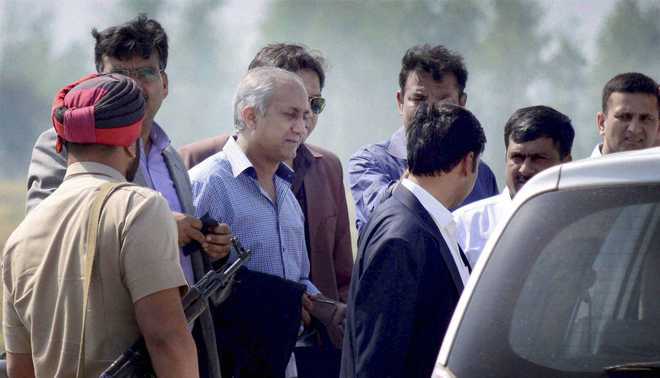
Pakistan JIT visits a spot near the Pathankot IAF base. PTI file photo

Islamabad/New Delhi, April 6

Pakistan tonight said India had not produced witnesses belonging to the security forces before its Joint Investigation Team (JIT) on the Pathankot terror attack.In its first statement after the JIT returned Pakistan following its visit to Pathankot and New Delhi, the Pakistan Foreign Ministry made no reference to media reports that claimed the attack was “stage-managed” by India.“The JIT visited the crime scene and also recorded the statements of some witnesses. However, the witnesses belonging to the Indian security forces were not produced before it,” said a statement.Meanwhile, NIA has approached probe agencies of some foreign countries, including the US’ FBI, in connection with its probe into the terror attack. Sources say their help is being sought to track cyber footprints left by JeM handlers. — PTI


Action on terror more important: India to Pak

Action on terror more important: India to Pak

Simran Sodhi

Tribune News Service

New Delhi, March 2

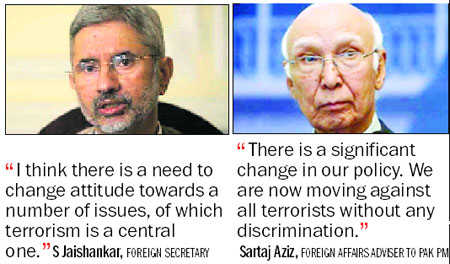
India today made it clear that action against terror by Pakistan would take priority over any diplomatic activity with it in the aftermath of the Pathankot airbase attack.This was stated today by Foreign Secretary S Jaishankar at the Raisina Dialogue in response to a question. “In the aftermath of a terror attack, if you ask me what do you give priority to, a terrorist attack or a diplomatic dialogue, I think the answer should be obvious,” he said.He said India had been saying for a while now that both India and Pakistan continued to be in touch, especially through the National Security Advisers (NSAs) since the Pathankot terror attack.India has blamed Pakistan-based Jaish-e-Mohammad (JeM) for the Pathankot strike and has handed over evidence to Pakistan to prove its case. It is also demanding action against the JeM leader Masood Azar. Pakistan has formed an SIT and promised action, but not much has happened in terms of real action on the ground.On the context of improving ties with Pakistan, he said India was for a “much more modern relationship” with Islamabad. “I think there was a need to have change in attitude towards a number of issues of which terrorism is a central one,” he said.“It takes two hands to clap and that India would like to have same kind of ties with Islamabad like with other neighbours. We need to remove obstacles which are coming in between India and Pakistan. Most people in this country want to treat Pakistan as a normal neighbour,” Jaishankar said.Meanwhile, in Washington DC, Sartaj Aziz, the foreign policy adviser to PM Nawaz Sharif said Pakistan was “anxiously awaiting” the FS talks between the two countries to take place.


Pak-backed terror will bite China: VK Singh

Gorakhpur, April 5

With Beijing scuttling India’s latest bid to have JeM chief Masood Azhar designated as a terrorist by the UN, Union Minister VK Singh has warned that the day is not far when China would have to pay a heavy price once it gets hit by Pakistan-backed terrorism.“The friendship between China and Pakistan appears to be very strong but the day is not far when China too gets affected by Pakistan-backed terrorism,” Singh, who is here to take part in a function at the Gorakhnath temple, told reporters last night.“When such a situation arises, China will have to pay a heavy price,” the Minister of State for External Affairs said, adding, “Pakistan has an important place in Chinese diplomacy…China’s intervention in that case must be seen in this context.” — PTI


Indian consulate in Afghanistan attacked, 4 militants killed All Indians safe, says MEA

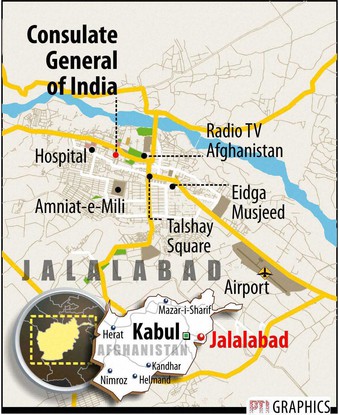
Afghan security personnel keep watch at the site of an attack in front of the Indian consulate in Jalalabad on March 2, 2016. — AFP

Jalalabad/New Delhi, March 2

India’s Consulate in Afghanistan’s Jalalabad city was attacked on Wednesday with a suicide bomber blowing himself up during the terror strike but all Indians at the mission were safe, Indian foreign office said.

One local staff sustained minor injuries in the attack, nearly two months after a similar assault was carried out by terrorists on the Indian mission in Mazar-i-Sharif in January.

“Indian Consulate in Jalalabad has been attacked. One suicide bomber blew himself up in front of the mission. All Indians in the mission are safe, while a local staff has sustained minor injuries,” External Affairs Ministry Spokesperson Vikas Swarup said in New Delhi.

The Indo-Tibetan Border Police (ITBP) fired after they detected some movement and gunfire near the consulate complex at about 1:30 pm IST, according to officials.

On January 3, heavily-armed terrorists carried out an attack on the Indian mission in Mazar-e-Sharif which lasted for over 25 hours with all the attackers who attempted to storm the building getting killed by the Afghan security forces.

Soon after that also in January, Islamic State jihadists claimed responsibility for a deadly gun and bomb siege targeting the nearby Pakistani consulate in Jalalabad.

Afghan forces have killed four militants involved in the attack. However, an exact number of attackers was not immediately known.

The combing operation is on after the attackers were killed, sources said.

No group has claimed responsibility for the attack. — PTI


Terror mastermind who inspired militants :::::::::::Arun Joshi

Masood Azhar, who indoctrinated a million militants, was freed by India in 1999. This is a reflection of the inertia in the system and a misreading of the national security situation. It also reveals the lack of a firm policy against terrorism and perpetrators of terrorism.

Terror mastermind who inspired militants
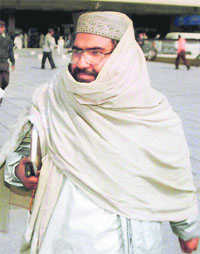
Maulana Masood Azhar. PTI

Before he founded the terror outfit, Jaish-e-Mohammad, Maulana Masood Azhar was a prisoner in the Kot Bhalwal jail in Jammu. On the night of December 30, 1999, mandarins from New Delhi, including the former RAW Chief  A.S. Dulat,  flew to Jammu to persuade the then Jammu and Kashmir chief minister  Farooq Abdullah to order Masood Azhar’s release.The soul of pan-Islamic militancy in South Asia, the urgency to secure his release was because Harkat-ul-Mujahadeen men, in connivance with  Lashkar-e-Toiba, an  off-shoot of  the Al-Qaida, had hijacked the Indian Airlines airbus IC 814  on its way from Kathmandu to Delhi. There was pressure on the NDA government, led by Atal Behari Vajpayee, to free Masood Azhar and two others, Mushtaq Zargar of Kashmir, and Ahmad Omar Sayeed Sheikh of Pakistan. Omar later killed Wall Street Journal’s South Asia Bureau Chief Daniel Pearl in Karachi.Twice  before Masood Azhar’s  men had attempted to   secure his release. In 1994,  it was done  by a group called Harkat-ul-Ansar. Two  Britishers, including the son of a British journalist based in Delhi, were kidnapped from the woods of Pahalgam. And, in July 1995, an hitherto  unknown group Al-Faran had kidnapped six foreigners from Aaroo on the upper reaches  Pahalgam  in South Kashmir. The demand in both the cases was for the release of Azhar Masood. The Indian Airlines plane was hijacked in December 1999 to achieve the same objective. On the night of December 30, Farooq Abdullah had refused to release Azhar but yielded after pressure from Delhi, especially from the then Union Home Minister  L K Advani and Foreign Minister Jaswant Singh.Incidentally, Masood Azhar’s arrest in 1994 was accidental. He was caught  while travelling in an autorickshaw in Anantnag. Why was Azhar so important for the  militant groups and the ISI  that had sent him to Jammu and Kashmir on a fake Portuguese passport?   Radha Vinod Raju, a brilliant investigator and founder of the NIA, the then Inspector General of Police, Jammu, explained,  “Azhar is a strategic asset for Pakistan’s ISI. They can afford to get any number of militants killed, but they need someone who can motivate the young to pick up guns to kill or die. They are cannon fodder. He is an ideologue. That’s the difference.” Before ordering the release of Azhar,  the  chief minister who had taken a similar stand against the release of Jammu and Kashmir Liberation Front  men  to secure the release of  then Union Home Minister Mufti Mohammad Sayeed’s youngest daughter  Rubaiya Sayeed, had warned of big trouble once Azhar was released. Delhi  did not heed the advice. The impression was that Farooq Abdullah was not interested in saving  the lives of crew and passengers of the hijacked aircraft parked in Kandahar, the capital of Taliban  in Afghanistan .Azhar had founded Jaish-e-Mohammad when he reached  Pakistan soon after his release. He was the mastermind of many terror attacks, including the one on the Indian Parliament on December 13, 2001. After the attack on the Pathankot Air Force base,  there is a  sudden urgency in  getting the custody  of the Jaish-e-Mohammad chief. This is necessitated by the national security and foreign policy imperatives. The Indian establishment is haunted by the fear that the idea of Masood Azhar could spell more disasters. A terror group that could reach a high-value asset like the Air Force base, is capable of doing anything. Now China too has come to the aid of Pakistan.  China has blocked the Indian  request to declare Azhar as a terrorist so that UN sanctions can be  imposed on him. But the Chinese  Permanent Representative at the U N  Liu Jieyi  said that Azhar did not qualify as a terrorist. Though in reel-life, getting Masood Azhar like Hafiz Sayeed  could be the storyline of a Bollywood thriller, in reality untold damage  has been done. It is a classic case of the  flip-flop policy of the government. At the time of Masood’s  release, India secured the release of  165 crew members and  passengers of the hijacked plane. There is no count of the many more who have been killed in the attacks sponsored by Jaish-e-Mohammad since the release. He was on trial in a Jammu court, but he could not be convicted. Instead, men who escorted him  to  the court, believed that he had spiritual powers and asked him for a taweez (amulet)  to guard against evil spirits and help to solve their domestic and professional  problems. Such was the aura of Masood Azhar among his jail mates  and others .Without going into details about how the Indian system succumbed to the hysterical images of the relatives and friends of the captive passengers flashed by TV channels, the fact is that  even if the terror mastermind is handed over to India — which in any case would never happen — there is no guarantee that the Indian leadership and bureaucratic system will not repeat the mistake as they had done on December 31, 1999.  On the eve of the millennium In India, there were celebrations over the release of a man who had motivated militants. Can there be a more tragic  story  than this?

ajoshi57@gmail.com


Misuse of Army uniform:: Letters to the Editor

During its recent deployment in Haryana, the Army was constrained to carry placards to identify itself since all Central Armed Police Forces (CASF) wear army-like uniforms, virtually making it indistinguishable from the others. The Army is the last pillar of state authority and it must inspire respect and awe in the citizens and fear in the enemies/rioters. If the CASF and others dress like the army, the latter loses its identity and with it this vital element of awe and fear.  The Army authorities must convince the central government to prohibit wearing of the army-like uniforms by the others. Even the Indian Penal Code makes wearing army-like uniforms a criminal offence.

photo (1)

Brig Harwant Singh (Retd), Mohali

PUBLISHED Today 27 Feb in The Tribune


brig haewant


MOD panel frowns on increase in awarding maintenance allowance to wives in military

The panel, in its report, has criticised the defence services for passing such orders in, essentially, what are private matrimonial disputes. – Ministry of Defence, MOD panel, indian army, army allowance, salary army, indian navy, indian air force, wives of military officers, army families, defence minister, manohar parrikar, indian express, india news

The Army, Navy and the Air Force Acts provide that the competent authority can impose a cut upto 33 per cent on pay and allowances which can be paid to the wife as maintenance on her application.

A panel of experts of the Ministry of Defence (MoD) has slammed the defence services for passing orders granting maintenance allowance to wives of military personnel from their salaries, especially in Army, without due investigation and scrutiny.

The panel, in its report, has criticised the defence services for passing such orders in, essentially, what are private matrimonial disputes. The Army, Navy and the Air Force Acts provide that the competent authority can impose a cut upto 33 per cent on pay and allowances which can be paid to the wife as maintenance on her application. With growing matrimonial disputes, the number of such applications has increased in the last few years especially with the Army granting maintenance to the spouses on almost all applications through non-speaking orders without providing reasons.

An expert committee constituted by the Defence Minister on litigation has however observed that the exceptional provisions are being invoked in a routine manner by defence authorities. It has also found that the system does not have the wherewithal or ability to examine the veracity or truthfulness of the allegations and counter-allegations of both parties which is basically a matter of evidence that can only be weighed and dealt with by civil courts under law legislated for this specific purpose. The panel has said that this exercise can only be carried out under Section 125 of the Criminal Procedure Code and the relevant Marriage Acts, rather than the defence services getting into what may fundamentally be a civil or private dispute between a husband and his wife. The panel has also observed that even the Army HQ has expressed concern on the issue and that maintenance is meant to tide over a difficult financial situation and not to lead life on someone else’s expense. It has recorded that the award of maintenance results in grave civil consequences for an individual wherein a cut is imposed on his pay and should be taken as a serious matter and not routine. Moreover, it may not be initiated on the fact whether the spouse is working or not but whether she has the capacity to work or not, further adding that a situation cannot be allowed to prevail wherein an otherwise qualified/educated spouse stops working or refuses to take up a job in order to claim maintenance. The Panel has stated that though defence personnel have a bounden duty to maintain their families, such issues should be left to Courts to decide based on evidence. Surprised at the acceptance of an unusually high number of applications by the Army, the committee has questioned, “does it mean that it was found that out of the total applications received, such a high percentage of officers were found wanting in their familial and marital obligations? If yes, then what were the tools available to reach that conclusion?” There has been a rise of litigation on the subject in the past. Recently, a Lt Col had averred that his wife held a Doctorate and also working in a real estate firm but still was awarded maintenance by the Army. Another officer had stated that his wife had a degree of MSc as well as BEd and was earning a huge amount from tuitions and he had elderly parents to look after but still deduction of arrears of maintenance had resulted in disbursement of more than Rs 30,000 to the wife per month while he was being disbursed a amount of just Rs 6000. Another serving Colonel had stated that was being expected put his earnings at the disposal of his wife who was fully qualified and competent to work and was actually working.


Pay Commission Award Not To Be Implemented Before OROP

New Delhi: The Seventh Pay Commission award becomes boon for central government employees, is not going to be implemented before the implementation of One Rank One Pension (OROP).

Finance Minister Arun Jaitley had earlier said financing the additional amount would not be a problem to implement the Seventh Pay Commission award.

According to a Finance Ministry official concerned, the Empowered Committee of Secretaries (CoS) for processing the report of the Seventh Central Pay Commission, is taking time to let the notification of One Rank One Pension (OROP) be executed first.

He added the notification of One Rank One Pension (OROP) was issued on November 08, while notification of the Seventh Pay Commission yet to be issued and ex-servicemen are pressing hard to implement OROP with some modifications.

Accordingly, the Seventh Pay Commission recommendations will not be implemented until One Rank One Pension (OROP) is implemented.

“The Empowered Committee of Secretaries (CoS) will sit soon to talk about review of the Seventh Pay Commission recommendations,” the official added.

Besides, hike minimum pay From Rs 18,000, rejection of Pay Commission’s recommendation for abolition of some allowances and advances and amendment to service rules is required, the official said. “For this reason also, time is needed.”

Finance Ministry sources said if the government followed the Seventh Pay Commission’s salaries and allowances revision proposals, expenditures would rise Rs 1.02 lakh crore in 2016.

Finance Minister Arun Jaitley had earlier said financing the additional amount would not be a problem to implement the Seventh Pay Commission award.

The thirteen-member Empowered Committee of Secretaries (CoS), led by Cabinet Secretary P K Sinha, was formed on Wednesday.

The twelve other members of the committee are the Finance Secretary, DoPT Secretary, Pension Secretary, Home Secretary, Defence Secretary, Revenue Secretary, Posts Secretary, Health Secretary, Science & Technology Secretary, Railway Board Chairman, Deputy Comptroller & Auditor General and Secretary (Security), Cabinet Secretariat.

In addition to reviewing the pay hike proposals for central government employees, the Empowered Committee of Secretaries will also looking after the pay hikes for the armed forces.

The Seventh Pay Commission, led by Justice A K Mathur submitted its proposals to the Finance Minister Arun Jaitley on November 19 last year, recommending 23.55 per cent pay hike of central government employees, health insurance insurance scheme for staff and pensioners and doubling the gratuity ceiling to Rs 20 lakh.

The highest salary of Rs 2.5 lakh was recommended for the cabinet secretary; currently his basic monthly pay is Rs 90,000.

The government plans to implement the hikes pay from January this year. The Seventh Pay Commission was set up by the UPA government in February 2014.

Currently, there are over 48 Lakh central government employees and 52 lakh pensioners.