All posts by webadmin

India joins elite missile tech group

Simran Sodhi

Tribune News Service

New Delhi, June 7

India was today admitted into the Missile Technology Control Regime (MTCR) even as Prime Minister Narendra Modi met US President Barack Obama in Washington DC. The meeting lasted about an hour and both leaders reaffirmed their commitment to cooperation in matters such as climate change. The US reiterated its support for India’s entry into the Nuclear Suppliers Group (NSG). There were no big announcements. Both leaders have shared a personal rapport and as Obama demits office in five months from now, the idea behind the Modi visit is to consolidate the gains and to keep working. Modi thanked Obama, whom he referred to as a close friend, for the US support on the Missile Control Group and the NSG. Obama said they had discussed regional security and nuclear cooperation. From the US perspective, getting India to agree on the climate change deal is a priority. That is a part of the legacy Obama wants to leave behind. Indications are that India has agreed to go along with the US on climate change with Modi stating, “Hope we will be able to realise our dream of climate justice.”After the Obama-Modi meeting, the White House said: “Both countries are committed to working together and with others to promote full implementation of the Paris Agreement to address the urgent threats posed by climate change.” Admission into the MTCR brings India closer to membership in the NSG. According to sources familiar with the developments, India is pitching efforts to make sure that when its membership comes up for discussion at the plenary meeting of the NSG in Seoul later this month, it makes through. Sources say to achieve this, India has assigned senior diplomats to countries such as Ireland which are hostile to India’s entry into the NSG. They say the Indian strategy is to isolate China in the process. China has held that since India is a non-signatory to the NPT (Non-Proliferation Treaty), it should not be given NSG membership. The MTCR membership would also make it possible for India to buy the state-of-the-art surveillance drones, such as the US predator. Meanwhile, the US Deputy National Security Adviser Benjamin Rhodes, speaking in Washington today, indicated that the US would support India in its bid for NSG inclusion.

The significance of it

  • The Missile Technology Control Regime (MTCR) is one of four international non-proliferation regimes
  • Membership of the MTCR would require India to comply with rules, such as a maximum missile range of 300 km (186 miles)
  • The group was set up in 1987 to limit the spread of unmanned systems capable of delivering weapons of mass destruction
  • New Delhi has also applied for membership of Nuclear Suppliers Group (NSG), a 48-nation club that governs trade in commercial nuclear technology
  • With China opposing India, NSG membership will bemore difficult


DRDO claims breakthrough in using solar energy for heating at night

DRDO claims breakthrough in using solar energy for heating at night

Vijay Mohan

Tribune News Service

Chandigarh, June 1

The Defence Research and Development Organisation (DRDO) has claimed to have made a breakthrough in developing technology for utilising solar heat harnessed during the day for heating rooms during the night at extreme altitude.The Defence Institute of High Altitude Research (DIHAR), a DRDO laboratory based at Leh, has developed a shelter for troops that uses non-conventional energy for heating, instead of fossil fuel. The shelter, costing about Rs 60 lakh, was tested through the winter at Chang La, located at 17,600 feet in Ladakh, with temperature as low as minus 40°C. The DRDO established the world’s highest research station there last year.Scientists at DIHAR said while solar energy could be harnessed and stored in batteries for later use, the same is not applicable for solar heat and conventionally solar heat can be used only while the sun is shining. Claimed to be the only kind of shelter, it utilises phase change materials (converting solid to liquid and liquid to solid on change of temperature, thereby releasing heat) to store thermal energy collected from evacuated tube solar collectors. It has a greenhouse based thermal trap area over the roof and utilises greenhouse concept for creating a tunnelling effect to trap solar heat in the shelter.“The shelter maintained a temperature of 7-10°C when the ambient temperature stood around minus 30°C. Other shelters in similar conditions have temperature of minus 10-15°C,” a DIHAR scientist said. “However, there is a need to operate a diesel generator for six hours during the peak winter months (January and February) when the temperature falls below minus 30°C,” he said.At present, the Army uses “bhukaris” and generator-run electrical appliance to heat spaces like barracks and bunkers in Ladakh as well as the North-East, consuming lakhs of litres of kerosene and diesel every year. The non-conventional energy shelter would be environmentally beneficial in ecologically sensitive areas, besides generating carbon credits.

Tech to make troops’ shelters cosy

  • It utilises phase-change materials (converting solid to liquid and liquid to solid on change of temperature, thereby releasing heat) to store thermal energy
  • It has a thermal trap area over the roof that utilises greenhouse concept for creating a tunnelling effect to trap solar heat in the shelters for the troops

Visit of Indian Warships to Subic Bay, Philippines

In a demonstration of India’s ‘Act East’ policy and Indian Navy’s increasing footprint and operational reach, Indian Naval Ships Sahyadri and Shakti have arrived at Subic Bay on a three day visit, as part of deployment of the Eastern Fleet to the South China Sea and Western Pacific.

During the visit, the IN ships will have professional interaction with the Philippine Navy towards further enhancing co-operation between the two forces. In addition, calls on senior Government and military authorities, sporting and cultural interactions and sharing of best practices, aimed at strengthening ties and mutual understanding between the two Navies, are also planned. The visiting IN ships are also likely to conduct exercises with the Philippine Navy, aimed at enhancing interoperability in communication as well as Search and Rescue procedures, post departure from Subic Bay. INS Sahyadri is commanded by Captain K S Rajkumar and INS Shakti is commanded by Captain Gagan Kaushal.

    Bilateral relations between India and Philippines are characterised by strong bonds of friendship based on cultural and economic ties dating back to 7th Century AD. Indian cultural influence reached the Philippines indirectly via the two great Indo-Malayan empires, the Sri Vijaya Empire based at Sumatra and Majapahit Empire of Java, which traded with Philippines. Bilateral relations between the countries received a fresh impetus since the initiation of ASEAN-India Summit level partnership and establishment of East Asia Summit, of which India is a founding member. These annual summits have provided an excellent platform for regular meetings between leaders of both countries, the most recent being in November 2015, at Nay Pyi Taw, Myanmar where Hon’ble Prime Minister Shri Narendra Modi had a bilateral meeting with the Philippine President. Bilateral trade between the nations stands at US $ 1.6 billion and India has substantial investments in Philippines in the fields of textiles, garments, IT, BPO, steel, Airport and pharmaceuticals.

    The Navies of both countries have been interacting with each other regularly through port visits. The last visit by an IN ship to Philippines was in October 2015, when Sahyadri berthed at Manila. The Philippines-India Joint Defence Cooperation Committee has been set up to enhance defence cooperation between the countries and has widened the scope of defence cooperation to include non-traditional threats as well.

    The current visit seeks to enhance maritime cooperation between the Indian Navy and the Philippine Navy. It will further bolster the strong bonds of friendship between India and Philippines  and  contribute   to  security  and  stability in this vital part of the world.


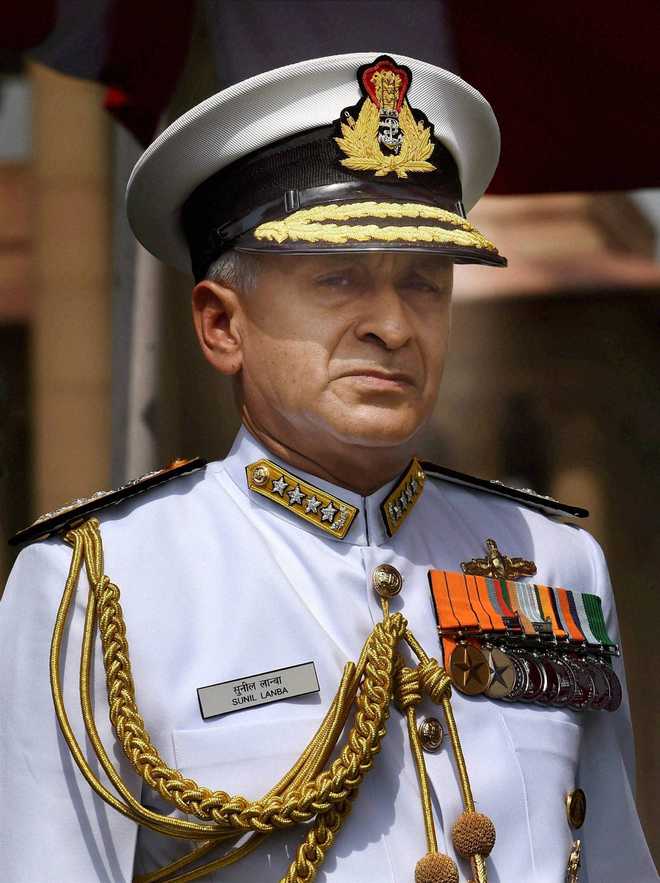
Sunil Lanba takes over as naval chief

Sunil Lanba takes over as naval chief
Admiral Sunil Lanba at South Block before taking over as the new Indian Navy chief, in New Delhi on Tuesday. PTI

New Delhi, May 31

Admiral Sunil Lanba takes charge as the new Chief of the Naval Staff

He replaces Admiral RK Dhowan, who retired on Tuesday.

Vice-Admiral Lanba was commissioned in 1978 into the Executive Branch of the Navy. He served as Vice-Chief, headed the Southern Naval command and the National Defence College. He has commanded minesweeper INS Kakinada, frigate INS Himgiri and has been the Executive Officer of INS Viraat. — Agencies/ TNS


2 Army officers among 16 dead in fire at ammo dump

Tribune News Service

New Delhi, May 31

In a major tragedy, 16 people, including two Army officers, were killed when a massive fire broke out at the Central Ammunition Depot in Pulgaon (Wardha), near Nagpur, in Maharashtra around 1.30 am on Tuesday. The fire was followed by multiple explosions.

Later, an inquiry was ordered into the incident.

The fire started in one of the explosives stores. A Defence spokesperson said there were 16 fatalities, including two officers, Lt Col RS Pawar and Maj K Manoj. The other dead were an Army jawan and 13 civilian firefighters.

As many as 25 people have been admitted to a hospital ICU.

The fire has been brought under control, but not before extensive damage. However, secondary explosions are still feared and precautionary measures are being taken.

The depot stores artillery ammunition, which is deadly. Small arms and mortars are also stored there.

(Follow The Tribune on Facebook; and Twitter @thetribunechd)

Defence Minister Manohar Parrikar and Army Chief General Dalbir Singh Suhag have dashed off to Pulgaon to make a spot assessment of the damage caused by the explosions.

“According to my information, the fire is now under control,” Maharashtra Chief Minister Devendra Fadnavis said on Tuesday. “It is an unfortunate incident. We have suffered a huge loss of lives and property. I have directed district officials to help whatever help they can. We are providing whatever assistance and resources—primarily medical assistance—required.”

“I pray that those who are injured recover quickly. I have asked Defence Minister Manohar Parrikar to visit the spot and take stock of the situation,” Prime Minister Narendra Modi said.

Later, Director General of Military Operations, Lt Gen Ranbir Singh, said the fire started in a shed that held “highly sensitive ammunition” and was restricted to that shed only.

Lt Gen Singh said the cause of the fire had not been ascertained yet. They were trying to assess the damage and an inquiry had been ordered, he added.

He said that among the dead were an Army jawan and 13 civilian firefighters, and not the DSC jawans as reported earlier.

The injured have been admitted to the multispecialty hospital at Wardha and a team of Army doctors has been sent from Pune. He refused to answer a question on the monetary loss caused by the fire. (With inputs from agencies)


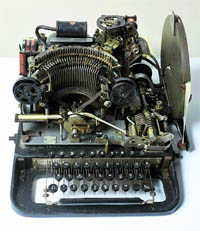
Secret WW-II Hitler code machine sells for £10!

Secret WW-II Hitler code machine sells for £10!
Big find: The WW-II machine

London, May 29

A World War II-era machine used to send personal messages between Hitler and his generals by encrypting plain German text into secret code has been found on eBay for 9.50 pounds!Volunteers from the UK’s National Museum of Computing at Bletchley Park used eBay to track down the historic teleprinter for the Lorenz cipher machine languishing in a shed in Essex.It was advertised as a telegram machine and was for sale for 9.50 pounds. “My colleague was scanning eBay and he saw a photograph of what seemed to be the teleprinter,” said John Wetter, a volunteer at the museum in Buckinghamshire.He then went to Southend to investigate further where he found the keyboard being kept, in its original case, on the floor of a shed “with rubbish all over it”.“We said ‘Thank you very much, how much was it again?’ She said ‘£9.50’, so we said ‘Here’s a £10 note – keep the change!’” the BBC reported today, quoting Wetter.The teleprinter, which resembles a typewriter, would have been used to enter plain messages in German. These were then encrypted by a linked cipher machine, using 12 individual wheels with multiple settings on each, to make up the code.The museum has just received one on loan from Norway’s Armed Forces Museum, and has a video of how top secret transmissions might have sounded. When volunteers took the teleprinter back from Essex to the museum, they found it was stamped with the official wartime number from the German army that matches the one on the machine from Norway.Andy Clark, chairman of the trustees at The National Museum of Computing, said the Lorenz was stationed in secure locations as “it was far bigger than the famous portable Enigma machine”.“Everybody knows about Enigma, but the Lorenz machine was used for strategic communications,” said Clark. “It is so much more complicated than the Enigma machine and, after the war, machines of the same style remained in use.” Volunteers are hoping to recreate the whole process on June 3, from typing a message in German to cracking the code using wartime equipment.“This gives us the chance to show the breaking of the Lorenz cipher code from start to finish,” said Clark.  — PTI


Indo-Pak border talks likely in Lahore in July

New Delhi, May 26Border guarding forces of India and Pakistan are expected to hold their bi-annual DG-level talks on issues related to ceasefire violations, infiltration and digging of illegal tunnels along the International Border in July in Lahore.The last such meeting between the Border Security Force and Pakistan Rangers was held in the national capital in September last year.While the forces have mutually agreed to hold the talks between July 21 and 24 at the Rangers’ headquarters in Lahore sources said, a final call on travel will only be taken by the governments of the two countries.The proposed visit of an NIA team to Pakistan to probe the Pathankot terror attack is awaiting Islamabad’s approval.A Joint Investigation Team (JIT) from Pakistan had visited Pathankot early this year.Sources indicated a positive movement on NIA’s proposed visit could pave the way for the BSF-Rangers meeting.Officials said though the IB has been “relatively less volatile” in nearly eight months since the last meeting between the two forces compared to the frequent ceasefire violations in Jammu and Kashmir in the early 2015, infiltration and drugs smuggling continue to be a matter of concern.They said the bi-annual meeting between the two border guarding forces has been already delayed due to a number of bilateral issues.The Indian side will also raise issues related to smuggling of arms, contraband items and detection of illegal tunnels running across the IB.”The agenda for the proposed talks is in the making,” they said.The last time the two sides had met in Delhi it was decided not to fire heavy artillery like mortar shells and ensure that civilians living along the IB were not harmed.The two forces had also decided that their officials, right up to the level of Directors General, will exchange mobile numbers, email ids and fax numbers for swift communication to resolve disputes on the IB running through Indian states of Jammu and Kashmit, Punjab, Rajasthan and Gujarat.The DG-level talks between the two sides are a bi-annual affair but many a time these meetings have not taken place due to strain in relations.The last time BSF travelled to Pakistan for these talks was in December 2013. — PTI


Old route from Nelong valley not opened after 1962 war

Old route from Nelong valley not opened after 1962 war
The Gartang Galion bridge in the Nelong valley in Uttarkashi that Bhotia tribesmen used to go to Tibet for trade. Photo courtesy: Tilak Soni

Ajay Ramola

Tribune News Service

Mussoorie, May 22

Uttarkashi district, besides being a famous centre of religious learning of the Hindus since ancient times, was also known for the trade route to Tibet. The first big market ‘Bada Haat’ used by Indian traders for selling Chinese goods was established here. The trade from the district  was completely stopped after the war with China in 1962 and was not resumed in 1992 when it was restarted from the Lipulekh pass.A big trade market fair was held at ‘Bada Haat’ every year where Bhotia tribesmen from the district brought different kinds of goods from Tibet to be sold during the fair held in January. The Bhotia tribes lived in villages of the Jadung and Nelong valleys. They used to trade at ‘Bada Haat’ in Uttarkashi and exchange goods according to their requirements. The festival is still held in Uttarkashi but the trade with Tibet has discontinued since the Chinese aggression in 1962.The remnants of the border trade can be seen in the expansive Nelong valley, a cold desert like landscape similar to Ladakh situated at an altitude of around 11,000 feet. It falls under the Gangotri National Park in Uttarkashi district. Many structures related to the old trade route, including a wooden bridge known as Gartang Galion and the Lal Devta temple, where the trading Bhotia tribe used to offer prayers before crossing over to Tibet, still exist in the area.The infrastructure that was developed in those days suggests that the trade with Tibet was the mainstay of the local economy, say old residents of Uttarkashi.Sheep and goats and products made out of their skins such as socks and warm clothes were an essential part of the trade.Agricultural implements, tobacco, snuff, blankets, tea, coffee, barely, rice, spices, copper products, indigenous medicines, salt etc were traded by Bhotia traders on the basis of the barter system. The women of this tribe were good weavers of carpets, blankets and woollen clothes and were known to sell clothes made of yak wool and skins.The Bhotias with Mongoloid features are good climbers and can reach high altitudes with ease. Their keen sense of direction helps them in the trade considering the difficult Himalayan terrain. The Bhotias are found in the districts of Almora, Chamoli, Pithoragarh and Uttarkashi and the trade with China flourished through the routes in these districts. Rang Bhotias are subdivided into Byanse, Darmi and Chaudensi. Rang and Johari Bhotias belong to Pithoragarh district while Tolcha and Marcha Bhotias are from Chamoli district. Jad Bhotias, who mostly lived in Uttarkashi district, used to go to Tibet for the trade through passes in the Jadung and Nelong valleys. Besides trade, they had cultural and religious links with Tibet.Jad Bhotias involved in the trade followed the main Jad river upstream passing through two camping spots of grazers, namely Hilding and then Do-Sumdo. They then reached the Thaga pass that forms one of the important corners of the Bhot Pradesh triangle. The traders following the path right from Do-Sumdo via Tirpani reached the Himalayan border at the Jelu Khaga pass. From here, they crossed into Tibet and reached Chhabrang Zong, which was the first Tibetan trading centre on the route. Another centre Tholing is 10 km northeast and serves as an important trade junction from where several other trade routes lead to western Tibet.The places such as Nelong, Naga, Neela Pani and Sonam in the district developed into flourishing trading stopovers. The ban on the trade with Tibet had badly affected the local economy, especially of the Bhotia community. The trade with China from Uttarkashi completely stopped though it is continuing from Pithoragarh in the Kumaon region.Uttarkashi residents say neither the state government nor the Union government has made any efforts to resume the trade with China from the district. On the contrary, the government has restricted the movement of Indian and foreign tourists by introducing an inner line permit clause. Indian tourists have to seek several permissions to enter the Nelong Valley while foreign tourists cannot go there.Ajai Puri, president of the Uttarkashi Hotel Association, says it is preposterous that while we are inviting Chinese entrepreneurs to invest under the Make in India programme, the Central government has not worked towards resuming the trade with China through the district and not allowed the movement of people. He says the trading community demands opening of trade routes to Tibet and mainland China so that the nation and local people could benefit.


Restricted area clause affects tourism in Uttarkashi district

Ajay Ramola

Tribune News Service

Mussoorie, May 22

The archaic Inner Line and restricted areas clause that was imposed in the region above Harsil and Nelong Valley in Uttarkashi district following the Chinese aggression in 1962 is affecting Uttarakhand tourism. At the same time, it is benefiting neighbouring Himachal Pradesh, say local businessmen.The restricted area clause does not define clearly as where the tourists, especially foreigners, can venture into leading a lot of inconvenience to the administration and the tourists.The Inner Line permit is required above the Harsil region but there is no check post established to stop tourists, especially foreigners, going to the region right up to Gangotri. Foreigners are seen staying overnight at Dharali, Bharon Ghati and other destinations right up to Gangotri.Indian tourists have to obtain a permit for the Nelong valley, which is completely out of bounds for foreign tourists. Foreigners due to such an ambiguity prefer Himachal Pradesh instead which allows an easy access to its tourist spots on the border with China.An Inner Line Border Permit required for trekking is easily provided in Himachal Pradesh to trekkers who want to walk through from Chitkul village in Himachal to Harsil while they find it difficult to obtain the permit from Uttarkashi for the same trek, said Tilak Soni, an adventure tour operator running a firm Where Eagles Dare.The presence of Gangotri National Park means the Indian tourists have to apply for special wildlife permit apart from inner line security permit to visit Nelong Valley. Gangotri National Park officials do provide access to the area till 23 km beyond the first recognised check post in the Nelong valley, which does not serve the purpose as they are asked to return the same day which is not possible in such a terrain.Lokendar Bisht, BJP state member of the working committee, said he had met the Union State Minister for Home Kiran Rijjiu during his visit to Uttarkashi and raised the issue.Rijiju had asked the district administration to send a proposal in this regard via state government. Uttarkashi District Magistrate Ashok Kumar Pandey said the process of seeking an inner line permit for the Nelong valley should be streamlined and converted into a single-window system as tourists have to seek permission from various departments.Pandey recommended the removal of the inner line permit clause from Harsil Market and 50 km area around it right up to Wilson Cottage.

Tibet border trade lifeline of tribal economy

British developed nomadic business through high Niti and Mana passes to keep an eye on expanding Russian influence
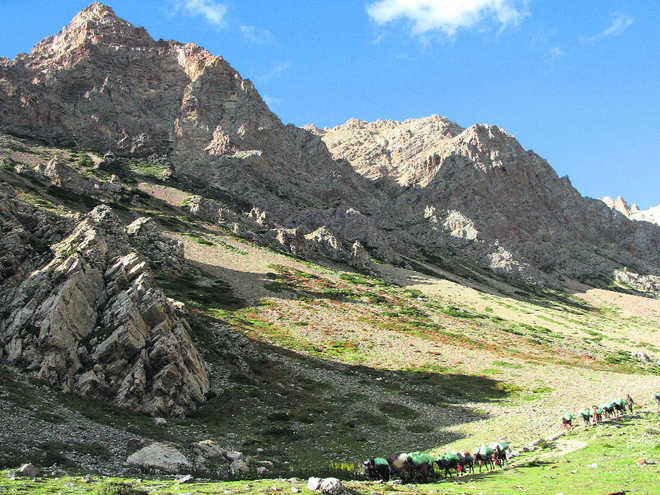
Tibet border trade lifeline of tribal economy
Indian traders along with mules carrying goods coming from Taklakot in Tibet after taking part in the trade. Photo courtesy: Keshav Bhatt

BD Kasniyal

Pithoragarh, May 22

The British in the Kumaon region became aware of the traditional trade between people living in Indian border villages and those in Tibet through several high Himalayan passes after a Jesuit missionary, Father Antonio de Andrade, visited the Tibetan mart of Tsaprang through the Niti pass in Garhwal in 1624. Father Andrade mentioned that the Niti and Mana passes were well-known trade routes to Tibet in those days.Another British settlement officer of Garhwal in 1896 also mentioned that the trade with Tibet was an important source of income and local employment in the border districts of the Kumaon and Garhwal regions in those days. According to him, the trade also provided a market for local produce of the region as well. The British, considering the significance of the border trade,  later secured the easiest way to Tibet through these regions so that the trade could prosper.According to experts, the Tibet border trade was in vogue even in the third century BC. Edwin T. Atkinson in his gazetteer has mentioned that there was an ancient route from Patliputra to Taxila via Kalsi in the third century BC. According to the historian, borax for the use of goldsmiths of northern India was imported from Tibet in the 6th century AD. Borax was used in making ink to write on birch bark or locally made hand paper. “Pearls, corals and glass beads were exported to Tibet in exchange for borax import in those days,” says Dr Lalit Pant, researcher on the border trade.The British were fully convinced that it was only through these passes to Tibet from the Kumaon and Garhwal regions that they could keep an eye on  advancing Russians. They decided to develop the trade with Tibet via these passes and sent Francis Young Husband with five other officers and 100 troops to Tibet in 1903 to facilitate mobility of Indian traders to the neighbouring country for the trade. “Even a survey was done for laying a railway line from Pilibhit to Tanakpur that was to be further connected with the Lipulekh pass via a road,” says Pant. The border trade with Tibet through high Himalayan valleys in Uttarakhand used to commence through the Byans, Chaundas, Garbyang, Darma and Johar passes in Pithoragarh district and the Niti pass and Mana pass in Chamoli district. “The significant passes of Lipulekh (16,500 ft), Darma (18,550 ft), Limpia (18,150 ft), Kungri Bingri (18,300 ft), Unta Dhura (17,950 ft), Mana (17,590 ft) and Niti (16,600 ft) were used for the trade with Tibet,” say experts.Dr RS Tolia, former Chief Secretary and a local from the Johar valley in Pithoragarh district, says the British in the early nineteenth century were fully convinced that the trade with Tibet sustained agriculture, animal husbandry, cottage and pharmacology industry in the lower valleys of Kumaon and Garhwal and generated employment for thousands of people. He adds cereals and grains of coarse varieties were the main exports to Tibet while salt, borax, wool, valuable stones and herbs were the main imports before the trade closed in 1962 following the war with China. “Charles W Sherring, the British commissioner in 1906, has mentioned that a trade worth 67,000 British pounds was commissioned from the Kumaon region alone,” says Tolia.Goods worth Rs 86,000, including raw wool Pasham, yak tail, sheep and goats and borax, were imported from Tibet in the first year of the resumption of the trade in 1992 while Indian traders exported Rs 12.06 lakh worth of textile, coffee, vegetables, jaggery, mishri (sugar candy) and Phaphar flour to Tibet, says HC Semwal, District Magistrate, Pithoragarh.Tea sipping, broken stone pieces matter of mutual trustThe traditional trade between Indian traders and their counterparts in Tibet was done on the basis of the ‘Gamgya’ system that was based on mutual faith. The system was established when the traders from both countries met during a small ceremony called ‘Suljimulji’ where a small cup of tea or wine was brought in. The first sip of tea or wine was taken by a Tibetan trader called ‘Mushye’ while the Indian trader called ‘Mitra’ had the second sip. After the tea-sipping ceremony, a few precious gifts were exchanged between the two. Later, an ordinary stone was broken into two parts. While the Tibetan trader kept the one part of the broken stone, the other part remained with his Indian partner,” says Dr Lalit Pant, an expert on the border trade.Pant says in later years, the representatives of the two traders or their generations were recognised by these stone parts. If the two parts fitted well, the identity of the representatives was established and the two would begin trading with each other. “The trading on the basis of this system between tribal Sauka and Rang traders and their counterparts in Tibet continued for centuries till 1962,” he adds.Pant says besides the ‘Mushye’ traders in Tibet, Dokpa nomads were the other important participants in the trade before 1962. The Dokpa nomads lived in the interior parts of Tibet with their herds of animals and visited the Taklakot mart for the trade. “These Dokpas used to exchange their raw material, including wool, with grains brought by Indian traders during the trading season. As the Dokpa traders would come with herds of animals, they were not allowed entry into the Indian mart at Gunji.  A mart was set up at Gunji in the Indian side after the trade resumed in 1992,” says Pant.HC Semwal, District Magistrate, Pithoragarh, says the activities for the border trade begins in May when trade passes are sought from the Indian Ministry of External Affairs and issued to the traders. The traders are provided space in a mart where they store their goods and bank facilities at Gunji till the trade concludes in the last week of October. The ITBP provides them security till they cross over to Tibet from the Lipulekh pass.


IAF choppers douse forest fire near Vaishno Devi

short by Bhavika Bhuwalka / 10:08 am on 19 May 2016,Thursday
A “massive” forest fire broke out close to the Mata Vaishno Devi shrine on Trikuta hills, near Jammu on Wednesday, following which the Indian Air Force pressed into service two MI-17 helicopters to douse the blaze. Around 15,000 to 20,000 litres of water were reportedly used to control the fire. Notably, no loss of life or property was reported.

Site for Army ammo depot identified

Kuldeep Chauhan

Tribune News Service

Shimla, May 20

The protracted dispute over the relocation of the Army’s ammunition depot at Powari in Kinnaur between Himachal Power Corporation Ltd (HPCL) and the Army seems to have ended as the Kinnaur district administration has selected about 300 acres near Sasho in Pooh subdivision for the purpose.“We have selected the land near Sasho in Pooh, upstream from the Powari site. The joint inspection of the land was carried out by the district administration and the Army recently,” Kinnaur Deputy Commissioner Naresh Lath told The Tribune. “The Army authorities have expressed satisfaction over the site and we hope that the site will fit the bill,” he added.The Army had demanded about 600 acres to relocate its ammunition depot from Powari, which faces eviction due to the 450 MW Karcham-Wangtoo power project coming up on the left bank of the Satluj. “But the Army will have to narrow down its demand to 300 acres or so as the plain land measuring 600 acres is not possible in mountainous region of Himachal,” said officials.Earlier, the Army had agreed to shift its ammunition depot from Powari to Jhangi. But the Jhangi site was opposed by local tribals on the ground that it was home to the rare chilgoza forest which will have to be axed to clear the site for the depot.The Army had stalled the project work last year, but the Ministry of Defence later allowed HPCL to carry out “non-hazardous activities at the site after the state government took up the matter with the ministry last year.HPCL started the work on the project in 2012 after the Ministry of Environment and Forests (MoEF) gave its clearance to the project. But HPCL has not got the clearance or NOC from the Ministry of Defence to use the site to move its machineries, sources said.HPCL managing director DK Sharma said the issue had been resolved for the time being as they were working in coordination with the Army. The project posed no hazard to the Army depot and was not acquiring any land there, but the district administration had identified the land for the Army, he added.The Army had cited the strategic importance of the Powari ammunition depot functioning there since decades. But the Army has yet to take a final call on the new site as it has to get all clearances from the state and Central governments that may take years together, revealed the Army sources.However, the district administration has offered all assistance. “We will assist the Army and will allot them as much land as they want,” Lath added.